Ashley Hinson (R) vs. Josh Turek (D)
I. The Race
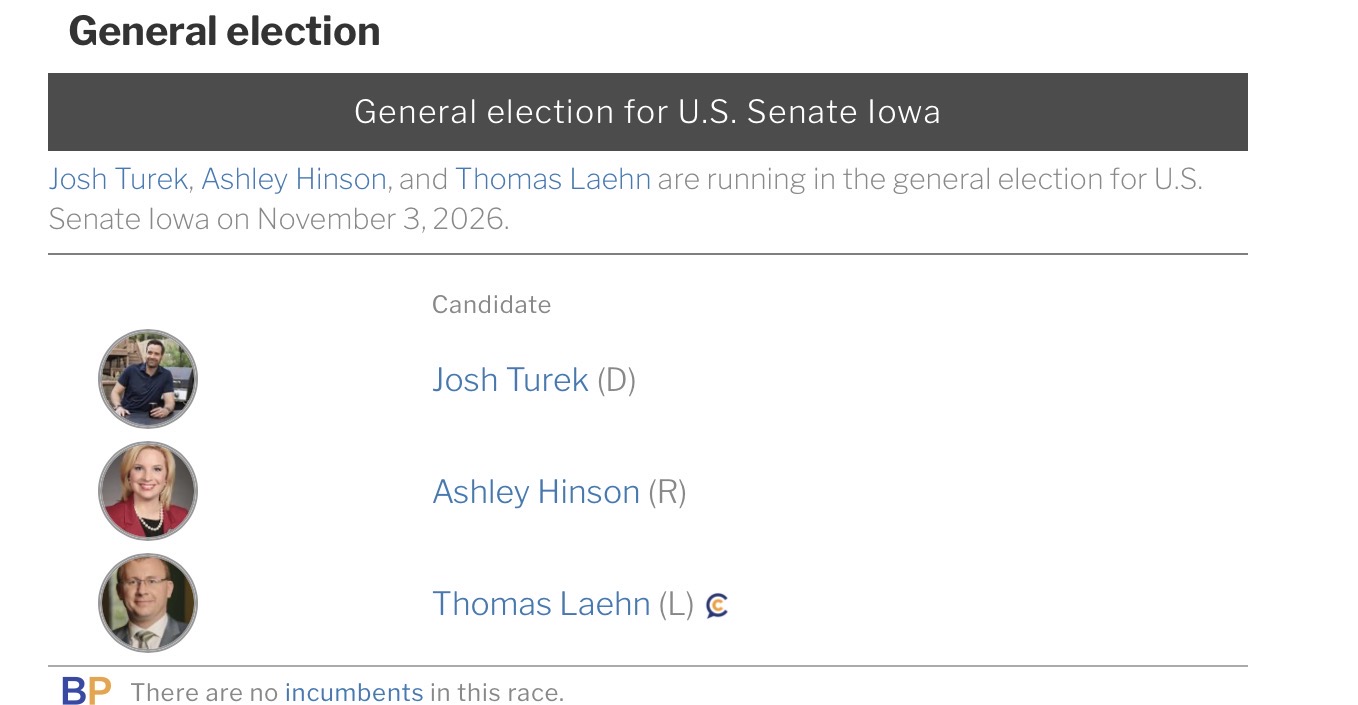
Ashley Hinson (Republican) was a well-known news anchor in Cedar Rapids before serving in the Iowa House of Representatives. In 2020, she knocked off Democrat Abby Finkenauer for her seat (now called IA-2, but then labeled IA-1). She has since won reelection twice by increasing margins each time.
Josh Turek (Democrat) is a member of the Iowa House of Representatives. He is a well-known former wheelchair basketball player and is running a campaign heavy on “moderate” overtones, which suggests Iowa Democrats are well aware of the President’s popularity in the Hawkeye State.
II. State Profile
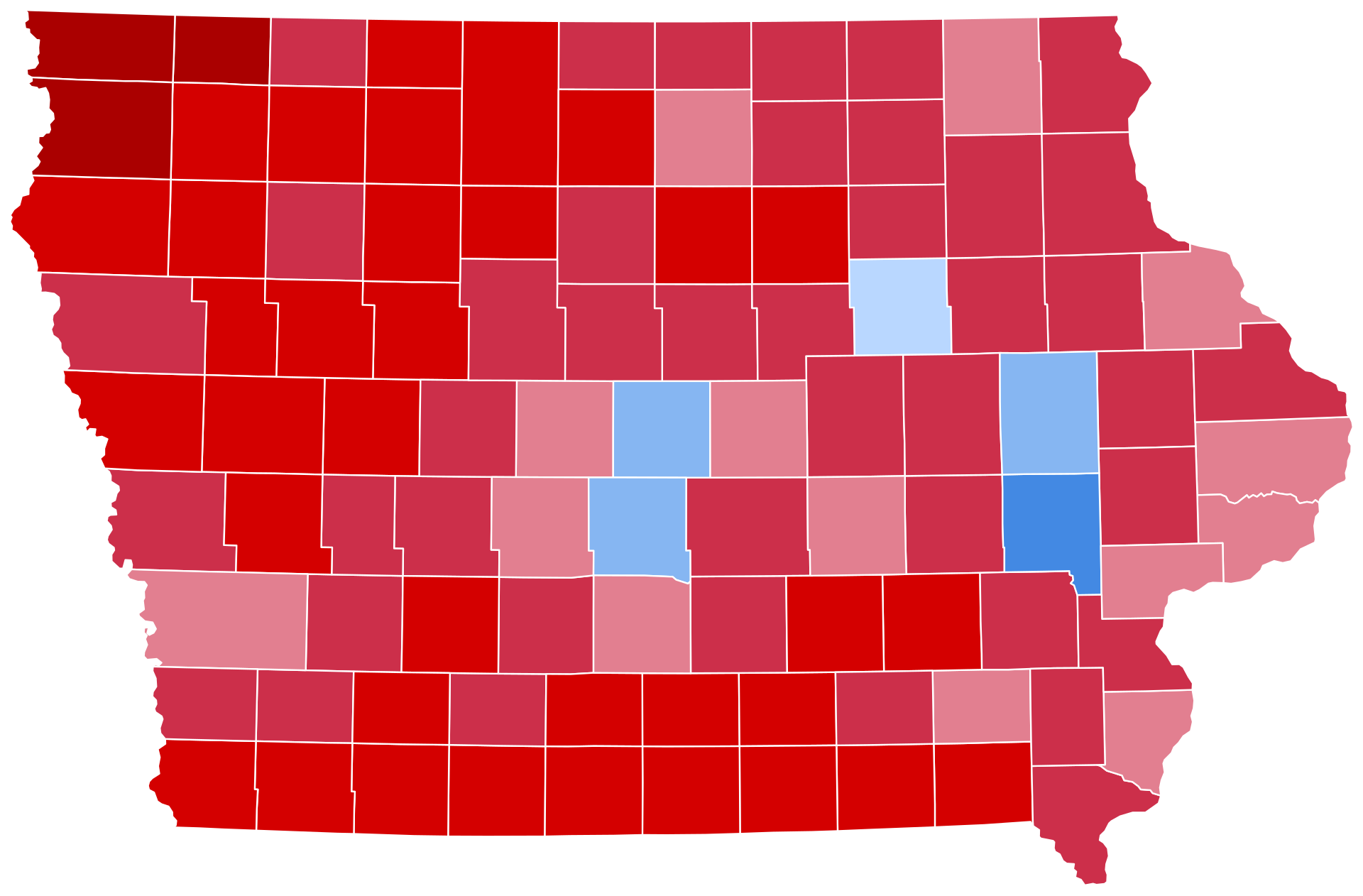
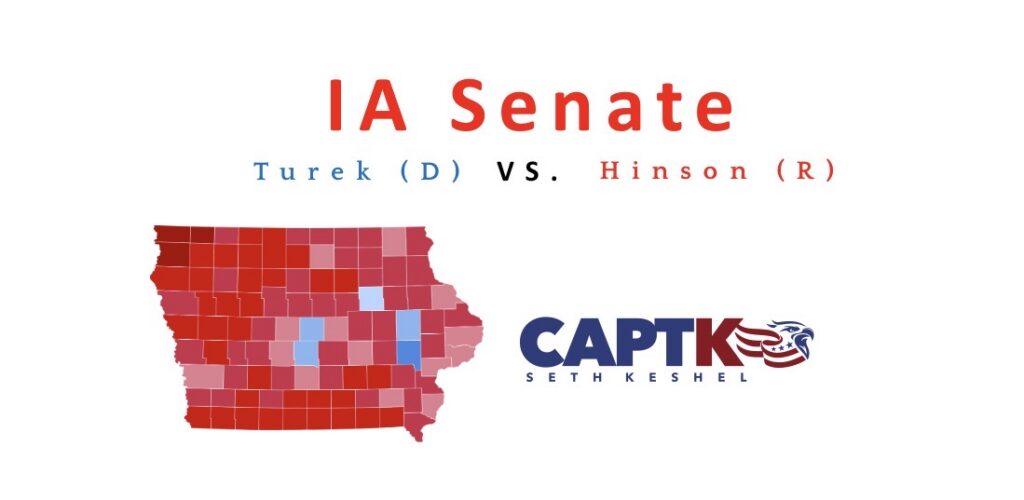
Iowa’s trend during the Trump era more closely resembles Missouri’s rather than Wisconsin’s. There are traditionally conservative areas in the northwest portion of the state that resisted Obamamania in 2008, when Iowa went blue by a margin of 9.5%, but the heaviest work of the Trump coalition has been in shifting the eastern half of the state to a dark shade of red:
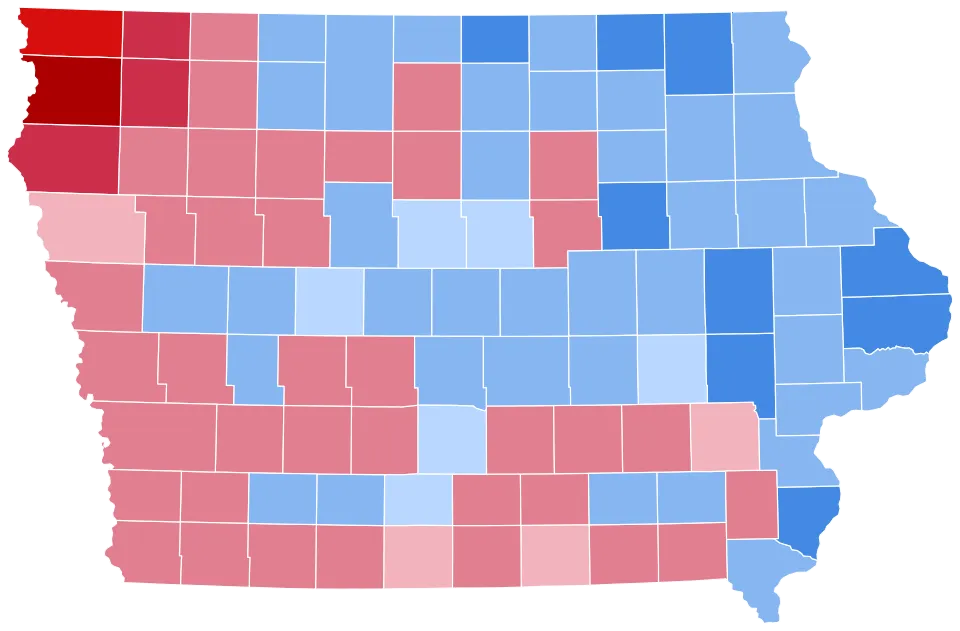
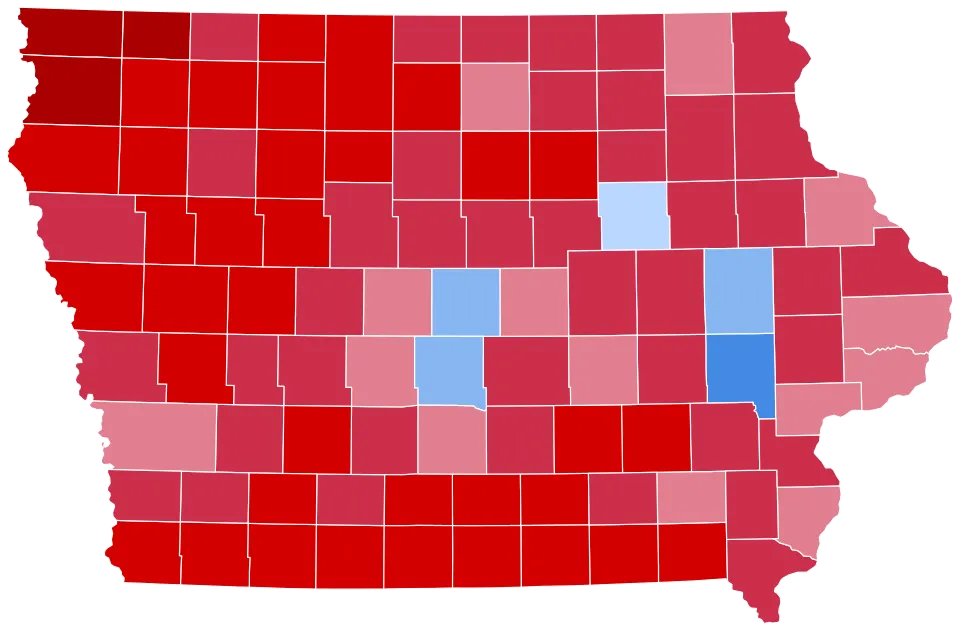
Donald Trump smoked Kamala Harris so badly in Iowa in 2024 that it ended Ann Selzer’s polling career.
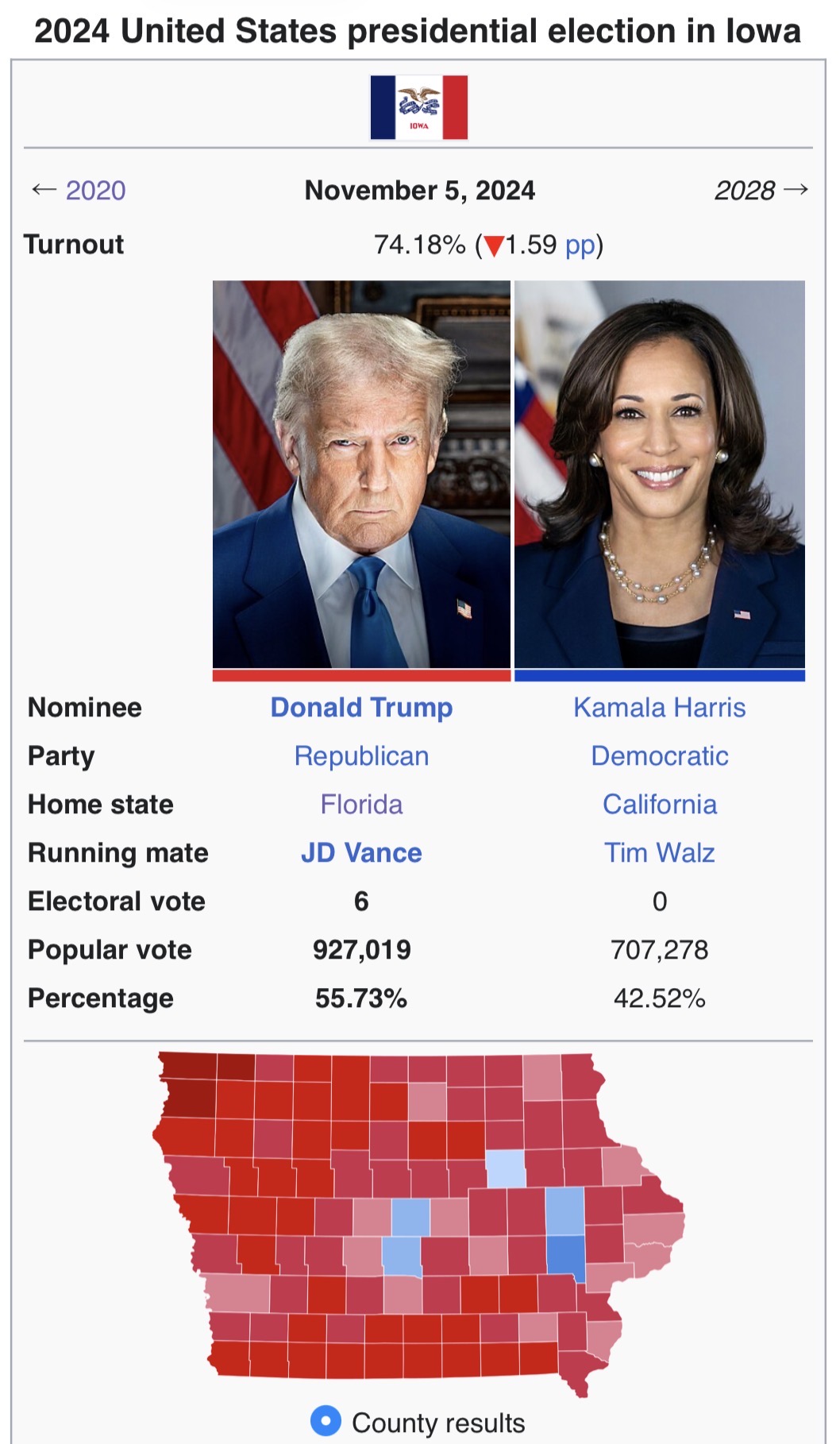
Harris won just five counties as Trump pulled off the biggest Republican margin of presidential victory in Iowa since 1972, when Richard Nixon won it by a mile. She only won Polk County, which accounts for 15% of the statewide vote and contains metro Des Moines, by 10.8%, and lost Scott County (Davenport) on the eastern edge of the state.
Simply put, Turek is facing a presidential margin of +13.2%:
Key Statistics
84.5% White, 5.6% Hispanic, 4.1% Black
III. Market Assessment
In what is a relatively rare occurrence in 2026, Polymarket bettors are mostly backing the Republican (Hinson) in this race.
IV. History
I mostly have to look outside of Iowa to get a feeling for what history suggests will happen with the Hinson-Turek race. Iowa has not had a Senate election in either of the rough GOP midterm years of the 21st century (2006 and 2018), so I am going to rely heavily on regional comps to inform my decision-making.
Iowa has had two of most tenured Senators in the history of the United States both serving at the same time in recent years. Democrats had Tom Harkin, elected in 1984 and reelected four times, in office until 2015. He was replaced by Republican Joni Ernst, whose retirement opened this seat for Hinson’s run. Harkin won by +10.4% in the 2002 midterm, which bucked historic trends and favored Republicans under George W. Bush. He then ran on the same ticket as Obama in 2008 and carried his race by +25.4%, a blowout defying the political alignment of Iowa.
Chuck Grassley, the Republican in the other seat, won election to the Senate in 1980 and remains there to this day. He has won by three ridiculous margins in the 21st century (+42.3%, +31.1%, and +24.4% in 2004, 2010, and 2016, respectively), and by a more modest one in 2022 (+12.2%). He is now 93 years old, but openly speculating about running in 2028.
With two legendary Senators skewing numbers, and Ernst having two favorable campaign years, a 2014 red wave and a run with Trump on the ticket, I have no real comparison to what a left-leaning midterm environment may look like for an Iowa Senate race within the state’s borders. So, let me travel to a few states regionally that had Senate races up in 2018.
Wisconsin – Trump won by 0.8% in 2016, but Democrat incumbent Baldwin won reelection by 10.8%. Democrat swing of 11.6% – not enough to tip Iowa.
Minnesota – Trump lost by 1.5% in 2016, but Democrat Tina Smith won an open seat by 10.6%. Democrat swing of 9.1% – not enough to tip Iowa.
Michigan – Trump won by 0.2% in 2016, but Democrat incumbent Debbie Stabenow won reelection by 6.5%. Democrat swing of 6.7% – not enough to tip Iowa.
Nebraska – Trump won by 25.1% in 2016, and Republican incumbent Deb Fischer was reelected by 19.1% in 2018. Democrat swing of 6.0% – not enough to tip Iowa.
Missouri – Trump won by 18.6% in 2016, and Republican Josh Hawley unseated Democrat Claire McCaskill in 2018 by a margin of 5.8%. This is 12.8% left of Trump’s margin, and close – but still not enough to flip Iowa. McCaskill’s strength as an incumbent resisting a regional realignment made this closer than it otherwise would have been.
I have no pure example of any state near or resembling Iowa that would give me a Trump-era midterm example of the state flipping based on swing. Hinson’s biggest vulnerability lies in the fact that she isn’t an incumbent (at least in the Senate).
V. Analysis of 2026 Primary Results
Hinson received Trump’s endorsement early in her campaign and moved on to pick up a strong primary victory:
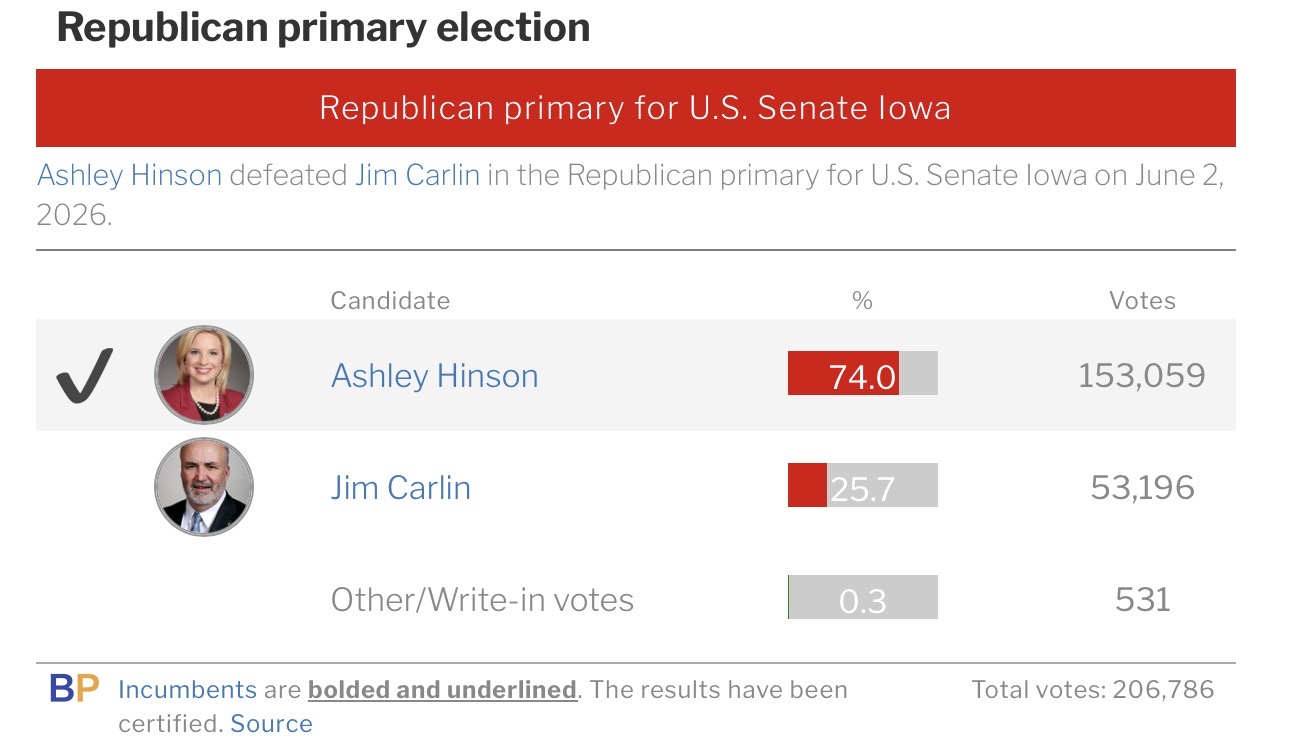
Her opponent, Jim Carlin, tried to stir up nonsense over ideological purity after the campaign, but has since gotten with the program and thrown his support behind Hinson.
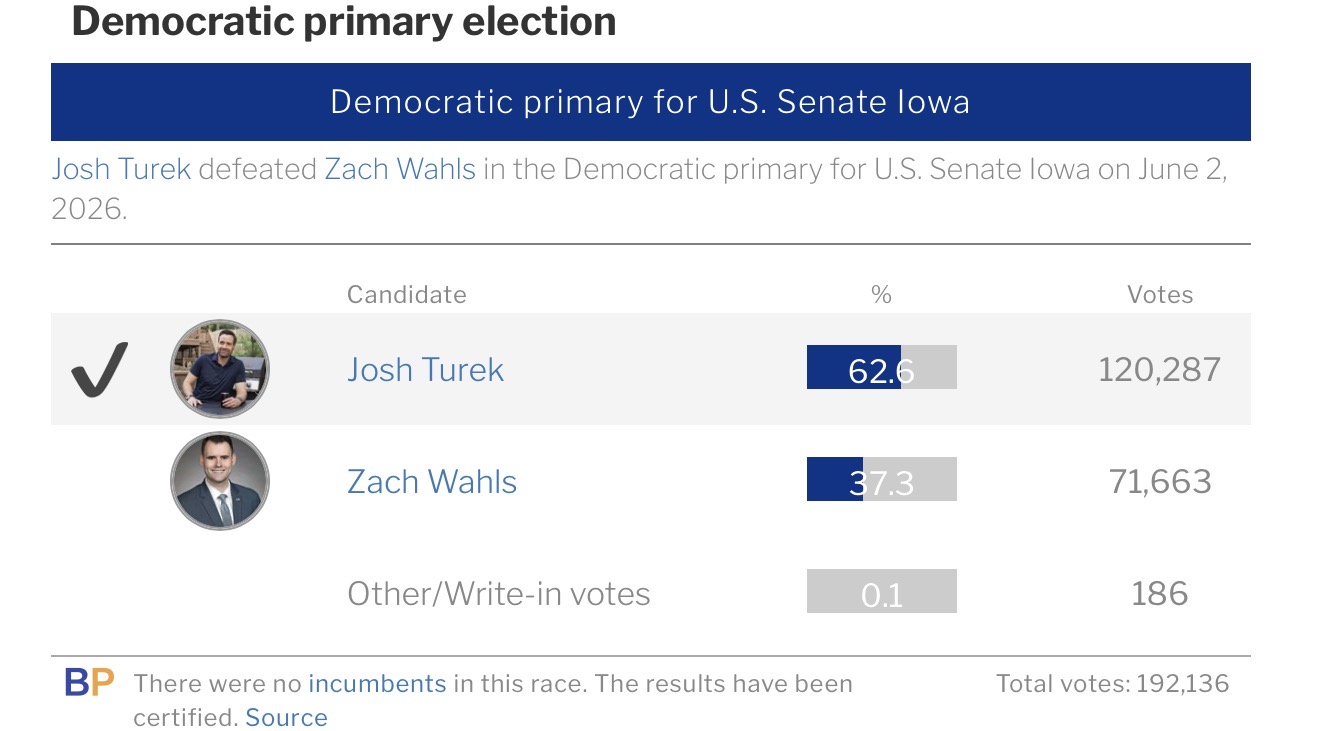
The Democrats have arrived at the cusp of the election with little drama. Turek defeated Zach Wahls by a 25.3% margin and the party is fully unified for the campaign.
VI. Polls
Polling has been all over the place, and here we see in this forecast an example of market traders not buying the results. Here is the RCP average:
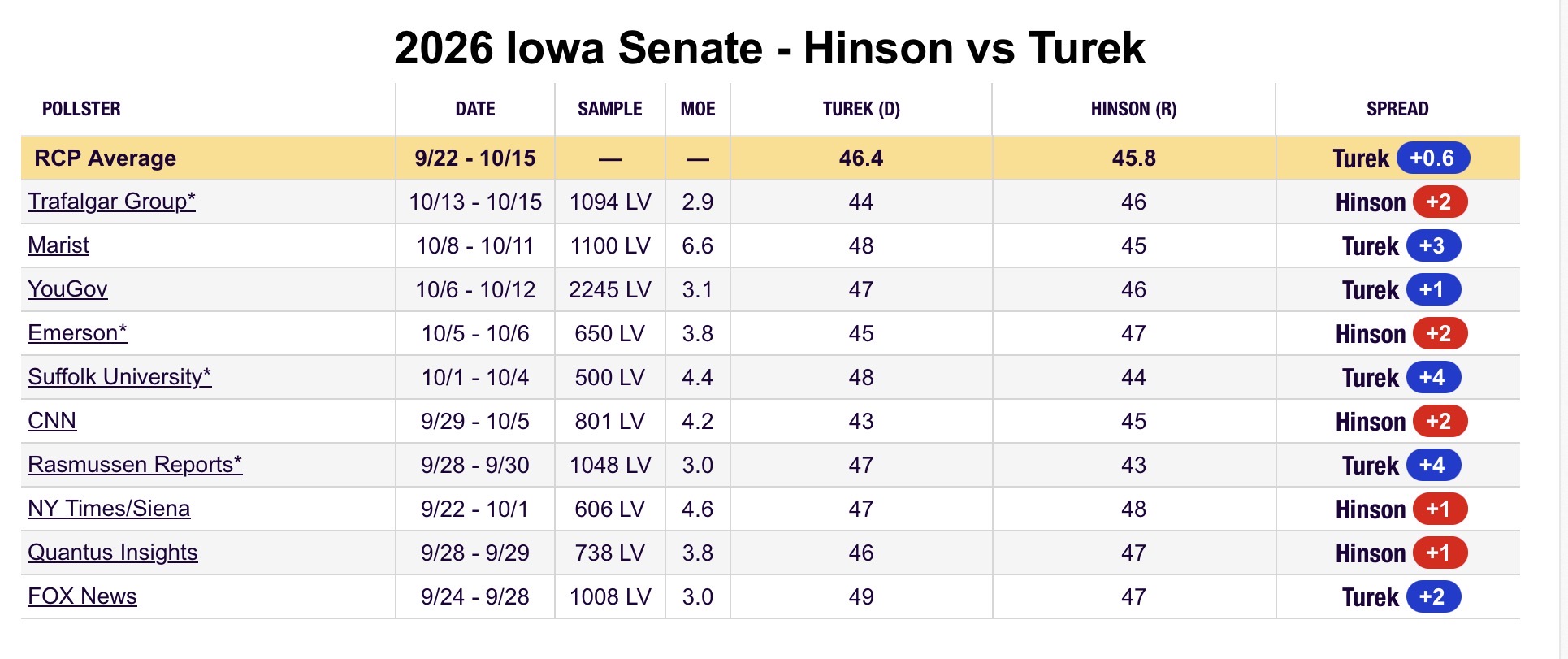
In the current sample making up the average, Hinson leads in 5 polls, and so does Turek. Turek’s narrow edge in the average is propped up by a pair of +4 outliers. Polling shows a push and reminds me of polls from Kansas – not picking up the support of white rural voters.
VII. Media Ratings
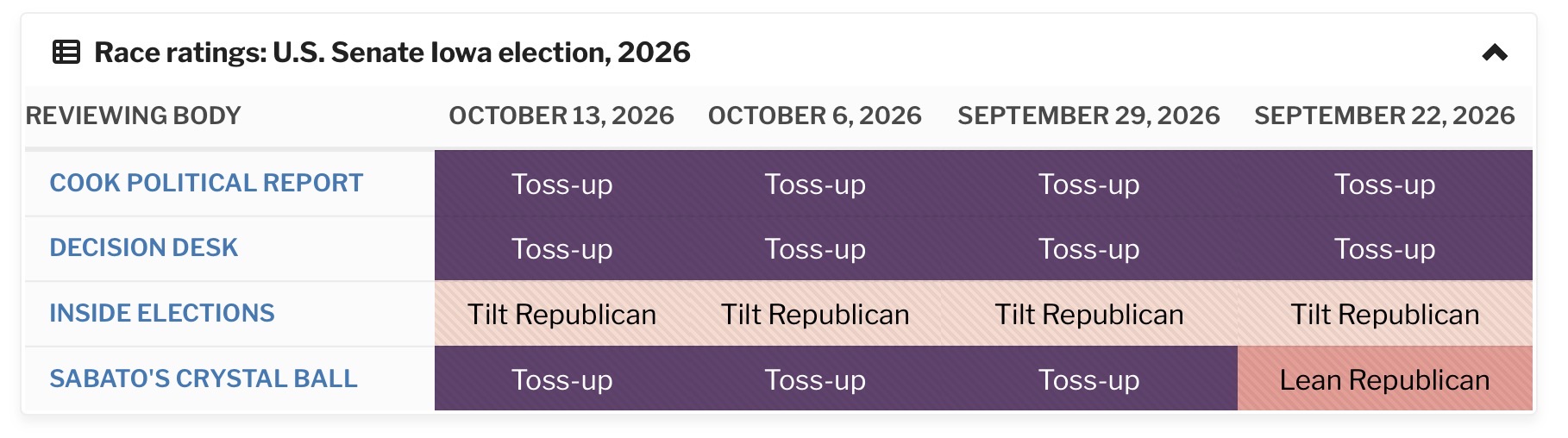
Inside Elections favors Hinson narrowly, while the other three reviewing bodies call the race a “toss-up.”
VIII. Party Registration
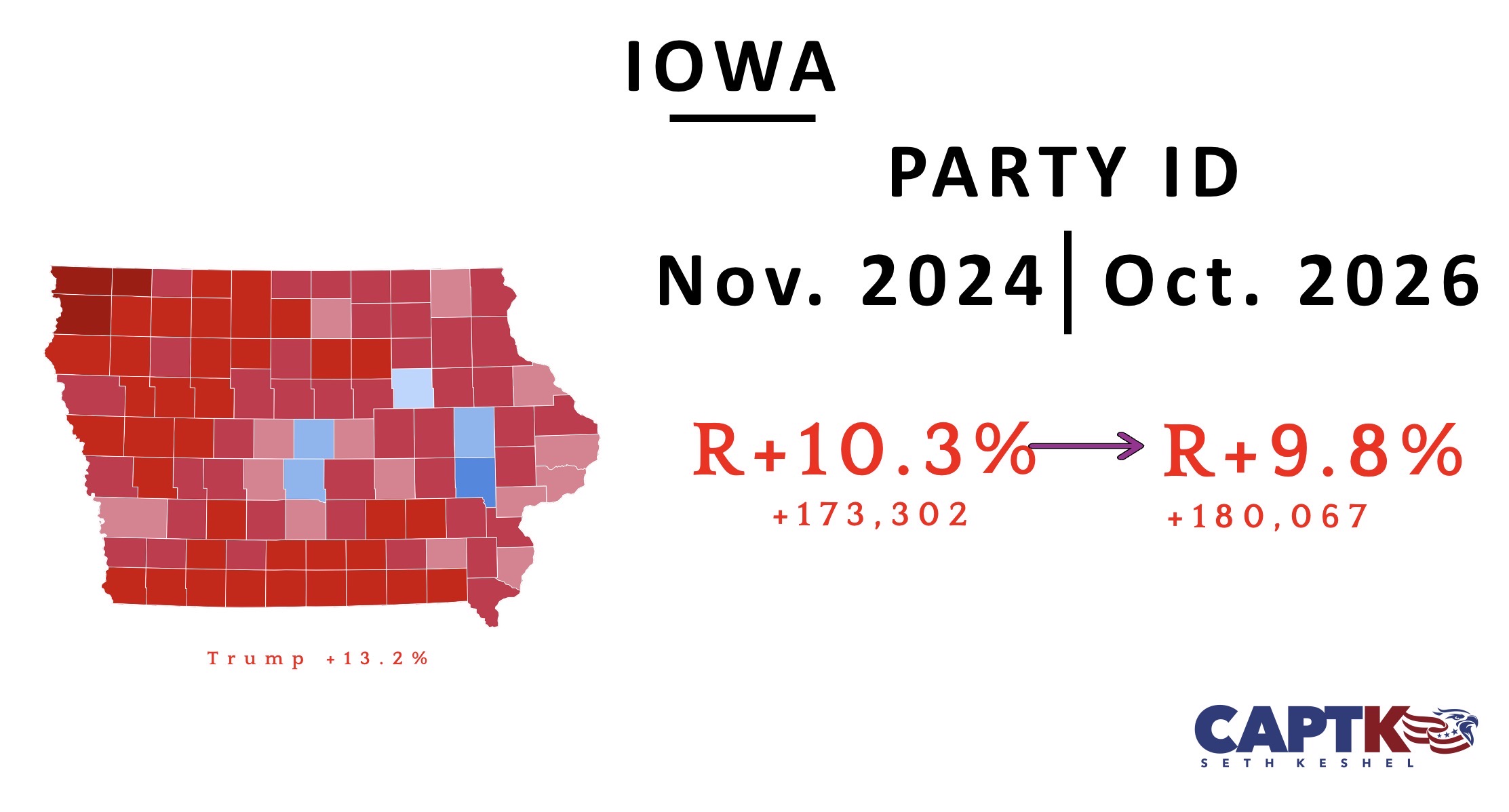
Senate races more closely resemble presidential outcomes because everyone votes. IA-1 looks rough for the GOP incumbent, and IA-3 is going to come down to the wire, but Republicans have a wider lead in IA-2 and IA-4 is deep red territory. Cumulatively, Republicans have a raw registration lead 6,765 higher than they had in November 2024, when Trump won the state by 13.2%. The index has decreased by a half-point from R+10.3% to R+9.8% thanks to the number of total registrants increasing, but it is clear the Democrat brand is in the garbage in the heartland.
Voters understand that no matter how moderate a Democrat touts himself to be, he will be pushing Chuck Schumer’s agenda in Washington. If Republicans vote, Democrats like Turek are at a major disadvantage.
IX. Election Considerations
From my IA-1 forecast:
One thing is for certain, and that is that Iowa runs excellent elections. A lot of this is owed to the current treasurer, Roby Smith, who started turning the screws on election reforms as a state legislator before the 2020 election. Iowa has manageable early voting windows, control over the mail-in balloting process, and a voter registration system that doesn’t automatically register voters.
X. Summary and Election Estimate
These are the major factors for the U.S. Senate race in Iowa:
The mountain of presidential margin. Senate races are not like House races, which voters know they can reverse two years later if they don’t like how things worked out. No fair comparison from 2018 exists to suggest Turek is likely to reverse a Trump +13.2% state against an appealing candidate like Hinson.
Turek had a massive third-quarter fundraising haul, putting him ahead of Hinson for receipts (although he trails for cash on hand down the stretch run). Harris won just five counties; rural voters realize he will rubber-stamp Schumer’s agenda no matter how moderate he claims to be. Hinson has been given leeway to moderate her positions compared to Trump’s, which will help her in urban areas most susceptible to the wild swings Turek would need in his favor to edge her out of the seat.
Iowa runs solid elections and has excellent control over counting and mail-in balloting. Unlike the Alaska Senate race, which gives me bad vibes because of Ranked Choice Voting and other elections issues, there is no advantage afforded through poor election administration to Democrats anywhere in the state.
This is what my decision matrix looks like for this race:
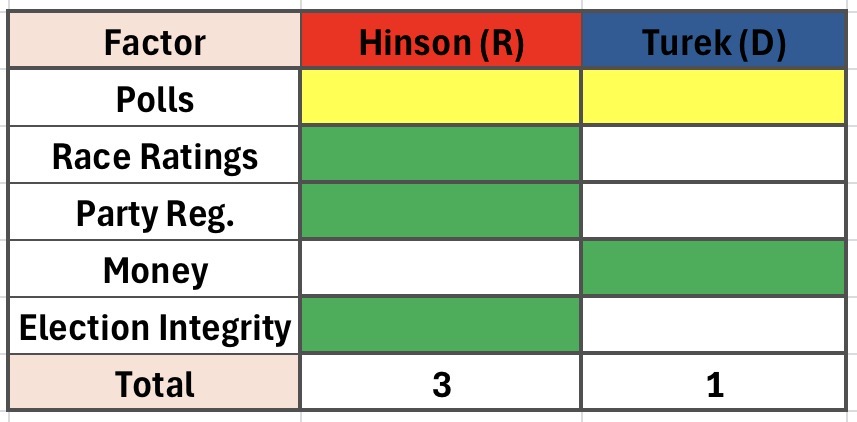
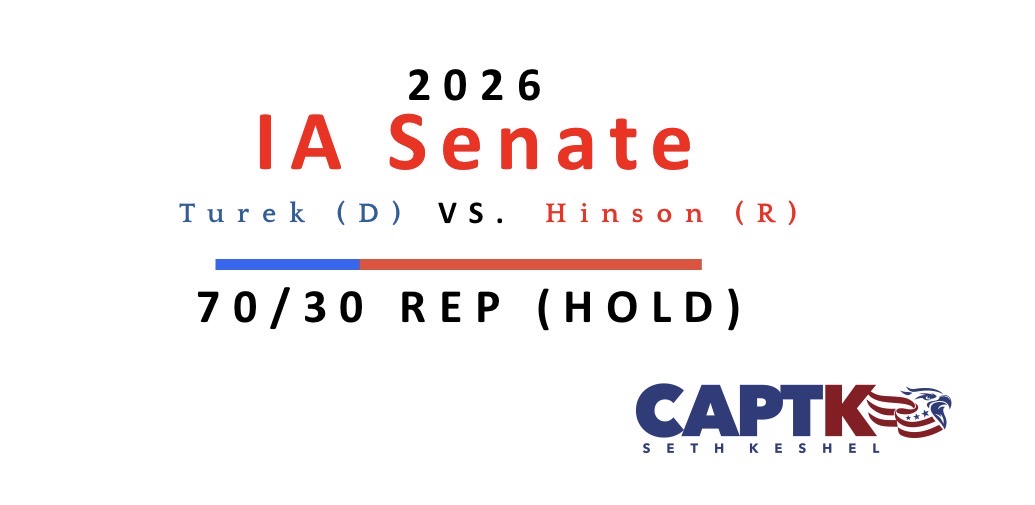
With all of these factors considered, I suspect Hinson will replace Ernst in the Senate, with a modest margin in single digits.
Forecast for IA Senate
Seth Keshel, MBA is a Senior Fellow at the Gold Institute for International Strategy and a retired Army Captain. He publishes Captain K’s Corner on Substack.