Senior Fellow Toshio Masuda on why President Trump posted Jim Rickards’ video “America Will Melt Down” to his own social media, in the August 31, 2026 edition of his Free Internet Seminar.
Continue reading
Senior Fellow Toshio Masuda on why President Trump posted Jim Rickards’ video “America Will Melt Down” to his own social media, in the August 31, 2026 edition of his Free Internet Seminar.
Continue reading
(This article was written by Adelle Nazarian and appeared in Newsmax. Will Geopolitics Render Our Dollar Replaceable?)
For most of modern history, the machinery that moves money globally has been almost invisible. You bought something. Money moved. Banks settled it.
Nobody thought much about the financial architecture making it all possible.
That era is ending.
This writer saw this transformation taking shape years ago as co-founder and CEO of the American Blockchain PAC, where our mission centered on bringing regulatory clarity to America’s emerging digital-asset industry and helping policymakers grapple with a fundamental question: What, exactly, are these new assets, and how should the United States regulate them?
At the time, much of Washington treated digital assets as a regulatory problem.
Today, they increasingly look like a geopolitical one.
Payments are becoming geopolitics.
And the next great contest for global power may not be over which currency replaces the dollar, but over something far less glamorous and potentially just as consequential: who controls the rails on which the world’s money moves.
That distinction matters.
The U.S. dollar remains overwhelmingly dominant.
According to the Bank for International Settlements, roughly 98% of stablecoin value is still denominated in dollars.
The dollar remains deeply embedded in global finance.
But countries increasingly want the ability to move money without passing through infrastructure vulnerable to American or Western control. Russia offers perhaps the most provocative example of this.
In a recent interview, PSB Bank Chairman Petr Fradkov described payments as a tool of “new warfare,” arguing that the dollar’s power extends beyond the currency itself to America’s ability to influence transactions.
You don’t have to accept Moscow’s framing, or sympathize with its motives, to recognize the larger point. Money is power.
But the ability to determine how, where and whether money moves is power too.
Consider A7A5, the ruble-backed stablecoin launched in 2025.
It has reportedly already generated nearly $140 billion in cumulative turnover, making it the world’s largest non-dollar stablecoin.
Western governments have sanctioned entities associated with A7A5, and critics argue that the broader A7 network is explicitly designed to help Russia circumvent sanctions.
But that’s precisely why Washington should be paying attention.
Sanctions work because America doesn’t merely issue the world’s dominant currency.
It also sits at the center of much of the machinery that moves money around the world.
A dollar transaction between two foreign countries can still touch correspondent banks, clearing systems and regulated financial institutions within America’s reach.
That gives Washington something enormously valuable: the ability to see transactions, block them and, in some cases, effectively shut institutions out of the global financial system.
For decades, there were few practical ways around that architecture. Now there are.
China has expanded its Cross-Border Interbank Payment System, or CIPS, which provides infrastructure for renminbi transactions. Governments around the world are experimenting with central-bank digital currencies, tokenized deposits and stablecoins. Russia is pushing A7 internationally, including into Africa.
These systems don’t have to defeat the dollar to matter.
They merely have to make Western financial infrastructure optional.
That may be the geopolitical story Washington is missing.
The debate is usually framed around “de-dollarization”: Will China replace the dollar with the yuan? Will BRICS create a common currency? Will some new digital asset knock the greenback from its throne?
Those questions may be looking in the wrong direction.
The more immediate competition is over infrastructure, not currency. Imagine the dollar remains the world’s preferred store of value, but a growing percentage of international commerce can move across settlement networks Washington cannot easily monitor, interrupt or influence.
America could retain monetary dominance while gradually losing some of the geopolitical leverage that monetary dominance once automatically provided.
And that has consequences.
Alternative payment rails can reduce American visibility into international transactions.
They can make sanctions harder to enforce.
They can weaken the network effects that make U.S.-centered financial infrastructure indispensable.
But there is another irony here.
Dollar-backed stablecoins themselves currently strengthen the dollar because their value is pegged to it, extending the dollar’s reach into the digital economy.
Nearly the entire stablecoin market is dollar-denominated, and major issuers hold enormous quantities of U.S. Treasury securities.
Digital finance, at least so far, has exported the dollar rather than displaced it.
That gives Washington an extraordinary advantage, but not necessarily a permanent one.
Countries across Asia, Africa and Latin America increasingly want what might be called financial optionality: the ability to trade globally without depending exclusively on infrastructure controlled somewhere else.
For America, the answer isn’t to stop technological competition.
It’s to win it.
That means making dollar-based digital infrastructure faster, cheaper and easier to use.
It also means regulatory clarity for American stablecoins and tokenized finance and treating payment technology as strategic infrastructure rather than an obscure corner of financial regulation.
America spent decades building the world’s most powerful financial system. Its next challenge is ensuring the rest of the world still wants to use it.
Because the battle for the future of money may not ultimately be about whose face is printed on the currency. It may be about who owns the rails – and the terrain beneath them.
Adelle Nazarian is a Senior Fellow at the Gold Institute for International Strategy, a Washington D.C.-based foreign policy and defense think tank.

You’ll always get lost if you only play the short game
You may remember a guest post from a few months ago by Ada Nestor.
Ada reviewed my book, The American War on Election Corruption, in her post. Let me tell you – she’s sharp as a tack and has a sense of perception second to none. Check out the piece she dropped yesterday in her newsletter, which I urge you to subscribe to:
“While You Were Watching a Lake Get Renamed“
Believe me, I’ve already heard all the second-guessing, hand-wringing, and rationalizing from so-called conservatives going on about changing the name of Lake Ontario to Lake America. Ada had this to say:
The same week, Lake Ontario became “Lake America.” A map with a name crossed out on Truth Social. An Oval Office signing. Canadian premiers issuing statements. Three straight news cycles arguing about whether a body of water can be renamed by executive fiat, and whether the Atlantic is next. I’ll believe the Atlantic panic when someone actually tries it.
I didn’t write a word about the lake. Not because it isn’t a story. Because I was watching two real ones.
She went on to talk about some actions President Trump took last week related to a national emergency over our power system. Give it a read and you’ll realize that she appreciates the same thing about the President that I’ve noticed for years now.
When President Trump is getting things done in a big way, he usually throws out a series of distractions for the press and Trump-deranged (often the same people) to choke on. That way, someone with an inside scoop to derail peace/trade/negotiation cannot gain the necessary leverage over people who would rather defend a communist or openly express their disdain over naming something to honor one’s own country.
Then, when the ink dries, you get something like this:
“Breaking News: The United States of America has just entered into an Agreement with the Country of Venezuela on, THE BIGGEST OIL DEAL IN WORLD HISTORY!”
President Trump pointed out that the United States now controls 65 billion barrels (65 thousand million) of Venezuela’s oil reserves – enough to supply the petroleum and oil needs of the United States (20.6 million barrels per day) for almost nine years.
Ada’s post compelled me to produce what I believe are the three most vital takeaways for Trump’s Venezuela oil deal, along with deeper explanations for each as to how they will benefit us, the people of the United States of America.
Without further ado:
I remember waking up on Saturday morning, January 3, to find out that U.S. force plucked Venezuela’s then-president Nicolas Maduro right out of his bed, then flew out without losing a single service member. I mean, they yanked him like you see with one of those hooks in a cartoon ripping someone off of a stage.
Another thing the Trump-deaf don’t get is how he refers to other people, like the interim president of Venezuela, Delcy Rodriguez. She’s a member of Maduro’s party and, I’m confident, a pretty lousy person and even worse leader. Even so, she is referred to in writing by the most powerful man on Earth as “Highly Respected.”
Rodriguez and Trump almost certainly have the same thing in mind. She will do what he says, and if she doesn’t, she will wind up getting a free ride on the same aircraft that took Maduro on an unexpected red eye across the Western Hemisphere. As long as she says “yes sir” and we turn Venezuela into a resource-rich partner in our area of influence, she is great, wonderful, and “highly respected” – and most importantly, going nowhere.
This brings me to the question of Manifest Destiny. Few of us support these endless wars that have been popular for the past 60 years. This opposition got President Trump elected twice (three times, really), and right now we are watching the rest of the world pine for the United States to do the dying in Iran. I am confident there were larger plans in place months ago, but Europe is out, and no one in the Middle East has the resources to put men on the ground needed to topple a regime that manages, above all things, to survive.
But taking care of our own backyard is hardly a concept of endless wars or never-ending conflict. Trump’s success at practically zero cost to the United States will likely spur future like-minded administrations (including Trump’s own) to take action against other pariah states on our side of the map, such as Cuba. A Latin America with de facto alignment with an America First agenda is a powerful economic force against the powers of globalism and the emergence of other-than-friendly nations, like China.
20% of the world’s crude oil flows through the Strait of Hormuz, a geographical feature which lends an otherwise backward nation like Iran a major advantage against other nations in the world economy.
The constant games played by the regime, which realizes the administration is too shrewd to be baited into a ground campaign, have caused major volatility in our markets and have kept energy and gas prices sky-high. This, naturally, has political consequences (enough to tip most of the 24 decisive House races, potentially) but also strategic ones.
Trump’s deal with Venezuela locks in a guaranteed source of oil at cost for 100 years, breaking our reliance on the Middle East and opening up our options when dealing with the perpetual conflict there. Additionally, Venezuela and Iran were critical pillars in China’s operation to conquer the world by mid-century.
Right on cue, American strikes on Kharg Island have commenced. With Venezuela realigned and Iran’s energy exports business up in flames (and global economic terrorism game upended), who takes the biggest hit?
Everyone is hoping this pays off for 2026 midterms, typically by hoping gasoline prices plummet. This requires a nuanced understanding of the deal. Analysts believe Venezuela is only producing 1.2 million barrels of oil per day; however, Trump the builder knows this and with a renewed focus on polishing up this investment, will heavily invest in infrastructure.
Why?
Venezuela has more oil than anyone in the world, up to six times more than the United States. We produce almost 14 million barrels of crude oil per day. That’s chump change in Venezuela at full potential. It may take some time for the fruit of this deal to become obvious, but the future of American energy dominance is now sealed, and will result in oil being so abundant without reliance on tranquility in the Middle East that a dramatic drop in all energy costs, including the cost of transportation, will follow.
This arrangement with Venezuela is a direct result of strong leadership, saying enough of Maduro, and finding a total workaround of a bottleneck in the Middle East no one has wanted to touch for decades. It stands to benefit our country for generations and absolutely harms China’s ambitions with great impact.
Next time you see some crazy stuff going on in the news, you should always wonder what President Trump and team are up to behind the scenes.
Seth Keshel, MBA is a Senior Fellow at the Gold Institute for International Strategy and a retired Army Captain. He publishes Captain K’s Corner on Substack.

This article was written by Ernie Audino and appeared in Frontlines of Freedom. SYRIA – IRAN IS OUT…(BUT NATURE ABHORES A VACUUM).
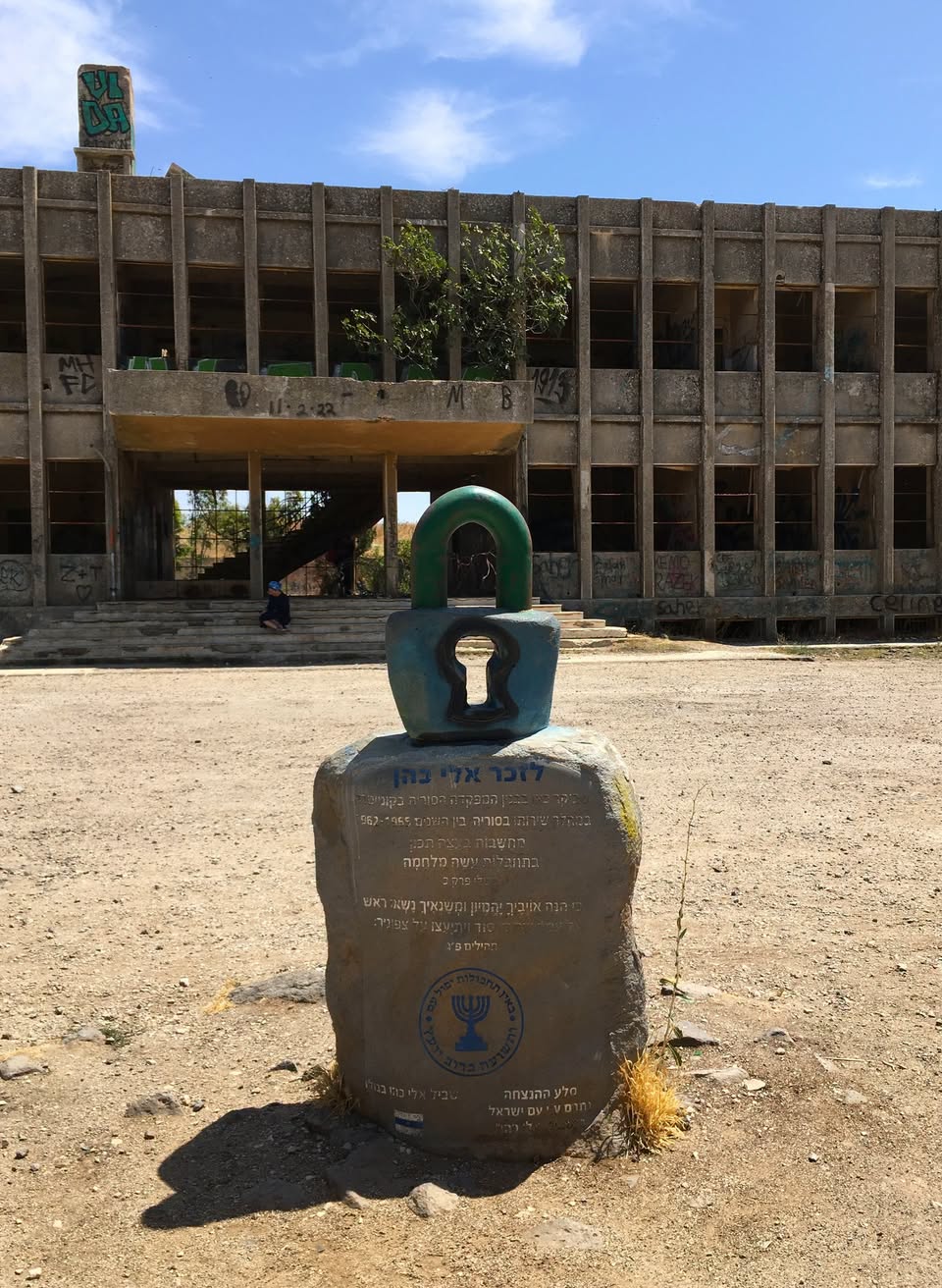
Standing along the Sea of Galilee a few years ago, I looked up at the Golan Heights rising from its northeast shore and marveled at the military advantage it provided to whomever held it. The Golan stands nearly 2,000 feet above the plain and is cut vertically by sharp draws that make crosswise travel difficult and canalize traffic towards only a handful of obvious routes. Consequently, traffic on those same routes is exposed to abundant, long-range observation and fields of fire from nearly any position on the high ground.
But rather than build a better peace for its citizens behind such defensible terrain, Soviet-era Syria, which held the Golan at the time, chose instead to pack it with artillery tubes, mortars and rocket launchers and rain terror down upon farmers and villagers on the Israeli side of the border. Syria began fortifying the Golan in 1949, and by the mid-1960’s had occupied it with 5 infantry brigades, 3 tank brigades, over 40,000 troops, 260 tanks, and nearly 300 cannons plus assorted rockets and missiles.
That all ended in June 1967 after Egypt, threatened to shut down the Strait of Tiran, Israel’s access to the Red Sea…which was an act of war. Surrounded and greatly outnumbered by the allied forces of Egypt, Syria, Jordan and Iraq (total combined strength of 465,000 troops, 800 fighter aircraft and 2,500 tanks), Israel brilliantly defeated each one in turn and routed their forces from the key terrain the Arab units were using to prepare offensives into Israel. As a result, and as a matter of basic, military logic, Israel has held the high ground of the Golan and the hills of Judea and Samaria ever since. It’s key terrain, and key terrain provides a marked military advantage to whomever holds it. It is irrational to cede it to an adversary.
Unfortunately, another vacuum has opened in modern Syria today, and it will likely be associated with a resumption of competition between various armed Syrian groups vying for control and an influx of Turkish combat power purposed to maintain Syria as a permanently fundamentalist, Sunni ally directly along Israel’s northern border. The recent Syrian Civil War resulted in a victory for Turkish-supported, Sunni jihadi groups and the ejection of Iran’s Shia proxies from the country. From a Turkish perspective, the urgency for Ankara to consolidate its influence/control of Syria (and gain key terrain closer to Israel) cannot be overstated.
Are we out of the frying pan and into the fire?
Joining me this week on the Frontlines Report to discuss precisely that topic is Colonel Jacques Neriah, IDF (Ret). He was the former Foreign Policy Advisor to Israeli PM Yitzak Rabin (assassinated in 1995). Few understand the strategic challenge from Syria like he does. You definitely want to hear what he has to say….your chance to hear history speaking: https://frontlinesoffreedom.com/show-975/