Monday, November 30, 2026, 1:30 p.m. ET: Peter Huessy, Juliana Geran Pilon and Ilan Berman on cognitive warfare and antisemitism. In person in Washington, D.C., and live on Zoom.
Continue reading
Monday, November 30, 2026, 1:30 p.m. ET: Peter Huessy, Juliana Geran Pilon and Ilan Berman on cognitive warfare and antisemitism. In person in Washington, D.C., and live on Zoom.
Continue reading
Bucharest, November 2026
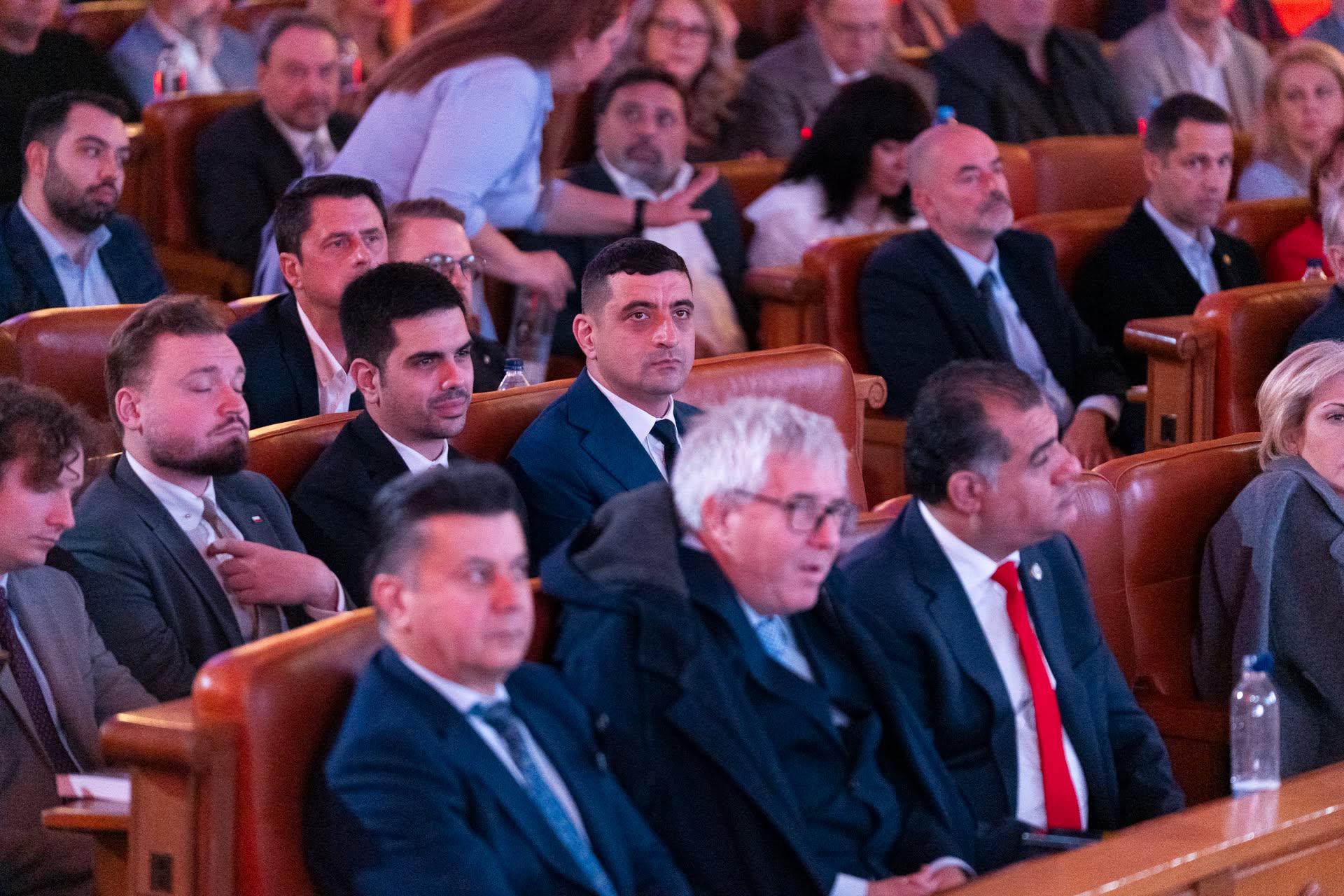
From November 13 to 15, 2026, Bucharest became an important meeting point for political dialogue, international cooperation, and the future of Europe. The Forum Europa – Vision, Identity, Education, organized by the Alliance for the Union of Romanians (AUR) at the Palace of Parliament, brought together a remarkable international gathering. Organizers reported more than 200 foreign guests and over 180 speakers representing more than 55 countries.
As a representative of the Confederation of the Kurdistan Diaspora, I had the distinct honour and privilege of participating in this international forum and witnessing an important moment in Romania’s evolving political landscape.
The three-day gathering was more than a political conference. It offered a platform for discussing national sovereignty, democratic accountability, economic prosperity, cultural identity, and cooperation among nations. It also demonstrated AUR’s ambition to build international relationships while presenting an alternative vision for Romania and Europe.
At the centre of this political movement stands George Simion, president of AUR, whose opening address conveyed a clear message about the relationship between European institutions and the people they represent. His speech emphasized that European cooperation must respect national sovereignty and respond to the everyday concerns of citizens.
Three particularly memorable statements captured the spirit of his message:
“It belongs to its peoples and nations.”
“These are not extravagant demands.”
“Our goal is global peace.”
These statements reflected his broader argument that European governments must address affordable energy, employment, security, family life, and public confidence. Simion’s call for a Europe of sovereign nations represents a challenge to excessive centralization, while placing democratic legitimacy and national responsibility at the centre of political debate.
Romania currently faces significant economic and institutional challenges. According to the European Commission’s autumn 2026 forecast, the Romanian economy is expected to contract by approximately 0.3% in 2026, with inflation averaging 7.9% and the public deficit remaining substantial. Corruption concerns and weaknesses in public accountability further complicate the country’s political environment.
Against this background, AUR’s emphasis on economic renewal, national industry, democratic responsibility, and greater governmental accountability deserves serious consideration. Its proposals should be assessed through their potential to create employment, protect living standards, strengthen public institutions, and restore citizens’ confidence. The fundamental question is whether political promises can become practical, transparent, and inclusive reforms.
During my visit, I also witnessed the powerful public emotions surrounding the demonstrations held near the Romanian Parliament on November 14. Several thousand people gathered in support of Călin Georgescu, in a protest promoted and supported by AUR, although the party stated that it was not the organizer.
I personally spoke with demonstrators who expressed deep dissatisfaction with the political establishment and strong confidence in the leadership and direction represented by AUR. Their determination, their sense of national pride, and their hopes for meaningful political change left a lasting impression on me. Whatever one’s political position, these voices deserve to be heard through peaceful democratic engagement.
AUR’s growing international significance is also reflected in its relationship with the European Conservatives and Reformists (ECR) political family. George Simion serves as a vice-president of the ECR Party, while Romanian AUR representatives contribute to the ECR Group in the European Parliament.
Among these representatives are Adrian-George Axinia, head of the AUR delegation, Gheorghe Piperea, an ECR Group vice-chair, and Georgiana Teodorescu. Through their parliamentary activities, they contribute to discussions concerning national sovereignty, economic competitiveness, social policy, and the future of European governance.
Particular recognition should be given to Maria Georgiana Teodorescu, an important Romanian voice within the European Parliament. As vice-chair of its Committee on Employment and Social Affairs, she has demonstrated a commitment to employment, vocational opportunities, and the effective use of European resources. Her work on the European Social Fund reflects the argument that European programmes should respond to the practical needs of citizens and national labour markets.
The participation of ECR Party President Adam Bielan and Secretary-General Antonio Giordano further highlighted the forum’s connections with the wider European conservative movement. These relationships provide AUR with opportunities to advance its priorities through dialogue and parliamentary cooperation.
For me, this gathering also carried a special meaning. Representing the Confederation of the Kurdistan Diaspora, I regard international dialogue as an essential instrument for building understanding between peoples with distinct histories, identities, and aspirations.
The establishment of bilateral friendship initiatives during Forum Europa offers a valuable opportunity to strengthen cultural, social, economic, and parliamentary relationships. Respect for identity, peaceful cooperation, mutual understanding, and democratic participation can create meaningful bridges between Romanian society and the people of Kurdistan.
Romania’s future ultimately belongs to its citizens. AUR has presented a political vision that resonates with many Romanians seeking change, dignity, economic opportunity, and stronger democratic representation. Its long-term success will depend on translating that vision into effective policies while upholding pluralism, civil liberties, and equal rights.
I sincerely hope that the friendships established during this remarkable gathering will continue to grow stronger, opening a new chapter of lasting friendship, solidarity, mutual respect, and meaningful cooperation between Kurdistan and Romania.