I’ve had high-level security clearances for much of my career, but it wasn’t until late in my career when I was admitted to a specific handful of sensitive, compartmented programs that I sat back in my chair one day and whispered to myself, “Wow. This is really like a James Bond movie.” Colonel Chris Costa, US Army (Ret) lived in that black world, and now he is the Ex. Dir of our International SPY Museum in DC. He joined me on the show this week: https://frontlinesoffreedom.com/show-981/
A little context…with the exception of Israel, no other nation comes close to our technical means of collection capabilities. In fact, our collection capabilities are so good that the sheer quantity of information acquired through SIGINT, MASINT, COMINT, ELINT, GEOINT, IMINT, FININT, OSINT, etc.., can rapidly overwhelm us. As human beings, we can only consume so much. Key info gets overlooked in the noise.
The bigger challenge, however, is that we can become so enamored of technical collection methods, that we hamper the deeper understanding of human will. Understanding the WHY behind an enemy’s decision-making is no less important than the where/when/what the enemy has done or is capable of doing. We need to know HOW an enemy thinks, so to speak. What motivates him? What does he consider important? How does he see the world? How does he see himself?
This is why the best spies operate inside the enemy’s mind. They build rapport with potential intel sources and find ways to penetrate the enemy circle of trust. Their heads are inside the enemy’s culture. We will need more of this in the future.
Why? Because the enemy’s increasing employment of hybrid capabilities that intentionally target the gray zone between war & peace, and crime & combat, confuses us as to how to respond AND almost infinitely expands the range of potential threats requiring a response. So, a strategy based overwhelmingly on responding can never be enough.
That means placing more priority on engaging MUCH earlier in the enemy decision cycle. That means not waiting until we detect the enemy assembling the parts and pieces for a strike but rather disrupting his plan at its earliest point…ie when he first conceives of it in his mind. THAT requires a much more robust human intelligence effort and a much deeper understanding of human will. It will also require us to get comfortable with a military that is no longer purposed to just “Deter, Fight and Win,” but also to “Deter, Fight, Win, and Disrupt.”
Written byErnie AudinoSenior Military Fellow, Gold Institute for International Strategy
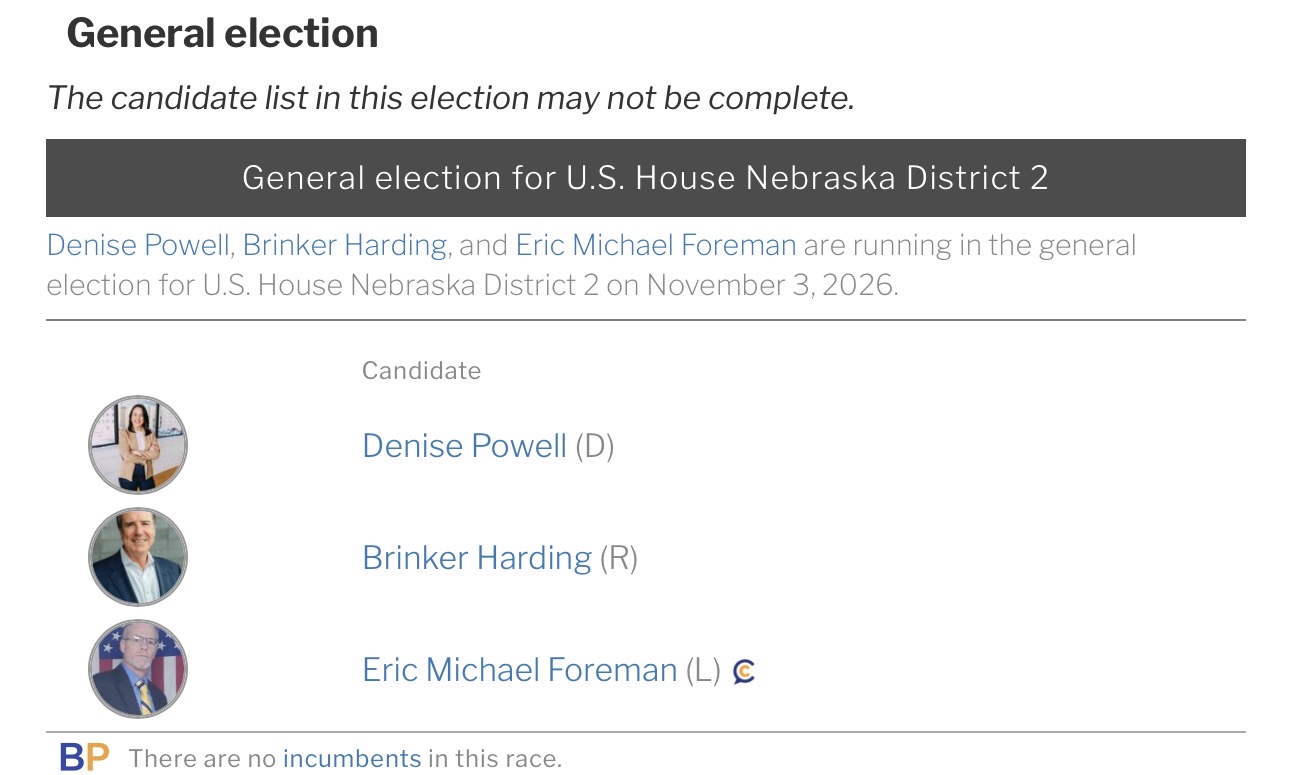
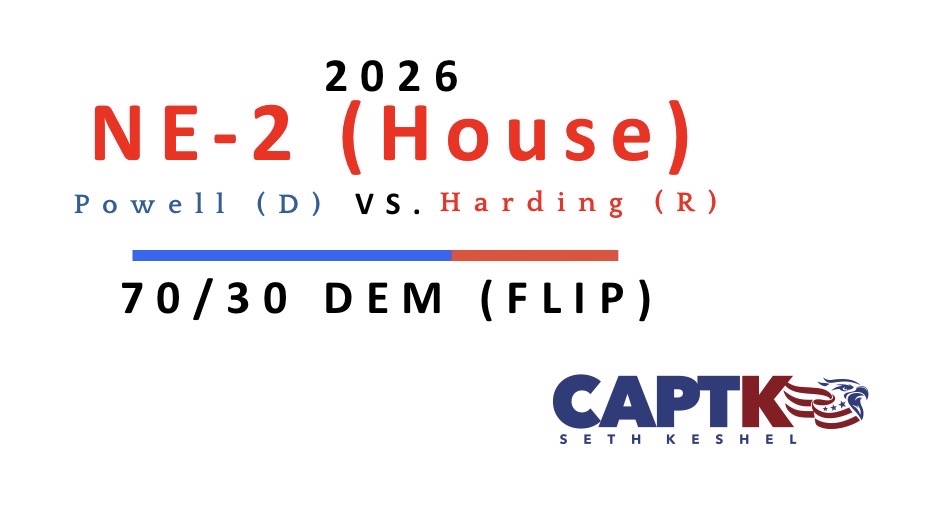
Brinker Harding (Republican) emerged from the GOP primary as the nominee looking to replace Don Bacon, who is retiring from Congress after five terms. Harding has spent most of the last decade as a member of the Omaha City Council.
Denise Powell (Democrat) has never run for office before. Her campaign revolves around her radical feminism (she co-founded a PAC called “Women Who Run Nebraska”), supposed outsider appeal, and her promises to stick it to Trump.
II. District Geography
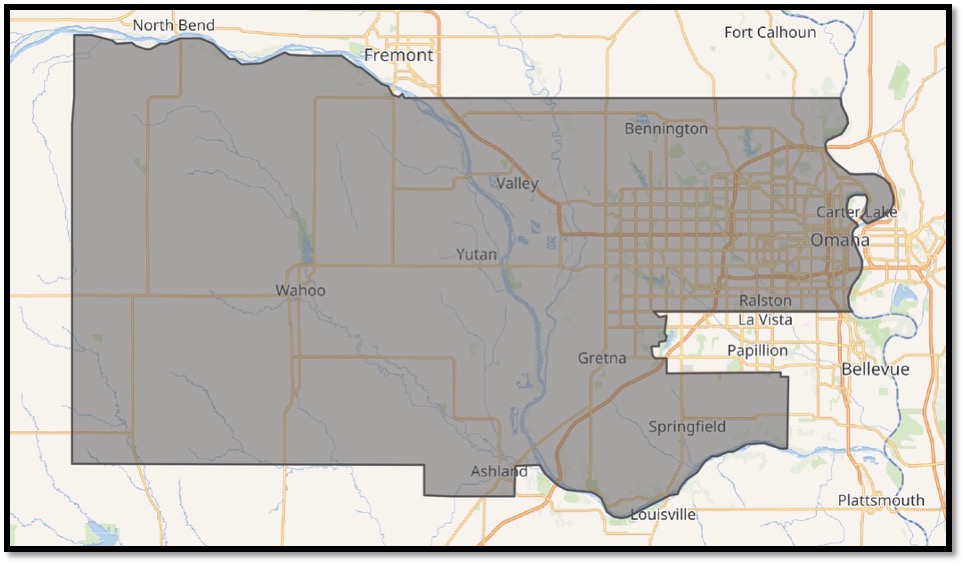
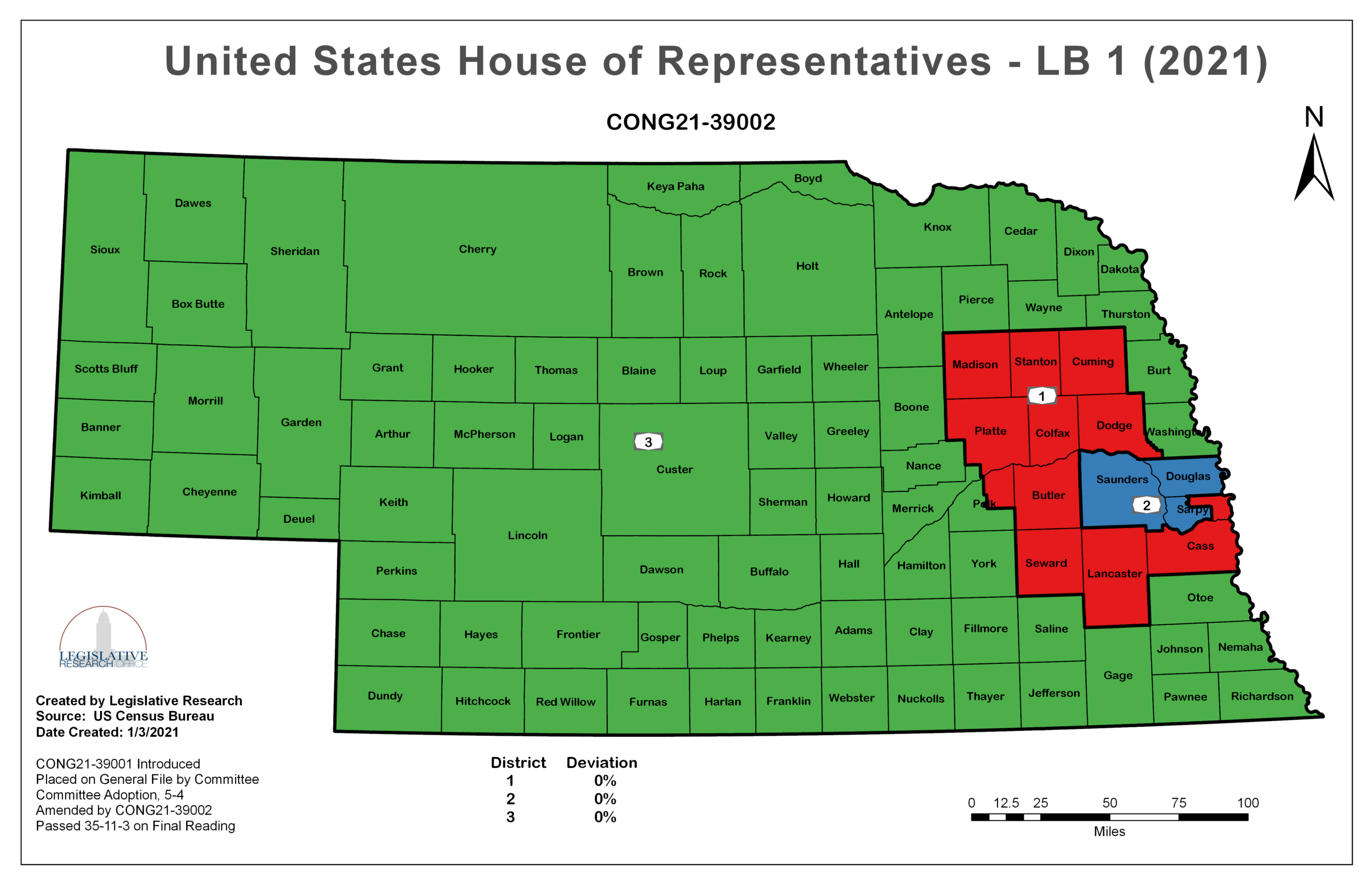
Nebraska’s 2nd Congressional District (NE-2) is a Republican Party catastrophe of its own making. President Trump carried the state, which has just three U.S. House districts, by 20.5%, yet lost the split electoral vote of NE-2 by 4.6%. The district consists of all of Douglas County (metro Omaha), a portion of Sarpy County, and all of Saunders County, which to the west of both. The idiotic Republican leadership in Nebraska’s unicameral legislature took the opportunity to redraw this seat ahead of the 2022 midterms, and instead of playing to win, added only a county (Saunders) that had less than 13,000 votes tallied in 2020 instead of shifting precincts around in Omaha.
Could they have figured out a creative way to ensure Republicans can cruise to victory in all three seats in a Trump +20 state? You tell me:
Sarpy is conservative, but becoming more suburbanized and losing margin. Saunders is super-MAGA, but small. Omaha, while not a monstrosity of a liberal city, is drifting leftward along with most major metros in America (including in the suburbs) and is reminding me a lot of KS-3, which Republicans lost in the 2018 wave.
Presidential Margins
2016 Trump +2.2%
2020 Biden +6.5%
2024 Harris +4.6%
Key Statistics
67.8% White, 12.8% Hispanic, 9.8% Black
97.9% Urban, 2.1% Rural
III. Market Assessment
Polymarket bettors, sniffing polls and presidential baselines, don’t think Brinker Harding has a chance.
IV. History
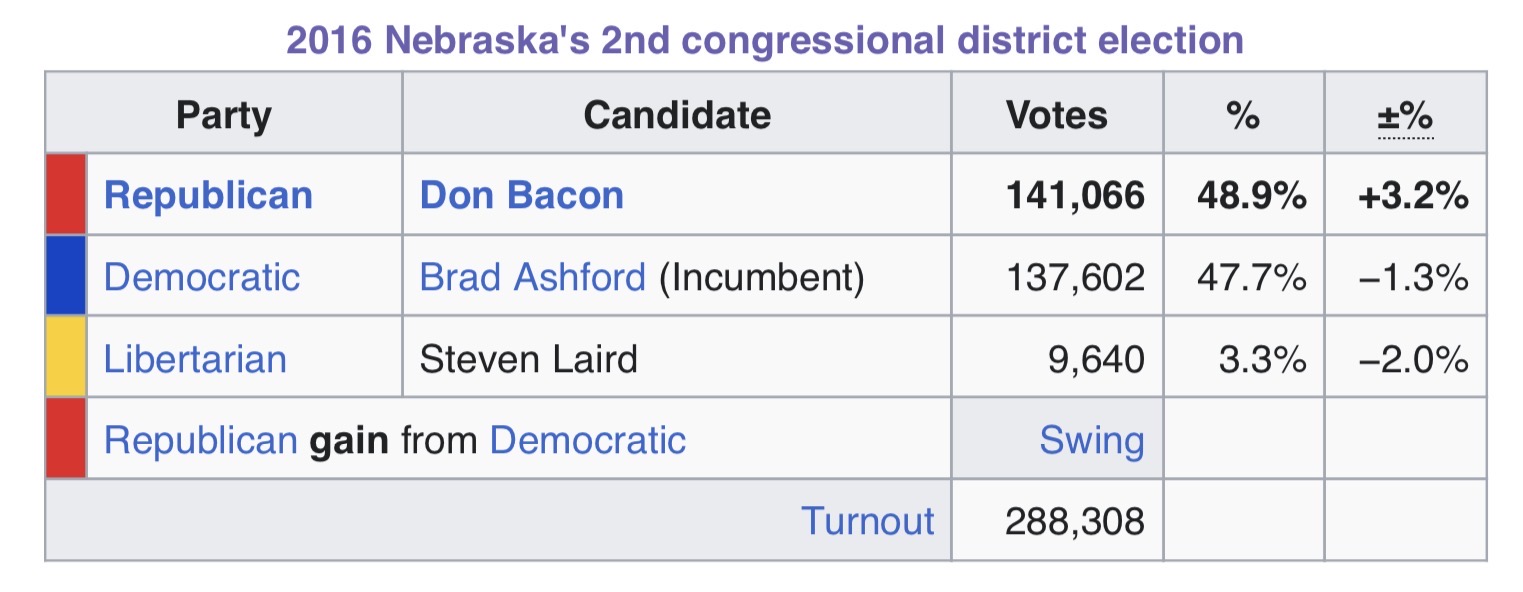
The district has represented Omaha since 1883; Republicans took the seat in 1994 and held it for 20 years, strangely losing it in 2014 (despite a red wave in which the GOP only lost one other seat) because Lee Terry blundered his way into a primary he barely won and lost the seat to Democrat Brad Ashford. Ashford won the seat with a 49% plurality thanks to a spoiler libertarian candidate exploiting the GOP feuding.
In 2016, retired Air Force Brigadier General Don Bacon won the Republican nomination and challenged Ashford for the seat. Bacon, an avowed Trump hater who now spends most of his days trashing Republicans on X, managed to knock off Ashford by an eyelash.
Bacon has managed to thread the needle four more times in an increasingly difficult district:
2018 +2.0%
2020 +4.6%
2022 +2.7%
2024 +1.9%
Five consecutive wins of the district for Bacon, and not a single one exceeding 4.6%. Trump outran Bacon’s 2016 margin by one point, so the above figures, with Bacon running 11.1% ahead of Trump in 2020 and 6.5% in 2024, truly demonstrate how much metro Omaha has drifted left in the past decade. Bacon did manage to win in 2018 by a higher margin than he posted in 2016, and almost directly in line with the 2016 presidential margin.
Bacon is now out, and leaves a difficult district for a GOP candidate with very little name recognition and a shattered coalition of voters.
V. Analysis of 2026 Primary Results
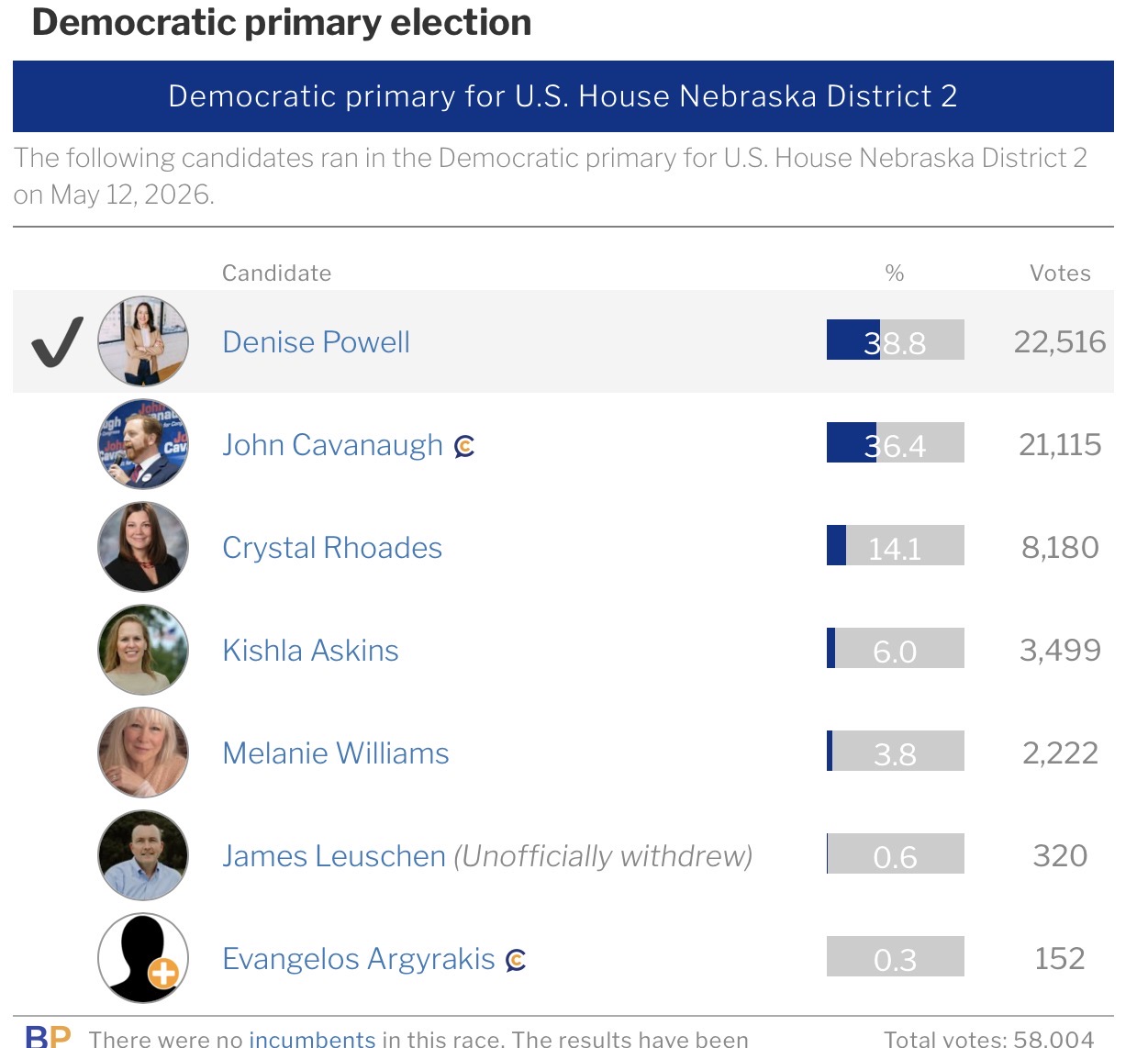
Harding ran unopposed in the Republican primary. Powell had to navigate a crowded field, and eventually prevailed over state legislator John Cavanaugh in a toxic battle:
Powell is the candidate who has to mend fences, but the rift isn’t as severe as can be observed in states that saw DSA-linked candidates battling establishment Democrats.
VI. Polls
I found one poll archived by The New York Times, and it shows Powell +4.
VII. Media Ratings
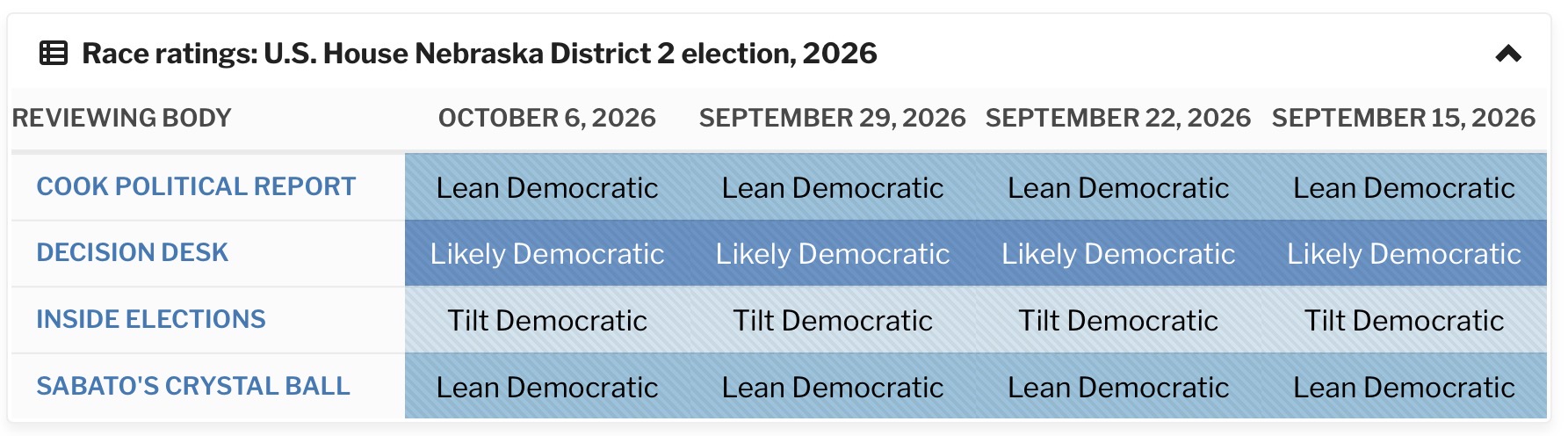
All four major reviewing bodies have the race favorable to Powell, ranging from “tilt” to “likely.” “Likely” probably overstates her advantage.
VIII. Party Registration
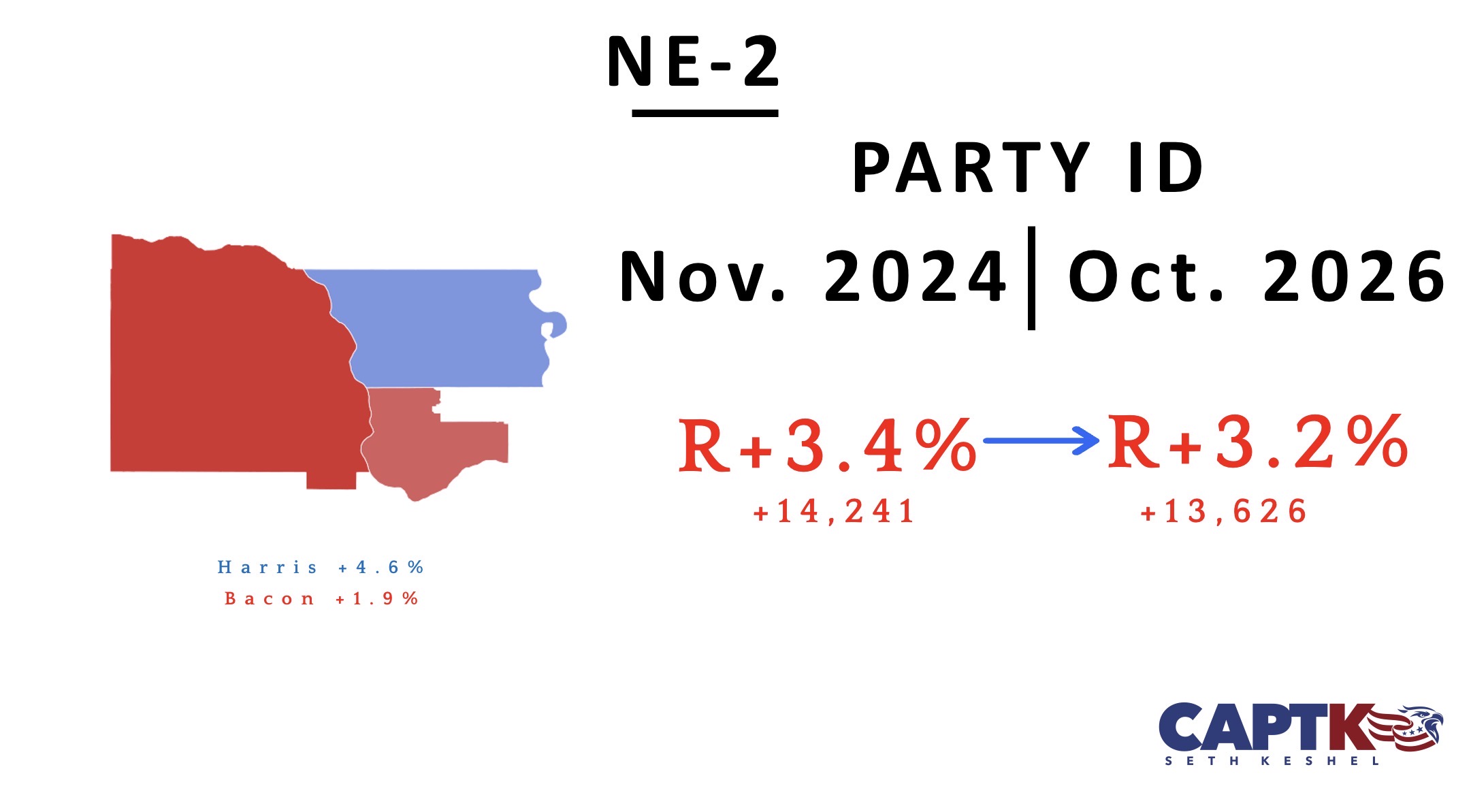
Since the 2024 election, NE-2 has inched slightly leftward – down 615 net registrations for Republicans and one-fifth of a point. This number generally tacks with the shifting of independent voters in presidential races, and the shift certainly doesn’t aid Harding’s cause.
IX. Election Considerations
Nebraska finally got with the program on Voter ID, and doesn’t operate Automatic Voter Registration or run mass mail-in elections. Manipulation is always possible with elections and has been identified in Nebraska, but this elections ranks low relative to others with regard to election integrity.
X. Summary and Election Estimate
Powell has three key factors in her favor:
• Money. Her figures compared to Harding’s at the end of June didn’t give her much of an advantage, but she isn’t being swamped by GOP funding like Democrat candidates have been in other seats. • The open seat and the suburban drift give her a big boost. Douglas County and, by extension, NE-2 remind me of KS-3, which Kevin Yoder lost to Sharice Davids in 2018. That seat hasn’t returned to the Republicans and gives no indication it will anytime soon. • Party registration figures reflect the continuing slide, and Harding lacks the big profile, status as a retired general, and party unity to make up the difference in a difficult year – especially given that Bacon never carried the seat by more than 4.6%.
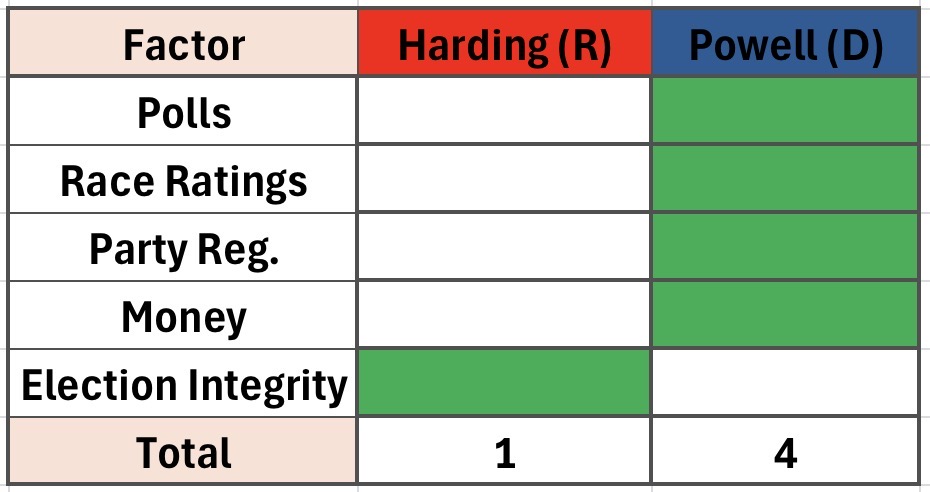
Still, we run the actual elections for a reason. Turnout matters, and if the district’s black vote (roughly one-tenth of the electorate) doesn’t turn out, the Hispanic vote runs right, and suburbanites don’t run left out of concern for the future of the Democrats (unlikely in NE-2), then Harding has a chance. I see the key factors like this:
Democrats are right to be bullish on a flip. While I don’t think NE-2 has a high ceiling for Democrats, Powell appears on the verge of taking the seat the Nebraska GOP refused to shore up.
Forecast for NE-2 House
Seth Keshel, MBA is a Senior Fellow at the Gold Institute for International Strategy and a retired Army Captain. He publishes Captain K’s Corner on Substack.
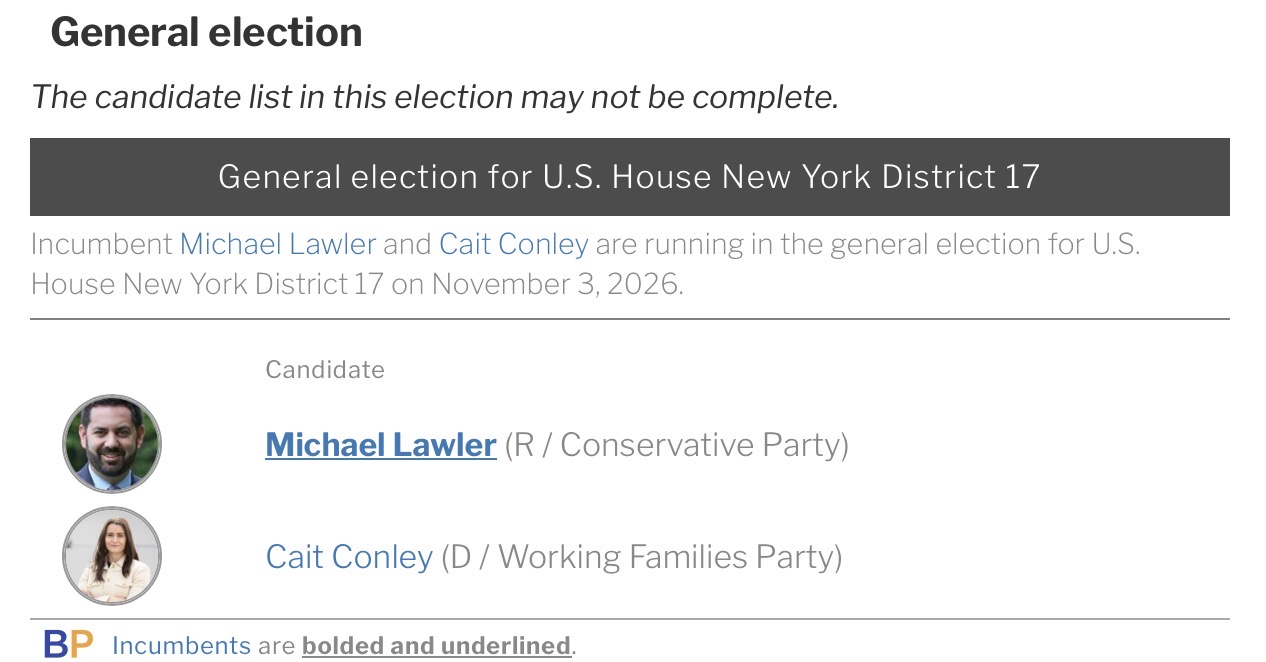
Mike Lawler (Republican) is seeking his third term and is one of just three Republicans in the House from a district President Trump lost in 2024. He has a proven record of running and winning in a tough district and is thought of as one of the more skilled politicians in Congress.
Cait Conley (Democrat) is new to campaigning, although she played a big role in CISA’s 2024 election monitoring operations. Prior to working at CISA, she had a long career as an Army officer.
II. District Geography
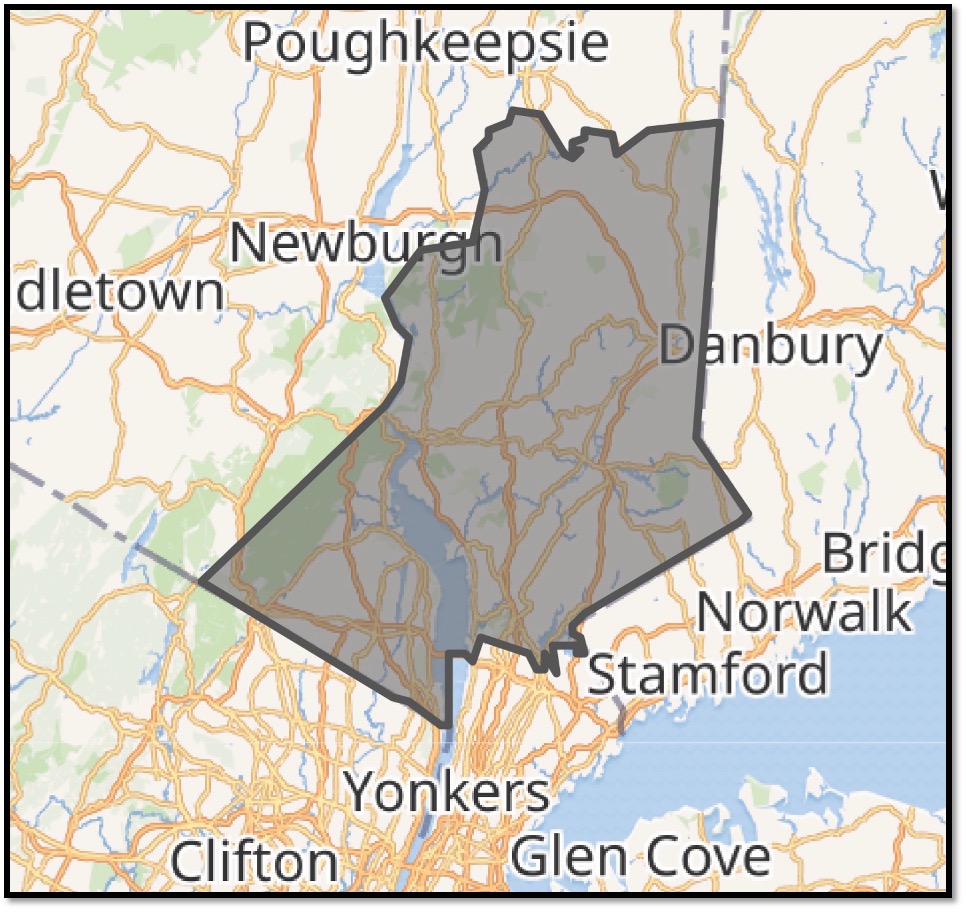
New York’s 17th Congressional District (NY-17) is located in the Hudson Valley not far north of New York City. It contains all of Rockland and Putnam Counties, as well as the extremely dense northern portion of Westchester County and a small portion of southern Dutchess County. Rockland is a competitive county, Putnam is very red, and Westchester County is a Democrat stronghold. The variance in these counties requires candidates to be flexible on ideology and fast to react to changes in public mood.
This district contains some of the most interesting electoral factoids I’ve encountered in my analysis of the 2026 races, which I will analyze in detail in the summary of this forecast. Until recently, it has been noticeably out of reach for President Trump. That changed in 2024 with his improvements with minorities, religious groups, and in the urban and suburban areas of the northeast.
Presidential Margins
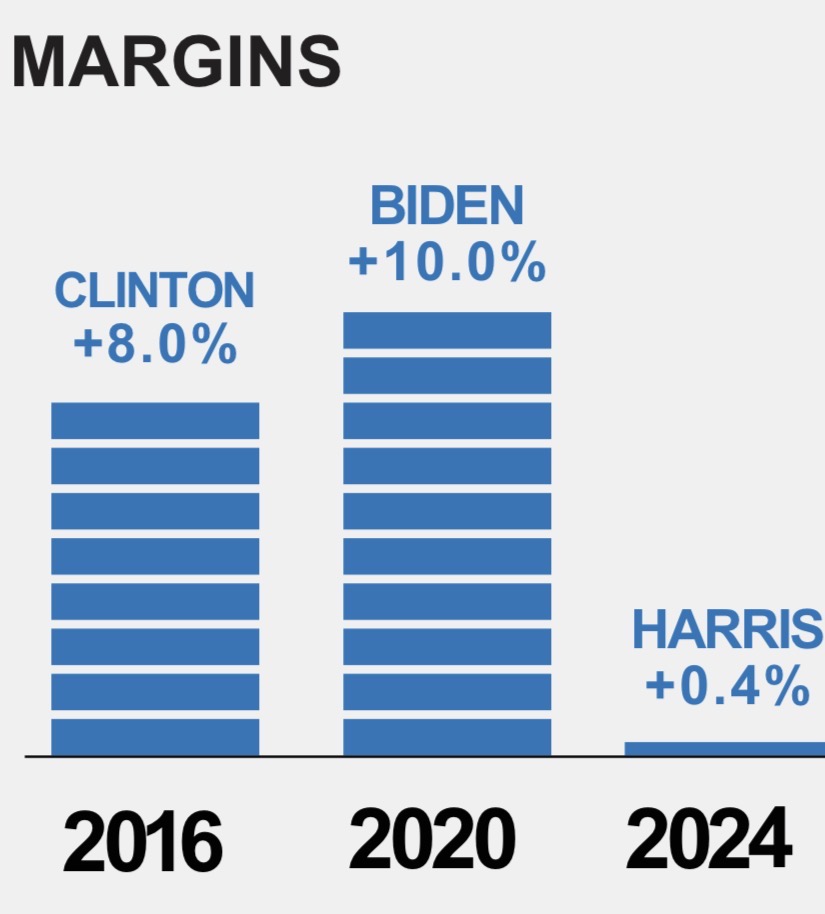
Harris wound up winning NY-17, but just barely at a +0.4% margin of victory. This marked a substantial improvement for Trump, who dropped it by 8.0% in 2016 and 10.0% in 2020, mail-in election and all. Similar shifts in margin in the 2024 presidential elections can be seen in adjacent spaces such as eastern Pennsylvania, throughout New Jersey, and in New York City itself. Lee Zeldin carried the district by four points in his 2022 gubernatorial bid.
Key Statistics
64.4% White, 19.9% Hispanic, 7.1% Black, 5.0% Asian
98.4% Urban, 1.6% Rural
III. Market Assessment
Conley, like most Democrats in decisive races, is favored on Polymarket – but not by a lot. That is an indicator of the competitive nature of this seat and Lawler’s quality as a candidate.
IV. History
Here in the beginning of the 21st century, NY-17 has remained consistently defined, with only slight variations. In elections held from 2002 through 2010, the seat includes parts of the Bronx, Rockland County, and Westchester County. From 2012 through 2020, races covered Rockland and a larger portion of Westchester. Democrats Eliot Engel, Nita Lowey, and Mondaire Jones held the seat.
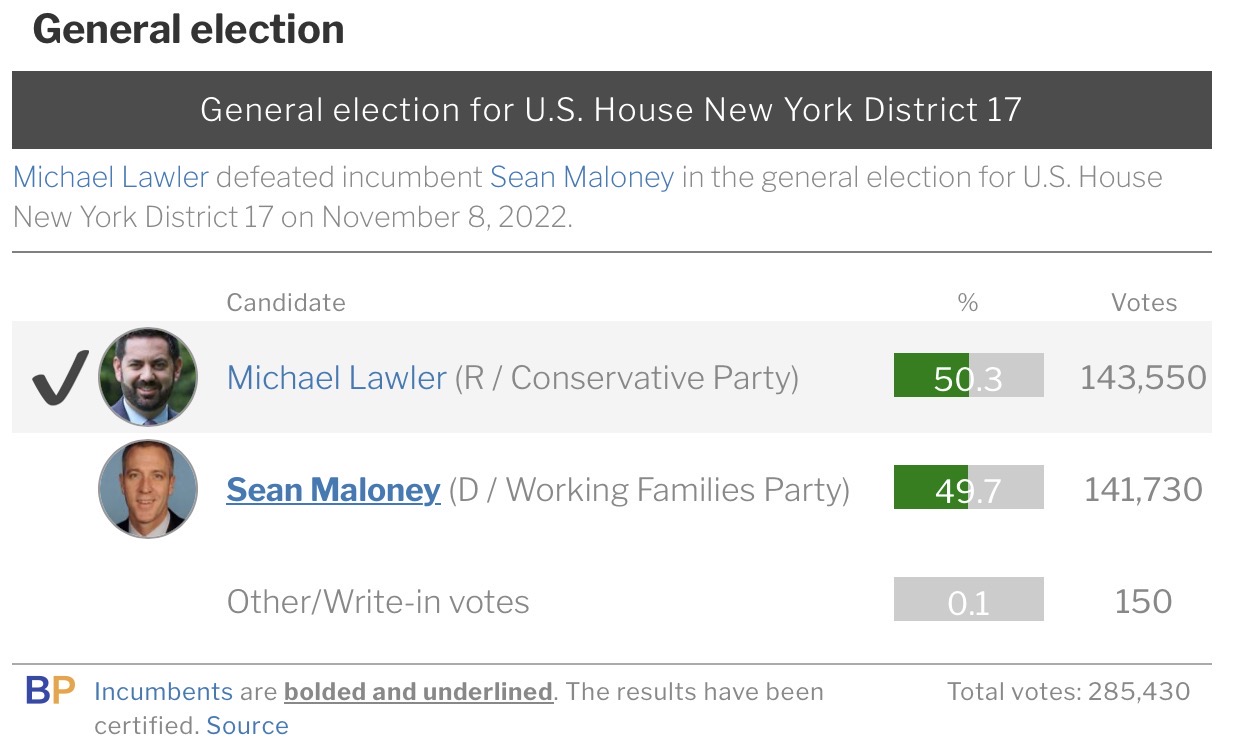
As soon as the seat was redrawn to add Putnam County and the small piece of Dutchess, Mike Lawler won the seat. Here is his razor close result from 2022:
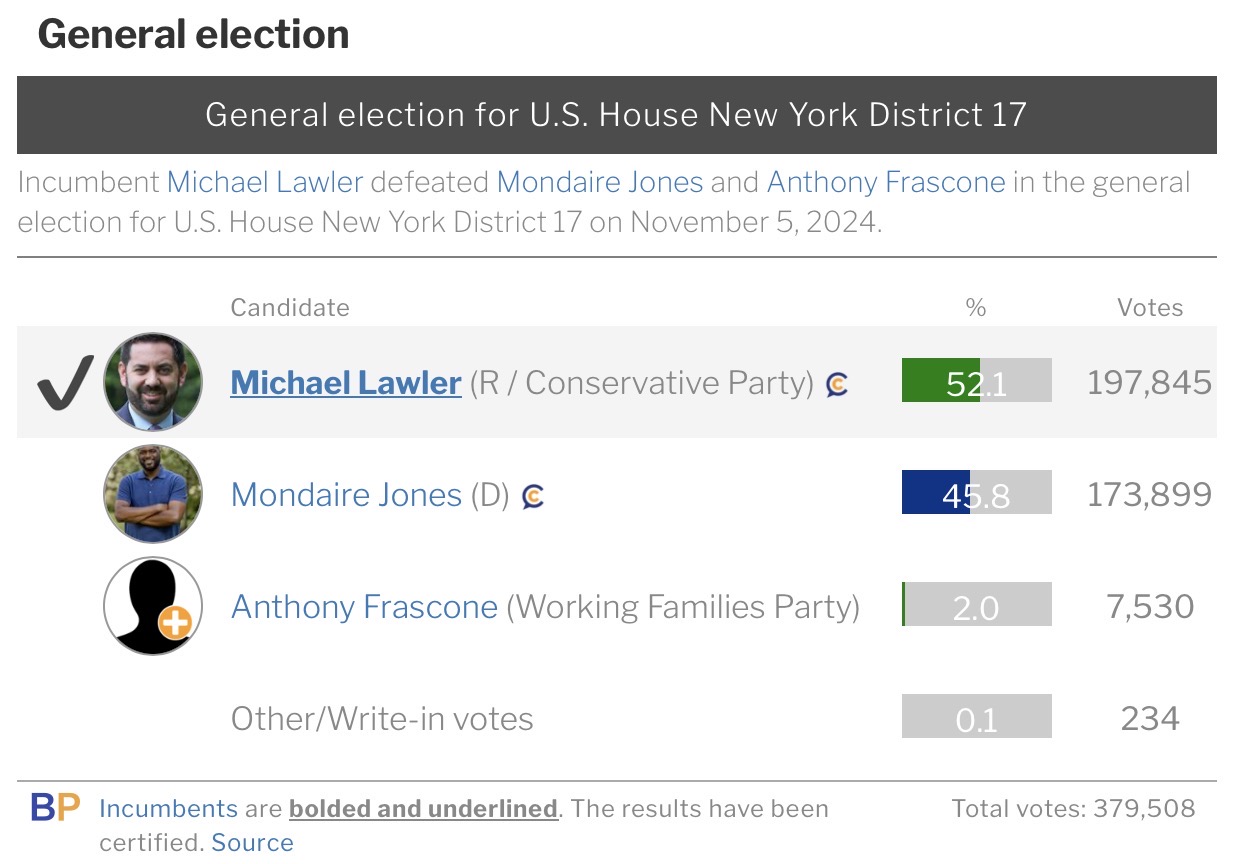
Impressively, running for reelection in a district Biden had carried by 10 points just four years earlier, Lawler put some serious distance between himself and Mondaire Jones, who had held the seat in a previous form but lost the nomination to face Lawler in 2022.
V. Analysis of 2026 Primary Results
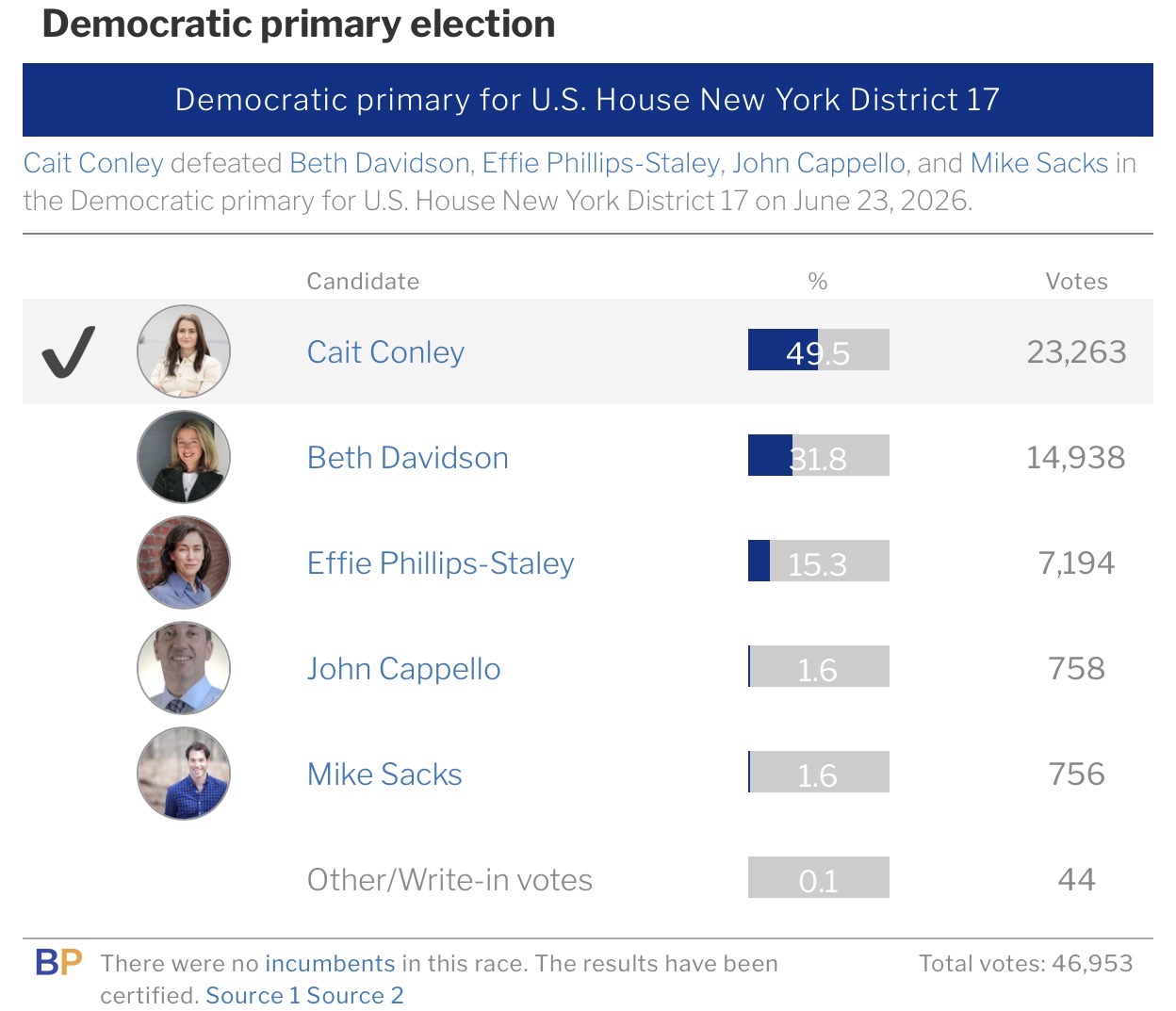
Lawler faced no primary challenge; Conley did, and won the election with just short of a majority:
There is no evidence the rest of the field that participated in the Democrat primary poses a risk to the General Election, as all have gotten behind the Conley campaign.
VI. Polls
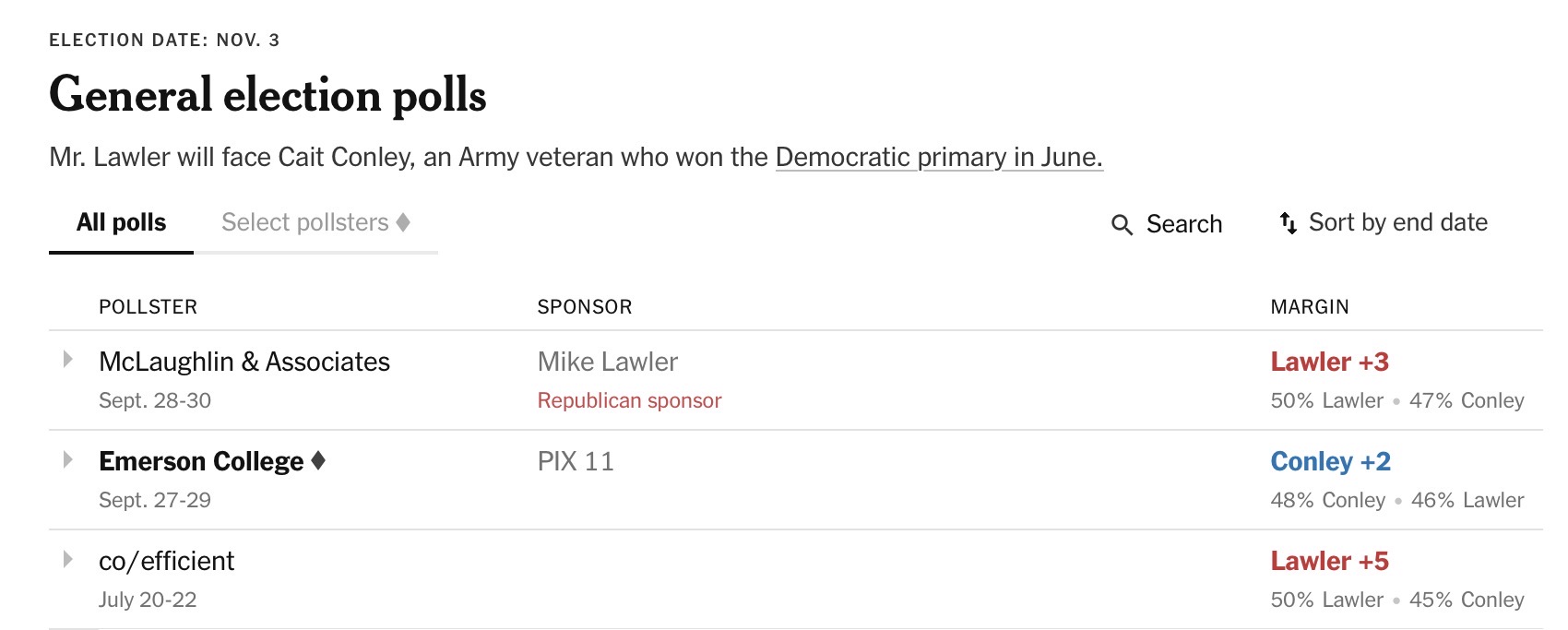
Polling data from The New York Times:
Tossing the 5-point outlier (pro-Lawler), we have polling suggesting a dead heat/statistical tie. Enough for me to buy that this is a close race without a clear favorite.
VII. Media Ratings
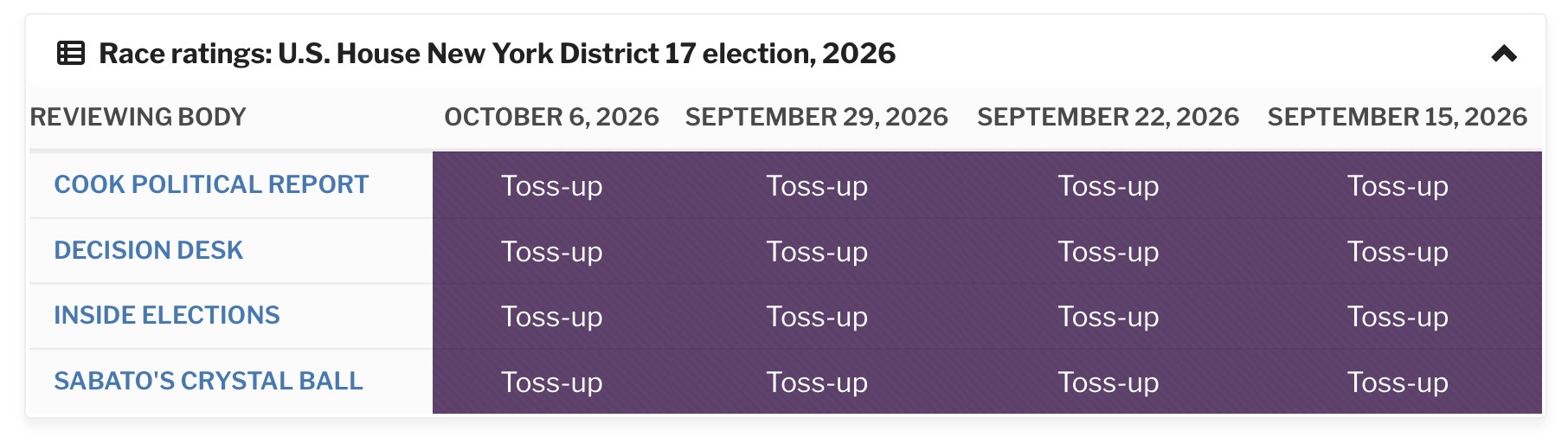
All major reviewing bodies lack the fortitude to make a call on this race as it stands. A positive sign for Lawler in a fundamentally tough district.
VIII. Party Registration
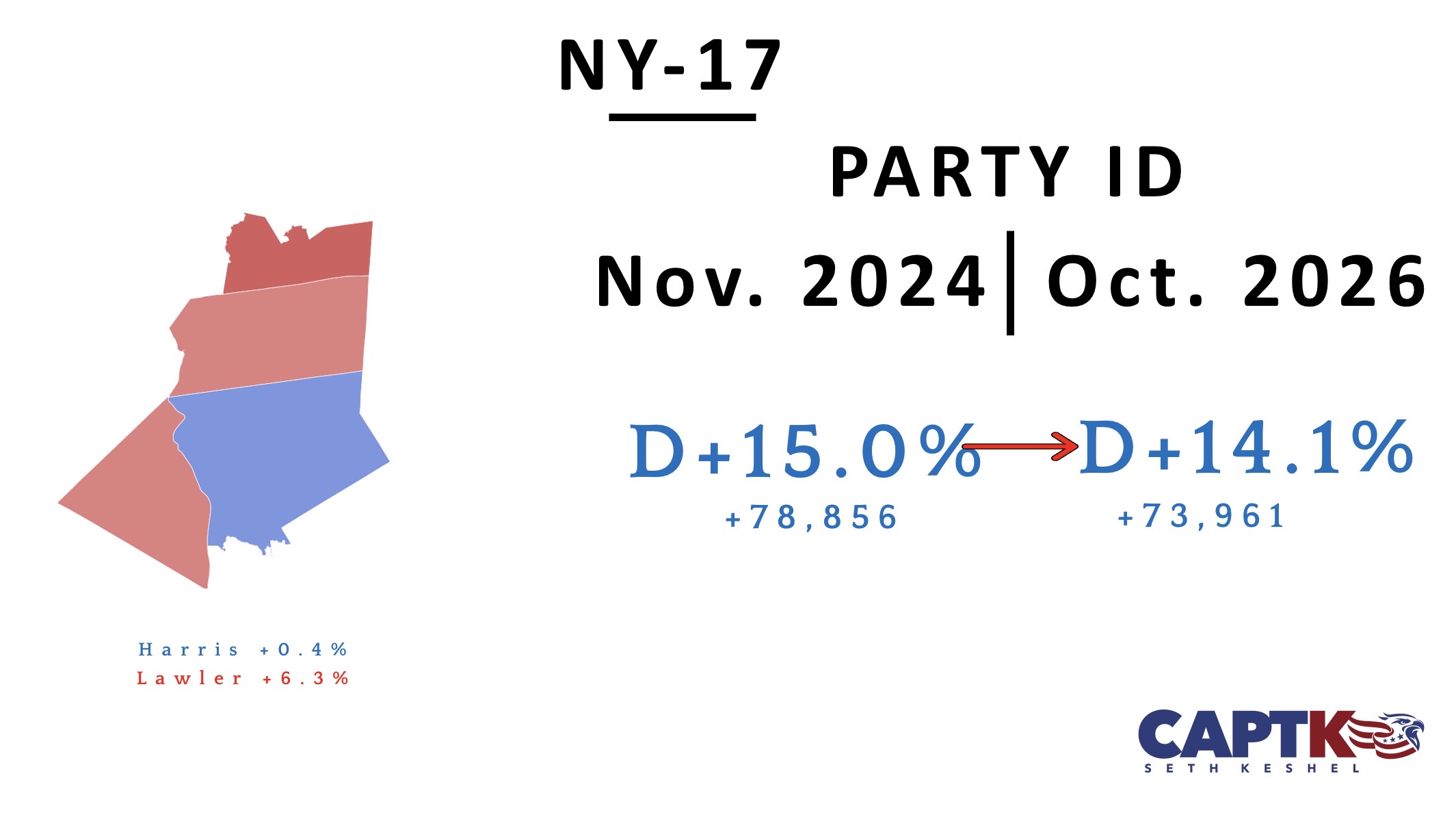
New York hasn’t updated its voter registration data in a while, but things are moving the right direction for Lawler – unlike how the registration data are moving against Tom Kean in NJ-7.
While this isn’t enough (like in a presidential election) to form a concrete prediction, it is yet another data point suggesting NY-17 isn’t the automatic flip that blue wave advocates surmise it to be.
IX. Election Considerations
I reviewed New York’s 2024 election, which featured a sharp shift in favor of Trump everywhere, in December 2024, in New York – 2024 Election Compendium.
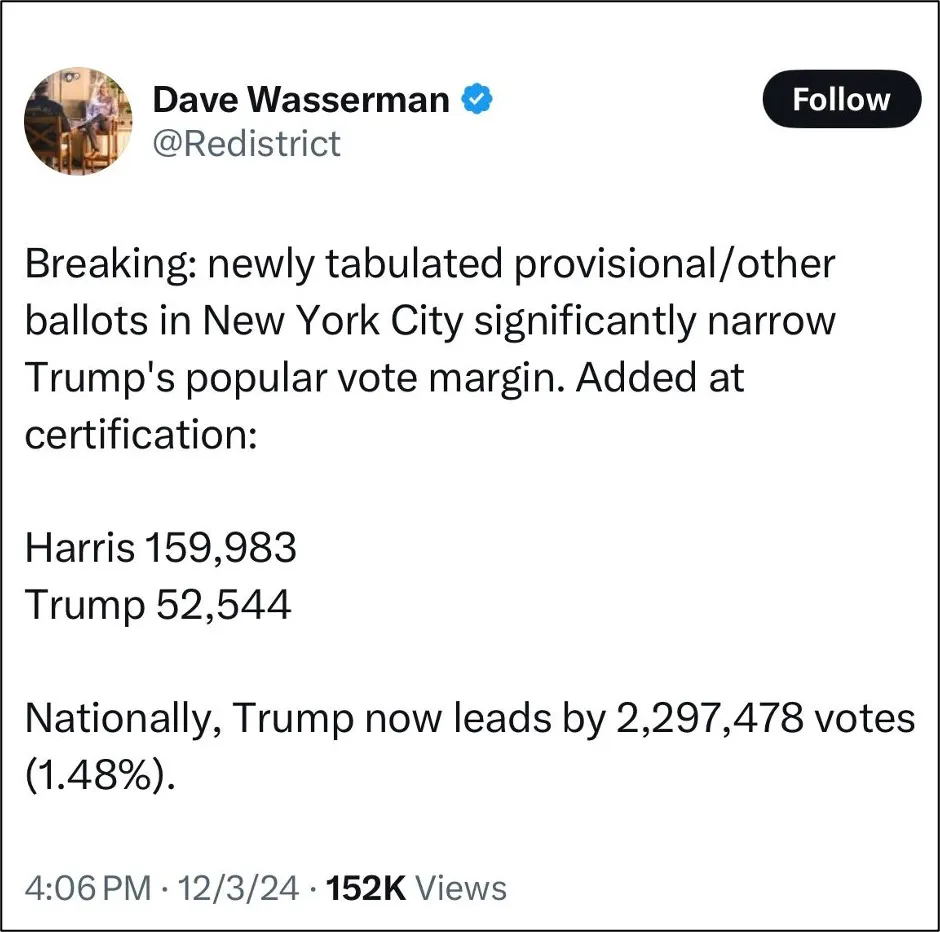
New York has a mixed bag of election laws. They do have Automatic Voter Registration, and also don’t require Voter ID, but the biggest threat to statewide election integrity has to do with transparency. On December 3, 2024, nearly a full month after Election Day, New York tabulated a massive ballot drop that went like this:
That drop had Harris with over three-quarters of the vote, a margin higher than she obtained overall within New York City’s five boroughs. Needless to say, with this sort of leeway, population dense areas have extra power to inflict maximum damage in the event of a close race. Think Westchester County in the battle for NY-17.
X. Summary and Election Estimate
Lawler’s methodology for carrying the district is simple. Knock it out of the park in the red turf present in Rockland, Putnam, and Dutchess Counties, and hold the line in Westchester. Lawler lost the 273 precincts of Westchester County that are part of NY-17 by 12 points (approximately 55% to 43%). Trump lost them by 20.3% (59.9% to 39.6%). Despite the lopsided margin, Trump improved in the Westchester portion by 7.4% over 2020.
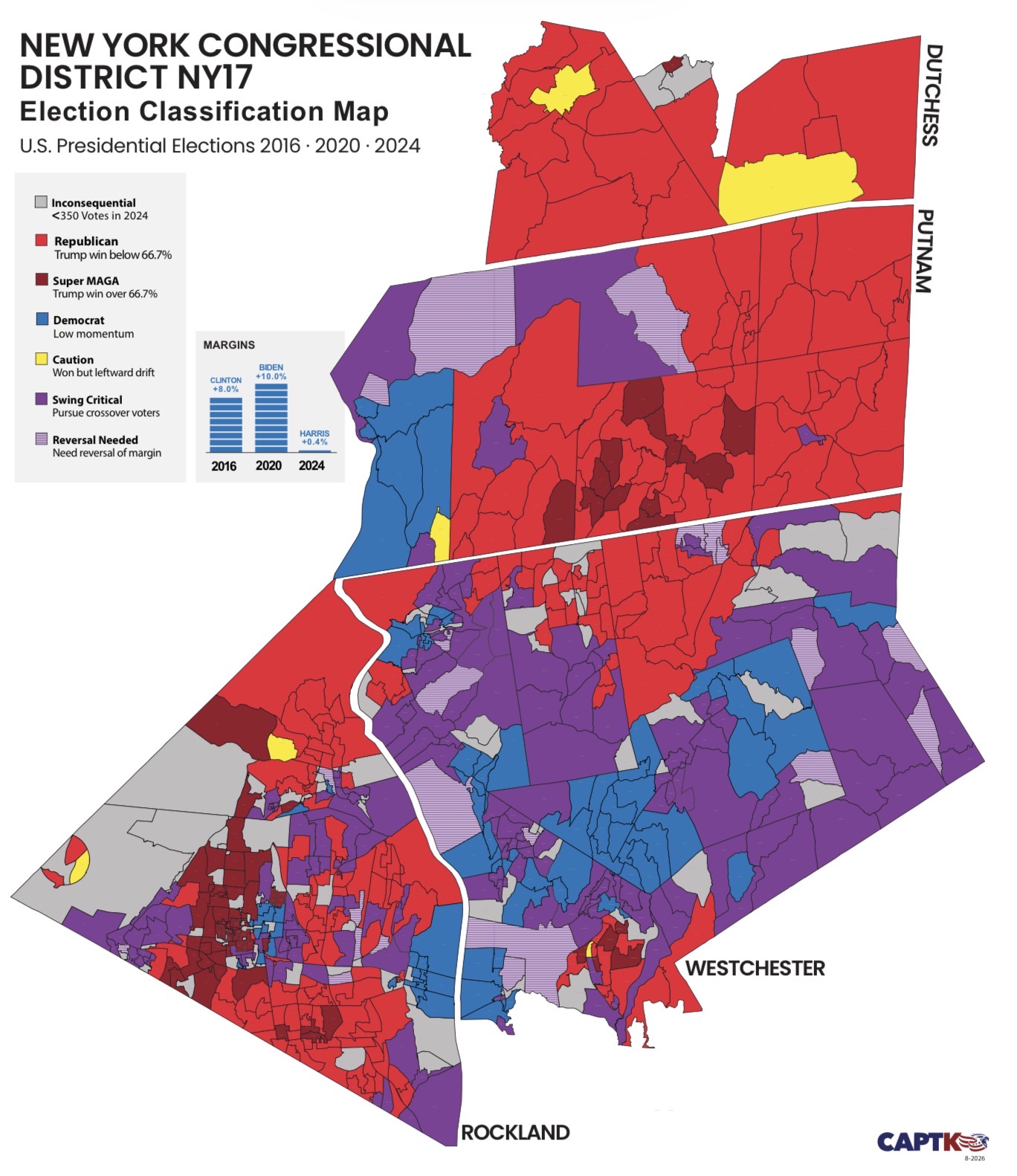
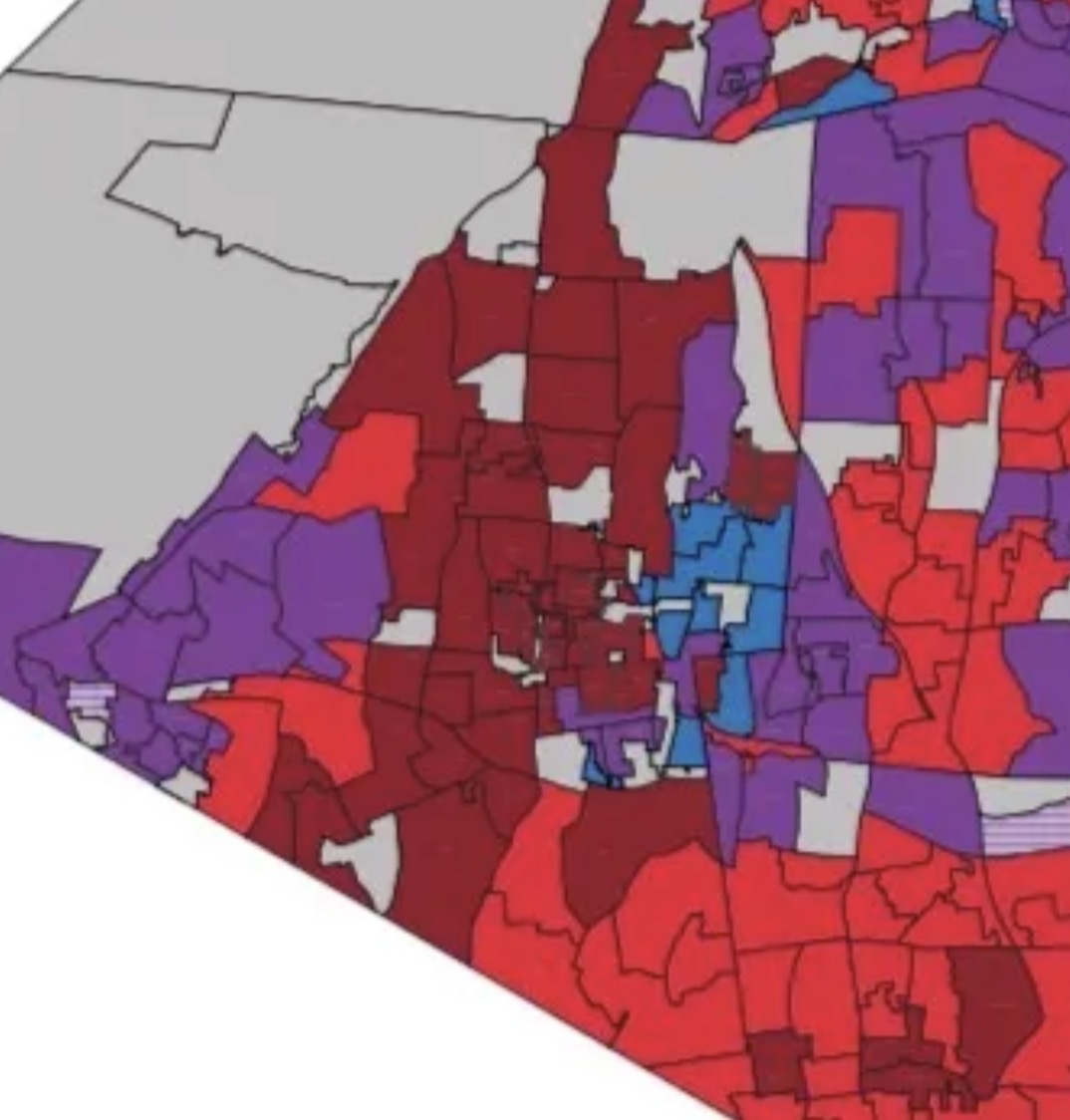
Captain K Proprietary Mapping of NY-17
What most don’t understand about this district is that it possesses the most overwhelmingly MAGA vote in the United States – even more crimson-shaded than the reddest areas of the Texas Panhandle or the most rural areas of Wyoming or Idaho. Let’s take a closer look at the crimson precincts in the heart of Rockland County:
By my count, there are 11 precincts in the Ramapo area in which Trump won over 95% of 500 or more votes (28 total precincts with Trump at over 95% of the vote). Here’s one example:
Trump had a similar margin there, and in the others, in 2020, but in 2016, the same precinct looked like this:
Trump 42 Clinton 657 Other 1 Margin – Clinton +87.9%
By now, I hope you understand why it is you subscribe to Captain K’s Corner – because you won’t find this level of detail anywhere else. Here’s why this is important to 2026:
Lawler is going to own this vote (and he won it by almost identical margins to Trump’s in 2024). He and Speaker Mike Johnson have been all over those precincts and courting the Orthodox/Hasidic Jewish bloc vote. Unlike the scattered voters of the remaining areas of NY-17, this group will absolutely vote, and they will vote for Lawler. The purpose of me pointing this out is not to advocate for any position in the ongoing debates over Zionism; it is to simply tell you that the people who provide the boost for Lawler are almost certainly to discern the emergence of the DSA faction of the Democrat Party as a clear and present threat to their political worldview, and side en masse with Lawler. Trump’s margin in those 28 precincts in which he got over 95 percent of the vote came out to this:
Trump 13,217 Harris 176 Other 30 Margin – Trump +97.2%
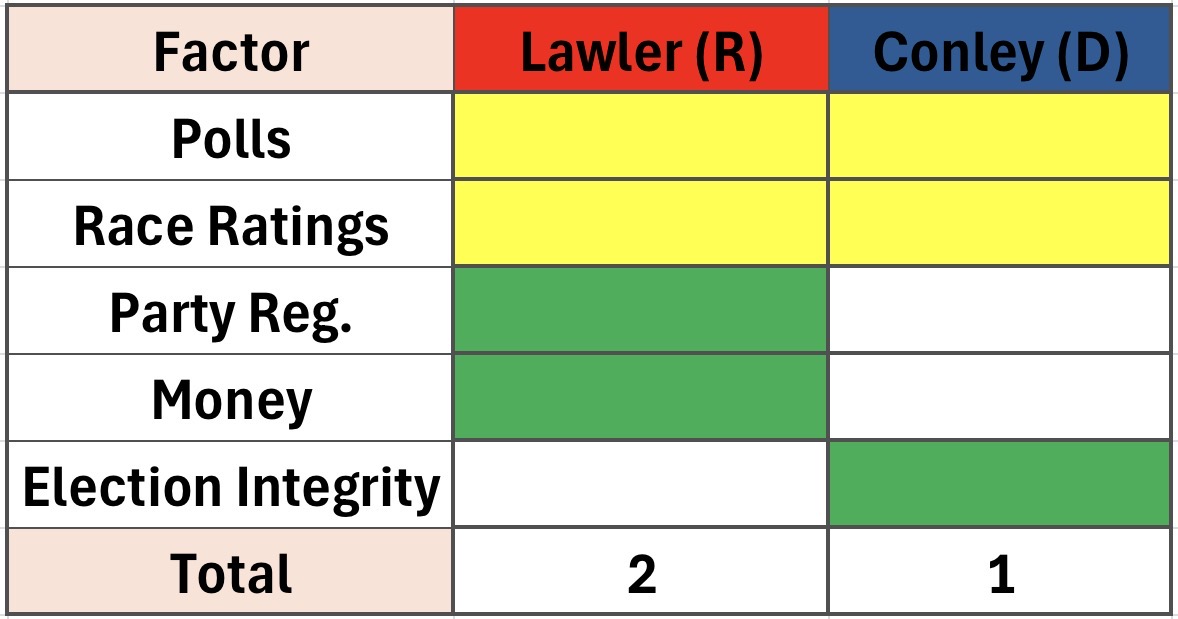
Lawler will then take those margins and do the Susan Collins routine to prevent getting blown out in Westchester, and put himself in position to hold his seat. I see the key factors of the race like this:
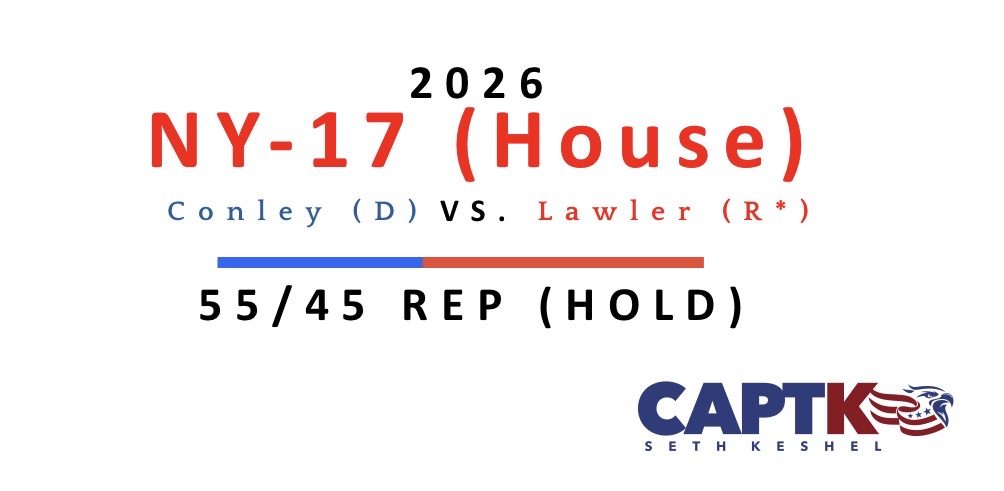
With Lawler’s resilience in Westchester County and strategic efforts to secure the Orthodox vote (which will vote in large numbers and as directed by their rabbis), I consider him the favorite in this race, even if only by a hair:
I think Westchester will swing, but I also think the turnout of enthusiastic Trump/Lawler supporters in Rockland County will balance this impact; He won’t win the race by 6 points, but he has some margin to give and Conley is the candidate lacking a major bloc vote. She can definitely win the race, but has serious structural challenges to account for.
Seth Keshel, MBA is a Senior Fellow at the Gold Institute for International Strategy and a retired Army Captain. He publishes Captain K’s Corner on Substack.