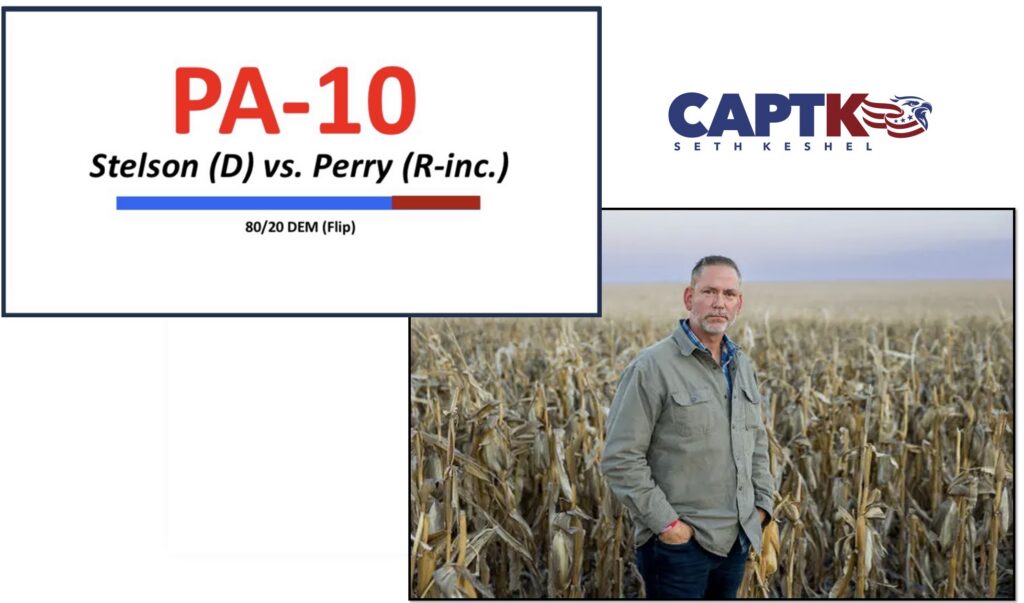
Recently, panic has arisen over perceived Democrat momentum in the Pennsylvania voter registration battle. I’m here to help explain it all.
Author’s Note: Today’s article is written in memory of my father, Lt. Colonel (U.S. Army, Retired) Donald Keshel, who left this life on September 7, 2010.
“10 percent of the people lead the way. 90 percent are just along for the ride.”
Catherine the Great, Empress of the Russian Empire in the 18th century, had a military advisor named Grigory Potemkin. His name is associated with the modern term “Potemkin village,” which is used to describe an artificial or deceptive display used to hide a reality. Legend has it that Potemkin built fake settlements with fake happy people in newly acquired territories to fool Catherine into believing she had acquired something worthwhile and of value.
Today, I’m going to put on a mathematics class to make my case as to what an artificial voter registration operation looks like. I’m not saying such an operation is patently illegal, but it’s also not what I would call organic and necessarily predictive of future outcomes. Allow me to use my book, The American War on Election Corruption, to illustrate my first point about just how far Republicans have come in Pennsylvania, now America’s most important political battleground:
Things used to be really bad in Pennsylvania. The Democrat high point in the past half-century came in 2008, when there were 1.236 million more Democrats than Republicans (D+14.1% by party registration) in the Keystone State. That was up by over 650,000 registrations from 2004, when there was a tight race for electoral votes between Bush and Kerry, and it projected a huge leftward lurch. The outcome was Obama +10.3%, the largest Democrat presidential win in Pennsylvania since Lyndon B. Johnson’s 1964 national landslide.
You can see that in 2012, Republicans had made up ground by virtue of Democrats losing even more registrants than they did, and the outcome was predictive. Romney only lost by roughly half of what McCain did in what amounts to a race to the bottom. The white working-class had abandoned Obama, and cities weren’t into him as much as they had been in 2008. The Trump revolution really lit the barn on fire for Pennsylvania Democrats:
The poll-obsessed still ignore party registration, at their own peril. When Trump won Pennsylvania by 1.7% in 2024, Democrats’ registration lead was down to just 286,283 total (D+3.1%), and 131,693 on the active voter roll (D+1.6%). You can also see the ill-fated 2020 election in there, which should have been a slam dunk for Trump if not for the fundamental overhaul in how the state votes occurring in 2019 (no-excuse mail-in balloting). This may be a shameless pitch, but you’ll really get a lot out of reading the book. It contains an entire 2004 through 2024 breakdown of these figures in Pennsylvania and why the bridge collapsed in 2020.
All of this is to say: Democrats finally get it, and know their demise has been foretold through their collapse of voter registration advantage.
They figured this out about a year ago, and now are spending big money to reverse the trend everyone is now watching out for. Now I’ll show you why I think it’s 100% Potemkin:
After Trump won the 2024 election, along with Dave McCormick down ballot for the U.S. Senate in a real shocker, Republicans spent another year piling on voter registration wins. This began to change around November of last year.
From the October 2025 report, a high point for the GOP:
Pennsylvania had moved nearly 118,000 right from Trump’s victory, giving Democrats a total lead of under 1.9%. I started tracking active registrations in February 2026, with Dems leading by 173,298 (and 42,877 active) and now here in September, this is where things stand:
Since October 2025, Democrats have recouped their post-2024 election losses by 43,669 net registrations, and they are now doing it by the thousands each week. July voter registration maintenance set them back in the active registrations, but they kept building the overall lead, which tells me they are adding new voters to the rolls and have less control over who gets deactivated.
Now, let’s compare with North Carolina, which has a rough population estimate of 11.2 million compared to Pennsylvania’s 13.1 million. Within a decade, these states will probably be the same size. I consider them comparable:
Democrats had the overall lead in registrations (but not in active) in October 2025, and by 9,968. Now, Republicans hold the lead:
While Democrats have clawed back 43,669 of their losses in 11 months, Republicans have flipped the state, moving more than 19,000 net registrations in the total roll. Just like Pennsylvania, however, these gains have begun to stall out and reverse. Here are the Democrats’ North Carolina gains since they last lost a month:
June: D+482 Total, D+2,206 Active
July: D+136 Total, D+3,611 Active
August: D+902 Total, D+1,058 Active
The GOP high point was +10,941. In the past three months, here is the total damage:
D+1,520 total, D+6,875
Notice that in August the ratio between total and active is roughly 1:1. That suggests to me that in June and July, Democrats spent a lot of time reactivating voters to go vote in primaries. Their gains in the active roll far surpass their overall gains in June and July, which amount to essentially statistical noise for a state that size and are aided by it being a GOP president’s midterm.
Now, how did the last three months in Pennsylvania go?
June: D+6,962 Total, R+2,197 Active
July: D+7,079 Total, R+34,722 Active
August: D+5,729 Total, D+6,911 Active
Total: D+19,770 Total, R+30,008 total
Republicans gained in the active roll in Pennsylvania twice in the past three months because of voter registration maintenance after the May primaries. Democrats have a very consistent average gain of total voter registration post-primary of 6,590 net.
So, average total roll registration gain in North Carolina is D+507. In Pennsylvania, it’s thirteen times that amount despite the state only being 17 percent more populated.
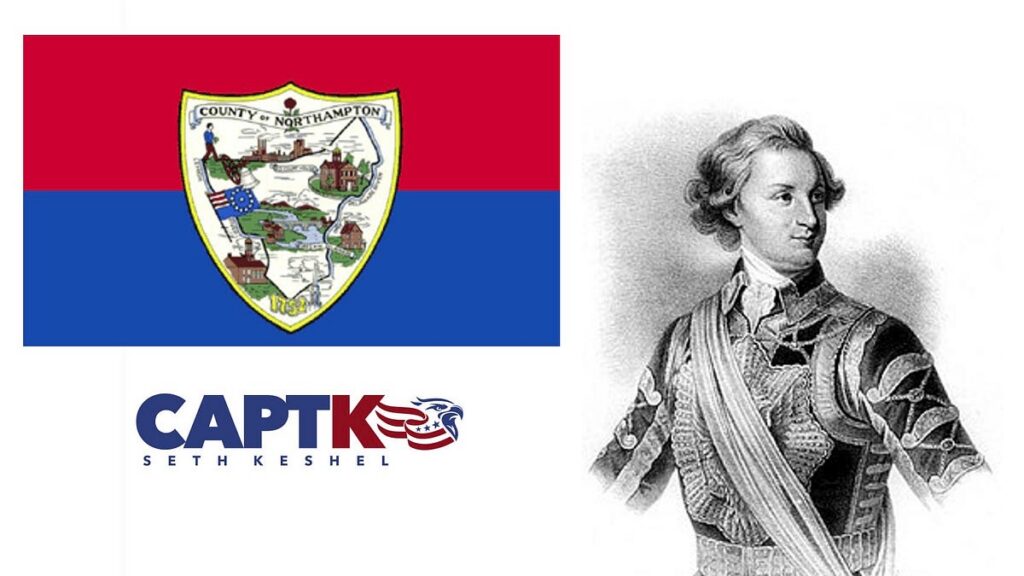
This is a voter registration funded operation meant to conceal Democrats’ losses in the Midwest, of which Pennsylvania is the only meaningful battleground that tracks party registration. Most importantly, this operation is an entirely urban creation. Here is how voter registration has moved in three critical blue collar bellwether counties, Erie, Monroe, and Northampton, since the GOP high point of October 2025:
Erie County
October 2025: D+5,652 total, D+4,232 active
September 2026: D+5,638 total, D+3,415 active
Net: R+14 total, R+817 active
Monroe County
October 2025: D+5,131 total, D+3,687 active
September 2026: D+5,264 total, D+2,672 active
Net: D+133 total, R+1,015 active
Northampton County
October 2025: D+8,321 total, D+5,721 active
September 2026: D+9,301 total, D+4,973 active
Net: D+980 total, R+748 active
Erie has been a GOP gain since the high point in both total and active registrations. Monroe has been essentially a push in the total voter roll, with a solid active GOP gain, and Northampton County, the largest of the three, has had a modest Democrat total roll gain, but has likewise moved more Republican thanks to voter roll maintenance.
This is decidedly not a blue collar coalition shift back to the Democrats.
Now, how have Philadelphia, Allegheny, and Montgomery Counties moved since the GOP high point of October 2025?
Philadelphia County
October 2025: D+635,642 total, D+573,127 active
September 2026: D+647,310 total, D+538,793 active
Net: D+11,668 total, R+34,334 active
Allegheny County
October 2025: D+235,479 total, D+212,621 active
September 2026: D+240,466 total, D+206,055 active
Net: D+4,987 total, R+6,566 active
Montgomery County
October 2025: D+92,629 total, D+86,608 active
September 2026: D+97,926 total, D+87,813 active
Net: D+5,297 total, D+1,205 active
These three counties account for a net of almost exactly half of the overall statewide gain since October 2025 for Democrats. You can find the rest mostly in Chester, Delaware, Dauphin, and a few other counties in the southeast. The overwhelming trend is that while total roll gains suggest they are adding new registrations left and right, existing registrations are being cleaned out, and this process disproportionately harms Democrats. I’m sure a lot of you are shocked that getting rid of bad registrations helps the Republican Party.
Conclusion
Three key takeaways for you on Potemkin Pennsylvania:
A legitimate left-wing rebound in Pennsylvania would include significant gains in Erie, Monroe, and Northampton Counties. The GOP has gained in the active roll over the past year despite the Democrat overall rebound in those three counties, and has won Erie County outright (total and active).
Democrat gains are concentrated in urban areas, which are still lagging behind their 2024 election counts and, in most cases, more favorable to Republicans on the active voter roll when considering registration maintenance.
The volume of registrations in Pennsylvania compared to the trickle of Democrat gains in North Carolina suggests substantial money is being poured into Pennsylvania to “get the numbers up” so the Democrat extinction in the state isn’t so obvious.
The moral of the story for today? Details matter. John Fetterman gets it.
Seth Keshel, MBA is a Senior Fellow at the Gold Institute for International Strategy and a retired Army Captain. He publishes Captain K’s Corner on Substack.