In the News
This article was written by Pieter Bauwens and appeared in Doorbraak. ‘Socialisten hebben geen verstand van economie’.
Featuring Derk Jan Eppink, Distinguished Fellow (Honorary), Gold Institute for International Strategy
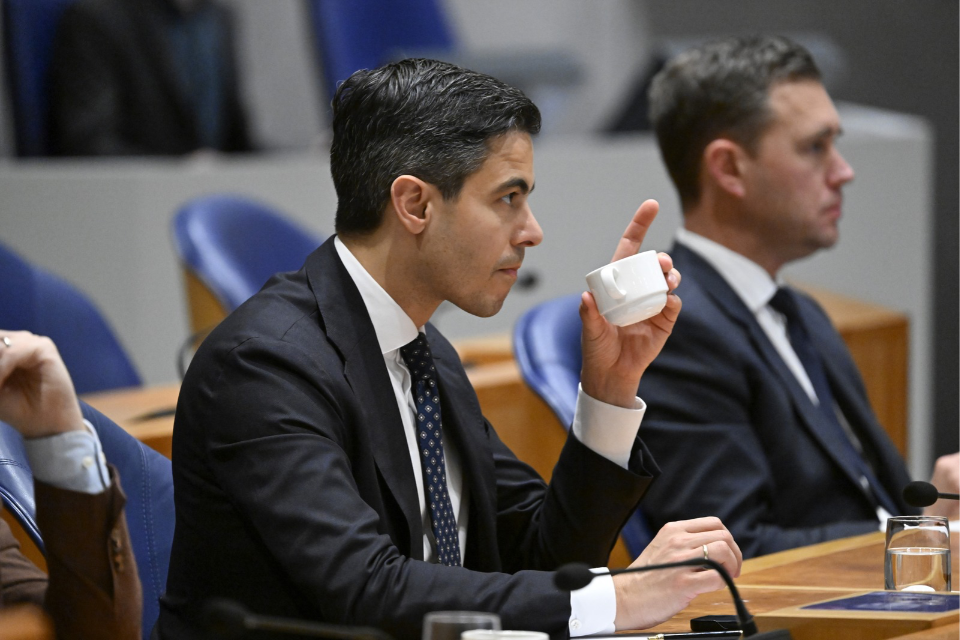
The Netherlands now also faces a government crisis over the budget. In the House of Representatives, the debate on the Dutch tax plan for 2027 dragged on into the evening on Thursday. Officially it was about a millionaires’ tax, but the real question is whether the Jetten cabinet will survive the week.
The minority government of D66, VVD and CDA holds 66 of the 150 seats. You read that correctly: that is not a majority. For every law it has to look for support from the opposition, on the left or on the right. This week it went looking for that support on the left. But two of the three partners did so behind the back of the third.
D66 and CDA negotiated late into Wednesday night with PRO, the merged party of GroenLinks and PvdA under Jesse Klaver, and with Volt. The result: the left supports the tax plan. In return, D66 and CDA support an amendment that shifts about one billion euros in taxes from labor to capital. The VVD was only told on Thursday morning.
Party leader and Deputy Prime Minister Dilan Yeşilgöz called it a bad deal and demanded a “fundamental reset” of the coalition. VVD parliamentary leader Ruben Brekelmans said during the debate that his party will vote against the entire tax plan if the amendment passes. He would not say what would happen after that. And to complete the chaos, a majority for the amendment is not certain, since parties such as the ChristenUnie and 50PLUS have not yet decided.
From Brussels to The Hague
Derk Jan Eppink is following the debate closely. In Flanders he is best known as a Member of the European Parliament for Lijst Dedecker from 2009 to 2014. Before that he was a journalist at NRC Handelsblad and De Standaard and worked for European Commissioners Frits Bolkestein and Siim Kallas.
In 2014 he was on the VVD list for the European elections. He later returned to the European Parliament for Forum voor Democratie. He then moved to JA21, for which he entered the House of Representatives in 2021, and he briefly sat in the BBB group. Today he writes columns, among others for Wynia’s Week. So he stands on the right side of the liberal family. In his view, The Hague has pursued “too left-wing a policy” since the years of Mark Rutte.
He compares the coalition of VVD, D66 and CDA to “a kind of marriage in threesome form,” in which “one partner has now been pushed aside.” “PRO has forced its way into the coalition through the back door,” says Eppink. For him, Klaver is the man behind the scenes. “He put this together.” CDA leader Henri Bontenbal, who in Eppink’s eyes always brandishes grand principles and morality, is said to have taken the idea to D66. “And of course they eagerly took it up.”
Houses and cafés
Who is actually a millionaire? For Eppink, that is the weakness of the political idea of taxing millionaires more. “Look at house prices. A great many people are millionaires.” But he is thinking above all of small business owners. “Dutch millionaires are not all Bill Gates types. A small business owner quickly has assets of more than a million, because he has a building and equipment. Even in something as simple as a café.” According to Eppink, a million is no longer nearly as much as it was fifty years ago. The image of the millionaires’ tax “divides” the coalition, and that is what Klaver wants.
He is hard on the ministers in the debate. Prime Minister Rob Jetten came to the House without his full cabinet. “The football team was left at home. Only the coach came.” Next to him sat Finance Minister Eelco Heinen, who followed the debate red in the face. “I think that man is finding the job of Finance Minister terribly disappointing.” His verdict on the whole debate: “A lot of fumbling about nothing.”
Monism or dualism
In the background lies the impossibility of governing with a minority government. A minority cabinet only works when there is real dualism: the government makes proposals, the House decides. “But there is really no dualism here. Here the old system still applies.” D66 and CDA invoke the freedom of the House, but expect from the VVD the discipline of a classic coalition partner. “You can’t pick whichever version suits you best right now. You have to choose one or the other.”
Eppink sees a generational problem in this. “In the Netherlands we have a political generation that has little understanding of politics.” By this he means the leadership: people without experience. He calls D66 “a party full of tricks and underhandedness.” The VVD, which in his view has already had to give up a great deal, is being “pushed against the wall.”
An old crocodile
Will the cabinet fall tonight? Eppink does not rule it out, but a fall could also come later. “The shelf life of this cabinet is very limited. Because the trust is gone.” He advises the VVD not to react impulsively. The party can vote against the millionaires’ tax and then let the others find a majority for the tax plan on their own. The right will not vote for it. The Netherlands could then be without a budget next year.
Even then, elections are not inevitable. The cabinet can offer its resignation and become a caretaker cabinet, followed by an attempt to patch things up. For that, someone “from the old box” is brought in, says Eppink (“you call that an old crocodile in Flanders, don’t you?”), to glue the pieces back together. “Some apologies, I won’t do it again, and then we try a restart.” A caretaker cabinet may only handle current business, but there does have to be a budget. “Otherwise you get elections without a budget.”
Also in Belgium
The Dutch drama sounds familiar in Wetstraat-land. The federal De Wever government is also struggling with its budget. Eppink sees the same cause. “The socialists have little understanding of economics. They think you can always print more money.” In both countries the government takes on more and more tasks, and every saving runs into left-wing vetoes. There is one difference: in Belgium the king still plays a role when things get stuck. “That is no longer the case in the Netherlands. Here they have to work it out themselves.”
Whether that will work tonight, nobody knows. What is certain is that the VVD feels deceived and that Klaver is helping to steer without a ministerial post. “But well,” says Eppink, “politics.”
Update, Friday morning. The tax plan was approved late on Thursday evening in the House of Representatives after all. After a roll-call vote it passed with 76 votes for and 74 against. In the end the Party for the Animals and DENK provided the votes needed for a majority. The VVD voted against, after D66 and CDA helped the PRO and Volt proposal for a millionaires’ tax to a majority.
Prime Minister Jetten called it “an unprecedented situation.” In his view, the millionaires’ tax does not conflict with the coalition agreement. VVD parliamentary leader Brekelmans spoke of a “sobering” result. He wants to discuss within his party how to proceed. Jetten is meeting his deputy prime ministers on Friday morning. The plan is not yet final. The parties that voted for the tax plan in the House are three seats short of a majority in the Senate. So Eppink’s assessment stands: the cabinet is still alive, but the trust is gone.
Read the full article at Doorbraak
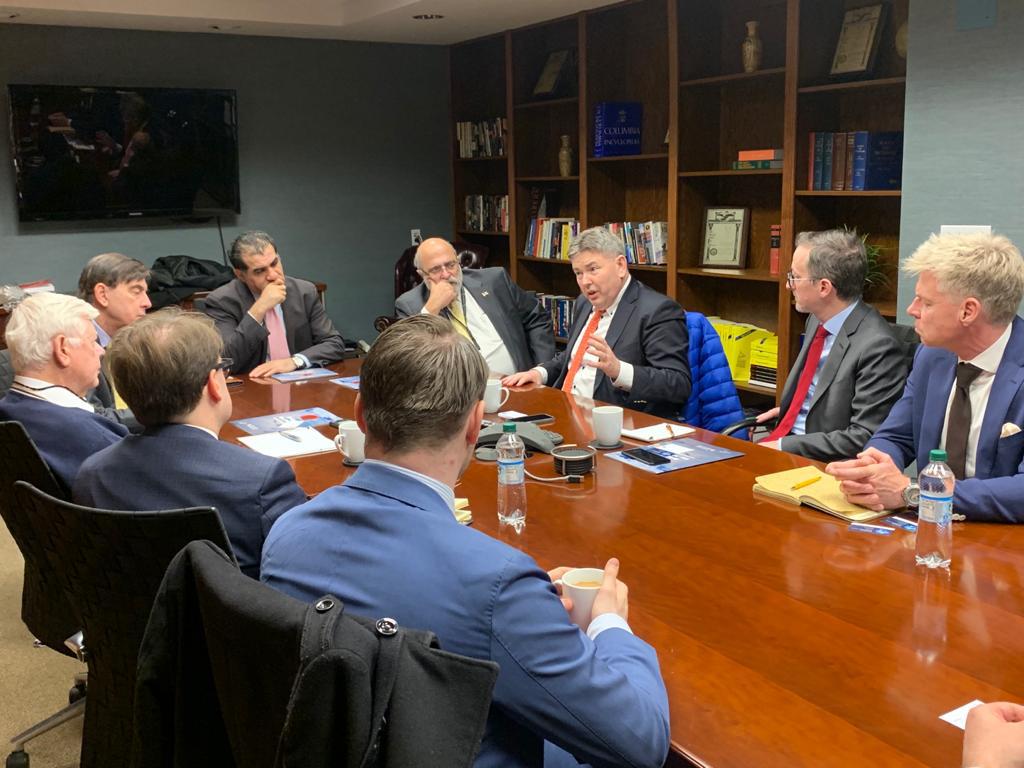
Derk Jan Eppink is a Distinguished Fellow (Honorary) at the Gold Institute for International Strategy, a Washington, D.C. foreign policy and defense think tank.