Modi or Munir? Adelle Nazarian says India, not Pakistan, is the horse Trump should bet on

Three flags including the U.S. flag against a blue sky

This segment aired on Times of India. Modi or Munir? Adelle Nazarian says India, not Pakistan, is the horse Trump should bet on.

Featuring Adelle Nazarian, Senior Fellow, Gold Institute for International Strategy

In brief

Adelle Nazarian appears on Times of India in the segment “Modi or Munir? Adelle Nazarian says India, not Pakistan, is the horse Trump should bet on.”

Watch the full segment at Times of India

Adelle Nazarian is a Senior Fellow at the Gold Institute for International Strategy, a Washington, D.C. foreign policy and defense think tank.

Leave or get killed: Iranian-American journalist Adelle Nazarian recalls escape from Shah’s Iran

Tehran skyline at dusk

This segment aired on Times of India. Leave or get killed: Iranian-American journalist Adelle Nazarian recalls escape from Shah’s Iran.

Featuring Adelle Nazarian, Senior Fellow, Gold Institute for International Strategy

In brief

Adelle Nazarian appears on Times of India in the segment “Leave or get killed: Iranian-American journalist Adelle Nazarian recalls escape from Shah’s Iran.”

Watch the full segment at Times of India

Adelle Nazarian is a Senior Fellow at the Gold Institute for International Strategy, a Washington, D.C. foreign policy and defense think tank.

2026 Ten-Point Forecast: Texas U.S. Senate

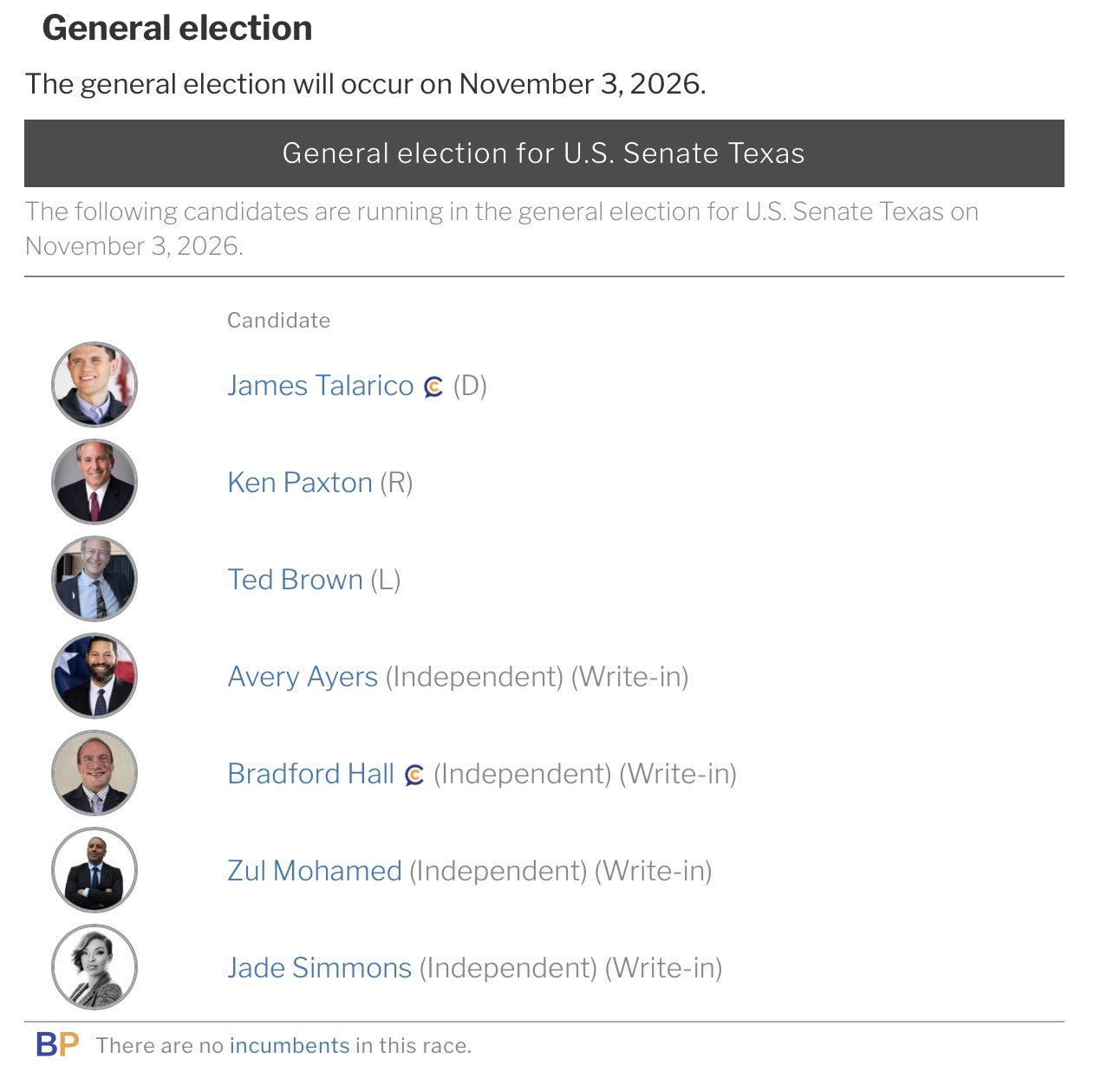
Ken Paxton and James Talarico, candidates in Texas's 2026 U.S. Senate race

Ken Paxton (R) vs. James Talarico (D)

I. The Race

Chart from Seth Keshel’s Texas U.S. Senate forecast: The Race

Ken Paxton (Republican) is the Attorney General of Texas, and has won three statewide races for that office. He knocked out four-term incumbent John Cornyn in a run-off earlier this year to win the party nomination for the General Election.

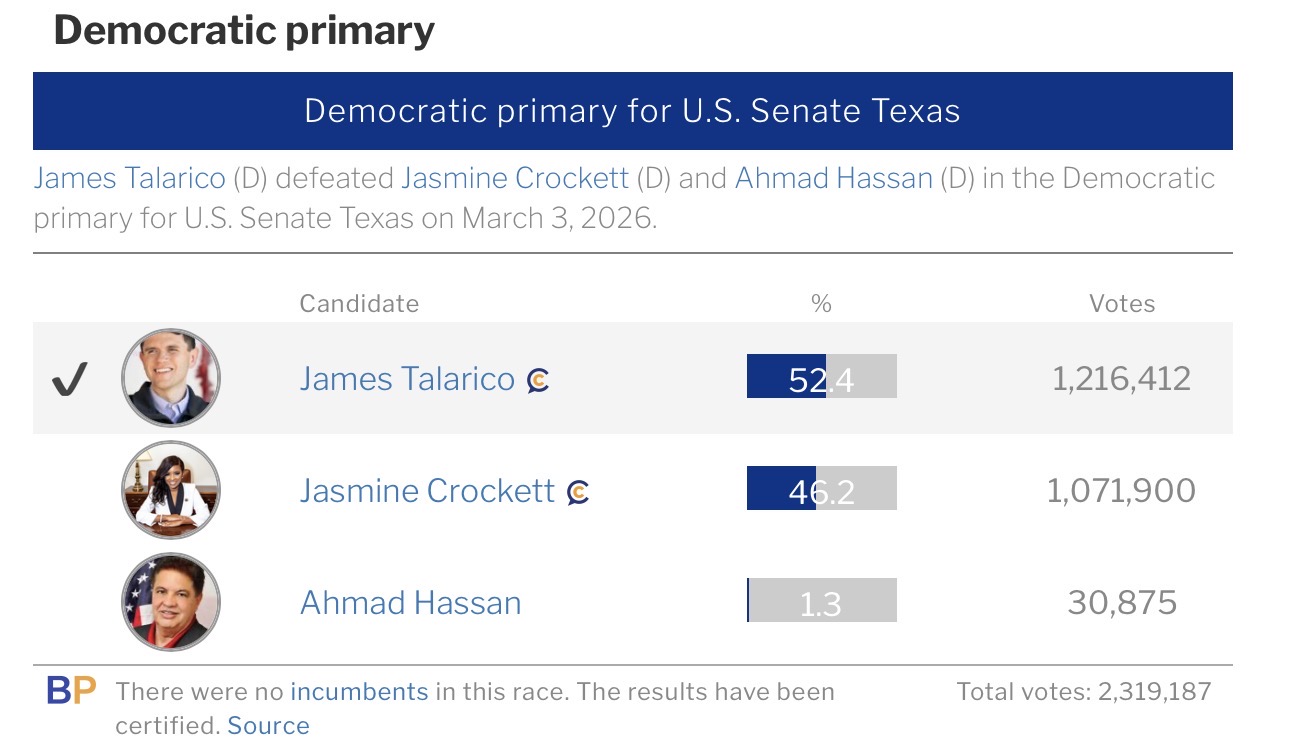
James Talarico (Democrat) is the Texas state representative who defeated Jasmine Crockett in the Democrat primary earlier this year to earn the party’s Senate nomination. If elected, he will be the first Democrat since 1994 to win a statewide race.

II. State Profile

Chart from Seth Keshel’s Texas U.S. Senate forecast: State Profile

From my forecast of the gubernatorial race:

The overwhelming theme of all 2026 analysis of Texas should be the same – if all of that red votes, then Texas will be red. The struggle with all of the work put into that endeavor so far ties directly to the fact that Texas has open primaries and does not register voters by party, whereas Florida closes primaries and does have party registration. We can watch it live as every vote comes in and know definitively in which direction the electorate is headed.

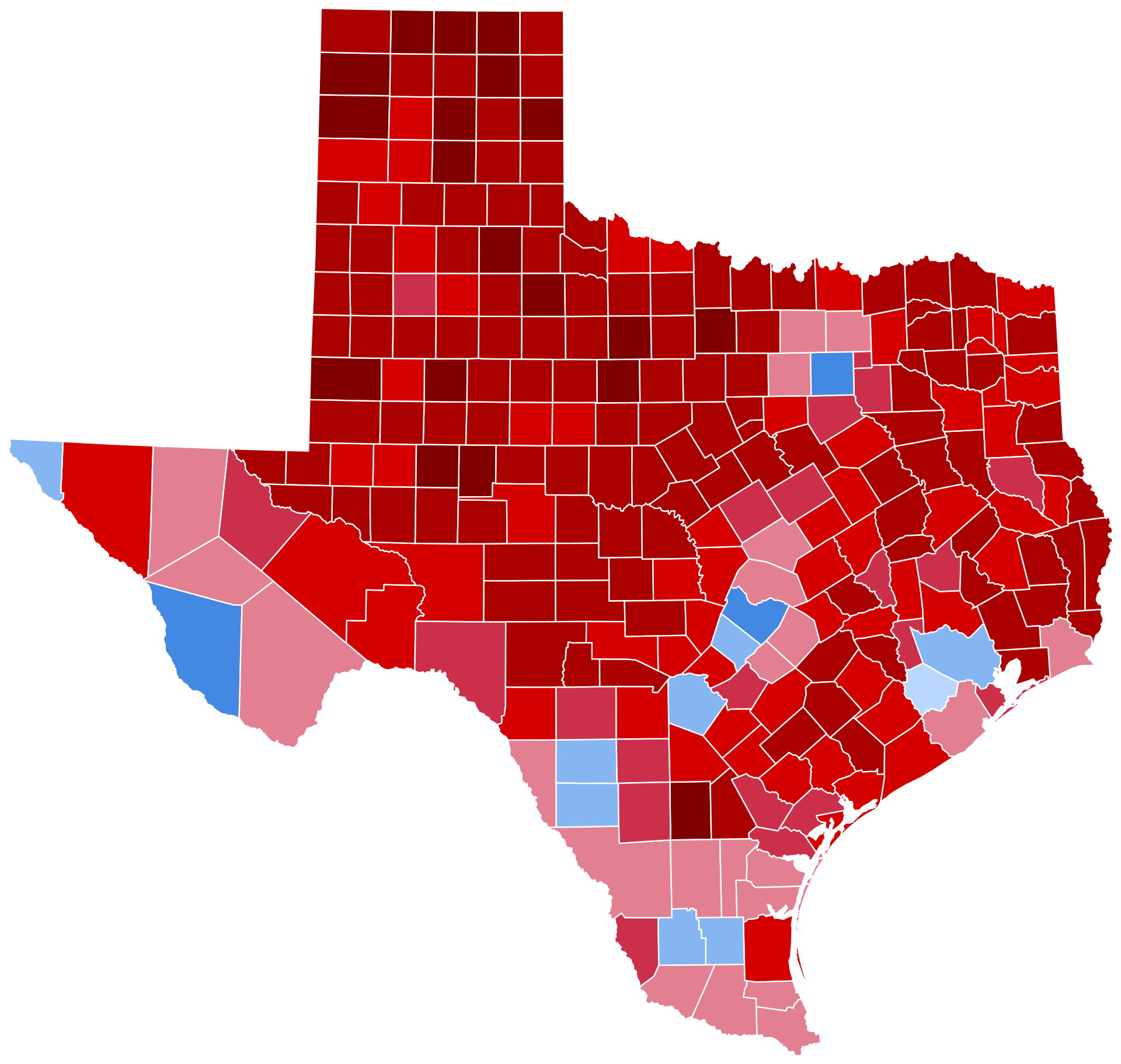
Texas’s presidential baseline is perhaps more imposing to Democrats’ long-term hopes than any before it, even those elections George W. Bush won by more than Trump’s +13.7% margin in 2024. The bedrock of that victory was a historic performance with Latino voters – 55% of them backed Trump:

While some of its urban counties, especially Dallas and Travis, have gone the way of their counterparts in the past 20 years (mega-blue), Harris (which contains Houston) and Bexar (San Antonio) have large working-class populations which have kept the county margins from getting out of control against Republicans. The rural areas of Texas are overwhelmingly Republican, and even more so now that rural South Texas has lurched in the same direction.

Democrats must have low Republican turnout, large swings in a small handful of counties, and overwhelming turnout in four blue bubbles (Harris, Bexar, Travis, Dallas Counties) to win a statewide election in Texas – something they haven’t done since 1994.

2026, thanks to its place on the calendar and in the electoral cycles, gives them their best shot in years to do just that, and they mostly have their eyes set on the Senate race between James Talarico and Ken Paxton, which I will profile after the end of in-person early voting.

Presidential Margins

2016 Trump +9.0%

2020 Trump +5.6%

2024 Trump +13.7%

Key Statistics

• 40.2% Hispanic, 39.3% White, 11.6% Black, 5.1% Asian

III. Market Assessment

Despite most of the bets being on Paxton, whales are betting on Talarico and creating an illusion that has little basis in a historical concept, given no Democrat wins statewide in 32 years.

IV. History

Democrats last had a United States Senator representing Texas in 1993, when Bob Krueger lost a special election to Republican Kay Bailey Hutchison. Krueger had replaced Lloyd Bentsen, Michael Dukakis’s choice for vice president in 1988, who had become Secretary of the Treasury under President Clinton earlier that year.

Hutchison then proceeded to be elected for a full term in 1994, then reelected by massive margins in 2000 and 2006. She had expected to turn the seat over to David Dewhurst, but Ted Cruz got in the way, won the nomination, and has sat in that seat ever since first elected in 2012 and seated in 2013. As a side note, Cruz is perhaps the most annoying senator in the Republican universe, and I hope to see him appointed to the Supreme Court so we can avoid having to listen to him doom on and on about Texas:

Honestly, the vote I regret more than any is Cruz in the 2016 primary.

I had a dozen people tell me they saw him in 2024 doing this routine about losing to Allred right before he won by 9 points. Frisking people for every dollar possible.

Seth Keshel (@RealSKeshel), Nov 1, 2026

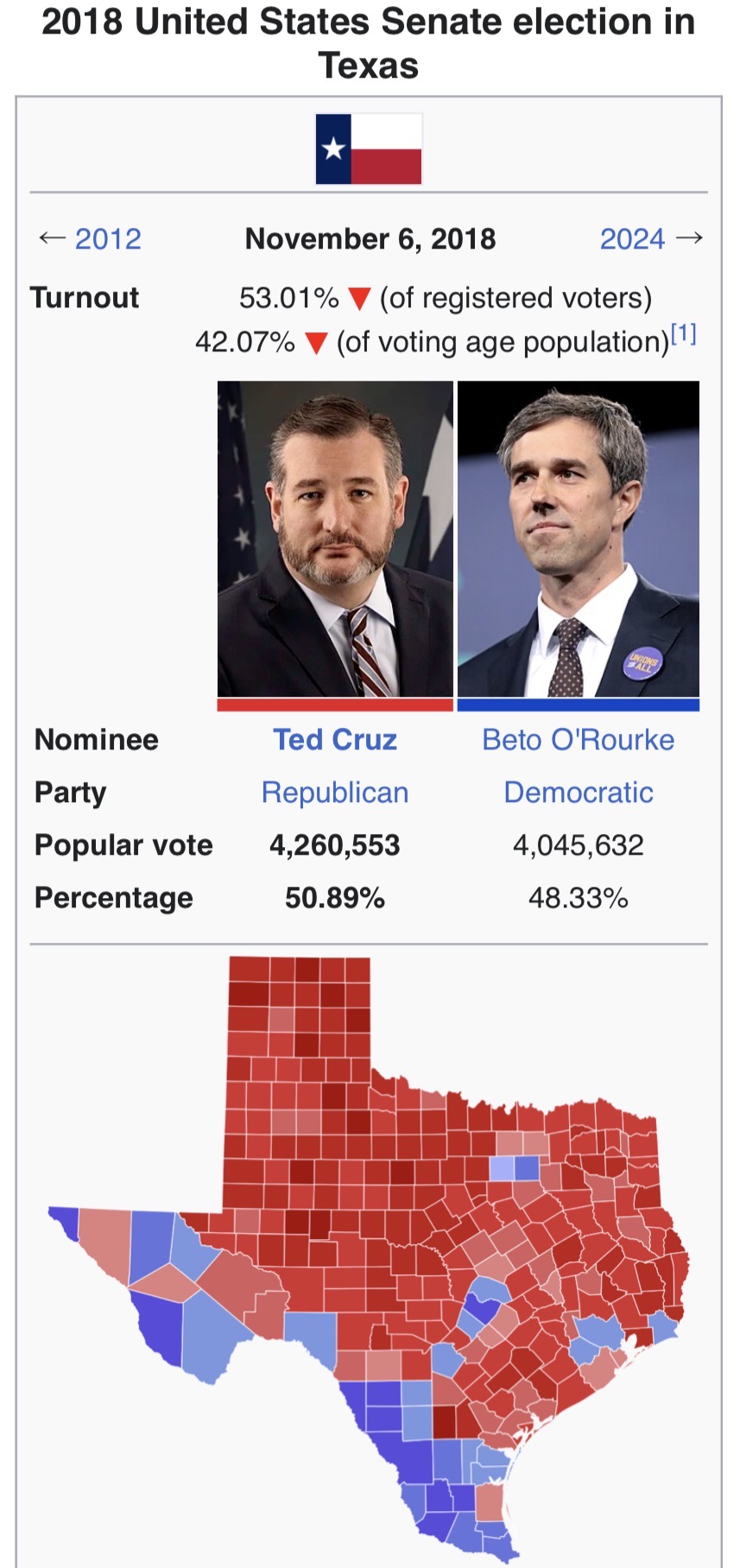
Cruz and practically every other shaky Republican appearing on cable news is spooked about this year’s race because of this result from 2018:

Chart from Seth Keshel’s Texas U.S. Senate forecast: History

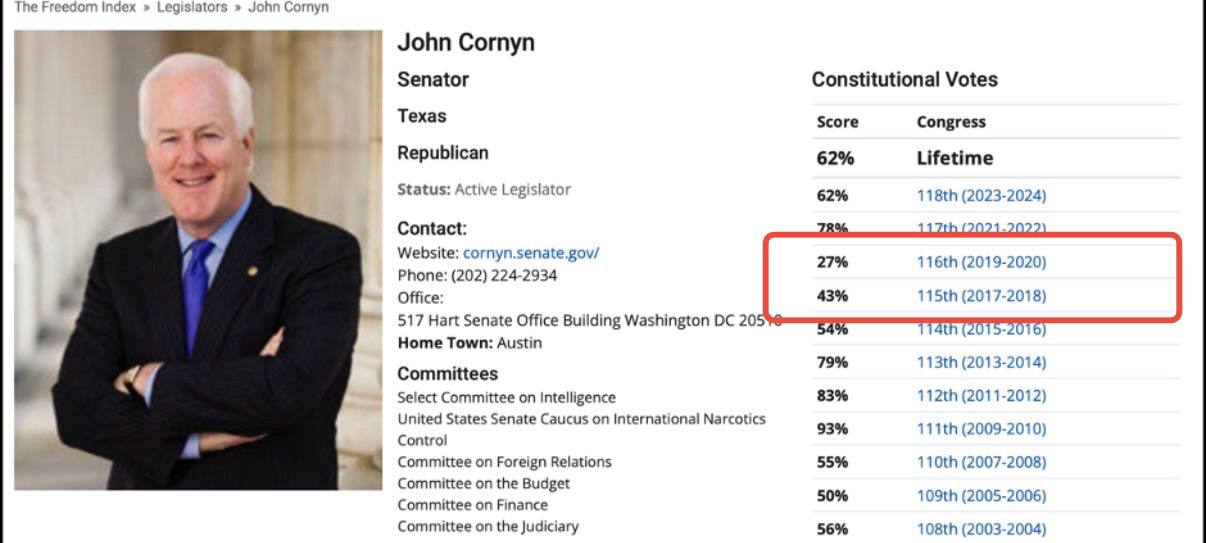
The seat Paxton and Talarico are vying for has been in Republican hands since John Tower was elected in 1961 to finish the term begun by none other than Lyndon B. Johnson, who vacated it to become John F. Kennedy’s vice president. Tower made the handoff to Phil Gramm in 1984, and in 2002, John Cornyn was elected to take over. While I’m on the topic of Cornyn, if for some reason Talarico defies the odds and wins this seat, you can blame Cornyn and his endless millions spent on attack ads against Paxton when he should have just retired after giving us this garbage:

Chart from Seth Keshel’s Texas U.S. Senate forecast: History

Yes, Cornyn had his worst years of voting in the four years of the Trump 45 administration, yet he sits online like a scorned teen wondering why the GOP primary voters rejected him – all while praying Paxton loses.

V. Analysis of 2026 Primary Results

Both sides had damaging primaries, the Republicans more so.

Chart from Seth Keshel’s Texas U.S. Senate forecast: Analysis of 2026 Primary Results

Talarico got past Jasmine Crockett, the big-mouthed U.S. House Representative from Dallas who serves no other purpose than to talk trash about whites, Republicans, and people who believe America has redeeming value. Crockett still refuses to endorse Talarico, and there is reason to believe in analyzing early voting data that the black vote could be soft for the Democrat nominee.

I have used tons of virtual ink describing the ins and outs of the warlike Republican primary, which Paxton won in the run-off with overwhelming force:

Three Texas-Sized Takeways from Paxton’s Dominant Runoff Victory

The risk for this year’s General Election is that we have a huge repeat of butt-hurt Cornyn voters defecting to support Talarico just to send Republicans a message, particularly in places like DFW and Central Texas. I have built these pitfalls into my modeling.

VI. Polls

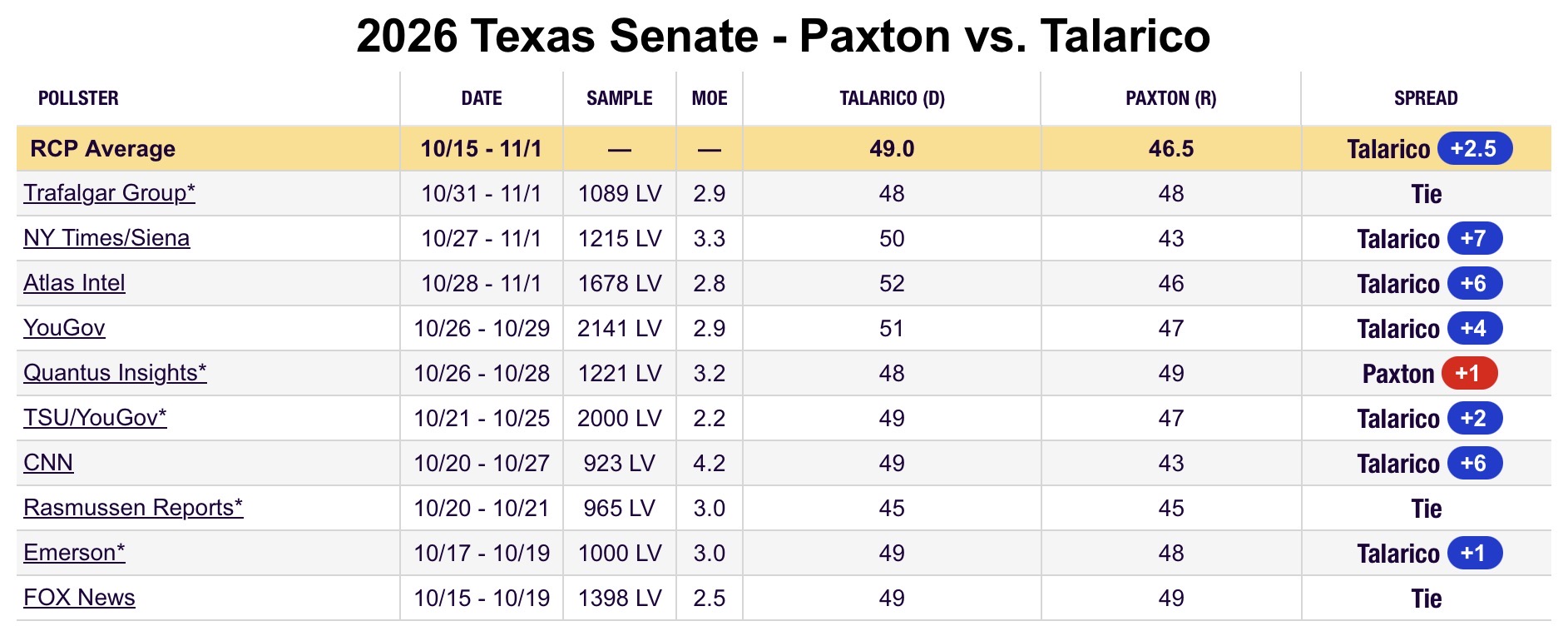
The RCP average reflects the insane polls that have come out of Texas this cycle:

Chart from Seth Keshel’s Texas U.S. Senate forecast: Polls

Strange to me how we have a series of polls giving Talarico leads of 6 or 7 points (600,000 to 700,000 in margin, which is impossible), at the same time Paxton has two showing narrow leads (Quantus and Trafalgar). Someone is right, and someone is wrong.

VII. Media Ratings

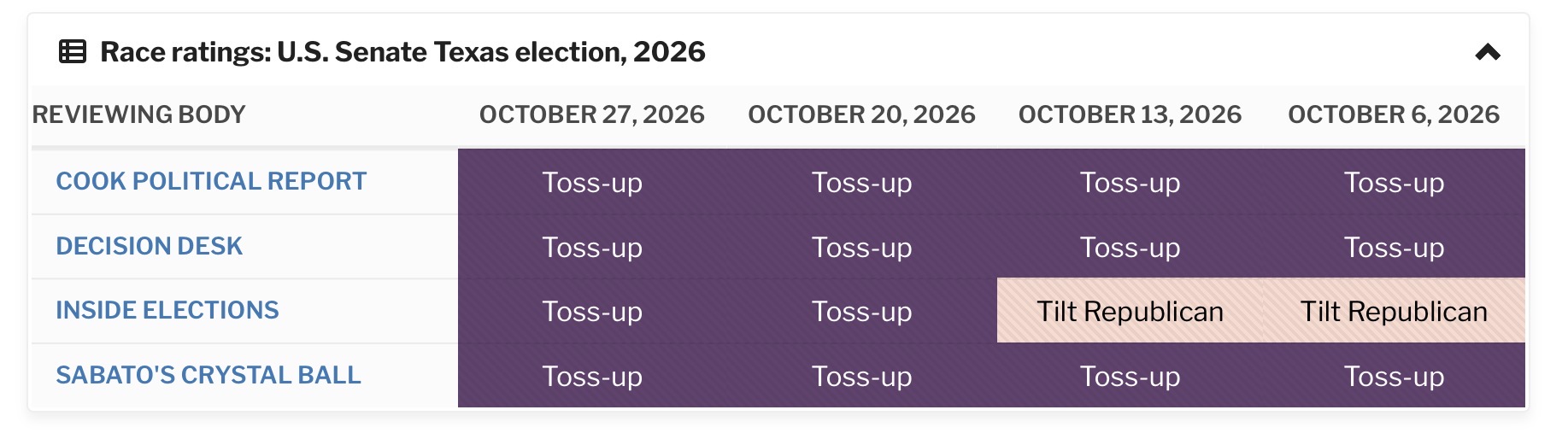
Chart from Seth Keshel’s Texas U.S. Senate forecast: Media Ratings

It is interesting to me, despite all the polling noise, that none of these reviewing bodies are going with the trend and calling a state that hasn’t elected a Democrat in a statewide race for 32 years for a vegan who has policies completely antithetical to everything Texan. They all choose the safety of “toss-up” until the storm passes over tomorrow night.

VIII. Party Registration

Texas doesn’t have party registration, and it’s a damn shame. If it did, we would have an actual idea of who has voted instead of having to rely on silly models that presume vote selection based on primary participation. If you didn’t know, in the Rio Grande Valley and other Hispanic-dominant areas of South and West Texas (which Trump won in 2024) voters almost exclusively vote in Democrat primaries because it is a certainty Democrats will win the local races.

I keep trying to help people see how futile it is to create a primary model for Texas since there is no party registration. Here’s an example from Hidalgo County in the Rio Grande Valley.

There were over 58,000 Dem primary voters and only 18,500 Rep. That is a D+52 split.…

Seth Keshel (@RealSKeshel), Oct 27, 2026

IX. Election Considerations

Rather than reinvent the wheel, I’m relaying what I wrote in my assessment of the decisive House race, TX-34:

Texas, being such a huge state with an overwhelmingly urban and suburban population, has people rung up on election corruption charges all the time – including in South Texas.

Still, Texas has strong control over what few mail-in ballots are sent out, and the risk for widespread corruption in this race (relative to others I’ve profiled) is low. You can read about Texas’s election integrity picture from my 2024 evaluation:

Texas – 2024 Election Compendium

X. Summary and Election Estimate

A word of caution. I have been warning everyone about midterms for a long time, all the way back to the first days of the Trump 47 administration when everyone was prattling on about red waves. Midterms are the elections in which the miracles can happen. Think of it like a comet passing by every 32 years that we step outside to see as it passes by. Yes, this (or perhaps 2018, depending how this race works out) is the best chance Democrats have had since 1994 to win a statewide race. If it happens, you can blame Cornyn for a lot of the damage.

Ultimately, Texas is a large state in which 90% of the population is urban and suburban. Democrats have 4.8 million presidential votes in the last election; just because they don’t win statewide races doesn’t mean there are no Democrats. Beto O’Rourke exceeded Hillary Clinton’s vote total in 2018, so there is precedent for Democrats in Democrat-favorable years to put down a lot of votes. Fortunately for Cruz, he came up with 91% of Trump’s 2016 vote total and got past by 2.6%.

If Paxton gets 91% of the 6.4 million Trump votes in Texas, he’ll cruise to an easy victory. If he gets 81%, he will almost certainly still win. That is the impact of Texas going to Trump by nearly 14 points. A lot has changed since the Betomania close call of 2018; Trump won the Hispanic vote in 2024, and there is evidence to suggest Abbott, and by extension Paxton will hold a lot of those gains.

NEW: Dem officials are raising alarm bells that Latino men are refusing to turn on President Trump in Texas and have a growing "aversion" to James Talarico.

Democrats on the ground are surprised to find that Latino men they interview are "loyal" to President Trump.

"Mr. …

Collin Rugg (@CollinRugg), Nov 1, 2026

For all the noise about early voting data, Republicans are voting. Early voting became steadily more Republican after Democrat high-propensity voters were spent, and Election Day stands to put practically all GOP-won counties from 2022 over that year’s totals. The simple fact remains that in order for Talarico to win by the slimmest of margins, three things must occur:

• A collapse of the rural and exurban GOP vote, which clearly isn’t happening based on the early voting data.
• Presidential turnouts in the big four urban counties (Harris, Dallas, Travis, and Bexar) with margins trouncing O’Rourke’s; I have factored this into my modeling in favor of Talarico.
• A reversion of the Hispanic vote to 2016-18 levels (check out the Cruz-O’Rourke map).

El Paso County, home of O’Rourke, produced a near-presidential vote count in 2018. O’Rourke won it by 50 points, at roughly 100,000 raw vote margin. That is higher than Clinton’s raw margin in a presidential election just two years earlier. This year, turnout may equal the O’Rourke number, but with it not being Talarico’s home county and Paxton likely to clear 35% (instead of Cruz’s 25%), up to 40,000 of O’Rourke’s margin goes in the trash right away.

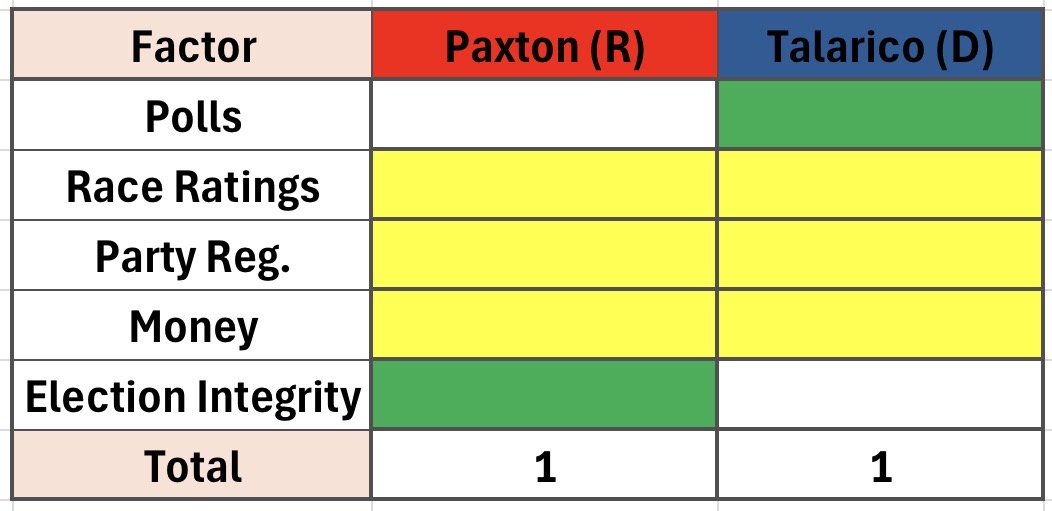
My decision matrix shows the potential for a close race:

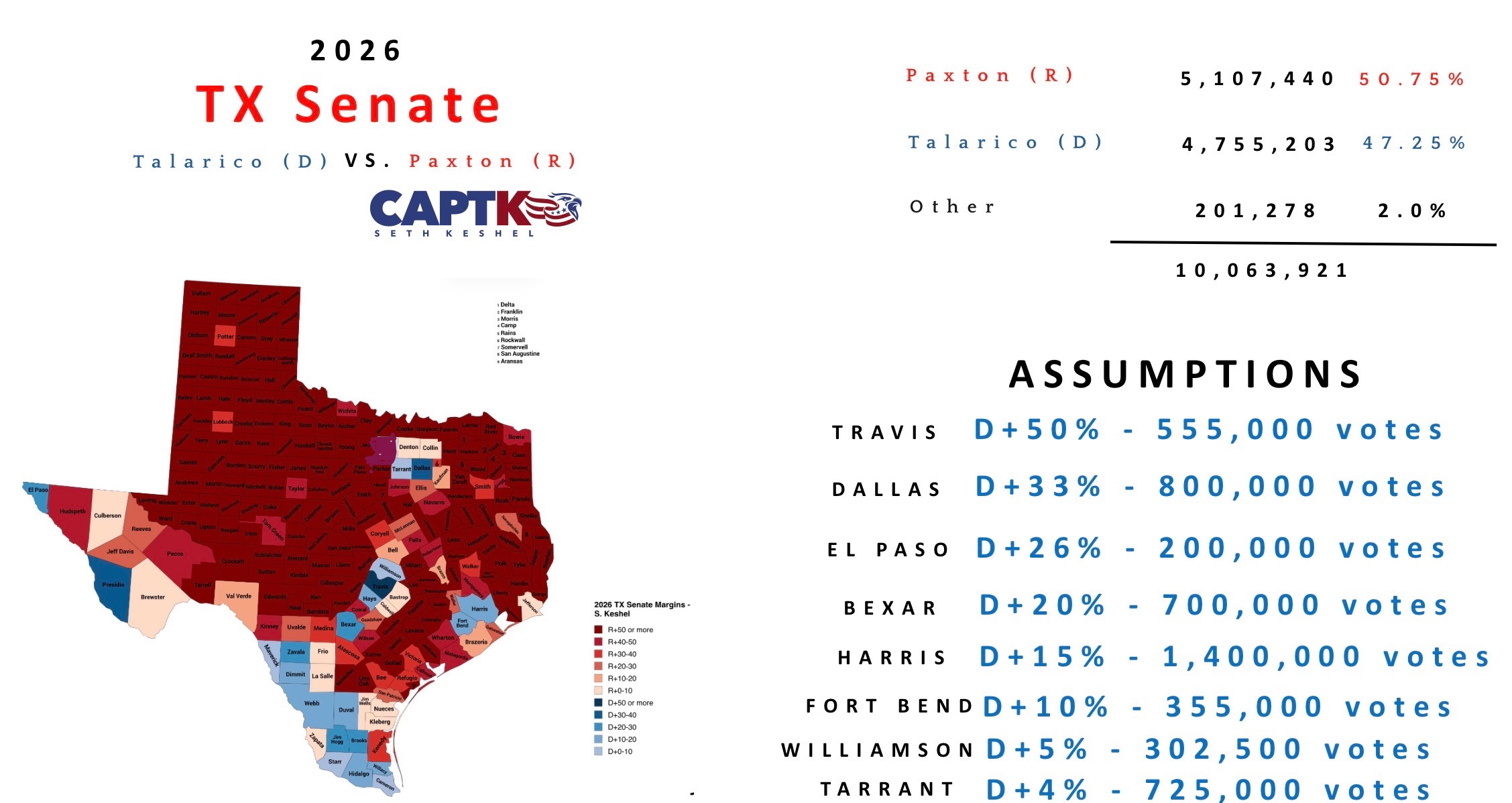
Chart from Seth Keshel’s Texas U.S. Senate forecast: Summary and Election Estimate

Now, you’re going to want to know my expectation, right? I don’t like hiding under the safety of a “toss-up.” While this is the best chance for Democrats in a while to win something in Texas, I struggle to see how they can be considered the “favorite” – especially based on polls and modeled primary data. These models are counting on a repeat of 2018 – back when Republicans didn’t have the Hispanic support they do today, and before hundreds of thousands of new Republicans moved to Texas, which they don’t want to see turn blue.

I waited for early voting to conclude and ran a county-by-county model in all 254 Texas counties. Here were some of the guidelines:

• Extrapolate early voting turnout and mesh with 2022 Election Day turnout to create a full turnout model
• Analyzed Paxton 2022, Cruz 2024, and Cruz 2018 victory/defeat margins and generally picked the lowest one in counties I expect Paxton to win (with exceptions for Denton, Collin, and a few others)
• Maximized turnout to near-presidential levels for Talarico in the big four blue counties and gave generous margins of victory in Tarrant and Williamson Counties, and put him within a point of flipping Collin County

And here is what I got…

Chart from Seth Keshel’s Texas U.S. Senate forecast: Summary and Election Estimate

This gives Talarico these margins:

Travis +277,500 (O’Rourke +240,494)

Dallas +264,000 (O’Rourke +240,269)

El Paso +52,000 (O’Rourke +100,539)

Bexar +140,000 (O’Rourke +109,346)

Harris +210,000 (O’Rourke +201,298)

Fort Bend +35,500 (O’Rourke +30,976)

Williamson +15,125 (O’Rourke +5,993)

Tarrant +29,000 (O’Rourke +4,308)

I have returned most of the counties of the Rio Grande Valley to Democrats, although by margins more closely matching the 2022 Texas statewide map. I have shorted Paxton’s raw margin gains in Republican strongholds like Montgomery, Parker, and Grayson Counties, and even sent him backward in raw margin in overwhelmingly Republican rural counties for sake of favoring Talarico as much as possible.

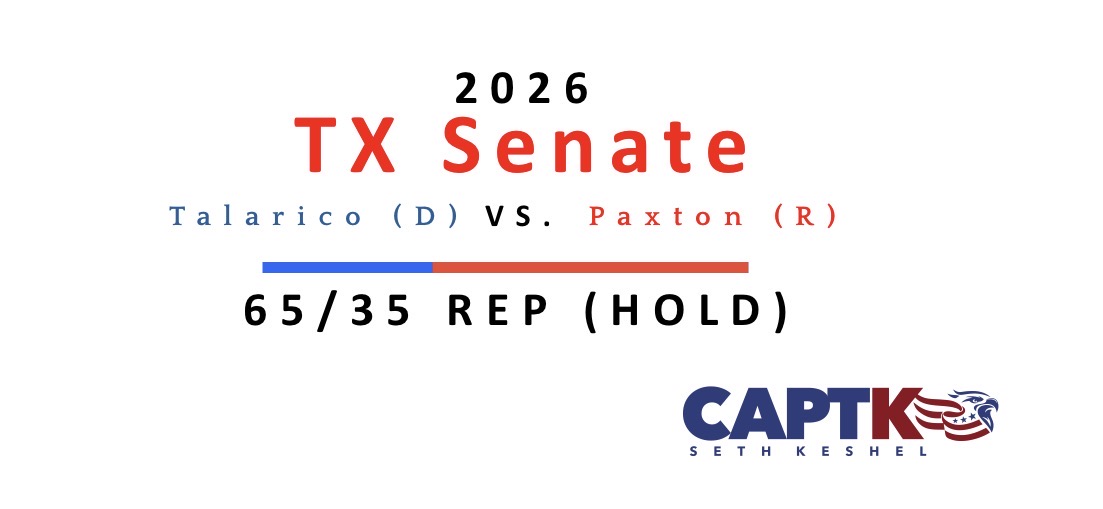
And I still came up with…

PAXTON +3.5% (+352,237) – right at 80% of President Trump’s 2024 vote total.

Forecast for TX Senate

Chart from Seth Keshel’s Texas U.S. Senate forecast: Summary and Election Estimate

If Republicans vote and treat Election Day as a referendum on the future of Texas, then Paxton will win. The question is, “How far will he run behind Abbott?” With the way rural turnout is shaping up, Abbott should feel fine. High turnout favors Republicans. Democrats don’t have the numbers to beat Republicans if they turn out. With Trump’s 6.4 million votes, and likely a couple hundred thousand new Texas Republicans settling in the Lone Star State, a loss here would land squarely on the shoulders of those who decided to listen to liars like John Cornyn and cross over or sit out to send a message.

I would be surprised if the polls were right, while at the same time recognizing that there are structural vulnerabilities here giving a small window of opportunity for the party that never wins to break the spell. If you’re a Texan and have a Paxton issue, get over it. Letting Democrats have this seat because you sat out will ensure they flood Texas with resources for the foreseeable future, when in fact it should be running right just like Florida.

Seth Keshel, MBA is a Senior Fellow at the Gold Institute for International Strategy and a retired Army Captain. He publishes Captain K’s Corner on Substack.

Widespread, Coordinated, Violence & Disruption in Europe – We’ve Seen This Before

Photo from Ernie Audino's post on coordinated violence and disruption in Europe

This article was written by Ernie Audino and appeared in Frontlines of Freedom. WIDESPREAD, COORDINATED, VIOLENCE & DISRUPTION in EUROPE – WE’VE SEEN THIS BEFORE.

Over the past few weeks, large/violent protests have erupted in Paris, Marseille, Lyon, Bordeaux, Nice, Strasbourg (France); Milan, Rome, Turin, Naples, Bologna, Florence, Madrid, Lisbon, Tirana (Albania); plus cities in Belgium and Greece. By overwhelming number of reports, the participants are largely left-wing groups, Islamist groups and migrant groups. Their articulated messaging is a consistent mix of anti-capitalist, anti-Western, pro-communist and pro-Palestine slogans.

But for the scale today, we’ve seen all of this before….and it was neither spontaneous nor uncontrived. There was an architect. Is there an architect today?

A little history – In the mid-80’s, the height of the Cold War, I was a lieutenant stationed near the East German border. Whenever we went to the field, whenever we deployed our units off post, ie out into German villages, towns, farms, countryside, etc (which was at minimum once/month) all squad leaders and above were required to carry live ammunition.

Why? Because the USSR, KGB and East German Stasi worked thru various left-aligned groups in Western Europe to stimulate violent demonstrations, ostensibly anti-NATO, anti-capitalist, anti-nuclear, and anti-USA, and US soldiers were specifically targeted. In fact, two of these groups (Red Army Faction and Action Directe) were responsible for 34 killings in Western Europe…6 of them were American soldiers. Italy’s Red Brigades killed another 50 (including the 1978 kidnapping and murder of former Italian Prime Minister Aldo Moro). And in 1981, the Red Brigades also kidnapped the senior U.S. Army officer at NATO’s Allied Land Forces Southern Europe, US Army BG James Dozier.

The Green Party and other left-aligned, anti-NATO, anti-US, and anti-nuke groups generated huge protests and disrupted civil order, blocked traffic, spit on US soldiers and threw pig-blood on US military vehicles. These “protests” typically included incidents of “spontaneous violence.” The crazy thing is German intelligence had captured documents from within these groups that included, among other things, printed instructions as to how to initiate localized violent incidents and then inflame them into incidents of mass violence

Were these violent “protests” orchestrated and purposed to undermine domestic faith in Western institutions and governments? YES! This point was indisputably proven when the archives of the Stasi, the East German Intelligence, were made public in 1991 after the Wall came down. The documents showed that Eastern Bloc intelligence had recruited operatives from within almost every major Western left-aligned group in Europe and had supported them financially and operationally. The effort was so effective that named members of the German Bundestag, German Army officers (including a named German Army general), and other major politicians across Europe had been “turned” and were active operatives for the Eastern Bloc.

The overall effort acted to:

• Exploit societal grievances and schisms in Western countries
• Deface/destroy/disrupt symbols of Western governance/institutions
• Demonstrate Western inability to maintain peace and domestic order
• All for the purpose of undermining domestic faith in Western institutions and, ultimately, destabilize Western populations.

We now know conclusively that specific, nation-state adversaries benefitted from the violent, leftist demonstrations in Europe during the late Cold War. Surely, there are specific nation-state adversaries who benefit from the violent, leftist demonstrations in Europe today. Answer THAT question and you’ll know who is behind them.

We discussed all of the above and more on our show this week. Joining me is US Army colonel (ret) Myles Caggins…an old friend and the former Director, Strategic Comms at the National Security Council, AND the former Senior Spokesman for the Global Coalition to Defeat ISIS in Iraq and Syria. Fascinating comments. Click on the link to hear our discussion: https://frontlinesoffreedom.com/show-984/

Written by Ernie Audino Senior Military Fellow, Kurdistan Program (U.S. Chair), Gold Institute for International Strategy

2026 House Quick Shots: In the Cracks

2026 House Quick Shots: In the Cracks, by Seth Keshel

10 House races on the bubble that shouldn’t be overlooked

Note: These quick estimates are for House races rumored to be in play or that may have simply slipped through the cracks over a long stretch of forecasting races.

I have now completed individual assessments for the 24 races I consider decisive in 2024. That is to say they are the most likely seats that will determine the winner of the coming majority. Still, with so many races, 435 in all, upsets can happen. Here is how I see the races in these 10 seats I think are on the bubble:

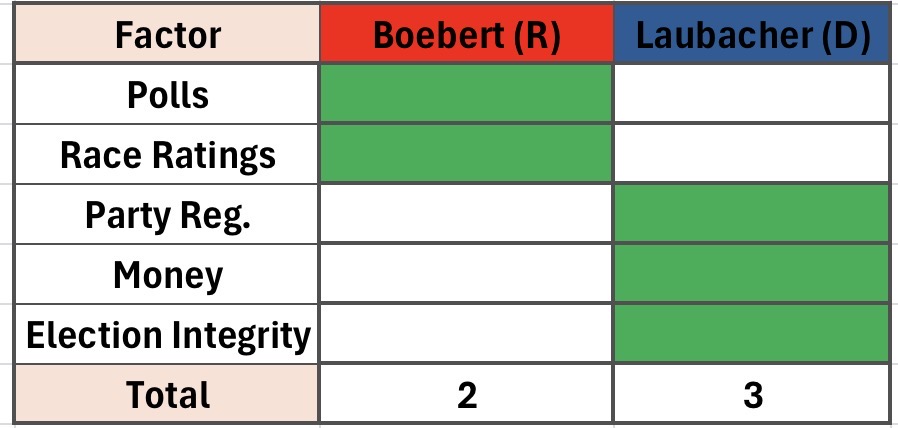
CO-4

Boebert (R-inc.) vs. Laubacher (D)

Chart from Seth Keshel’s In the Cracks forecast: CO-4

• Party registration has slipped left from 2024, but is still R+18.3% in a district covering rural eastern Colorado
• Laubacher is flush with cash and running in a state with Universal Mail-In Voting, which gives her a chance to sneak up

RATING

75/25 Boebert (R) – too rural and too red

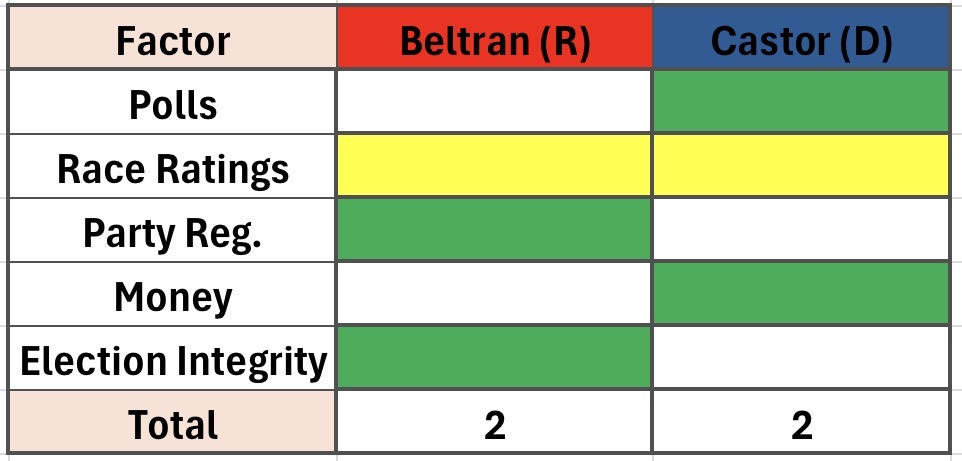
FL-14

Beltran (R) vs. Castor (D-inc.)

Chart from Seth Keshel’s In the Cracks forecast: FL-14

• GOP leads party registration by more than 9 points in seat redrawn to push Castor out of Congress
• Early voting not as impressive in Florida as hoped for, leaving Castor some optimism as a well-known incumbent

RATING

60/40 Beltran (R) – Florida Republicans have all the momentum, and I feel good about their odds of flipping the toughest seat, FL-25. That means they should get FL-14, too.

FL-22

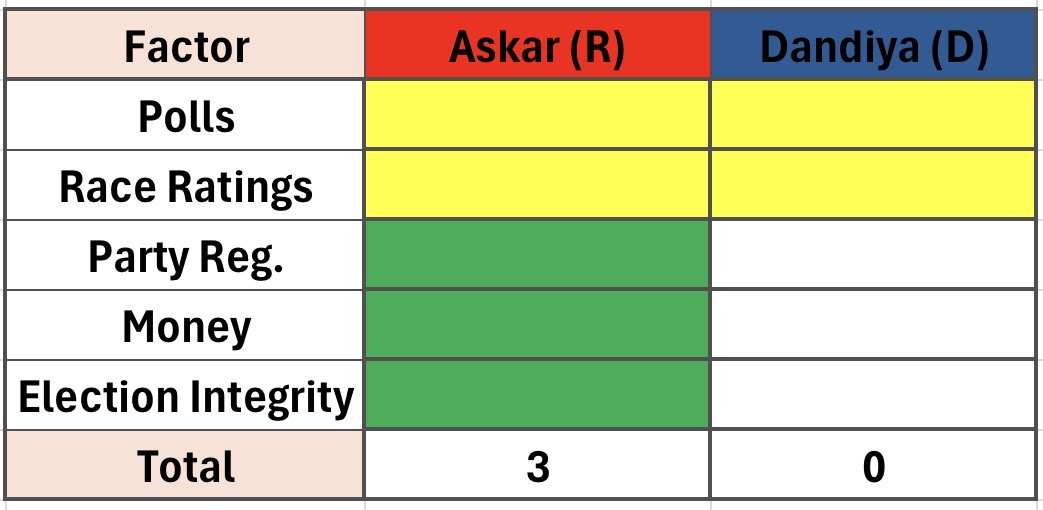
Askar (R) vs. Dandiya (D)

Chart from Seth Keshel’s In the Cracks forecast: FL-22

• FL-22 is redrawn and includes a heavy Republican vote from Collier County and moderate portions of Palm Beach and Broward County; district is more than 8 points in favor of GOP by registration
• Dandiya’s hopes rest on low turnout on Election Day for GOP

RATING

65/35 Askar (R) – Askar has a big financial edge and isn’t facing the incumbent.

IA-2

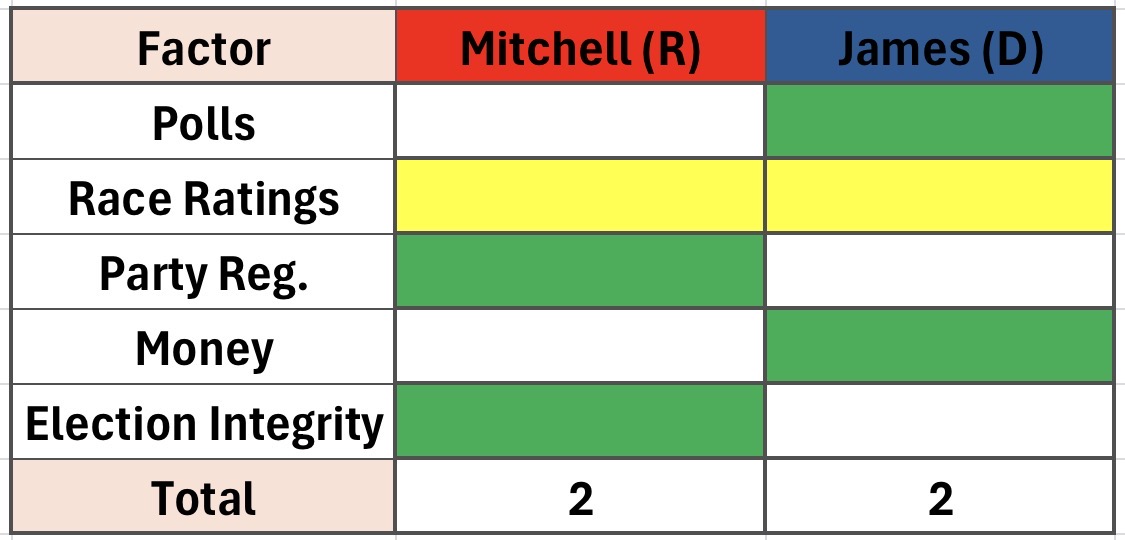
Mitchell (R) vs. James (D)

Chart from Seth Keshel’s In the Cracks forecast: IA-2

• This seat came open due to Ashley Hinson’s run for Senate
• Republicans have added to their voter registration lead in this Trump +10 seat since November 2024

RATING

65/35 Mitchell (R) – I have Democrats favored in IA-1 and IA-3, but IA-2 is a bridge too far as Democrats have collapsed after a fast start in early voting.

NH-1

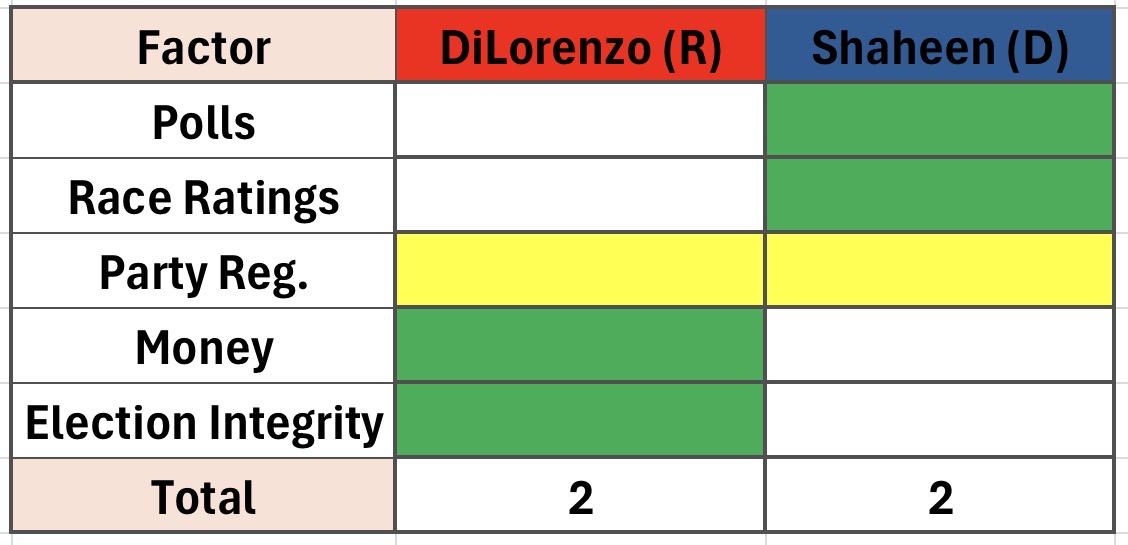
DiLorenzo (R) vs. Shaheen (D)

Chart from Seth Keshel’s In the Cracks forecast: NH-1

• Seat open for new representative thanks to Pappas running for U.S. Senate
• Daughter of Senator Shaheen is Democrat nominee and will benefit from mother’s political network, but DiLorenzo has the funds to make this race interesting

RATING

65/35 Shaheen (D) – New Hampshire likes to favor the out-party, especially when Republicans are in the White House. Shaheen’s name recognition will likely carry her across.

OH-1

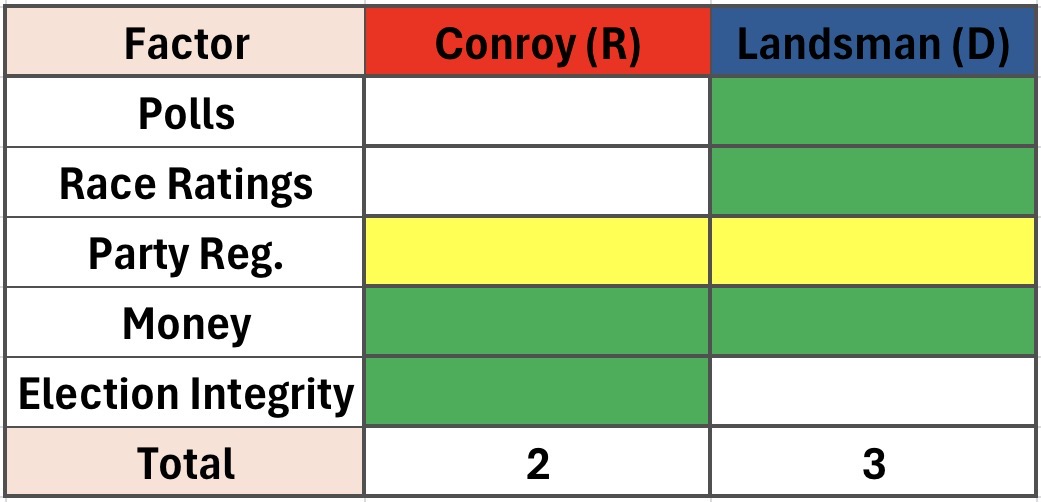
Conroy (R) vs. Landsman (D-inc.)

Chart from Seth Keshel’s In the Cracks forecast: OH-1

• Ohio legislature didn’t cut deep enough into the new OH-1 boundaries, otherwise they could have guaranteed a flip
• Landsman is a tough incumbent in a district Trump won narrowly; he is not invincible, because urban turnout is terrible in Ohio – including in Cincinnati (the heart of the district)

RATING

60/40 Landsman (D) – Landsman would have a considerably higher rating if Cincinnati turnout wasn’t poor heading into Election Day.

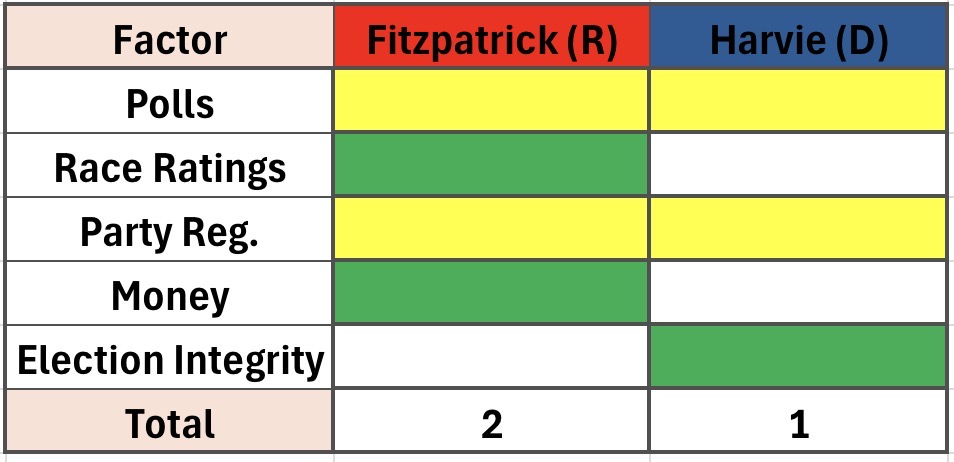
PA-1

Fitzpatrick (R-inc.) vs. Harvie (D)

Chart from Seth Keshel’s In the Cracks forecast: PA-1

• Fitzpatrick is one of few Republicans in the House representing a district Trump lost
• Fitzpatrick’s +12.8% margin in 2024 should hold up, given his perception as a moderate in a very suburban district

RATING

70/30 Fitzpatrick (R) – His margin will likely shrink, but Fitzpatrick will work the district like Susan Collins works Maine to get by.

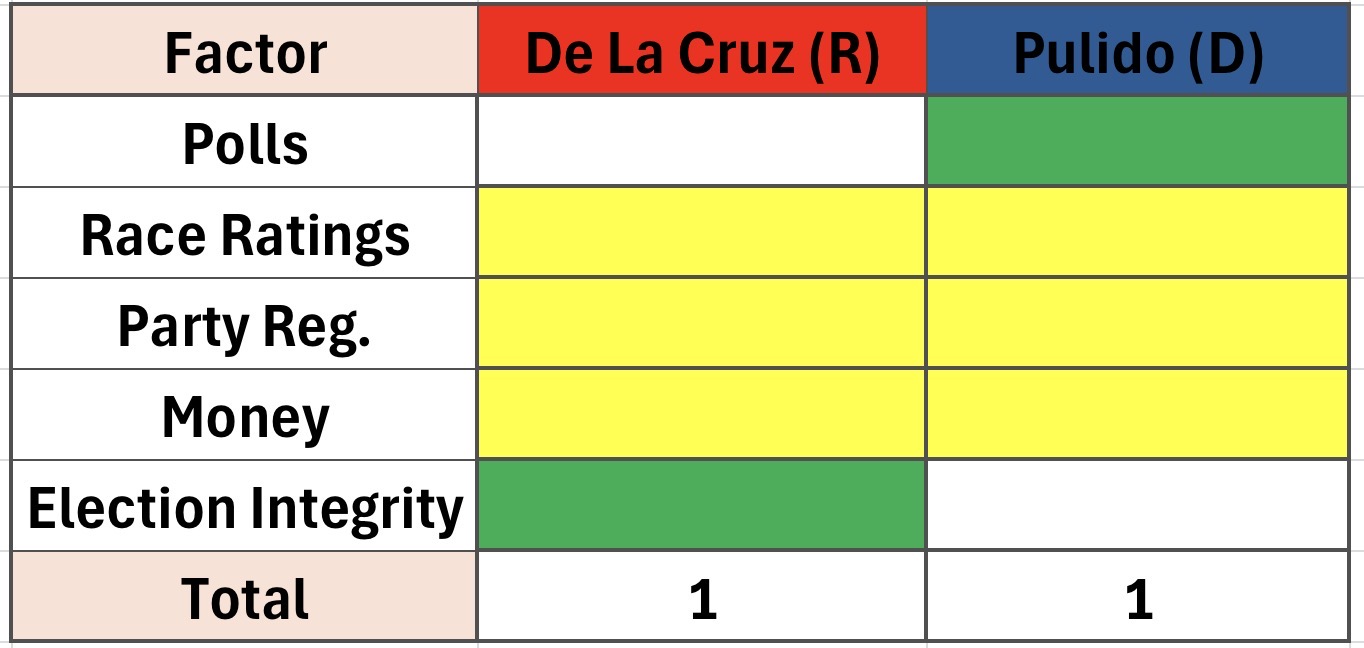
TX-15

De La Cruz (R-inc.) vs. Pulido (D)

Chart from Seth Keshel’s In the Cracks forecast: TX-15

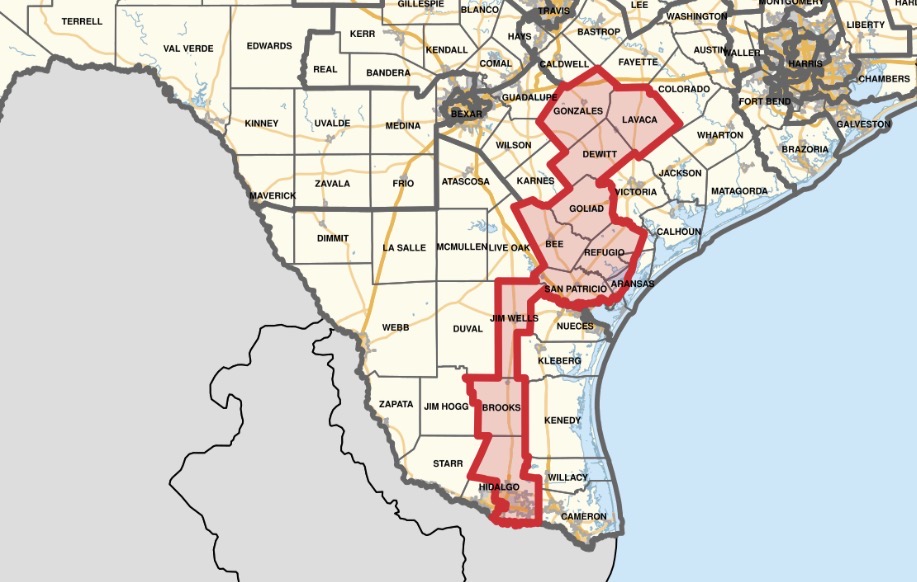
• Fundamentally, the race belongs to De La Cruz, who is running in a newly redrawn Trump +17.8% district in far south Texas; however, her opponent is a popular musician who polls well that has everyone worried about the seat
• I suspect Republicans will hold onto a lot of Trump’s Latino gains, and the redness of the district will carry her across; still, if there is a trick shot to be played this year, it’s for Democrats in this seat with their unique candidate

RATING

60/40 De La Cruz (R) – The new boundaries include some seriously red terrain full of Latinos that have been voting Republican for a long time.

Chart from Seth Keshel’s In the Cracks forecast: TX-15

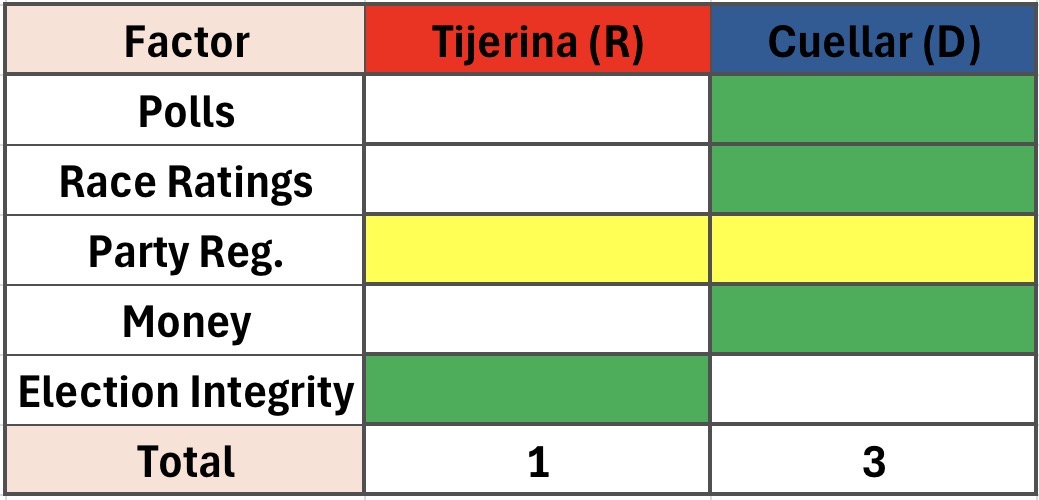
TX-28

Cuellar (D-inc.) vs. Tijerina (R)

Chart from Seth Keshel’s In the Cracks forecast: TX-28

• After a pardon, Trump probably thought Cuellar would switch parties; Cuellar has been tough on the border (for a Democrat) and is one of the few remaining “blue dogs” in the House after two decades in Congress
• Tijerina is the one who switched parties for this race; the Webb County Judge signed up for the newly redrawn Trump +10.4% district that includes Laredo/Webb County and several other surrounding counties
• Cuellar has the edge here, but if Eric Flores can win TX-34 convincingly, it’s a sign the Latino realignment is still on and that he (Cuellar) could be in for a tight race

RATING

70/30 Cuellar (D) – Tijerina seems like a strong candidate for a more promising (presidential) cycle; this seat was redrawn with a future GOP flip in mind.

VA-1

Wittman (R-inc.) vs. Taylor (D)

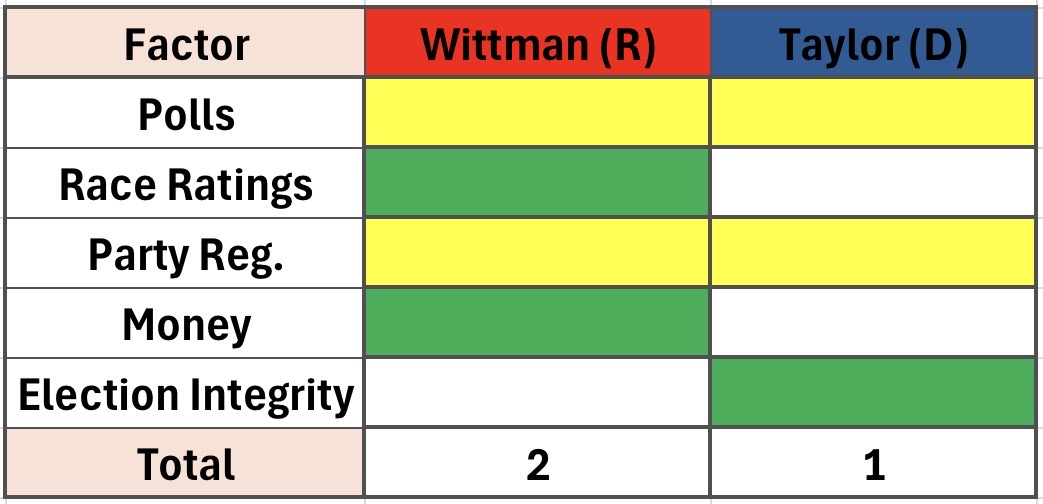
Chart from Seth Keshel’s In the Cracks forecast: VA-1

• Wittman’s seat fits the mold for a danger seat, given that he significantly outran Trump in 2024 and that Virginia’s electorate is likely to trend bluer relative to the rest of the nation over federal cuts
• Turnout in VA-1 is high, which should favor Wittman, who has nearly two decades of Congressional experience; the negative trends in Virginia of late sour this race, which would have been a no-doubter in most cycles

RATING

60/40 Wittman (R) – High turnout, name recognition, and experience carry Wittman – but narrowly.

On Tuesday morning, my entire House map drops right here on Captain K’s Corner.

Seth Keshel, MBA is a Senior Fellow at the Gold Institute for International Strategy and a retired Army Captain. He publishes Captain K’s Corner on Substack.

2026 Ten-Point Forecast: AZ-6 (U.S. House – Decisive)

Juan Ciscomani and JoAnna Mendoza, candidates in Arizona's 6th Congressional District

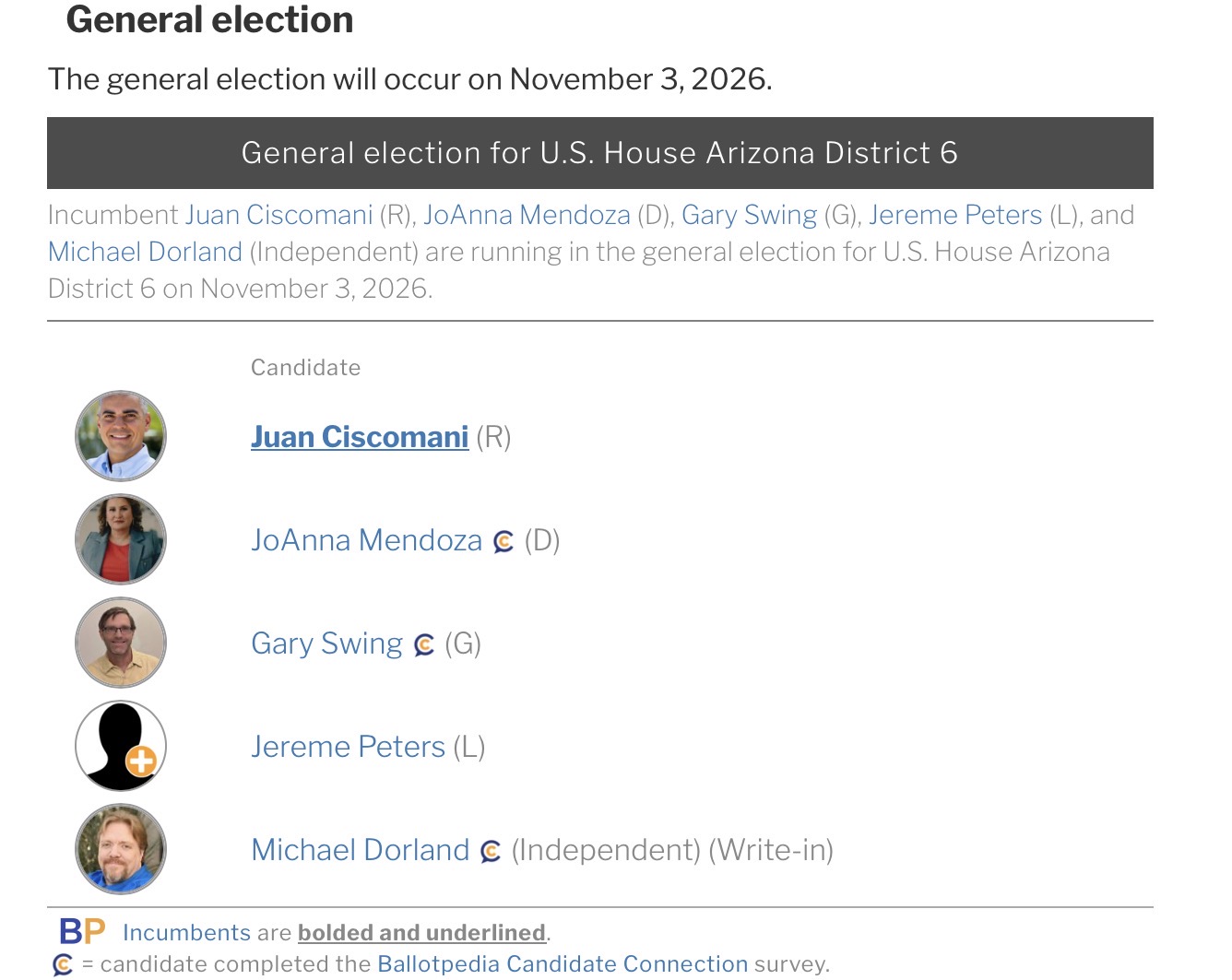
Juan Ciscomani (R) vs. JoAnna Mendoza (D)

I. The Race

Chart from Seth Keshel’s AZ-6 (U.S. House - Decisive) forecast: The Race

Juan Ciscomani (Republican) seeks his third term representing AZ-6 in the U.S. House. He won the seat in 2022 in the first election held under its current boundaries after having served as an advisor to former Arizona governor Doug Ducey. Ciscomani is the first naturalized immigrant from Mexico to serve in Congress from Arizona.

JoAnna Mendoza (Democrat) is a Marine Corps veteran who found her way into politics after retirement from the military. She has worked extensively as a lobbyist and ran unsuccessfully for the Arizona Senate in 2020.

The ballot also includes potential spoilers for both candidates – especially Green Party candidate Gary Swing (who would exclusively siphon votes from Mendoza).

II. District Geography

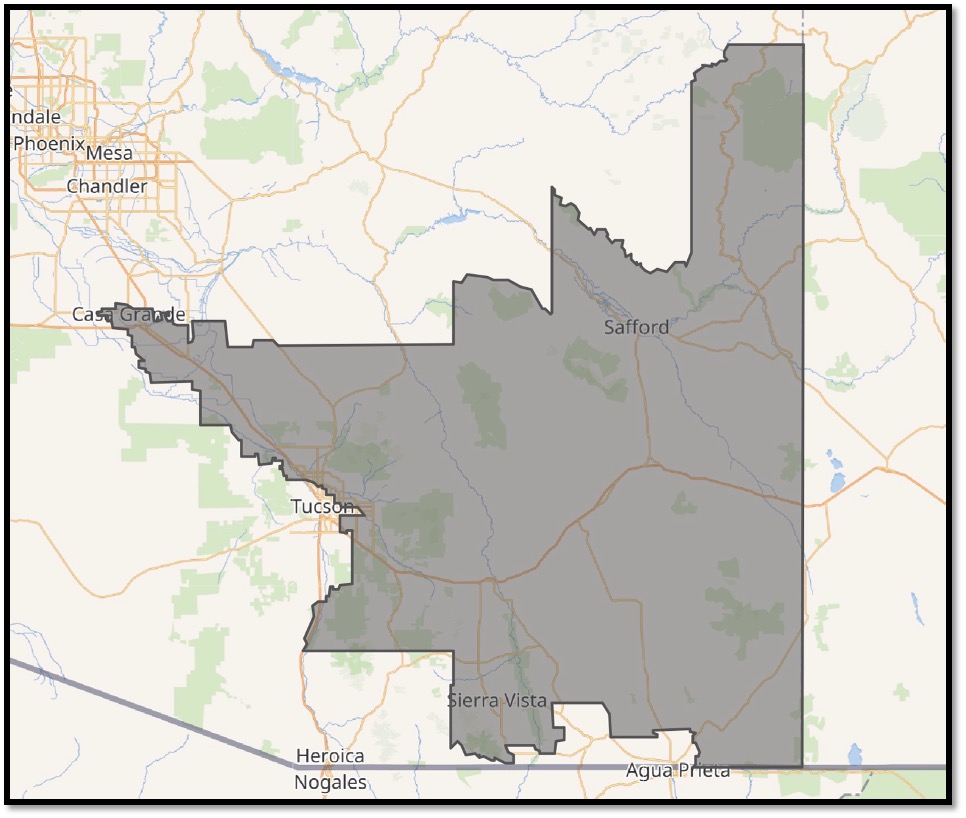
Chart from Seth Keshel’s AZ-6 (U.S. House - Decisive) forecast: District Geography

Arizona’s 6th Congressional District (AZ-6) is wedged into the southeast corner of the state and stretches across five counties: all of tiny Greenlee County, and fragments of Cochise, Graham, Pinal, and Pima Counties. The Pima portion includes chunks of northeast Tucson, the sole reason the district is competitive in any way and the portion Mendoza rests her hopes on for unseating Ciscomani.

Mendoza is originally from Eloy in Pinal County, so she will look for extra support in that part of the district while looking to leverage her military service to sandbag Ciscomani’s margins in Cochise County, which is home to Fort Huachuca – the headquarters of the U.S. Army Military Intelligence Corps (where yours truly was twice stationed).

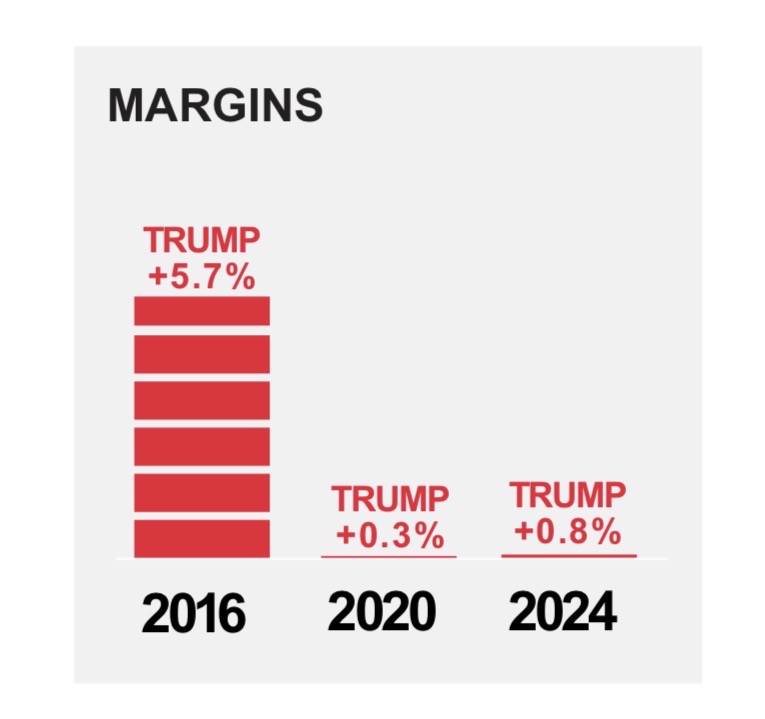
The shift against Trump in northeastern Tucson and its suburbs (which includes my wife’s district, Legislative District 17) dramatically reduced the presidential margins of these boundaries:

Chart from Seth Keshel’s AZ-6 (U.S. House - Decisive) forecast: District Geography

As you can clearly see, Trump went from winning these boundaries by 5.7% in 2016 to carrying them by less than a point in 2020 and 2024, running behind Ciscomani in the latter run. Whereas he has continuously improved with Latino voters, he has backtracked with affluent former Republicans of the Flake/McCain variety. It truly takes a skilled political toolset to succeed in this district, and it would be difficult to draw a more complex and competitive district than AZ-6. The winning candidate must have an excellent overall game that includes rural outreach and urban strategy.

Key Statistics

• 63.1% White, 24.7% Hispanic
• 96.8% Urban, 3.2% Rural

III. Market Assessment

Polymarket bettors have their money on the out-party candidate, Mendoza, but have her significantly overvalued against a candidate who has figured out how to thread the needle in the Trump era.

IV. History

The latest redistricting of Arizona drastically altered the composition of the suburban Tucson district. The remainder of Tucson, the urban core and its heavily Hispanic working-class vote in the southern end of the metro, has long been given over to the Grijalva political family, which rules over its subjects with an iron fist.

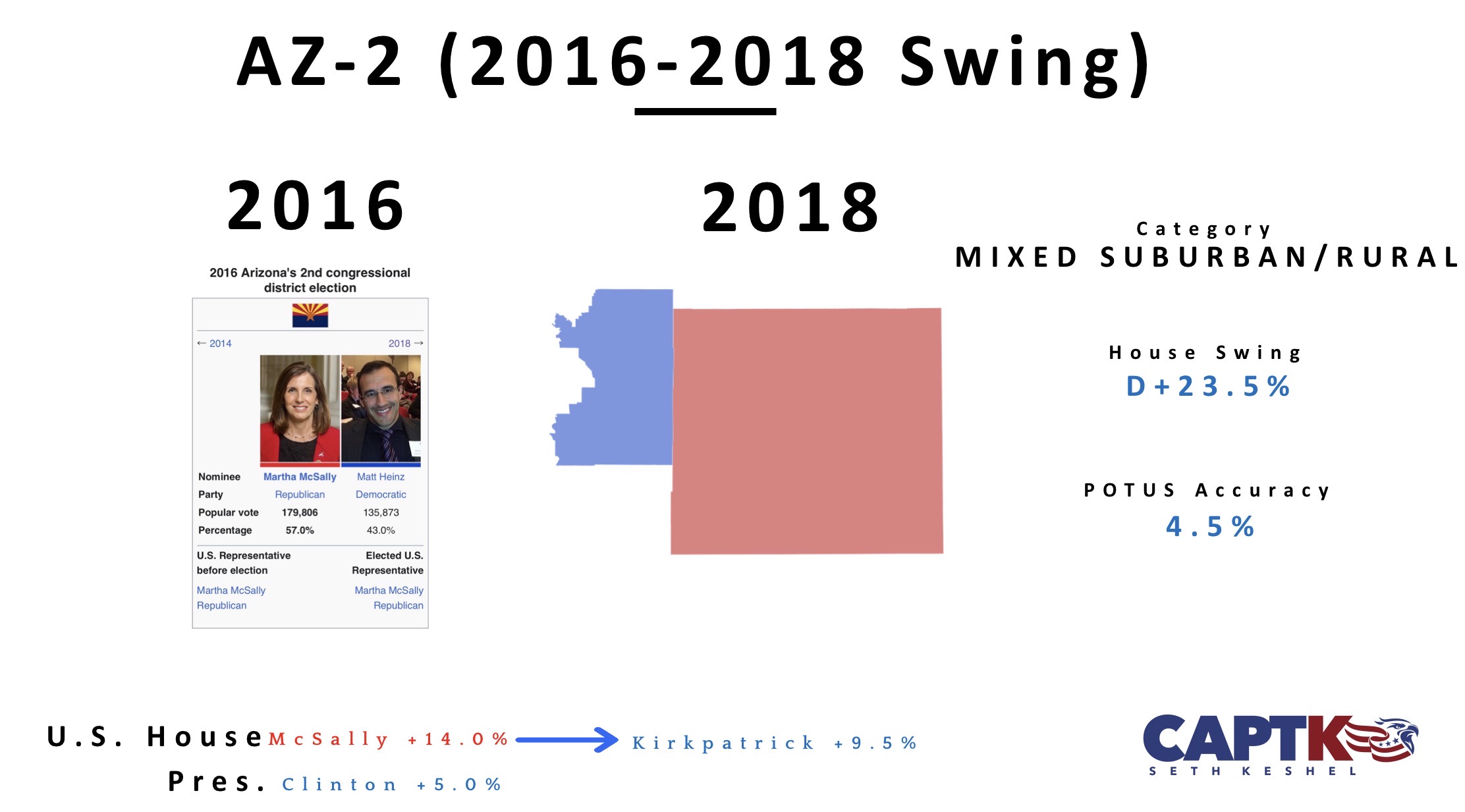
In 2016, Cochise County and northeastern Pima County made up AZ-2 (AZ-2 is now Eli Crane’s district in northern Arizona). Incumbent Martha McSally won the seat by 14 points, at the same time Trump lost the district by 5. That is one of the biggest red flags possible looking back at the 2018 cycle (Trump massively underperforming the GOP House candidate), and when McSally vacated the seat to run for U.S. Senate, all hell broke loose. Democrats won the seat by 9.5%.

Chart from Seth Keshel’s AZ-6 (U.S. House - Decisive) forecast: History

Cochise County, while weaker in margin, wasn’t the problem. It was northeastern Pima County, which is still in Ciscomani’s district today. The middle swung hard to the left and contributed one more to the Democrat count on their way to a strong House majority win. Ann Kirkpatrick, who took the seat, held it by 10.2% against Republican Brandon Martin in 2020’s crooked election.

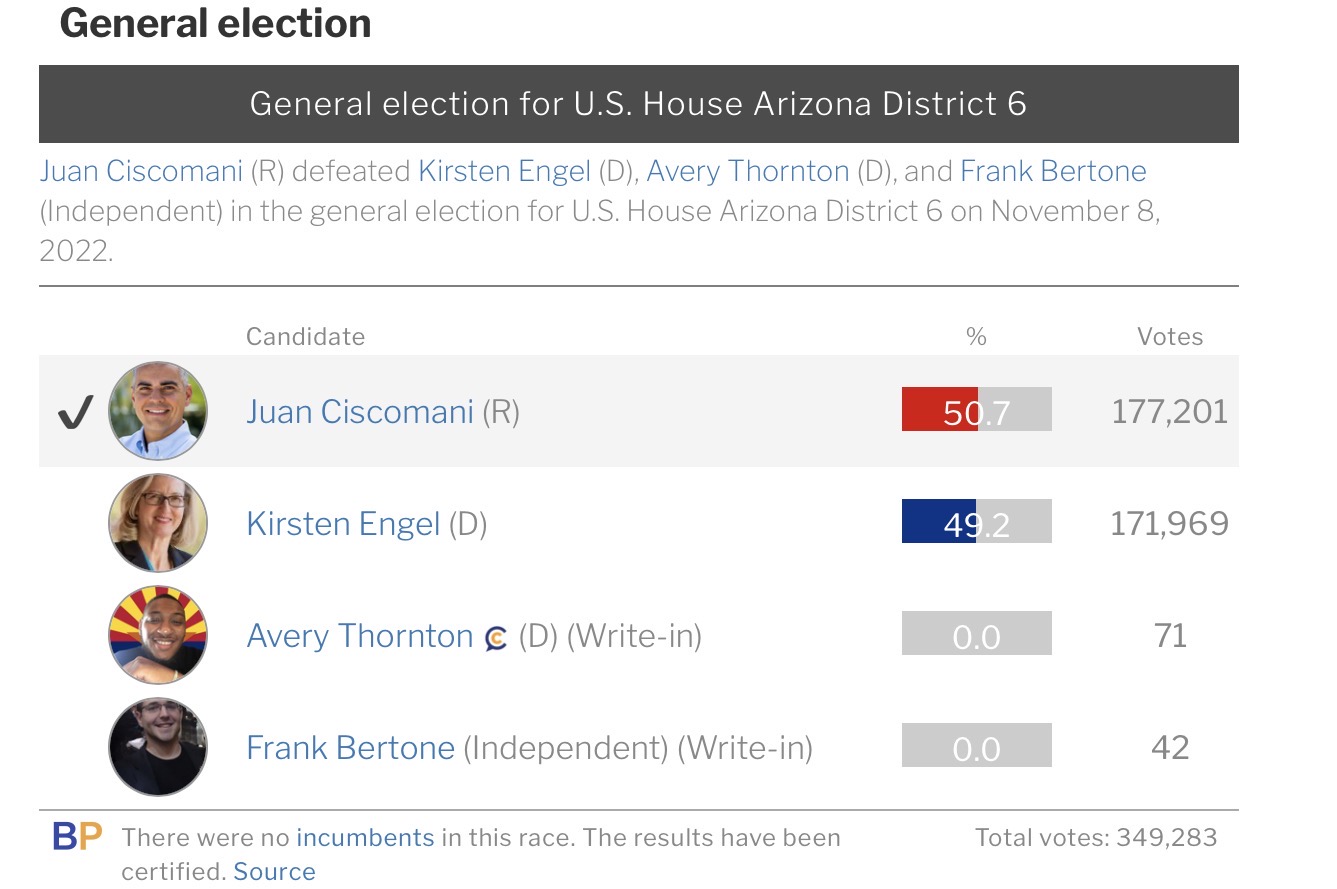
Arizona redistricted, and with Kirkpatrick retiring, Ciscomani and Kirsten Engel battled for the seat in the 2022 midterms. Despite Arizona elections being a disaster once again, Ciscomani narrowly defeated Engel in what was a surprise to many.

Chart from Seth Keshel’s AZ-6 (U.S. House - Decisive) forecast: History

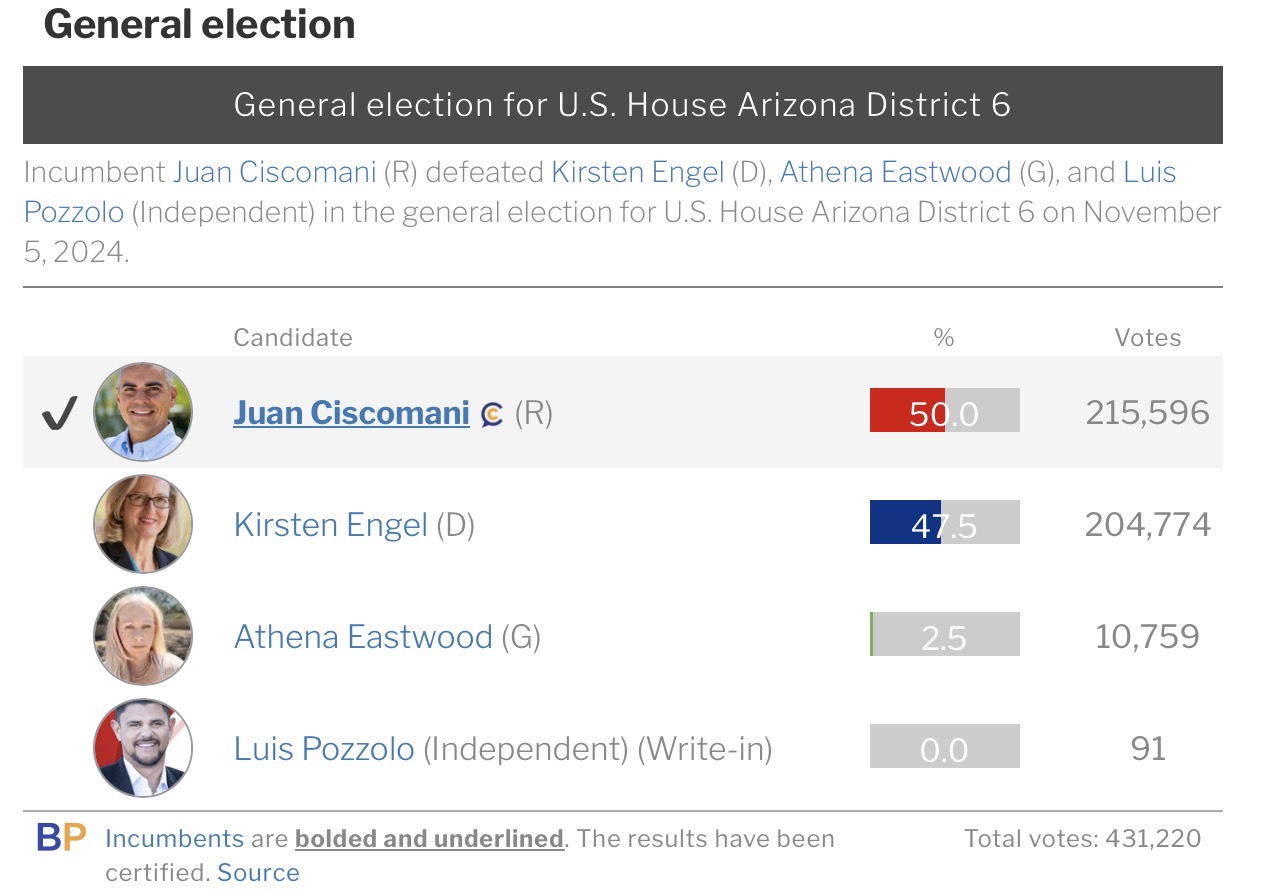
Ciscomani then held the seat in 2024 by a larger margin against the same opponent, with his win being the seat that led media networks to call the House for the GOP:

Chart from Seth Keshel’s AZ-6 (U.S. House - Decisive) forecast: History

History suggests to us that an elastic portion of the electorate in Pima County can swing hard in a midterm, but also that Ciscomani has found success in a district that has been resistant to the MAGA agenda.

V. Analysis of 2026 Primary Results

Ciscomani had to fight difficult primaries in 2022 and 2024, but got a break in 2026. Neither he nor Mendoza had primary challengers.

VI. Polls

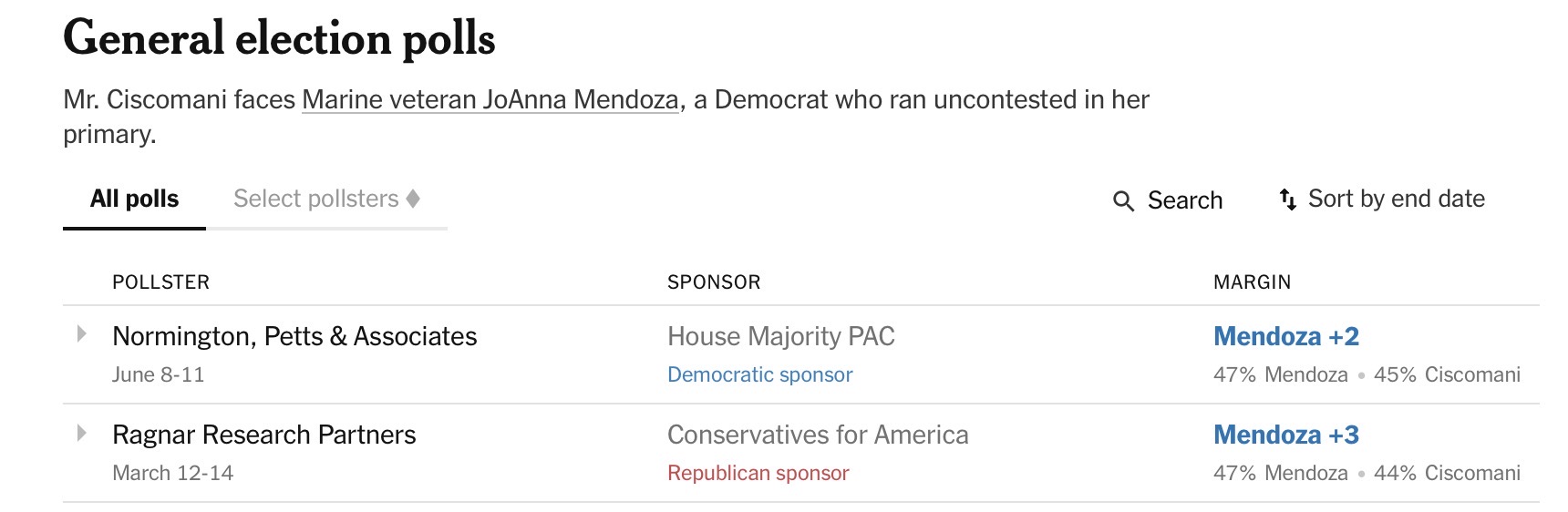
Polls pulled from The New York Times:

Chart from Seth Keshel’s AZ-6 (U.S. House - Decisive) forecast: Polls

It has been more than four months since any polling has been released, but the last one had Mendoza up by just 2 points (inside the margin of error) and was sponsored by Democrats.

VII. Media Ratings

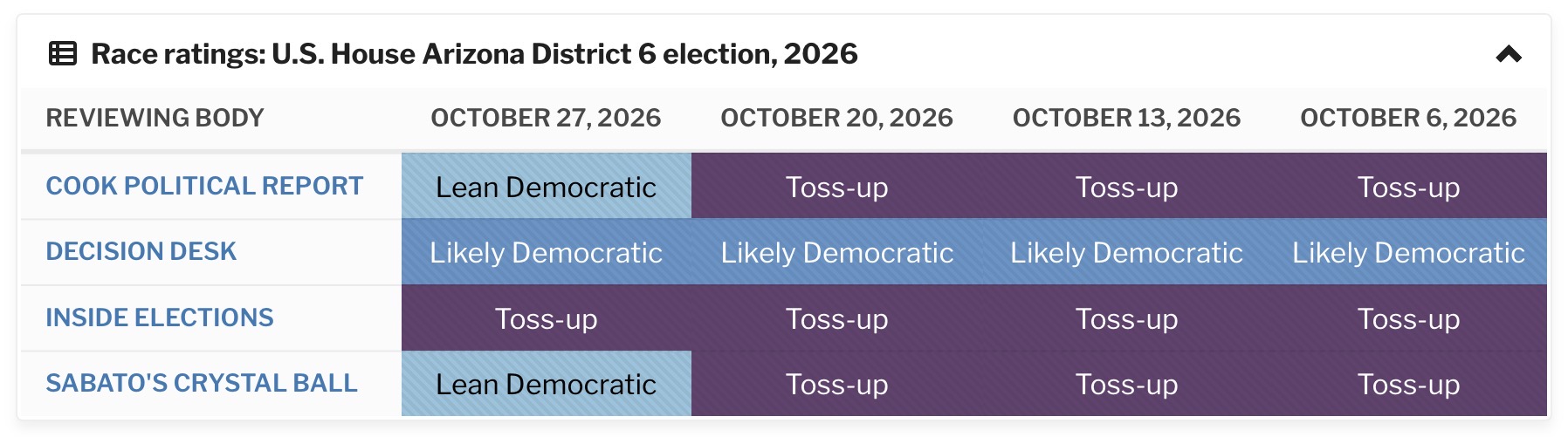
Chart from Seth Keshel’s AZ-6 (U.S. House - Decisive) forecast: Media Ratings

All major reviewers except for Inside Elections have this race favoring Mendoza. Decision Desk feels strongest about her chances, rating the race as “Likely Democratic.”

VIII. Party Registration

Chart from Seth Keshel’s AZ-6 (U.S. House - Decisive) forecast: Party Registration

Democrats have made a very modest net gain in voter registration, but only because they have lost fewer registered party members than Republicans have. Both parties have lost members to the growing chunk of non-affiliated voters, just as I profiled in my forecast of AZ-1.

This change affords a slight advantage to Mendoza and suggests a tailwind with independent voters in a hotly contested federal office.

IX. Election Considerations

Here is what I wrote about Arizona’s elections in my forecast for AZ-1:

It will come as absolutely no surprise to anyone who has followed the battle for election integrity in America that Arizona is one of the worst states in the country for transparency, handling of mail-in ballots, long counts, and “bipartisan” cover for these activities. The Maricopa County Board of Supervisors, supposedly four Republicans to one Democrat, have constantly interfered with the efforts of Justin Heap, the new County Recorder, to streamline as much of this process as possible in a short period of time.

If you want to be depressed and less optimistic, read my 2024 overview of the impact of Arizona’s electoral environment:

Arizona – 2024 Election Compendium

Pima County’s recorder, Gabriella Cazares-Kelly, is another real disaster when it comes to running elections. You can review some of her exploits in this piece:

Pima County on the Clock After Mail-Balloting Botch

X. Summary and Election Estimate

This is one of few remaining seats held by the GOP that is far more friendly to House Republicans than President Trump atop the ticket. Most of them were blown over in 2018, and haven’t been taken back. That, as shown by the dramatic shift in the old AZ-2 in 2018, is the biggest risk to Ciscomani, who is running a fine campaign as we speak:

Chart from Seth Keshel’s AZ-6 (U.S. House - Decisive) forecast: Summary and Election Estimate

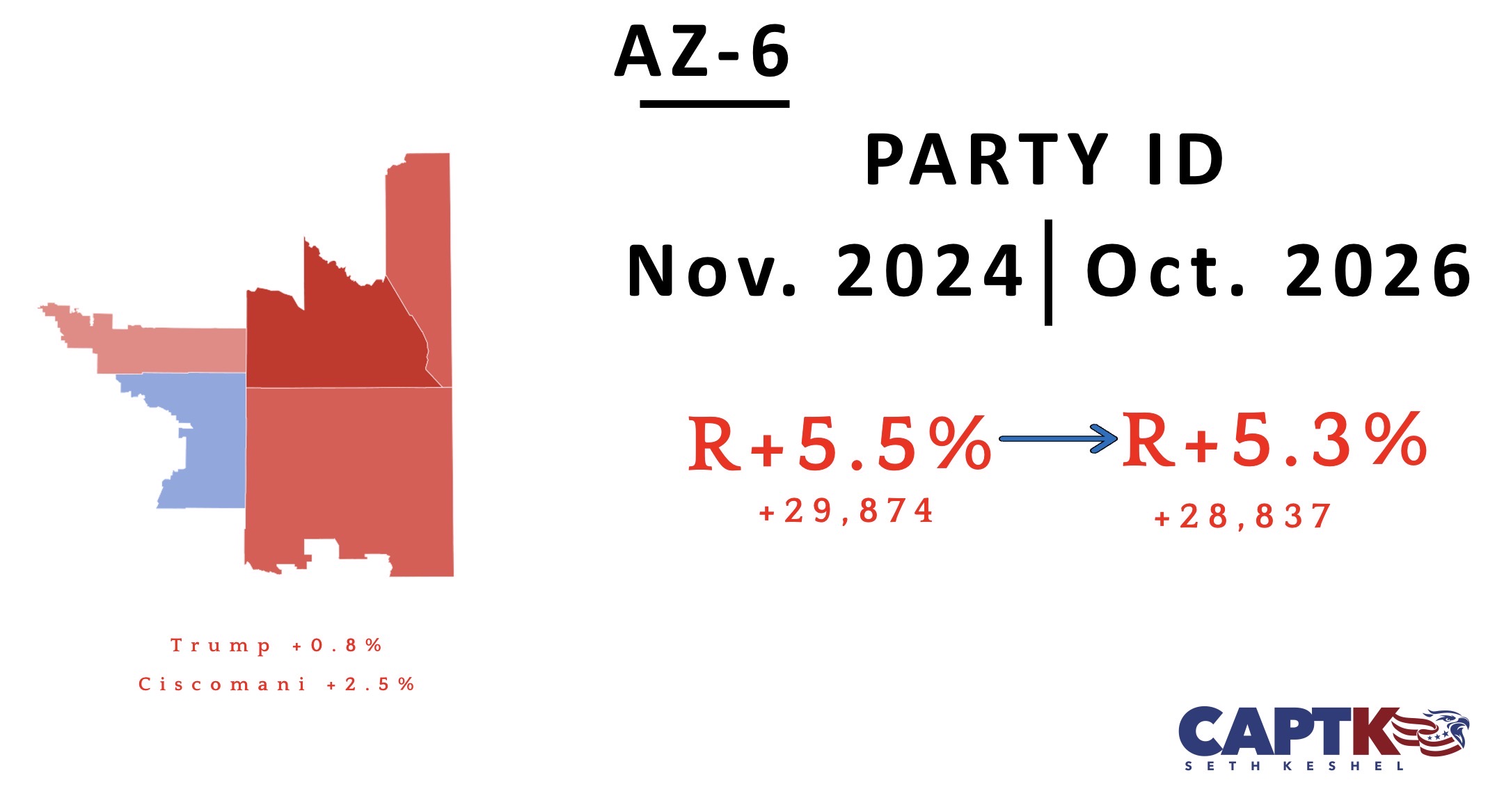
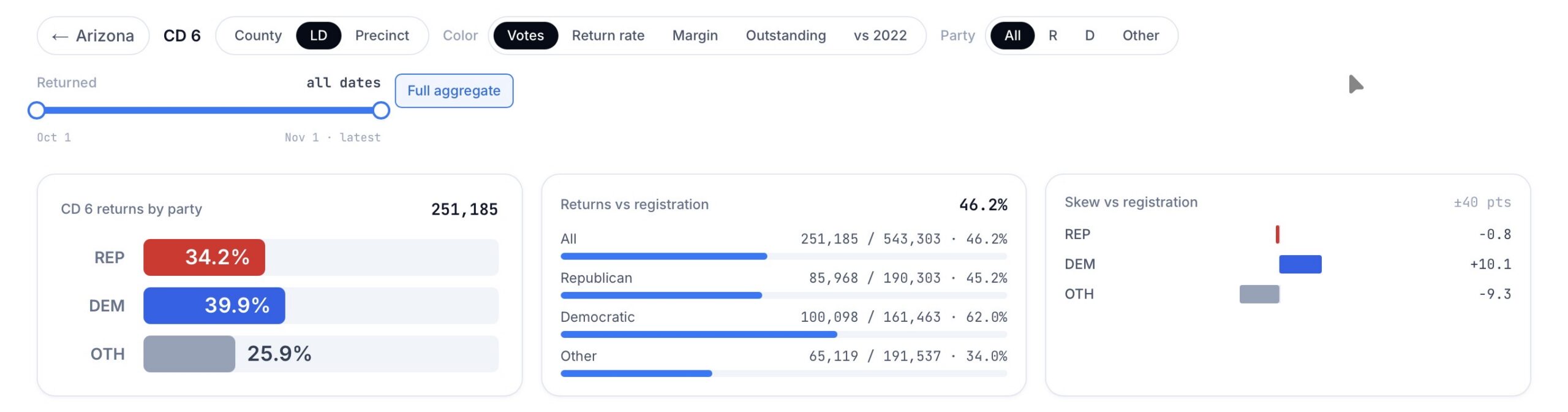
Democrats are up 5.7% in returns, but they’ve been up like this in Ciscomani’s two previous runs. TPUSA efforts are also squeezing low propensity voters to get ballots in. If Ciscomani is going to pull off the hold and see his 2.5% margin from 2024 stand up, he’s going to need to do well in northeastern Tucson:

Chart from Seth Keshel’s AZ-6 (U.S. House - Decisive) forecast: Summary and Election Estimate
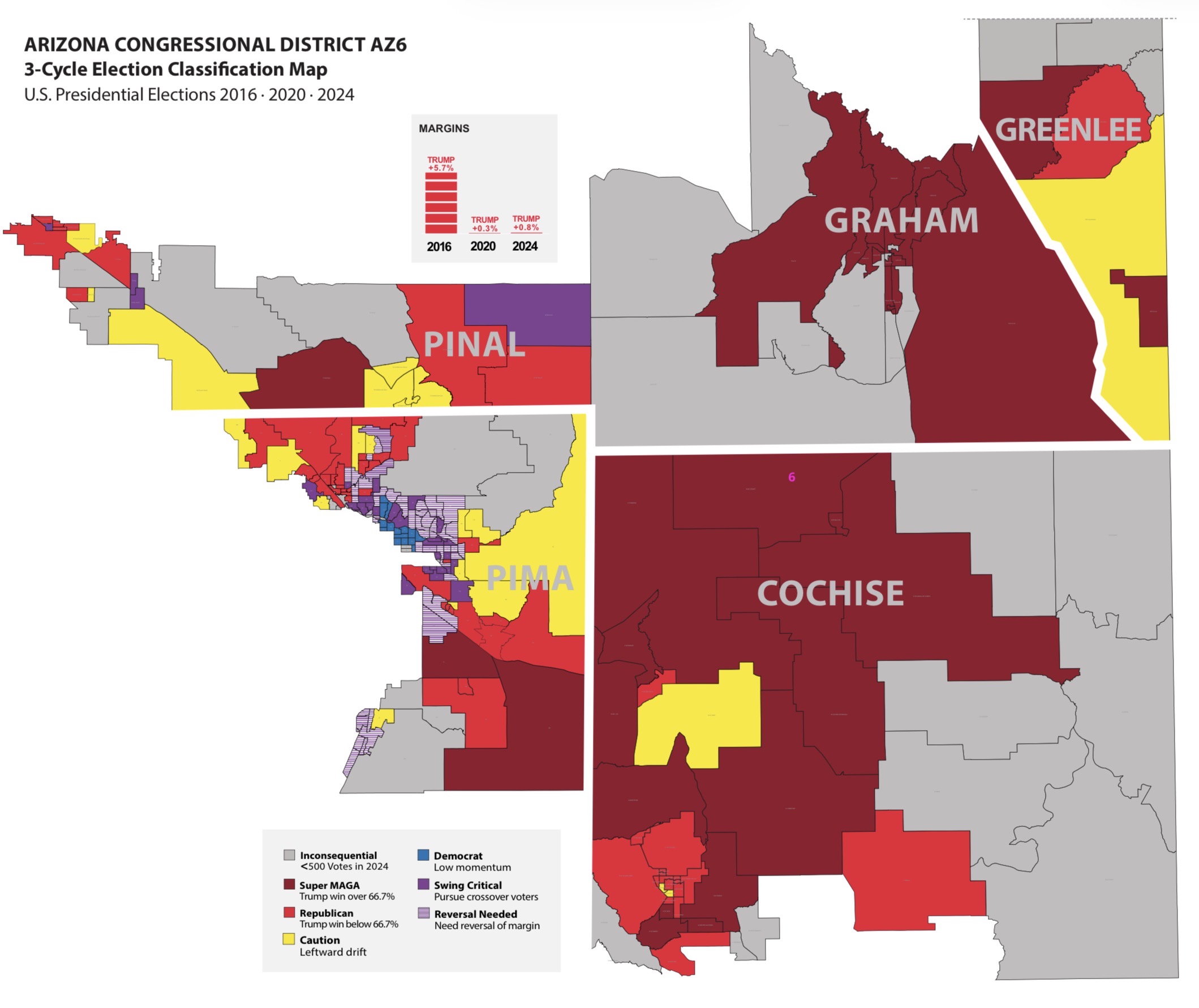
Captain K Proprietary Mapping of AZ-6

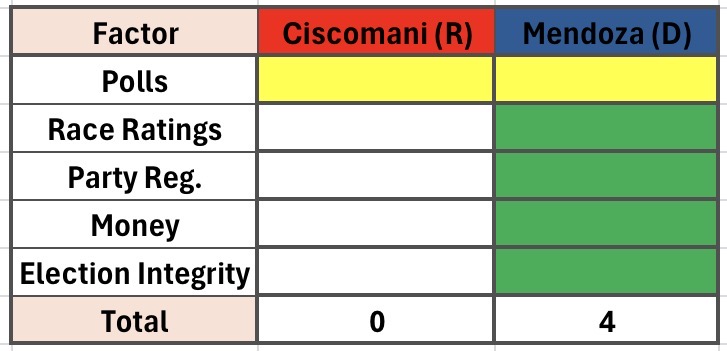
Ciscomani will dominate the rural vote. MAGA precincts (crimson-shaded) are all over southeastern Pima County, Cochise County, and Graham County. Those purple (solid and striped) and yellow precincts in Pima County will determine if Ciscomani goes back to Congress, or Mendoza takes over. This is how the decision matrix looks:

Chart from Seth Keshel’s AZ-6 (U.S. House - Decisive) forecast: Summary and Election Estimate

Despite having no singular advantage in this matrix, I think Ciscomani has a shot. Things aren’t as volatile as they were at the beginning of the Trump era, and the GOP has made gains with important voting blocs, like Latinos (AZ-6 is 24.7% Hispanic). If he can tie Mendoza’s progressive record and obsession with LGBTQ issues to the emergence of the DSA, he may pull off the upset – especially if the Green candidate gets in the way.

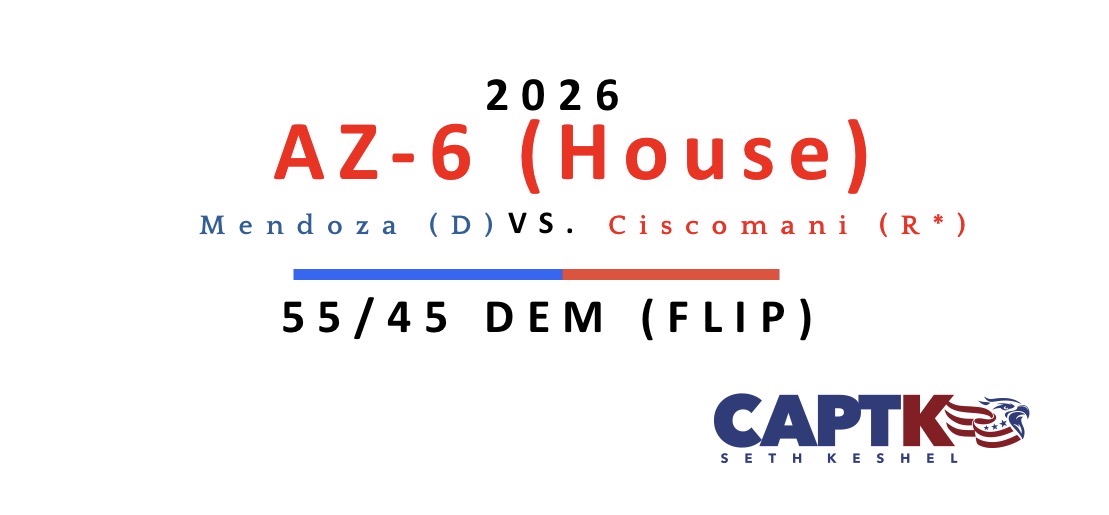
Forecast for AZ-6 House

Chart from Seth Keshel’s AZ-6 (U.S. House - Decisive) forecast: Summary and Election Estimate

Seth Keshel, MBA is a Senior Fellow at the Gold Institute for International Strategy and a retired Army Captain. He publishes Captain K’s Corner on Substack.

Kurdistan24 Set for International Recognition on 11th Anniversary

Kurdistan24 11th anniversary

This article was written by Dr. Kamaran Aziz and appeared in Kurdistan24. Kurdistan24 Set for International Recognition on 11th Anniversary.

Featuring Eli M. Gold, President, Gold Institute for International Strategy

ERBIL (Kurdistan24) – Kurdistan24 and its Washington-based correspondent and bureau chief Rahim Rashidi are set to receive an award at the National Press Club on Nov. 9, according to Sasha Toperich, Executive Vice President of the Transatlantic Leadership Network, who announced the recognition as the broadcaster marked its 11th anniversary.

Toperich made the announcement in Washington, D.C., on Saturday, Oct. 31, 2026, during a series of anniversary messages from journalists, policy specialists and former American military officials. He said his organization presents awards annually to news outlets and journalists, but did not identify the formal name of this year’s distinction.

“Kurdistan 24 and one of your finest, Rahim Rashidi, will be receiving an award at the National Press Club,” Toperich said.

He invited viewers to follow the Nov. 9 event and offered congratulations on the broadcaster’s anniversary, expressing the hope that its work would continue for many decades.

The announcement was among eight messages recorded in Washington, where speakers focused on Kurdistan24’s coverage of American institutions, its reporting for Kurdish audiences and the importance of maintaining reliable international journalism.

Eli M. Gold

Eli Gold, President of the Gold Institute for International Strategy, commended the broadcaster for connecting political and international affairs in Washington with audiences in Kurdistan and across the Kurdish community.

He singled out Rashidi’s work at the White House, Pentagon and State Department as an example of the broadcaster’s presence at major American institutions.

Gold said President Donald Trump knew Rashidi as “Mr. Kurd” and frequently took questions from him, a characterization he presented as evidence of the correspondent’s visibility.

He congratulated Kurdistan24 on 11 years of broadcasting and said he looked forward both to watching its coverage and participating in future programs.

Retired U.S. Army Colonel Myles B. Caggins III recalled his own relationship with Kurdistan24, saying his first television studio interview in the Kurdistan Region took place at its Erbil facilities in 2019.

He said he had subsequently developed friendships with staff in Erbil and abroad, expressing admiration for the organization’s journalists.

Caggins also praised the broadcaster’s presence in Washington, where he said its journalists cover events involving the U.S. president, Cabinet secretaries and visiting delegations from Iraq.

He opened his message with Kurdish greetings and congratulated the station on “11 years of broadcast and media excellence,” wishing it continued success for many years.

Peter Huessy, a Senior Fellow at the Gold Institute and President of Geo-Strategic Analysis, spoke about Kurdistan24’s contribution to American understanding of Kurdish affairs.

Huessy, whose work focuses on nuclear weapons, space and energy issues, said he valued opportunities to appear on the broadcaster’s programs and discuss developments involving those fields.

He also welcomed what he described as the organization’s commitment to Kurdish security and aspirations for independence, alongside maintaining close ties with the United States.

Huessy thanked Kurdistan24 for helping American audiences better understand developments affecting Kurdistan and its people.

Other Washington correspondents offered congratulations based on their professional encounters with the station’s journalists.

Michail Ignatiou, a Greek correspondent covering Greek, Turkish, Cypriot, Israeli and Egyptian affairs at the White House, wished the organization continued success and said he hoped its reporters would secure “many, many exclusives from the White House.”

Alana Austin, who covers the White House and Congress for Newsmax, described Kurdistan24’s Washington reporting as important for bringing Kurdish perspectives into coverage of U.S. relations with the Middle East.

She praised its correspondents for addressing issues affecting the Kurdish people and covering developments concerning the relationship between the United States and countries across the region.

“Thank you for all you do,” Austin said, acknowledging the work of Kurdistan24 journalists in Washington.

Macy Gunnell, the White House correspondent for News Force, similarly emphasized the presence of international media in Washington.

Referring to Rashidi by the nickname used by several speakers, she said, “It’s absolutely incredible to see Mr. Kurd here at the White House.”

Gunnell said working alongside him illustrated the importance of allowing journalists from different countries and communities to have a voice at the White House.

She congratulated Kurdistan24 on reaching its 11th anniversary and expressed appreciation for her professional relationship with Rashidi, adding that she would continue following the broadcaster’s work.
Saurabh Shukla, founder and Editor-in-Chief of NewsMobile, delivered his message from the White House press room.
He praised Rashidi’s participation in briefings and his questions to American officials, while emphasizing the importance of accurate reporting.

Shukla urged Kurdistan24 to “make sure that you always do verified news reportage and keep the world informed.”

His remarks placed particular emphasis on verification and journalistic responsibility, alongside the congratulations expressed by other international correspondents and policy specialists.

The Washington messages coincided with anniversary commemorations in the Kurdistan Region and beyond.

Founded in Erbil on Oct. 31, 2015, during the war against ISIS and a period of severe financial pressure, Kurdistan24 began broadcasting at a time when Peshmerga forces were engaged in fighting the terrorist organization.

The institution subsequently expanded its operations through television, radio and multilingual digital platforms, providing political, security, economic and social coverage for audiences in Kurdistan and internationally.

Prime Minister Masrour Barzani and other officials marked the anniversary by recalling the broadcaster’s reporting from the Peshmerga front lines and its role in bringing developments in the Kurdistan Region to international audiences.

Iraqi officials, diplomats, professional organizations and community representatives also offered messages addressing its journalistic responsibilities and coverage of political, cultural and social affairs.

As Kurdistan24 enters its 12th year, the organization has reaffirmed its commitment to verifying information before publication, protecting human dignity and privacy, and confronting misinformation, including material generated through artificial intelligence.

It has also outlined plans to strengthen its digital platforms and invest in the professional development of younger journalists.

The announced Nov. 9 ceremony at the National Press Club will be the next occasion for international recognition highlighted during the anniversary messages, with Toperich specifically naming Kurdistan24 and Rahim Rashidi as the intended award recipients.

Read the full article at Kurdistan24

Eli M. Gold is the President of the Gold Institute for International Strategy, a Washington, D.C. foreign policy and defense think tank.