2026 Ten-Point Forecast: FL-25 (U.S. House – Decisive)

Scott Singer and Jared Moskowitz, candidates in Florida's 25th Congressional District

Scott Singer (R) vs. Jared Moskowitz (D)

I. The Race
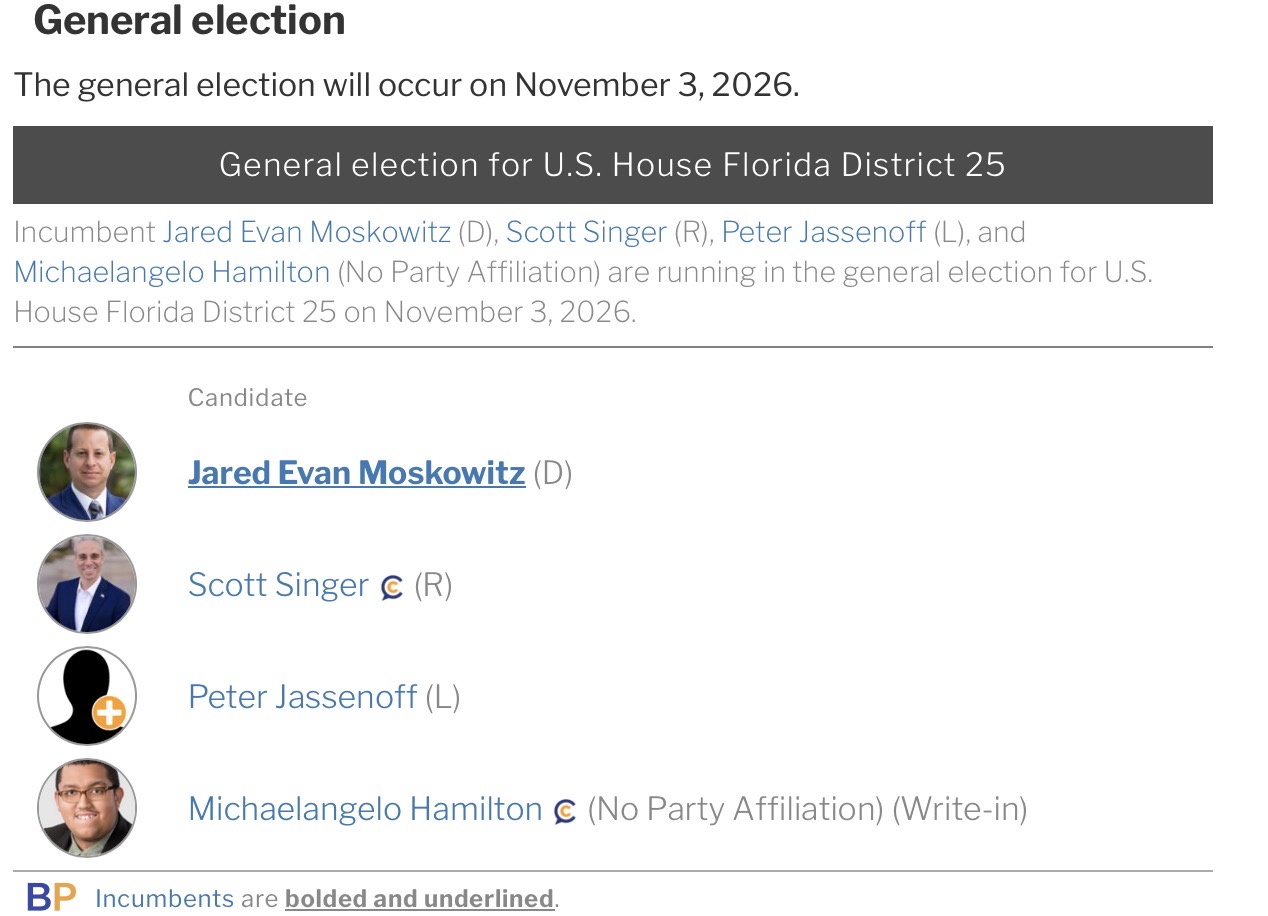
Chart from Seth Keshel’s FL-25 (U.S. House - Decisive) forecast: The Race

Scott Singer (Republican) is a south Florida native and attorney who served three terms as the mayor of Boca Raton. He chairs the Mayors’ Council of the America First Policy Institute and is looking to represent the newly redrawn FL-25 in Congress.

Jared Moskowitz (Democrat) was elected to represent the old FL-23 in 2022 and is one of the smartest Democrats in Congress. He was twice appointed to special roles by Governor DeSantis before entering Congress; once he was there, he supported the DOGE push to maximize government efficiency and was part of the bipartisan task force investigating the assassination attempt against President Trump.

II. District Geography
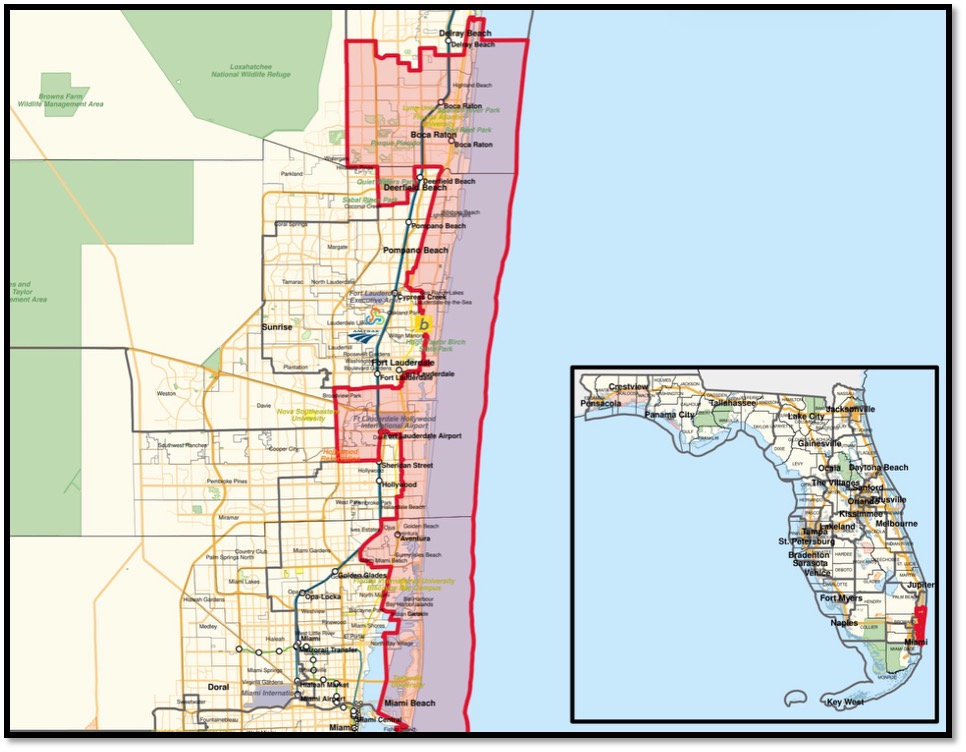
Chart from Seth Keshel’s FL-25 (U.S. House - Decisive) forecast: District Geography

Florida’s 25th Congressional District (FL-25) isn’t even in existence yet; this is the first General Election held under these boundaries following Florida’s 2026 redistricting effort that looks to give Republicans up to four additional U.S. House seats. These efforts upended Moskowitz from his old boundaries and prompted him to file for the race for this new FL-25.

This district looks like a skinny, vertical sliver spanning three counties – Miami-Dade, Broward, and Palm Beach. It avoids the major cities of those counties (Miami, Fort Lauderdale, and West Palm Beach, respectively) and includes cities like Miami Beach, Boca Raton, and other communities situated along the shoreline.

These boundaries create a district that reminds me a lot of the new TX-34, another decisive U.S. House seat that is thought to be competitive because of the major progress President Trump made with Latino voters. The only difference is that in South Florida, you’re talking about Venezuelans, Cubans, and Puerto Ricans more than Mexicans in Texas. On paper, these boundaries went red enough for President Trump that they seem like automatic GOP pickups; a closer look at the trends and down ballot impacts suggests otherwise even though this new district is much whiter (non-Hispanic, anyway) than TX-34 is.

Presidential Margins
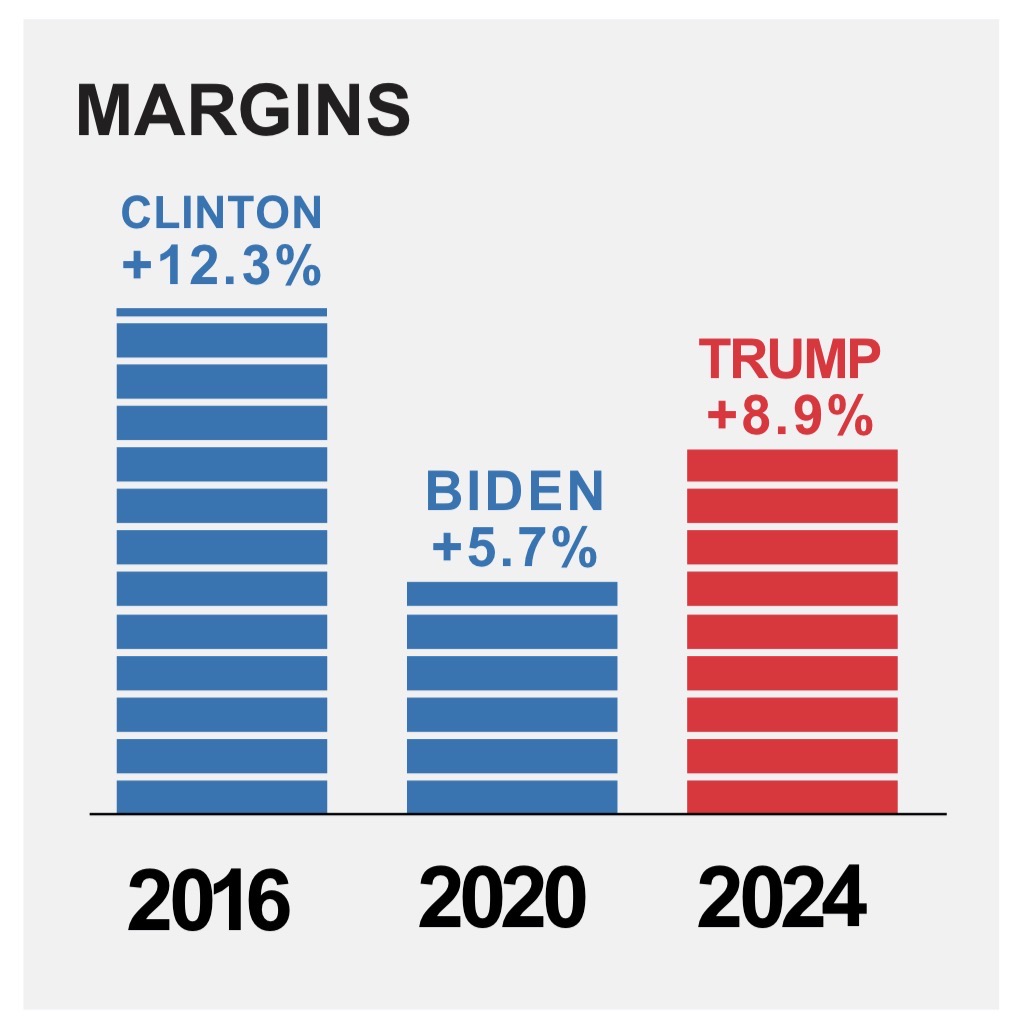
Chart from Seth Keshel’s FL-25 (U.S. House - Decisive) forecast: District Geography

In his 1.2% statewide win of then-battleground Florida in 2016, Trump lost these boundaries by 12.3%. Then, with progress made in a 3.4% statewide win in 2020, Trump lost them by 5.7% – narrowly missing out on a flip of Miami-Dade County. Trump’s huge margins in 2024 everywhere in the Sunshine State brought new optimism for another GOP district in South Florida; his +8.9% margin in the new boundaries sits 21.2% to the right of where it was in 2016.
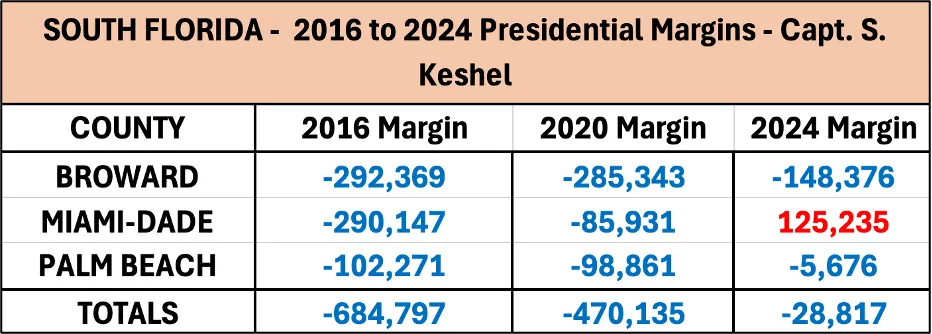
Chart from Seth Keshel’s FL-25 (U.S. House - Decisive) forecast: District Geography

Singer’s challenge, not being named Donald J. Trump or Ron DeSantis himself, will be to hold the Trump coalition together against the Democrat-blowing headwinds of a midterm – especially against a Democrat who notably displays no Trump Derangement Syndrome. Both candidates are Jewish in a 25% Jewish district.

Key Statistics

• 54% White, 28% Hispanic, 18% Black/Other

III. Market Assessment

Despite the major progress made within these new boundaries, Polymarket bettors favor Moskowitz four-to-one.

IV. History

The district as presently drawn for the 2026 election was broken up over other districts in 2018, most notably what was then FL-25 in the north end of the district, and what was then FL-27 in the southern end of the district, extending down into parts of core Miami. Representative Mario Diaz-Balart held his seat in FL-25 by an impressive margin of 21 points, only down a few notches from 2016.

2018’s FL-27 is the portion of the present district (FL-25) that gave Republicans fits. The retirement of GOP Representative Ileana Ros-Lehtinen, who won by 9.8% in 2016, left an open seat for Democrat Donna Shalala and Republican Maria Elvira Salazar (the amnesty queen now representing today’s FL-27) to battle over. Shalala won by six points, representing a 15.8% swing from 2016.
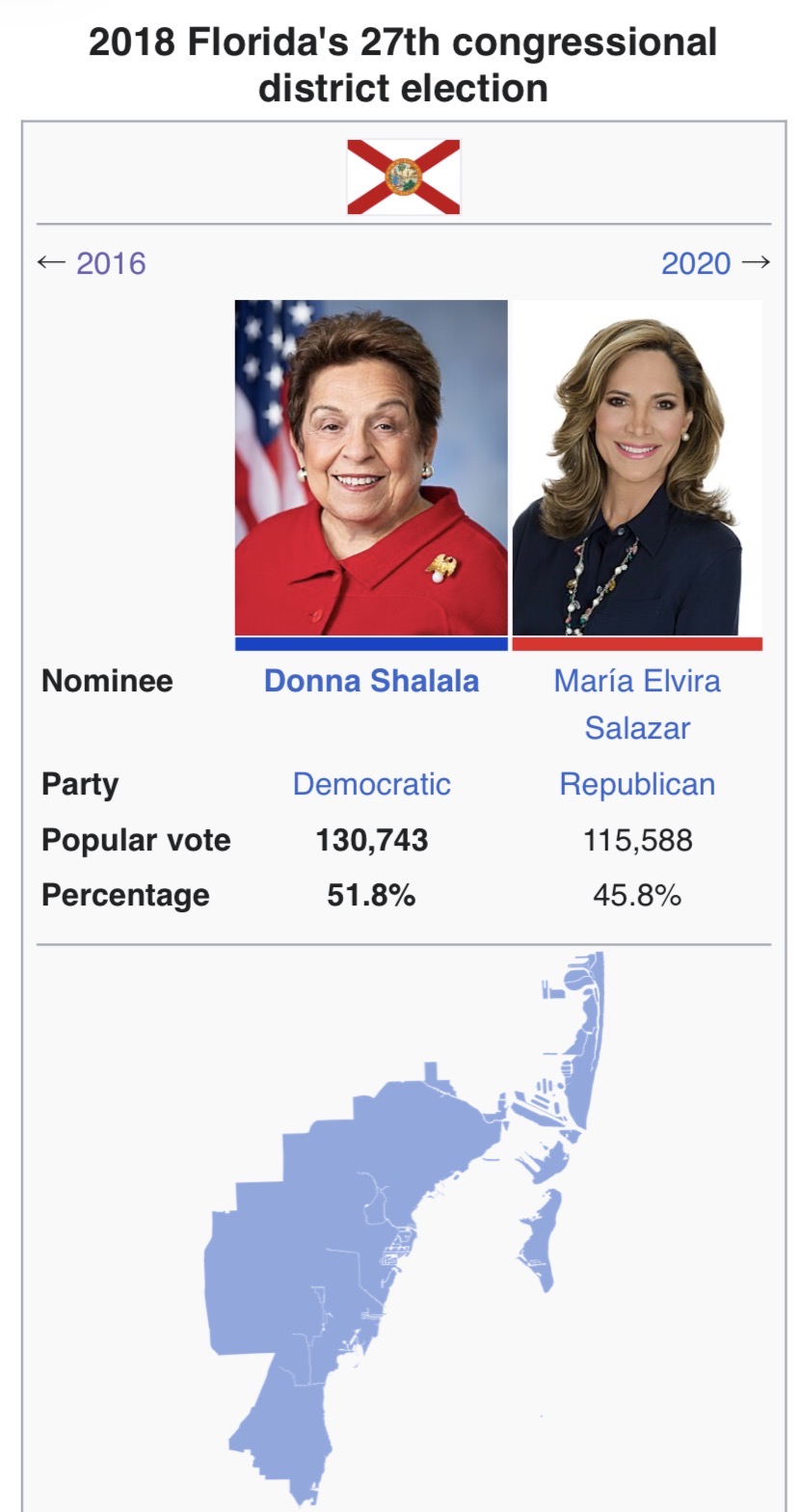
Chart from Seth Keshel’s FL-25 (U.S. House - Decisive) forecast: History

Moskowitz won his current seat (FL-23 before the change) by 4.8% in 2022, then again by the exact same margin in 2024:
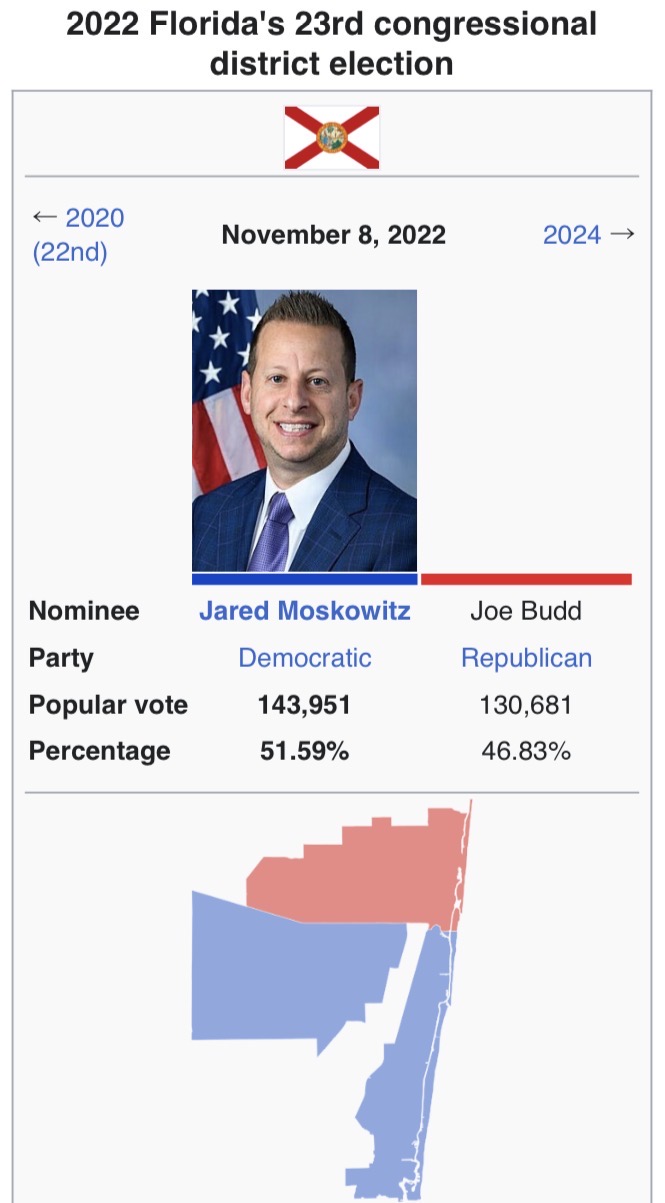
Chart from Seth Keshel’s FL-25 (U.S. House - Decisive) forecast: History

Trump only lost those boundaries by 1.9%.

V. Analysis of 2026 Primary Results

Fortunately for Democrats, especially in a state trending as hard to the right as Florida, Moskowitz soundly defeated radical left-winger Oliver Larkin in the Democrat primary.

Singer narrowly prevailed over a crowded field of candidates, winning a plurality with 31.4% of the vote on a 3.9% margin.
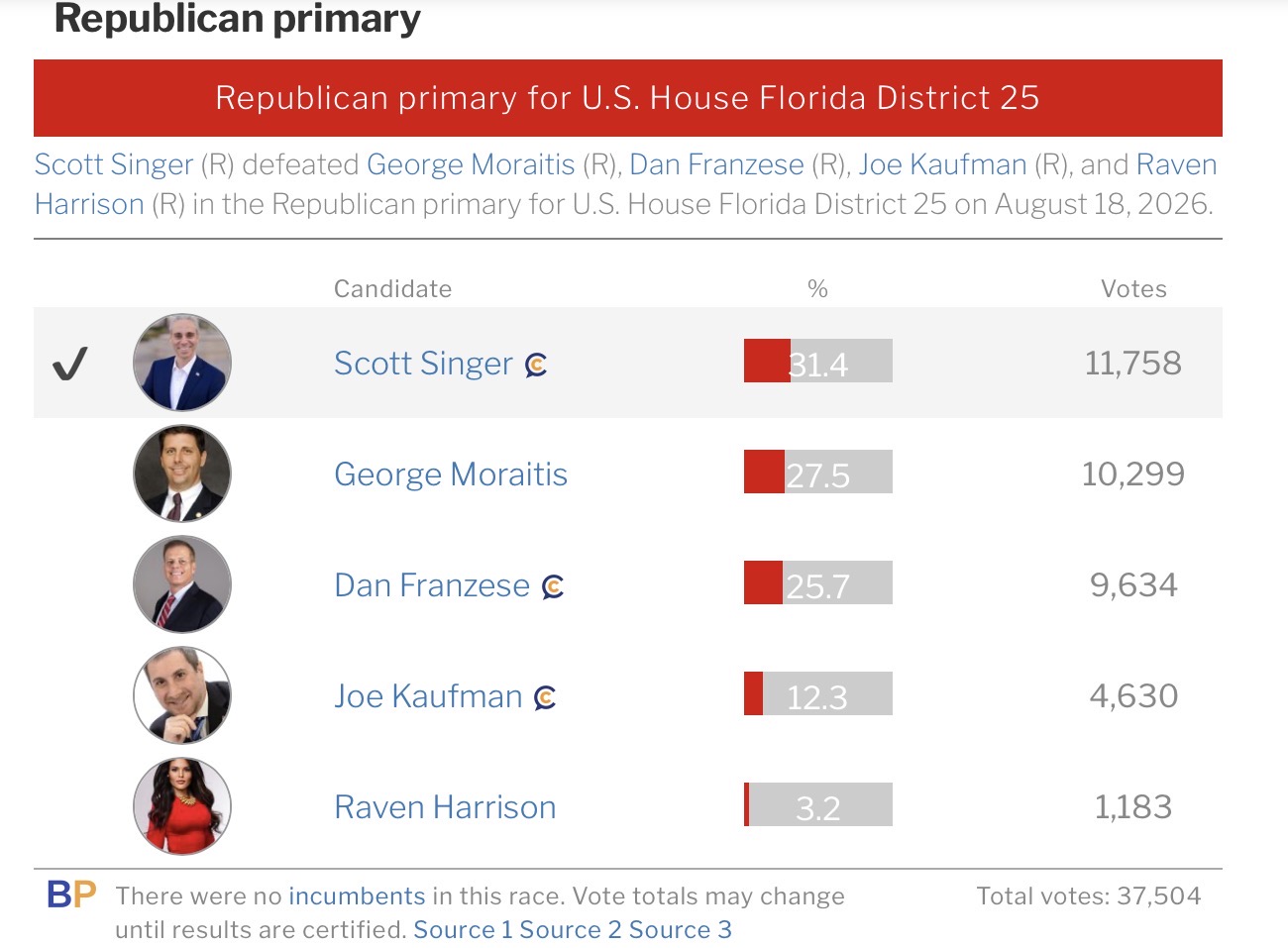
Chart from Seth Keshel’s FL-25 (U.S. House - Decisive) forecast: Analysis of 2026 Primary Results

The Republicans, as usual, ran a brutal primary. Fortunately, they appear to have come together since the contest wrapped up.

VI. Polls

I found three polls listed by The New York Times:
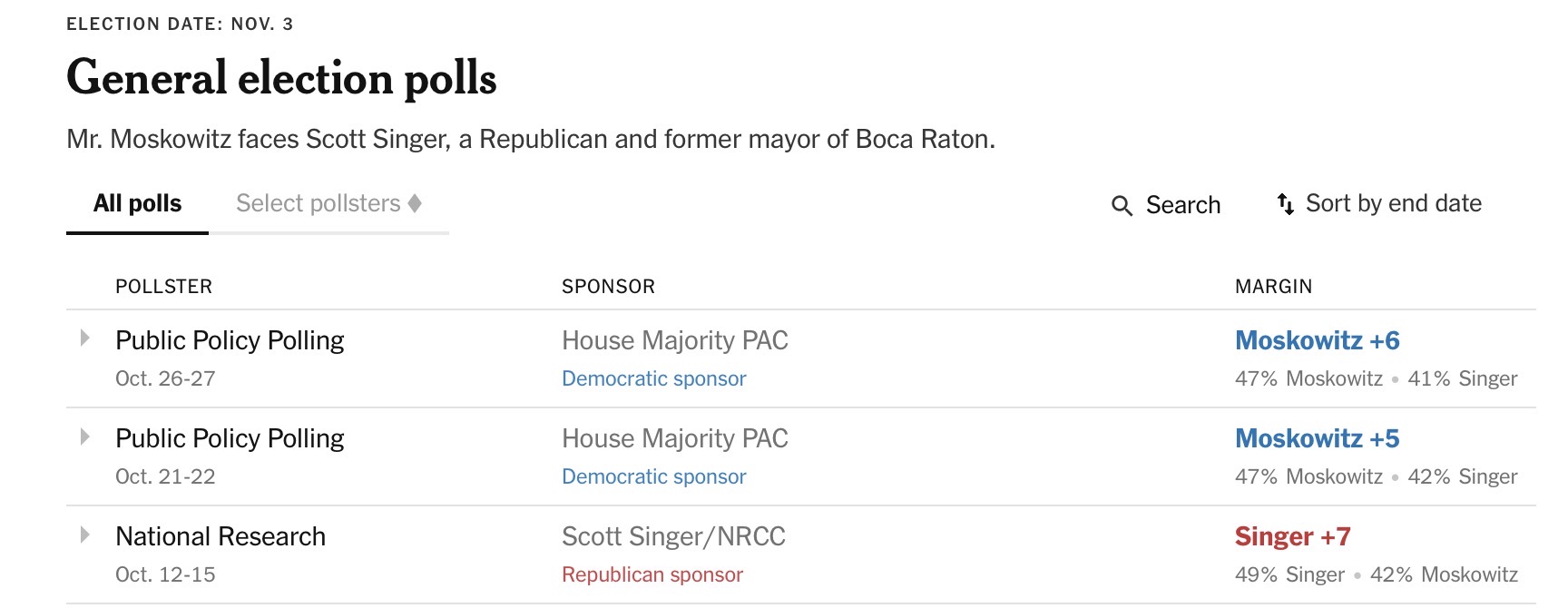
Chart from Seth Keshel’s FL-25 (U.S. House - Decisive) forecast: Polls

As usual, polling displays its increasing futility. Two Democrat-sponsored polls show Moskowitz in command of the race, and a GOP-sponsored poll has Singer up by 7 points and near an outright majority.

VII. Media Ratings
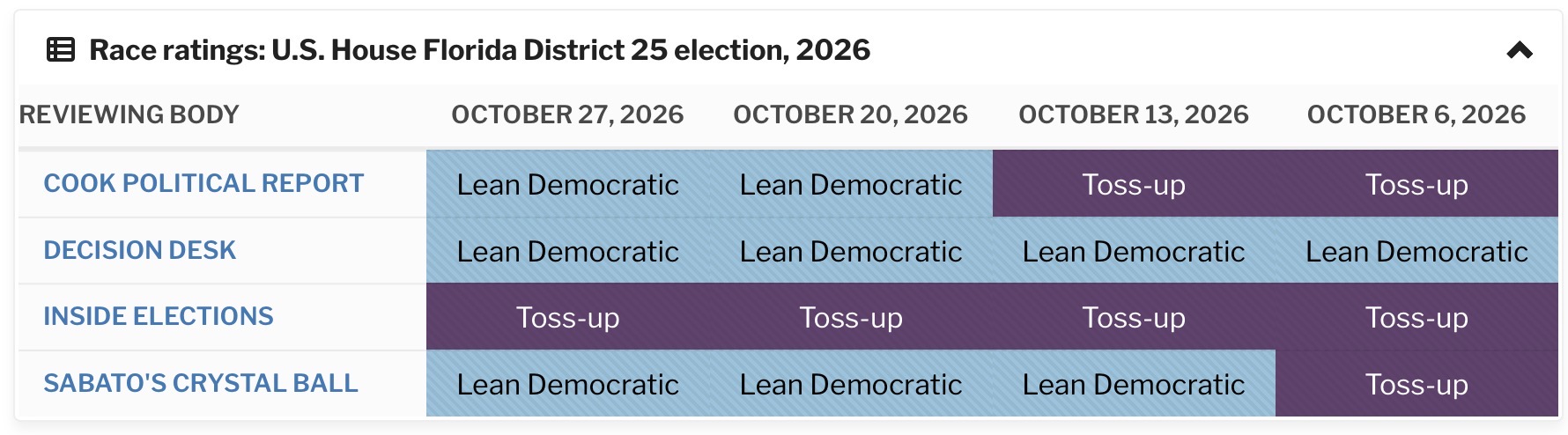
Chart from Seth Keshel’s FL-25 (U.S. House - Decisive) forecast: Media Ratings

Reflecting the likelihood of a tight contest, three of four major reviewers have this leaning for Moskowitz.

VIII. Party Registration

Florida itself is on a massive GOP registration surge, and has moved nearly four full points more Republican than it was when Trump won it by over 13 points in 2024.

Florida’s book closing report gives the registration statistics for the new FL-25 like this:

Republicans 163,894 (35.7%)

Democrats 139,891 (30.4%)

Total 459,448

Advantage R+5.2% (R+24,003)

Reports from spring suggest Republicans have made substantial progress in voter registration in the new district since it was first established by DeSantis’s signature. From Florida Politics:

Moskowitz’s campaign also noted that voters registered without a political party make up a plurality of the constituency in the new CD 25. About 35.9% are independent voters, while 32.9% are Republicans and 31.2% are Democrats.

I don’t have official figures to go on for what the registration splits in these new boundaries would have been if they were notated at the time of the 2024 election, but if Florida Politics is accurate, the district has run another 3.5% right since May by registration.

Notably, Moskowitz won his 4.8% reelection margin in 2024 in the old FL-23 with a district that was D+6.5% by registration. That means the margin ran 1.7% right of registration, which could be a huge red flag for him in a new R+5.2% district that may vote right of registration like South Florida has been trending.

IX. Election Considerations

I summed up Florida’s election picture, highlighting DeSantis’s landmark legislation, in my piece previewing Florida’s Senate and gubernatorial races:

People frequently ask me which states have made the most important reforms to elections since the 2020 quasi election. “Florida” is my hands-down answer. Governor DeSantis signed Senate Bill 524 in 2022, creating the election crimes task force and ensuring that the state would have proper control over mail-in balloting (requiring voters to request a ballot and confirm the address the ballot would be sent to). While it is a large state full of opportunities to attempt fraud, it has done an incredible job at preventing mass fraud. Here is my review of the 2024 election encompassing these changes:

Florida – 2024 Election Compendium

Notably, Florida sets the “gold standard” for counting millions of ballots, nearly the entire statewide count, by the time people wake up the next day. They learned how important public trust in elections is after the 2000 “hanging chads” debacle and have set the standard for the rest of the country.

X. Summary and Election Estimate

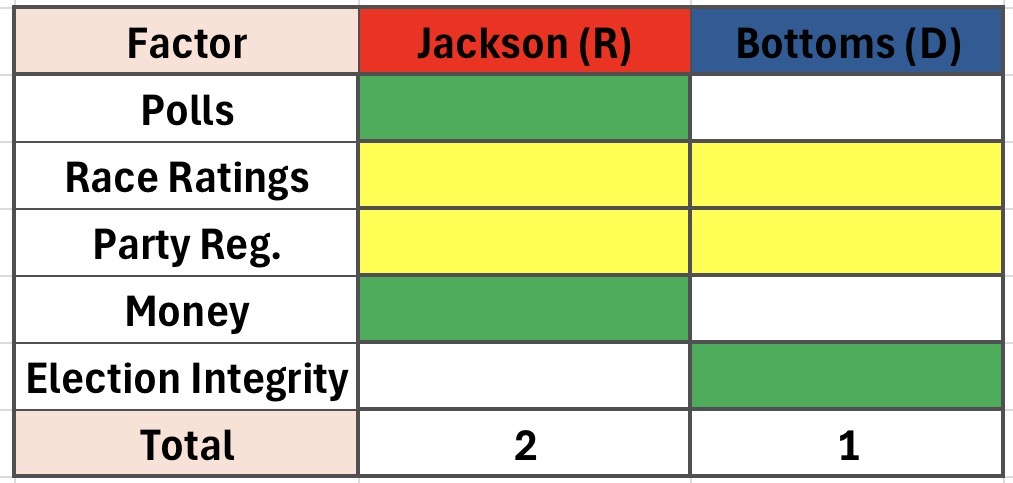
All seats with fresh boundaries, especially those merging several districts, make analysis a tall order. I have little doubt no one is winning this race by a wide margin, especially not Moskowitz. While Moskowitz is one of the more rational Democrats and clearly accepted by a heavily Jewish voting base, Singer is an experienced mayor of a major city in the district and also Jewish. No one will have the market cornered on American-Israeli affairs, neutralizing Moskowitz’s bread-and-butter issue. My decision matrix shows a very balanced battle:
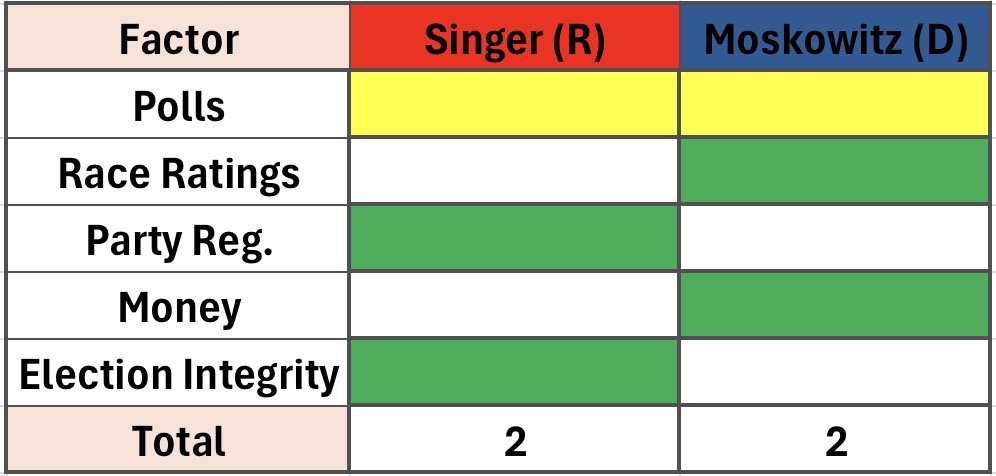
Chart from Seth Keshel’s FL-25 (U.S. House - Decisive) forecast: Summary and Election Estimate

Moskowitz has a built-in advantage with his Congressional experience and has managed his public commentary in such as way so as not to ensure his opponents show up in force to ensure he loses. If this election were in a presidential year, all the data suggest Singer is a strong favorite – especially the weight of party registration trends in south Florida. To get a win this year, with a presumptive Democrat tailwind, he will need to keep Trump’s gains with Latino and Jewish voters. Here is a look at my proprietary mapping of the new FL-25:
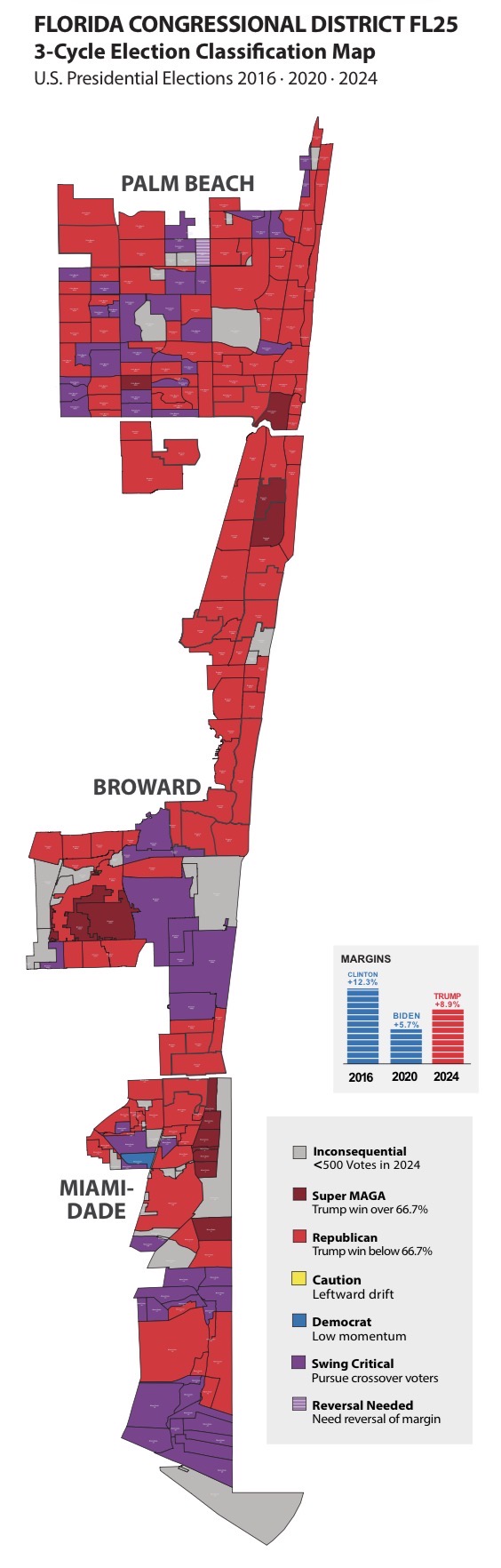
Chart from Seth Keshel’s FL-25 (U.S. House - Decisive) forecast: Summary and Election Estimate
Captain K Proprietary Mapping of FL-25

Many of the red precincts have long been Republican strongholds, especially those shaded in crimson. The purple-shaded precincts (Trump losses, but with more than 30% of the vote and a rightward shift in 2024 if solid purple) are essential for Singer to maintain margin; if they slide too much and turnout lags in strong precincts, Moskowitz can win the race.

Forecast for FL-25 House
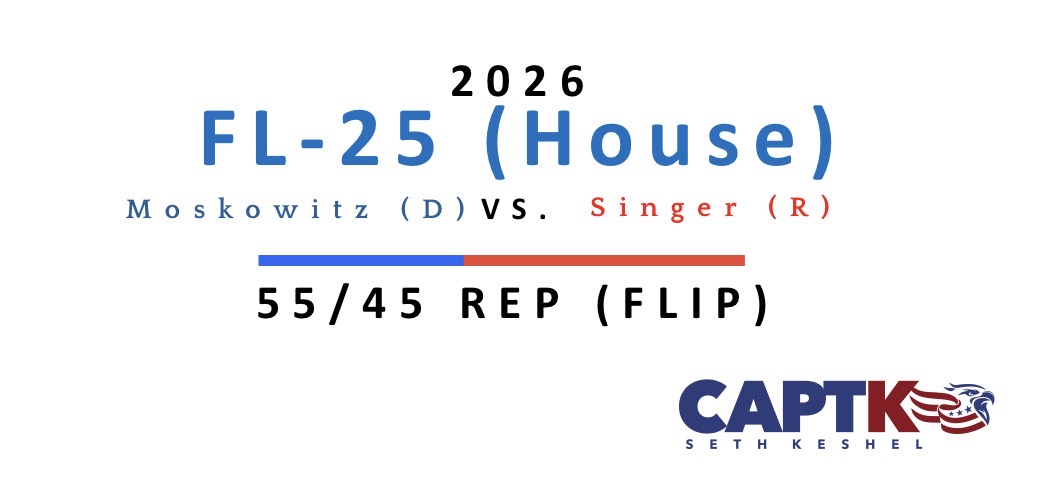
Chart from Seth Keshel’s FL-25 (U.S. House - Decisive) forecast: Summary and Election Estimate

I am bullish on Singer because I believe the registration data point to continued Republican success with Latino and Jewish voters, who continued to come around to Trump over his three runs. Moskowitz, given his experience and familiarity with parts of the new district, is absolutely in the running, and may have reason to be hopeful based on weaker-than-expected GOP in-person early voting turnout. I am not worried about this for statewide races, and all signs point to an overwhelmingly red Election Day using a much heavier registration advantage than last time around.

I feel slightly more optimistic for Republicans about this race than I do the very similar TX-34 race, primarily because Cuban and Venezuelan voters are a stronger Republican constituency than those of Mexican ancestry prevalent throughout Texas.

Seth Keshel, MBA is a Senior Fellow at the Gold Institute for International Strategy and a retired Army Captain. He publishes Captain K’s Corner on Substack.

Col. (ret.) Myles Caggins on mass protests in Europe and dangerous influences in Syria

Frontlines of Freedom podcast cover art: a U.S. soldier silhouetted against an American flag at sunset

Col. (ret.) Myles Caggins, a former communications official for the National Security Council and the anti-ISIS coalition, joined Brig. Gen. Ernie Audino on Frontlines of Freedom to discuss mass protests in Europe and dangerous influences in Syria.

On Frontlines of Freedom, Col. (ret.) Myles Caggins joined the program to discuss who may be organizing the recent mass protests in Europe and how they compare with earlier waves of unrest there. He also gave his view of Syria’s power structure, its military and economic conditions, the roles of militant and armed groups, and the outlook for Syria’s relationship with the United States.

Brig. Gen. Ernie Audino, US Army (Ret.), is a Senior Military Fellow at the Gold Institute for International Strategy, a Washington D.C. based foreign policy and defense think tank. He hosts Frontlines of Freedom, a nationally syndicated military news and talk radio program.

Listen on Spreaker Listen on Apple Podcasts

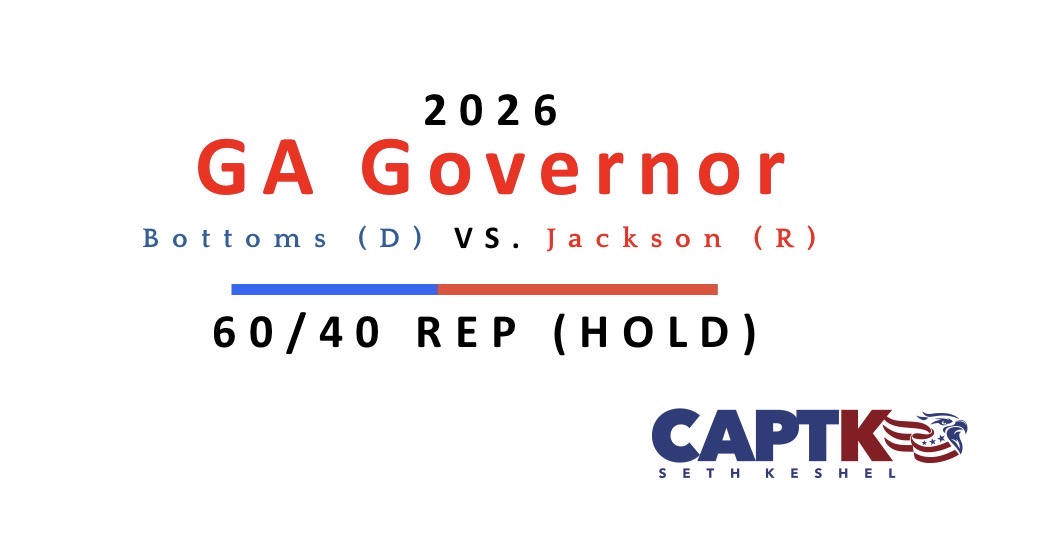
2026 Ten-Point Forecast: Georgia Governor

Rick Jackson and Keisha Lance Bottoms, candidates in Georgia's 2026 governor race

Rick Jackson (R) vs. Keisha Lance Bottoms (D)

I. The Race

Chart from Seth Keshel’s Georgia Governor forecast: The Race

Rick Jackson (Republican) is a billionaire healthcare executive who came out of nowhere to take the GOP gubernatorial nomination from a crowded field of candidates, including Trump-endorsed Lieutenant Governor Burt Jones. He has a relatable story from growing up in poverty and contributed large sums of his own money to finance his campaign.

Keisha Lance Bottoms (Democrat) was once mayor of Atlanta (2018-2022) and later worked in the Biden administration. Her campaign is very loudly anti-Trump to distract from her lack of meaningful achievement as Atlanta’s mayor; if elected, she would be the first black woman to govern an American state.

II. State Profile

Chart from Seth Keshel’s Georgia Governor forecast: State Profile

Simply put, Georgia is a looming catastrophe of epic proportions for the Republicans. Perhaps not this year for governor, but almost certainly for U.S. Senator. Without a major change in racial voting patterns, Georgia looks like a blue state to me by 2036 – close enough to get excited about when the first votes drop, but urban and polarized enough to remember better days not so long ago.

President Trump carried Georgia by 5.1% in 2016, and barely had to campaign there despite his lack of political experience. Trump then gained a massive heap of net new votes and ran into Secretary of State Brad Raffensperger’s corrupt elections system and a 634 percent increase in mail-in ballot usage from 2016 to 2020. He managed to keep driving up his vote total in a re-try in 2024, and despite a prodigious performance, carried the Peach State by a measly 2.2%.

Presidential Margins

2016 Trump +5.1%

2020 Biden +0.2%

2024 Trump +2.2%

If you want to get into the weeds and details of the 2020 election in Georgia and other states, read my book, The American War on Election Corruption.

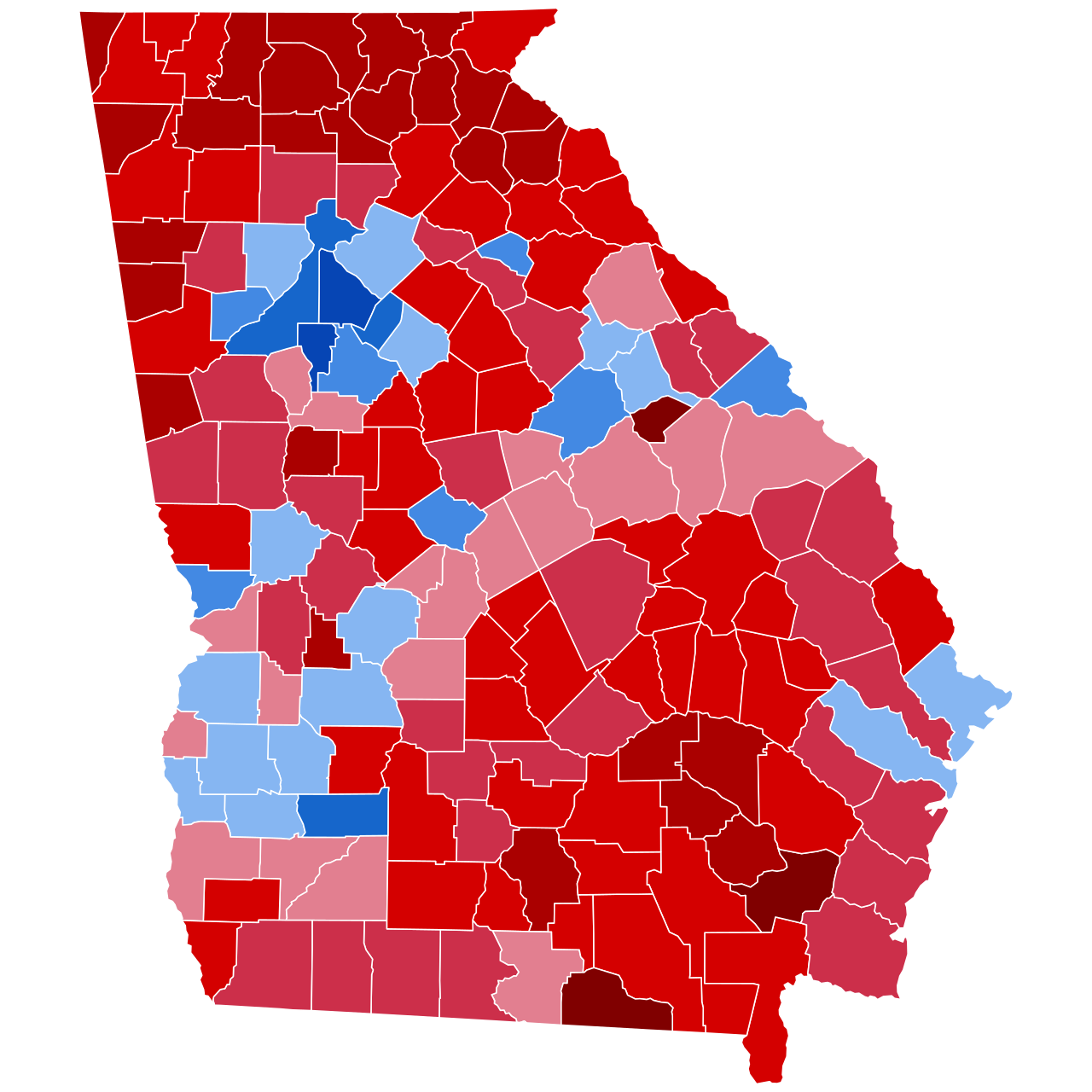
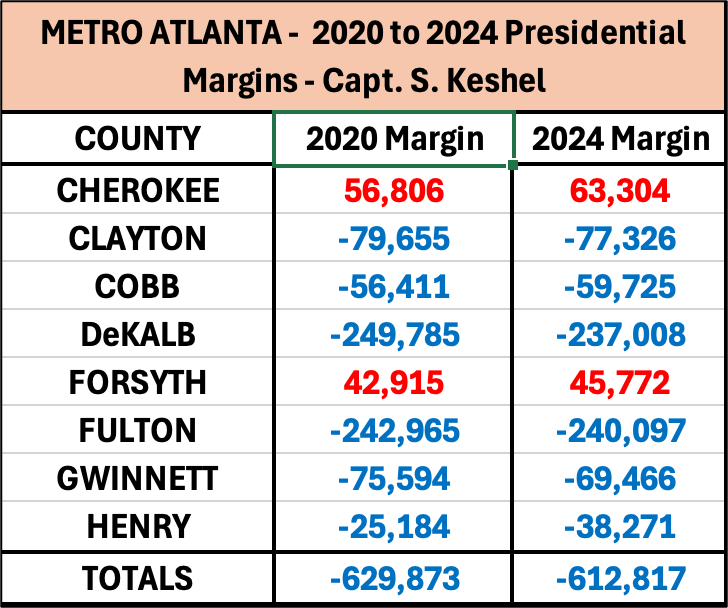
Georgia still has plenty of issues with public confidence in election results, but its political problems remain. The Atlanta metro dominates the rest of the state. Fulton and DeKalb Counties are the two Democrat strongholds making up core Atlanta. They are flanked by Cobb and Gwinnett Counties, two former Republican strongholds of the suburban variety that both flipped in 2016 and gotten bluer and bluer. The graphic below illustrates just how badly President Trump has been smoked in metro Atlanta:

Chart from Seth Keshel’s Georgia Governor forecast: State Profile

Southern black voters are more loyal to Democrats than black voters anywhere else. In Georgia, from the 1990s until only recently, they were easily outvoted by the extremely conservative white voter base. Unfortunately for Republicans, the turn to Republican populism (“MAGA”) has created a moderate wing of the party that is confined to metro Atlanta that has been instrumental for declining margins not only in northern Fulton County, but also in suburban counties like Forsyth and Cherokee Counties.

The rural counties of Georgia (outside of the “Black Belt” rural counties that support Democrats) are overwhelmingly red. The issue is that they are maxed out and practically incapable of producing notably larger margins in absolute votes. Any major growth in Atlanta without progress with voters there, or further slippage in suburban counties, makes a blue Georgia increasingly likely in coming years.

Key Statistics

• 53.2% White, 32.3% Black, 10.5% Hispanic

III. Market Assessment

Polymarket bettors favor Bottoms, but Jackson is still considered competitive and subject to the same wild swings in these markets impacting all GOP candidates.

IV. History

Georgia’s gubernatorial history closely resembles Texas’s, even if the current chapter started eight years later than the Lone Star State’s. In 2002, Sonny Perdue was elected governor of Georgia, defeating Roy Barnes. In winning that race, Perdue became the first Republican governor of the Peach State since Reconstruction. He served two terms and gave way to Nathan Deal, a former Democrat, who won in 2010 and took over in January 2011.

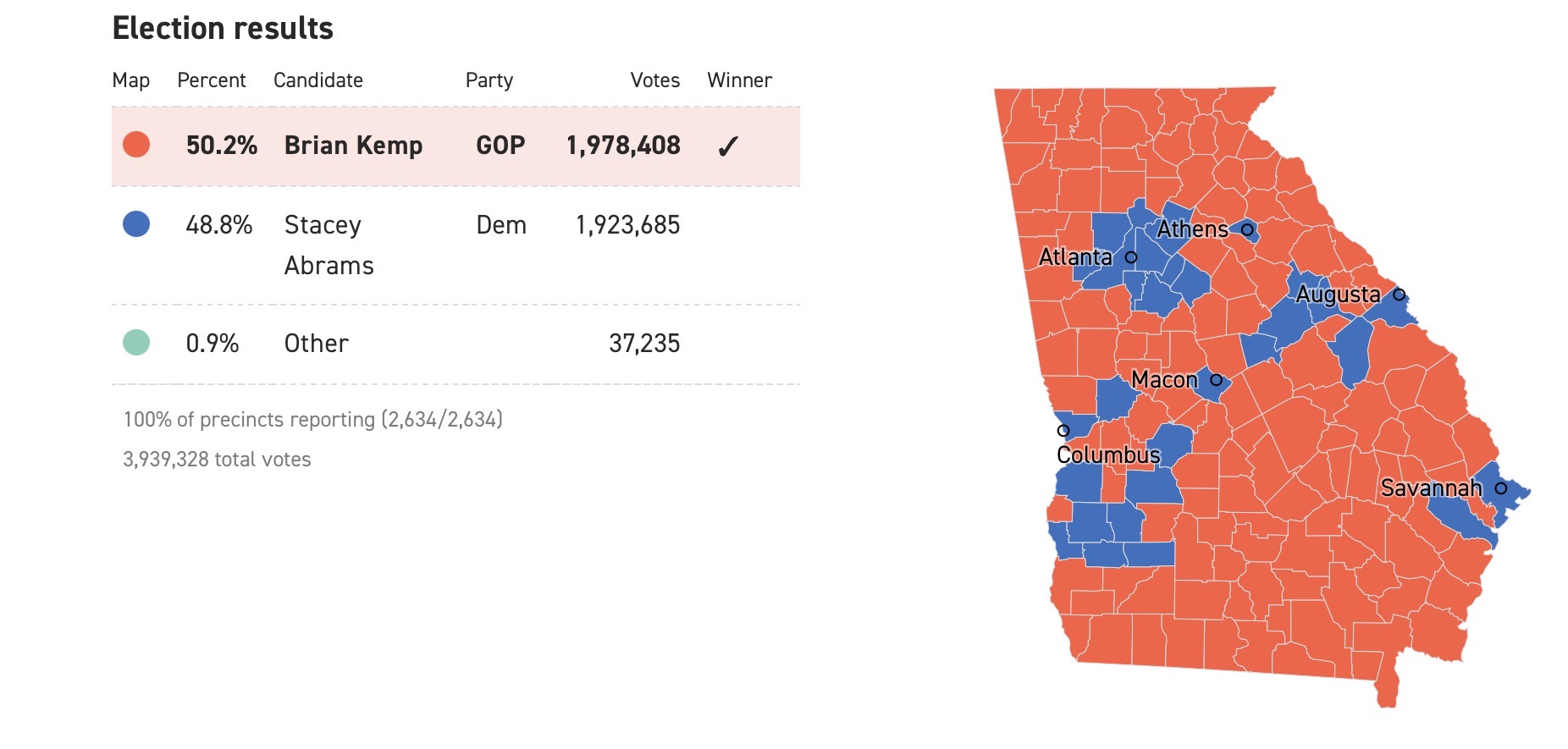
In 2018, the first electoral test of the state since Trump’s election win, Secretary of State Brian Kemp was the GOP nominee for governor in a race everyone overlooked. It nearly backfired, but Kemp held on by a tiny margin over progressive favorite Stacey Abrams.

Chart from Seth Keshel’s Georgia Governor forecast: History

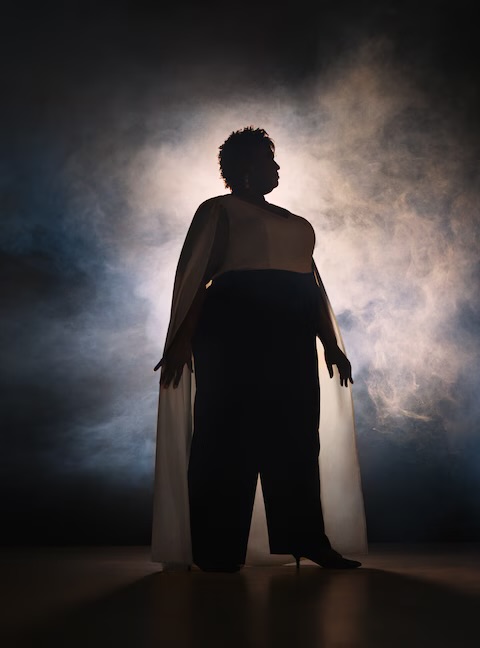
Just 54,723 votes, 1.4%, separated Kemp and Abrams, thus preventing the good people of Georgia from having this individual as their governor:

Chart from Seth Keshel’s Georgia Governor forecast: History

Kemp wound up waffling on his pledge to root out the corruption of the 2020 election and sided with Raffensperger over Trump; this earned Trump’s ire, so he endorsed former Senator David Perdue to primary Kemp in 2022. Kemp throttled Perdue, then wen t on to beat Abrams soundly in a rematch in the General Election (+7.5% margin).

To conclude, the modern history of Georgia suggests the state prefers Republican governors. It should not surprise you that an anti-Trump state rewarded the governor who stuck it to Trump the most, and this is an important thing for understanding how things next week will likely unfold.

V. Analysis of 2026 Primary Results

This is going to highlight a major Republican problem that will be a recurring theme in Georgia.

First, the easy part. Bottoms advanced with a majority in the Democrat primary to become the party nominee. She blitzed past six opponents, including former Republican quisling Geoff Duncan, who was once the state’s Lieutenant Governor. He preached all the “conservative” talking points, went on cable news to bash Trump, and then when he realized his career was dead in the water, changed his views on abortion to become a Democrat and pander around Atlanta. He reminds me very much of the hunchback in the movie 300; he betrayed Leonidas and then the enemy he helped threw him to the side, too.

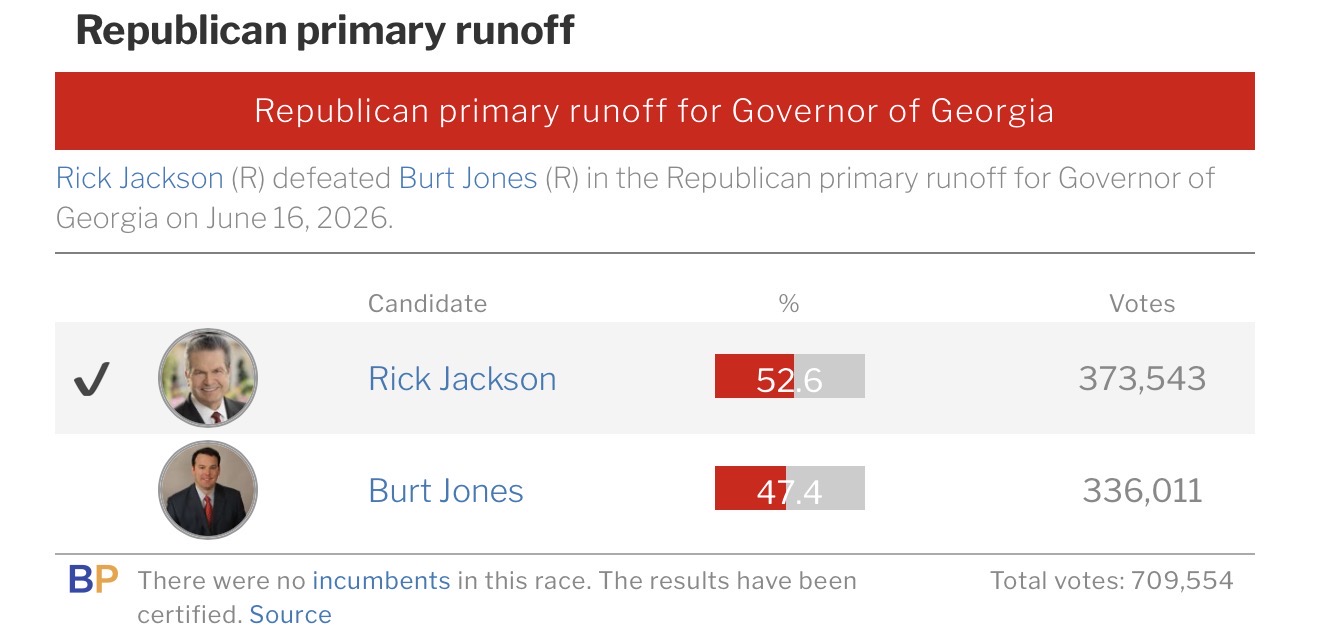
Now, on to the Republicans. Jones, Trump’s endorsed pick popular with the grassroots wing of the GOP, beat Jackson in the first go-around, but didn’t get to a majority. Jackson won in the June 16 run-off:

Chart from Seth Keshel’s Georgia Governor forecast: Analysis of 2026 Primary Results

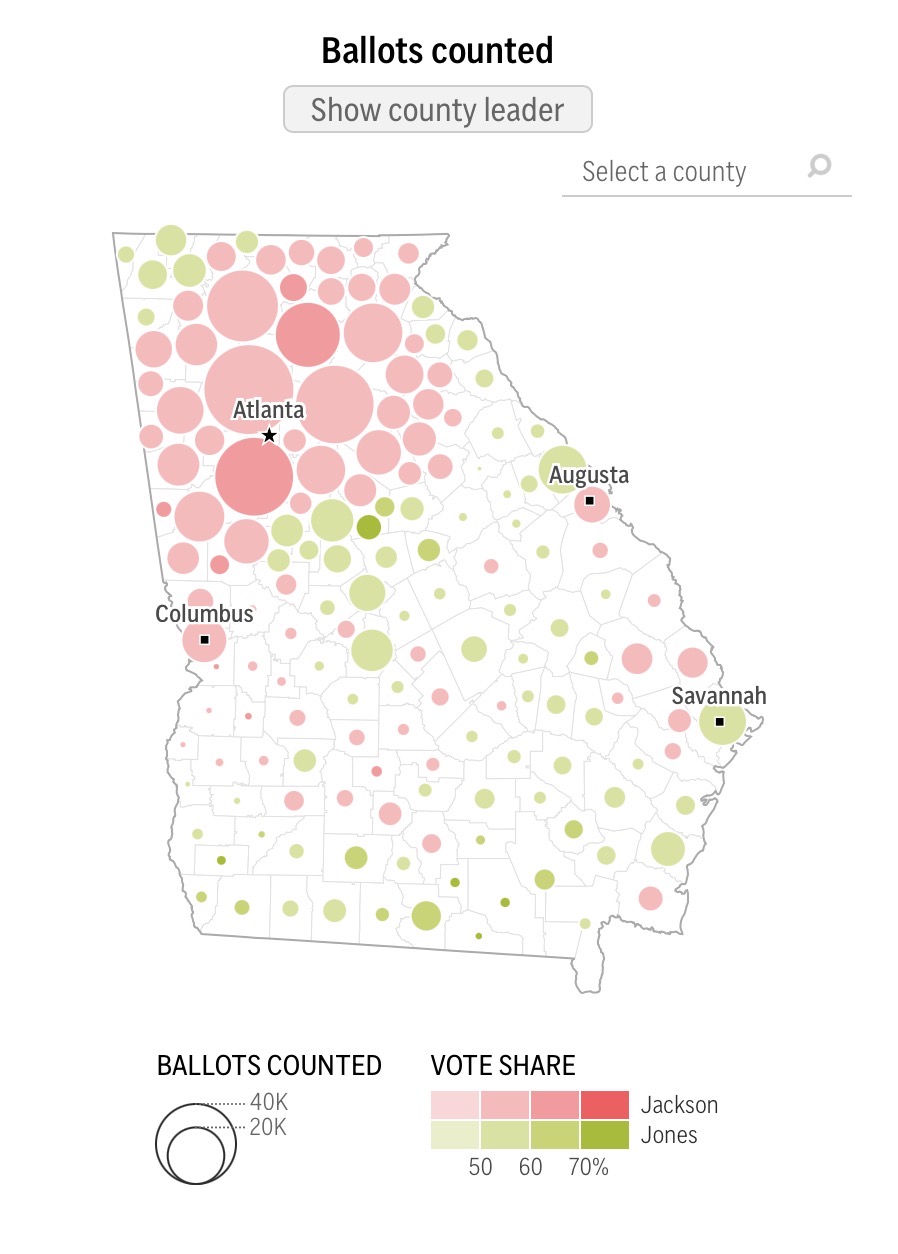
Notably, Jackson dominated Jones inside the Atlanta metro:

Chart from Seth Keshel’s Georgia Governor forecast: Analysis of 2026 Primary Results

Tensions have remained escalated with no end in sight. The candidates have traded campaign-related lawsuits, and recently Jones declined to attend a Trump rally because Jackson was going to attend. This can only harm the GOP’s chances in a state they’re already struggling to compete in. The root issue is the rift between the rural grassroots and suburban voters who are needed to chip Atlanta’s margins.

VI. Polls

Chart from Seth Keshel’s Georgia Governor forecast: Polls

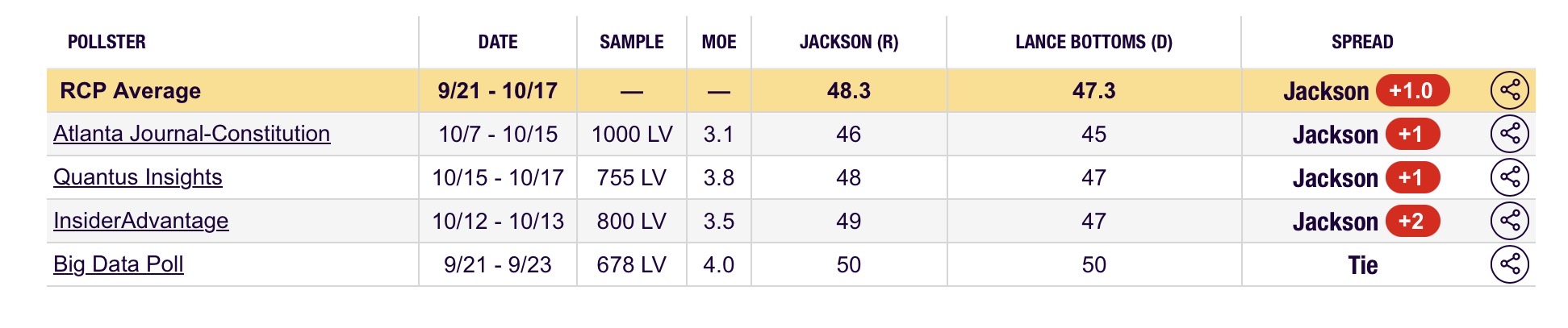
Jackson leads the average of polls by one single percentage point, according to the RCP file – but hasn’t hit 50% in any of those he leads.

VII. Media Ratings

Chart from Seth Keshel’s Georgia Governor forecast: Media Ratings

Everyone is keeping their powder dry regarding this race; they’ve all been stuck at “toss-up” for weeks, possibly due to the bad blood between Jones and Jackson.

VIII. Party Registration

Georgia does not register voters by party; however, new transplants over significantly Democrat:

Chart from Seth Keshel’s Georgia Governor forecast: Party Registration

IX. Election Considerations

Georgia has Automatic Voter Registration, a lot more mail-in voting than it had a decade ago, a dominant Democrat super-center of an urban area, and a Secretary of State (on his way out) very few trust to administer elections after the 2020 debacle.

Fortunately, the legislature has made a few incremental changes to improve things, and the primary method of voting is early in-person voting with Voter ID. You can read more about Georgia’s overrated and vulnerable election system in my 2024 review of the topic:

Georgia – 2024 Election Compendium

X. Summary and Election Estimate

The nominations of both parties for governor and the U.S. Senate offer quite the contrast.

Republicans nominated the uber-conservative grassroots fighter that appeals to rural voters, but not suburban voters, in an attempt to knock off Jon Ossoff that is widely expected to come up short (including by yours truly). Through the run-off, they also nominated Jackson, who lacks bona fide conservative credentials and the pro-Trump background he would have needed to be nominated in a state like Arizona or Texas. While that may not animate the base, the prospect of Keisha Lance Bottoms as governor will.

Bottoms declined to run for reelection as mayor of Atlanta, and for good reason. She was in charge during the COVID-19 crisis and also oversaw a massive uptick in violent crime in her four years. She is widely associated with being a failed leader and didn’t give herself much time out of the spotlight before jumping back in.

The impact of her failure in Atlanta will be exactly what Jackson needs in Cobb and Gwinnett County; Kemp lost both of them in 2022, but cleared 47% in Cobb and 44% in Gwinnett – meaningfully higher shares than Trump was able to secure in 2024. Jackson’s non-MAGA credentials will also play well in north Fulton County, which has a large establishment-oriented voting bloc that will come back to him rather than back Bottoms.

Jackson has a slight edge in my decision matrix:

Chart from Seth Keshel’s Georgia Governor forecast: Summary and Election Estimate

Forecast for GA Governor

Chart from Seth Keshel’s Georgia Governor forecast: Summary and Election Estimate

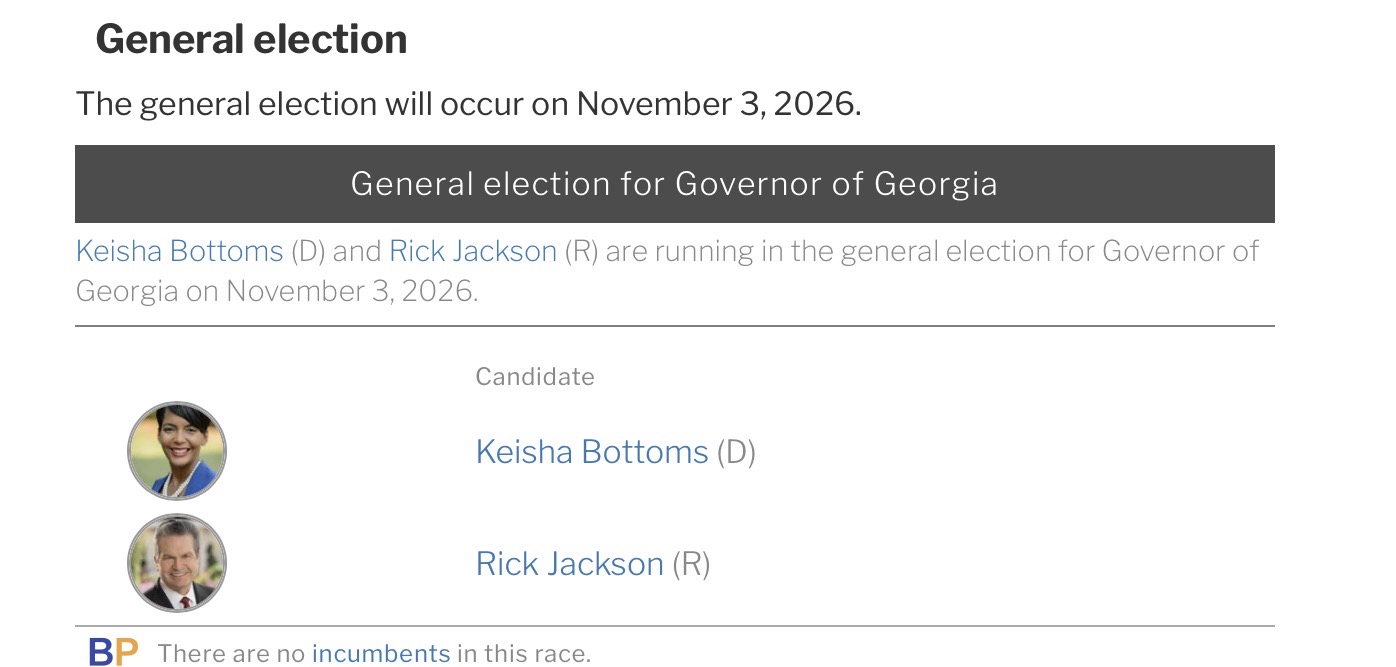
Based on Georgia’s preference for GOP governors, recent retention of two Republican-aligned Supreme Court justices, Jackson’s non-MAGA disposition, and Bottoms’s bad track record as Atlanta mayor, I feel confident this race leans toward Jackson. Without the warring going on between Jackson and Jones, I’d feel extremely confident, especially since Jackson has Bottoms beat about 10-to-1 on finances. Black rural turnout is down, but a bad Election Day from the Republican rurals, tied to the Jackson-Jones rift, is what could derail the GOP train and get Georgia’s misery started ahead of schedule.

Seth Keshel, MBA is a Senior Fellow at the Gold Institute for International Strategy and a retired Army Captain. He publishes Captain K’s Corner on Substack.
Living in Fear of Their Own

The Reichstag building in Berlin with the German flag

This article was written by Hermann Tertsch and appeared in El Debate. Vivir con miedo a los suyos.

Islamism holds ever more sway in the parties of the European left

For some years now it has been evident that totalitarian Islamist forces play an ever larger role in the parties and movements of the left in the West. Muslim candidates are multiplying on the left and, thanks to the left, radical Islamists are winning power, as in the New York mayoralty or in the local governments of dozens of British cities. Muslims are 7% of the population of the United Kingdom, but Muslim mayors govern more than 60% of the British population. And so, every day, they further transform daily life and, above all, cultural policy and police conduct to the benefit of Muslim interests. Islamic penetration of the administration and of local power is constant and immensely effective

In Germany, it is now the turn of the capital, which has been degrading for decades, also thanks to the woke drift of part of the CDU. After two decades of governments led by the Socialists with the Greens and the Communists, a brief CDU government changed almost nothing, and now the Communists stand as the leading force for the first time, thanks to the Muslim vote. Everyone knew that the Muslim vote in the neighborhoods with the most immigration is controlled by Islamist groups that follow the instructions of the Muslim Brotherhood and of the organized crime clans.

But few knew the extent to which radical Islamist groups have control and power within the parties of the German left, and especially within Die Linke, the Communists, heirs of East Germany’s Socialist Unity Party (SED). The mistaken sending of some confidential notes along with the answers to an interview that the Communist leader of Berlin and the city’s next head of government, Elif Eralp, gave to the magazine Der Spiegel has revealed that this Communist politician of Turkish origin lives terrified and under pressure and coercion from agents of Hamas, the Palestinian terrorist organization, and its partners, the Muslim criminal clans of the Arab world, especially Syrian and Lebanese ones.

Die Linke’s election victory party in Berlin, with Elif Eralp as the great winner, turned into a parade of figures linked to Palestinian terrorism and to the Arab organized crime clans omnipresent in the Berlin underworld. The notes mistakenly added to the corrected interview answers revealed the fear that the Communist Eralp, from a Muslim family, has of the party’s Islamic milieu, and made clear that she considers both herself and her family threatened by it. As she stresses, her husband also shares that fear.

Things being as they are, the Social Democrats and the Greens, who call themselves virulent opponents of antisemitism, are going to ally in Berlin with a Communist who lives under the coercion and influence of Islamist and Palestinian terrorism, which has a broad majority of supporters in Berlin’s Muslim community. Through money from the mosques, from the underworld clans and also from abroad, the pro-Hamas movement has achieved great strength and activism in Berlin and other German cities against the State of Israel and also against the increasingly threatened Jewish community.

The three forces of the left in Germany, as is happening in France with Mélenchon and in the United Kingdom with the Labour governments, have intensified their aggressive militancy against Israel, against the Jews and against Western society itself as Muslim candidates and groups have gained relevance, power and presence. The threat that parts of Europe will be governed by a left in the service of Islamism has already come to pass in many corners of the Old Continent. Berlin is next, and certainly very symbolic.

Written by Hermann Tertsch Distinguished Fellow (Honorary), Gold Institute for International Strategy

Attempted Coup in Poland

The Presidential Palace in Warsaw with a stone lion statue

This article was written by Hermann Tertsch and appeared in La Gaceta. Intento de golpe en Polonia.

Without X, no one in Europe would have found out what happened in Poland last night. The head of government, Donald Tusk, carried out an attempted coup d’état, taking advantage of the head of state, Karol Nawrocki, being on a trip abroad. He stormed the Constitutional Tribunal with the police and tried to remove the president and vice president of the Constitutional Tribunal using a loyal judge with no authority to do so.

But he did not count on the president, who, once informed, ordered his plane to turn around while it was flying over Spain. He returned to Warsaw, forced his way into the Constitutional Tribunal building ahead of his own escorts despite the cordon of Tusk’s police, and convened all the highest bodies of the Supreme Court and the Constitutional Tribunal to restore constitutional order.

Although the crisis continues, it seems clear that the Tusk government, the puppet of Von der Leyen that would never have carried out this assault without Brussels’ permission, has its days numbered. But remember: public and private media across Europe have been accomplices to the coup by silencing the whole operation. Only social media alerted Poles and Europeans. That is why they want to take control of it.

Written by Hermann Tertsch Distinguished Fellow (Honorary), Gold Institute for International Strategy