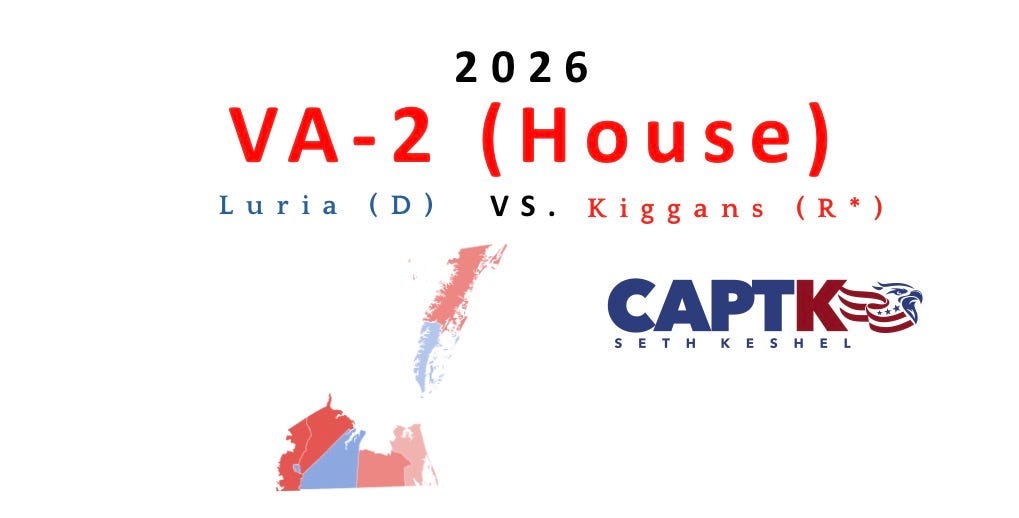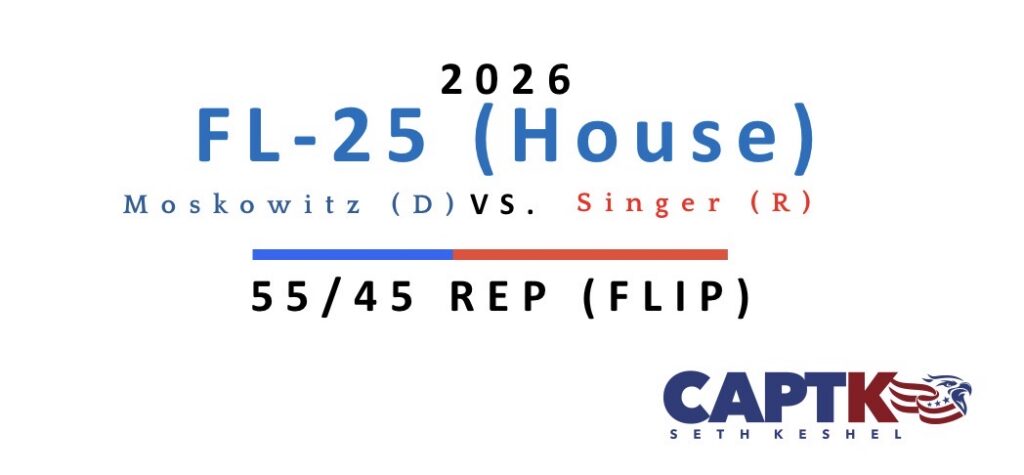
Scott Singer (R) vs. Jared Moskowitz (D)
I. The Race
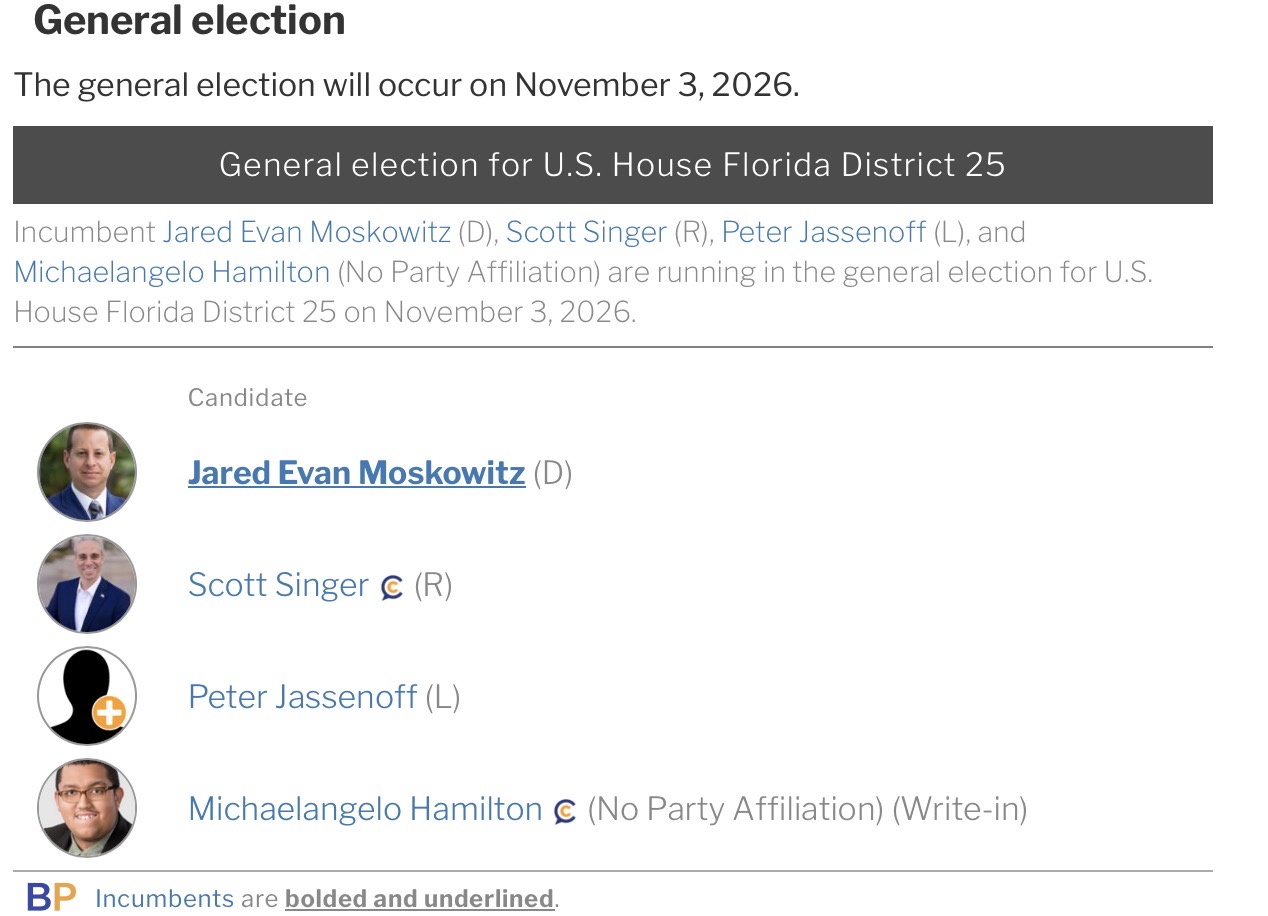
Scott Singer (Republican) is a south Florida native and attorney who served three terms as the mayor of Boca Raton. He chairs the Mayors’ Council of the America First Policy Institute and is looking to represent the newly redrawn FL-25 in Congress.
Jared Moskowitz (Democrat) was elected to represent the old FL-23 in 2022 and is one of the smartest Democrats in Congress. He was twice appointed to special roles by Governor DeSantis before entering Congress; once he was there, he supported the DOGE push to maximize government efficiency and was part of the bipartisan task force investigating the assassination attempt against President Trump.
II. District Geography
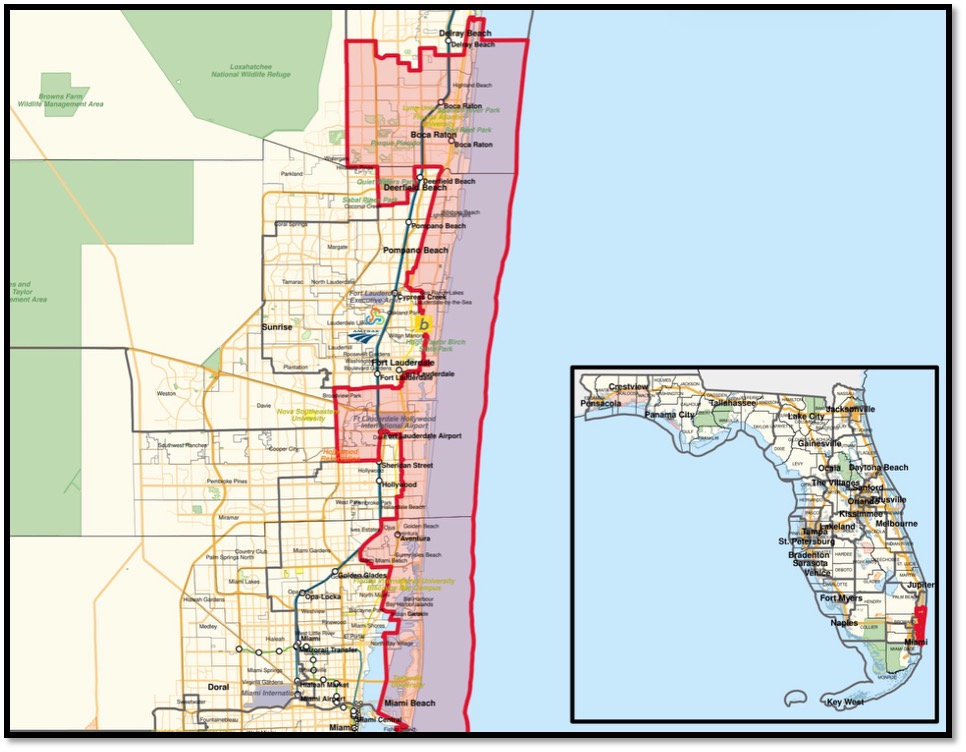
Florida’s 25th Congressional District (FL-25) isn’t even in existence yet; this is the first General Election held under these boundaries following Florida’s 2026 redistricting effort that looks to give Republicans up to four additional U.S. House seats. These efforts upended Moskowitz from his old boundaries and prompted him to file for the race for this new FL-25.
This district looks like a skinny, vertical sliver spanning three counties – Miami-Dade, Broward, and Palm Beach. It avoids the major cities of those counties (Miami, Fort Lauderdale, and West Palm Beach, respectively) and includes cities like Miami Beach, Boca Raton, and other communities situated along the shoreline.
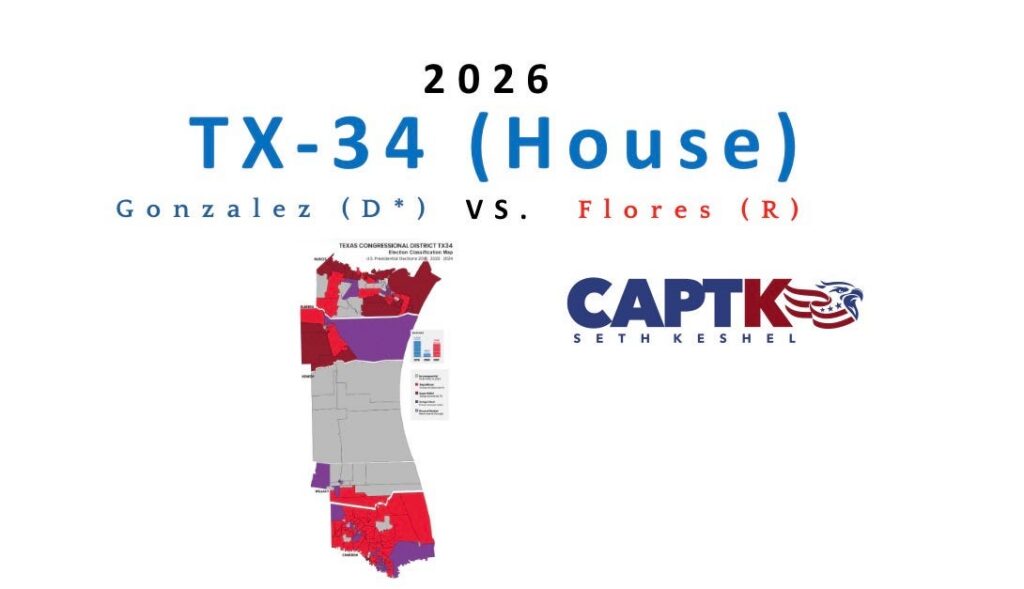
These boundaries create a district that reminds me a lot of the new TX-34, another decisive U.S. House seat that is thought to be competitive because of the major progress President Trump made with Latino voters. The only difference is that in South Florida, you’re talking about Venezuelans, Cubans, and Puerto Ricans more than Mexicans in Texas. On paper, these boundaries went red enough for President Trump that they seem like automatic GOP pickups; a closer look at the trends and down ballot impacts suggests otherwise even though this new district is much whiter (non-Hispanic, anyway) than TX-34 is.
Presidential Margins
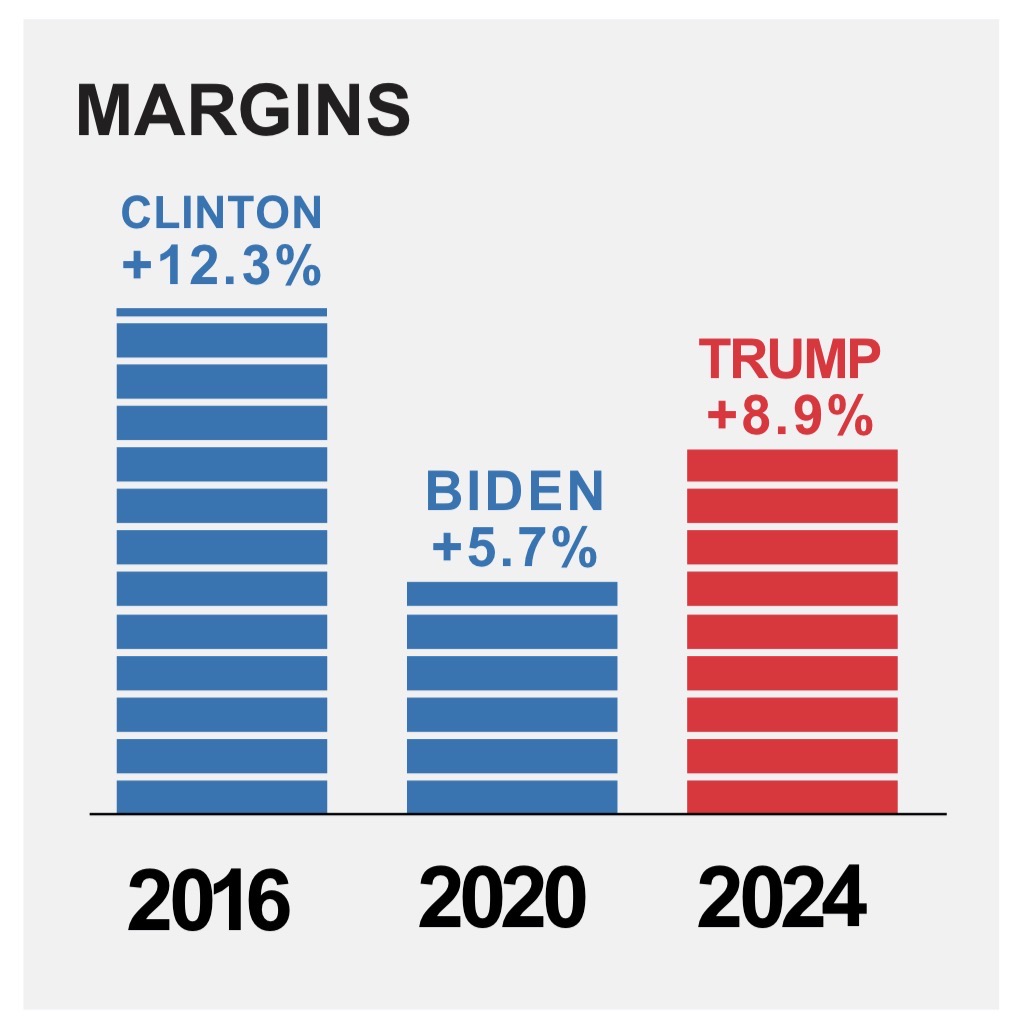
In his 1.2% statewide win of then-battleground Florida in 2016, Trump lost these boundaries by 12.3%. Then, with progress made in a 3.4% statewide win in 2020, Trump lost them by 5.7% – narrowly missing out on a flip of Miami-Dade County. Trump’s huge margins in 2024 everywhere in the Sunshine State brought new optimism for another GOP district in South Florida; his +8.9% margin in the new boundaries sits 21.2% to the right of where it was in 2016.
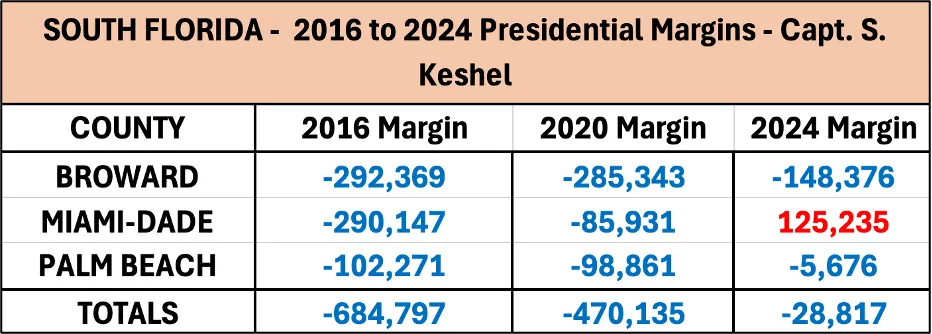
Singer’s challenge, not being named Donald J. Trump or Ron DeSantis himself, will be to hold the Trump coalition together against the Democrat-blowing headwinds of a midterm – especially against a Democrat who notably displays no Trump Derangement Syndrome. Both candidates are Jewish in a 25% Jewish district.
Key Statistics
• 54% White, 28% Hispanic, 18% Black/Other
III. Market Assessment
Despite the major progress made within these new boundaries, Polymarket bettors favor Moskowitz four-to-one.
IV. History
The district as presently drawn for the 2026 election was broken up over other districts in 2018, most notably what was then FL-25 in the north end of the district, and what was then FL-27 in the southern end of the district, extending down into parts of core Miami. Representative Mario Diaz-Balart held his seat in FL-25 by an impressive margin of 21 points, only down a few notches from 2016.
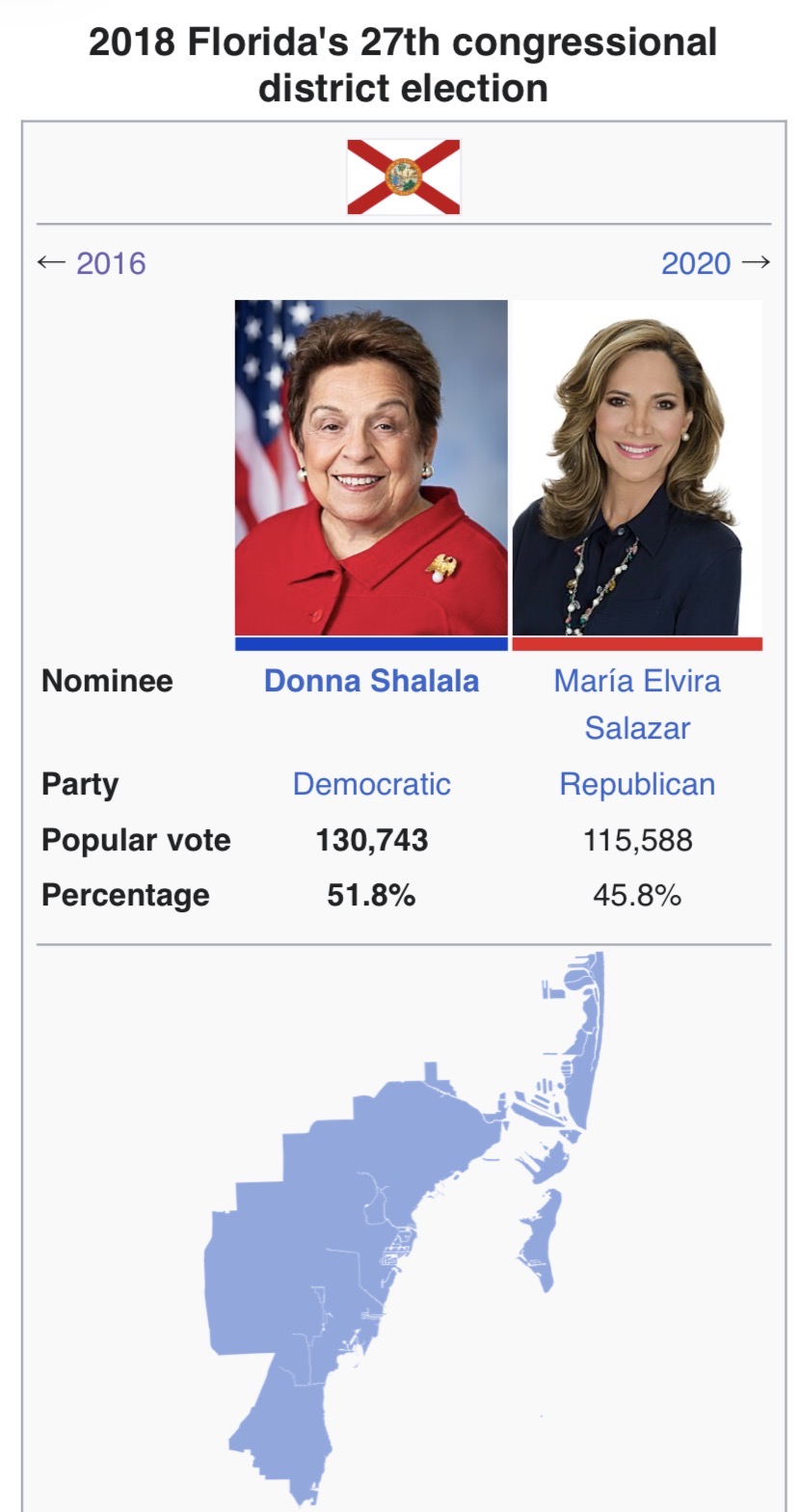
2018’s FL-27 is the portion of the present district (FL-25) that gave Republicans fits. The retirement of GOP Representative Ileana Ros-Lehtinen, who won by 9.8% in 2016, left an open seat for Democrat Donna Shalala and Republican Maria Elvira Salazar (the amnesty queen now representing today’s FL-27) to battle over. Shalala won by six points, representing a 15.8% swing from 2016.
Moskowitz won his current seat (FL-23 before the change) by 4.8% in 2022, then again by the exact same margin in 2024:
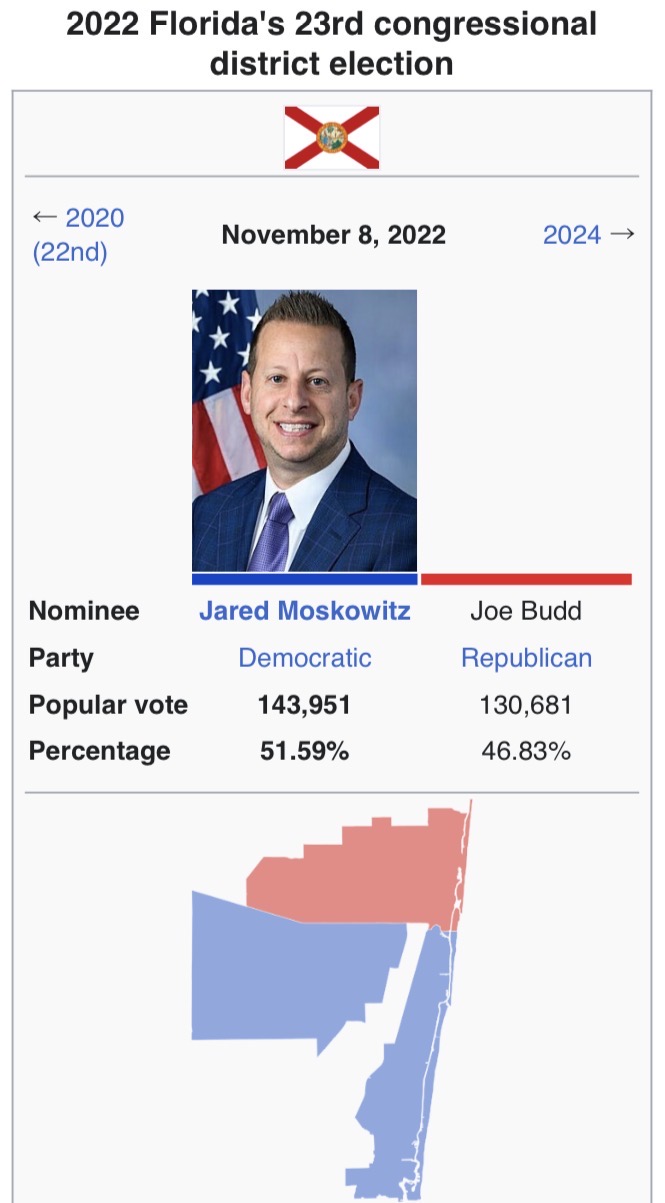
Trump only lost those boundaries by 1.9%.
V. Analysis of 2026 Primary Results
Fortunately for Democrats, especially in a state trending as hard to the right as Florida, Moskowitz soundly defeated radical left-winger Oliver Larkin in the Democrat primary.
Singer narrowly prevailed over a crowded field of candidates, winning a plurality with 31.4% of the vote on a 3.9% margin.
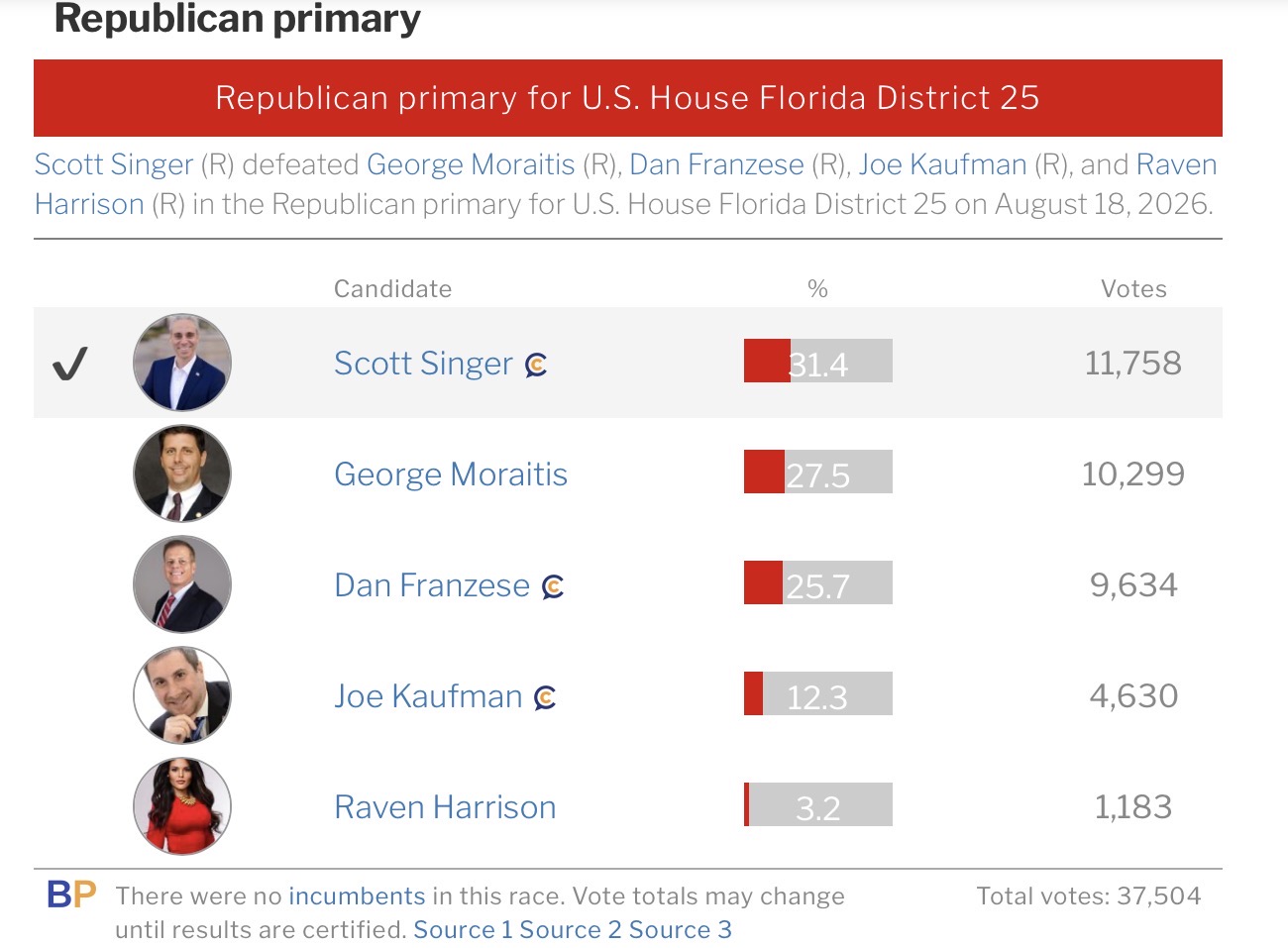
The Republicans, as usual, ran a brutal primary. Fortunately, they appear to have come together since the contest wrapped up.
VI. Polls
I found three polls listed by The New York Times:
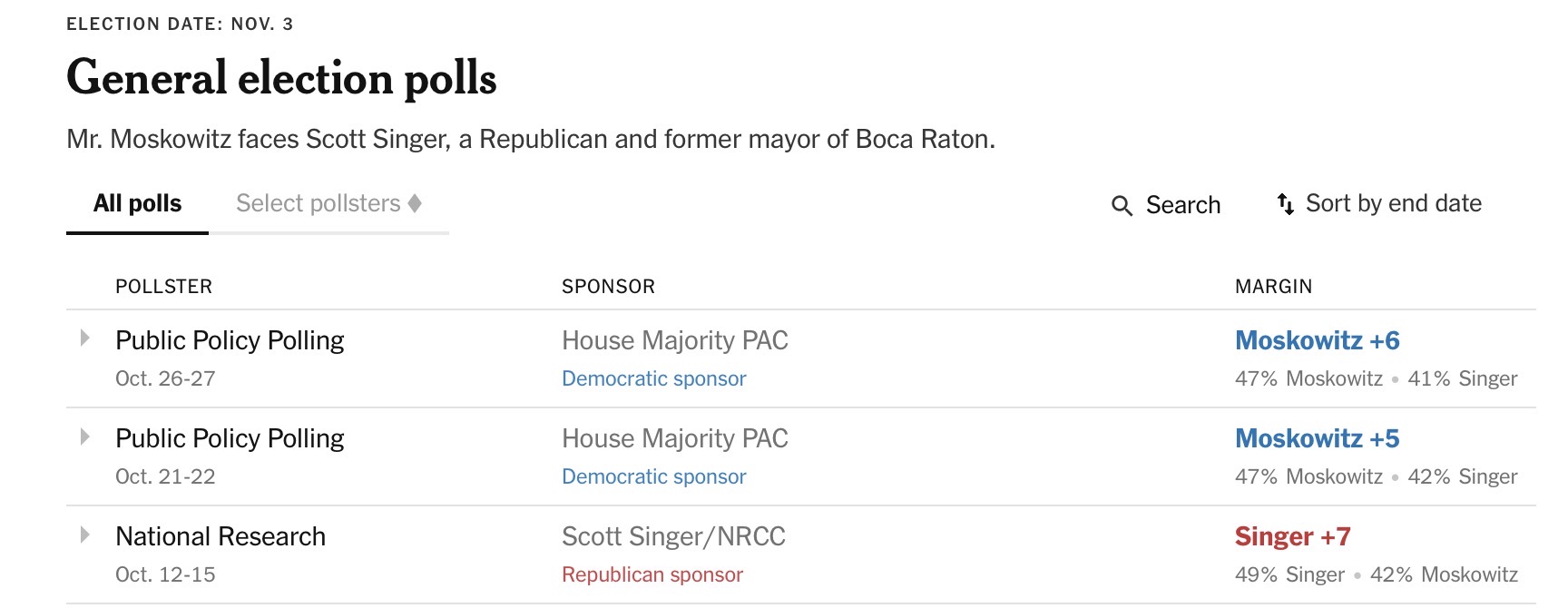
As usual, polling displays its increasing futility. Two Democrat-sponsored polls show Moskowitz in command of the race, and a GOP-sponsored poll has Singer up by 7 points and near an outright majority.
VII. Media Ratings
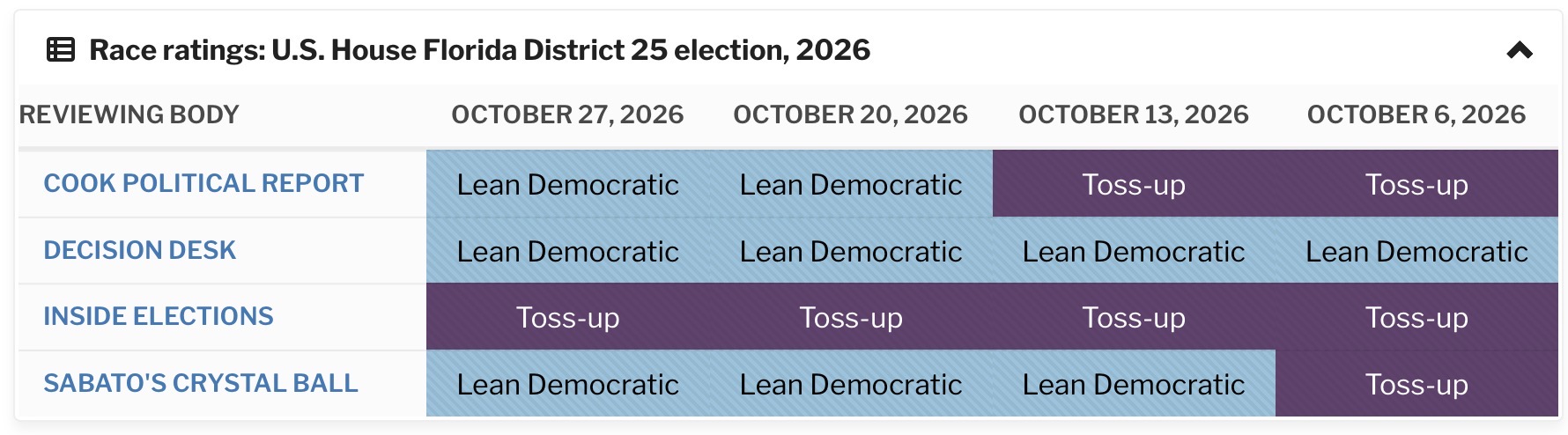
Reflecting the likelihood of a tight contest, three of four major reviewers have this leaning for Moskowitz.
VIII. Party Registration
Florida itself is on a massive GOP registration surge, and has moved nearly four full points more Republican than it was when Trump won it by over 13 points in 2024.
Florida’s book closing report gives the registration statistics for the new FL-25 like this:
Republicans 163,894 (35.7%)
Democrats 139,891 (30.4%)
Total 459,448
Advantage R+5.2% (R+24,003)
Reports from spring suggest Republicans have made substantial progress in voter registration in the new district since it was first established by DeSantis’s signature. From Florida Politics:
Moskowitz’s campaign also noted that voters registered without a political party make up a plurality of the constituency in the new CD 25. About 35.9% are independent voters, while 32.9% are Republicans and 31.2% are Democrats.
I don’t have official figures to go on for what the registration splits in these new boundaries would have been if they were notated at the time of the 2024 election, but if Florida Politics is accurate, the district has run another 3.5% right since May by registration.
Notably, Moskowitz won his 4.8% reelection margin in 2024 in the old FL-23 with a district that was D+6.5% by registration. That means the margin ran 1.7% right of registration, which could be a huge red flag for him in a new R+5.2% district that may vote right of registration like South Florida has been trending.
IX. Election Considerations
I summed up Florida’s election picture, highlighting DeSantis’s landmark legislation, in my piece previewing Florida’s Senate and gubernatorial races:
People frequently ask me which states have made the most important reforms to elections since the 2020 quasi election. “Florida” is my hands-down answer. Governor DeSantis signed Senate Bill 524 in 2022, creating the election crimes task force and ensuring that the state would have proper control over mail-in balloting (requiring voters to request a ballot and confirm the address the ballot would be sent to). While it is a large state full of opportunities to attempt fraud, it has done an incredible job at preventing mass fraud. Here is my review of the 2024 election encompassing these changes:
Florida – 2024 Election Compendium
Notably, Florida sets the “gold standard” for counting millions of ballots, nearly the entire statewide count, by the time people wake up the next day. They learned how important public trust in elections is after the 2000 “hanging chads” debacle and have set the standard for the rest of the country.
X. Summary and Election Estimate
All seats with fresh boundaries, especially those merging several districts, make analysis a tall order. I have little doubt no one is winning this race by a wide margin, especially not Moskowitz. While Moskowitz is one of the more rational Democrats and clearly accepted by a heavily Jewish voting base, Singer is an experienced mayor of a major city in the district and also Jewish. No one will have the market cornered on American-Israeli affairs, neutralizing Moskowitz’s bread-and-butter issue. My decision matrix shows a very balanced battle:
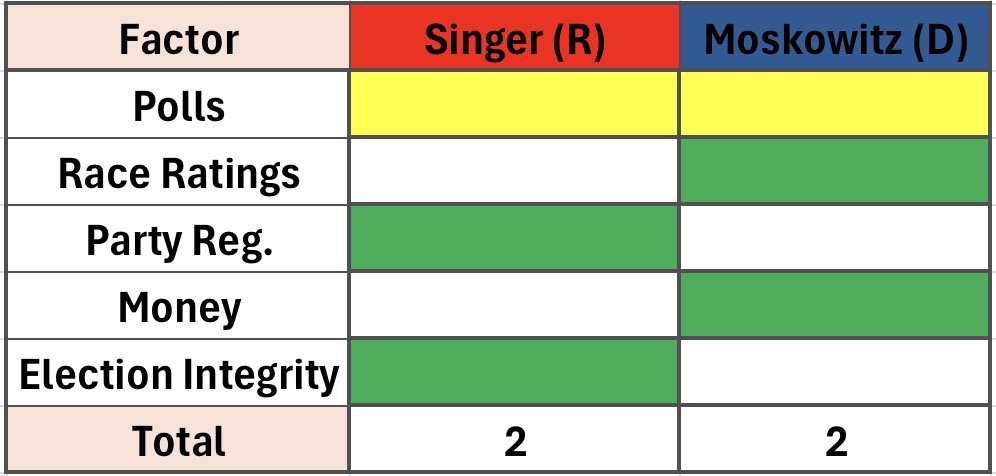
Moskowitz has a built-in advantage with his Congressional experience and has managed his public commentary in such as way so as not to ensure his opponents show up in force to ensure he loses. If this election were in a presidential year, all the data suggest Singer is a strong favorite – especially the weight of party registration trends in south Florida. To get a win this year, with a presumptive Democrat tailwind, he will need to keep Trump’s gains with Latino and Jewish voters. Here is a look at my proprietary mapping of the new FL-25:
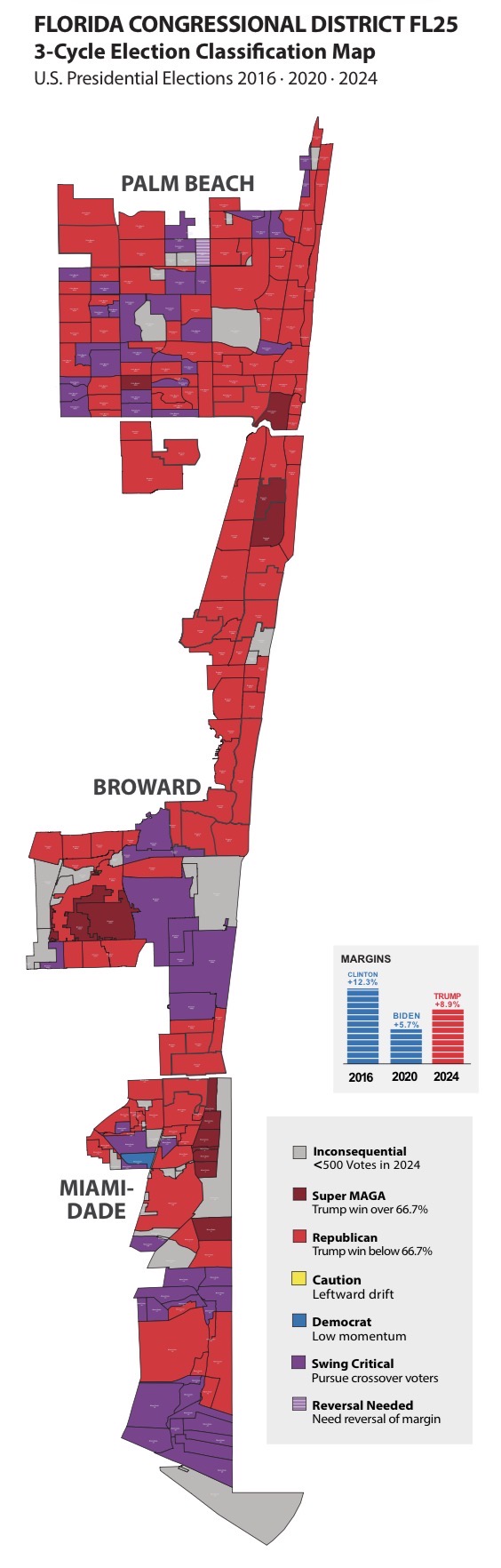
Many of the red precincts have long been Republican strongholds, especially those shaded in crimson. The purple-shaded precincts (Trump losses, but with more than 30% of the vote and a rightward shift in 2024 if solid purple) are essential for Singer to maintain margin; if they slide too much and turnout lags in strong precincts, Moskowitz can win the race.
Forecast for FL-25 House
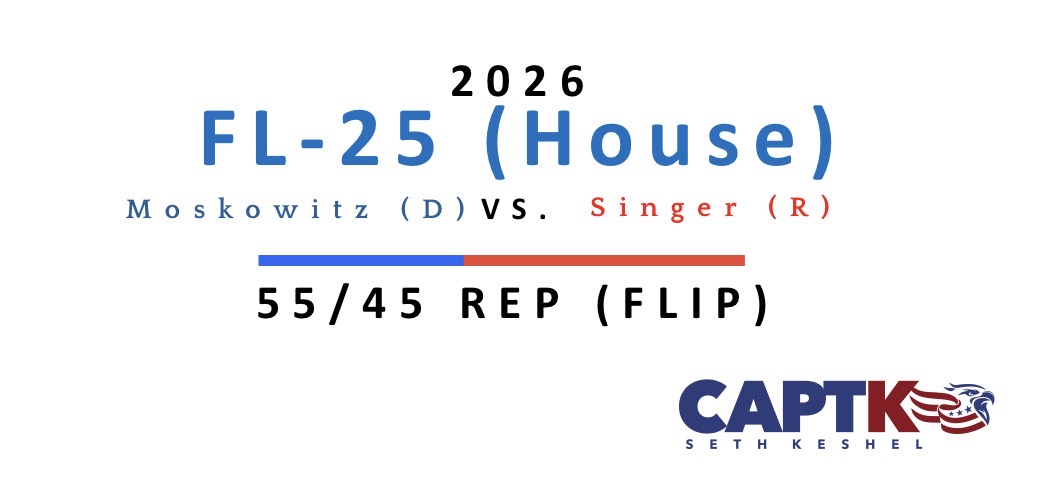
I am bullish on Singer because I believe the registration data point to continued Republican success with Latino and Jewish voters, who continued to come around to Trump over his three runs. Moskowitz, given his experience and familiarity with parts of the new district, is absolutely in the running, and may have reason to be hopeful based on weaker-than-expected GOP in-person early voting turnout. I am not worried about this for statewide races, and all signs point to an overwhelmingly red Election Day using a much heavier registration advantage than last time around.
I feel slightly more optimistic for Republicans about this race than I do the very similar TX-34 race, primarily because Cuban and Venezuelan voters are a stronger Republican constituency than those of Mexican ancestry prevalent throughout Texas.
Seth Keshel, MBA is a Senior Fellow at the Gold Institute for International Strategy and a retired Army Captain. He publishes Captain K’s Corner on Substack.