Surveying the terrain of 2028 before the chaos of 2027 descends
Alaska, population 740,000, is still counting its meager collection of ballots; Florida, population 23.5 million, finished counting a few hours after polls closed. Folks are reeling from unexpected outcomes in deep-red territory, and every day, we have new reasons to doubt the integrity of elections – illegals registered to vote, machines concealing transparency, and candidates flying past already aggressive polling averages to record performances. Needless to say, there will be many people who don’t want to look into the future any further than a single week, let alone seven months.
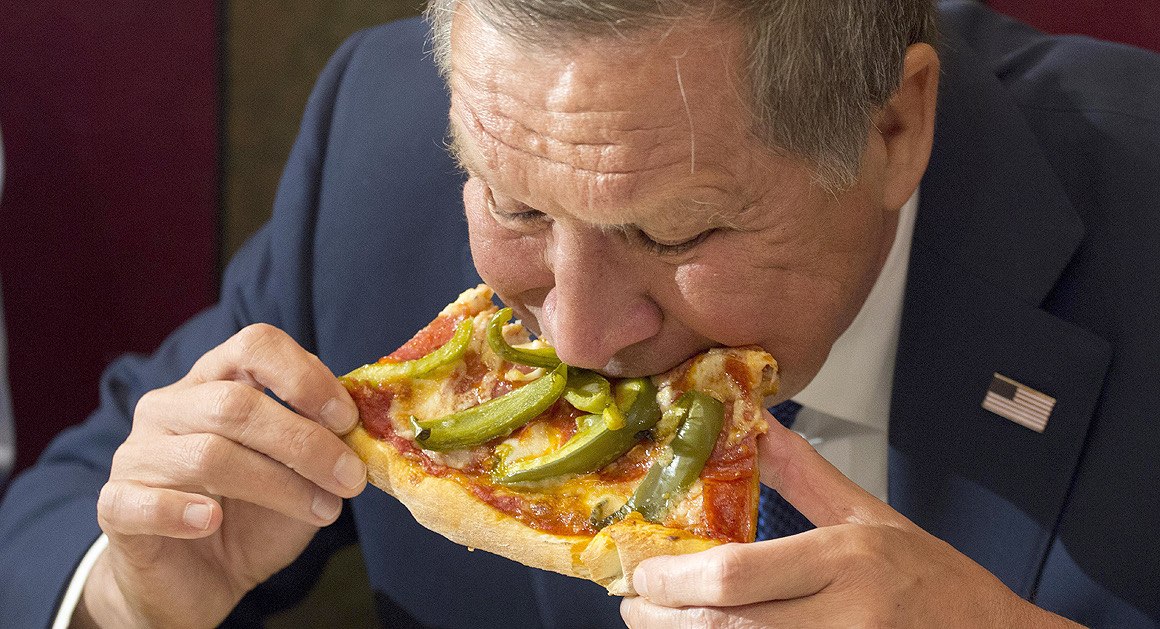
Yep – seven months. By this point in June, candidates will be wading into the presidential field from both parties. You’ll see them in the cornfields of Iowa, kicking the tires in New Hampshire, and hosting talk panels in South Carolina. Then they’ll line up at podiums for debates, with big names dominating the center of the lineup and upstarts or also-rans out at the fringes. Some of them will be doing it just for the chow:
I wrote about the Democrat candidates I expected to see in the race 18 months ago:
18 months ago, Republicans appeared poised to perform modestly well in the 2026 House races and a near-lock to hold the Senate. None of what has transpired this month has changed my view of who the likely Democrat front-runners are. I expect Governors Newsom, Shapiro, and Whitmer to all run, and to potentially be joined by a Kamala Harris reboot. Alexandria Ocasio-Cortez may determine that 2028 is her window, or perhaps she will primary Chuck Schumer in the Senate – a race she would most likely win given the powerful emergence of the DSA in New York City.
I strongly sense the Democrats’ best bet is a perceived moderate. Many are hoping Jon Ossoff, reelected to a second term in the U.S. Senate from Georgia, enters the field. Ossoff has shrugged these pleas off and said he’s intending to serve his full term in the Senate, but we’ve heard that before. Maybe he’s telling the truth, or maybe not. He’d have a stranglehold on his state’s 16 electoral votes no matter who Republicans run, but in this age of populism versus the old way, exacerbated by the aging-in of a new, pissed-off young electorate, all bets are off. I expect a chaotic Democrat primary field made highly interesting by candidates running off left-wing grassroots (DSA) energy. The Democrat machine will need to do what it does best and control (rig) the primary outcomes with their superdelegates.
For the Republicans, a big three is on the table. At this point here in November 2026, I strongly suspect one of the following will be the 2028 presidential nominee (in no order):
• JD Vance
• Marco Rubio
• Ron DeSantis
First, an important note – I do not expect that Vance and Rubio will both run. It is possible that neither run, but I think the odds of the two squaring off against one another are low based on prior commentary. It is possible that if one is the apparent nominee, the other could be the Vice Presidential candidate – although this arrangement likely only works if Vance is at the top of the ticket (since he’s not going to run for Vice President again).
Why Vance?
Vance has several areas of appeal:
• Youth
• Blue collar poverty upbringing
• Frankness
Vice President Vance reeled off a tweet after Election Day that took a lot of courage to send, and that post has over 73 million views:
Young Americans are feeling squeezed out of the American Dream. Vance’s entire story is about rising from nothing to something, and that makes him an effective messenger in the Midwest, which continues to favor a working-class GOP message in the long run. Where Vance could be knee-capped is in how the administration responds to the things the electorate is most frustrated with. Immigration enforcement, despite narratives over mass deportations, continues to favor Republicans even in a D+14 midterm electorate.
Continued focus on the Middle East, with conditions deteriorating at home for Gen Z, Gen X, and Millennials would make it hard for him to make the case for himself. Historically, the sitting Vice President normally struggles in an immediate run for president.
Why Rubio?
I remember when Rubio hit center stage in 2015 as the guy who was supposed to be the fresh, new face of the Republican Party. He and Trump had a nasty feud, and it took the Florida presidential primary to send Rubio’s focus back to the Senate for another 8+ years until he was tapped for Secretary of State.
And what an outstanding Secretary of State he has been, no question.
Rubio exudes professionalism, even when it is clear he has a different opinion than the president has. He has pulled “additional duties” (as we know them from the military) like a champ, and is owed great credit for many of the foreign deals and achievements of the Trump 47 administration – including the slow takeover of Venezuela’s oil-rich economy.
In a presidential election, it is very likely Rubio will perform well with suburban voters, and will likely do the same with Latino voters. Not enough to win states like New Jersey or New Mexico, but certainly well enough to hold key red states and be in the driver’s seat in Arizona and Nevada. For Rubio, it will be easier to campaign and be allowed to hold different opinions than Vance will be afforded without contradicting the administration.
Again, I don’t think both men will run against one another. I would think it is most likely Rubio, not Vance, enters the field.
Why DeSantis?
Both Vance and Rubio have albatrosses they’ve managed incredibly well. Vance was an original “Never Trumper,” and repented so successfully of his positions that Trump put him on the ticket with him in 2024. Rubio had major weak points in his immigration worldview and alliances with all of the GOP kingmakers, which helped Trump get past him in 2016; he appears to be much more squared away now and acutely aware, perhaps due to his Cuban heritage, of what the extreme left can do if they get enough power.
DeSantis stepped in it in 2023 when he suddenly declared he would run for president instead of serve out his second term as Florida’s governor, which he had just been reelected for by overwhelming margins. Shortly after it became clear DeSantis was running for president, Trump got snagged by Biden’s DOJ, turned into a political martyr, and the rest is history. The concern for me had more to do with DeSantis’s motives and transparency, given that it takes a lot of time and effort to form a presidential campaign – yet here his was ready to go. Trump, given the corruption of the 2020 election, was the choice of the Republican base, and once the judicial persecution began, there was no surrender. The mugshot sealed the deal, and then the rest of his non-Republican voting base was on board once the psychopaths on the left wanted him dead (not just politically dead).
Yet, the path to forgiveness always exists. DeSantis has been an incredible governor and single-handedly turned Florida into a Republican fortress. All of those registration updates I’ve been posting mattered most in Florida – where not even a blue asteroid strike put a Democrat over in any statewide race in the Sunshine State. DeSantis is an intellectual titan, and has taken to the camera many times since Election Day to speak clearly and frankly to the people. He has made personal sport of targeting blue counties like a cunning strategist and diminishing their margins accordingly, knowing the red trend everywhere else.
If the mood of the electorate is to have the best of the new GOP with a proven executive track record, DeSantis will have a lot of strength…if he chooses to run.
There is no guarantee that either of these three will run. It is highly likely that one or two will run, very unlikely that all three will – but possible they’ll all sit it out. If the overpaid consultants who can’t read the mood of the electorate convince them that 2028 is a lost cause, it is possible they’ll all sit it out and leave a secondary Republican field.
I would expect that to include a few perennial losers, like Chris Christie, the annual atypical Republican candidate who comes out of nowhere, like Vivek Ramaswamy, and then a few strong electoral horses intended to shake things up, like former Virginia Governor Glenn Youngkin. I met Youngkin earlier this year, shortly after he left office. A very nice guy, very smart, and someone who would most definitely appeal to the old suburban Romney coalition (the one that wins Arizona and Texas in a landslide); however, Youngkin’s on-paper appeal is that he could potentially win Virginia. I don’t see that as likely given its presidential baselines, and I’m not sure how well a NoVA Republican would go over in Pennsylvania, Michigan, or Wisconsin.
Keep your eye on all policy-related decisions taking place before the New Democrat Congress is seated. They may either float Vance and Rubio as likely successors in 2028 (and impact Trump’s possible endorsement), or make it clear that DeSantis or another Republican is on the rise.
Seth Keshel, MBA is a Senior Fellow at the Gold Institute for International Strategy and a retired Army Captain. He publishes Captain K’s Corner on Substack.