California Medical Breakthroughs Bring In Hundreds of Millions While the Very Same Industry Suffers Substantial Job Loss

Doctors and nurses walking through a hospital hallway

This article was written by Adelle Nazarian and appeared in The Western Journal. California Medical Breakthroughs Bring In Hundreds of Millions While the Very Same Industry Suffers Substantial Job Loss.

A medical breakthrough can begin in a California laboratory. Whether the manufacturing plant, skilled jobs, and next round of investment stay nearby is another question.

California’s leaders should have to answer it.

For Americans who want this country to build more of what it invents, life sciences should be a priority.

Developing treatments is an extraordinary achievement. Turning those discoveries into lasting productive capacity is how that achievement strengthens the country.

California has a considerable head start. According to Biocom’s 2026 economic impact report, the state’s life sciences industry generated $394 billion in economic output in 2025, directly employed more than 406,000 workers, and attracted $73.1 billion in private investment.

Those numbers describe a sector with impacts far beyond Silicon Valley or the state’s borders.

But investment alone does not guarantee expanding opportunity. A separate 2026 report from California Life Sciences found that employment in the sector had declined 1.8 percent.

That should temper the celebrations. A state can remain a magnet for capital while workers face a less promising picture. Policymakers should care about both.

California’s advantages are substantial: research universities, experienced entrepreneurs, scientific talent, and investors willing to finance difficult work. The challenge is to make building and expanding a business in the state as compelling as starting one there.

Palo Alto-based BridgeBio illustrates why that matters.

Its Attruby treats adults with transthyretin amyloid cardiomyopathy, also known as ATTR-CM, a serious disease in which abnormal protein deposits damage the heart.

Attruby’s approval in 2024 gave patients another treatment option for a condition that can lead to heart failure, and has quickly become a blockbuster drug, generating over $400 million in revenue for the company in the first half of 2026 alone.

BridgeBio’s progress is a case in point for the economic question California must answer: How can the state turn scientific and commercial success into more opportunities for its workers?

Companies developing new treatments need an environment that supports their next stage of growth, including access to skilled employees and a predictable path to expanding their operations.

For policymakers, the goal should be making California a place where companies have compelling reasons to deepen their investment. The state’s role in developing a treatment should be the beginning of a longer economic story.

Other companies demonstrate the breadth of that opportunity.

Pleasanton-based 10x Genomics supplies tools that help make future discoveries possible. Its Atera platform allows researchers to examine gene activity across tissue at large scale, helping them investigate the biology underlying disease.

On Sept. 3, Carlsbad-based Ionis Pharmaceuticals announced FDA approval of Zanvastro, the first disease-modifying treatment for Alexander disease. This rare, progressive, and often fatal neurological disorder can deprive children and adults of the ability to move independently or swallow.

In August, Redwood City-based Revolution Medicines announced FDA approval of Rasonque for certain adults with metastatic pancreatic cancer. The company reported that in a Phase 3 trial involving previously treated patients, the medicine reduced the risk of death by 60 percent compared with chemotherapy.

For families confronting these diseases, progress is measured in treatment options and time together. That human purpose should remain at the center of the debate.

Delivering those treatments requires skilled people, specialized facilities, and dependable production. California should be working to capture more of that opportunity, and Washington should recognize its importance to American industrial strength.

Local governments should establish clear permitting requirements and firm timelines for research and manufacturing facilities. Companies need to know what approval requires and when a decision will come. Predictability and rigorous safety standards can coexist.

Colleges and employers should develop training together, with courses tied to actual hiring needs. Paid apprenticeships and technical programs could help more Californians qualify for laboratory, production, and equipment maintenance work.

The economic promise of medical innovation should reach people pursuing practical credentials alongside those pursuing advanced degrees.

Taxpayers also deserve accountability. Any public incentive should include measurable investment and hiring commitments, public reporting, and consequences when recipients fail to deliver.

And federal policymakers have responsibilities, too.

Research funding should be predictable, awarded on scientific merit, and subject to meaningful oversight. Private investors take risks to develop commercial products. Public research can help establish the scientific foundations on which those products depend. Both deserve policies that reward useful work and responsible stewardship.

California cannot assume its reputation will secure its future. Entrepreneurs and investors have choices. State leaders should give them concrete reasons to build, manufacture, and hire in the Golden State.

BridgeBio’s success and the advances emerging across California demonstrate what American medical innovation can deliver. The next challenge is to create the conditions for that progress to support a stronger domestic workforce and manufacturing base.

America should remain capable of discovering new medicines and producing them. California has helped show what American science can accomplish. Its next test is whether more American workers can build a future around that success.

Written by Adelle Nazarian Senior Fellow, Gold Institute for International Strategy

2026 Ten-Point Forecast: NJ-7 (U.S. House – Decisive)

Graphic introducing the NJ-7 U.S. House race candidates

Thomas Kean, Jr. (R-inc.) vs. Rebecca Bennett (D)

I. The Race

Thomas Kean, Jr. (Republican), son of the former New Jersey governor of the same name, is running for his third term in the U.S. House. He earned his first win in 2022, knocking out Tom Malinowski, before winning reelection in 2024 by +5.4% as President Trump ran strong in New Jersey. His campaign is clouded by concerns over transparency and fitness for office.

Rebecca Bennett (Democrat) is a veteran with a background in healthcare, and she has focused her campaign on exactly that – one of the few issues Democrats poll ahead of Republicans on.

II. District Geography

Map of New Jersey's 7th Congressional District

New Jersey’s 7th Congressional District (NJ-7) is a large district in the northwestern corner of the state. It holds all of Hunterdon and Warren Counties, and segments of Morris, Somerset, Sussex, and Union Counties. The boundaries of the district were altered after the 2022 election, making NJ-7 slightly more Republican than it had been previously. Bridgewater Township (population 46,000) is the largest place in the district; Kean is from Westfield, Union County (population 31,000).

This district covers almost the entirety of northern New Jersey from west to east, and has a suburban nature to it given its proximity to New York City. It has trended away from President Trump since he won a +6 margin in 2016, despite a nice recovery in 2024.

Presidential Margins

2016 Trump +6
2020 Biden +4
2024 Trump +2

Key Statistics

70.8% White, 12.2% Hispanic, 8.3% Asian
85.8% Urban, 14.2% Rural

III. Market Assessment

Polymarket bettors are acting like Kean isn’t even a two-term incumbent, and consider Bennett an overwhelming favorite to flip the seat.

IV. History

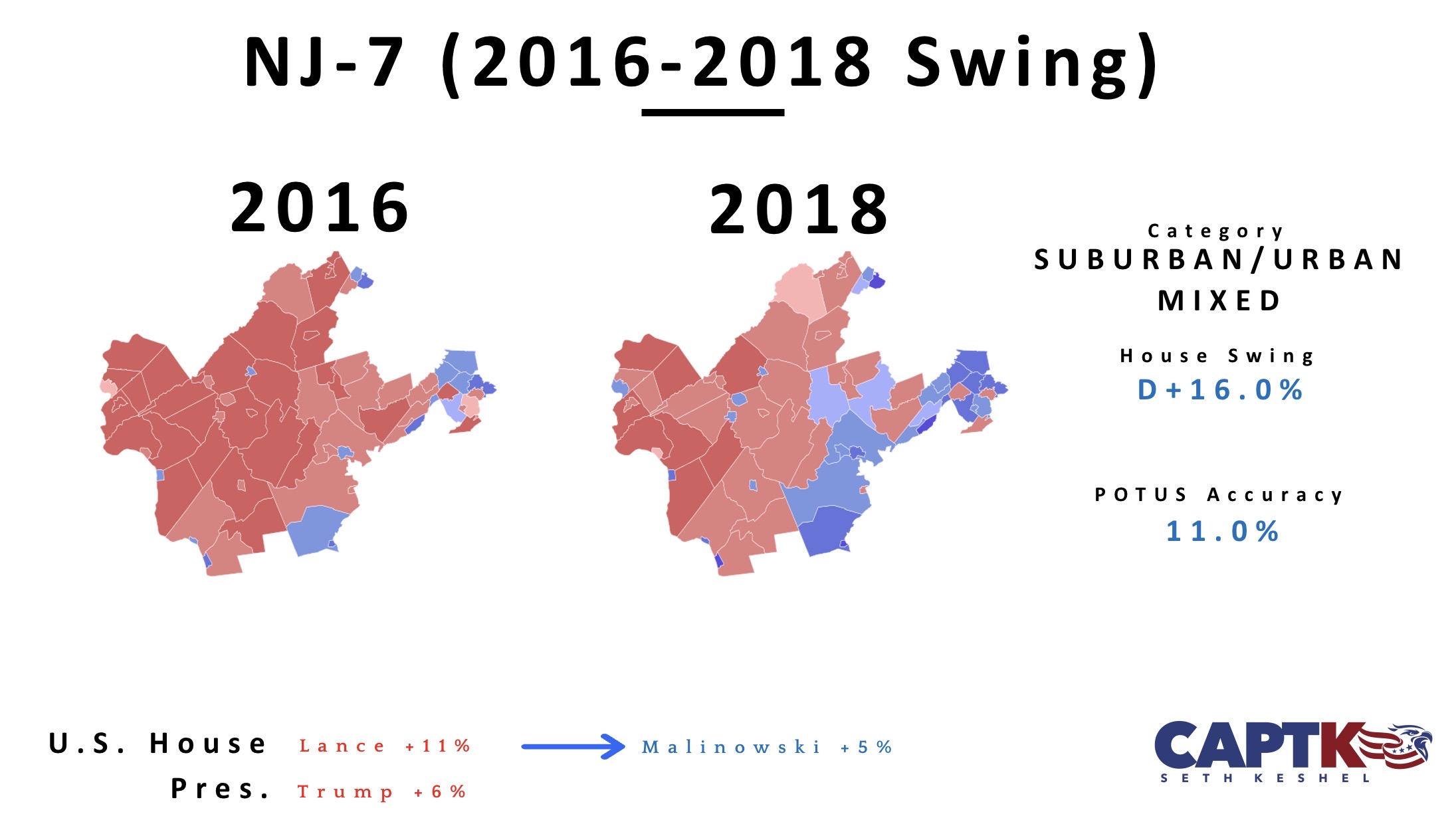
NJ-7 hasn’t changed much over the past two decades, which makes it easy to analyze. Leonard Lance (GOP) took office in 2009, and carried his seat by +11.0% in 2016, with Donald Trump winning the district by six points. With suburban seats in 2016, a notable presidential underperformance from the Congressman’s margin was a telltale sign trouble was on the horizon in 2018. Sure enough, Lance was ousted by Tom Malinowski, whom Kean eventually put out of work himself.

Here is the swing in the old NJ-7 from 2016-18:

Swing in the old NJ-7 from 2016 to 2018

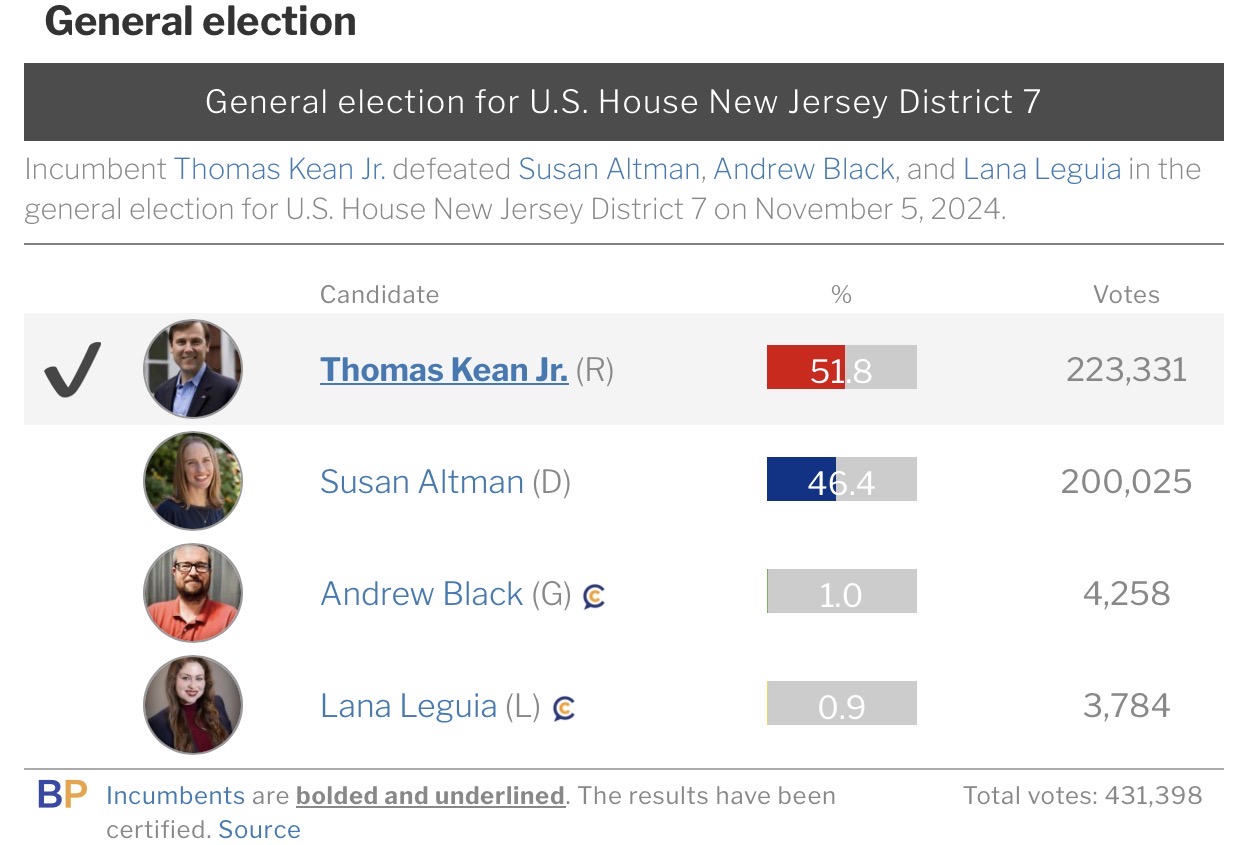
Malinowski blew past the presidential margin by 11 points, and Lance’s incumbent House margin by 16. Kean, then a state Senator, challenged Malinowski in 2020 and came up just short (-1.2%). By 2022, the seat had been drawn more favorably for the GOP and Kean won a rematch, topping Malinowski by 2.8%. He then held NJ-7 in 2024, this time with a nice margin of +5.4%:

2024 NJ-7 result, Kean's reelection

In essence, the district is very competitive and is neither rural nor overly urbanized. It appears to swing dramatically based on who the president is, as what was then NJ-7 swung 16 points against Trump and then the newly drawn NJ-7, containing most of the original turf, blew back another 10.4% against Biden between 2018 and 2024. That isn’t a good sign for 2026 for the new incumbent.

V. Analysis of 2026 Primary Results

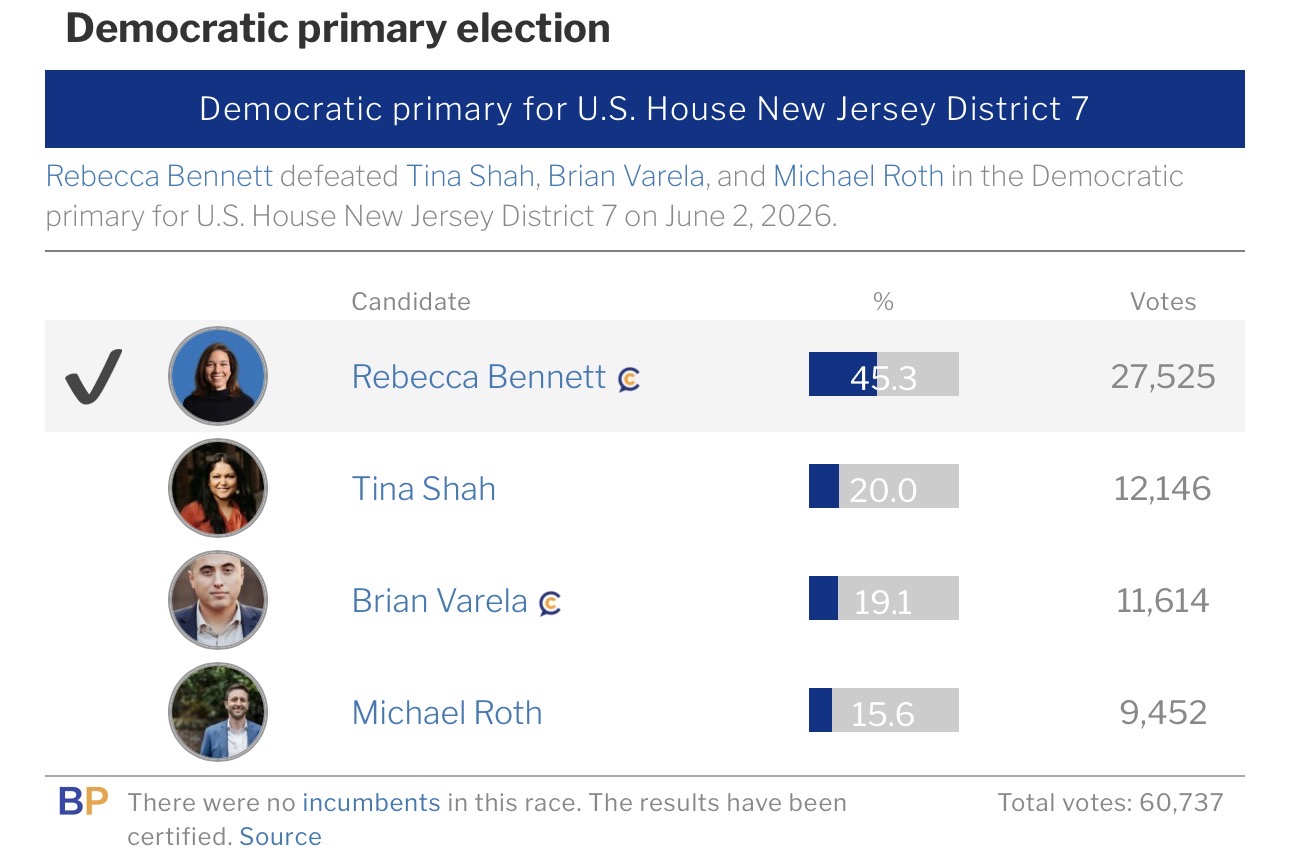
Kean, despite a lengthy absence from the House floor ahead of the primary, ran unopposed in the GOP primary. Bennett had to beat three other Democrats, and she did so with ease:

2026 NJ-7 Democrat primary results

Being held short of a majority hasn’t hurt her, and there are no reports of lingering drama in the Democrat camp. 2026 primaries appear to be a non-factor in the forthcoming Kean vs. Bennett matchup.

VI. Polls

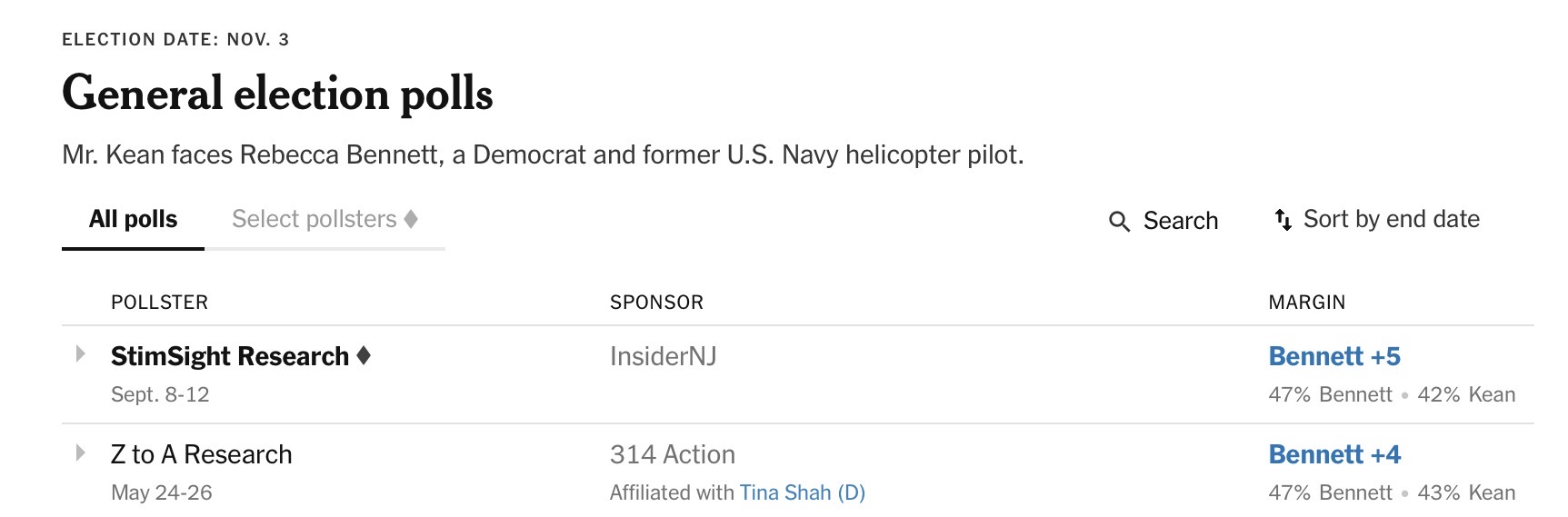
These polls came from The New York Times:

Recent polls of the NJ-7 race

Bennett’s primary opponents’ polling found her (Bennett) up 4 over Kean, while a more recent poll by StimSight Research has her up 5.

Average: Bennett +4.5%

VII. Media Ratings

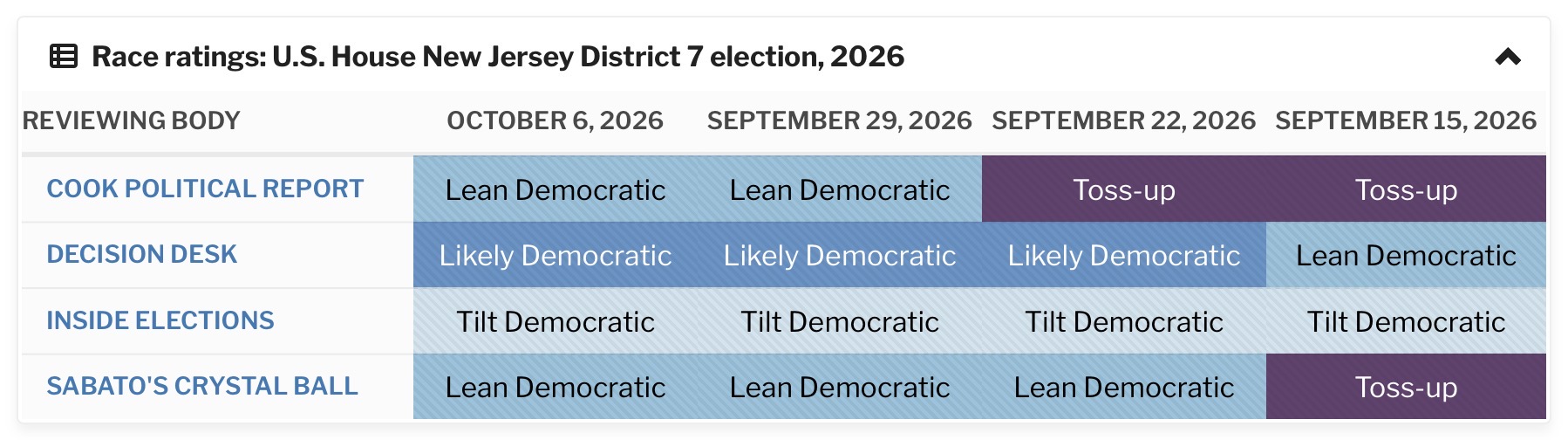
Media race ratings for NJ-7

Inside Elections is the most favorable toward Kean, having it only “tilt” Democrat (generally less than 2 points). The others are far more confident Bennett will flip the seat.

VIII. Party Registration

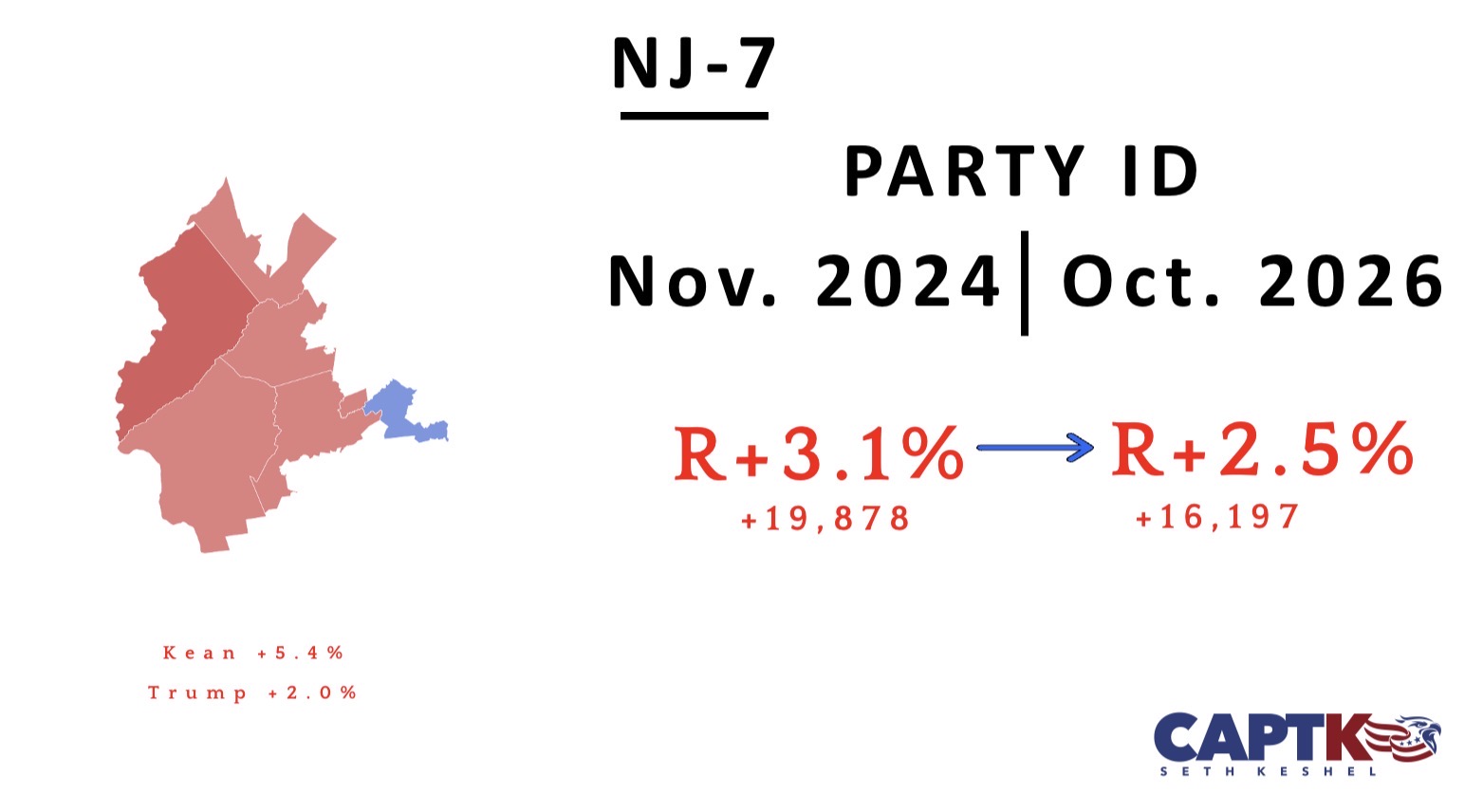
NJ-7 party registration changes

Republicans have lost almost 20% of their registration advantage since November 2024; both parties have been gaining registration, but Democrats are adding them at a superior rate (+7,036 D to +3,355 R) of over 2 to 1. The Republicans had a registration advantage of R+2.7% in 2022, when Kean won by 2.8%, and clearly he overran the registration index by 2.3% in 2024; Bennett has to like what she sees with the advantage diminishing and independents expected to stick to that grain next month.

IX. Election Considerations

New Jersey’s election laws make up a mixed bag. On some counts, they have an apocalyptic environment marred by Automatic Voter Registration. I wrote up the deeper meaning of the exposure of 6,600 non-citizens on the voter rolls this summer, and there is little doubt things are far worse than we are told.

Therefore, it can be reasonably baked into any race in New Jersey that the voter rolls are full of people who shouldn’t be on them. The state also lacks Voter ID, and has way too many mail-in ballots floating around in a given election than they did a decade ago. They do have tough laws against ballot harvesting, and I even wrote about them in my book.

Mikie Sherrill’s bloated margin from 2025’s off-year gubernatorial election strongly suggests people are still ballot harvesting extensively in New Jersey, as she blew past the vote total of her opponent, who himself blew past the 2021 vote total of the Democrat victor, Phil Murphy.

New Jersey runs lousy elections, when they need to.

X. Summary and Election Estimate

These are the primary factors that will decide this race:

NJ-7 is a volatile seat for midterm adjustments. Not only did it swing against the presidential margin by 11 points in 2018, it ran 16 points against its sitting representative who had held the seat for five terms. Rest assured it won’t have greater affinity for Kean than it did for Lance. The GOP lost four seats in the Garden State in 2018, and despite positive mail voting splits available in most places, they’re not so rosy in New Jersey (although it is too early to pass serious judgment).

Despite Republicans having made gains in New Jersey registration overall since 2024, NJ-7 has slipped nearly 4,000 registrations to the left.

Finally, Bennett and Democrats are hitting Kean where it counts:

Democrat ad attacking Thomas Kean, Jr.

In one of the strangest political stories of the year, Kean disappeared into thin air in early March, and reemerged at the end of June after having spent months dodging reporters and not campaigning for his uncontested primary. He missed 140 roll call votes, and when pressed, none of his GOP colleagues had any answers.

The official explanation was “depression.” Whether this is the truth or not, it couldn’t have come at a more inopportune time or been handled any worse in a critical year in which he still has a strong enough voter registration advantage to possibly hold the seat. Democrats have been advertising the missed work and painting Kean as a comfortable bureaucrat unaccountable to the people, and it seems to be working.

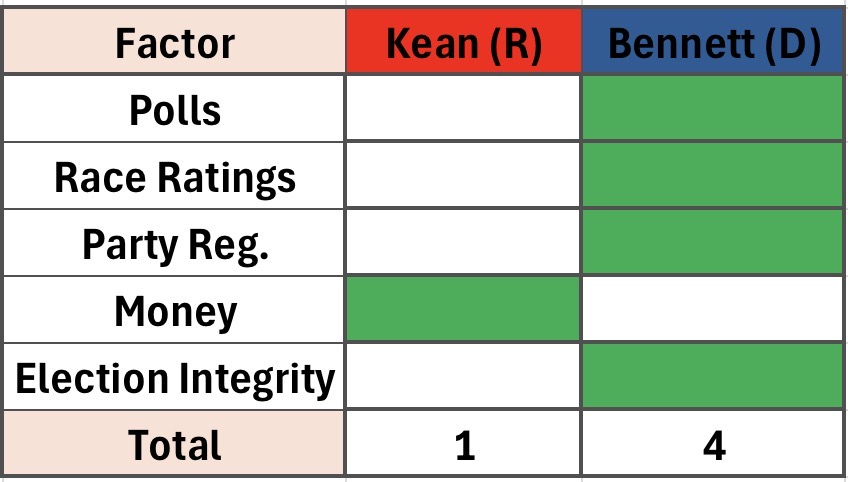
Here is how the key factors in this race stack up:

Key factors in the NJ-7 race

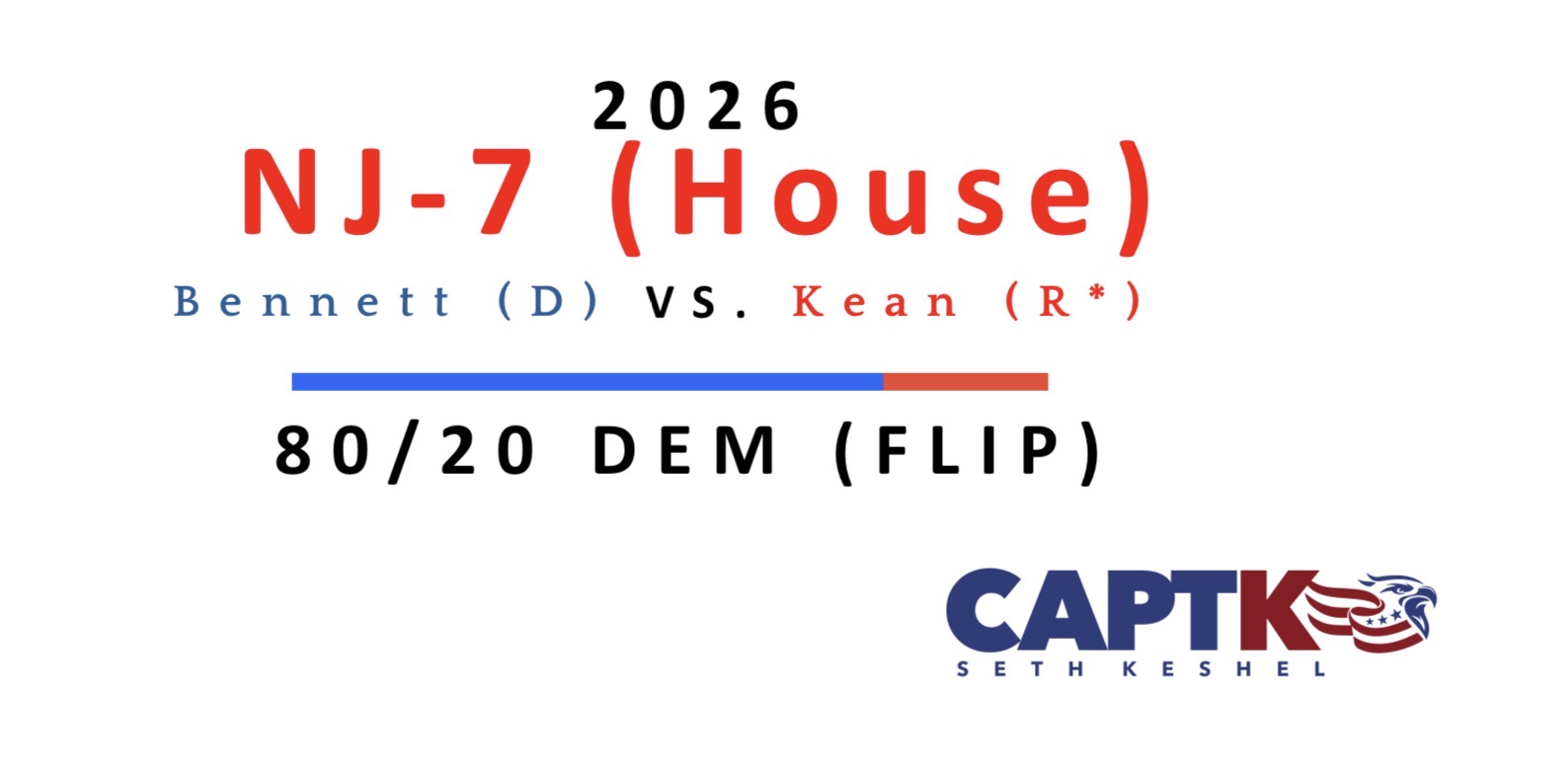
Forecast for NJ-7 House

Forecast for the NJ-7 U.S. House race

Despite having way more money than Bennett, Kean is a serious underdog in his seat thanks to factors both in and out of his control. He’s currently saddled with a 60% disapproval rating, and it appears voters aren’t buying his explanation for his absence this year. Bennett has no political experience and is winging that as a positive, giving her an “outsider” label she can ride to what is likely to be a fairly comfortable win next month. If that win happens, the GOP will hold just two of New Jersey’s 12 House seats.

Seth Keshel, MBA is a Senior Fellow at the Gold Institute for International Strategy and a retired Army Captain. He publishes Captain K’s Corner on Substack.

2026 Ten-Point Forecast: ME-2 (U.S. House – Decisive)

Graphic introducing the ME-2 U.S. House race candidates

Paul LePage (R) vs. Matthew Dunlap (D)

I. The Race

Paul LePage (Republican) is the former governor of Maine and is seeking to become just the second Republican member of Congress from any of the six New England states.

Matthew Dunlap (Democrat) is a career bureaucrat. He currently serves as State Auditor, and has twice been Secretary of State. Before that, he was a member of the Maine House of Representatives.

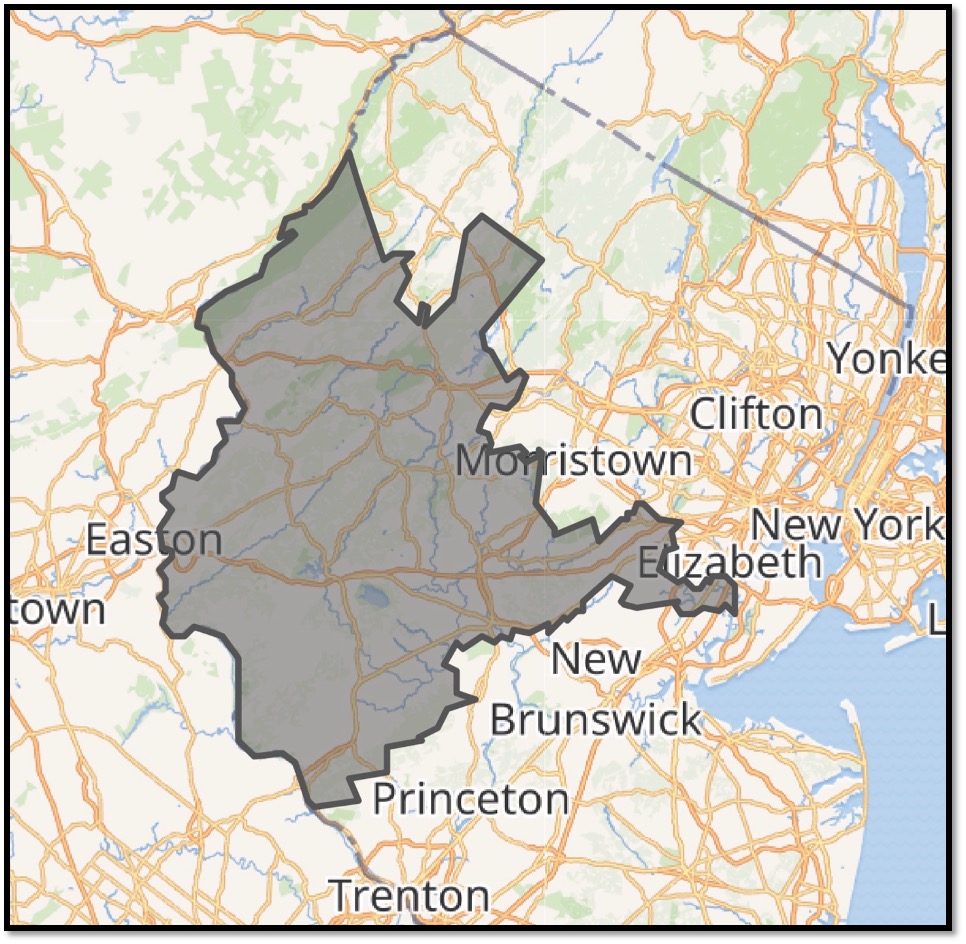
II. District Geography

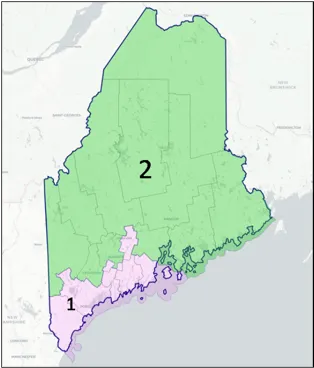
Map of Maine's 2nd Congressional District

ME-2 makes up the vast majority of Maine’s statewide geography and nestles up against the Canadian border.

The districts have changed very little in the state’s history, and Maine has split the electoral votes since 1972. In 2016, Donald Trump became the first Republican candidate to win ME-2 since 1988.

Presidential Margins under Trump

2016 Trump +10.3%
2020 Trump +7.4%
2024 Trump +9.1%

Key Statistics

90.9% White
72.1% Rural, 27.9% Urban

III. Market Assessment

Tapping into LePage’s name recognition and past track record and Trump’s three wins in ME-2, bettors on Polymarket are hunkering down for a LePage victory.

IV. History

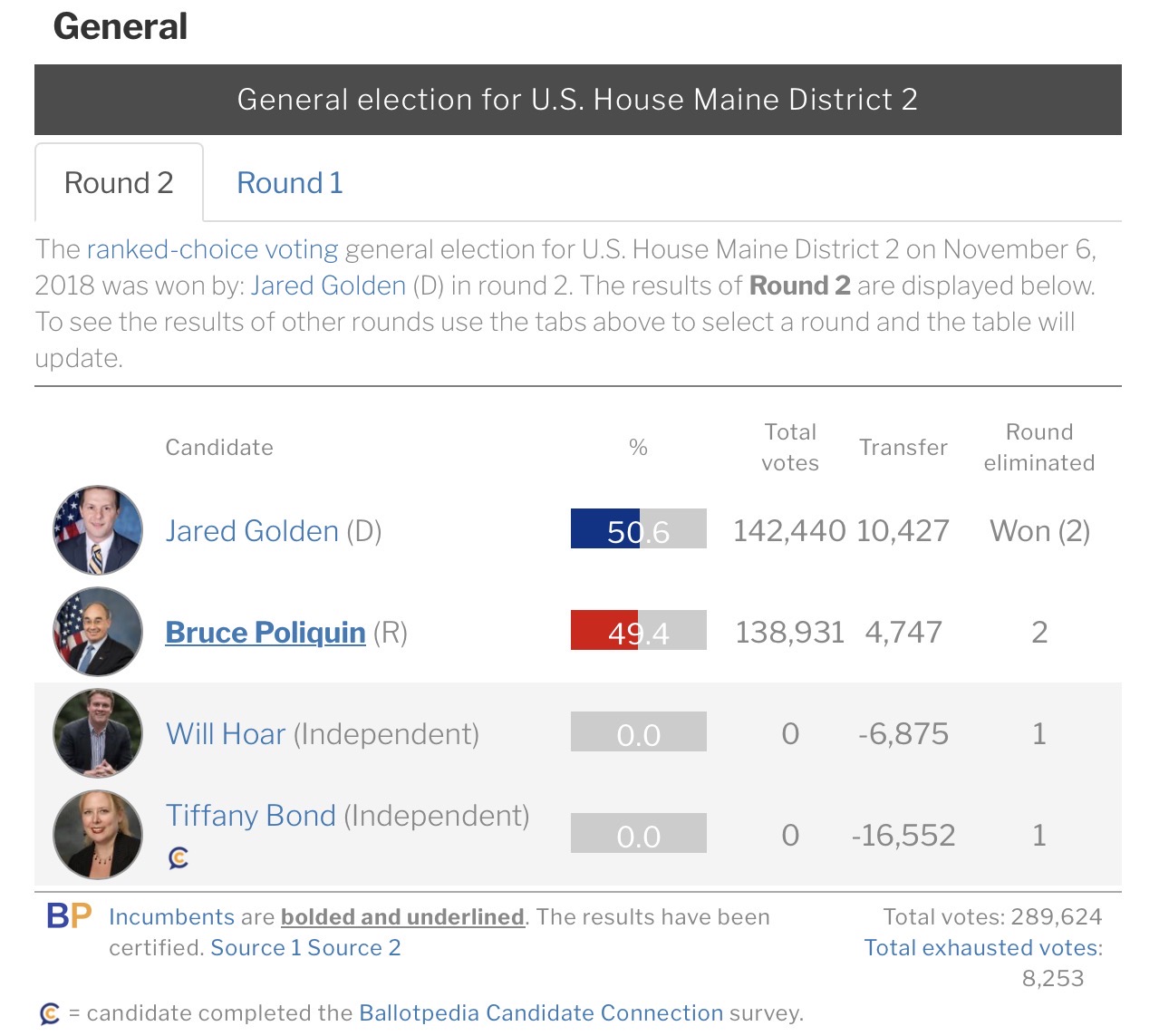
Republican Bruce Poliquin represented ME-2 for two terms, including the first two years of the Trump 45 administration. In the 2018 Democrat wave, he lost his seat (which swung 10.8% left) to Jared Golden, who is retiring from Congress after his current term expires. Interestingly enough, Poliquin beat Golden in the First Choice Round in the very first run of Ranked Choice Voting in Maine, but lost after votes were redistributed:

2018 ME-2 Ranked Choice Voting results

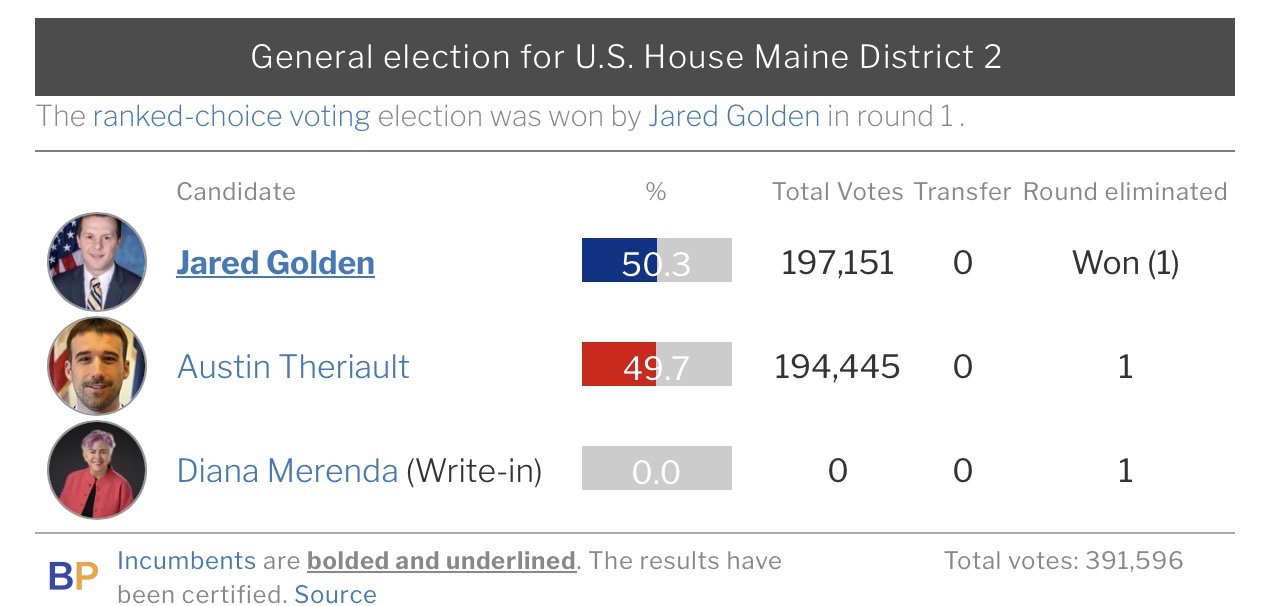
Golden has successfully defended the seat three times, by +6.2% in 2020, 6.1% in 2022 (over Poliquin again), and a razor-thin 0.6% in 2024 over a relatively unknown GOP challenger:

2024 ME-2 result, Golden's narrow win

That photo finish, which I will dissect later, seems to have been all Golden needed for smelling the coffee and calling it a career. No matter how moderate, the district appears to be running Republican red from here on out. With the pressure off, Golden (a member of the “Blue Dog” Caucus) has been almost Fetterman-esque in his support for Trumpian policy.

The recent history of ME-2 looks like that of Upstate New York or other parts of Appalachia. While they were once happy to stick with the party and fulfill union wishes, the Democrats appear to have worn out their welcome. Golden’s departure at the age of 44 seems to confirm it.

V. Analysis of 2026 Primary Results

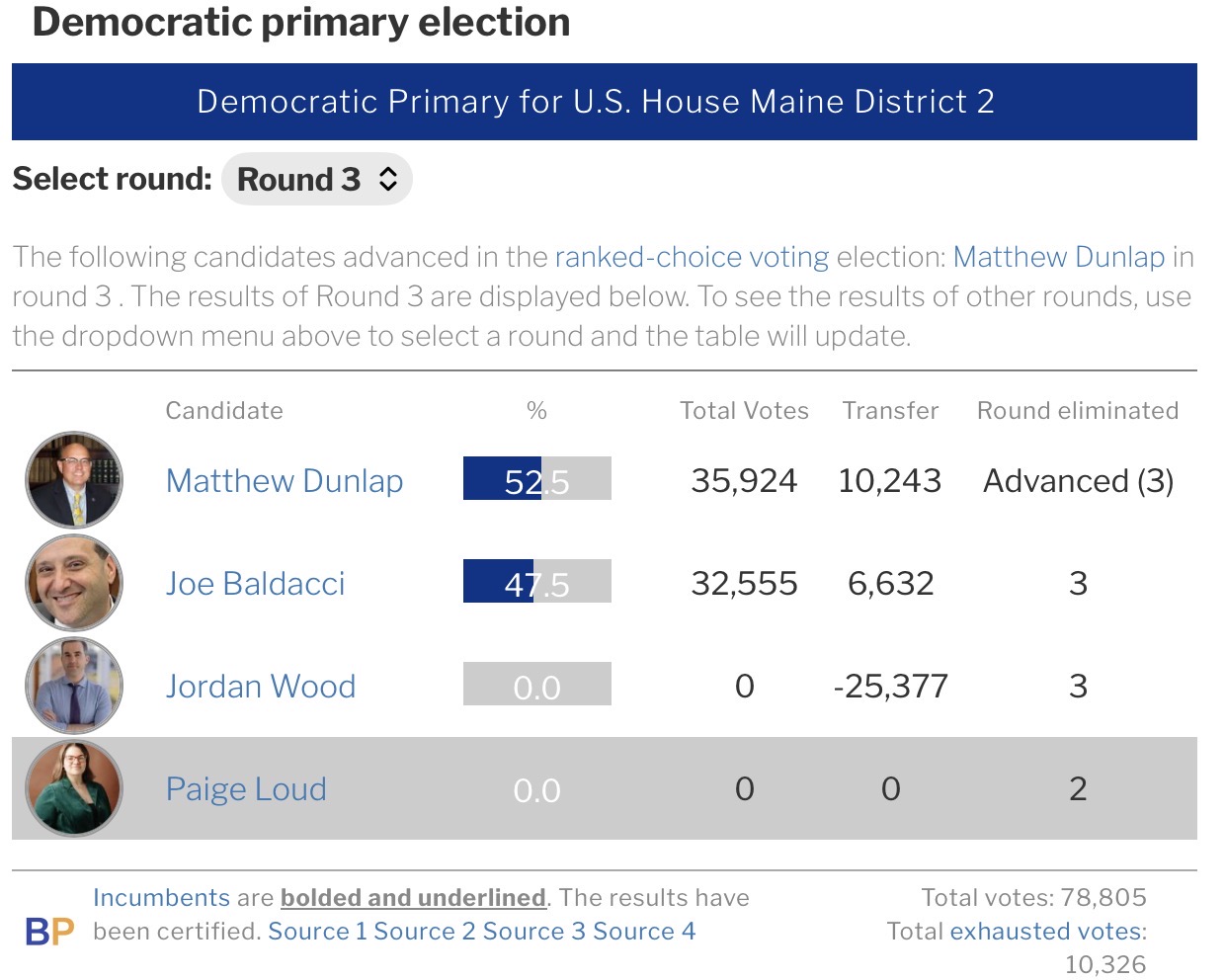
Republicans got behind the LePage campaign early, and as such, he ran unopposed in the GOP primary. Democrats had to scrap it out in the Ranked Choice Voting setup, and Dunlap prevailed in the third round after having trailed in the first two:

2026 ME-2 Democrat primary Ranked Choice results

Baldacci is the brother of John Baldacci, former governor of Maine, and was viewed as a moderate option in this rapidly reddening district. He broke ranks with the party on gun control, but the same progressive fringe that nominated Graham Platner for Senate backed Dunlap, who has been pushing Medicare for All and other progressive planks. While the ME-2 rift has none of the toxicity of the Senate situation post-Platner, Democrats probably went a bridge too far on ideology.

VI. Polls

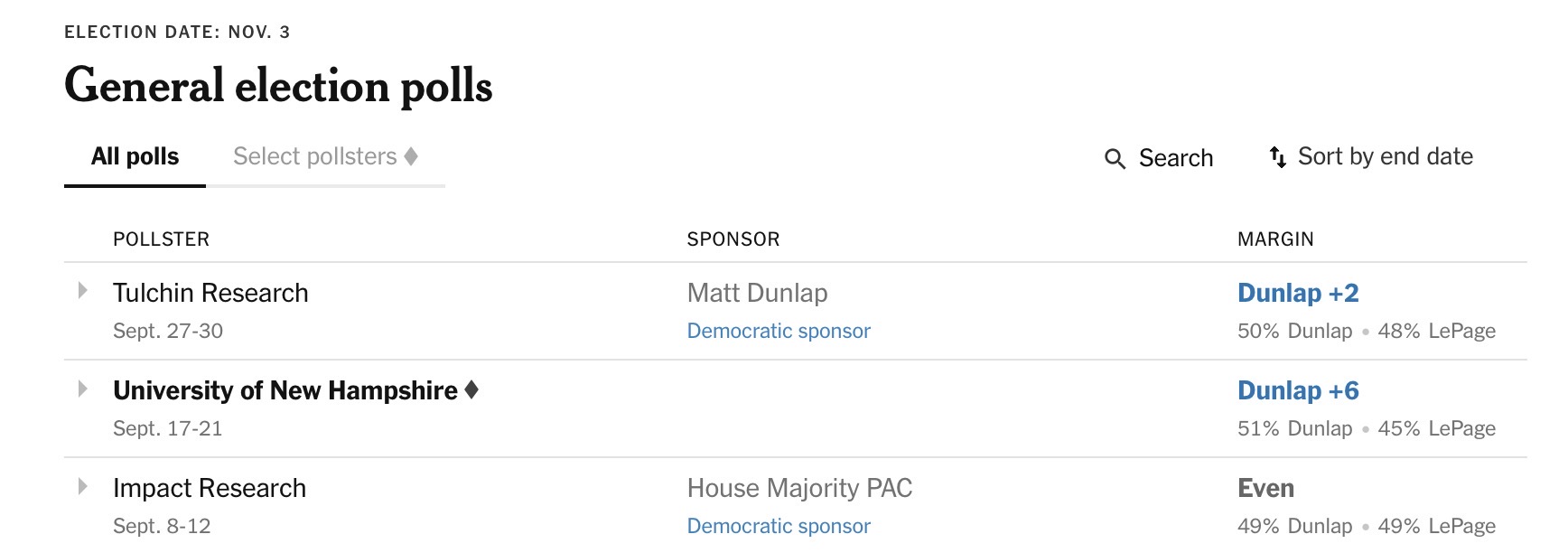
Polls pulled from The New York Times:

Recent polls of the ME-2 race

The University of New Hampshire is about as reliable for polling (check their 2024 presidential polls for New Hampshire) as a slingshot is for stopping a tank. Tossing that one, Dunlap “leads” by one point in polls released over the past month.

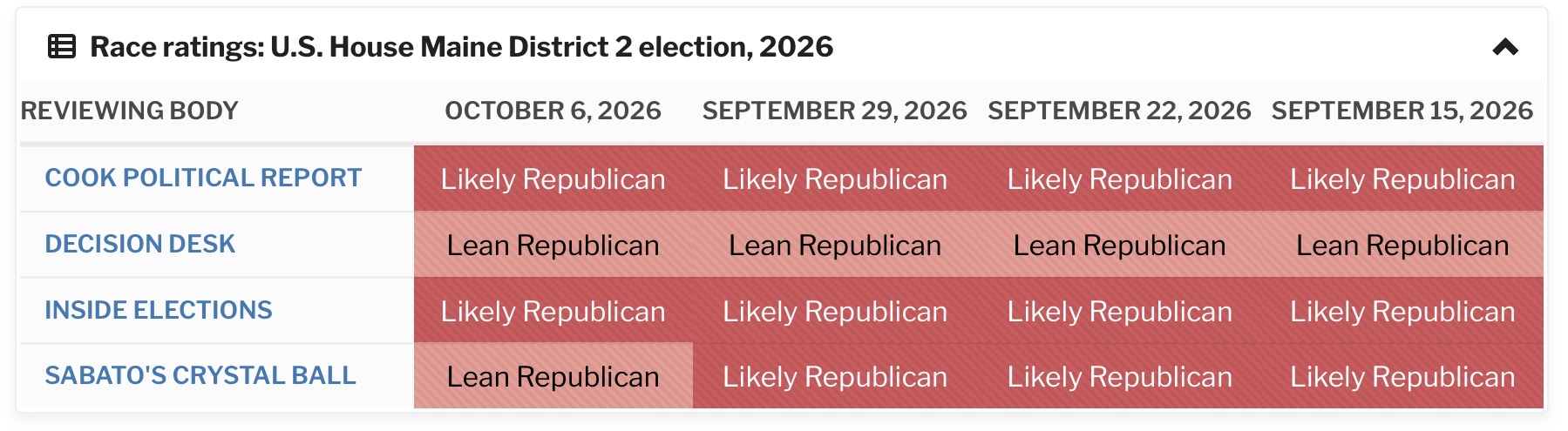
VII. Media Ratings

Media race ratings for ME-2

All four major reviewing bodies expect a LePage victory, with magnitude variable.

VIII. Party Registration

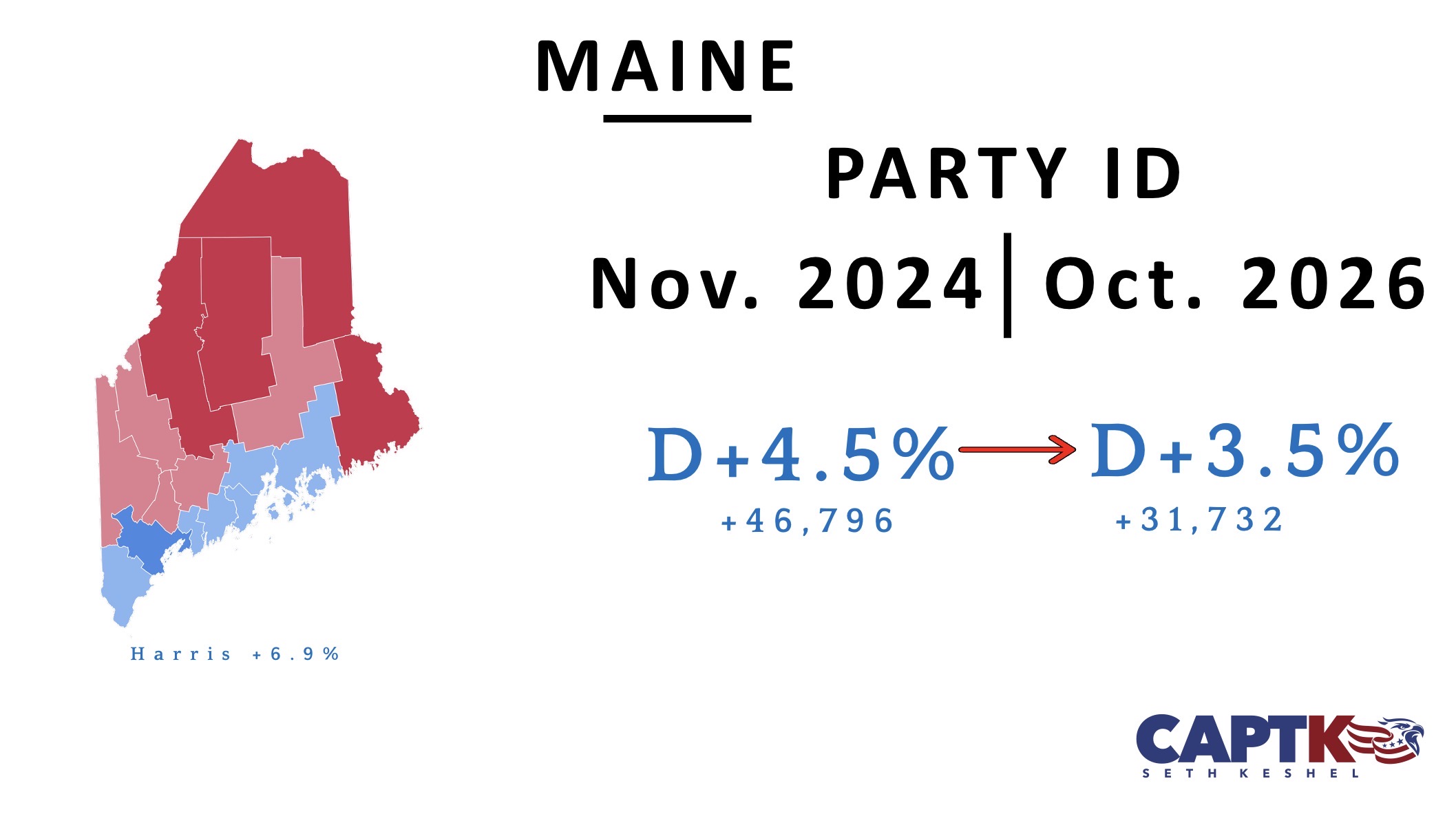
Maine party registration changes since 2024
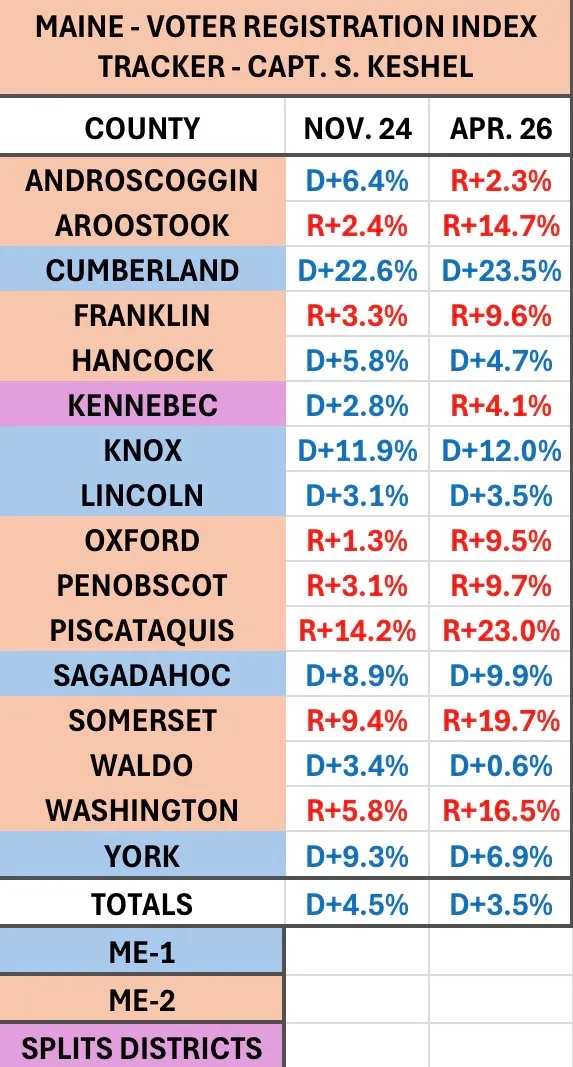
Party registration shifts by county in ME-2

Maine sits a full point to the right of its registration index from November 2024, down from D+4.5% to D+3.5%. All 11 counties that are part of ME-2 have moved toward Republicans in registration, confirming what Jared Golden already felt in 2024 when he barely held on.

Advantage: LePage

IX. Election Considerations

Here is what I wrote in this section for my Maine Senate review, published just last week:

You name it, Maine has it. Too much mail-in voting, a blind eye to ballot harvesting, Automatic Voter Registration, and the dreadful Ranked Choice Voting, which is constantly gamed and exploited to produce the most troublesome outcomes. If this race winds up in a dead heat, a slow drip of mail-in ballots combined with Ranked Choice Voting tilts the scales heavily in favor of Jackson. Collins needs to get her majority in the First Choice round.

I am confident, based on where Democrats were adding votes in 2024 (from 2020), that Golden had his seat “fortified” by rampant ballot harvesting:

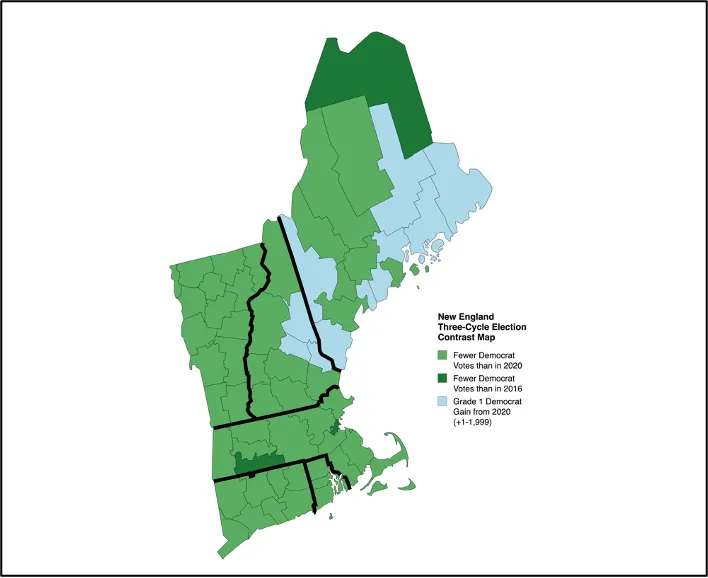
Where Democrats added votes in ME-2 from 2020 to 2024

X. Summary and Election Estimate

Trend is what matters here. Golden knows about it, and that’s why he saw his margin in 2024 and called it “good enough.” The Democrat “blue dog” coalition that remained viable in northern Maine is on its way out, and all 11 counties are reflecting that in their party registration data. To further complicate things, the Democrat base that nominated Platner punted on the more moderate candidate with big name recognition who could have better handled LePage, who has a massive cash advantage over Dunlap.

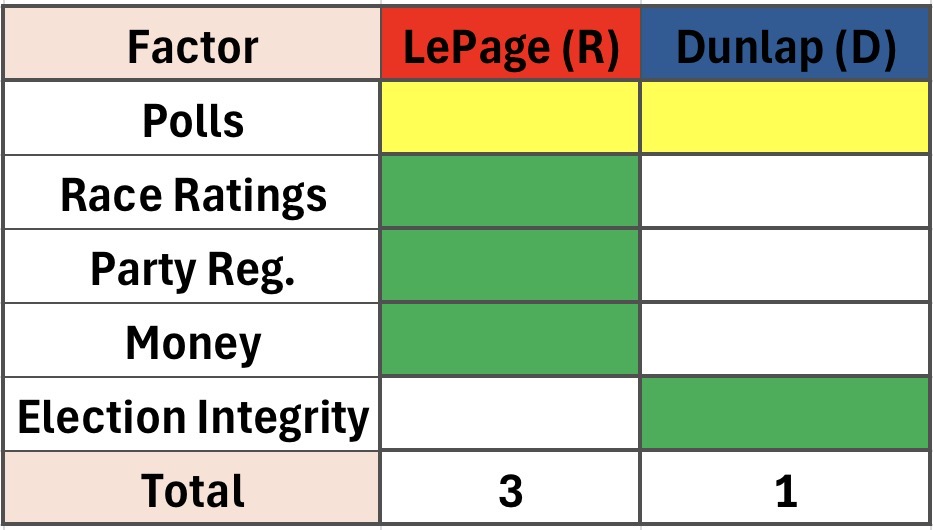
Here is how the key factors in this race stack up:

Key factors in the ME-2 race

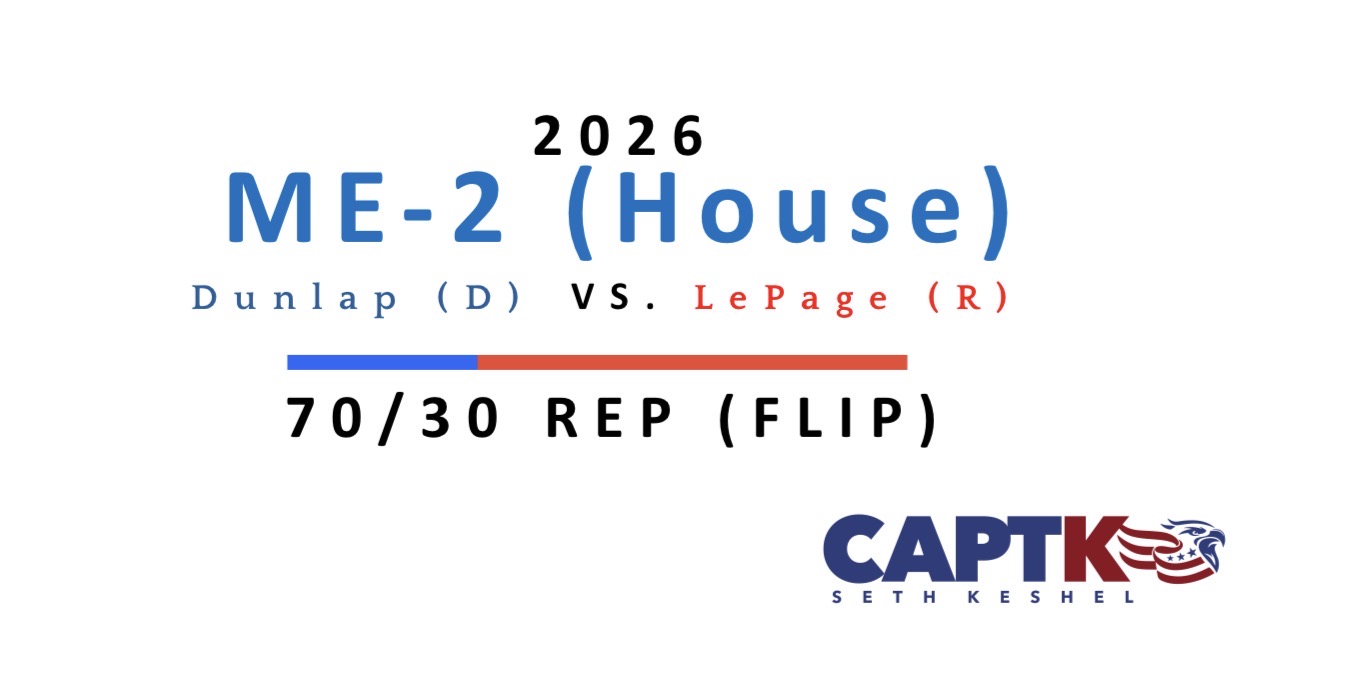
Forecast for ME-2 House

Forecast for the ME-2 U.S. House race

A combination of partisan realignment, candidate quality, superior campaign finance, and extreme ideological positions all point to a changing of the partisan guard in ME-2, which would constitute a true flip, not one from redistricting. Unless something drastic happens between now and November 3, I suspect LePage will be joining his fellow Mainer, Susan Collins, in Congress come January 2027.

Seth Keshel, MBA is a Senior Fellow at the Gold Institute for International Strategy and a retired Army Captain. He publishes Captain K’s Corner on Substack.