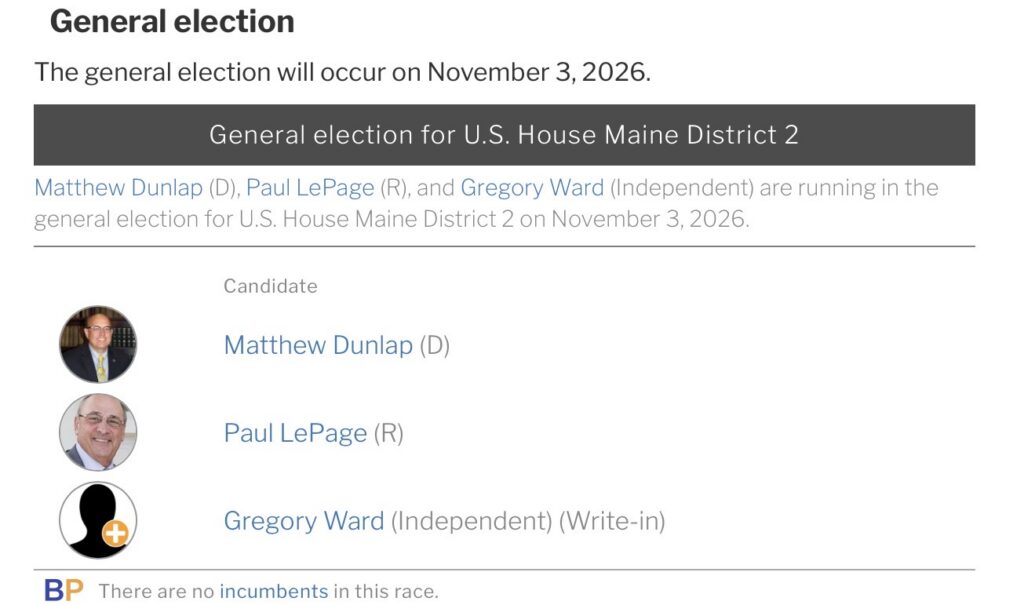
Paul LePage (R) vs. Matthew Dunlap (D)
I. The Race
Paul LePage (Republican) is the former governor of Maine and is seeking to become just the second Republican member of Congress from any of the six New England states.
Matthew Dunlap (Democrat) is a career bureaucrat. He currently serves as State Auditor, and has twice been Secretary of State. Before that, he was a member of the Maine House of Representatives.
II. District Geography
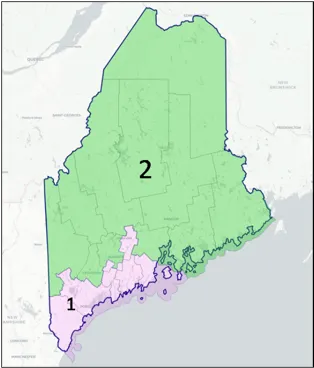
ME-2 makes up the vast majority of Maine’s statewide geography and nestles up against the Canadian border.
The districts have changed very little in the state’s history, and Maine has split the electoral votes since 1972. In 2016, Donald Trump became the first Republican candidate to win ME-2 since 1988.
Presidential Margins under Trump
2016 Trump +10.3%
2020 Trump +7.4%
2024 Trump +9.1%
Key Statistics
90.9% White
72.1% Rural, 27.9% Urban
III. Market Assessment
Tapping into LePage’s name recognition and past track record and Trump’s three wins in ME-2, bettors on Polymarket are hunkering down for a LePage victory.
IV. History
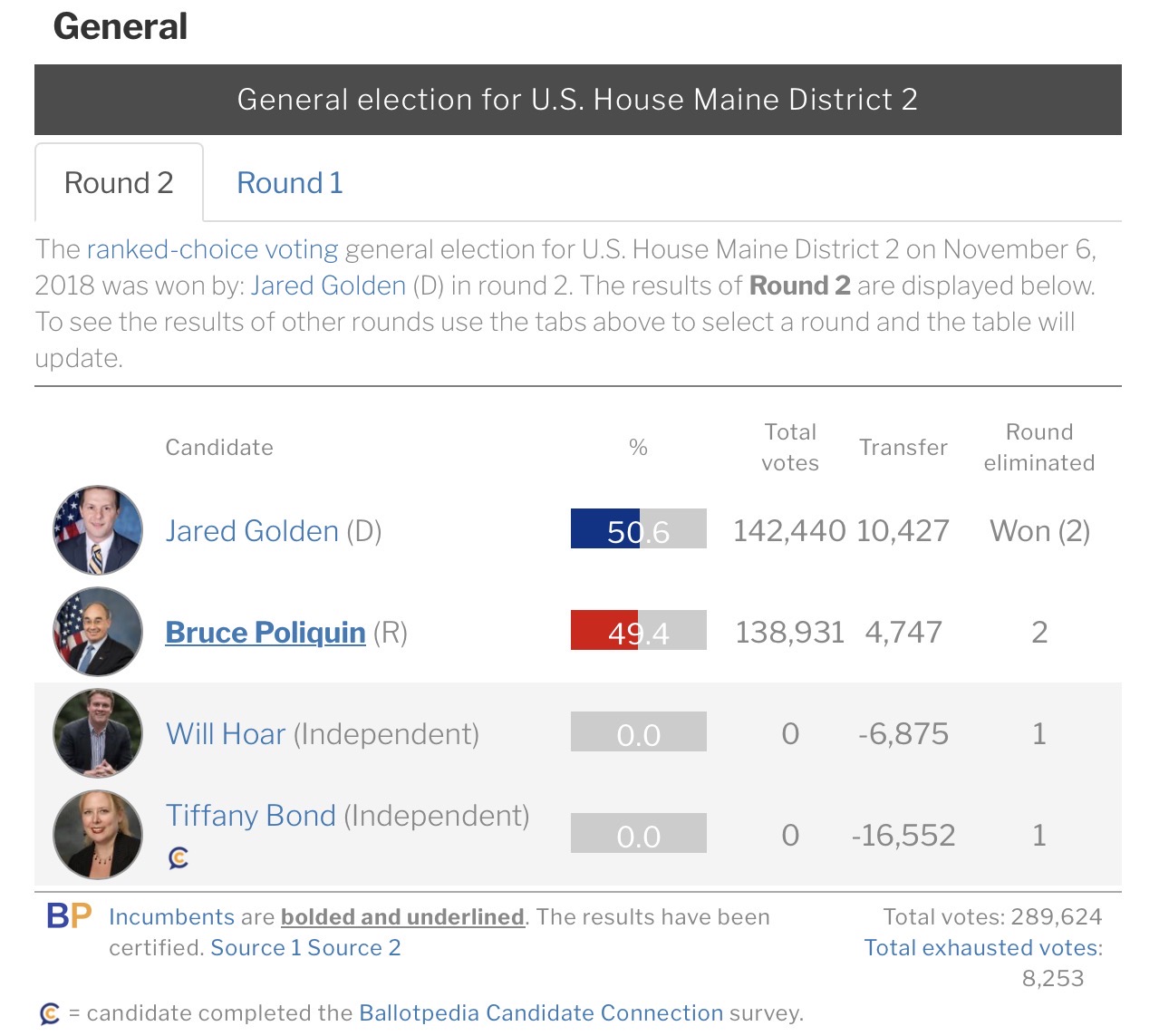
Republican Bruce Poliquin represented ME-2 for two terms, including the first two years of the Trump 45 administration. In the 2018 Democrat wave, he lost his seat (which swung 10.8% left) to Jared Golden, who is retiring from Congress after his current term expires. Interestingly enough, Poliquin beat Golden in the First Choice Round in the very first run of Ranked Choice Voting in Maine, but lost after votes were redistributed:
Golden has successfully defended the seat three times, by +6.2% in 2020, 6.1% in 2022 (over Poliquin again), and a razor-thin 0.6% in 2024 over a relatively unknown GOP challenger:
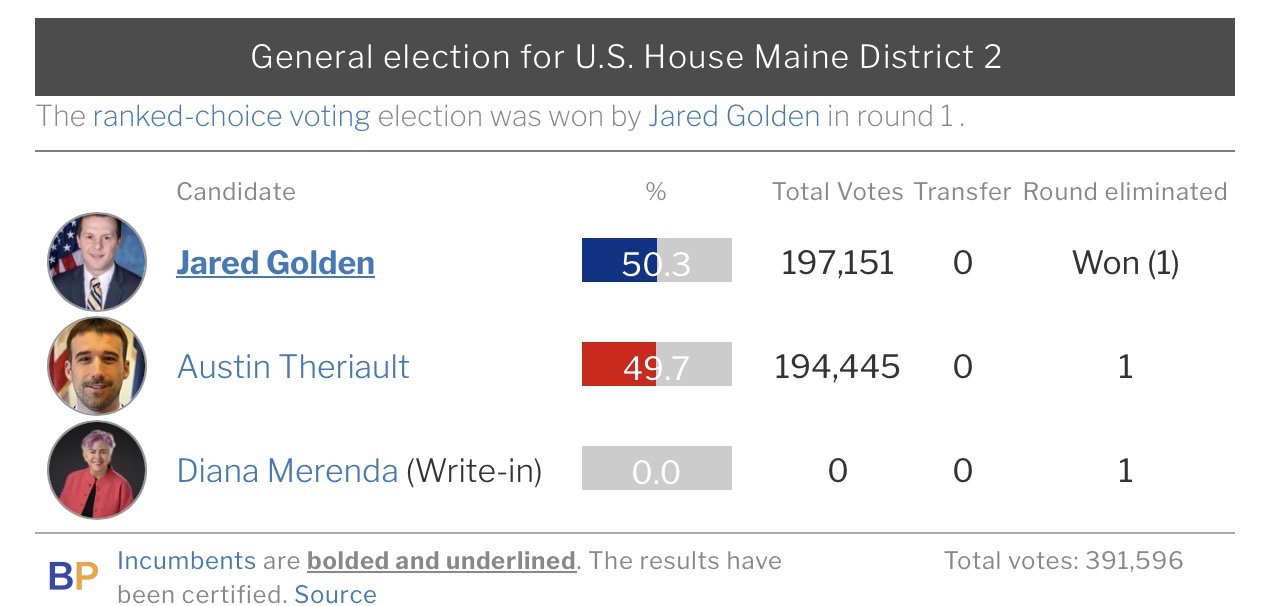
That photo finish, which I will dissect later, seems to have been all Golden needed for smelling the coffee and calling it a career. No matter how moderate, the district appears to be running Republican red from here on out. With the pressure off, Golden (a member of the “Blue Dog” Caucus) has been almost Fetterman-esque in his support for Trumpian policy.
The recent history of ME-2 looks like that of Upstate New York or other parts of Appalachia. While they were once happy to stick with the party and fulfill union wishes, the Democrats appear to have worn out their welcome. Golden’s departure at the age of 44 seems to confirm it.
V. Analysis of 2026 Primary Results
Republicans got behind the LePage campaign early, and as such, he ran unopposed in the GOP primary. Democrats had to scrap it out in the Ranked Choice Voting setup, and Dunlap prevailed in the third round after having trailed in the first two:
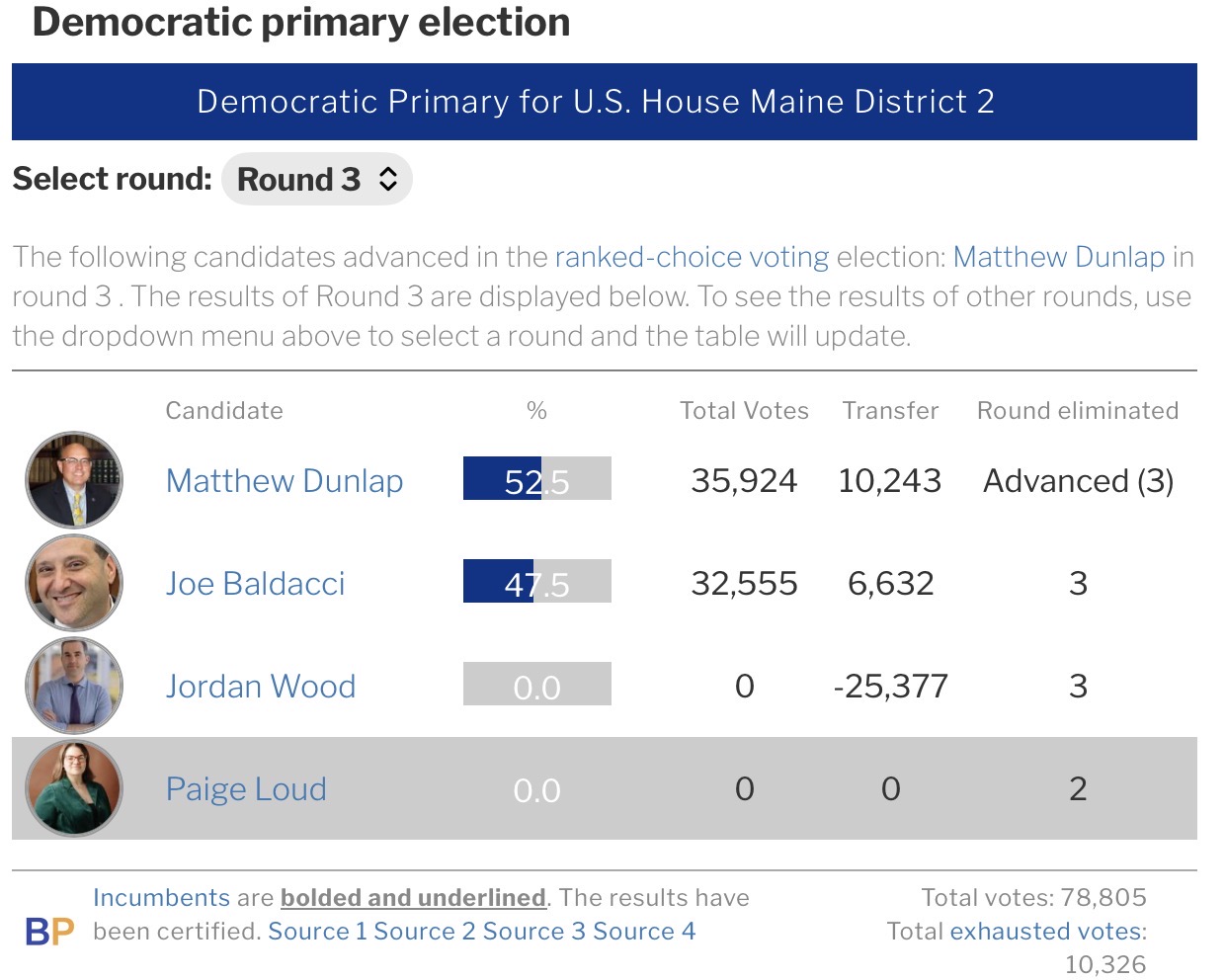
Baldacci is the brother of John Baldacci, former governor of Maine, and was viewed as a moderate option in this rapidly reddening district. He broke ranks with the party on gun control, but the same progressive fringe that nominated Graham Platner for Senate backed Dunlap, who has been pushing Medicare for All and other progressive planks. While the ME-2 rift has none of the toxicity of the Senate situation post-Platner, Democrats probably went a bridge too far on ideology.
VI. Polls
Polls pulled from The New York Times:
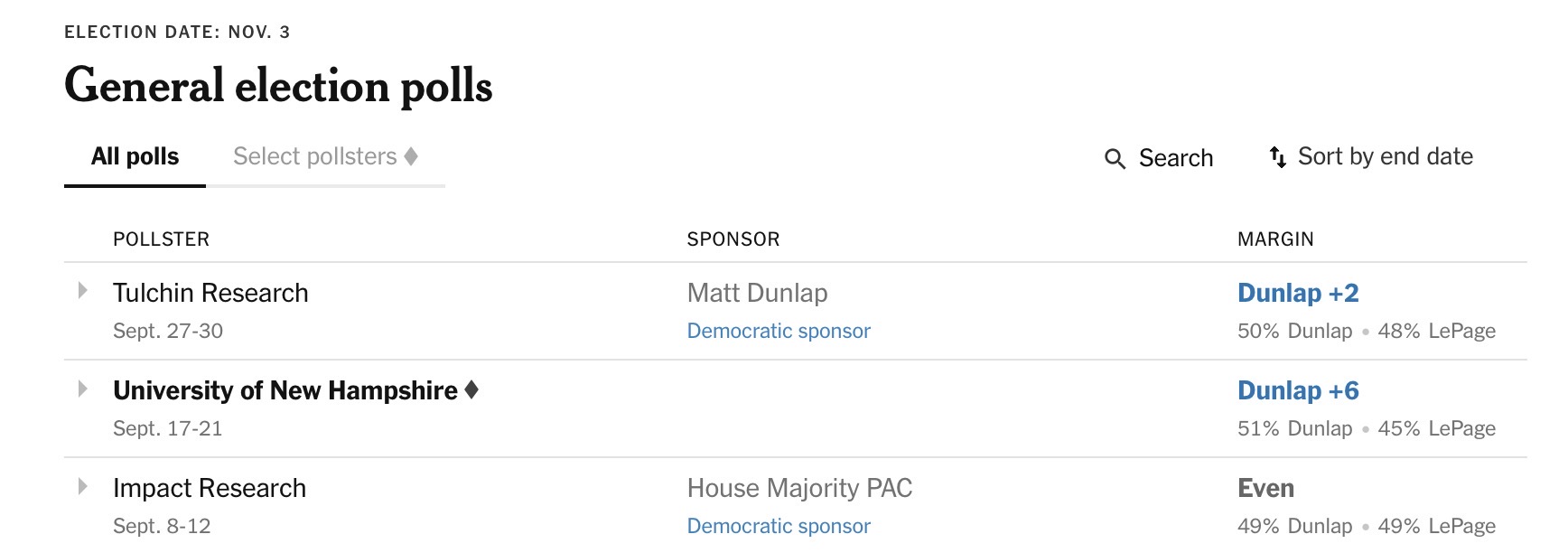
The University of New Hampshire is about as reliable for polling (check their 2024 presidential polls for New Hampshire) as a slingshot is for stopping a tank. Tossing that one, Dunlap “leads” by one point in polls released over the past month.
VII. Media Ratings
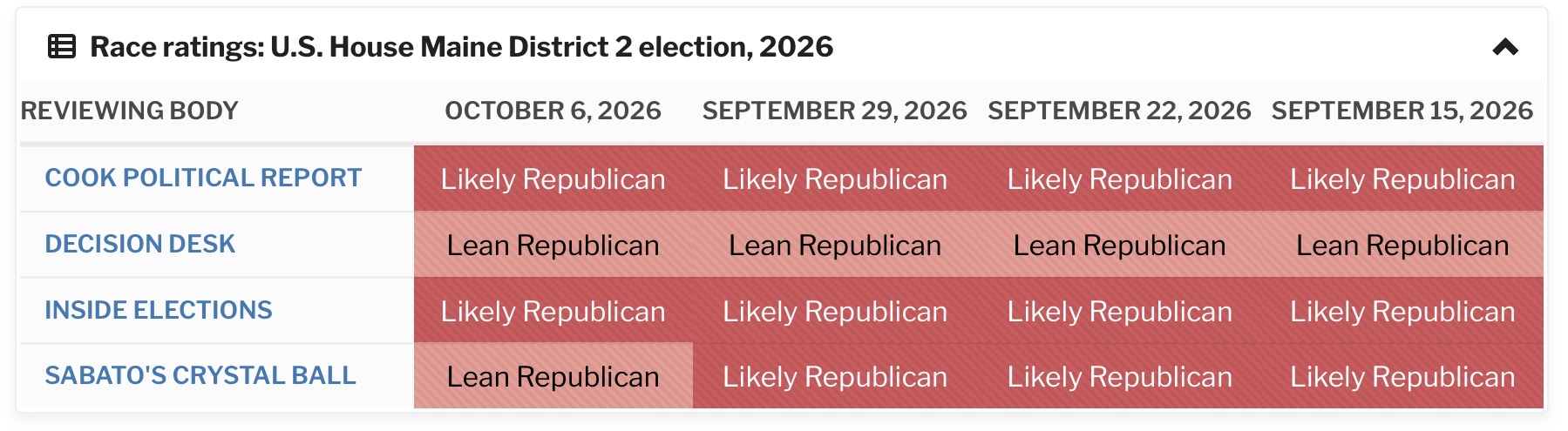
All four major reviewing bodies expect a LePage victory, with magnitude variable.
VIII. Party Registration
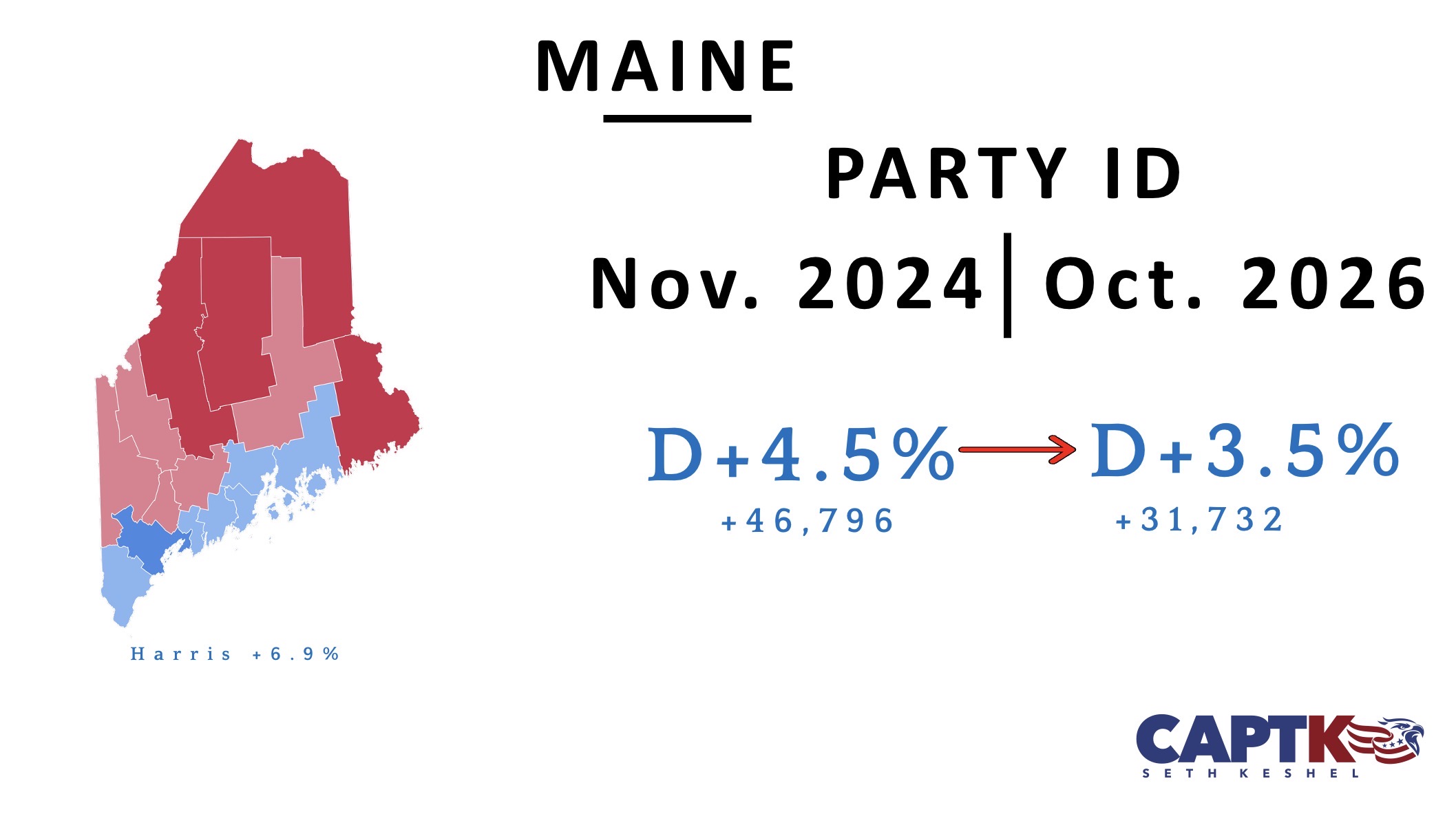
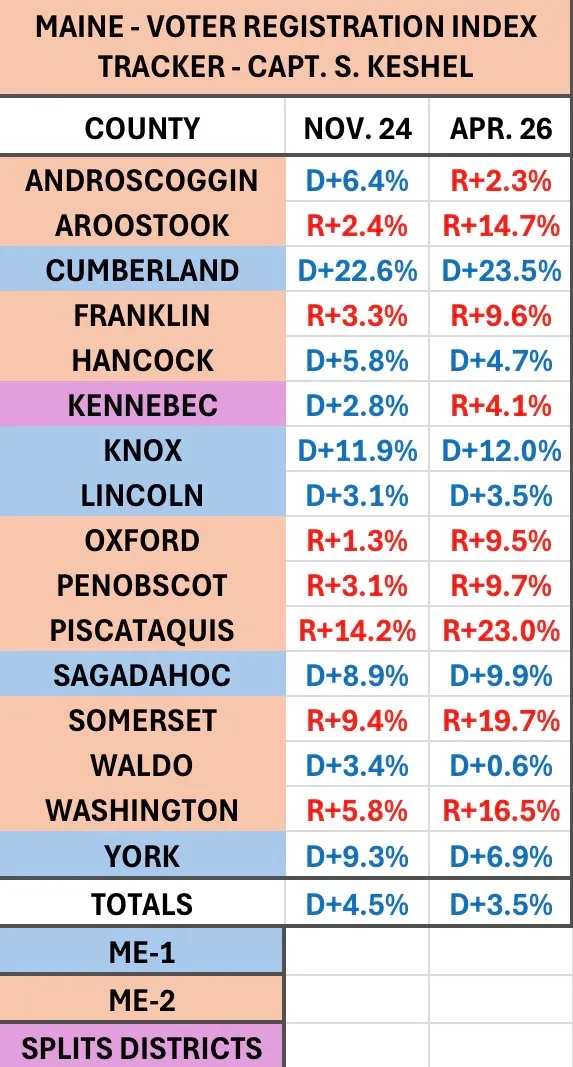
Maine sits a full point to the right of its registration index from November 2024, down from D+4.5% to D+3.5%. All 11 counties that are part of ME-2 have moved toward Republicans in registration, confirming what Jared Golden already felt in 2024 when he barely held on.
Advantage: LePage
IX. Election Considerations
Here is what I wrote in this section for my Maine Senate review, published just last week:
You name it, Maine has it. Too much mail-in voting, a blind eye to ballot harvesting, Automatic Voter Registration, and the dreadful Ranked Choice Voting, which is constantly gamed and exploited to produce the most troublesome outcomes. If this race winds up in a dead heat, a slow drip of mail-in ballots combined with Ranked Choice Voting tilts the scales heavily in favor of Jackson. Collins needs to get her majority in the First Choice round.
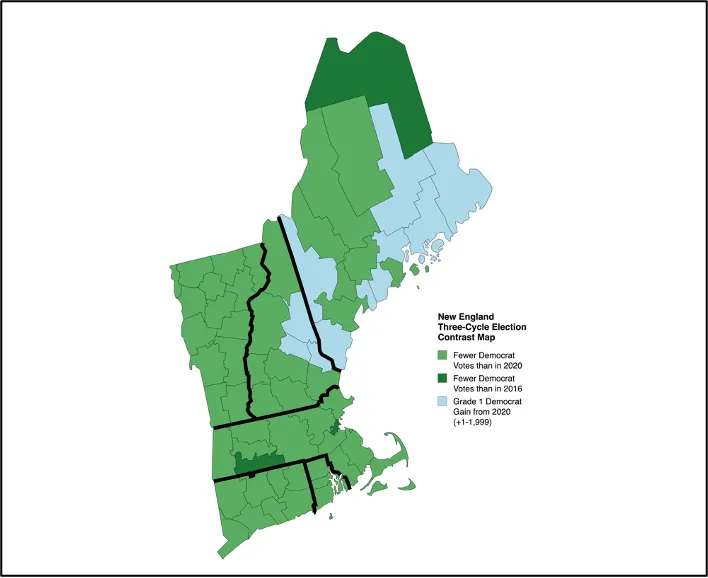
I am confident, based on where Democrats were adding votes in 2024 (from 2020), that Golden had his seat “fortified” by rampant ballot harvesting:
X. Summary and Election Estimate
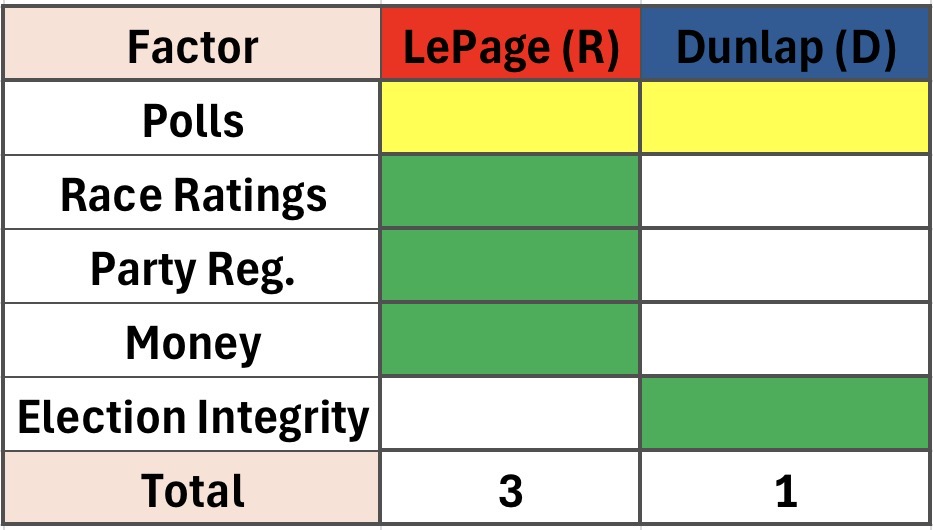
Trend is what matters here. Golden knows about it, and that’s why he saw his margin in 2024 and called it “good enough.” The Democrat “blue dog” coalition that remained viable in northern Maine is on its way out, and all 11 counties are reflecting that in their party registration data. To further complicate things, the Democrat base that nominated Platner punted on the more moderate candidate with big name recognition who could have better handled LePage, who has a massive cash advantage over Dunlap.
Here is how the key factors in this race stack up:
Forecast for ME-2 House
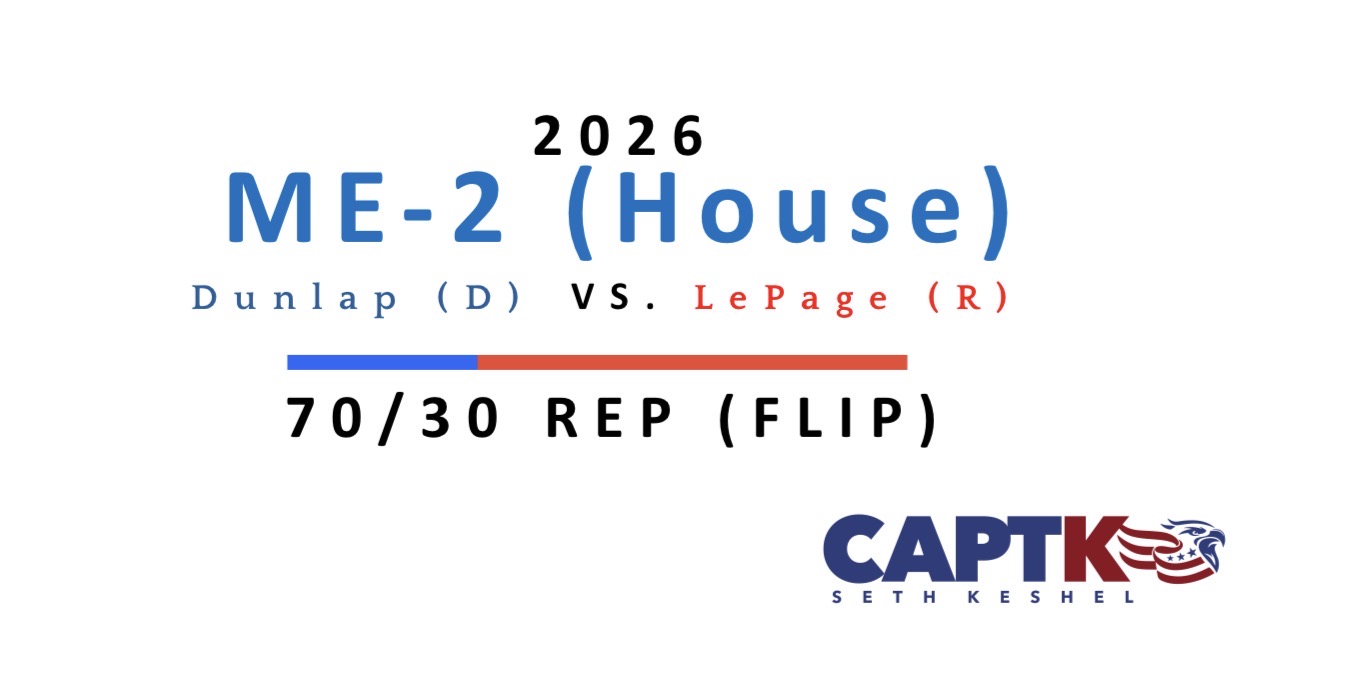
A combination of partisan realignment, candidate quality, superior campaign finance, and extreme ideological positions all point to a changing of the partisan guard in ME-2, which would constitute a true flip, not one from redistricting. Unless something drastic happens between now and November 3, I suspect LePage will be joining his fellow Mainer, Susan Collins, in Congress come January 2027.
Seth Keshel, MBA is a Senior Fellow at the Gold Institute for International Strategy and a retired Army Captain. He publishes Captain K’s Corner on Substack.