Brinker Harding (R) vs. Denise Powell (D)
I. The Race
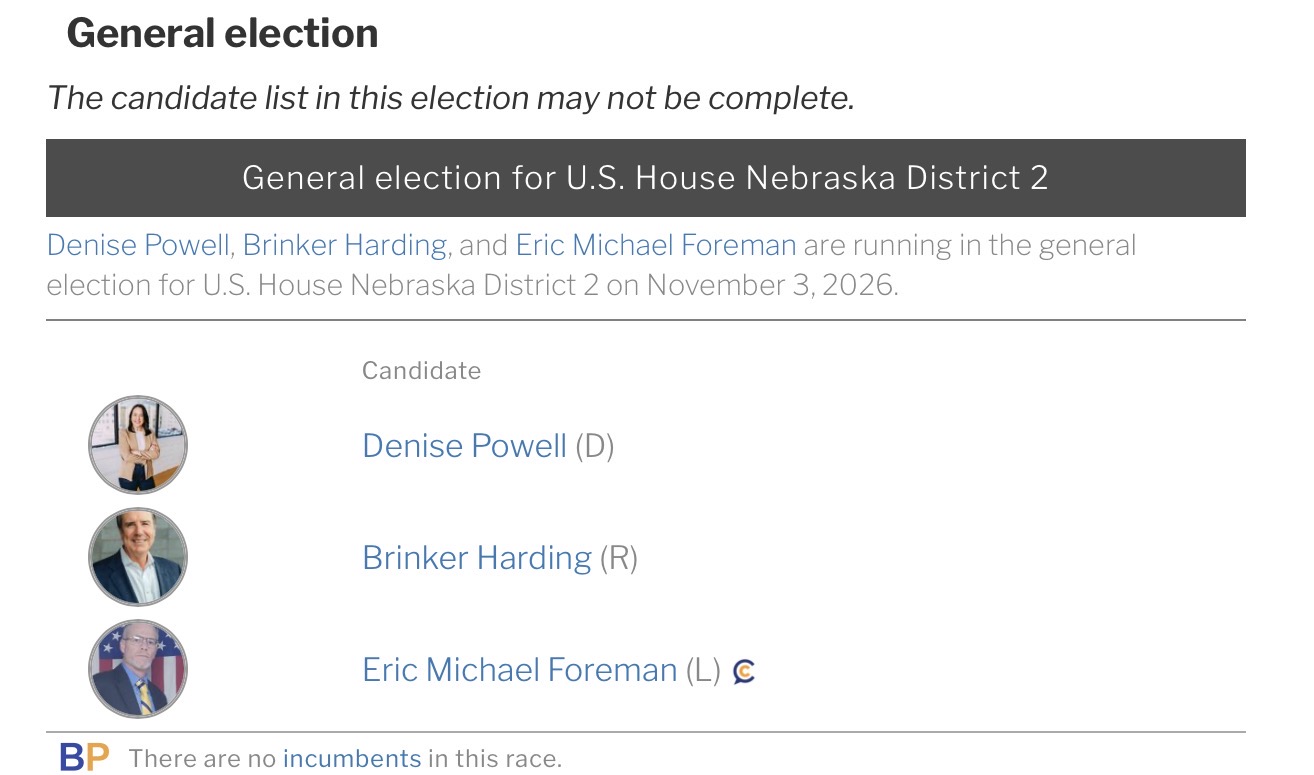
Brinker Harding (Republican) emerged from the GOP primary as the nominee looking to replace Don Bacon, who is retiring from Congress after five terms. Harding has spent most of the last decade as a member of the Omaha City Council.
Denise Powell (Democrat) has never run for office before. Her campaign revolves around her radical feminism (she co-founded a PAC called “Women Who Run Nebraska”), supposed outsider appeal, and her promises to stick it to Trump.
II. District Geography
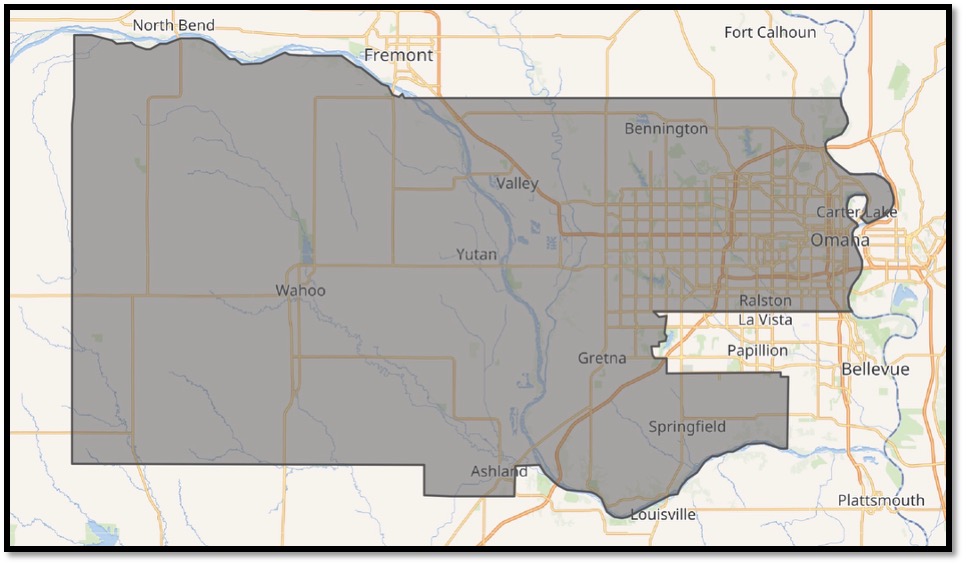
Nebraska’s 2nd Congressional District (NE-2) is a Republican Party catastrophe of its own making. President Trump carried the state, which has just three U.S. House districts, by 20.5%, yet lost the split electoral vote of NE-2 by 4.6%. The district consists of all of Douglas County (metro Omaha), a portion of Sarpy County, and all of Saunders County, which to the west of both. The idiotic Republican leadership in Nebraska’s unicameral legislature took the opportunity to redraw this seat ahead of the 2022 midterms, and instead of playing to win, added only a county (Saunders) that had less than 13,000 votes tallied in 2020 instead of shifting precincts around in Omaha.
Could they have figured out a creative way to ensure Republicans can cruise to victory in all three seats in a Trump +20 state? You tell me:
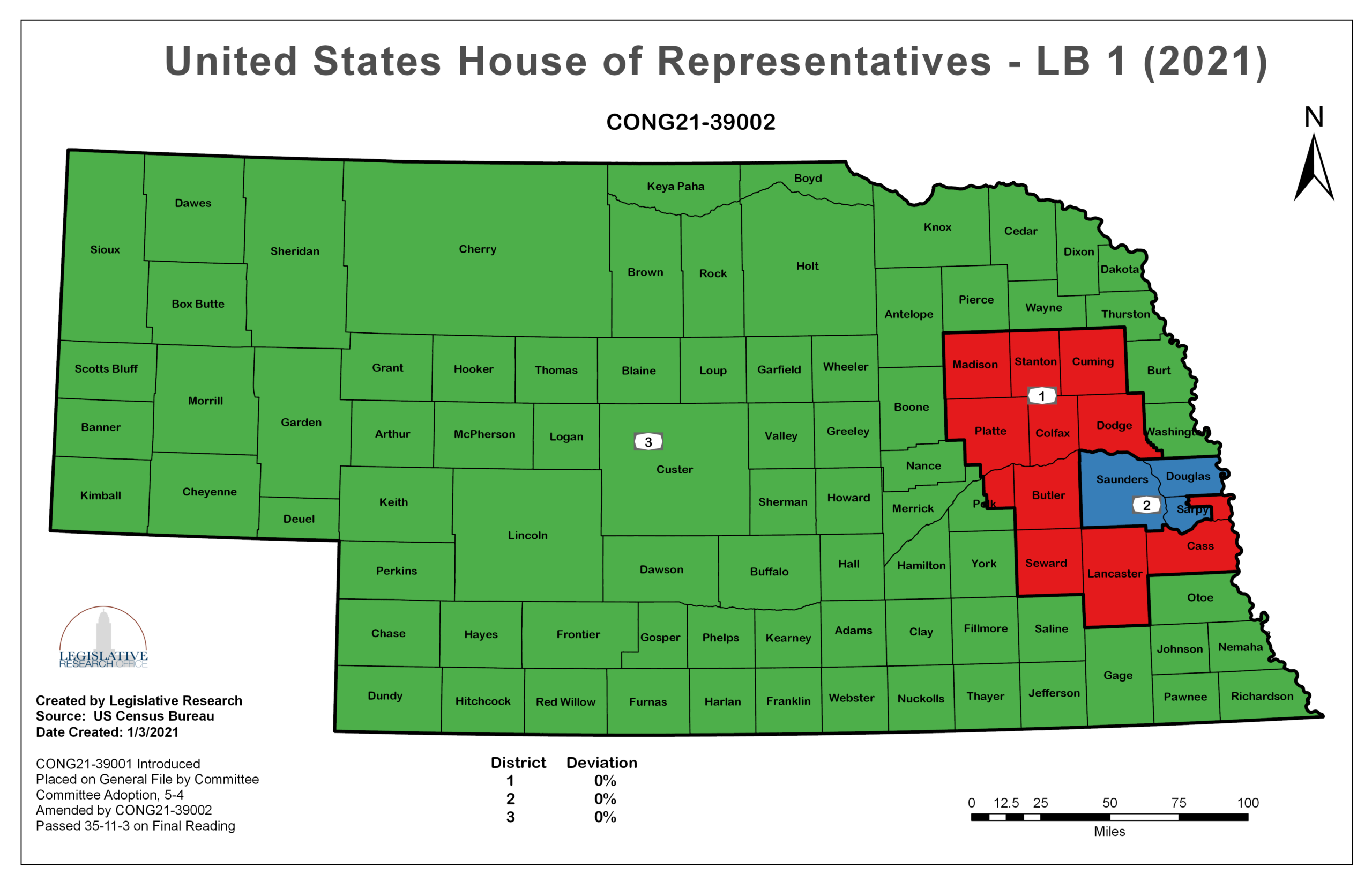
Sarpy is conservative, but becoming more suburbanized and losing margin. Saunders is super-MAGA, but small. Omaha, while not a monstrosity of a liberal city, is drifting leftward along with most major metros in America (including in the suburbs) and is reminding me a lot of KS-3, which Republicans lost in the 2018 wave.
Presidential Margins
2016 Trump +2.2%
2020 Biden +6.5%
2024 Harris +4.6%
Key Statistics
67.8% White, 12.8% Hispanic, 9.8% Black
97.9% Urban, 2.1% Rural
III. Market Assessment
Polymarket bettors, sniffing polls and presidential baselines, don’t think Brinker Harding has a chance.
IV. History
The district has represented Omaha since 1883; Republicans took the seat in 1994 and held it for 20 years, strangely losing it in 2014 (despite a red wave in which the GOP only lost one other seat) because Lee Terry blundered his way into a primary he barely won and lost the seat to Democrat Brad Ashford. Ashford won the seat with a 49% plurality thanks to a spoiler libertarian candidate exploiting the GOP feuding.
In 2016, retired Air Force Brigadier General Don Bacon won the Republican nomination and challenged Ashford for the seat. Bacon, an avowed Trump hater who now spends most of his days trashing Republicans on X, managed to knock off Ashford by an eyelash.
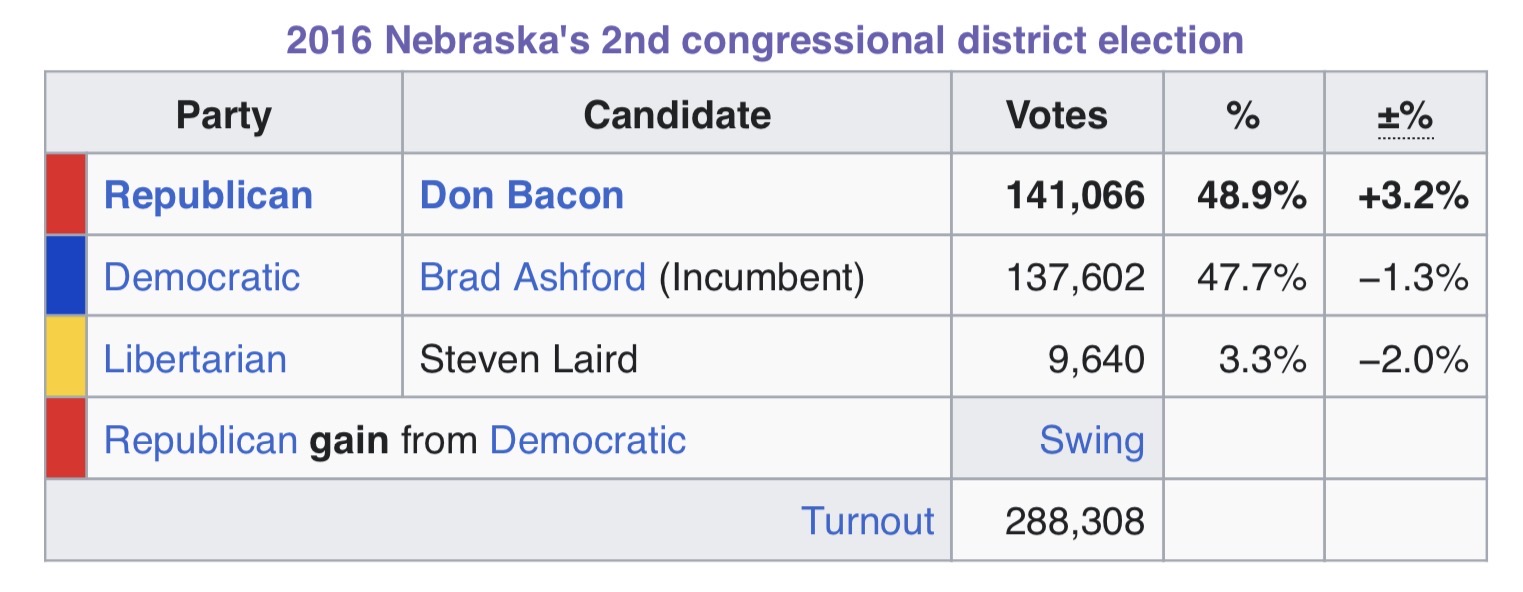
Bacon has managed to thread the needle four more times in an increasingly difficult district:
2018 +2.0%
2020 +4.6%
2022 +2.7%
2024 +1.9%
Five consecutive wins of the district for Bacon, and not a single one exceeding 4.6%. Trump outran Bacon’s 2016 margin by one point, so the above figures, with Bacon running 11.1% ahead of Trump in 2020 and 6.5% in 2024, truly demonstrate how much metro Omaha has drifted left in the past decade. Bacon did manage to win in 2018 by a higher margin than he posted in 2016, and almost directly in line with the 2016 presidential margin.
Bacon is now out, and leaves a difficult district for a GOP candidate with very little name recognition and a shattered coalition of voters.
V. Analysis of 2026 Primary Results
Harding ran unopposed in the Republican primary. Powell had to navigate a crowded field, and eventually prevailed over state legislator John Cavanaugh in a toxic battle:
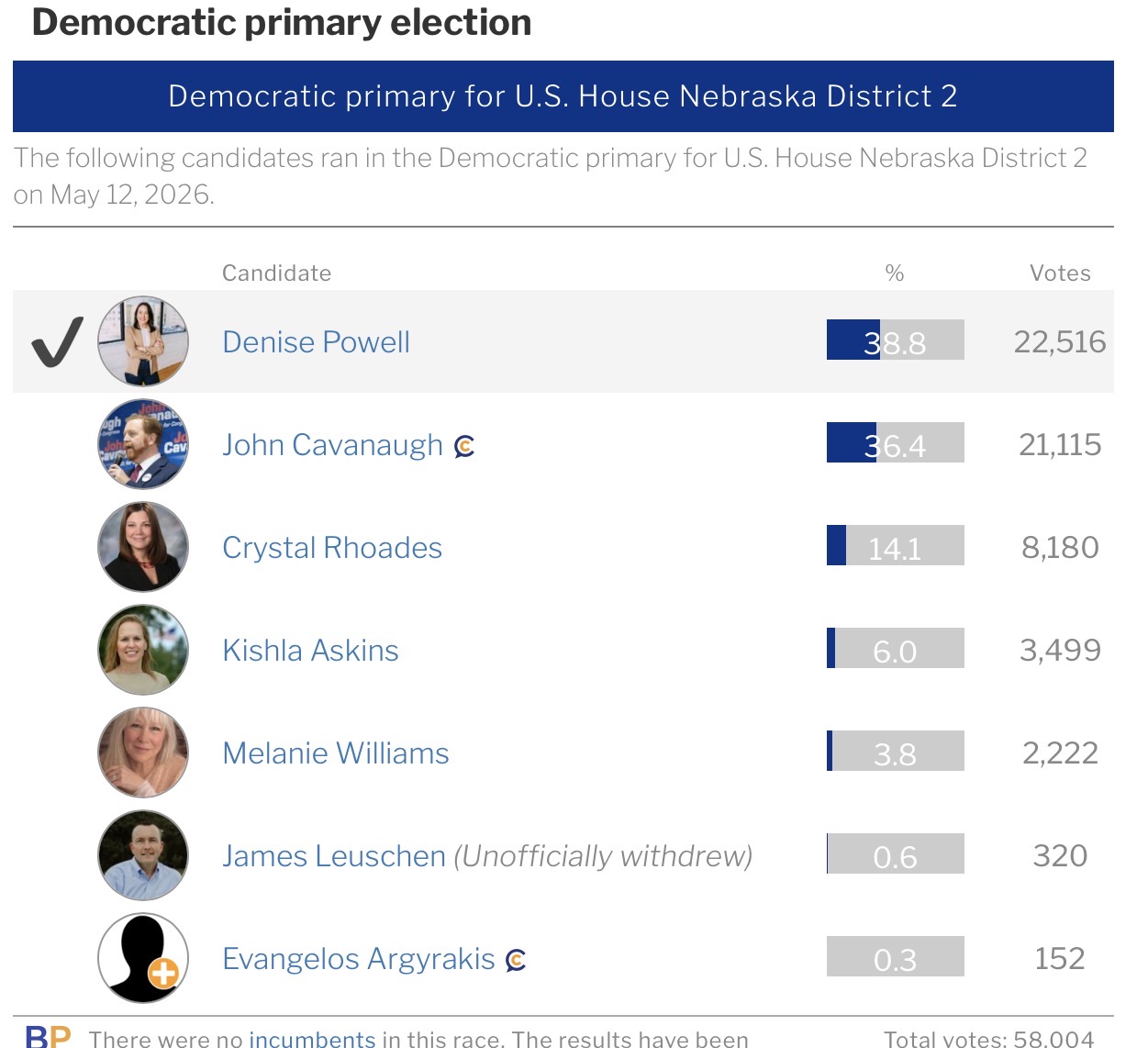
Powell is the candidate who has to mend fences, but the rift isn’t as severe as can be observed in states that saw DSA-linked candidates battling establishment Democrats.
VI. Polls
I found one poll archived by The New York Times, and it shows Powell +4.

VII. Media Ratings
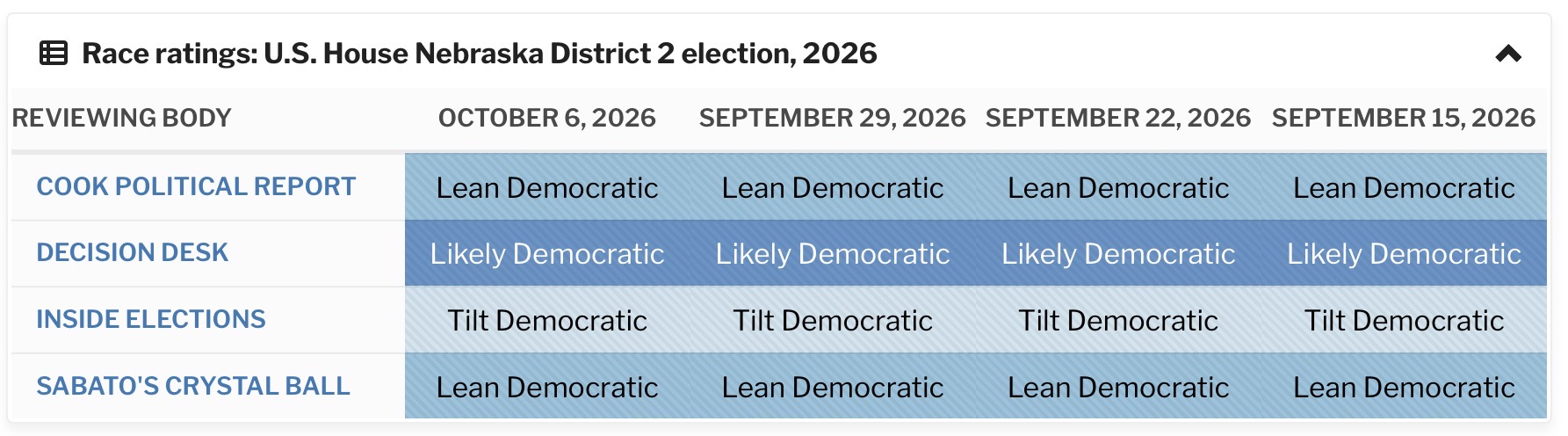
All four major reviewing bodies have the race favorable to Powell, ranging from “tilt” to “likely.” “Likely” probably overstates her advantage.
VIII. Party Registration
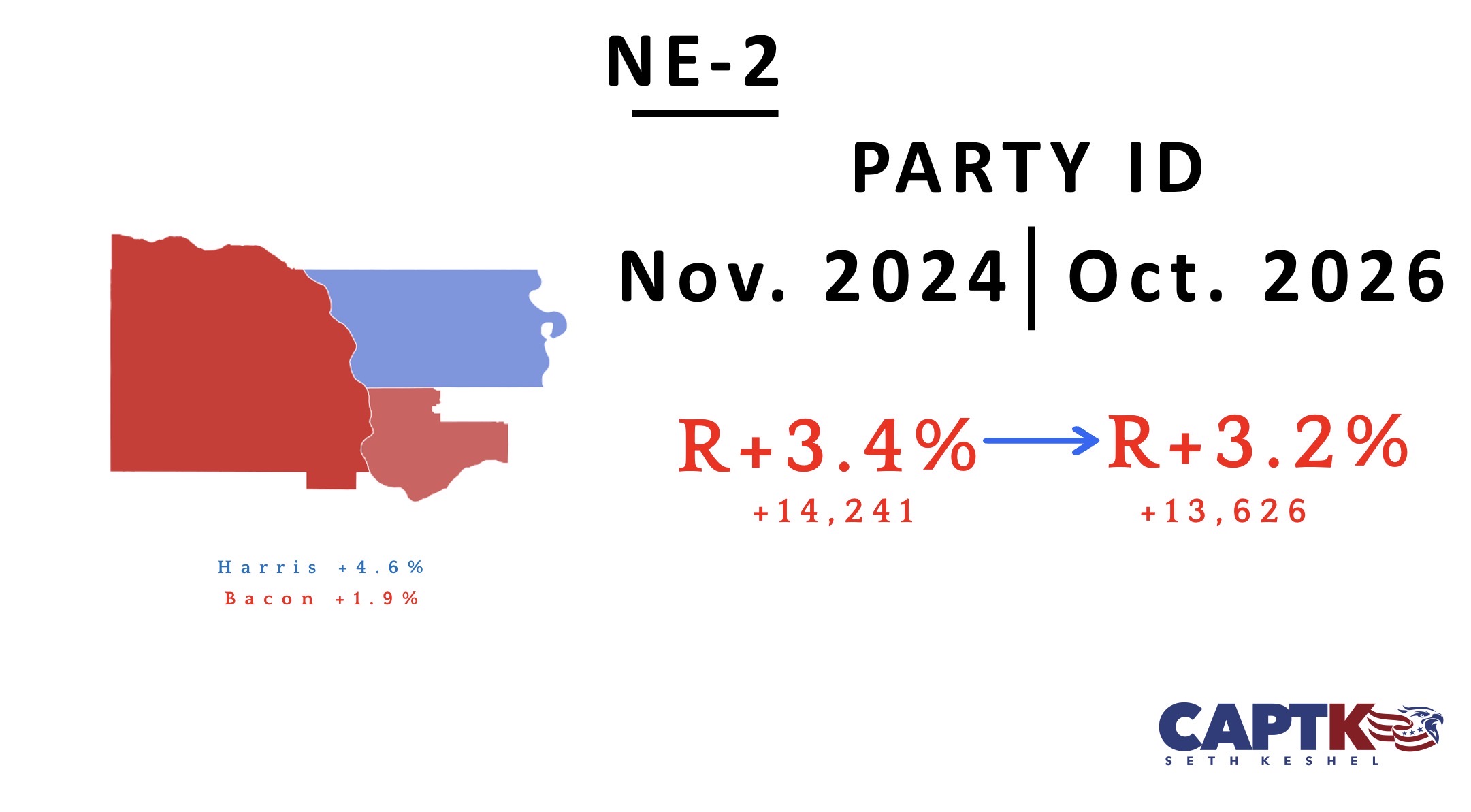
Since the 2024 election, NE-2 has inched slightly leftward – down 615 net registrations for Republicans and one-fifth of a point. This number generally tacks with the shifting of independent voters in presidential races, and the shift certainly doesn’t aid Harding’s cause.
IX. Election Considerations
Nebraska finally got with the program on Voter ID, and doesn’t operate Automatic Voter Registration or run mass mail-in elections. Manipulation is always possible with elections and has been identified in Nebraska, but this elections ranks low relative to others with regard to election integrity.
X. Summary and Election Estimate
Powell has three key factors in her favor:
• Money. Her figures compared to Harding’s at the end of June didn’t give her much of an advantage, but she isn’t being swamped by GOP funding like Democrat candidates have been in other seats.
• The open seat and the suburban drift give her a big boost. Douglas County and, by extension, NE-2 remind me of KS-3, which Kevin Yoder lost to Sharice Davids in 2018. That seat hasn’t returned to the Republicans and gives no indication it will anytime soon.
• Party registration figures reflect the continuing slide, and Harding lacks the big profile, status as a retired general, and party unity to make up the difference in a difficult year – especially given that Bacon never carried the seat by more than 4.6%.
Still, we run the actual elections for a reason. Turnout matters, and if the district’s black vote (roughly one-tenth of the electorate) doesn’t turn out, the Hispanic vote runs right, and suburbanites don’t run left out of concern for the future of the Democrats (unlikely in NE-2), then Harding has a chance. I see the key factors like this:
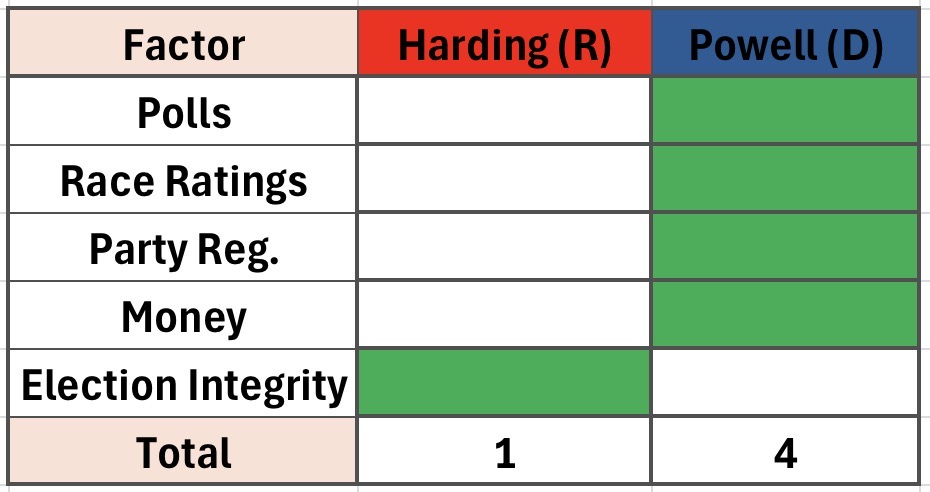
Democrats are right to be bullish on a flip. While I don’t think NE-2 has a high ceiling for Democrats, Powell appears on the verge of taking the seat the Nebraska GOP refused to shore up.
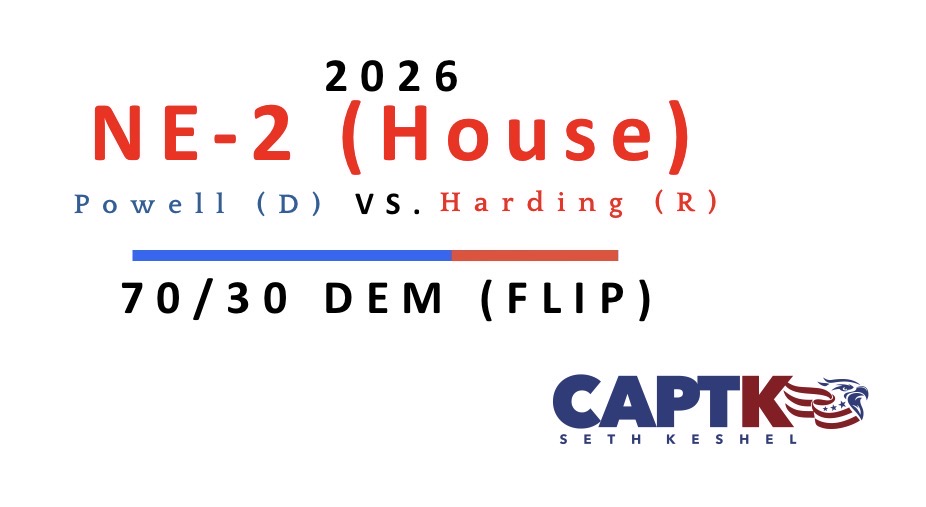
Forecast for NE-2 House
Seth Keshel, MBA is a Senior Fellow at the Gold Institute for International Strategy and a retired Army Captain. He publishes Captain K’s Corner on Substack.