Why Talarico Wants (Needs) Debates

Cover image for Seth Keshel's analysis of the Texas U.S. Senate race between Ken Paxton and James Talarico

County math trumps polling every time, and the math ain’t mathin’

In the early stages of the 2024 election cycle, I created a series of pessimistic forecasts for the seven decisive states. I made them to simulate a repeat of the 2020 election, complete with its suburban swings, urban booms (yes, almost everyone knows exactly where that came from), and with the Democrat nominee somehow running ludicrously high ballot counts in rural or “Trump central” mid-sized counties.
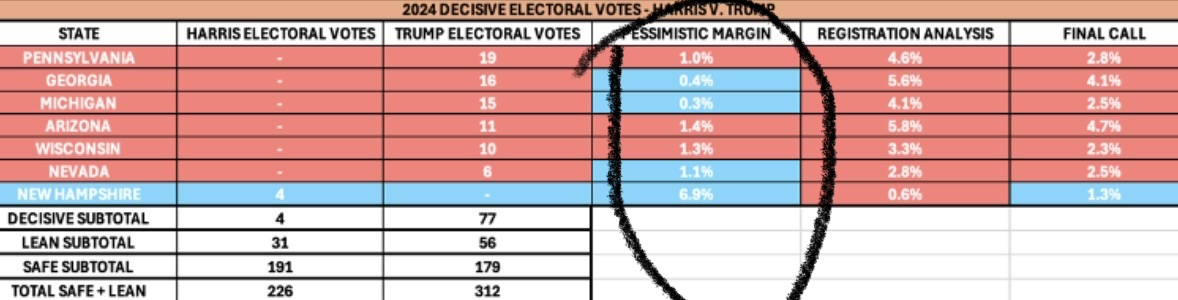
Table of Seth Keshel's 2024 swing-state forecasts compared with the results

I contrasted those concessions with a registration analysis, which turned out to be too bullish in every state but Nevada (and almost right on the money in Arizona), and when blending the two disciplines – produced seven perfect calls, with none of my margins missing by more than two points. Yes, I was more accurate than the most accurate pollsters while completely crapping all over polling. For some reason, the New York Times is no longer interested in interviewing me.

New York Times headline: Meet the Election Denier Forecasting the 2024 Race

That was then, this is now. Texas is at risk, they’re telling me in the polls. What can we discern about the Lone Star State using a pessimistic model? Lots has changed since Beto O’Rourke gave Ted Cruz all he wanted in the 2018 Senate race in the middle of a suburban reorganization and lingering Trump-Cruz factional drama. Namely, this:
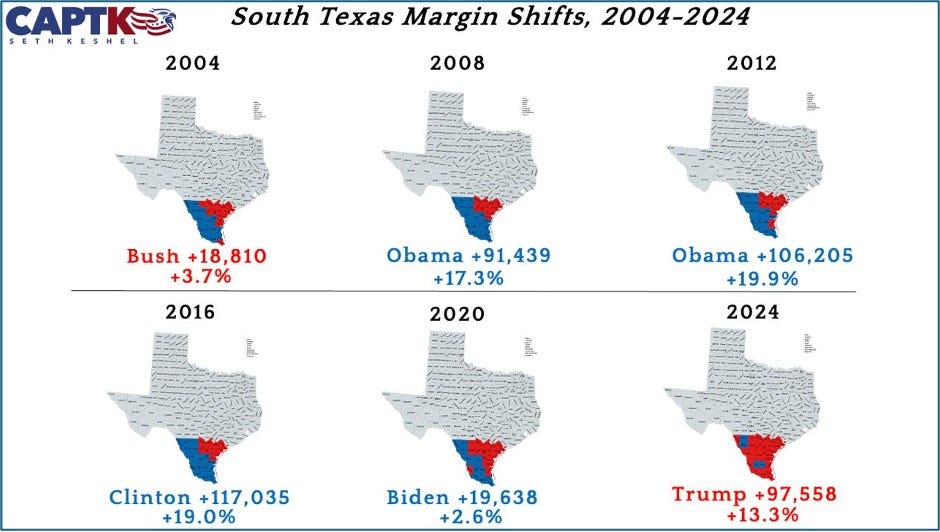
Map of the Texas shift toward Trump since 2018

Not just in South Texas, but all over. From the Trans-Pecos region, to the Llano Estacado, to the cities with working-class Hispanics, and everywhere in between. Ken Paxton isn’t defending a Trump +9.0% state full of Bushies who held their nose in 2016. He’s defending a Trump +13.7% that, if we let it stick, crushes the Democrats’ dreams for the future Texas:

How Trump Saved Texas, In One Stunning Image

I could go on and on, but the purpose of this post is to show you my pessimistic math that demonstrates exactly why I think Paxton should win against James Talarico, and additionally, why Talarico is demanding to debate the Texas Attorney General despite polling looking like something out of a dystopian novel.

Recent polling in the Texas U.S. Senate race between Ken Paxton and James Talarico

In the past 10 days, Talarico’s polling average is +3.5%. There is a vast field of difference between a +6 poll (roughly 600,000 margin this year, which is impossible for a Democrat), and a +1-2 poll complete with standard polling problems like response bias, Cornyn-Paxton factional feuding, and straight up incompetence.

But what do the data say?

We need to go back to the 2016-18 timeframe to understand modern Texas. Trump got smoked in the overwhelmingly Hispanic counties of South Texas his first time around, and wore big losing margins in the major metros. No one had seen a Democrat presidential margin in Harris County as large as Clinton’s +12.3% since the old “Solid South” days (1964 and LBJ, to be exact). Still, despite Ted Cruz losing 6.4% of Trump’s 2016 margin in holding off O’Rourke, these counties shifted Republican from the 2016 presidential election to the 2018 Senate election in favor of Cruz:

Map of Texas counties that shifted Republican from the 2016 presidential election to the 2018 Senate election

107 in all, and overwhelmingly Hispanic. 52 counties shifting toward O’Rourke did so by less than 2 points, with many doing so thanks to turnout differentials in midterms or just plain old statistical noise in small counties. O’Rourke’s narrow loss, the closest race in Texas since 1998, was propelled by these shifts:

  • Hays County, Trump +0.8% to O’Rourke +15.4%, moving 12,872 margin
  • Williamson County, Trump +9.6% to O’Rourke +2.9%, moving 25,705 margin
  • Denton County, Trump +20.0% to Cruz +8.2%, moving 35,621 margin
  • Travis County, Clinton +38.6% to O’Rourke +49.7%, moving 59,438 margin
  • Collin County, Trump +16.6% to Cruz +6.1%, moving 38,601 margin
  • Tarrant County, Trump +8.6% to O’Rourke +0.7%, moving 61,825 margin
  • Dallas County, Clinton +25.9% to O’Rourke +33.0%, moving 42,118 margin
  • Bexar County, Clinton +13.3% to O’Rourke +19.9%, moving 30,167 margin
  • Fort Bend County, Clinton +6.6% to O’Rourke +12.1%, moving 13,610 margin

And finally…

  • El Paso County, Clinton +42.8% to O’Rourke +49.4%, moving 8,216 margin – this is O’Rourke’s home county and, as you will read, a major obstacle to Talarico’s presumptive pathway to victory

The shifts in Texas from 2018 to 2026 define why Paxton should be expected to win his race for the U.S. Senate.

The model I’m describing today has to determine two things – turnout and margin.

For turnout:

I calculate turnout coefficients as percentage of the previous presidential vote. In Travis County (Austin), there were 468,720 total votes for President and 484,204 for “Betomania” in 2018 (the U.S. Senate race). That means Travis produced 103.3% of its 2016 presidential vote total. In these 15 counties, I have set turnout equal to the 2018 share as described above to give Talarico a strength of turnout he may not have:
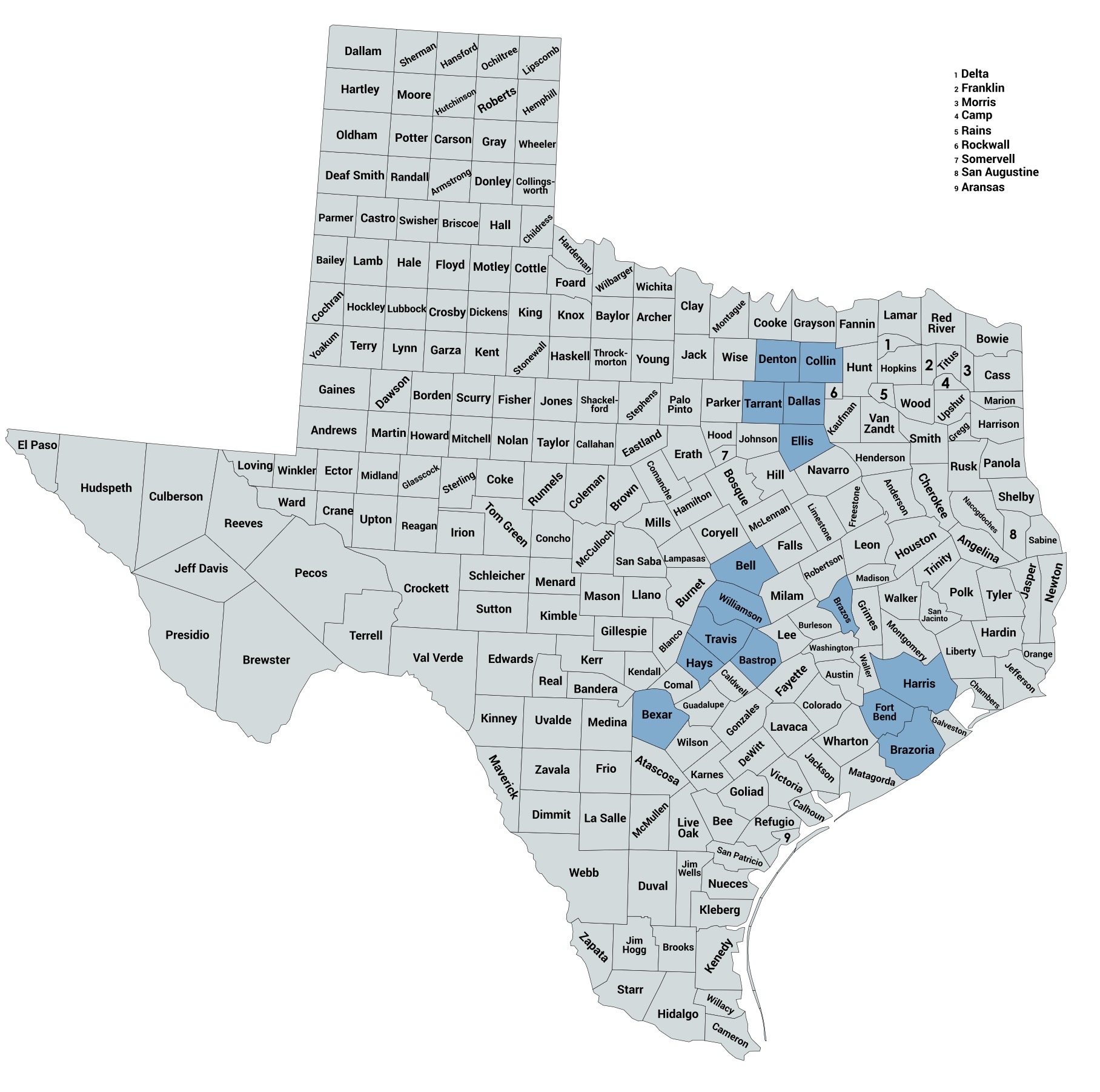
Map of the 15 Texas counties given 2018 turnout levels in Keshel's model

Because of the fear of Texas turning blue, “red Texas” turned out in huge numbers, with many counties exceeding 90% of their 2016 presidential vote count. To ensure I don’t overestimate Paxton’s support, in practically every county not shaded in blue, I have averaged the 2018 and 2022 turnout coefficients. For example, using Lamar County (Trump +60.9% on 21,285 total votes), 88.5% of presidential vote in the 2016/18 cycles and 71.6% in the 2020/22 cycles (with no threat of a Democrat winning Texas in 2022) comes out to turnout estimate for this cycle of 80.0% of the 2024 presidential vote.

For margin:

In the blue-shaded counties mapped above, I have given Talarico margins five points stronger than O’Rourke’s in 2018. For instance, O’Rourke won Travis County by 49.67% in 2018. For 2026, I’m letting Talarico take it by 54.67%. That wouldn’t surprise me, but him getting five point margin gains over O’Rourke in all of the counties above would shock me. For Brazoria County, thanks to a Cruz lag in 2024, I’ve given Talarico a margin ten points stronger than Beto’s.

In most of the Trump-won counties, I’m deducting five points from Trump’s 2024 margins. Where he has won Hardin County by 75.8%, now it’s going to be Paxton +70.8%, with the turnout averaged as described above. This undercuts Paxton’s likely margins while amplifying Talarico’s urban and suburban performance potential. In counties in which Cruz lagged behind Trump by a lot, I’ve spotted Paxton’s margin right at Cruz’s from 2024, instead of adjusting off Trump’s.

In the following “Trump special” counties, the overwhelmingly Latino counties, I’ve set Paxton’s margin at Trump’s 2020 presidential margin, which revealed the heavy trend in South Texas and beyond:
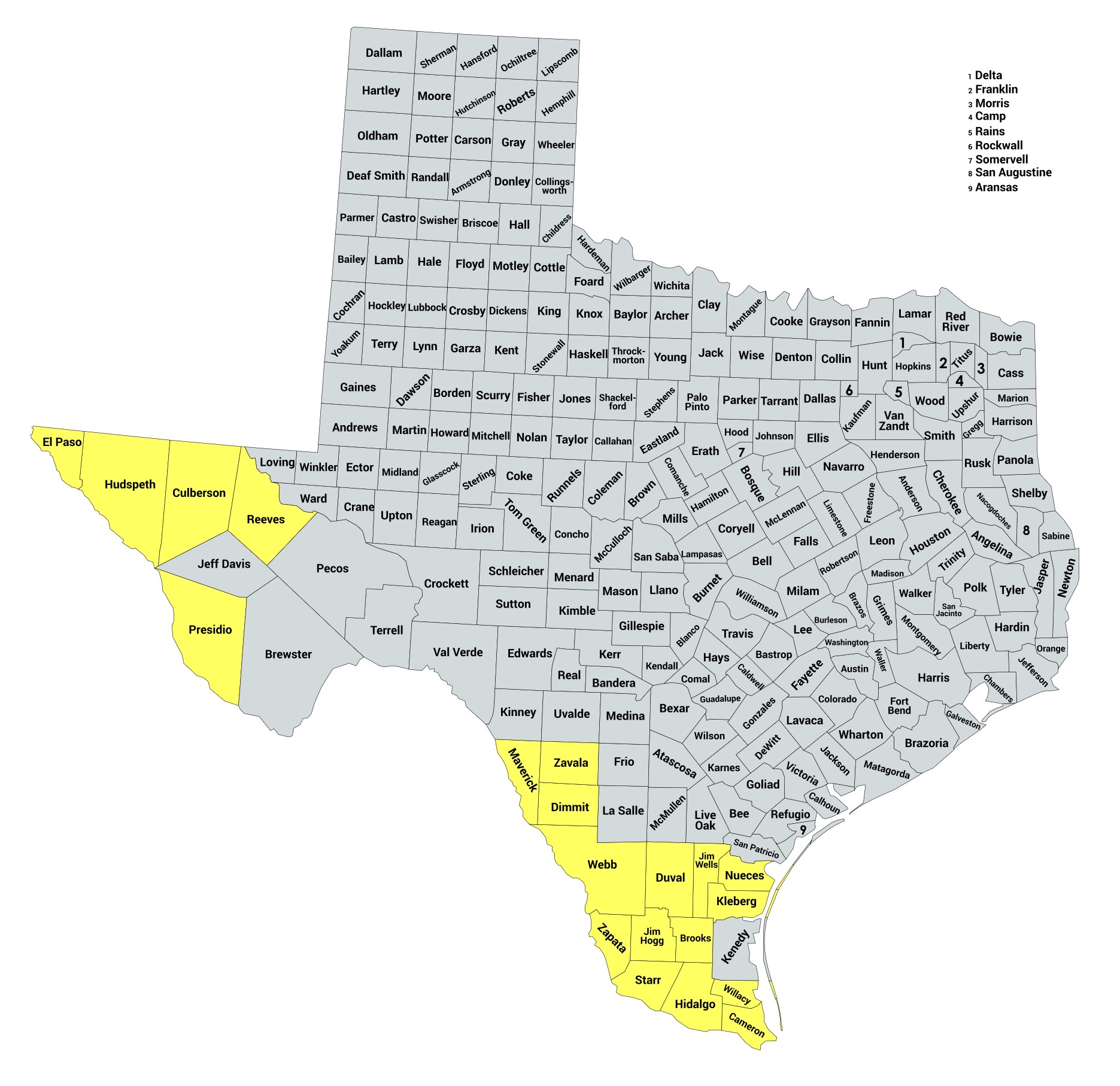
Map of the overwhelmingly Latino "Trump special" counties in Keshel's Texas model

Whereas Trump won Cameron County by 5.8% (and Cruz lost by 4.3%), I’m setting Paxton’s margin there back to the 2020 presidential margin, which was Biden +13.1%. Based on the Latino counties shifting for Cruz in 2018, I’m not confident Paxton will lose Cameron County by 13.1%, if he loses it at all. Latino-specific polling is usually wildly wrong, and in some of the ridiculous Talarico polls out there, Paxton is hovering around 40% Latino support anyway.

One county that is going to absolutely kill Talarico is El Paso. Trump lost it by just 15.1% in 2024, after having dropped it to Biden by 35.1%. I’m giving Talarico the margin of 35.1%, which is extremely high and probably not going to happen. Beto O’Rourke blew out his home county by 49.4% over Cruz, taking the margin to +100,545, when it had been just +92,328 in a presidential election two years earlier. Talarico taking 35.1% margin at an average turnout gives him a margin of +68,969, or 31,576 short of Betomania 2018.

He will have to make those up somewhere else to get over the top. Since 2018, the minor red counties people don’t know how to spot on a map – the Woods, Fannins, Wises, Graysons, Rockwalls, and Chamberses of Texas – have grown in population and maintained their ridiculous margins – often over 65% in decent-sized counties. I have these estimates – already short-shotted for Paxton by my model – for ballots gained over 2018 margin:

  • Montgomery – +18,490 net gain over 2018
  • Parker – +15,587 net gain over 2018
  • Comal – +11,095 net gain over 2018
  • Grayson – +6,523 net gain over 2018

This list goes on and on.

Affording Talarico’s turnout model and margin gains, here is what he stands to gain in the big four over Beto’s raw 2018 margins:

  • Harris – +109,331 net gain over 2018
  • Travis – +87,777 net gain over 2018
  • Dallas – +66,815 net gain over 2018
  • Bexar – +65,166 net gain over 2018

He also makes huge gains in the other key counties I’ve identified above…and is even allowed to flip Collin County and come close in Denton…

Just so he can lose in this model to Ken Paxton by 14,035 votes.

I did not set out in creating this model to make a virtual tie. That is just how it came out with me affording Talarico five point or better gains across the board in all but the “Trump special” Latino counties specified above, with turnout depressed in red counties and pumping at 2018 rates in counties Talarico will need to win.

Now imagine if the red counties don’t lag in margin by five points across the board, and turnout climbs to match 2018 intensity, or even higher now that everyone is warning of the impending doom of a blue Texas. Imagine if most of Trump’s Latino gains do actually stick like they did in 2018.

If the reds turn out and Latinos don’t abandon Trump, Paxton will win this race in the mid-single digits, or better.

PSYCHOLOGY

Talarico isn’t up by 5 or 6 points, despite the two polls in the last week giving us exactly those numbers. I am forecasting 10.251 million votes in the pessimistic model. Therefore, every percentage point of margin is equal to almost exactly 100,000 votes. In order for a Democrat to win Texas by 5 points, a half-million votes, millions of red voters would have to stay home.
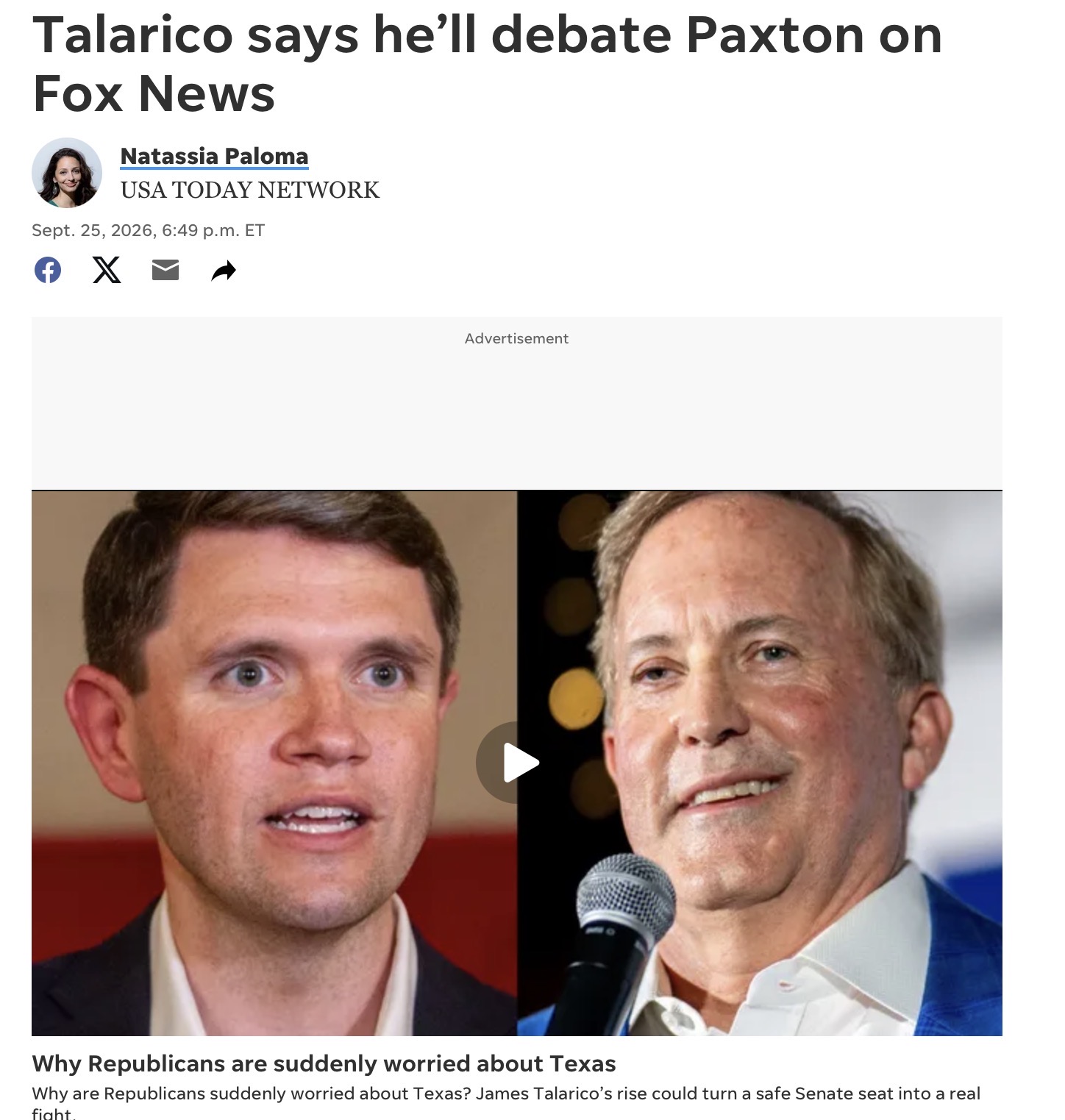
Headline: Talarico says he'd debate Paxton on Fox News

If Talarico were up by 5 (or 6) points, he wouldn’t dare ask for a debate. He would be benefitting from a once-in-a-generation electoral fluke and would let sleeping dogs lie.

If he were up by 1 or 2 points, debating Paxton risks exposing his (Talarico’s) ludicrous left-wing positions (anti-Christian, anti-oil, anti-gun, anti-meat, etc.) and forcing Texas Republicans to set aside the Cornyn-Paxton animosity and vote the party line.

You only demand debates in a race like this if your math looks exactly like mine. Flipping a Trump +14 state that just underwent a major Latino realignment is a much taller task than O’Rourke trying to flip a Trump +9 state with suburban slippage.

CONCLUSION

Every football team that steps onto a field has a chance to win. Sometimes that chance goes away after the first drive. Talarico’s pathway requires him to blow past O’Rourke’s margins in the key counties, benefit from 2014 (or worse) turnout in the red counties, and revert the Latino vote back to 2016-18 levels.

The demand for debates is the absolute tell that Talarico himself doesn’t believe the polling.

If Texas Republicans vote, Ken Paxton will be the next Senator from Texas.

Seth Keshel, MBA is a Senior Fellow at the Gold Institute for International Strategy and a retired Army Captain. He publishes Captain K’s Corner on Substack.

Germany’s Criminal-Left Victory Party Is a Warning for the Netherlands

Derk Jan Eppink

This article was written by Derk Jan Eppink and appeared in WNL. Duits crimineel-links feestje is waarschuwing voor Nederland.

Alongside justified concerns about the rise of the AfD, the radical-left parties in Germany also deserve critical attention. Remarkable support from Berlin’s crime clans should worry us too.

The Netherlands has more self-appointed Gaza experts than Germany experts, but it is high time we looked more carefully across our eastern border. Germany is in its greatest political transition since reunification in 1990, albeit in the wrong direction. Alternative für Deutschland (AfD) is polling as the largest party in all of Germany.

The capital, Berlin, has meanwhile degenerated into a hotbed of antisemitism, the worst since the Second World War. Amsterdam’s mayor Halsema would do better to look at Berlin than to sit down amiably with New York mayor Mamdani, who is not free of antisemitism.

When the AfD emerged as the largest party in the German state elections in Saxony-Anhalt and Mecklenburg-Western Pomerania, political Berlin reacted with resignation. It was only East Germany. The AfD seemed like the big bad wolf in a sparsely populated area full of ‘Ossis’. The big surprise, however, came from Berlin, where Die Linke, legal successor to the former East German ruling party SED, became the largest. Led by lead candidate Elif Eralp, Die Linke won 25.7 percent of the vote; the Christian Democratic CDU stalled at 18.8 percent.

The heirs of the GDR could have celebrated a cheerful victory party, had it not been for some mysterious guests who turned up to celebrate with them: the bosses of Arab crime syndicates in Berlin. There was Issa Remmo, leader of the Remmo clan, notorious for drug trafficking, extortion, protection money and money laundering. Method: brute violence. The center of this underworld is the district of Neukölln. In his wake came other gang leaders to celebrate the victory. The leadership of Die Linke did not know what to do with these unexpected gang leaders.

With its 3.9 million inhabitants, Berlin records more criminal offenses than all of Poland, with a population of 37.6 million citizens. After the fall of the Wall in 1989, many expected Berlin to become a shining star in Europe. At first it looked that way, but the city became a magnet for criminals. Crime clans from the Middle East, from Syria and Lebanon, found their way to West Berlin. In the mid-1970s, gang members traveled from Lebanon, ravaged by civil war, to the GDR and then via East Berlin to West Berlin. From there, crime syndicates grew to unmanageable proportions.

Die Linke and the clan leaders were soon on the same political wavelength. Political telepathy. According to Die Linke, the tough approach to the Arab clans was ‘racist’. That was music to the ears of the clan leaders. In Die Linke’s analysis, Berlin’s policing is ‘too harsh’. Hence: ‘less police’ resulting in ‘less crime’. Applause from the gang leaders guaranteed. Fighting clan formation was, according to Die Linke, ‘Islamophobic’. Once again, happy gang leaders.

Then the legal successor of the GDR stepped it up a notch. Israel was the source of all evil in the Middle East and ‘antisemitism’ became a weapon of political propaganda. The Arab clan world could not have put it better. That is what Die Linke propagated, and it ensured that 51% of the Muslim vote went to that party. Jewish citizens in Berlin became a target; the ‘Nie Wieder’ faded. The Berlin bourgeoisie was frightened by Die Linke’s communist demand: the expropriation of home ownership. Economic philosophy: if the rich are expropriated, the poor can live better!

This trend of antisemitism exists in Amsterdam too. Jewish citizens have to be careful in public. Criticism of Israel, which has been fighting for its survival in the Middle East since its founding in 1948, is recycled by the political left in European cities into antisemitism. With ‘students’ smashing everything in the front line and fearful administrators who think they are calming things down but make everything worse. It is a slippery slope toward times that seemed to be behind us.

Should PRO ever organize another Gaza event in Amsterdam: keep an eye on the visitors. You never know who might walk in.

Written by Derk Eppink Distinguished Fellow, Gold Institute for International Strategy

The Asylum Question Will Intensify the Factional Feud Within the European PRO Delegation

GroenLinks MEP Tineke Strik

This article was written by Derk Jan Eppink and appeared in Wynia’s Week. De asielkwestie zal de bloedgroepenstrijd in de Europese PRO-fractie verhevigen.

Social democracy is a conviction; Green is a religion. The merger ran into rejection symptoms because the first is willing to compromise, while for the second Green dogma prevails. It was not surprising that the merger of the PvdA and GroenLinks delegations in the European Parliament became the last piece of the puzzle.

Should PRO join the group of the European socialists or the European Greens? Party members chose the socialist group in a referendum, which does not mean the Greens will give up their faith. The struggle continues in the joint ‘PRO delegation meeting’. The factional debate has been parked for now, but it will return when the lists are drawn up for the 2029 European elections. Who will be lead candidate?

Heresy

A party committee led by party grandee Mariëtte Hamer came out in favor of joining the Party of European Socialists (PES), the second-largest group in the European Parliament. In her view the ‘power element’ must prevail, but according to convinced Greens there is only one faith. And share a pillow with that, and the devil sleeps between you.

For a sectarian club, compromise is heresy. The PES is used to compromises, for example with the (German) Christian Democrats. Greens think fundamentally differently about asylum, and that will remain a major theme in the next European elections. This puts enormous pressure on the PRO delegation within the socialist group, half of which consists of Greens. Will, for example, the ultra-Green Tineke Strik, who came up through the Dutch Council for Refugees, support a stricter asylum policy? Highly unlikely. For Greens, compromise is synonymous with betrayal.

The ‘power-building’ argument is also relative. Political developments in the EU are heading to the right. Look at developments in Germany, France, Spain: as soon as there are elections, the voters strike. Italy under Giorgia Meloni is currently more stable than Germany under Chancellor Merz. And France is charging into the jungle.

European Commission President Ursula von der Leyen wants to bring forward the decision on the EU’s multiannual budget because voters in many member states are turning right. As a result, new, more right-wing governments in Northern Europe are resisting the European mega-budget of 2,000 billion euros. Combined with excessive immigration and economic stagnation (due to climate and energy policy), Brussels will become even more of a whipping boy than it is now.

#MeToo

The harsh internal, almost sectarian, party culture of the Greens proved not conducive to smooth relations in the European Parliament, as Green delegation leader Bas Eickhout (49) found out. He was ‘co-chair’ of the Green group in the European Parliament and had a relationship with the 25-year-old Austrian member Lena Schilling. She was also a member of parliament, not a subordinate, and there was mutual consent. The relationship fell within ‘Green norms’.

A former chairman of the Green group, Daniel Cohn-Bendit, was once a prominent Franco-German charmer who saw his Green group, including staff, as an amorous field of work. Cohn-Bendit was adored. He was lucky, because there was no #MeToo yet. There is now, and it was used above all as a weapon against ‘the right’, preferably ‘white men’. But such men turned out to exist in left-wing circles too; in the arts, academia and politics.

Eickhout had rotten luck with his ‘co-chair’, the German Green Terry Reintke. Her main mission was the fight against ‘sexual harassment’ and her hashtag: ‘#MeToo’. Reintke waged a crusade and would certainly show ‘keine Gnade’ to Eickhout, popular with women, who cut his losses and resigned. He will undoubtedly find a new job at an NGO in Brussels, ‘to continue the struggle’. And Reintke has the Green realm to herself. Internally, the Greens are even worse than the Vatican.

Eastern Bloc methods

Much of this kind of thing, however, goes unseen in Brussels. The Dutch House of Representatives, with 150 members, has 260 accredited journalists. They knock everyone over in the corridors. At the European Union, of which the European Parliament is only a part, 21 Dutch correspondents are accredited. An MEP is glad when a correspondent calls at all.

It was to be expected that the merger of PRO’s two wings, PvdA and GroenLinks, would be problematic. The European wings come from two different worlds of thought. In the House of Representatives, the PvdA wing is being devoured by GroenLinks. There were already several PvdA MPs, such as Kati Piri, who belong more with GroenLinks than with the PvdA, whose culture and history are being filtered away. The ‘Red Rose’ has disappeared, and anyone entitled to the Drees medal must now have been a member for 65 years (!) instead of 60. Why not 100 years? The goal is to abolish the Drees medal. These are really Eastern Bloc methods, which ordinary social democrats do not notice.

A flea circus

Other European groups are crackling too, such as the European liberals. Renew, a French-dominated group at the wish of French President Macron, houses both the VVD and D66. Both have always sat in the same liberal group, and their members were ‘pro-European’ to varying degrees. Bolkestein’s Euroscepticism never got through. In The Hague the VVD regularly displays criticism of the euro for its grassroots in the country, but in Brussels there is no sign of it.

Malik Azmani (VVD), for instance, was rapporteur on the important EU Return Regulation as part of a stricter asylum policy: the option of forced return is necessary, because otherwise asylum is a one-way street, as it is now. Rapporteur Azmani looked like a ski jumper who started to wobble after take-off and crashed hard, nose in the snow. He was caught in a split. The VVD was in favor, but his own liberal group, with the French liberals in the lead, was against. The shadow rapporteur, the Christian Democrat François-Xavier Bellamy, took over the file and built a center-right majority.

In the confusion Azmani abstained, while the other VVD MEPs voted for the tough approach. D66 members, led by Gerben-Jan Gerbrandy, voted against. Renew looked like a flea circus. The liberal group once had two pillars: the British and the Germans. The British left; the German liberals are camping below the 5% threshold, and the French liberals are hopelessly fickle.

Bible-firm

The European Christian wing, made up of the SGP and ChristenUnie (CU), has a longer history. For decades they worked together, but in 2019 their paths parted. The SGP stayed in the European Conservatives and Reformists group (ECR), but the ChristenUnie moved to the large group of Christian Democrats (EPP). The bone of contention was The Hague: the CU was in the Rutte III cabinet (with VVD, CDA, D66) and the SGP in opposition. Relations soured, in Brussels too. The CU vetoed FvD joining the ECR, but lost the vote and left for the EPP. The SGP had an immense problem: in European elections the party won half a seat; the CU one and a half. That way they each had one. Brotherly sharing.

The consequence of the split was that the SGP had to win a whole seat on its own from then on. MEP Bert-Jan Ruissen ran a clear, conservative campaign in the 2024 European elections. The CU drifted onto a more left-wing track in Europe, as had already happened in the House of Representatives. Bible-firm voters preferred the SGP, while the CU lost its seat and disappeared from the European Parliament.

Storms

Anyone who projects current political developments in the EU member states onto the European Parliament should not be surprised when the traditional center axis breaks. The trend in the large countries, and the small ones too, can be found in the European Parliament. The ‘political center’ is getting ever smaller; the extremes larger. Germany and France foreshadow this. It will be interesting to see whether the PRO delegation weathers these storms.

Written by Derk Eppink Distinguished Fellow, Gold Institute for International Strategy

2026 Ten-Point Forecast: Georgia U.S. Senate

Georgia State Capitol building under a blue sky in Atlanta

Jon Ossoff (D-inc.) vs. Mike Collins (R)

Author’s Note: Other 2026 forecasts can be found in the Central File.

I. The Race

Jon Ossoff and Mike Collins, candidates for U.S. Senate in Georgia

Jon Ossoff (Democrat) is seeking his second term in the U.S. Senate, having first been elected in a January 2021 runoff after the controversial November 2020 election held both Georgia Republican Senators under 50%. Ossoff is 39 and thought to be a contender for the 2028 (or future) Democrat presidential nomination.

Mike Collins (Republican) is finishing up his second term as the U.S. Representative of GA-10, a district covering parts of northeastern Georgia. His voter base is mostly rural and the district is not competitive.

II. State Profile

Georgia state profile

Georgia has recently become one of America’s most hotly contested battlegrounds and was carried by Donald Trump in 2024 by just 2.2%. Prior to the 2020 election, it had backed six consecutive GOP presidential candidates.

Demographic Statistics

  • 53.2% White, 32.3% Black, 10.5% Hispanic

III. Market Assessment

Betting markets overwhelmingly favor Ossoff, as incumbent, against Collins.

IV. History

Warnock’s seat: Georgia, a former “Solid South” Democrat stronghold and the home of Jimmy Carter, was free of Republicans representing them in the U.S. Senate from the time of Reconstruction until 1981, when Mack Mattingly took office after having been elected in 1980. Mattingly only made it one term, but that seat was recaptured in 1992 by Paul Coverdell, who died in office and was replaced by a Democrat (thanks to a Democrat Governor). Republicans, in keeping with the new partisan loyalty to the GOP, recaptured the seat in 2004 and held it with two different Senators until Kelly Loeffler ran into the 2020 COVID election buzzsaw and dropped the seat to Raphael Warnock.

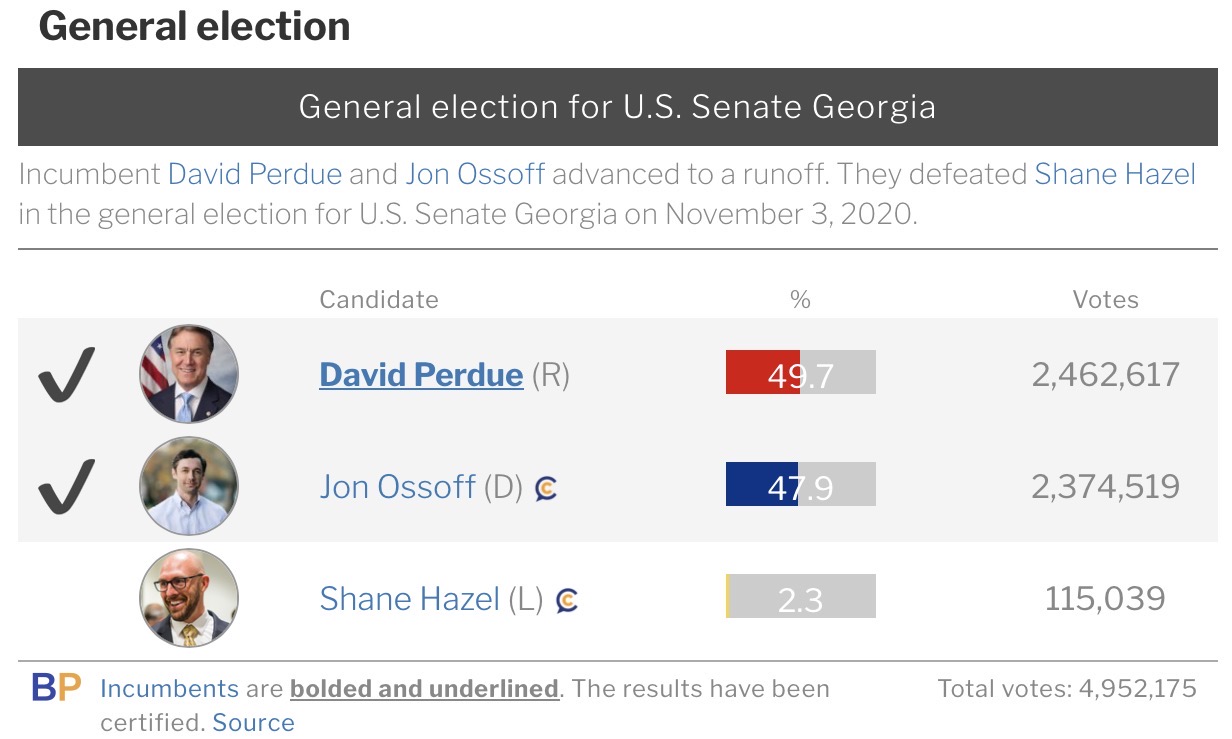
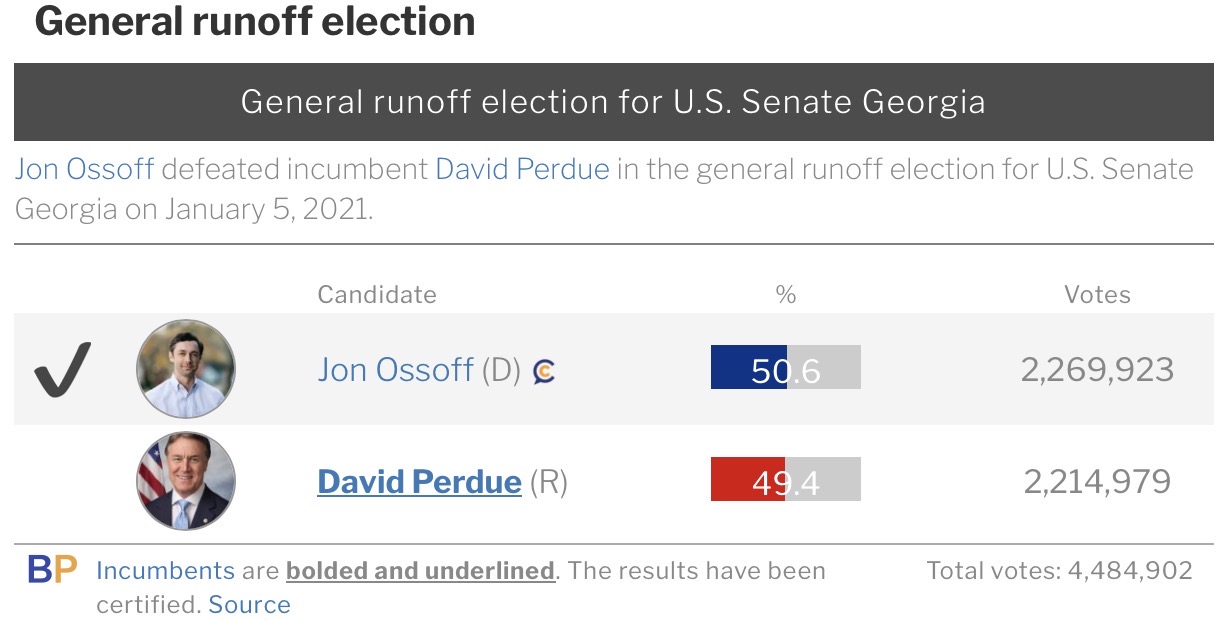
Ossoff’s seat: Republicans pried this seat from Democrats in the 2002 midterms, winning it three times before David Perdue got smacked in the face by mail-in ballots on November 3, 2020, prompting a runoff that Ossoff (along with Warnock for the other seat) won. It turns out that it wasn’t just Joe Biden needing every extra mail-in ballot that was counted after Election Day:

Georgia 2020 U.S. Senate election results
Georgia 2021 U.S. Senate runoff results

These seats have very strong correlation to Georgia’s presidential voting tendencies, which are presently extremely competitive.

V. Analysis of 2026 Primary Results

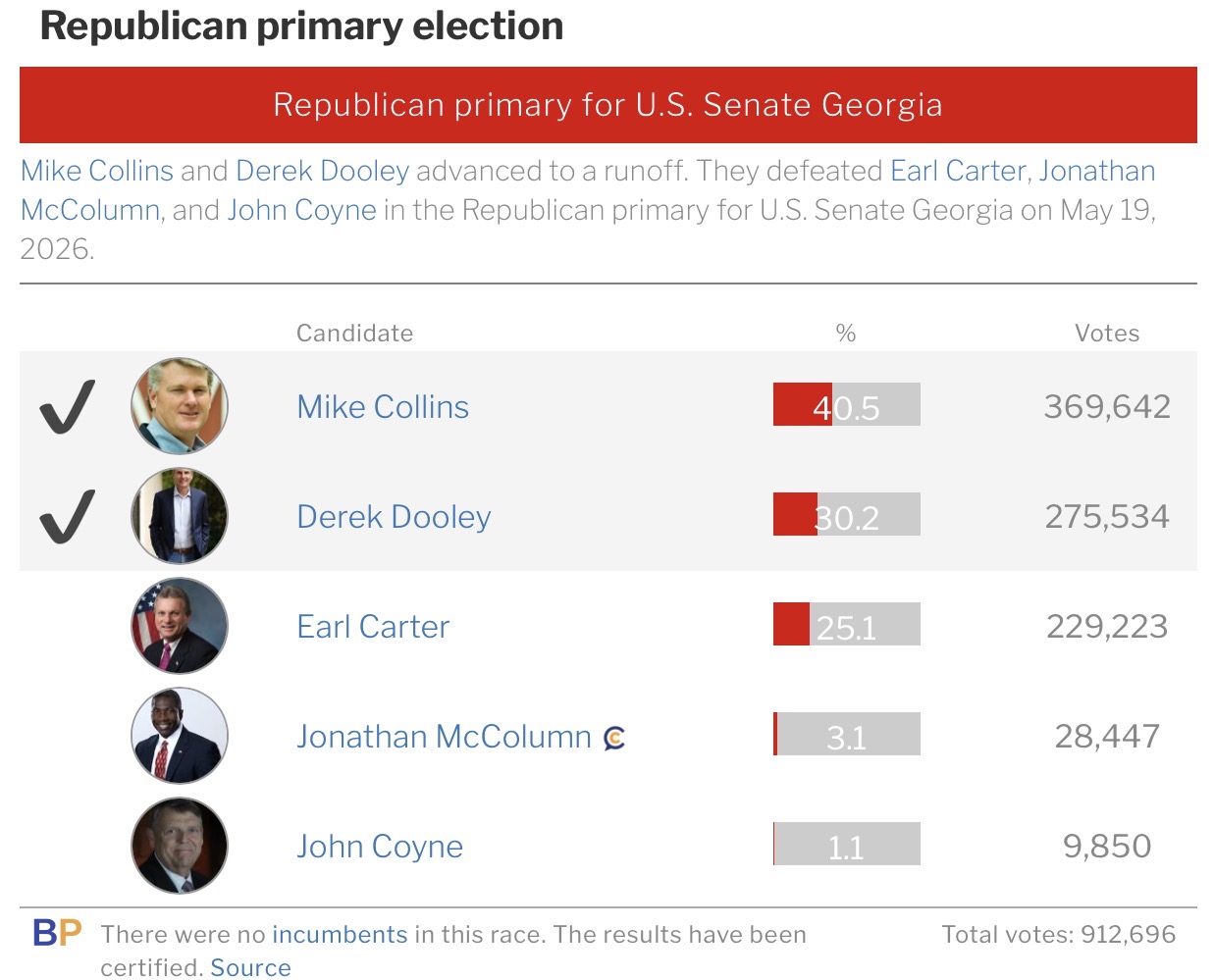
Ossoff breezed to renomination with no contender for his spot. Collins, on the other hand, had to navigate the typical GOP minefield for his – with a runoff necessary:

Georgia 2026 Republican U.S. Senate primary results
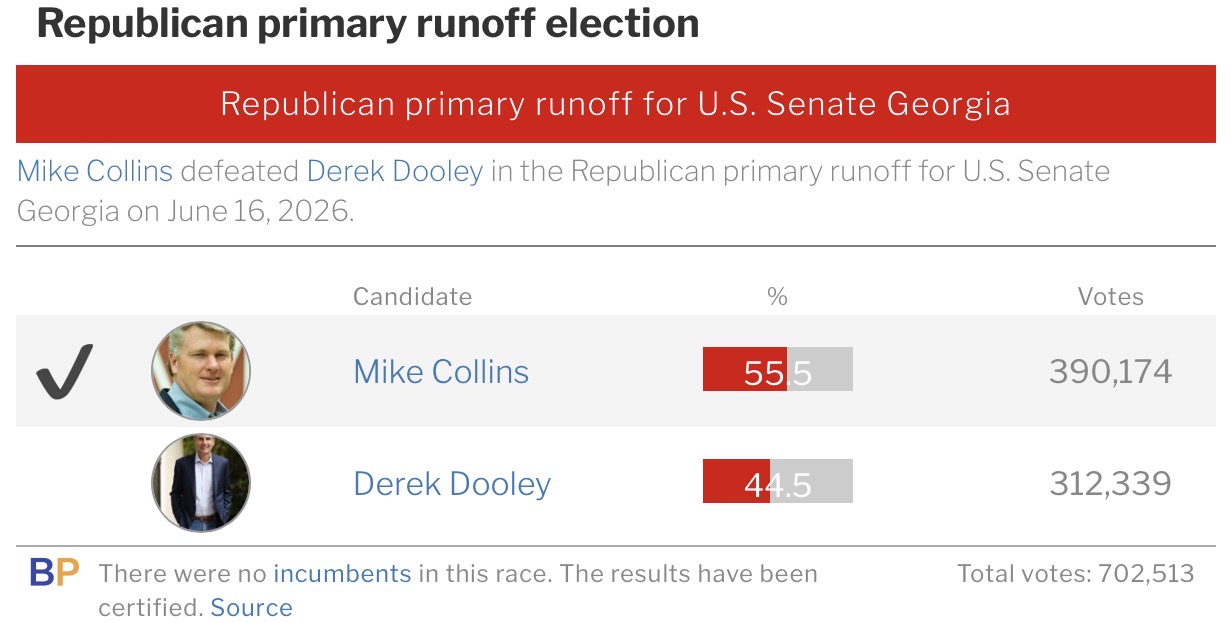
Georgia 2026 Republican U.S. Senate primary runoff results

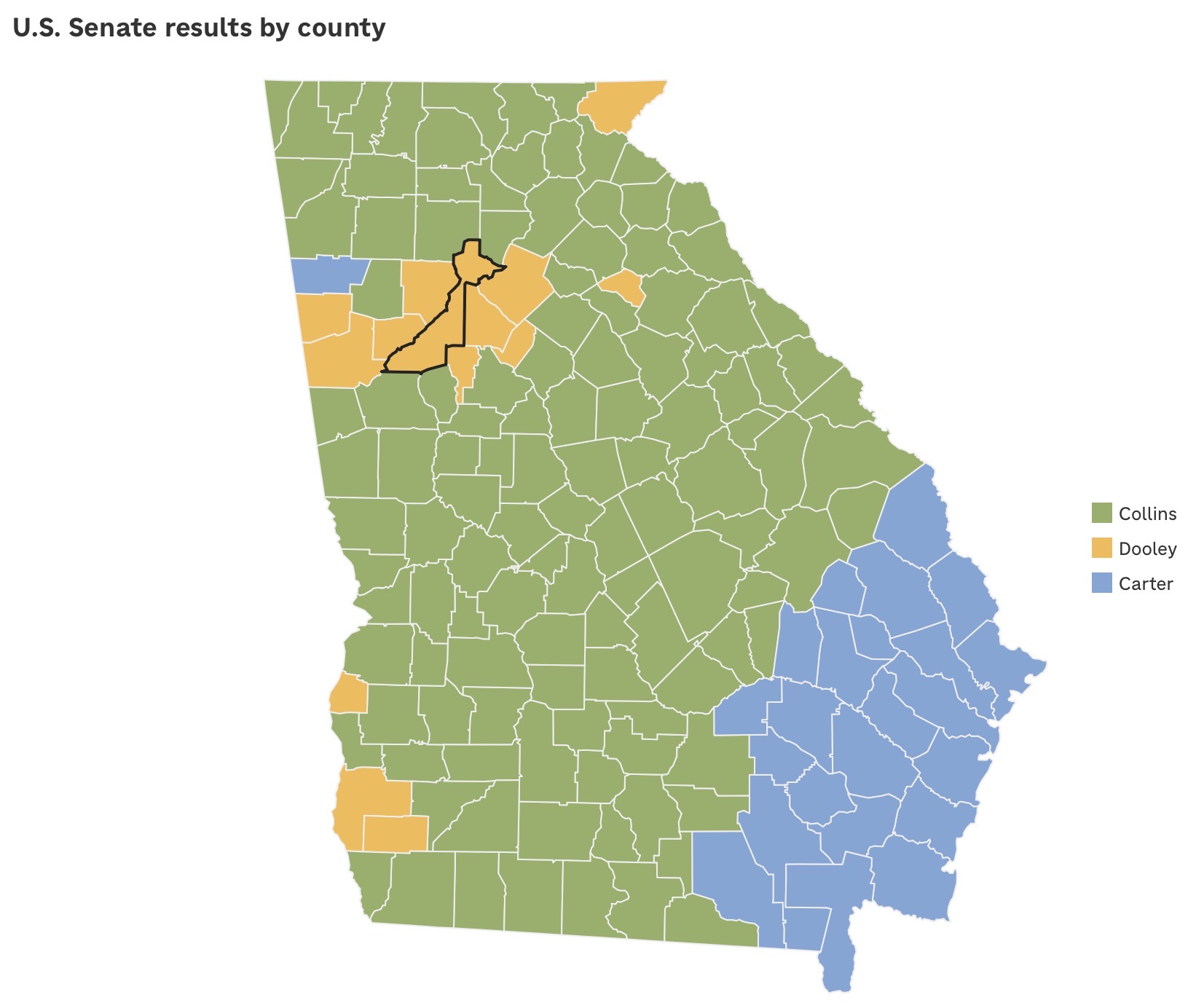
Collins defeated former football coach Derek Dooley in the ensuing runoff. Earl Carter, his opponent in the first round, is the sitting U.S. Representative for GA-1, based on the Atlantic Coast and also far removed from the cosmopolitan political environment of Atlanta that GOP gubernatorial nominee Rick Jackson navigated.

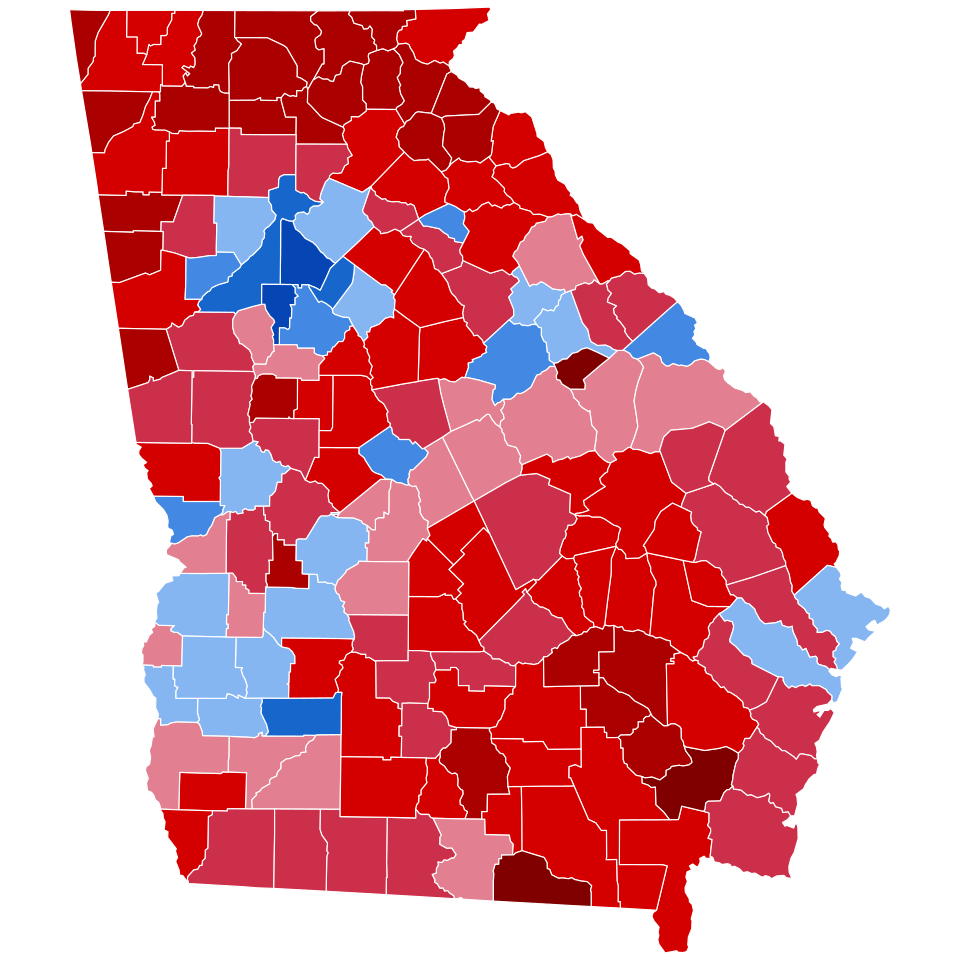
Notice the regional splits here, with Fulton County highlighted:

County map of the Georgia Republican primary runoff with Fulton County highlighted

The Atlanta metro didn’t get its guy, and that’s bad news for Collins given the overblown influence Atlanta now enjoys in statewide politics.

VI. Polls

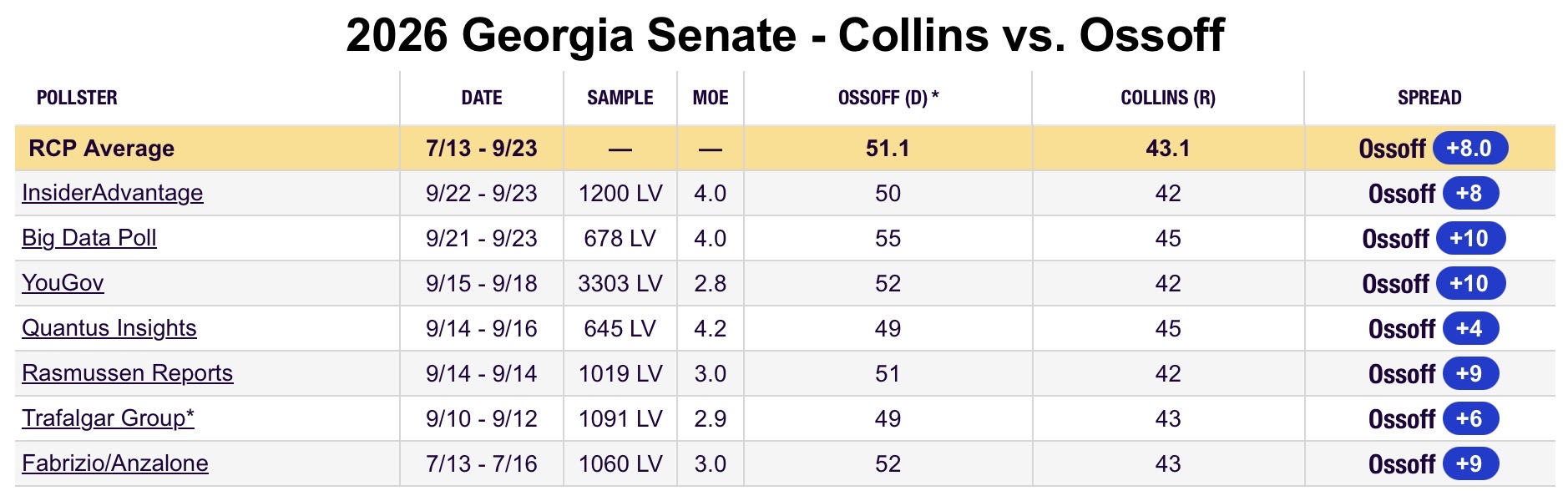
RCP Average: Ossoff +8%

Recent polls of the Georgia U.S. Senate race

Polling this cycle is all over the place, but with the exception of Quantus, no recent polling has shown a competitive race.

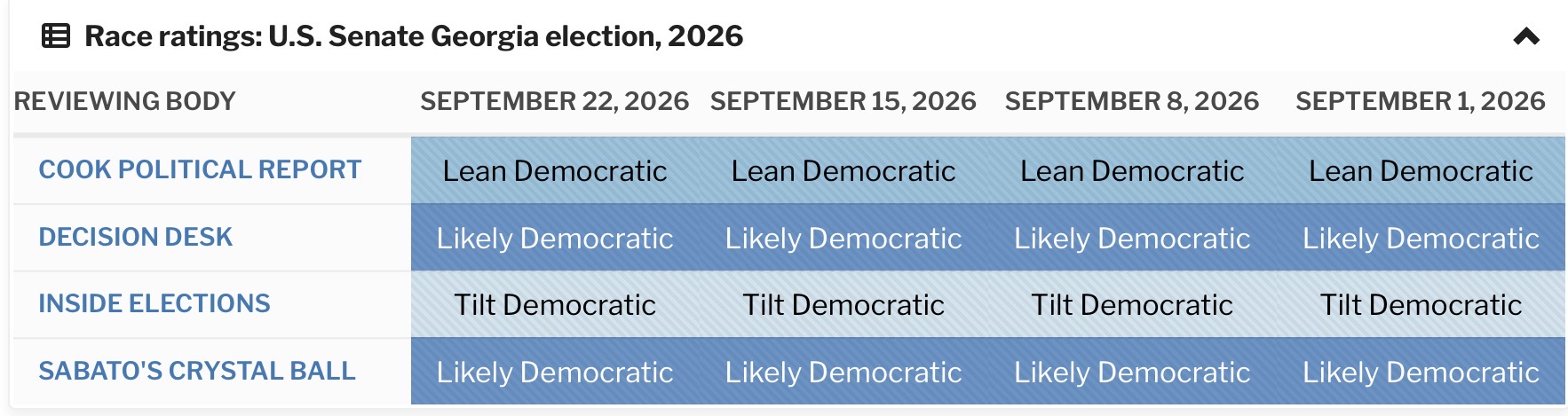
VII. Media Ratings

Media ratings for the Georgia U.S. Senate race

The four major aggregators all have Ossoff favored, and I must say I’m surprised Inside Elections has this as a “tilt” race. “Tilt” usually means a margin inside two points. Georgia is also too competitive with too much overwhelming red geography to allow for a blowout Democrat win – at least for now. Ask me again in 2036 if current trends continue:

Why Georgia May Be Doomed* (Capt. Seth Keshel, June 17)

VIII. Party Registration

Georgia doesn’t register voters by party; however:

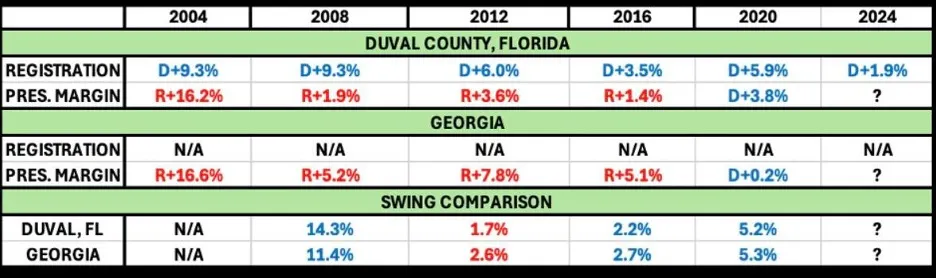
When I made my final forecast (accurate) for Trump’s 2024 victory in Georgia, I noted that my research had revealed a parallel for voter registration in nearby Duval County, Florida (Jacksonville metro), that had tracked with the presidential movement of Georgia for two decades. When Duval moved left, so did Georgia. When it moved right, so did Georgia. This trend lived on in 2024, as Trump flipped both Duval County and Georgia in actual results.

Duval County, Florida voter registration and Georgia presidential results

Duval County is nearly one point to the right in registration from the November 2024 election as it stands today:

Duval County, Florida voter registration today

This is a likely sign that Georgia is still winnable at the presidential level, but I wouldn’t expect it to be a sign that this Senate race is going to Collins given standard midterm and incumbency dynamics.

IX. Election Considerations

Secretary of State Brad Raffensperger, one of the most notorious 2020 election personalities still in office, claims the state runs amazing elections. Those of us who have studied election integrity for years would disagree:

  • Automatic Voter Registration
  • Urban Domination
  • Expanded mail-in balloting (634% increase from 2016 to 2020)

You can read about the rest of the election-related deficiencies in Georgia in my 2024 recap:

Georgia – 2024 Election Compendium (Capt. Seth Keshel, December 9, 2024)

There are definitely states that are worse off, but Georgia is firmly within the “elevated concern” category when ranked nationally, and the election integrity picture there doesn’t favor Collins.

X. Summary and Election Estimate

These are the major factors for the U.S. Senate race in Georgia:

  • Ossoff is running a Democrat incumbent in a Democrat-favorable midterm year in a state that is increasingly competitive, with Senate races tracking with presidential disposition.
  • Collins ran the rural route through a state now dominated by urban politics; the GOP suburban and grassroots split is a its worst right now, and while Jackson will appeal to the soft moderate vote in Gwinnett and Cobb Counties, Collins won’t.
  • Ossoff is being floated as a 2028 presidential contender, is not seen as a threatening candidate (policies excluded), and is keeping enough distance from dumpster fire Democrat gubernatorial candidate Keisha Lance Bottoms to maintain his “moderate” image.
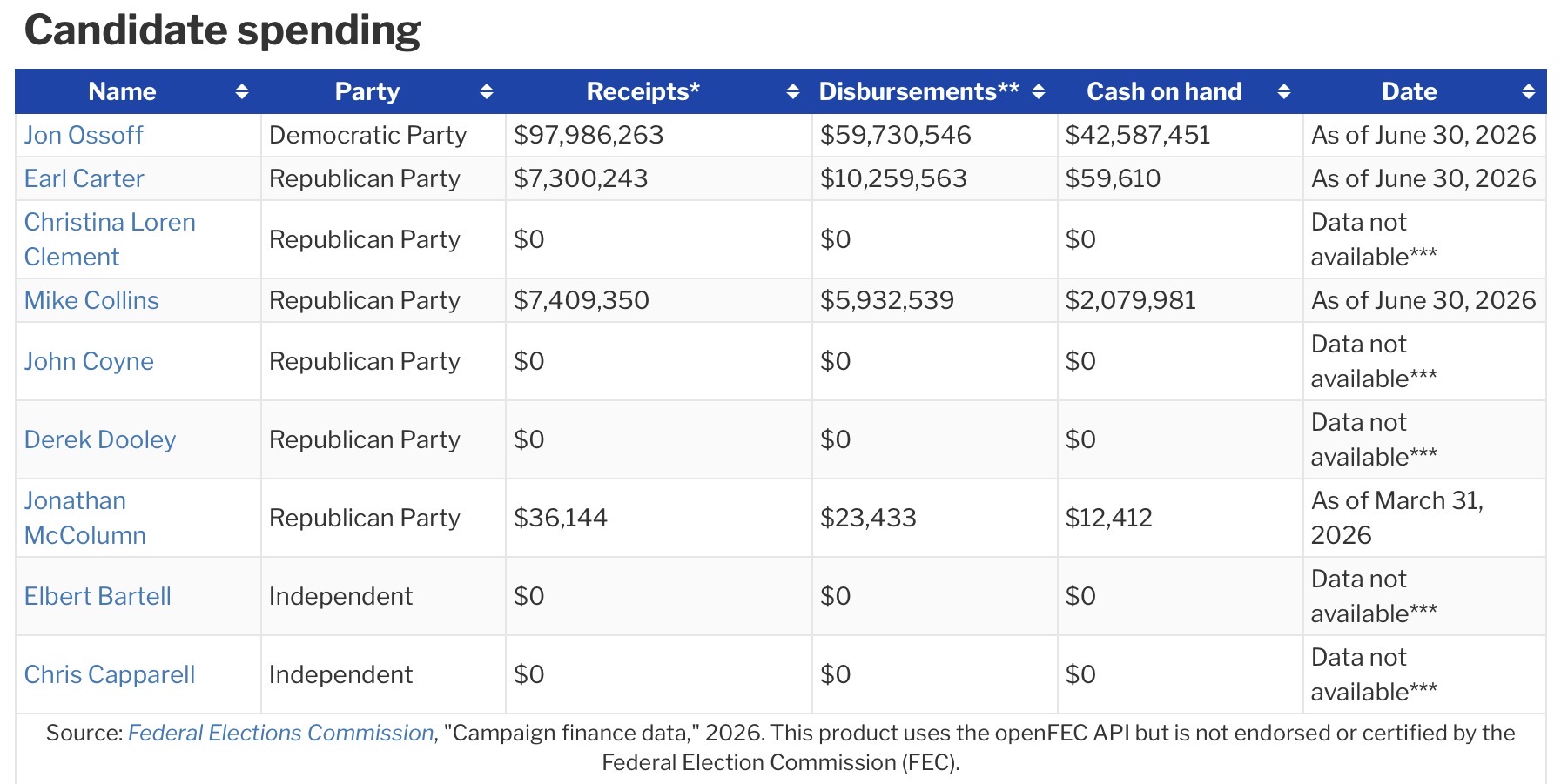
  • Finally, Ossoff has roughly 20 times as much cash on hand as Collins does.
Campaign cash on hand, Ossoff and Collins

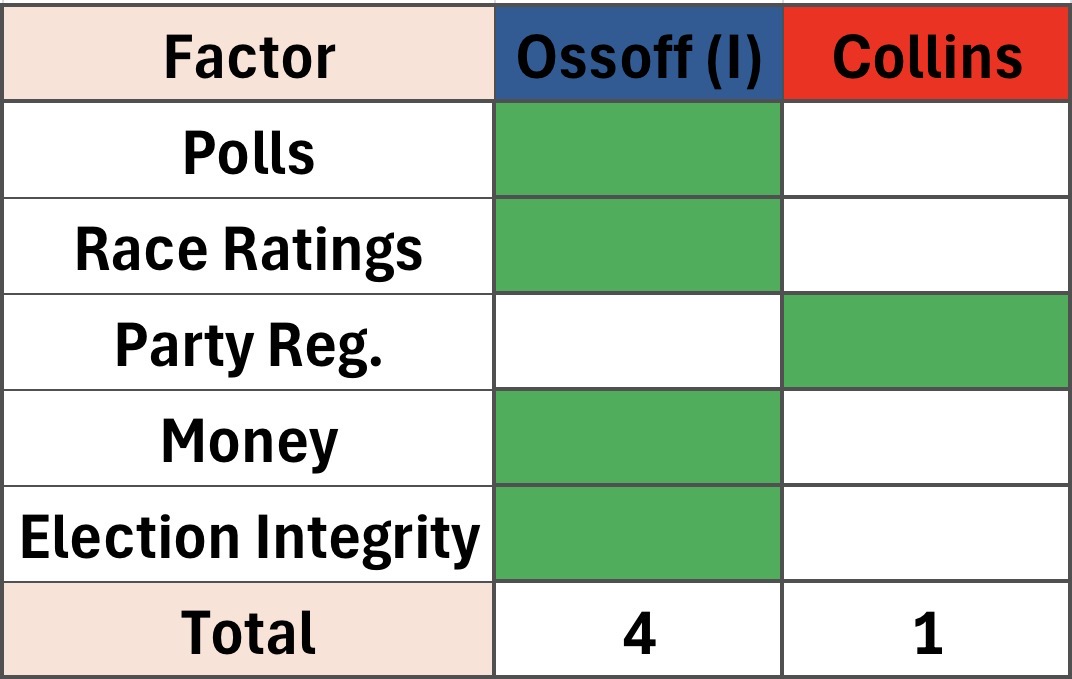
Here is how the key factors in this race stack up:

Key factors in the Georgia U.S. Senate race

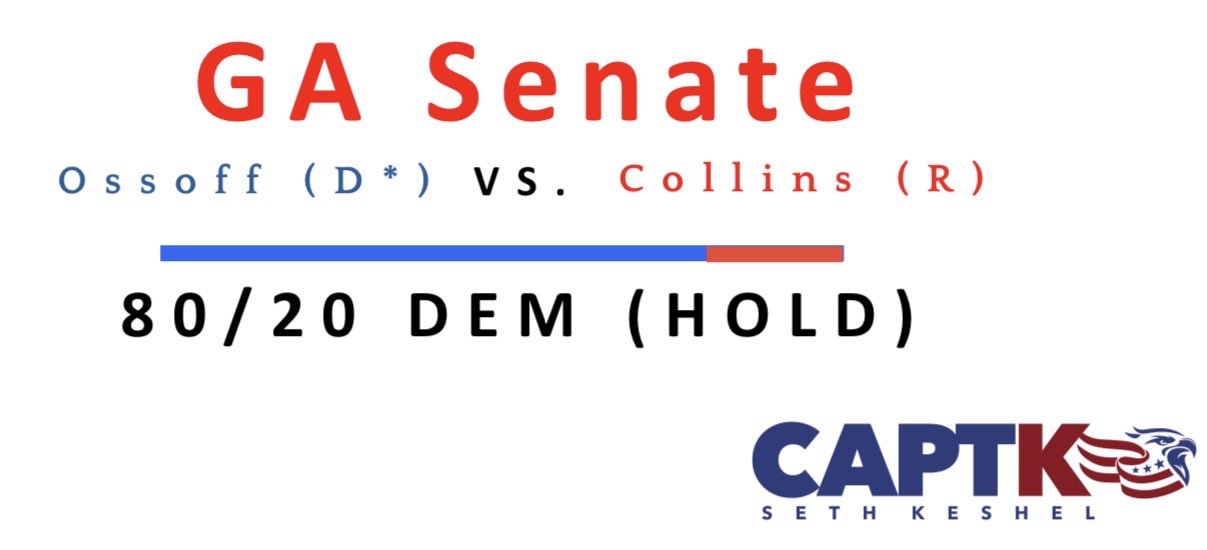
Forecast for Georgia U.S. Senate

Forecast for Georgia U.S. Senate

Ossoff is limited in terms of margin by the states deeply polarized electorate and is most likely to capture the swingy suburban vote that was once reliably Republican. I must caveat, however, that black turnout in other states in which data can be found appears to be down a lot from previous cycles. It is still early and this can change, but Democrats rely on maximum black participation and support levels throughout the state (especially core Atlanta). Collins’s only real shot here is if that turnout tanks. If it does, I will reassess this race closer to the election.

Ossoff, as of late September, is on his way to a fairly easy reelection win.

Seth Keshel, MBA is a Senior Fellow at the Gold Institute for International Strategy and a retired Army Captain. He publishes Captain K’s Corner on Substack.

Venezuela Demands the End of Delcy

Venezuelans wave their national flag at a street protest for freedom and change.

This article was written by Hermann Tertsch and appeared in El Debate. Venezuela exige el fin de Delcy.

Donald Trump deserves colossal credit for the historic advances that have taken place across Ibero-America during his term. For now he deserves statues in the capitals of many Spanish-American countries, just as Ronald Reagan deserved them, and has them, in the countries of Central Europe.

Trump and his Secretary of State Marco Rubio have managed in these two years to transform the Ibero-American political landscape so much for the better that it would be a shame for him to squander all that capital and pull down the statues before they are even erected. And to do so, moreover, for nothing, blinded by oil that will always be at his disposal and by flatterers who think only of how easy it is to make money with criminals.

It has been highly significant to see the leaders of Ibero-America’s new patriotic forces in New York demand, one after another, those elections in Venezuela and a timetable to end this interim period under a criminal president such as Delcy Rodríguez.

It is an interim period in which the same people who ruled, stole and abused under Maduro still rule, steal and abuse. And many of the decent, patriotic Venezuelans whom Maduro and Delcy put in prison remain behind bars.

It could be justified for a few months, even a year, after Maduro’s capture. But the lack of a timetable for those elections is unbearable and a permanent insult to the Venezuelans who want to join, as soon as possible, the great movement Trump unleashed when he put an end to USAID and stopped the criminals with threats and more expeditious methods. He thereby allowed the democratic and conservative forces in so many countries to fight for power, and to do so successfully. And now all of them, Trump’s allies in the Shield of the Americas, want to open a radically new chapter across the entire continent.

That is incompatible with the survival in power of Delcy Rodríguez and her regime of murderers, drug traffickers, terrorists and paid journalists. Neither Trump’s prestige nor the alliances of all the other leaders with Washington can withstand this dramatic contradiction; they are equally discredited by complicity with Delcy Rodríguez’s murderous regime.

That is why the immediate establishment of an electoral timetable for Venezuela is so important, along with the return to her homeland of María Corina Machado, the undisputed Nobel Peace Prize laureate, leader and representative of the Venezuelan democratic will. Several Ibero-American leaders allied with Trump have met with Delcy Rodríguez, which the propagandists of Caracas’s criminal cave have tried to present as a legitimization of the delinquent. It is not. All of them have told her, and said in public, that there is an absolute need for a timetable for those elections to be imposed now, for all the prisoners to be released at once, and for the democratic process to be set on course now.

Venezuelans have begun taking to the streets to defend this single option, which is also the best one for President Trump. Delcy is betting on a Republican defeat and Trump’s subsequent weakness in order to entrench herself in power and perpetuate her dictatorship. Allowing it would be suicidal for Venezuelans, but also for all Ibero-Americans, who would once again have a criminal, narco-terrorist, subversive hotbed, one that would moreover carry the prestige of having beaten the Empire in a test of strength. And it would be suicidal for the United States too, which would once again face a direct and massive threat to its national security where, by logic, free will and democracy, it could have a Venezuela firmly united with the U.S. for the benefit of both, under those who truly believe in freedom, in prosperity and in friendship with the best democracy in the world: that immense majority of Venezuelans who are represented by María Corina and who see Delcy Rodríguez for what she is, a murderer and drug trafficker who hates freedom as much as she hates the United States.

Written by Hermann Tertsch Distinguished Fellow, Gold Institute for International Strategy

2026 Ten-Point Forecast: Alaska At-Large (U.S. House – Leaner)

Cover image for Seth Keshel's 2026 forecast of Alaska's at-large U.S. House race.

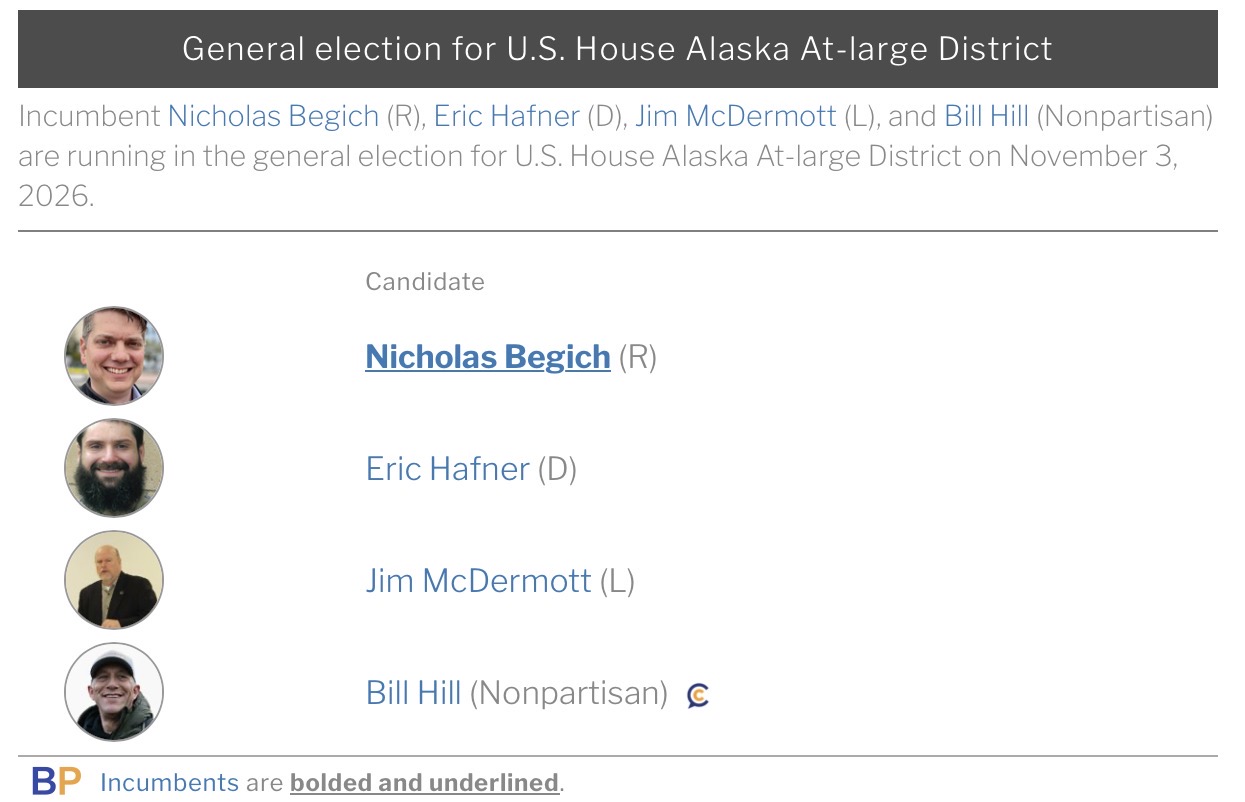
Nick Begich (R-inc.) vs. Bill Hill (I) vs. Eric Hafner (D) vs. Jim McDermott (L)

Author’s Note: Today’s release unveils the first of many U.S. House and Senate forecasts to come now that we have reached election season. For free subscribers, the open portion of this release will help you grasp the depth of my assessments and how distinguished they are from slop polling that is in great abundance these days. All detailed election forecasts will be reserved for paid subscribers.

Until recently, Alaska-At Large was designated a decisive seat. With significantly more information available to me now, I have downgraded it to leaner status and have replaced it in the decisive category with NC-1. Our electoral environment is a moving target, and as such, my estimates can and will change.

I. The Race

Candidates for Alaska's at-large U.S. House seat

Nick Begich (Republican) is in pursuit of a second term in the U.S. House running into standard midterm headwinds.

Bill Hill (Independent) is thought to be his primary challenger, as made clear by primary results, which will be analyzed further down in the article. Hill is a lifelong fisherman and a construction union man. He is running the “working class” motif for his campaign, which pales in comparison financially to Begich’s campaign.

Eric Hafner (Democrat) is the token Democrat in the race and a fresh face for the party after Mary Peltola’s recent runs for this seat.

Jim McDermott (Libertarian) rounds out the ticket.

Alaska’s ridiculous election system pits four candidates against each other in a jungle format held under Ranked Choice Voting. The winner is the first to reach 50%, which can be done in the First Choice Round outright, or after multiple rounds of ballot redistribution. To understand how Ranked Choice Voting, also called Instant Runoff Voting, works – check out the article I wrote before the 2022 Senate showdown in Alaska.

II. District Geography

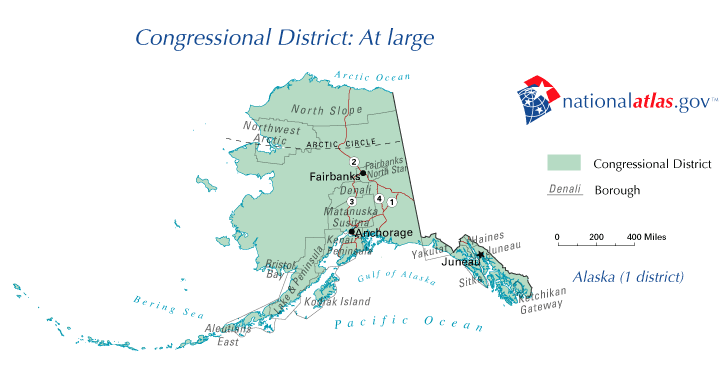
Map of Alaska's at-large congressional district

The entire state of Alaska, allotted just one U.S. House Representative, makes up the Alaska-At Large U.S. House district (AK-AL).

Key Statistics

  • 57.5% White, 14.8% Native Alaskan
  • 65.7% Urban, 34.3% Rural

III. Market Assessment

The market above doesn’t price in the “Independent” candidate (Hill), but Begich hasn’t priced as far down as the 60s since May. Bettors clearly expect the Republican Party to hold the seat, and there are many reasons why which will be explored in depth in the balance of this forecast.

IV. History

Alaska hasn’t voted for the Democrat presidential nominee since Lyndon Johnson’s 1964 national landslide. Given their allotment of just one U.S. House seat, it shouldn’t surprise you that the state has stuck with its presidential stripes almost as long as it has been in the union.

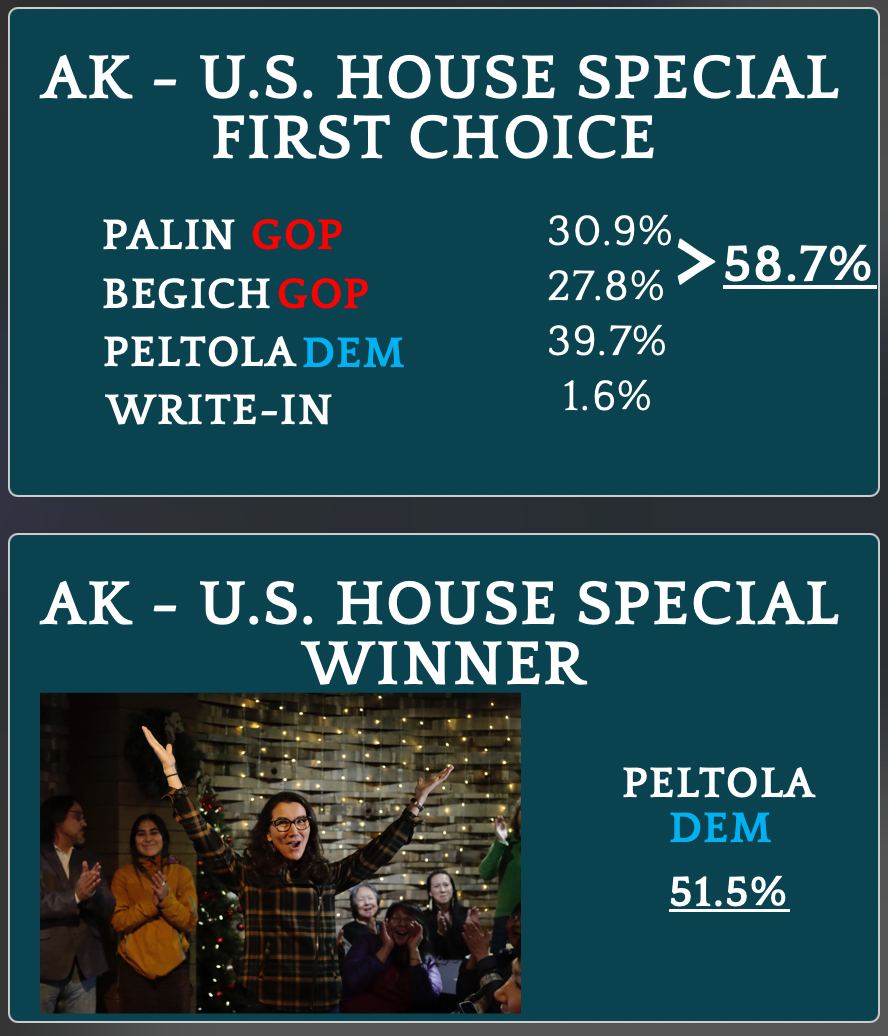
At the age of 39, Don Young was elected in a 1973 special election, putting the seat in GOP hands. Young held the seat until he died in 2022 at the age of 88. This prompted a special election that summer that yielded these First Choice Round results, yet a rather dubious final result.

Alaska 2022 special election First Choice Round results

You read that right. Nearly 3 in 5 votes of the First Choice Round went to Republicans, yet Mary Pelota, the Democrat, won with the ridiculous Ranked Choice Voting system Alaskans have inflicted upon themselves.

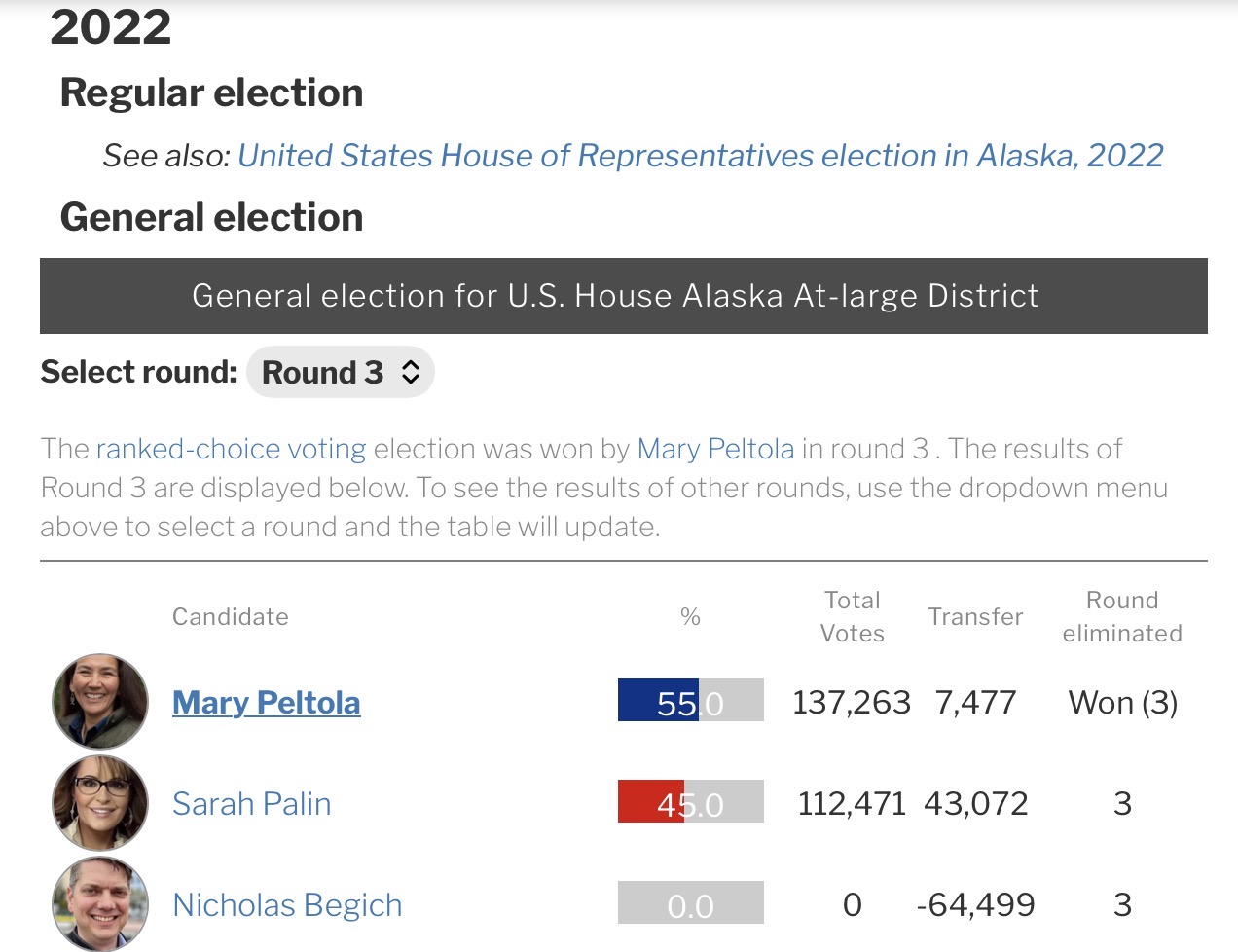
Peltola went on to win again in the General Election that fall, once again aided by Sarah Palin and Begich splitting the GOP vote:

Alaska 2022 general election results for the at-large House seat

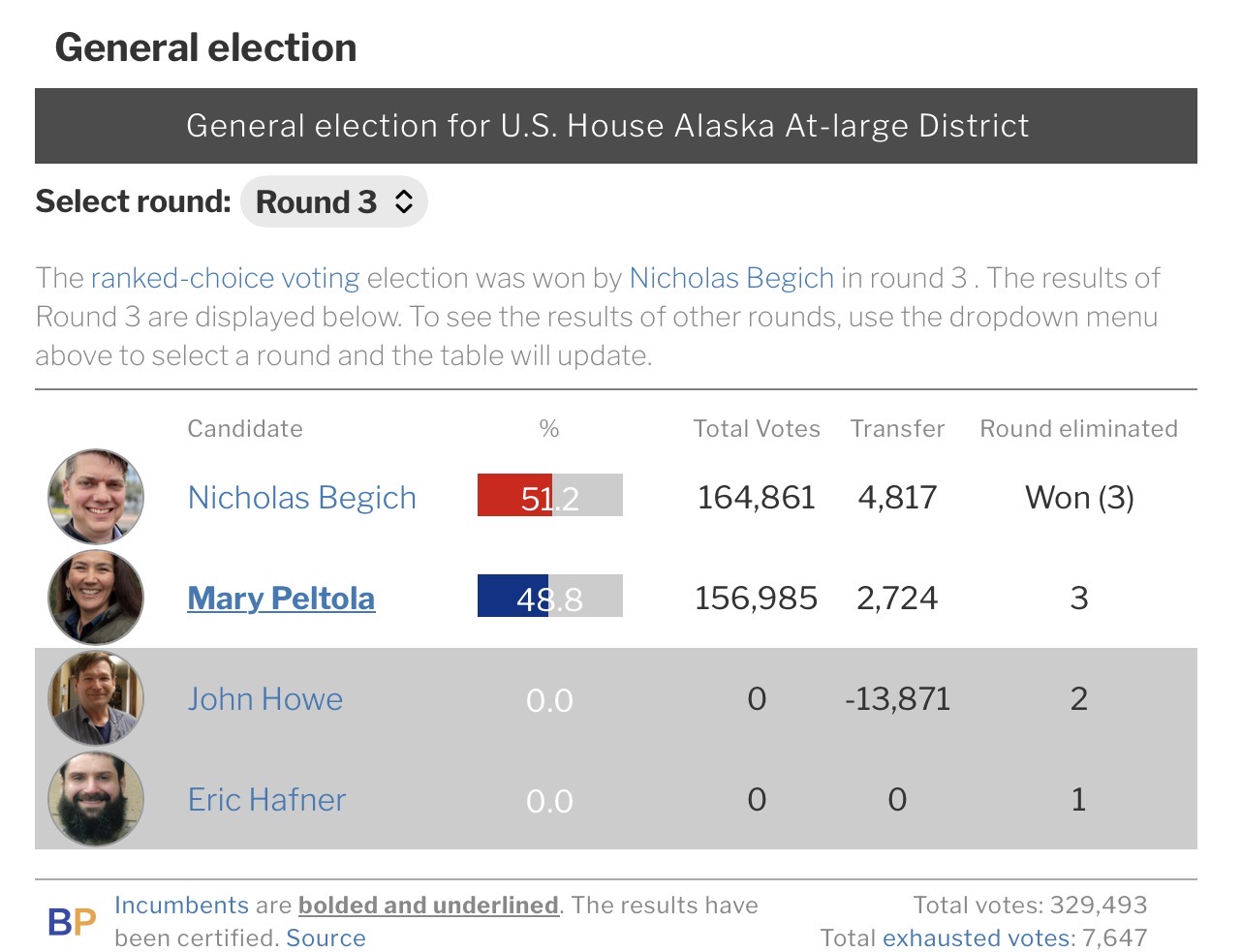
In 2024, the GOP got it figured out and ran only one major candidate, knocking Peltola out in a state Trump won by more than 13 points:

Alaska 2024 at-large House election results

V. Analysis of 2026 Primary Results

Alaska 2026 at-large House primary results

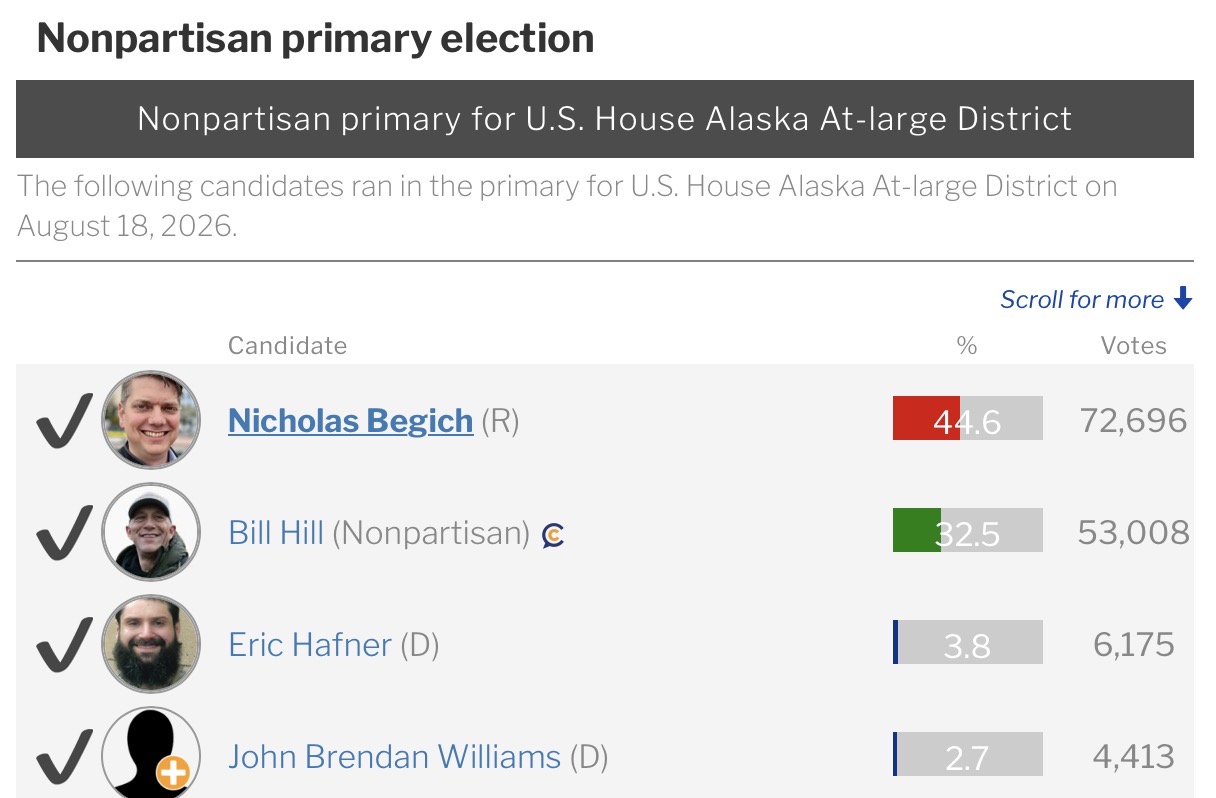
Begich, with no legitimate Democrat-branded opponent, cruised to the top spot with 44.6% of the jungle primary vote. Williams, the fourth-place finisher, has removed himself from the General Election ballot in favor of Libertarian-backed McDermott. There is no GOP primary damage inflicted on Begich requiring coalition consolidation.

VI. Polls

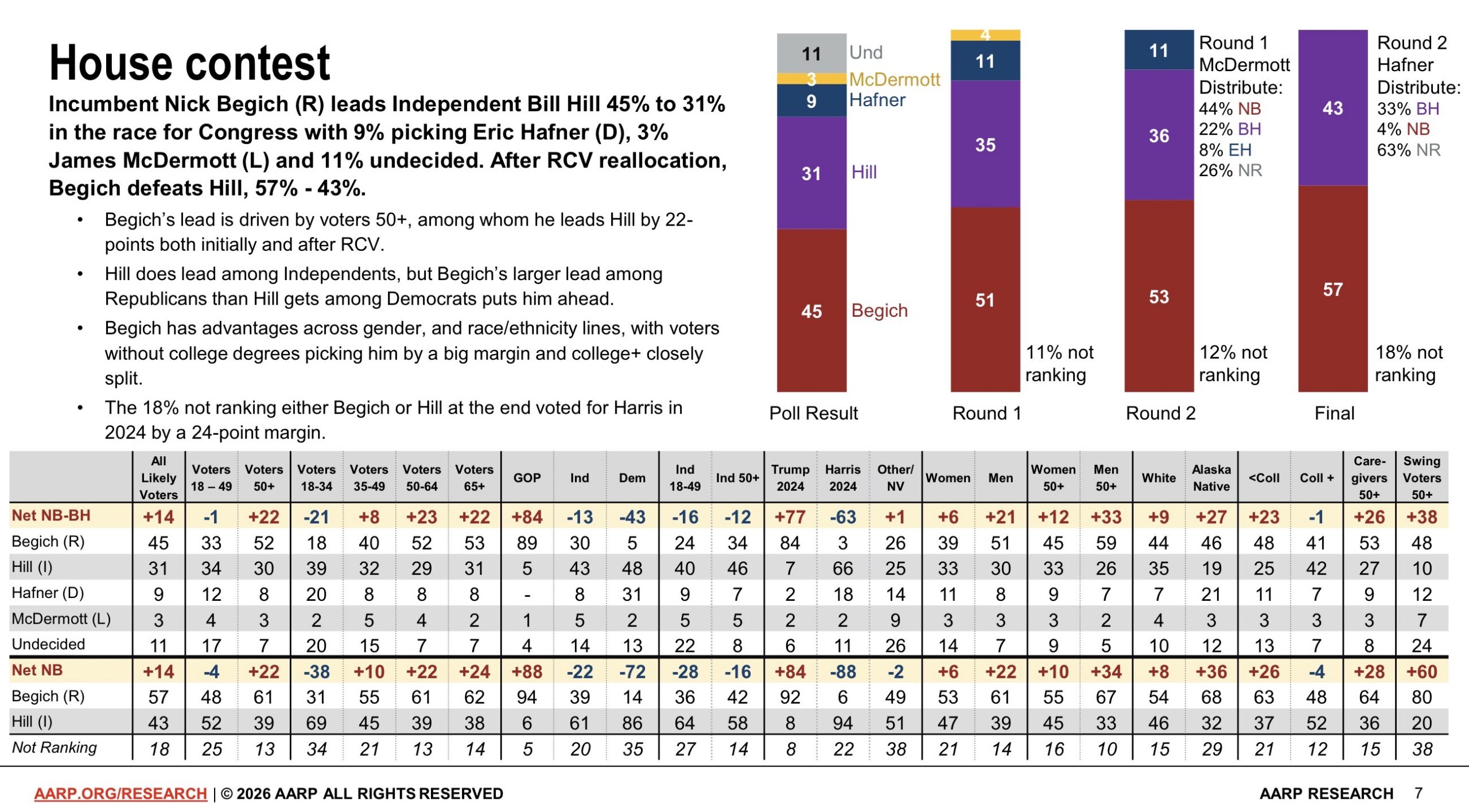
Average: Begich +16

Polling for Alaska's at-large House race

Only one major poll has run on this race, by Fabrizio Ward/Impact Research. It shows Begich winning the First Choice Round with an outright majority and +16 margin.

VII. Media Ratings

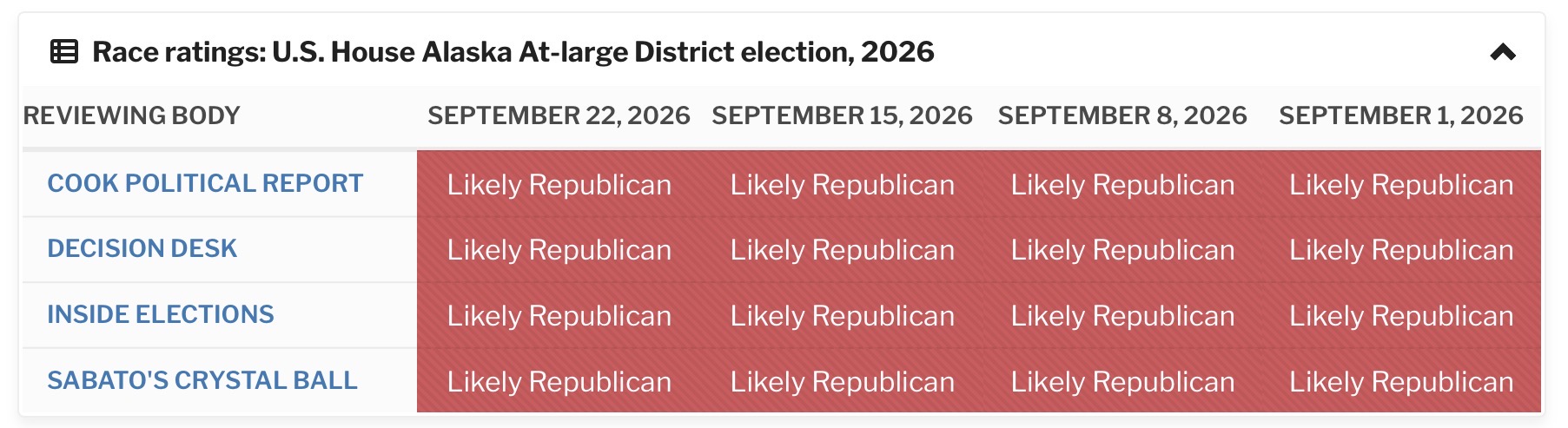
Media ratings for Alaska's at-large House race

No major ratings outlet is expecting an upset in this race.

VIII. Party Registration

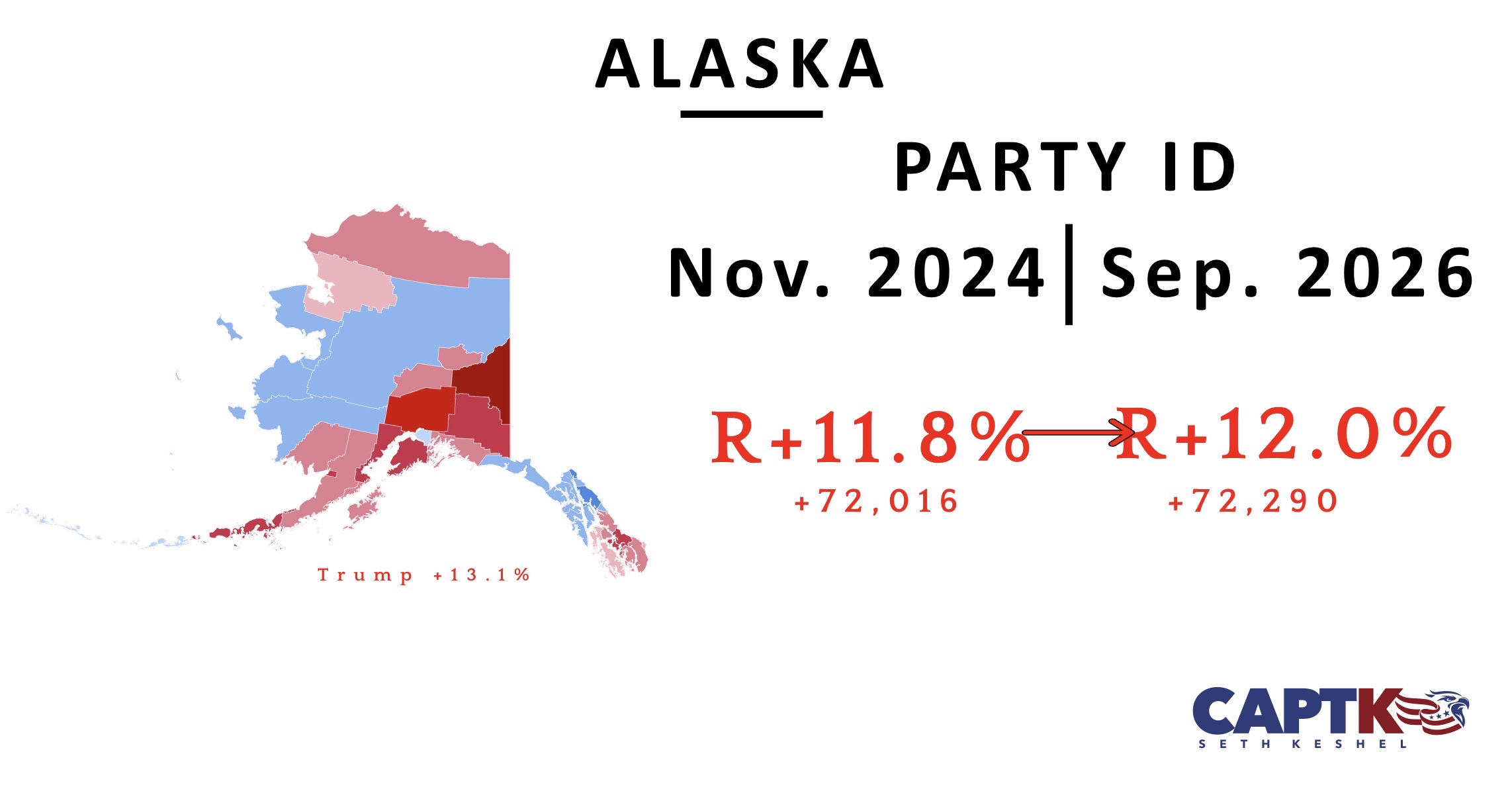
Alaska voter registration by party

Democrats have made no progress in voter registration in Alaska, even inching backward since Trump’s +13.1% win there in 2024. There is no warning of a Democrat realignment of the state.

IX. Election Considerations

Alaska runs some of the worst elections in the country. I detailed this in a recent article decrying the Senate picture, which I will paint in full within these virtual pages soon:

Why Alaska Can’t Have Nice Things (Capt. Seth Keshel, August 21)

Alaska has roughly 1/23rd the population of Florida, yet requires two weeks to count them all, aided largely by expanded mail-in voting and the ridiculous Ranked Choice Voting reallocation process if a candidate doesn’t secure a majority in the First Choice Round. I expect these concerns to be a major factor in the Senate race, but not so much in this House race. You can read about the pitfalls of Alaska’s election system in detail here:

Far West – 2024 Election Compendium (Capt. Seth Keshel, January 10, 2025)

X. Summary and Election Estimate

Three factors greatly favor Begich:

  • Member of a well-known Alaskan political family
  • Democrats ran their only viable federal candidate for the U.S. Senate seat
  • He isn’t even facing a serious Democrat, which will defuse polarization animosity

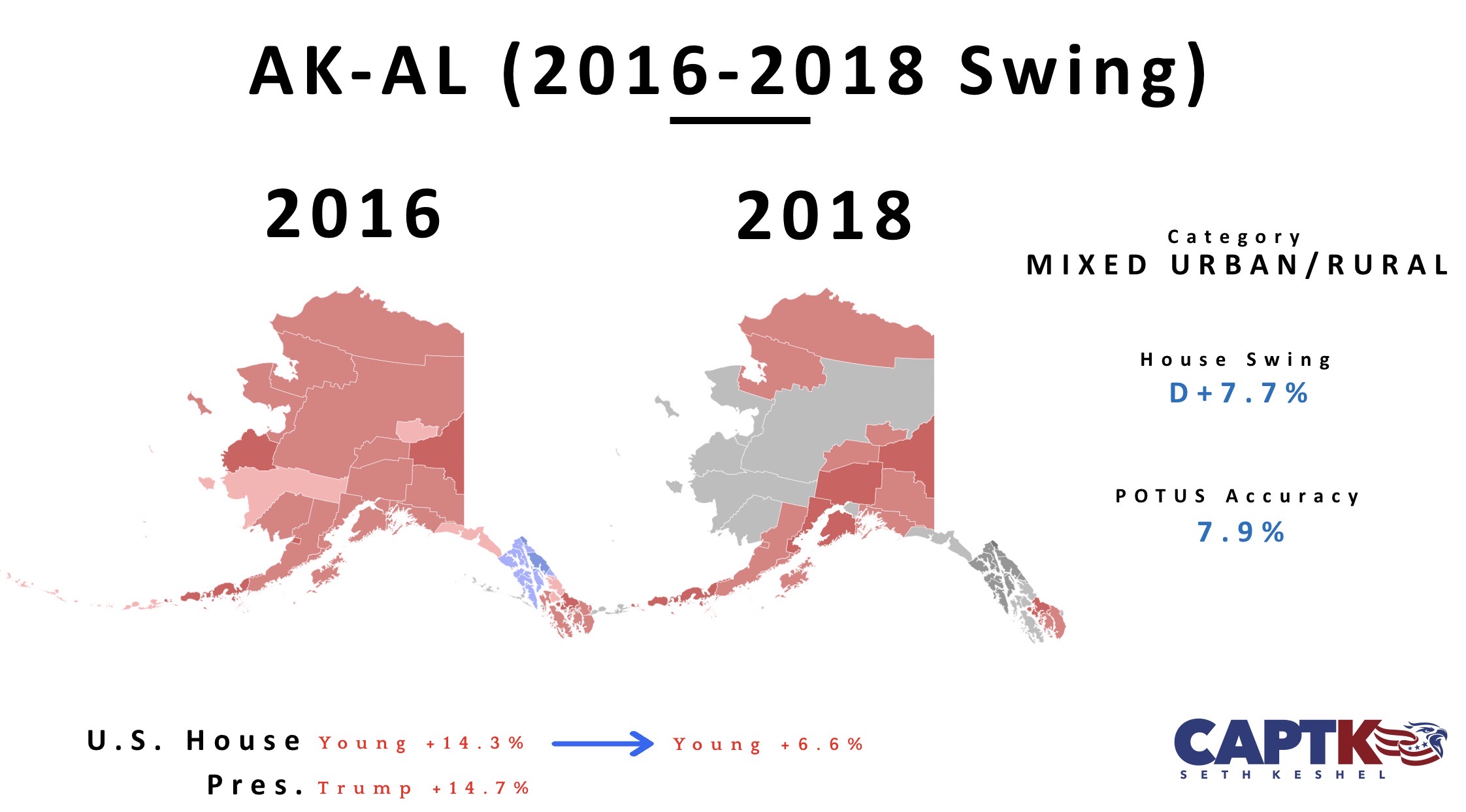
Otherwise, he would be in for a serious campaign. Young, who ran almost dead even with Trump in 2016, lost 7.7% of his margin in the 2018 midterm swing:

Don Young's 2016 and 2018 results compared

That swing in 2026 would doom Begich, who won by 2.4% in 2024, by over 5 points.

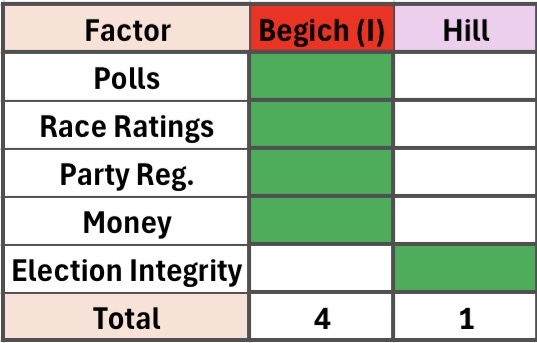
Here is how the key factors in this race stack up:

Key factors in Alaska's at-large House race

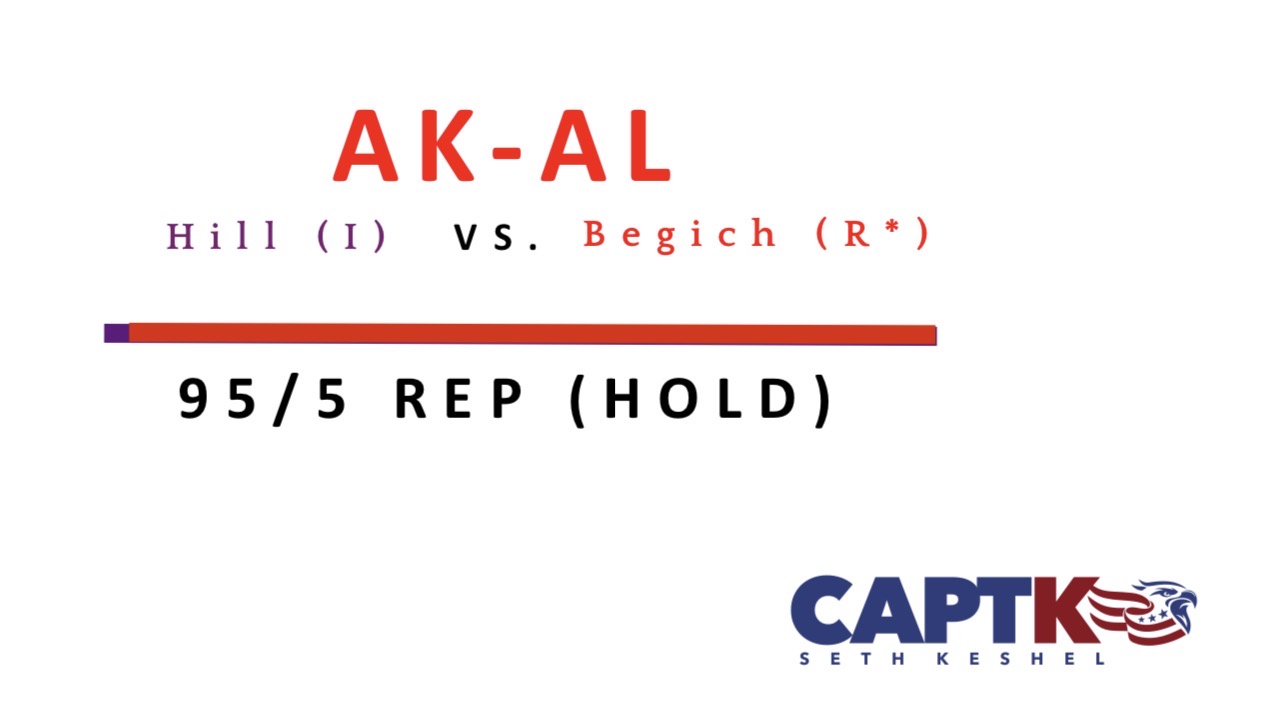
Forecast for AK-AL

Forecast for Alaska's at-large House seat

Rep. Begich is highly likely to hold his seat, which is a must-win for the GOP and only downgraded to leaner because of the factors listed above.

Seth Keshel, MBA is a Senior Fellow at the Gold Institute for International Strategy and a retired Army Captain. He publishes Captain K’s Corner on Substack.
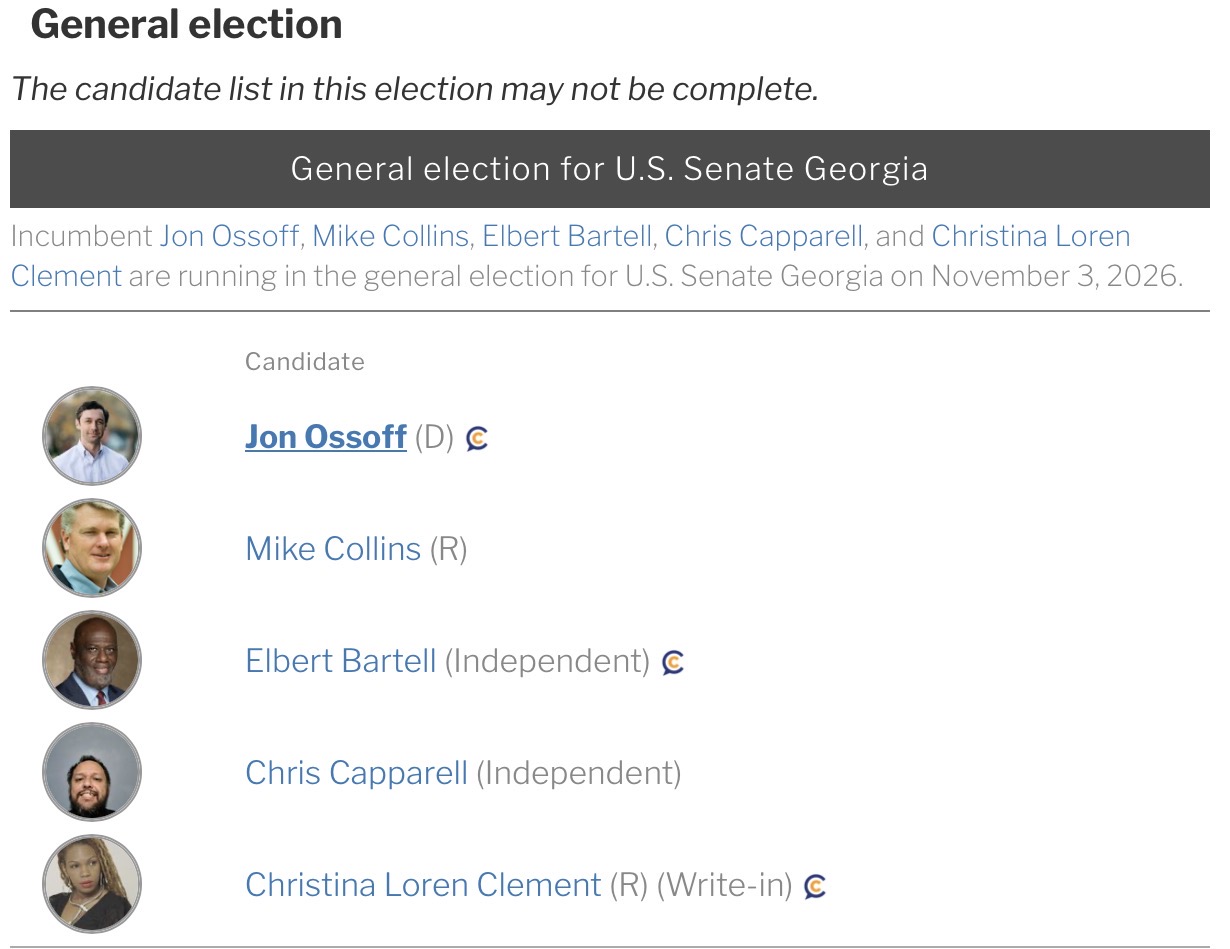
“Silent Majority” is a Stupid Term

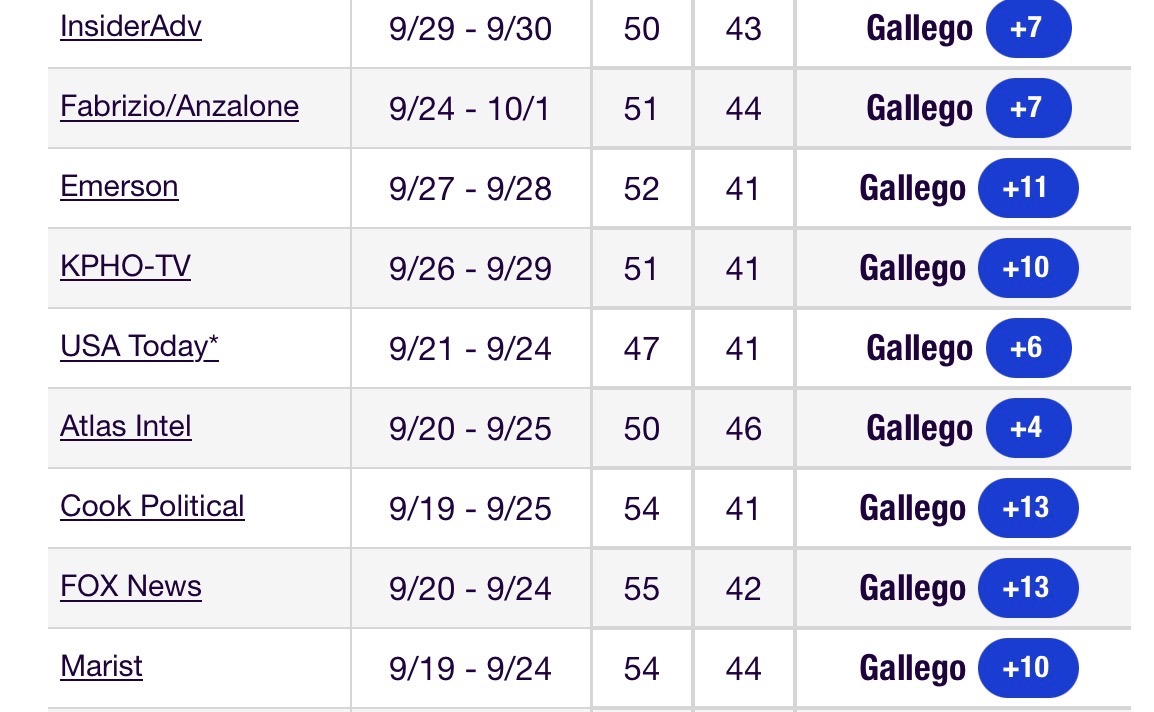
Arizona Senate polls from September 2024

Why “We the People” must become the new “establishment”

Years ago, Larry Schweikart used to tell people that he doesn’t “hold hands” over bad polling. His comments on X, then Twitter, were always filled with “what about that poll from (state)?” He got sick of it, warned people he would block them if all the concerns persisted, and now people finally understand that Larry doesn’t “do” polls. Thankfully, due to the utter trash that makes up modern polling, most people realize it, too.

Arizona Senate polls from September 2024

Above, you can see some examples of what passes for polling these days. Those are snapshots of the Arizona Senate race from this exact week in 2024, showing some wild misses, including Marist’s. Marist yesterday did their “look at me” routine over Texas. Despite being critical of polling, I have a sober view of what elections may bring us this fall:

For some reason, people think because I’m critical of polling it must mean I think it will be a GOP wave this year. This couldn’t be more distant from the truth. I’ve been realistic about midterms for the past 18 months. The House is only competitive as far as a majority…

Seth Keshel (@RealSKeshel), September 22, 2026

I am here to help candidates and campaigns win. I am in touch with one major U.S. Senate candidate on a nearly daily basis now over his race. I have produced serious analysis on the U.S. House races that will decide that chamber’s majority, and they have made their way all the way to the candidates and the top of the Republican Party. Still, I center my assessments on historical precedence and political reality, and don’t get caught up in all the noise and “red wave” cheerleading that defies reality.

The goal of a midterm with your party’s president in office is survival. Should Democrats win the House (or even the Senate) in November, many people will go off the ledge, thinking the MAGA movement is dead or giving up hope for the good fight of liberty. In reality, a Democrat majority will arguably do more to advance the MAGA agenda and strengthen the likely Vance/Rubio (or Rubio/Vance) ticket in 2028 than defying the odds and holding the House will. Imagine what they’ll do:

  • Convene investigative panels and committees to go after Trump on personal issues, made-up financial affairs, and now, Iranian military action
  • Impeach Trump multiple times, despite being unable to secure a conviction in the Senate
  • Hold up all of Trump’s popular legislative ideas, which he will almost certainly lob at them just so they screw themselves

Stop worrying about impeachment and removal. If it didn’t happen after J6, it won’t happen. The effort to impeach Bill Clinton backfired on the Republican Party, and my guess is that Trump’s economy will boom in the last two years of his tenure, as it has already shown some signs of doing with expected Q3 growth. Aircraft carriers take a long time to turn around, and that is not something a society mired in instant gratification wants to hear.

Still, the question remains – can we fix this politically? Can America be set on a pathway to success, see evil-doers punished, be rid of political and institutional corruption using the political process? I tire of seeing anonymous wannabe revolutionaries online and have begun to clap back:

The problem with sentiments like this is that no one seems to want to provide an alternative plan. We are all stupid for participating in the political system. Yet they always fall just short of organizing or leading or calling for an overthrow of government. There are two…

Seth Keshel (@RealSKeshel), September 22, 2026, replying to @magisterium17: “Politicians won’t help us resolve, fix, or improve anything. Cheerleading and focusing on the candidates in a corrupt election system is only perpetuating the lie. We have the illusion of choice.”

You only have two choices regarding America’s current issues: Fix the political process or commence the process of abolishing government that Thomas Jefferson detailed. For the written record, I do not endorse “the big ugly” that the latter point entails, and think people of good faith must first put shoulder to plow to fix the political process. Are we doing that? Let us examine together:

THREE SIGNS WE DON’T “GET IT”

I. Checked Out and Asleep at the Wheel

You and I “get it.” You read this newsletter because you have interest in American politics and presumably prefer the first option listed above, which is to engage in fixing American politics. 34,000 email addresses get this newsletter, and I am ranked in the Top 100 in the U.S. politics genre for paid subscriptions, which constitute less than 10% of my email list. There are precincts in Pima County, Arizona, that register more votes tallied in a presidential election than there are paid subscribers to my newsletter.

I have 85,000 followers on X. There are nearly that many Democrat presidential votes in Pinal County, Arizona, which Kamala Harris lost by 22.1%. The problem here is that we, the people who pay attention to this stuff, think everyone feels the same way or considers the same issues we fret over to be existential issues. It is a huge world out there, and my Dad always said, “10% of the people lead the way; 90% are just along for the ride.”

You may not realize it, but there are a lot of people who have no idea an election is even upon us. We are aware of this unfortunate fact (that people don’t realize an election is coming up) because we are busy as hell trying to win reelection in the Arizona House:

Living Through What We All Hate (Capt. Seth Keshel, September 21)

Let me explain why midterms usually hurt the president’s party in layman’s terms:

  • Trump wins a tense, drama-filled election for all the marbles
  • Trump’s voters are happy and come down from high alert
  • Harris’s voters are filled with irrational hatred and insanity, and eat, sleep, and breathe politics and consider voting their own act of religious devotion to the cause
  • Midterms come around and the Harris voters, joined by a few swing voters who vote on gas prices or other issues that have arisen since the previous presidential election, vote in high numbers
  • Trump’s voters, asleep at the wheel and generally happy, turn out in smaller numbers – enough to upend the more narrowly held seats

Despite what you may read on X, which I use out of necessity and not personal enjoyment, Trump’s voters are happy. You can see it in the data outlining his approval within the Republican Party. The average Joe out there who showed up to vote because he was convinced our southern border imperiled America doesn’t sit around all day thinking about Iran, Israel, tariffs, or circuit judge nominations. We, the people who follow politics impulsively, are the ones who do that. We are going to vote. Average Joe “shut the border” Smith is busy running a business and watching his kids play sports, and it kills our momentum when the results come out.

II. The Real Elections are the Primaries in Most Races

Watching all of the Susan Collins drama unfold has helped shape my opinion on squishes more than anything. Yes, Collins is a squish. She is a 50/50 proposition at best when it comes to highly charged votes; however, she votes with President Trump on just about everything else, whereas a Democrat of any stripe from Maine would vote against practically everything. I’ve written about why mounting a primary campaign against her would be a mistake:

Primarying Susan Collins is a Mistake (Capt. Seth Keshel)

The greater issue within the Republican Party, therefore, is that we continue to nominate squishes for seats that are overwhelmingly red and would elect a brown paper bag if it had an (R) next to its name. We have a number of legislative districts in Arizona that are of this crimson stripe that are represented in the House and Senate by people who have no desire to bring about election integrity or to sling one word downrange in the ongoing culture wars.

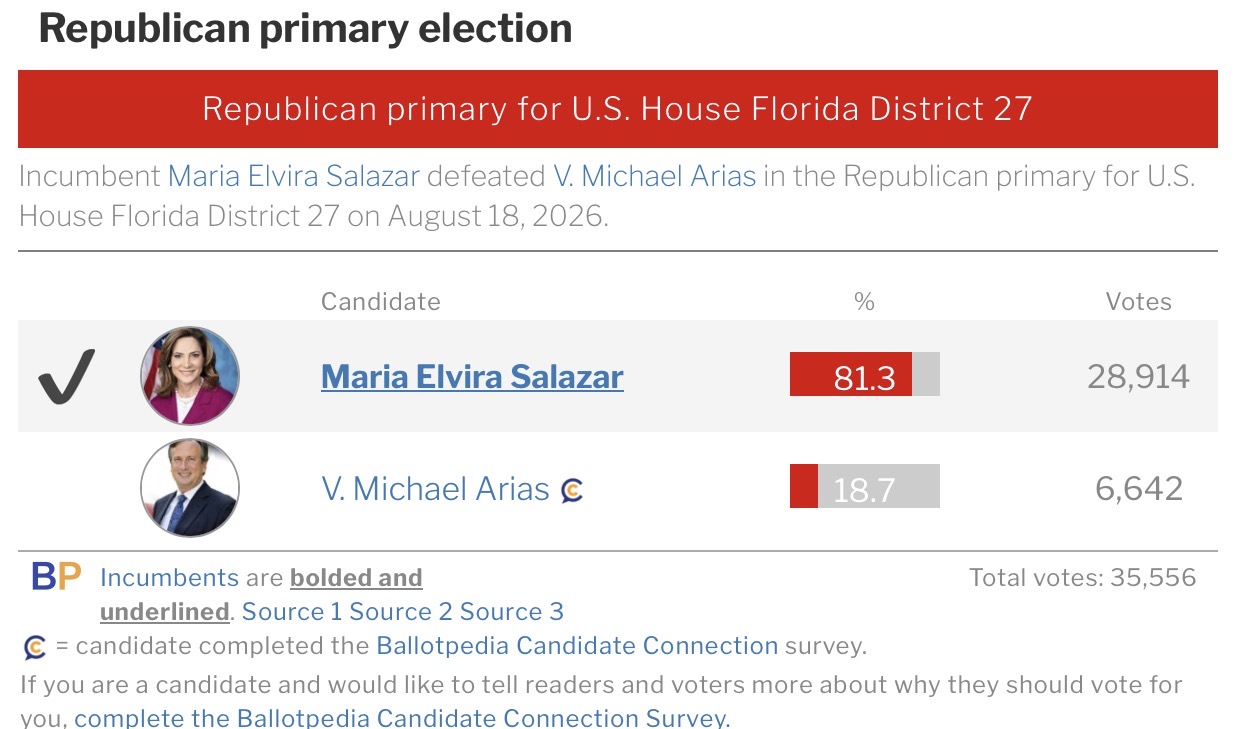
Just this past week, I’ve written about Maria Elvira Salazar’s public contradiction of the Trump administration’s immigration enforcement operations. Salazar is sitting in a seat Trump won by almost 20 points, outside the margin of 2018 flips and an almost certain reelection victory for her even in a bad 2026 year. Clearly she is reading the fraudulent polling to come out and “step on it” as badly as she has, which has prompted people to ask me why we didn’t primary her. Well, that’s a good question:

FL-27 2026 Republican primary results

Less than 1% of the population of FL-27 showed up to vote for her primary opponent in 2026. Roughly 4% of the population, or 1 in 25 people, showed up to renominate Salazar, who commands the massive dollars and the supposed security of incumbency. We’ve known for years she is a squish and an amnesty pusher, yet in this seat she won by over 20 points in 2024, no one with money, influence, and impact mounted a serious campaign to replace her in a seat a generic Republican should win even in a blue year (or would win back in the next normal year anyway, rendering the presumptive Democrat gain moot).

Do you want to know why the President often endorses crappy candidates like her? Because there is most often no viable alternative. When Republican voters start taking primary elections seriously, I will believe we are doing all we can to alter the current political crisis using the desired methods available to us.

III. Are We Truly Doing All We Can?

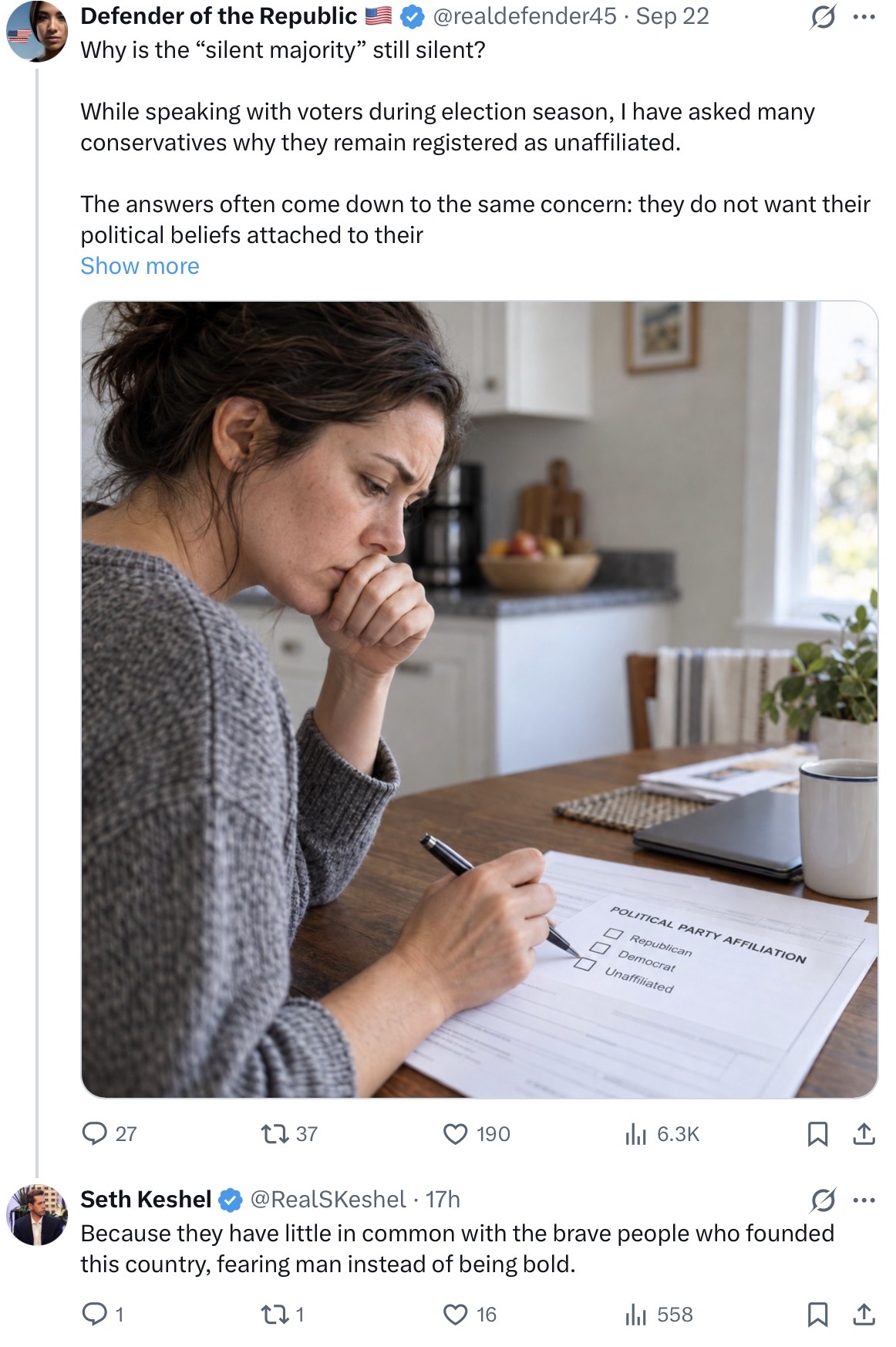
If I hear the term “silent majority” again, I’m going to puke. I’m so sick of hearing that term or being remotely associated with it. If you’re still silent, why? Why are you using an anonymous account? Why are you afraid of man? Most of you reading this are people of faith – we should only fear God.

Image from Seth Keshel's article on the silent majority

It has never been more clear to me just how important Charlie Kirk was (and still is, in memory). We are talking about a guy with a brilliant mind and the gravitas to inspire young people to take an active role in Republican politics. I have spoken in front of many local groups over the years that have the same head count, same members, and same goals for every meeting. They are essentially social clubs for older Republicans rather than an outward-facing organization rebuffing the term “silent majority” altogether.

Elections are games of math. In a tossup race, both sides are going to have 45 percent. It’s what happens to the other 10 percent that decides how it all shakes out. If you need to get people who normally vote for the other side to vote for your side, how in the hell is that going to be done if the mantra is “I’m part of the silent majority, please don’t report me to H.R.?” Maricopa County remains ground zero for the 2020 election, yet less than half of all precinct committeeman spots are filled. Out of those that are filled, normally less than 10% of those committeemen actively engage voters in their precincts.

Are we truly leaving it all on the field?

SPIRIT WILLING, FLESH WEAK

Anyone can complain online all day. If this year’s midterms wind up being a true blue wave, including one that washes away the Senate, you can thank the online negativity chambers for depressing base turnout and discouraging those who truly care from engaging with the low propensity voters who come out for Trump, but whose votes we need in lower turnout elections and for ensuring good people are elected to local offices. If this article convicted you, then here are four things you can do to take action:

  1. Volunteer to be a precinct committeeman/precinct captain, and get to work knowing voters in your precinct
  2. Commit to recruiting good candidates for all races ahead of time, not when everyone is in a rush and at one another’s throats during primary season
  3. If you’re a member of a Republican/conservative club, commit to bringing one person with you to the next meeting, and even paying for a year’s membership – political clubs cannot simply be “social clubs” for bored people
  4. Stop worrying about annoying people; get your friends to commit to voting in the midterms, even if you think they will without being prompted

We don’t need to turn water into wine. We need to repeat basic fundamentals over and over again and grow an organization capable of winning elections and changing hearts and minds for the long run. After all, Benjamin Franklin warned us that we have a Republic only if we “can keep it.”

Seth Keshel, MBA is a Senior Fellow at the Gold Institute for International Strategy and a retired Army Captain. He publishes Captain K’s Corner on Substack.
California can fix its women’s prison rape crisis now. Why won’t they?

Surveillance camera and exit sign in a cell block corridor.

This article was written by Adelle Nazarian and appeared in Washington Examiner. California can fix its women’s prison rape crisis now. Why won’t they?.

Bodily autonomy is a cornerstone of women’s rights in California. But behind prison walls, incarcerated women can face a very different reality in which the state holds enormous power.

Last month, the U.S. Department of Justice delivered a damning assessment of California’s two state prisons for women. Federal investigators concluded that the California Department of Corrections and Rehabilitation and its two women’s prisons — the Central California Women’s Facility in Chowchilla and California Institution for Women in Chino — are violating the Constitution by failing to protect female prisoners from sexual abuse and harassment by staff.

Investigators found a long-standing pattern of staff sexual misconduct, inadequate safeguards, flawed investigations, and insufficient accountability, concluding that CDCR, CCWF, and CIW fail to adequately and effectively implement the Prison Rape Elimination Act.

Washington now faces its own test: The Justice Department gave California 49 days to satisfactorily address its findings before the attorney general may initiate litigation. With that window closing in early October, the Trump administration should insist on measurable protections for incarcerated women, and Congress should demand answers about why its landmark prison-rape law remains so poorly implemented.

For a state that prides itself on women’s rights and criminal-justice reform, that should be intolerable. And California cannot claim it wasn’t warned. In 2023, the state paid millions to settle claims involving former prisoners who alleged sexual assault by CCWF correctional officer Gregory Rodriguez, who was later convicted of dozens of sexual-abuse charges. This year, California agreed to pay another $1.9 million to 13 women who alleged prison staff retaliated violently against them for reporting sexual misconduct.

It was not an isolated incident. In 2024, the federal government agreed to pay nearly $116 million to 103 survivors of the now-shuttered federal women’s prison FCI Dublin in the Bay Area that became so notorious for staff sexual abuse it was nicknamed “rape club.” In 2023, an Illinois federal jury awarded $19.3 million to a former Logan Correctional Center prisoner who was repeatedly sexually assaulted by a prison counselor; an appeals court later upheld liability findings against prison officials but ordered a new trial on damages. In 2021, New Jersey agreed to pay nearly $21 million to resolve sexual-abuse and misconduct claims involving the Edna Mahan Correctional Facility for Women.

Congress passed PREA in 2003 with a clear mandate: eliminate sexual abuse in the nation’s detention facilities. More than two decades later, California’s own prisons show how far reality has fallen short of that promise and how disproportionately women bear the gap. According to a Bureau of Justice Statistics analysis of substantiated incidents from 2016 to 2018, women made up just 10% of the combined U.S. prison and jail population, yet accounted for 27% of all victims of staff sexual misconduct. The same BJS data show incarcerated women are roughly three times as likely as incarcerated men to be sexually victimized by staff. Twenty-three years of federal law have not closed that gap.

The Justice Department’s notice of required remedial measures for CCWF and CIW includes expanded camera coverage, enhanced confidential reporting channels, strengthened investigative protocols, improved staff training and monitoring, and implementation of PREA-compliant safeguards. Companies are working to fill that gap. Texas-based LEO Technologies recently launched Verus Vision AI, which turns correctional cameras into real-time monitoring systems through agentic AI, capable of detecting behaviors and conditions that may signal developing threats.

LEO Technologies’ products give correctional officers another set of eyes where humans cannot possibly watch every camera, corridor, and cellblock simultaneously. The company frames the tool as flagging risk before harm occurs to enhance the ability of human judgment to take the proper course of action, not to replace the human component of the process.

That distinction matters because technology is not a substitute for accountability. Two decades after PREA became law, California still hasn’t been able to improve its implementation. Cameras go unmonitored, incidents go undocumented and uninvestigated, and reports vanish into a bureaucracy without consequences.

California is home to some of the most sophisticated technology companies in the world. It should be equally sophisticated about protecting the women whose safety it has taken into its own hands. PREA set the standard in 2003, but California is still failing to meet it. When incarceration is the punishment, sexual abuse should never be part of the sentence.

Written by Adelle Nazarian Senior Fellow, Gold Institute for International Strategy

The Death of Adenauer’s Party

Front view of the historic Reichstag building in Berlin, Germany, featuring classical architecture.

This article was written by Hermann Tertsch and appeared in La Gaceta de la Iberosfera. La muerte del partido de Adenauer.

The Frankfurter Allgemeine Zeitung (FAZ), once the venerable, today far less so, conservative daily of Germany, has declared Konrad Adenauer’s Christian Democratic Union (CDU) dead. It is nothing less than announcing the demise of the main people’s party in the history of the Federal Republic of Germany. The paper illustrates this terrible assertion on its front page with a defeated Chancellor Friedrich Merz, looking down into the depths of the abyss that has opened beneath his feet. The CDU is dead, Germany needs another party.

Well, I am going to contradict the FAZ, whose historic editors and columnists, in its days as the absolute authority, defended the political positions, values and virtues that the Alternative for Germany (AfD) defends today. Today the paper, ever less influential in its progressive drift that would shame its founders and legendary bylines, does nothing but attack the AfD and defend those who, fewer and fewer, refuse the logical alliance of the forces of the right that would form a large majority. Germany does not need another party, but rather the alliance of the one that lost its way, the CDU/CSU, and the one that emerged to recover it, the AfD.

Together they can carry out all the reforms that the CDU has promised and cannot deliver because it has condemned itself to being the eternal ally of the left. The AfD leader, Alice Weidel, has just offered it again from the position of political leadership across all of Germany, because she is 10 points ahead of the CDU in the federal polls.

The CDU has to ally itself with the AfD to help Germany climb out of the cesspit into which the CDU has plunged it with its accursed alliances with socialists and Greens, under the disastrous leadership of Angela Merkel and with its socialist, ecological, climate and multicultural idealisms and fanaticisms. If the CDU does not do it, it will disappear, and the Alternative for Germany will have to do it alone.

Written by Hermann Tertsch Distinguished Fellow, Gold Institute for International Strategy

Nuclear Insurance You Can Bank On

A B-52H Stratofortress parked on the flight line during Exercise Global Thunder 26 at Minot Air Force Base, North Dakota

This article was written by Peter Huessy and appeared in RealClearDefense. Nuclear Insurance You Can Bank On.

The Congressional Budget Office is charged by Congress to carefully examine the spending implications of government funded programs including those in the Department of War. Some decades ago, CBO assessed the cost of the nation’s nuclear deterrent particularly the Triad of strategic bombers, submarines and the sea launched ballistic missiles they carried and the land-based ICBMs in silos. The CBO also estimated the cost of the warhead and nuclear laboratories maintained by the Department of Energy (now the National Nuclear Security Administration within DOE) and the cost of our Nuclear Command, Control, and Communications (NC3). One early report garnered a lot of national attention because CBO headlined its report with the startling estimate that the nation’s nuclear deterrent was going to cost $1 trillion. Even in Washington, D.C., that was a lot of money.

But CBO played a few clever tricks to get to that number. First, CBO said this was the cost of “nuclear modernization” or the new nuclear weapons systems. It was that but a lot more. All the current legacy and very old system costs were also included, systems that now are from 40-70 years old, hardly what one would include under the rubric of “modernization.” Second, CBO also included all 100 strategic B21 bombers although only 20 of the bombers were going to be in the deployed nuclear arsenal. Third, CBO arbitrarily decided that the estimated costs would be for three decades, triple the length or duration of budgets usually presented by an administration in February of each year when the Federal budget proposals are required to be submitted to the U.S. Congress. And fourth and finally, CBO decided to add a 3% inflation kicker over the three decades which mathematically more than doubled the actual costs of the nuclear modernization enterprise.

So, in their 2013 report, for example, CBO trumpeted that nuclear forces would cost $1 trillion (over the next 30 years), generating headlines across the news media, engendering the shock and awe they wanted to create, hoping strong opposition in Congress would develop that would cut back significantly on the modernization effort. And just so Congress would get the message, another favorite regular past time of CBO was to do a regular excursion of killing the land based silo ballistic missiles to examine what force alternatives would provide what kind of budget savings.

CBO was strongly criticized for these sleight of hand magic tricks and eventually CBO made two key adjustments—they estimated the bomber costs at the 20 not 100 to be in the force. And CBO admitted that modernization should not include the ongoing sustainment and maintenance of the current legacy force.

Nonetheless CBO as one senior USAF general told me got its “bumper sticker and press release headline” and made nuclear investments look out of line with the rest of government requirements. The nuclear abolition enthusiasts took the number and ran with it and even came up with their own estimates near the $2 trillion mark by making the same mistakes that CBO was making but also adding even more of their own.

Senator John Hoeven of North Dakota (R-ND) put things in perspective two years ago when he explained that as a member of the defense appropriations subcommittee in the Senate, he had a front row seat when examining the nuclear portion of the defense budget. And yes, the Senator supports in his state two elements of the U.S. nuclear Triad—150 Minuteman missile silos and B52 strategic bombers, the only state with two parts of the nuclear Triad. Senator Hoeven laid out in late 2024 that the entirety of the nuclear Triad modernization cost for FY2025 for the nation was $18.6 billion annually for the B21 bombers, the Columbia-class submarines and companion upgraded D-5 missile and the Sentinel ICBM. One could add the costs of the associated NC3 and warheads, but whether or not the U.S. modernized the Triad these other elements would have had to be acquired irrespective of whether for the legacy or modernized force.

Now to be fair those Triad costs are now upwards of $26 billion as the country moves toward full annual production of each of the Triad elements. As acquisition costs increase, research and development costs decline. Also, sustainment and maintenance of our legacy forces continues, with some of those costs rising as much as 17% annually. What is remarkable is that despite being 55 years in service, the 20th USAF commanders have been able to sustain the Minuteman III force at a 98% alert rate, an extraordinary achievement, and a tribute to the leadership of 20th USAF that has recently changed hands with the retirement of USAF Maj Gen Stacy Huser. [And hats off to our Ohio-class sub and B52/B2 bomber folks as well.]

CBO largely misses any acknowledgement of such challenges to sustaining the U.S. legacy nuclear force. After the collapse of the USSR, CBO went on many alternative defense budget excursions that had at their core an assumption (often reflecting the tenor of some Congressional initiatives) that U.S. restraint and minimum investments in defense including nuclear forces was the way to proceed. This included a parallel and nearly zero attention to the looming threat of China as a possible nuclear peer competitor. [Although the U.S.-China Economic and Security Commission regularly and fairly examined the national security dangers facing the U.S. due to China’s rapid and accelerating defense and technology investments.]

In looking into the future, CBO also largely missed another aspect of the entirety of the budget requirements for the nation’s nuclear deterrent. The Columbia class submarine and the Sentinel ICBM forces will both remain in the force through 2080-5. That means these two elements of the nuclear Triad will have to be replaced, under currently projected conditions, but not for half a century or more. Using the current estimates for the research, development, and acquisition costs of Sentinel ($140 billion) and Columbia ($138 billion), plus $15 billion for the requited new and life extended warheads, the costs now to the U.S. taxpayers for each of the next 30 years comes to roughly $9.76 billion a year, which is more than what Americans spend for food on the 4th of July ($7 billion) and 1/122nd of what Americans spend on insurance each year. And for 80 years that nuclear insurance policy called deterrence has never had to cash out.

Written by Peter Huessy Senior Fellow, Gold Institute for International Strategy