Bizarre Liberal Bungling in the European Parliament Over Stricter Asylum Policy: Will the Real VVD Please Stand Up Now?

European Parliament asylum vote

(This article was written by Derk Jan Eppink and appeared in Wynia’s Week. Bizar liberaal geklungel in het Europees Parlement over strenger asielbeleid: wil de echte VVD nú opstaan?)

At the European Parliament vote on the return regulation for rejected asylum seekers, the four-person VVD delegation went down ignominiously this week. VVD delegation leader Malik Azmani was the main negotiator (‘rapporteur’) in parliament. A ‘rightist wind’ in Strasbourg and Brussels made his draft report stricter and sharper. United left was furious and Azmani bewildered. He abstained on his own report, while his three fellow VVD members voted in favor. Meanwhile, the D66 delegates voted against, even though Prime Minister Rob Jetten advocates stricter asylum policy in Europe.

At the VVD, the question now is ‘will the real VVD please stand up,’ while coalition partner D66 governs in The Hague, even provides the prime minister, but leads the opposition in the European Parliament.

Immigration discontent is more noticeable in Europe than in the Netherlands, which confines itself to the usual political dance steps in The Hague. Municipal council elections are behind us and the protest vote has coalesced through the emergence of local parties with the annoying ambition to stand up for their own citizens. The term populism is then the codeword.

In many municipalities, the local elections turned into a referendum on the Distribution Act, once launched by then State Secretary of Justice Eric van der Burg (VVD). Here too the trajectory proved to be that of a drunkard in liberal ranks. In December 2023, party leader Dilan Yeşilgöz tried to block that law with the remark ‘mark time.’ What did not prevent VVD senators from happily voting for the law in January 2024. In the Schoof cabinet, agreement was reached, in the presence of the VVD, to withdraw the Distribution Act. Which subsequently did not happen.

In the Jetten cabinet, the VVD seems to ‘tolerate’ this law, with the remark from faction leader Ruben Brekelmans that the Distribution Act is ‘provisionally needed to distribute the pressure.’ The VVD’s policy reversal on this point became a growth factor last week in The Hague for Richard de Mos’s party: a gain of seven seats (from nine to sixteen), while the VVD lost four (from seven to three). Here is the result of the ‘referendum’ on the Distribution Act.

In Europe, Azmani continued the flip-flopping. He began to ‘negotiate’ between left and right to achieve unanimous agreement on the return regulation. This is the successor to the return directive that came into force in 2008. The legal difference is important. A regulation has direct effect, like a law, and is immediately applicable. A directive is a European decision that EU member states must transpose and incorporate into their own legislation. With the latter, numerous interpretation differences often emerge so that asylum legislation became a European mosaic of legal rules that differ greatly. An oasis for lawyers from the asylum sector. That is why it was time for directly binding rules, via the return regulation.

The left-wing political factions (socialists, greens, and radical left) did not want to know about it. They were put under pressure by seventy NGOs who acted as subsidized shock troops for the old asylum order. Azmani’s liberal faction was also largely opposed, especially the French followers of President Emmanuel Macron. Azmani was too generous with softener in his compromise proposals. He fell between the cracks.

Meanwhile, Azmani’s co-rapporteur, French right-liberal François-Xavier Bellamy from Versailles, set to work with the German Christian Democrats who are under heavy pressure in their own country due to excessive immigration. They pulled the draft to the right and won the vote, partly thanks to the European conservatives (including the SGP and BBB) and the Patriots for Europe faction (including the PVV and Viktor Orbán’s party).

Result: 389 in favor, 208 against, and 32 abstentions, including rapporteur Azmani who did not vote for the report bearing his name. The rest of the VVD delegation did. The caravan moves on. In June comes the ‘trilogue’: negotiations between the European Parliament and the Council of Ministers under mediation by the European Commission over the final version of the return regulation. There is haste. The Jetten cabinet will undoubtedly agree. Regardless of the D66 delegation in the European Parliament.

What is left of the real VVD? A few weeks ago, journalist and historian (meanwhile doctored) Dik Verkuil presented his biography of VVD leader Frits Bolkestein in whose cabinet I worked at the European Commission.

It has become a comprehensive and complete life description (776 pages) and perhaps Bolkestein was one of the last Mohicans in Dutch politics about whom a proper biography can still be written. Earlier figures were prime ministers like Joop den Uyl, Ruud Lubbers, and Wim Kok. Also Mark Rutte? Time will tell.

Dutch politics revolves too much around morality; in other countries (and also the EU) it is about power, often ‘pur sang.’ Azmani experienced that. He tried—undoubtedly with good intentions—to keep all larger factions together with a ‘compromise’ for a substantial majority; a European dream. But the ‘momentum of power’ has also shifted in Europe. ‘Realpolitik’ suppresses ‘Idealpolitik.’

The German Christian Democrats are under such great pressure that the return regulation became the perfect opportunity to introduce stricter migration policy. Germany stands on the brink socially and economically. So does the Netherlands, but the political elite does not (yet) understand it. The German Christian Democrats also received support in the vote from the villified Alternative for Germany (AfD). Plus votes from delegates of the villified Hungarian Prime Minister Orbán. In the Bundestag, Christian Democrats barely look at an AfD member. As if a ‘contact prohibition law’ applies. But in the European Parliament, the German Christian Democrats carry the day, if necessary with the ‘far right.’ That escaped Azmani; not Bellamy.

Tightening migration legislation is more than necessary. Currently, one in five rejected asylum seekers is expelled; four in five remain. That has an enormous drawing effect. The Distribution Act will not help either, and our new Housing Minister, former air force general Elanor Boekholt-O’Sullivan (D66), speaks in The Guardian about housing shortages in the Netherlands without identifying the main cause: immigration.

Immigration remains the core problem. Whoever does not see that misses the mark. Recently, Danish Social Democratic Prime Minister Mette Frederiksen called early elections, assuming she would win by a landslide after the row with Donald Trump over Greenland. But she lost and booked her party’s worst result in over a hundred years. She resigned. The Danes were not concerned with Greenland, but with immigration, even though Denmark has Europe’s strictest immigration model. The winner was the right-wing People’s Party of former European Parliament member Morton Messerschmidt, with a sharpened migration plan. Messerschmidt, a man with the fury his surname suggests.

The political divide between left and right, with ‘pro-immigration’ or ‘anti-immigration’ as the main theme, is anchored in Western Europe. The belated handling of the issue gives it the dimension of a cultural struggle that cuts deep tracks through the political-cultural landscape.

Next year there are presidential elections in France. Migration is the main theme between left and right; both political fronts are organizing themselves. In the second round, a left-wing and right-wing candidate loom: neck and neck. The polarization can take such violent forms that chaos ensues. That is why Bellamy was in a hurry with the European return regulation.

The idea that Azmani could serve as a bridge between left and right on immigration was well-intentioned negotiating in Europe, but entirely illusory. He would do better to pass the baton to Bellamy because he knows what is coming. The French presidential elections are heading toward a European cultural struggle, fought out in ‘deep France.’

Derk Jan Eppink is a Distinguished Fellow (Honorary) at the Gold Institute for International Strategy, a Washington D.C.-based foreign policy and defense think tank.

SITREP: IRAN CONFLICT

Iran conflict situation report map

We are now on the 24th day of active U.S. and Israeli strike operations against Iran. What began on February 28 as a coordinated campaign targeting Iran’s nuclear infrastructure, missile program, and military command structure has expanded significantly in scope and is now touching nine countries across the region.

CENTCOM has confirmed strikes on more than 7,000 targets inside Iran since February 28. The U.S. military has confirmed 13 American fatalities from Iranian counter-strikes across the region, with an additional six service members killed when a refueling aircraft went down in western Iraq.

Iran has responded by launching strikes across nine countries: Bahrain, Iraq, Jordan, Kuwait, Oman, Qatar, Saudi Arabia, the UAE, and Israel. Iranian missiles have repeatedly targeted the U.S. Navy’s 5th Fleet headquarters in Bahrain.

Iran’s military has declared it is prepared to close the Strait of Hormuz indefinitely and attack regional infrastructure if President Trump follows through on his threat to strike Iranian power plants.

Nearly 50 percent of global urea and sulfur exports and 20 percent of global LNG transit the Strait of Hormuz.

President Trump announced a five-day pause on strikes against Iran’s power grid, citing what he described as productive conversations and a positive tone from Iranian interlocutors. Iran’s Foreign Ministry immediately denied that any dialogue had taken place, calling President Trump’s characterization an attempt to lower energy prices and buy time.

The five-day pause buys time but does nothing to resolve the structural issue.

Bahrain has intercepted and destroyed 143 missiles and 242 drones since February 28. Saudi forces shot down 47 drones in a single day, including 38 within a three-hour window. Kuwait’s Mina al-Ahmadi refinery, one of the largest in the Middle East, was struck by Iranian drones, sparking a fire.

The Pentagon has requested an additional $200 billion for war operations. The cost to the U.S. as of March 19 was estimated at $18 billion. The conflict has been described as the world’s largest supply disruption since the 1970s energy crisis.

The five-day pause is not a ceasefire. It is a pressure valve. The Strait of Hormuz remains the decisive terrain, economically, strategically, and diplomatically. Iran understands this and is leveraging it. The administration is managing competing pressures: oil prices, allied cohesion, questions of congressional authorization, and an Iranian regime that has replaced Khamenei but has not collapsed.

The hard questions remain unanswered. What is the defined end state? What does a post-conflict Iran look like under whatever governing structure emerges? Who holds the ground, secures the nuclear material, and prevents the power vacuum from being filled by forces hostile to U.S. interests? What, if any information can be provided to the U.S. public about activation of Iranian sleeper cells inside the United States?

The EU Buries Democracy

Hungary's Sovereignty at the Ballot Box

(This article was written by Hermann Tertsch and appeared in El Debate.) The European Commission presided over by Ursula von der Leyen and its colossal propaganda apparatus have announced that it is already intervening directly in the Hungarian elections. They are the same ones who…

Continue reading

Jetten Must Stand Up for Dutch Interests in Brussels, Otherwise He Will Be Spat Upon in His Own Country

European Council meeting, Brussels

(This article was written by Derk Jan Eppink and appeared in Wynia’s Week. Jetten moet in Brussel opkomen voor het Nederlands belang, anders wordt hij in eigen land uitgespuugd)

Premier Jetten begins his European entry in a turbulent world. Should the Netherlands join a maritime power to secure ‘free passage’ through the Strait of Hormuz? At first glance: ‘too unsafe’. Europe is backing out. A naval ship at Cyprus is quite a lot. Moreover, for many in The Hague, Donald Trump looks like Frankenstein’s monster. But he is, after all, the leader of the most powerful country in the world. Furthermore, European migration policy must be stricter and expensive climate policy, the gospel of D66, must be drastically reversed. This is the world Jetten is entering.

Therefore, he first made an introductory tour of several leading figures, such as German Chancellor Friedrich Merz and French President Emmanuel Macron, besides of course the President of the European Commission, Ursula von der Leyen, who is pleased with a ‘pro-Europe’ premier from the Netherlands.

The former D66 leader Hans van Mierlo believed, as a great visionary of his time, that the Netherlands should crawl into the armpit of Germany and France. That is exactly what the first D66 premier did, even though that armpit is sweaty and not fresh. There is friction especially between the two countries with statesmen who prefer to travel abroad. The popularity of both Merz and Macron is at an all-time low in their own countries. Germany and France are part of the core of the European problem.

Merz received Jetten with military honors and Macron with lunch at the Élysée Palace, so that Jetten understands who is pulling the strings in Europe. Influential in both Europe and the US is Italian Premier Giorgia Meloni, but she did not fit the picture, because she is conservative. D66 is actually a ‘European church denomination’ that expects all salvation from Brussels. The Netherlands is thereby seen as a ‘state’ of a federal Union. But a Dutch premier must especially stand up for ‘Dutch interests’ in Brussels. In D66 circles, that is already a dirty word. A D66 premier who proclaims that is cursing in church.

Proportionally, the Netherlands is the largest net contributor to the EU. The member state of the Netherlands pays 17.8 billion euros per year and receives only 1.4 billion euros back as ‘compensation’. For each Dutch taxpayer, the net contribution to the EU amounts to 1700 euros per year. And what does the EU want? To eliminate the net rebate of 1.4 billion euros. What does the current D66 premier say to that: ‘It is not realistic to maintain this agreed rebate.’ He capitulates before he even arrives in Brussels.

Instead of standing up for Dutch taxpayers in Brussels, the Dutch premier harms them in Brussels, from European perspectives. Such a premier would be dragged to the scaffold in France by angry unions for treason, but in the Netherlands, nobody cares.

Former Finance Minister Hans Hoogervorst (VVD) and former top official at the Finance Ministry Dick Sluimers criticized this financial gap in an opinion article in De Telegraaf (February 13). But there was no response whatsoever, neither from the cabinet nor from Parliament. Apparently, no one cares about the squeezed taxpayer.

Remarkable, because at the same time the Jetten cabinet wants to cut healthcare spending, shorten the duration of unemployment benefits, reduce welfare payments, and raise the retirement age. Social measures are never popular. However, this cabinet serves not the citizens of its own country, but those of other countries. The reverse is an unknown phenomenon. If the Dutch premier does not stand up for Dutch citizens in Brussels, no one else will.

Since the Jetten cabinet is a minority government, it will be very difficult to find support in Parliament for those social measures; both left and right will largely vote against, albeit for different reasons. Try to make a state budget for Budget Day now. Eelco Heinen, good luck!

The veto right in EU decision-making is an ideological curse for D66, but actually also for the CDA and the current VVD. The latter is even willing to deprive member states that obstruct the Common Foreign and Security Policy (CFSP) of their voting rights. According to the government agreement, the Dutch coalition wants to ‘take a hard line with Hungary and Slovakia’. Here, the illogical idea that EU expansion and its federalization are parallel processes takes its revenge. Depriving a member state of voting rights denies that member state the ability to defend itself in case of an existential issue. Small countries especially suffer from this. Holland had no veto right in the Spanish Empire either. Disagreement inevitably resulted in rebellion.

Fortunately, there is still a lifeline: the veto right over the EU’s multi-year budget. Its elimination is not mentioned in the government agreement. That must have been the wish of the VVD. No member state makes difficulties over marginal differences between the pluses and minuses of a multi-year budget.

However, the Netherlands currently pays twelve times more than it gets back from Brussels. At the same time, it is a major financial supporter of Ukraine, while Spain puts on airs. That justifies a Premier Jetten who, as it were, bangs his fist on the table. However, it is unlikely that he will assert himself. As ‘champion net contributor,’ he stands up for many countries, but not for his own. That would not happen to Italian Premier Meloni; she would loudly snap back and, if necessary, block the entire European Council.

A member of the European Council who does master the game is the Belgian premier, the Flemish Bart De Wever. He succeeded in completely changing course with the European Council in the Euroclear case. The European Commission came up with a plan to use 185 billion euros in frozen Russian assets, held with the financial institution Euroclear in Brussels, to support Ukraine. De Wever feared major financial risks for Belgium through lawsuits. The plan could be legally interpreted as ‘theft,’ with financial liability for Belgium of 185 billion euros.

Belgium took a stand in the EU, which is already rare. De Wever went to the leading figures of the EU to plead his case. The alternative, according to him, would be a European loan to Ukraine.

He first ensured unity in his own government, a feat in itself, reassured the Baltic states and Poland, and eventually got Merz and Von der Leyen, the German central axis, on his side. Thus the Flemish nationalist De Wever succeeded in saving the Kingdom of Belgium, with thanks from the King of Belgium.

No one can expect Premier Jetten to already master the power game in Brussels at that level. But standing up for your own member state in Brussels strengthens the legitimacy of a Dutch premier in his own country, because that is also the core task of all his colleagues in the European Council.

Whoever wants to play the ‘European purist’ might receive the annual ‘International Charlemagne Prize’ in Aachen but will be spat upon in his own country. Especially if at the same time he also cuts spending on the disadvantaged, the sick, and the disabled.

That ‘authority’ is necessary, especially if Dutch naval ships were to be sent to the Strait of Hormuz to safeguard ‘free passage’; a cornerstone of international law since Hugo Grotius (1583-1645). As soon as European countries refuse to do so, there will be major Atlantic repercussions, especially for NATO. If Europe abandons America, the opposite also happens. Trump: ‘Ukraine, your problem!’

A permanently smiling Premier Jetten does not make a ‘new Rutte’. He will have to step up his game in the ‘creepy’ world of power politics.

Derk Jan Eppink is a Distinguished Fellow (Honorary) at the Gold Institute for International Strategy, a Washington D.C.-based foreign policy and defense think tank.

SITREP IRAN: The Past is the past—like it or not, America better focus on the future

SITREP IRAN: The Past is the past—like it or not, America better focus on the future

We can second guess all we want the decision for the United States to enter another war in the Middle East, this time in Iran. However, cutting to the heart of how geopolitical debates often get mired in rearview mirrors rather than what’s next, I want to break down the dynamics at play.

Why the Fixation on the Past?

People (policymakers, analysts, media, and the public) dwell on historical decisions for a few interconnected reasons, even as the current situation demands forward-thinking:

1. Accountability and Blame-Shifting: The Persian Gulf’s volatility, marked by Iran’s nuclear ambitions, proxy conflicts in Yemen and Syria, ballistic missile tests, and disruptions to shipping lanes like the Strait of Hormuz, stems directly from past U.S. and allied policies. Think the 1979 Iranian Revolution, the Iran-Iraq War (with Western backing for Iraq), the 2003 Iraq invasion that empowered Iranian influence, or the 2015 JCPOA nuclear deal and its 2018 withdrawal. These aren’t abstract history; they’re scapegoats. Critics on the left blame Bush-era neocons for destabilizing the region, while those on the right point to Obama-Biden appeasement or Clinton’s missed opportunities. It’s easier to litigate old choices than own new risks, especially in a polarized environment where admitting “we need to adapt” feels like weakness.

2. Lessons from History as a Crutch: The Gulf’s strategic importance (oil flows, U.S. naval presence via the Fifth Fleet in Bahrain, and alliances with Saudi Arabia, UAE, and Israel) makes every misstep feel existential. Past events like the 1980s Tanker War or the 2019 drone attacks on Saudi oil facilities are invoked to justify caution or aggression. But this often turns into paralysis: “We can’t trust diplomacy because of the failed Algiers Accords” or “Military action backfired in Iraq, so let’s not repeat it.” It’s a valid way to avoid repeating errors, but it crowds out innovation, like exploring new deterrence models or economic levers.

3. Institutional Inertia and Media Cycles: Bureaucracies in Washington, Tehran, and Riyadh are staffed by veterans of those eras, so institutional memory biases toward hindsight. Media amplifies these headlines’ love “what if” retrospectives (i.e., “How the Iran Deal’s Collapse Led to Today’s Crisis”) because they’re clickable and don’t require predicting uncertain futures. In 2026, with ongoing Houthi disruptions backed by Iran and potential escalations post-any recent incidents, this backward gaze distracts from evolving threats like cyber warfare or Iran’s alliances with Russia and China.

Shifting to Future Decisions:

The real imperative RIGHT NOW is ensuring a proactive strategy. The situation today (escalating Iranian enrichment to near-weapons-grade uranium, proxy militia attacks on U.S. bases, and Gulf states diversifying away from oil amid climate shifts) demands decisions that aren’t just reactions. Here’s what could (and should) be prioritized:

Strengthen Deterrence Without Endless Wars: Build on Abraham Accords momentum by integrating Israel-Gulf defense networks, perhaps with AI-driven early-warning systems for missile threats. Future-focused: Invest in non-kinetic options like economic sanctions tied to verifiable de-escalation, or cyber defenses to counter Iran’s hacking prowess.
Energy Independence and Diversification: The Gulf’s oil chokehold is waning with global renewables push. Decisions now could accelerate U.S. and allied transitions to alternatives, reducing Iran’s leverage from asymmetric warfare on tankers. Think incentives for nuclear power or green hydrogen hubs in the region.
Diplomatic Off-Ramps with Teeth: Instead of rehashing JCPOA debates, craft a new framework that includes ballistic missiles and regional proxies, enforced by a coalition including Europe, India, and even cautious outreach to moderates in Tehran. But this requires bold leadership willing to risk short-term backlash for long-term stability.
Countering Broader Influences: Iran’s ties to the Axis of Resistance (Hezbollah, Houthis, etc.) and partnerships with Moscow/Beijing are accelerating. Future moves: Bolster Gulf cyber resilience, support proxy countermeasures, and use trade deals to peel away Iranian allies economically.
In essence, the past obsession is human nature, comfort in the known versus the gamble of the unknown. But America is a leader who’s navigated these waters before, we know victory comes from decisive action ahead, not endless autopsies. If we keep debating yesterday’s calls, tomorrow’s threats will outpace us. There are clearly emerging and unknown threats that we must consider and be prepared to address when they raise their ugly heads. Let’s not fall into the traps of staring at our strategic navels, instead, think geo-strategically, long-term, and use common sense and then move rapidly to end this war.

IRAN UPDATE – THE PSYCHOLOGICAL COMPONENT IN IRREGULAR WARFARE

Trent Franks, Fmr Congressman & Vice Chair of HASC – Toppling the Iranian Regime & Ending the Nuclear Threat

This past week we’ve begun to see indicators that suggest an increasing number of elements within the regime are fearful that defeat is inevitable. We’re not yet talking huge numbers, but the trend is building in the right direction. This follows previous analysis that the regime had already psychologically isolated itself from the Iranian citizens. Both of these developments, when they arise at compelling levels and combine, are two conditions favorable to successful revolution. A third belongs to the citizens (as irregular operators), who must reach the point where they’re convinced there’s no going back to the way things were before the uprising…that life can only improve after the regime is toppled. This reflects the reality that the psychological component in irregular warfare contributes at least 50% toward ultimate victory.
So, consider the following:
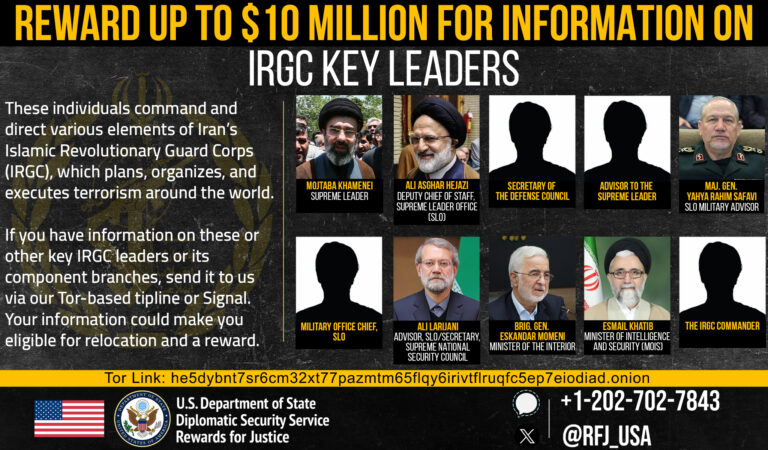
In the last few days alone we’ve seen several reports of Iranian diplomats requesting asylum in the west. In Denmark, Australia, Switzerland and Austria…probably others, too. (BTW we’ve put a $10M bounty on the heads of several other listed senior leaders in the Regime).
Also, we continue to see increasing reports of IRGC members and basij, and police failing to report for duty.
Other reports suggest desertions are rising amongst Iran’s various security forces.
And we’ve disrupted the logistics for the regime’s security forces, and that has produced acute shortages for them…And the shortages, in turn, have led to tension between the IRGC and the Artesh (the conventional Army), because now they’re competing against each other for resupply.
And this supply problem’s only going to get much worse….because a few days ago we destroyed the main data center for Iran’s largest bank, Bank Sepah, which, until now, paid the salaries for all government workers, police, IRGC and basij. I can tell you from first-hand experience that when indigenous forces can’t get money home to their families, bad things happen.
On the other hand are the citizens. So, a few days ago we hit a cyber-company in Tehran, named Sahab Pardaz. That’s the company that the regime used to shut down the internet. So, clearly the intent of our strike was to enable turning the internet back on for Iranian citizens. That’s important, because until the regime blacked out the internet over Iran, the protestors had been relying on social media and other online capabilities to communicate and coordinate. If the internet comes back on, the citizens will regain their ability to organize…and when conditions in the streets ripen…we’ll likely see an increase in organized opposition activity. BTW renewed/re-energized opposition activity is kinda typical in irregular warfare. It’s common that resistance activity goes…let’s say…dormant for a period, and then pops up again, re-energized and with renewed intensity. My guess is we’ll see this when conditions become optimal. Keep watching for it.
Another thing to watch is the shifting priority to our targeting. Why? Because folks on the ground in Iran report that they’re starting to see our targeting shift to local security forces. Until recently we’ve largely been targeting fixed assets of the national-level security forces, air defenses, radars, missile stockpiles, launchers, HQs, bases, armories, airfields, aircraft, storage facilities, training facilities, motorpools, ammo storage bunkers, etc. However, as those have been largely addressed, folks on the ground are now reporting that our targeting is transitioning to other, more local elements of the regime….They’re seeing us hit neighborhood police patrols, snap traffic control points, snap personnel checkpoints…even private automobiles where security forces are sleeping, because they have no patrol base to return to..…these are local levers of repression the regime has relied upon to control the population. Destruction of enough of these local security forces is a necessary condition to enable to citizens to return to the streets. Oh, and much of this targeting is the result of Iranian citizens themselves identifying for us the hide sites and geographic locations of police, baij and IRGC operating in their villages and towns.
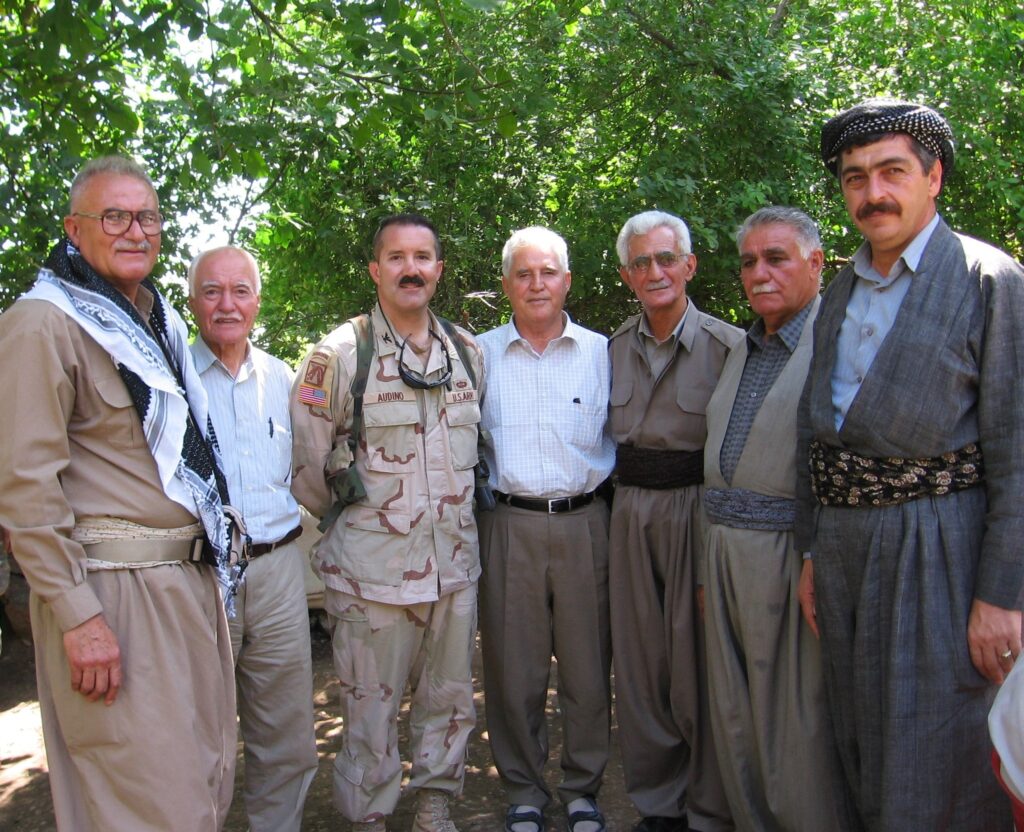
We discussed all of this AND the “closing” of the Straits of Hormuz on our show this week. My guest is Arash Saleh, member of the KDP-I (Kurdistan Democratic Party – Iran), the oldest Kurdish resistance group inside Iran. It traces its history back to 1945 in the days leading up to Qazi Mohamed bravely stepping onto the park at Chwar Chira in Mahabad and declaring history’s first, so far only, and sadly short-lived independent, sovereign, Kurdish state…the Kurdish Republic of Mahabad. Threatened by Tehran, the Republic ended one year later. Click on the link to hear our discussion: https://frontlinesoffreedom.com/frontlines-03-07-2026

SITREP IRAN

SITREP IRAN

Given current conditions, does Iran have a fallback doctrine (ie., a Strategy)?

Now that Iran has experienced some level of leadership decapitation and defeat of some components of their military, does Iran possess or follow a military doctrine that allied and partner forces should be aware of?

The short answer is YES.

Iran’s military doctrine in the face of leadership decapitation emphasizes resilience through decentralized command structures, rapid succession planning, and asymmetric warfare to ensure regime continuity and deterrence. This approach, often referred to in analyses as a “fourth successor” strategy, involves pre-designating multiple backups for key positions to prevent total disruption, making the system harder to fully dismantle.

The Islamic Revolutionary Guard Corps (IRGC) plays a central role, stepping in to consolidate power, stabilize institutions, and drive retaliation, potentially through collective leadership or hardline figures while a new supreme leader is selected via constitutional mechanisms like the Assembly of Experts or an interim council.

Key elements include:

Asymmetric Response and Escalation: Rather than conventional engagement, the focus shifts to missile strikes, proxy networks, and disruptions like targeting regional energy infrastructure or waterways to impose costs on adversaries without direct confrontation.

Recent examples highlight operations framed as “ferocious offensives,” prioritizing vengeance and regional destabilization over submission.

Institutional Intertwining for Survival: The regime’s architecture links the security sector (including the IRGC and Basij militia) with political, economic, and religious institutions, allowing quick adaptation but risking fragmentation if the security core weakens significantly.

This setup aims to maintain control amid chaos, with the IRGC often emerging as the dominant force in wartime transitions.

Deterrence and No Capitulation: Attacks are viewed as confirming external hostility, reinforcing the need for sustained asymmetrical tools and proxy operations to signal resolve, even if it leads to prolonged conflict rather than collapse (forms of asymmetry and attrition).

Historical precedents suggest this rarely leads to regime submission, instead fostering adaptation or internal power contests.

Overall, the doctrine prioritizes endurance and counterpressure over reform, with outcomes potentially ranging from stabilized hardline rule to protracted instability, depending on internal cohesion and external pressures.

Bottom line: Settle in for a sustained conflict. History, cultural and societal norms, political dynamics, ability to suffer, and the idea they are the “chosen” people are all elements that must be considered, along with many other factors.

SITREP

SITREP

Iran has crossed a significant threshold. Following confirmed strikes on banking infrastructure inside Iran, Iranian military sources are now threatening retaliatory action against US and Israeli financial centers across the region, with specific signals pointing toward tech sector targets. This represents a deliberate strategic shift from military-to-military engagement toward targeting civilian economic infrastructure, a move that places ordinary American workers, employees of major technology companies, directly in the crosshairs of a regime at war.

This escalation is not a sign of Iranian strength. It is the signature of a losing force making a desperate play.

Regimes that are winning wars fight on the battlefield. They do not threaten banks, financial centers, and technology campuses populated by civilian workers. The decision to escalate toward economic and civilian targets is a calculated gamble by Tehran, an attempt to generate enough global economic disruption and political pressure to force Washington and Jerusalem to stand down before the military situation deteriorates further.

It will not work, but it must be recognized for what it is.

Iran’s air defense architecture has been severely degraded since strikes began on February 28. Their missile and drone stockpiles are being systematically reduced. Proxy networks across Lebanon, Iraq, and Yemen are fractured or operating under significant constraint. The transition in the supreme leadership with Mojtaba Khamenei installed only days ago creates internal uncertainty at the command level. These are the conditions that produce exactly this kind of escalatory threat: loud, broad, and designed to intimidate rather than defeat.

Threatening US tech sector targets is significant for one specific reason.

It signals Iran is willing to accept international condemnation for targeting civilian economic infrastructure in exchange for the psychological and political impact of threatening American workers on American soil or in American-affiliated facilities abroad. That is a terrorism calculus, not a military one.

Iran is making a massive, desperate move because they are losing and they know it. The targeting of financial centers and technology infrastructure is designed to change the psychological terrain of this conflict when they can no longer change the physical terrain.

Desperation dressed as escalation is still desperation. Do not be deceived by it.

5th Generation Warfare at its most defined level

SITREP IRAN: Global Oil Prices Rising!

SITREP IRAN: Global Oil Prices Rising!

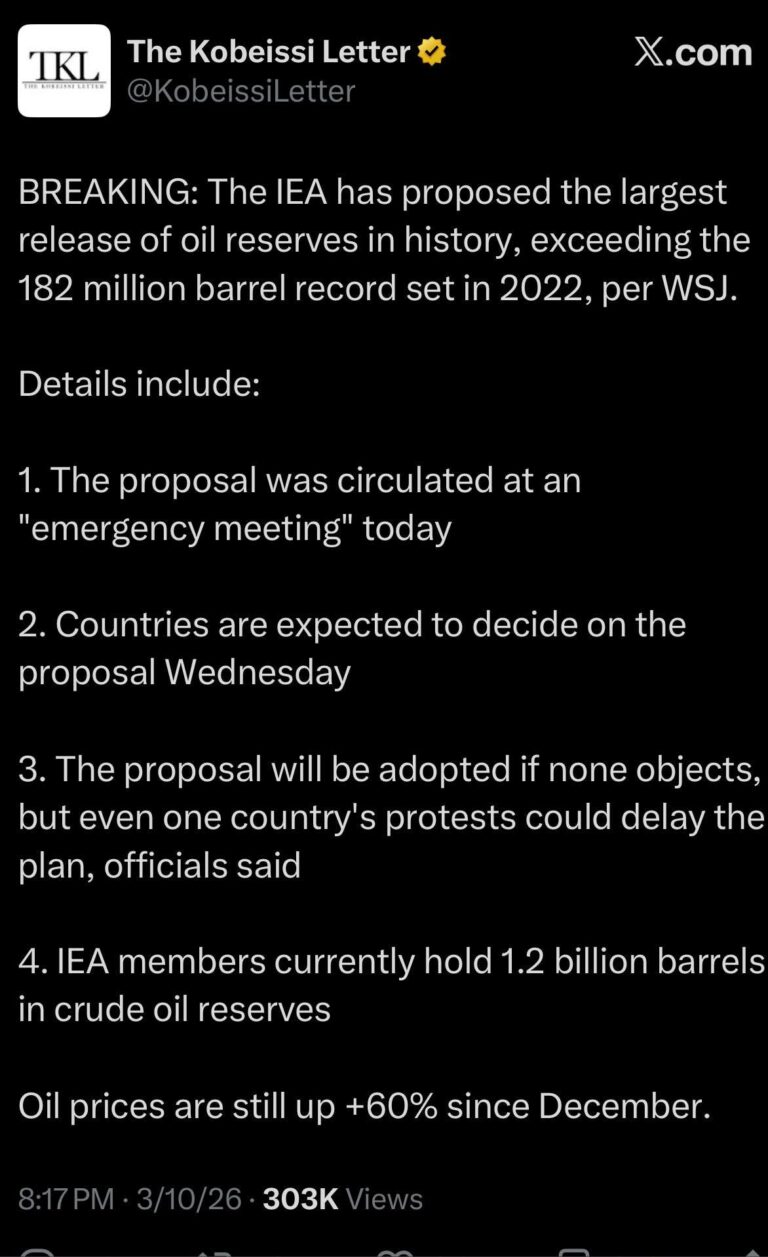
The IEA (International Energy Agency) is a Paris-based intergovernmental org founded in 1974 by 31 OECD countries (plus associates) to ensure energy security after the 1973 oil crisis.

The 1973 oil crisis was a total oil embargo against countries that had supported Israel at any point during the 1973 Yom Kippur War (another Middle East war—they never seem to end), which began after Egypt and Syria launched a large-scale surprise attack in an ultimately unsuccessful attempt to recover the territories that they had lost to Israel during the 1967 Six-Day War (a previous Middle East War).

The IEA monitors, among many tasks, global energy markets and coordinates emergency oil reserve releases—like today’s proposed HISTORIC drawdown from the 1.2B barrel stockpile to stabilize prices and supply.

So what?

Fill your gas tanks up now before the prices go up even further.

You may not want war but war wants you and when it takes hold, the costs and consequences are usually severe.

Pray for our troops and our POTUS

Trump Forges His New Alliance With Ibero-America

Map of South America with national flags

(This article was written by Hermann Tertsch and appeared in El Debate. Trump forja su nueva alianza con Iberoamérica)

While Europe threatens to fall apart, in the Americas a new organization for the defense of freedom and common security is being created.

A buoyant President Donald Trump, confident he can soon end the war in Iran with the disappearance of the planet’s largest terrorist regime, yesterday gathered twelve presidents of Ibero-America in Miami to found a new organization, the Shield of the Americas, whose objective is the all-out fight against the drug cartels and the curbing of Chinese penetration throughout the American continent.

The meeting at the Doral Golf Club, owned by the president, is unprecedented because it stems from the convergence of interests, ideology and political will of Trump and his team — led by Marco Rubio — with the increasingly numerous conservative and anti-socialist leaders of Ibero-America. And its ambitious aim is to carry out the modernizing revolution of the continent that makes possible the advance of conservative forces toward the defeat of the alliance of left-wing forces with organized crime, and very especially with the large organizations of drug production and trafficking.

The new organization has a political, moral and intellectual link with Europe through the main channel of dialogue and political collaboration between the right-wing forces of all the Americas and the European right of patriots, conservatives and sovereigntists, which is constantly growing in the European nations. This organization for the political cooperation of the two pillars of the American West fits harmoniously into the project of the three pillars of the West that is the object of the policy of the Madrid Forum, which develops the Madrid Charter promoted by the Disenso foundation under the direction of the president of Vox, Santiago Abascal. Many of those attending are signatories of the Madrid Charter, collaborators of Patriots for Europe, allies and even personal friends of Abascal.

For the first time, a front is being forged in which the U.S. and numerous solid democratic allies of Ibero-America set out to put an end to the tragic and catastrophic prominence in Ibero-America of a violent, subversive and destructive left that made rivers of blood run throughout the subcontinent since the Cuban revolution. And Cuba — its mafia-like, communist and murderous regime, the infectious focus of violent communist subversion for nearly 70 years — will be the next to fall in the advance of this general redesign in which the dictatorships fed by crime are defeated and abolished.

America is beginning to unite in the reconquest of freedom, security and justice, with a recovery of the traditional values and virtues of the West and an unambiguous victory over the communist, socialist and drug-trafficking forces. The Shield of America aims to be an organization in defense of the market economy and the rule of law, and of self-defense against attempts at penetration by totalitarian and criminal powers.

Many countries have yet to join, and three of the largest — Mexico, Brazil and Colombia — remain in the hands of a left allied with the drug cartels. But the continent’s greatest focus of crime, the dictatorship of Nicolás Maduro, is being dismantled — not as quickly as many of us wish, but steadily.

Meanwhile, the European Union shows ever more signs of dissolution, with a power in Brussels — embodied by Ursula von der Leyen’s European Commission — that is failed and adrift, and member states that openly reconsider their own interests in order to appease the growing rebellion of their increasingly poor, frustrated and dissatisfied citizens.

While in Europe the rulers have more differences every day in how to confront times of crisis amid the formation of a new world order — and cannot even agree on the degree of hostility toward Donald Trump — in America there are many who see the immense opportunity of a reconstruction of the West.

While the narco-socialist left throughout the West, Islamism allied with socialism, and some pathetic intellectuals weep over what they call “Anglo-Zionist imperialism,” American rulers reach agreement to advance security, freedom and prosperity.

At the Miami summit, the U.S. and twelve presidents take part. Among the leaders present are Javier Milei (Argentina), Rodrigo Paz Pereira (Bolivia), José Antonio Kast (Chile, to be sworn in this Wednesday), Rodrigo Chaves (Costa Rica), Luis Abinader (Dominican Republic), Daniel Noboa (Ecuador), Santiago Peña (Paraguay), Nayib Bukele (El Salvador), Irfaan Ali (Guyana), Nasry “Tito” Asfura (Honduras), José Raúl Mulino (Panama) and Kamla Persad-Bissessar (Trinidad and Tobago).

Hermann Tertsch is a Distinguished Fellow at the Gold Institute for International Strategy, a Washington D.C.-based foreign policy and defense think tank.