IRAN – BATTLE UPDATE – THE “KURDISH OFFENSIVE”

IRAN - BATTLE UPDATE - THE KURDISH OFFENSIVE
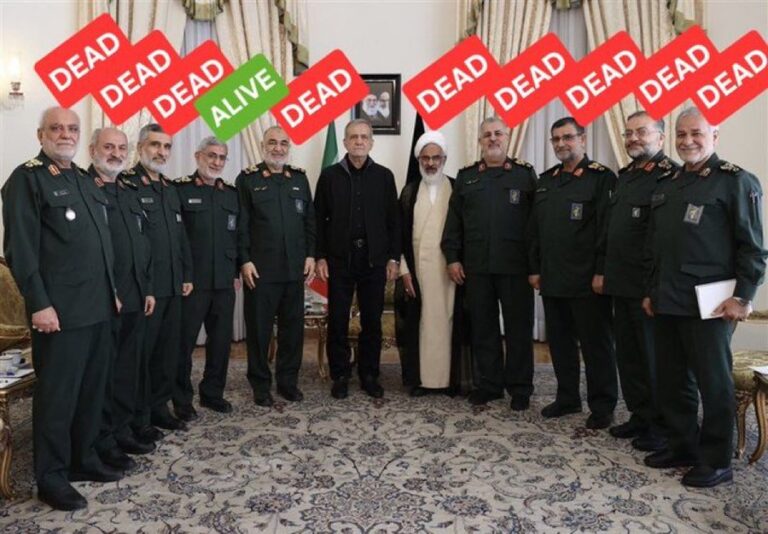
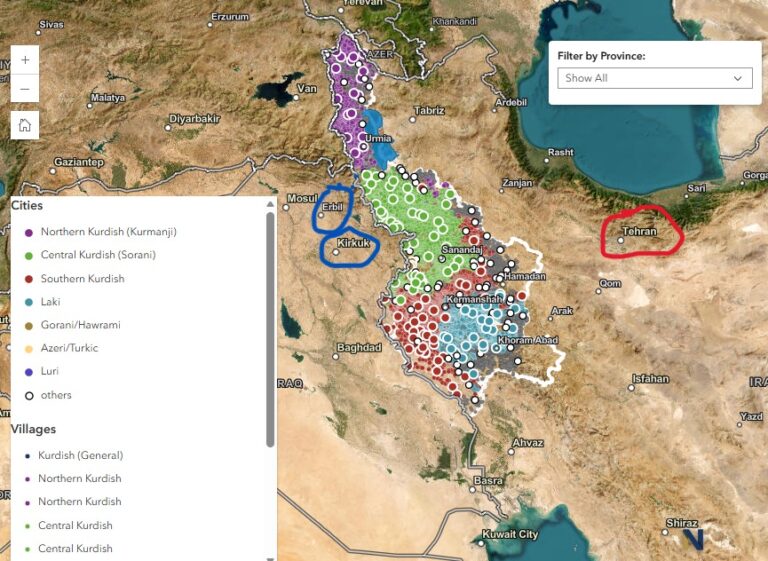
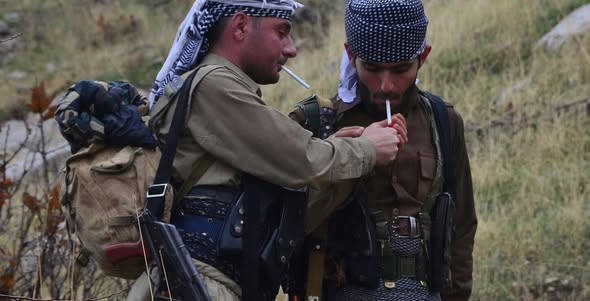
Reports began circulating a few days ago of “thousands of Kurdish peshmerga” launching an offensive into Iran. The reports generally referenced the peshmerga of the major Kurdish resistance groups in Iran, but occasionally insinuated that peshmerga of the Kurdistan Regional Government (KRG) in Iraq were also involved. None of these reports are true. That shouldn’t be taken that there won’t be a Kurdish offensive in the future, but there isn’t one now. I’ve now spoken directly with the leadership of the 3 major Kurdish resistance groups (and the KRG), and they all deny the reports. Nor have I seen any other evidence to support the reports. I suspect these reports were intentionally disseminated to advance a likely Iranian psyop narrative that the Kurds are “separatists”….and that the Kurdish objective is to seize terrain for a future independent Kurdish state. Why would Iran promote that narrative? Three reasons….to attempt to divide the regime’s opponents, promote dissension amongst them, and (strategically) draw Turkey into the fight. Turkish involvement would greatly complicate matters for the USA and Israel and NATO. The contrary reality to the reports is that ALL of the major Kurdish resistance groups in Iran have recently issued a joint statement expressing their unified objective is a semi-autonomous region inside a federal Iran, NOT a separate, sovereign state. On a different topic…is IRGC Quds Force (special forces) commander, BG Ismail Qaani the suspected mole behind the assassinations of Supreme Leader Ayatollah Khamenei and 47 senior IRGC/military leaders? This question is being asked inside Iran right now. I admit, the circumstances suggest that this speculation is at least plausible. Here’s why: First, though the main effort of the Quds Force has been Hezbollah, last year’s Israeli pager operation killed or maimed 3,000 Hezbollah members (and others), but not Qaani. Second, the several Israeli assassination strikes inside Iran during June’s Operation Rising Lion killed numerous key leaders inside Iran, but not Qaani. Third, this week’s assassination strikes that killed Khamenei and the 47 senior military leaders, did not also kill Qaani. Moreover, that he has not been seen in public since the start of current operations has sparked speculation that he has been detained or killed by the regime or has defected to the West. I acknowledge that this all could be completely untrue and purely circumstantial…but time will tell. On the show this week we speak AGAIN with a Kurdish resistance group actively in the thick of things inside Iran. Salah Bayaziddi of Komala brings us first-hand reporting that you’re not getting elsewhere. We also speak with US Army aviator, ranger, brigadier general (ret) Chris Petty, who today leads Battle Digest. He and I discuss some time-tested principles of war and apply them to Iran to help us better understand the developing combat action. Click on the link to listen: frontlinesoffreedom.com/frontlines-03-07-2026
IRAN - BATTLE UPDATE - THE KURDISH OFFENSIVE

SITREP IRAN

SITREP IRAN

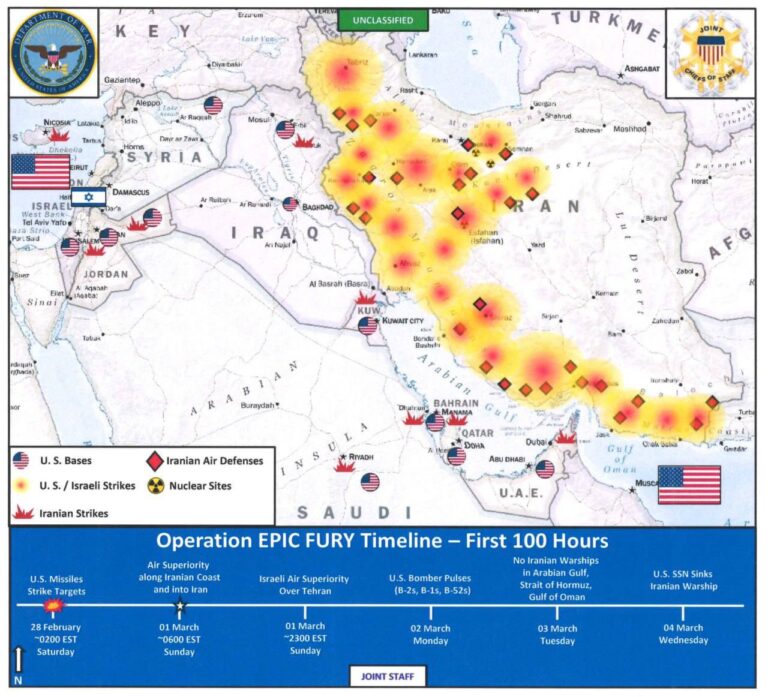
The ongoing military conflict in Iran, which began on February 28, 2026, involves a coalition led by the United States and Israel conducting airstrikes and operations aimed at degrading Iran’s military capabilities, including its ballistic missile program, nuclear sites, and leadership structures. The strikes have resulted in the death of Iran’s Supreme Leader Ayatollah Ali Khamenei and other high-ranking officials, escalating into a broader regional war.

Iran has retaliated with drone and missile attacks on U.S. bases, embassies, and allied infrastructure across the Middle East, including in Saudi Arabia, Qatar, the UAE, Oman, and Bahrain.

The conflict has drawn in proxies and allies, with no clear end in sight, though U.S. President Donald Trump has suggested it could last around four weeks.

Primary Opposing Sides

Side 1: Iran and Its Allies (Axis of Resistance)

  • Iran (Islamic Republic): The central target, led by remaining IRGC (Islamic Revolutionary Guard Corps) elements and military leadership. Iran has launched widespread retaliatory strikes, closed the Strait of Hormuz to disrupt global oil flows, and deployed advanced drones, including first-person view (FPV) models for the first time.

Internal pro-regime forces are clashing with anti-regime protesters, adding a domestic dimension that could evolve into civil unrest.

  • Hezbollah (Lebanon): Actively involved, with Israeli strikes targeting their positions in Beirut and southern Lebanon. Hezbollah has entered the conflict, firing on Israeli forces and contributing to the regional escalation.
  • Iranian-Backed Militias: Groups like Shiite militias from Iraq have deployed fighters into Iran to suppress protests and support the regime.

These include broader proxy networks across the Middle East, such as those in Yemen (Houthis, though less prominently mentioned in recent reports) and Syria, united against U.S. and Israeli presence.

  • Broader Support: Russia and China have reportedly sided with Iran diplomatically, opposing Western intervention and potentially providing indirect support.

Sunni militant groups, like those historically opposed to Israel, have shown some alignment with Shia proxies in this context.

This side focuses on asymmetric warfare, including missile barrages and proxy attacks, aiming to overwhelm defenses and disrupt energy supplies.

What the Arms Control Community Gets Wrong About Arms Control – RealClearDefense

What the Arms Control Community Gets Wrong About Arms Control - RealClearDefense

(This article was written By Peter Huessy and Stephen Blank and appeared in the RealClearDefense. What the Arms Control Community Gets Wrong About Arms Control – RealClearDefense)

In an ideal world a binding arms control treaty governing numbers and types of deployed and stored nuclear weapons, proclaiming, and enforcing strictly agreed to mutual verification procedures would be a wonderful thing.  But we do not live in that world nor is it likely to appear anytime soon.  The New START Treaty expired on February 5 and there is not even a negotiation in sight let alone a viable treaty.  Predictably the arms control community blames the Administration for this.  Angela Kane, the former UN High Representative for Disarmament Affairs and Under-Secretary-General for Management in the United Nations, wrote that, civil society urged the Trump administration to accept Vladimir Putin’s proposal to continue observing the numerical limits of that treaty after expiration.

That may be true in Europe and among the arms control lobby here.  But they assuredly do not speak for whatever she means by the term civil society here and in Europe. Indeed, treaty extension is a bad idea, and the Administration rightly refused Putin’s offer. Washington got it right. Putin’s offer was a typical Russian ruse.  Notably it said nothing about verification, and it came from a government that has systematically broken every arms control treaty that it has ever signed.  It is an axion of successful arms control that unless both sides can verify a treaty’s observance that treaty is worthless.

In the meantime Russia has used chemical weapons in Ukraine, provided them to the Assad government, conducted biological warfare against opponents at home and abroad – most recently – Alexei Navalny – and probably against U.S. diplomats abroad, the notorious Havana Syndrome being a case in point.  Russia violated the Budapest accords on Ukrainian nuclear disarmament by seizing Crimea in 2014 and then invading again in 2022, actions that violated eight solemn international treaties.

As Dr. Blank wrote in 2023, Russia’s post-2014 aggression does not merely target Ukraine. Instead, it deliberately assaults the very idea of international order, particularly that of a European security order.  Indeed, Putin, Secretary of the Security Council of Russia Nikolai Patrushev and Foreign Minister Sergey Lavrov proclaim the collective West is at war with Russia.  Russian nationalist political scientist Sergei Karaganov openly says that “We are at war with the West. The European security order is illegitimate.”

As part of its assault on international order Russia violated the CTBT (Comprehensive Test Ban Treaty) by conducting nuclear weapons tests in 2019.  At the same time, Russia’s Oreshnik missile, a prototype of which appeared approximately 15 years ago, was developed in violation of the Intermediate-Range Nuclear Forces Treaty. Furthermore, the Oreshnik prototype, the Rubezh missile, was developed in violation of the New START Treaty, since, given its range, it can be classified as an intercontinental ballistic missile.

Russia is also seeking to deploy a nuclear weapon in space in violation of previous treaties.  Apart from all these treaty violations for which no penalty was exacted, Moscow regularly threatens Ukraine, Europe, and the U.S. with nuclear strikes for supporting Ukraine.  The latest such threat against. Estonia occurred on February 22.  Finally by moving nuclear weapons to Belarus, funding North Korean nuclear programs, and transferring missile, satellite, and nuclear submarine technology to Pyongyang Moscow has violated the Non-Proliferation treaty and a host of UN resolutions.

Neither is Russia alone, China’s breathtaking and utterly unconstrained nuclear buildup represents a growing threat to both the U.S. and Russia not to mention India, Japan, Australia, and virtually every other state in Asia.  China now has a nuclear triad but because no treaty constrains it, it is also apparently developing a new generation of low-yield “mini-nukes” to give it the future option of limited nuclear warfare.  It violated the CTBT in 2020 despite being a signatory to the treaty.  Thus, it too cannot be counted on to uphold a treaty without strict verification and enforcement mechanisms.

It is hard to imagine either American or European governments let alone civil society, however it is defined, resuming an unverifiable treaty with Russia and/or China under such conditions of intolerable disadvantage,  a phrase coined in 1999 by members of the Clinton Administration.  As Thomas Schelling and Morton Halperin wrote in 1960-61, “the aims of arms control and the aims of a national military strategy should be substantially the same.”  And a more recent commentary observes, “This principle established national security as the dominant goal of arms control, not the reduction of arms per se.”

Unfortunately, Ms. Kane and the arms control community have evidently forgotten this crucial distinction.  Arms control is not and cannot be a moral crusade for unilateral disarmament or global zero.  Experience shows that Moscow negotiates only when it fears a U.S. technology buildup or when one, as is now beginning, takes place.  Neither will China be moved by moralism and what amounts to American self-deterrence.  But it might be moved by a genuine American buildup to parry its threats.  Otherwise, nuclear proliferation will inevitably become a more realistic option as China pushed in a secret 1982 Politburo meeting.  Indeed, at the first sign of the fraying of our alliances in Asia and Europe those countries’ nuclearization  instantly returns to their agendas as is now happening. Regardless of claims made on behalf of a nebulous civil society, Western populations expect their governments to defend them against threats and history shows us that only when we build do our enemies negotiate.

IRAN – BATTLE UPDATE – THE REGIME HAS LOST THE INITIATIVE

IRAN - BATTLE UPDATE - THE REGIME HAS LOST THE INITIATIVE

USA and Israel, are dictating the time, place and manner of combat. The regime can only react, and as it has no means to replenish its rapidly depleting combat assets and no ally is willing (China and Russia) or able (Russia) to replenish those stocks, we will retain the initiative until the culmination of combat. Here are some significant developments and 2nd & 3rd order effects:

1. Iran’s depletion is evident in their ability to launch ballistic missile and drones out of country. Measured against Day One, Iran’s ballistic missile launches are down 89% and drone launches are down 71%. (BTW the Pentagon’s data corroborates this within a few percentage points)

Ballistic missiles:
▪️ Day 1 — 350 units
▪️ Day 2 — 175
▪️ Day 3 — 120
▪️ Day 4 — 50
▪️ Day 5 — 40

Number of launched kamikaze drones:
▪️ Day 1 — 294
▪️ Day 2 — 541
▪️ Day 3 — 200
▪️ Day 4 — 85
▪️ Day 5 — 45

2. Our strikes continue to expand northwest up through the four Kurdish populated provinces in Iran. This is key. Not only are we destroying the existing assets of IRGC Land Forces commands permanently based there, but we are also hitting the additional IRGC Land Forces that Iran has recently been relocating there. And why would they relocate them there? Because the regime fears the combat potential of the several Kurdish resistance groups in that region. We are clearly setting battlefield conditions to enable operations by these groups. However, contrary to various headlines today, no major Kurdish offensive has yet been launched. I’ve been in comms within the last several hours with leadership from two of the major Kurdish resistance groups, and they’ve told me those reports are false. Nevertheless, they are ready.

3. Russia and China Not Happy with The Regime. Let’s take China first. It imports 20% of its oil from Iran, and if Iran succeeds in its threats to shut down the Straits of Hormuz, through which transits nearly 1/3 of global oil, shipments to China are shut off, too. That is why Beijing has reportedly communicated with Tehran to leave the Straits open. As to Russia, Tehran has been a major supplier of weapons to Russian forces in Ukraine. In particular, Tehran’s Shahed drones are among the most utilized drones by Russian forces. Over the near future, this will definitely harm Russian ops in Ukraine, I am happy to say.

IRAN - BATTLE UPDATE - THE REGIME HAS LOST THE INITIATIVE

Leverage, Not Finality: Trump, Israel, and the Strategic Limits of American Commitment on Iran

Chess pieces representing geopolitical strategy

A great deal of commentary on the U.S.-Israel-Iran confrontation suffers from a basic analytical defect: it treats formal alignment as if it were the same thing as strategic convergence. It is not. States can fight on the same side, strike the same targets, issue the same public language, and still be pursuing materially different wars in their own minds. That, in essence, is the core misunderstanding behind much of the discourse surrounding Donald Trump’s posture toward Iran during this phase of escalation. Too many observers saw operational cooperation and assumed deep unity of purpose. But the evidence, when viewed with greater strategic discipline, points to something more constrained, more conditional, and ultimately more revealing: Trump was never truly committed to the full strategic logic of the most maximalist Israeli view.

This does not mean he was passive. It does not mean he was indifferent. And it certainly does not mean he was unwilling to use force. On the contrary, Trump has always been comfortable with coercion, spectacle, intimidation, and the cultivation of unpredictability as political tools. But there is a decisive difference between being comfortable with coercion and being committed to an open-ended strategic project. There is also a difference between wanting to exert pressure and wanting to carry a war to its furthest logical conclusion. That distinction matters here, because Israel’s core logic toward Iran and Trump’s core logic toward Iran were never identical, even when tactically aligned.

Israel’s position was always anchored in a deeper and more existential framework. For Israel, Iran is not merely another adversarial file. It is not just a bargaining counterpart. It is not one dossier among many in a crowded global portfolio. It is a structural threat embedded in the region’s military, ideological, and proxy architecture. It is a regime whose missile program, nuclear trajectory, regional militia network, and eliminationist rhetoric are all understood in Jerusalem not as abstract challenges but as elements of a long-term strategic danger. That produces a very particular mentality: one that is less interested in cyclical bargaining than in degradation, rollback, deterrence restoration, and, where possible, systemic weakening of the adversary’s capacity to reconstitute power.

Trump’s posture, by contrast, appears to have been narrower from the outset. Even if he was persuaded whether by Israeli arguments, by advisers such as Kushner, or by his own reading of the failure of diplomacy that Iran was not going to yield a grand bargain on attractive terms, that still does not mean he internalized the Israeli end-state. What he seems to have accepted was not the full philosophical premise of a maximalist anti-Iran campaign, but rather a more limited proposition: that pressure had utility, that force could create leverage, and that leverage might produce a political opening that he could eventually convert into a sellable outcome. In other words, he appears to have approached the confrontation less as a civilizational or existential struggle and more as an escalatory bargaining instrument.

That distinction is not semantic. It goes to the heart of how he thinks. Trump’s strategic instinct has never been rooted in ideological patience or in the disciplined pursuit of a historic end-state at high cost. His instinct is transactional. He tends to view pressure as a means of manufacturing negotiating advantage, not as a sacred logic that must be followed regardless of downstream complications. He likes to sit at the top of an escalation ladder while preserving the freedom to climb higher, pause, descend, or suddenly declare victory. He is attracted to optionality far more than to doctrinal consistency. His ideal strategic environment is one in which he can credibly threaten destruction without becoming trapped inside the consequences of total commitment.

This is why the description of his posture as “half-hearted” is often misunderstood. Half-hearted does not mean weak. It does not mean fearful. It does not even necessarily mean restrained in the immediate tactical sense. It means conditional. It means instrumental. It means that his participation in coercive action is not evidence that he shares the full strategic appetite of the more committed partner. A man can authorize force and still be fundamentally uncommitted to where the pure logic of that force would lead if pursued without brakes. That, arguably, is precisely what we are seeing here.

Indeed, one of the clearest indicators of this difference lies in the persistent ambiguity surrounding the American end-state. If Washington had truly and fully embraced the most extreme version of the campaign, if it had fully internalized a logic of exhaustive dismantlement, uncompromising strategic closure, and the elimination of future political pathways with the existing Iranian system, its behavior would almost certainly look different. The rhetoric would be less elastic. The operational logic would be more totalizing. The tolerance for ambiguity would shrink. The preservation of backchannels, pauses, signaling ambiguity, and speculative off-ramps would make far less sense. The entire architecture would move toward finality rather than negotiable pressure.

But that is not what Trump instinctively prefers. Trump prefers pressure with reversibility. He prefers intimidation with personal discretion preserved. He prefers campaigns that can be narrated as strength and then repackaged as diplomacy the moment an opening appears. This is not incidental to his statecraft; it is the essence of it. He is far less interested in a morally purified or historically conclusive struggle than in a politically monetizable sequence of moves. He wants to be able to say: I hit them hard, I made them bend, and I got a deal. Whether that deal is structurally durable is, in many cases, secondary to whether it can be publicly sold as proof of dominance.

That pattern makes the possibility of exploratory ceasefire signals, backchannel feelers, or indirect diplomatic probing entirely plausible at the level of strategic psychology, even if any given report about them is false, exaggerated, or planted. One does not need to authenticate every rumor to recognize that the broader behavioral pattern fits. Trump’s political method has long involved using pressure not as an end in itself, but as a prelude to a transaction he can narrate as a triumph. He wants to remain feared enough to negotiate from strength, but unconstrained enough to stop when the political price of continuation rises or when a face-saving agreement becomes available. In that sense, escalation and negotiation are not opposites in his worldview. Escalation is often the staging ground for negotiation.

This is also why he may be more open than many ideologically driven hawks would be to the prospect of engaging new Iranian leadership if political dislocation inside the system creates such an opening. For Trump, the emergence of a new power configuration in Tehran would not necessarily be assessed primarily through the lenses of revolutionary continuity, institutional ideology, or regime resilience. His instinct is markedly more transactional than doctrinal. If a figure emerging from within the IRGC were to present as pragmatic, disciplined, technocratic in method, and capable of delivering a stable strategic understanding with Washington, Trump would be entirely capable of engaging that figure on functional terms. He is far less concerned with ideological essence than with operational utility. He is not looking for philosophical convergence, moral conversion, or some deep conceptual reorientation of the Islamic Republic. He is looking for a counterpart who can make decisions, enforce outcomes, and sustain a bargain. Trump’s threshold for engagement is not ideological moderation in any meaningful substantive sense. It is functional reliability.

From there, the logic follows naturally: a post-shock reconfiguration in Tehran would be read less as a question of ideological continuity than as a possible opening for a deal reset. New faces, new pressures, new leverage, new signatures. But that is also where the analytical weakness enters. Trump’s recurring analytical error is to assume that sufficiently pressured actors will eventually behave as transactional counterparts in a marketplace of fear. But the Islamic Republic, whatever internal fractures it may contain, is not merely a frightened negotiating unit waiting to be priced correctly. It is an ideological security state with embedded doctrines, internal legitimacy logics, and strategic self-conceptions that do not always bend in proportion to material pain. Pressure matters, certainly. Shock matters. Elite fragmentation matters. But not every regime translates pressure into pliability on the timeline or in the manner a transactional American president may expect.

This, in turn, creates a profound divergence between Israeli and Trumpian horizons. Israel’s strategic class is not naive about negotiation, but its approach to Iran is shaped by a much harder proposition: that even periods of tactical calm can merely mask reconstitution; that ideological hostility is not a temporary bargaining posture; that partial agreements may freeze symptoms while preserving the regime’s deeper strategic drive; and that the costs of underestimating Iran’s adaptive persistence are potentially catastrophic. Trump, by contrast, seems more inclined to believe that if the pressure is sharp enough, the adversary or some successor formation will eventually produce a negotiable outcome that can be claimed as success. That difference is not just about tactics. It is about anthropology. It is about what each side thinks the adversary fundamentally is.

Netanyahu, from this perspective, appears to have understood the asymmetry clearly. Israel could carry much of the campaign logic itself, and had long prepared to do so if necessary, but it still needed the United States for the outer layers of state power that only Washington can provide: strategic deterrent cover, force multiplication, political legitimacy, diplomatic shielding, escalation management, and the psychological weight that comes from America’s participation. Yet acquiring American participation was never the same thing as converting the United States into an Israeli mirror image. It meant obtaining the umbrella, not eliminating the difference in strategic temperament underneath it. Trump could provide protection, credibility, and military mass without truly embracing Israel’s full theory of victory.

That is why one should be careful not to overread American involvement as proof of American maximalism. The United States may have joined, enabled, or underwritten key parts of the campaign, but Trump’s deeper instinct still seems to have been to preserve maneuverability rather than surrender himself to an irreversible war logic. He wanted enough force to shape the board, not necessarily enough commitment to see every implication through to the bitter end. He wanted to retain authorship over the political narrative, including the ability to pivot from bombardment to bargaining without appearing to retreat. He wanted the benefits of confrontation without becoming fully possessed by its strategic absolutism.

Seen from that angle, the apparent lukewarmness is not an inconsistency. It is the core reality. Trump’s posture was never best understood as that of a man marching with ideological conviction toward total strategic closure. It was better understood as that of a man wielding violence as leverage while keeping one eye on the negotiating table, one eye on domestic political presentation, and one hand permanently on the exit door. Israel may have viewed the confrontation as a deep strategic necessity with long historical roots. Trump appears to have viewed it as an intense but still ultimately instrumental pressure campaign; something to dominate, shape, and perhaps later convert into an agreement he could market as proof of his mastery.

That makes his posture neither trivial nor incoherent. It makes it profoundly limited in a very specific way. He was not fighting with the same psychology as Israel, even when fighting beside Israel. He was not animated by the same internal stakes, not governed by the same strategic memory, and not necessarily aiming at the same horizon. His approach was harder than diplomacy, but softer than total war; more coercive than conciliatory, but less committed than ideological hawks would prefer; more interested in leverage than in historical finality.

And that, in the end, is probably the clearest way to understand the entire issue. Trump is not absent from the campaign. He is not detached from its utility. He is not indifferent to its symbolism or to the benefits of demonstrating force. But he was never fully inside Israel’s war in the deepest strategic sense. He is inside a pressure architecture, not a complete end-state architecture. He is inside an escalatory instrument, not a civilizational doctrine. He is inside the logic of conditional coercion, not the logic of uncompromising resolution.

Once that is understood, much else becomes clearer: the ambiguity, the preserved room for negotiation, the possibility of ceasefire exploration, the attraction to a post-shock deal, and the unmistakable sense that America’s role, though formidable, remained fundamentally more reversible than Israel’s own. Trump did not need to be weak to be half-hearted. He only needed to be what he has always been most consistently: a coercive tactician in search of leverage, not a strategist of total commitment.


 

The Days of Islamic Rule in Iran Are Numbered. But Iranians Must Seize Power Themselves, and That’s Harder Than It Seems

Flag of Iran

(This article was written by Derk Jan Eppink and appeared in Wynia’s Week. De dagen van het islamitische bewind in Iran zijn geteld. Maar de Iraniërs moeten zelf de macht grijpen en dat is lastiger dan het lijkt)

For decades, ayatollahs in Iran sat like substitute gods on their thrones, ruling with an iron hand and spreading military violence across the Middle East and across parts of the world through Islamic radicalization. This regime is heading, despite its death throes, toward the dustbin of history.

Spiritual leader Ayatollah Ali Khamenei ruled Iran for 36 years as the successor to Ruhollah Khomeini. He was brought down by an Israeli bombardment, along with the defense minister, leader of the Iranian army, and leader of the Revolutionary Guard. A collective funeral of Iranian leaders.

At such a historic turning point, members of the newly appointed Dutch cabinet struggled for words to say something. Premier Jetten called for ‘maximum restraint’, though it was unclear whether he meant the allied action by the US and Israel, or the leaders of the Iranian theocracy who have been anything but ‘restrained’ since 1979, Khomeini’s power takeover.

Jetten knows Iran. He took a tourist trip with his friend in the Iran of the mullahs. To be safe, female company also came along, because in Iran homosexuals are thrown off roofs. He called the trip an ‘eye-opener’ but that hasn’t broadened his insight. He points to the importance of ‘avoiding further escalation’. Iran has been escalating since the founding of the Islamic republic. According to him, ‘stability in the region is essential’. That’s correct, but Iran destabilized the Middle East, like a poisonous spider in the web, through proxies in Syria, Lebanon, the Gaza Strip, and Yemen. The end of that regime is precisely the way back to stability.

The reaction of the Dutch cabinet is emblematic of those in other Western European countries. France and Britain also called for ‘de-escalation and negotiations’.

Empty words. Both France and Britain refused to give Americans access to military airfields to carry out bombing raids in Iran. President Macron and Prime Minister Starmer played the role of peacemakers; the real reason runs deeper. They are afraid of unrest among Muslims in their own countries.

France votes on a new president in April 2027; the opponent of Marine Le Pen or another right-wing candidate will depend on the Muslim vote. For Labour, the party of Prime Minister Starmer, the Muslim vote is even the hard core of its electorate. In both countries, a growing Muslim community has become radicalized. As domestic politics becomes Islamicized, foreign policy Islamicizes itself. Including that of the Netherlands. See Jetten.

Other countries did give the US access to military airfields: Kuwait, Jordan, Qatar, United Arab Emirates, and Saudi Arabia. All Arab countries; America is their insurance policy.

The Americans and Israelis decided to attack Iran after failed negotiations with Iranian representatives in Geneva. Iran continues to enrich uranium with the goal of producing nuclear weapons. The Islamic republic sees nuclear weapons as its only guarantee of survival. For Israel, the opposite applies: an Iran with nuclear weapons is an existential threat. Irreconcilable positions.

President Trump decided, with Israel, to launch military action against Iran, with a large air and naval force. America is also bound. Since the Iraq War, military action abroad has been unpopular. Especially among Trump’s base. The line is drawn at ‘boots on the ground’.

Warfare has changed in 2026. Technology changes strategy; operations invisible from the air with millimeter precision and groundbreaking methods for gathering information. In this process, Israel is at the forefront. When liquidating Hamas leaders, Israel didn’t need to bomb buildings; the target’s bedroom sufficed. Regardless of where. Spiritual leader Khamenei thought himself safe with the military top, but America and Israel found him. The US can continue a bombing campaign for weeks, even until the Islamic republic has returned to the Stone Age.

Iran’s spiritual leadership has a big problem. Who wants to succeed Khamenei? His power structure was systematically dismantled. Who dares to apply for the position of ‘spiritual leader’? A triumvirate of top figures must find a candidate. During meetings, Israeli intelligence, Mossad, listens in. Whoever applies might be blown out of bed. Anyone who has seen the spy series Tehran will be amazed at the similarities to what is happening now. The regime has the Arab world against it and is also receiving no substantial support from Russia and China. It languishes in self-isolation.

Ultimately, Iranians must overthrow the Islamic regime themselves. Trump declared that military personnel and even members of the Revolutionary Guard (IRGC) can receive immunity if they lay down their weapons. Quite a major concession because the IRGC is Iran’s murder machine. During recent uprisings, some 32,000 people were murdered, often in gruesome ways, by members of that guard. They cling to the regime because, in addition to their police and military role, they also enjoy economic benefits, ownership and shares in companies, making them privileged. Offering immunity to those murderers will not be appreciated by the ordinary Iranian.

America is preparing the ground, but Iranians must seize power. That’s harder than it seems, because Iran is in a different situation than Venezuela, which has known democracy for some time and where democratic elections have taken place. By arresting President Maduro, Trump picked out the ‘bad guy’ and put the economy in a stranglehold so that Venezuela’s vice president must carry out America’s will. Iran has never even experienced fair elections.

After Khamenei’s death, Maryam Rajavi, leader of the national resistance group NCRI, declared a ‘Interim Government’ with a Ten-Point Plan, with a view to a ‘democratic, secular republic’. NCRI also has resistance strongholds in Iran. With the downfall of the Islamic regime, there should theoretically be room for a democratic uprising. Every uprising needs catalysts; the sparks that lead to the flame. NCRI has a long resistance tradition. It fought not only against the Islamic regime from the beginning but also against the rule of Shah Reza Pahlavi (1919-1980) and his self-glorifying peacock throne, which caused the Islamic revolution in 1979.

The Shah’s son, Reza Pahlavi II (65), left for the US at age 17 to train as an air force pilot but never returned to Iran because his family was expelled from the country during the Islamic revolution. He lives in Washington DC, has no long resistance tradition but positions himself as a ‘transition figure’ from the current dictatorship to a new form of government, possibly a monarchy. He calls the transition ‘temporary’, lasting up to 3 years or more. Pahlavi has also never disavowed his father’s rule from his peacock throne. Iran has various ethnic minorities such as the Kurds, who demand autonomy within Iran, but Pahlavi calls them ‘separatists’.

The Islamic regime continues to struggle, at the expense of Arab neighbors and freedom of the seas. But its days are numbered. As soon as the Islamic regime crumbles, a ‘moderate part’ of it will seek alignment with the opposition. That will happen sooner with the Pahlavi movement and its monarchical tradition than with the NCRI, which was hated by both the Shah and the Mullahs.

The best outcome is if the divided opposition reaches agreement in a round table negotiation about fair, general elections for a Constitutional Assembly, from which to continue negotiating about Iran’s future. Both Pahlavi and NCRI have effective lobbies in Washington DC, in Congress, and in American media. Trump can force them to the table and act as the growling ‘watchdog’.

Derk Jan Eppink is a Distinguished Fellow (Honorary) at the Gold Institute for International Strategy, a Washington D.C.-based foreign policy and defense think tank.

IRAN -THINGS ARE GETTING WORSE FOR THE REGIME

IRAN -THINGS ARE GETTING WORSE FOR THE REGIME

The launch of Operations Epic Fury and Lion’s Roar yesterday has left the Regime helpless…and US and Israel are vigorously exploiting the opportunity. Here’s a rundown of key developments:

1. The Iranian response has so far managed only scattered, underwhelming, haphazard strikes across the region, and with no understandable military purpose. They’ve mostly been intercepted, and those that have gotten through have largely hit civilian targets with relatively low numbers of casualties. Because they were launched out of a passion for revenge, and not out of cold, military calculus, they’re achieving a momentous, DISADVANTAGE for Tehran…they are rallying the entire Sunni political spectrum in the region against them. Where these politics were meekly cautious before, they are not now.

2. Case in point…Saudi Arabia, the home of Mecca, today announced its willingness to join offensive ops against the Iranian Regime. Moreover, the other 10 or so Sunni-majority countries in the region that have been hit no longer have any reason to withhold their full support to our attacks on Iran. And according to the Saudi Foreign Ministry, the Gulf Cooperation Council countries (Bahrain, Kuwait, Oman, Qatar, Saudi Arabia, and the United Arab Emirates) strongly condemned Iran’s attacks on them and stated that they “reaffirmed their right to take all necessary measures to protect their security and stability.” Meanwhile, Beijing and Moscow are effectively quiet.

3. Now that we’ve gained air supremacy, the main effort for Israeli targeting seems to have shifted (as expected) to the regime’s internal security capabilities, ie police HQs, basij morality police, IRGC Land Forces HQs (in particular, the Tharallah Command in Tehran, which, incidentally, we discussed in a previous show), military bases, govt buildings, etc. This is important, as the likely trigger for a popular uprising of Iranian citizens is that they need to first see evidence that the regime is losing its ability to repress them and maintain internal security.

4. I have no doubt that CIA and Mossad operators on the ground inside Iran are liasing with dissident leaders and armed resistance groups. They’ve likely convinced them to keep their powder dry until we finish attritting the regime’s internal security capabilities, and we’ll give them a green light as soon as we assess conditions are optimal for an uprising.

5. BTW hours after his appointment to replace the late Ayatollah Khamenei as Iran’s Supreme Leader, Ayatollah Arafi has been killed, too.

6. Our show this week was recorded a few hours before we initiated hostilities on Iran, but we deliberately covered a topic that has received little discussion in the mainstream media….Iran’s likely stockpiles of chemical and biological weapons. Joining me for a discussion of Iran’s history with WMD is a man who knows that subject cold, former Congressman Trent Franks. He was a long-time member of the House Armed Services Committee, the Emerging Threats subcommittee, and served as vice chair of the Strategic Forces (ie nukes) subcommittee. He provided fascinating details. Click to listen: https://frontlinesoffreedom.com/frontlines-02-28-2026…/

End of Euphoria

End of Euphoria

IRAN SITREP: Today was an historic day in the region of the Middle East and around the world. That said, my training and education as well as a life’s worth of experience have taught me many things. When the euphoria of successful military operations end, what comes next? Below is an attempt to address this vital question.

First, the euphoria from today’s strikes such as precision hits on IRGC command nodes, nuclear infrastructure remnants, missile arrays, and top leadership (including the reported death of Supreme Leader Ali Khamenei) will inevitably give way to harder questions of “what comes next?”

Operations Epic Fury (U.S.), and Roaring Lion (Israel), launched February 28, 2026, after the Islamic regime rejected maximalist demands in Geneva talks. It’s not a one-off raid like this past June 2025; it’s a sustained campaign to degrade existential threats: nuclear breakout, ballistic missiles, Iran’s navy, and the regime’s ability to project terror via proxies.

Initial high-fives in Jerusalem, Washington, and among Iranian diaspora communities (reports of street celebrations waving pre-1979 flags and Reza Pahlavi portraits) stem from real tactical wins: hundreds of targets damaged, air defenses suppressed, and a decapitation strike that severs the theocracy’s symbolic head. But euphoria fades fast when the bill arrives; financial, strategic, human, and when the fog of war clears on Iran’s response.

Short-term realities (days/weeks): Iran has already retaliated with ballistic missiles and drones against Israel and U.S. bases in Bahrain, Kuwait, Qatar, UAE (and possibly others). Expect more: proxy activations (though Hezbollah is gutted, Houthis/Iraqi militias remain), attempts to harass Gulf shipping or mine the Strait of Hormuz (20% of global oil), and asymmetric hits. U.S./Israeli air and naval superiority can blunt most of this, but casualties or oil spikes will test domestic support.

No U.S. ground invasion is planned or feasible. Trump’s messaging emphasizes “Iranians seize your destiny,” with offers of immunity to defecting forces. Strikes will continue “as long as necessary” to “raze” the missile program and “annihilate” naval capabilities. The regime’s survival instinct historically favors calibrated restraint over all-out suicide to preserve power.

When the initial rush ends: the branching paths U.S. intelligence reportedly modeled scenarios pre-strike, and experts (Gold Institute for International Strategy, Atlantic Council, CFR, Stimson, Foreign Affairs) converge on three broad futures. None are clean.

1. Regime hunkers down and offers a deal (“recalibration” or “IRGCistan”). Surviving clerics/IRGC hardliners close ranks around a new figurehead (e.g., Ali Larijani or a council). They trade verifiable nuclear/missile/proxy concessions for sanctions relief and breathing room. This is the most likely near-term outcome if internal cohesion holds: a battered but intact theocracy, more pragmatic out of necessity, but still repressive. No full “victory,” but threats neutered enough for de-escalation. Oil markets stabilize; region breathes—but the underlying ideology festers.

2. Regime fractures and collapses (the high-reward scenario). This comes w/ decapitation plus sustained degradation sparking mass defections, security forces stand down, and protests (building on recent waves) overwhelm remaining loyalists. This is what Trump explicitly called for: “the single greatest chance for the Iranian people to take back their Country.” A potential transition vehicle: Exiled Crown Prince Reza Pahlavi has positioned himself as a non-permanent transitional figure. His publicly outlined plan covers the first 100-180 days: stabilize currency/economy, form a National Reconciliation Council, seize state media for transparent messaging, amnesty for non-criminal regime elements, humanitarian corridors, and rapid move to a new secular constitution plus internationally supervised elections. He frames it as “maximum support for the people plus maximum pressure on the regime” to trigger internal tipping points.

Upside: A secular, democratic Iran ends 46 years of theocracy, sponsorship of terror, and nuclear roulette. A regional peace dividend (no more Axis of Resistance funding), economic reopening to Western investment, and a historic win for the Iranian people who’ve shown in repeated uprisings they reject the regime.

Downside risks: Power vacuum invites ethnic/sectarian score-settling (Kurds, Baloch, Arabs, Azeris), IRGC remnants turning insurgent, refugee waves, or looting of remaining WMD assets. Without boots on the ground, external influence is limited to aid, broadcasting, and diplomacy.

3. Prolonged mess or state failure. This comes w/ a partial collapse without coherent opposition leadership. Instead, it entails militias, warlordism, or civil strife akin to post-2011 Libya (not a full Iraq 2003 redux since no occupation). Proxies flare; Gulf states get dragged in deeper; China/Russia exploit chaos for influence. This is the nightmare that “euphoria” blinds people to…history shows airpower degrades regimes but rarely installs stable successors alone.

The honest strategic bottom line?

This isn’t 2003 Iraq (no WMD hunt, no nation-building occupation, far better intelligence/preparation, and a population that’s already demonstrated anti-regime sentiment). But it’s also not a videogame “win screen.” Success metrics shift from “bombs dropped” to “threats eliminated plus sustainable outcome.”

Best, most realistic path: Degrade the regime’s coercive machinery enough that Iranians themselves finish the job. The people and not U.S. troops own the sequel. Pahlavi-style transition offers the cleanest off-ramp if momentum builds.

There are many risks to manage. A few are an oil shock to the global oil markets, congressional pushback at home (War Powers debates), escalation ladders, and the eternal post-strike question of “who fills the vacuum?”

These risks also present opportunities. The Islamic Republic has been the region’s chief arsonist since 1979. Removing its oxygen (nuclear threshold plus missile terrorism) creates space for something better. Iranians have endured enough (much of the region and the world feel the same); their responses now decide whether this becomes liberation or another cycle.

Euphoria is the adrenaline of a necessary and well landed punch. The “what then” is governance, economics, and reconciliation in a traumatized society. It will be messy, protracted, and must be Iranian led. The strikes bought time and space; whether it’s used for a free Iran or muddled through depends on what happens inside Tehran and on the streets in the coming weeks. History favors the bold who also plan for that day!

BREAKING: WAR IN IRAN

BREAKING: WAR IN IRAN

First, and I believe most important, is for all Americans to steady themselves for a lot of misinformation. This will come from all angles of attack. In war and intelligence reporting we say, first reports are always wrong. That’s a good starting point for us all.

War is never in any nation’s interest unless national survival is at stake. In America, the decision to go to war should be a joint decision by the executive and legislative branches of government. There will be untold costs and consequences and our nation must be together on this issue—like it or not, our nation going to war is not the sole prerogative of the executive branch. We should demand that Congress has skin in this “game” just as our President and our military forces have skin in it.

For a minute, consider the lost resources spent fighting in Iraq and Afghanistan (trillions of $’s and thousands of lives), never mind Ukraine and Venezuela (we still have a naval armada minding this critical part of the world).

We also need to consider what responses might come from China (ie., Taiwan), Russia (use of Nukes), or Turkey (a NATO ally, hopefully they sit this one out), and is our homeland at risk to terrorist counter-strikes?

That said, a PROLONGED war is never in America’s interests. However, once war is waged, it is an unleashing of emotions that can easily cause it to be endless.

We’ve been told time and again, America can no longer afford endless wars. That is a seriously true statement, we really cannot afford another endless war or conflict.

Therefore, we want to see if our Congress will respond with full throated support for our military operations and our troops. We also want them to vote their beliefs whether or not they support these actions. We also want there to be as much transparency as possible from our White House on those clear objectives that describe vital national security interests, precisely how long this war will last and what objectives, once achieved, will allow us to rapidly extract ourselves from this war.

We have far too many problems here at home and we cannot afford open ended ventures back in the Middle East on behalf of others. We have to get back to taking care of America First as fast as possible.

Pray for our troops and like millions of Americans, we want to be at peace. We also want freedom loving people around the world to know we stand with your fight to achieve freedom and once achieved, we will open the doors of America to fully embrace your desire to live freely and in peace. But also understand achieving freedom takes sacrifice and comes at a cost. Americans understand that, our own American Revolution is a perfect example of sacrifice.

For those that don’t understand scale and scope, Iran is four times the size of California with over 90 million people. A few strikes and a few days does not solve all of its problems. The people of America need to understand this while the people of Iran are living it.

In war, the best plans provide the most options right up to the last possible minute. I know our military is exceptional and well led. But going to war is also a failure of diplomacy and policy. Remember, Iran also had many chances to come to the table. Let’s pray President Trump sits his team down and has solutions for the long haul. I believe he does but the bureaucratic challenges he faces are immense.

God bless America and may God keep us safe and secure in the days, weeks and months ahead.

Pray for all those in harms way, especially our great military.

Klaas Knot Fits as ECB Chief in the European Picture – Unless Emmanuel Macron Changes His Mind

Klaas Knot, former DNB president

(This article was written by Derk Jan Eppink and appeared in Wynia’s Week. Klaas Knot past als ECB-baas in het Europese plaatje – mits Emmanuel Macron niet van gedachten verandert)

French President Emmanuel Macron threw a spanner in the works with the idea that the president of the European Central Bank (ECB), Christine Lagarde, would step down early. The chickens scattered in all directions. Every candidate vying for Lagarde’s position began calculating. Among them was the former president of De Nederlandsche Bank (DNB), Klaas Knot (58), who nowadays holds a less prominent position as envoy for the development of the Lelylijn, with multiple routes being explored.

The number of routes to a high position in the European Union network is typically limited. A candidacy must certainly not be launched too early, because political sharpshooters are lurking in every corner. First, sufficient support is needed from the major member states, especially France and Germany, which requires careful maneuvering. Moreover, the most promising candidate must also fit into a ‘system of balances,’ in short, the European top positions picture.

Knot knows these ground rules better than anyone else. As president of DNB, he sat for fourteen years on the Governing Council of the ECB in Frankfurt, first in a modest building but later in an enormous headquarters that towers far above Frankfurt – like a Tower of Babel. And far above the headquarters of the German central bank, the Bundesbank.

In 2019, many in Brussels noted Knot’s interest in the ECB presidency, but that hope was dashed by the same Macron. He launched a ‘nomination package’ with the three top positions: Ursula von der Leyen as president of the European Commission, Belgian Charles Michel as president of the European Council, and Christine Lagarde as president of the ECB. Macron, then still promising, surprised everyone, including German Chancellor Angela Merkel. Knot, as an opponent of Eurobonds (the EU independently issuing common debt on the capital market), did not make it onto Macron’s list: game over.

Now the cards are laid out differently. Macron is no longer the promising president but a grumpy old man on his way out, in his final year. The French president appears clownish and his power is waning, yet he wants to protect his ‘legacy’ at any cost, with an unparalleled move.

In the French presidential elections of April 2027, there is a possibility that the candidate of the Rassemblement National (RN) – Marine Le Pen (57) or her replacement Jordan Bardella (30) – will become president. Macron wants beforehand to shield his supposed successes by having Lagarde, whose term ends in October 2027, step down early and be replaced. Lagarde’s succession will thus be settled well before the French presidential elections. A possible President Le Pen or Bardella will be left empty-handed.

It is a remarkable move to solve French political problems at the European level like this. But France does see the EU as a continuation of itself. Macron surprises Europe with this idea, and therein lies precisely the opportunity for Knot who, knowing his associates, has adjusted his position over the years in the direction of France.

Particularly regarding Eurobonds, Knot has stated that he sees them as an instrument for financing defense spending. In the Second Chamber there is no majority for Eurobonds, but Knot claims that the Dutch parliament is ‘hyperventilating.’ This of course goes down well in France. At the same time, he says that Eurobonds should not be used to repay government debts of other countries. The ‘new geopolitical situation’ offers Knot the chance to curry favor in Paris. The most important thing at the beginning of his strategy must be: to prevent a French ‘non.’

Then the question follows: what does Germany think? The current coalition in Berlin of Christian Democrats and Social Democrats is wavering. Chancellor Friedrich Merz (CDU) wants to move right, but he is chained to the left by the German Social Democrats (SPD). In any case, the ruling coalition in Berlin is against Eurobonds.

Since Germany cannot put forward a candidate for the ECB because Ursula von der Leyen is already president of the European Commission, the Germans often see an alternative in a Dutchman. The first ECB president was not coincidentally Wim Duisenberg (PvdA). He was succeeded by Frenchman Jean-Claude Trichet. So far, ‘candidate’ Knot fits well into the picture.

Then come the bumps in the ‘system of balances.’ What do other countries think? Since January 1, 2023, the eurozone has consisted of twenty countries. The Eurogroup, an informal body of finance ministers, is chaired by Greek minister Kyrjakos Pierrakis, naturally a strong supporter of Eurobonds. Eurogroup meetings consist of informal deliberations. The Greek presidency is mainly a sign that the eurozone once again has confidence in Greece. The opinion of the Greek minister is personal. He should already be happy to be there, after all the Greek fraud in the past. Italy typically keeps its cards close to the chest to get the most out of the situation, through ‘quid pro quo.’ With Italians it is pleasant to dine.

With Spaniards it is different. They bang their fist on the table and make a lot of noise, as if a big bull could appear at any moment. Spain thus demanded the presidency of the European Investment Bank (EIB) in Luxembourg, with candidate Nadia Calviño, former Spanish minister of Economic Affairs and a former senior official at the European Commission. The opposing candidate was Danish Margrethe Vestager, former EU Competition Commissioner. Spain found a strong ally in France, which well remembered how Vestager blocked a merger between French Alstom and German Siemens. A European Commissioner for Competition makes, if done properly, many enemies. But for Vestager, that was one too many. Result: a resounding ‘non.’

Knot must of course avoid such a situation, although Spain has a competing candidate up its sleeve in the person of Pablo Hernández de Cos, former governor of the Spanish central bank (2018-2024) and since last year director general of the Bank for International Settlements (BIS) in Basel. Spain, particularly the current socialist government, will begin to ‘push’ again, even though it has already secured a high position with Calviño.

Premier Pedro Sánchez admittedly talks big but does nothing for Ukraine, while he legalizes 500,000 illegal immigrants in Spain, to the horror of other European countries. These people are free to travel through the ‘Schengen area.’ Spain does not deserve gifts for this. Ultimately, the European system will have to put a ‘compensation’ on the table for Spain, if only to save Spanish honor. But the gift will not meet the standards of Saint Nicholas. As long as Germany supports Knot, and France is not against him, lesser deities can be ‘bribed.’

Under Knot as well, the ECB will continue to develop into a European ATM, instead of its original task: a strict supervisor of stable monetary policy. Conclusion at this moment: Knot fits, in the current situation, into the monetary picture as regards Eurobonds; he remains standing in the Franco-German balance of power system and he should be able to overcome remaining hurdles, such as those of Spain.

Yet a profit warning applies. Knot cannot praise the day before evening, because any day Macron could decide not to do it after all.

Derk Jan Eppink is a Distinguished Fellow (Honorary) at the Gold Institute for International Strategy, a Washington D.C.-based foreign policy and defense think tank.