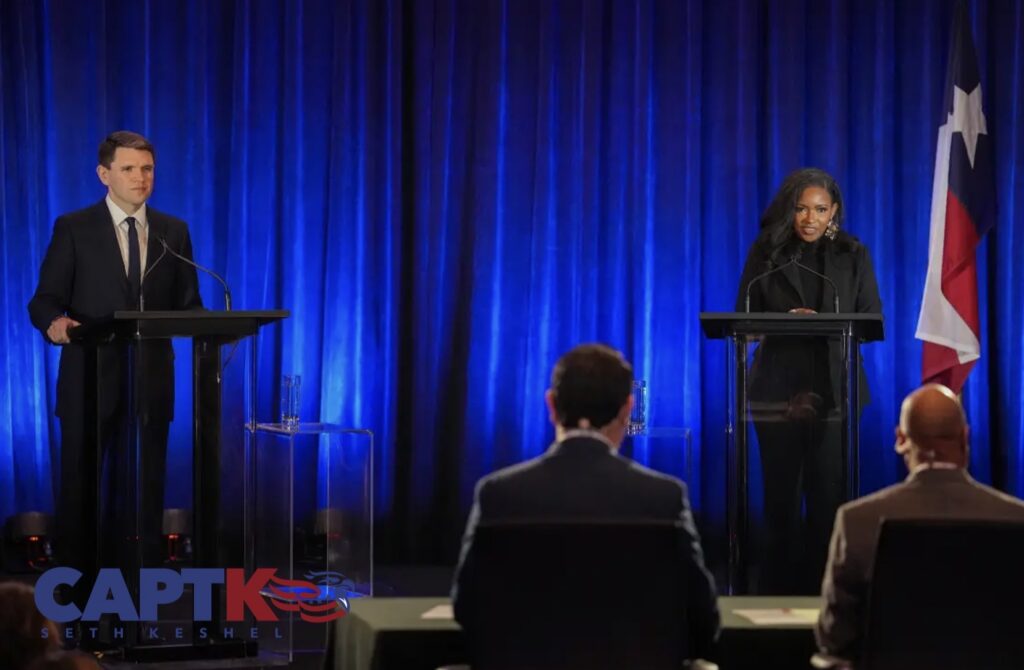
Don’t take your eye off the ball in a constantly changing game
Author’s Note: Professor David Clements, a freedom fighter and a great friend, suffered a serious heart attack yesterday. Fortunately, he looks like he’s going to make a full recovery, but that process won’t be easy for him or for his family. I confirmed the validity of this GiveSendGo account with his wife Erin this morning, and Rachel and I have made a contribution. I’m asking you to prayerfully consider chipping in to get this patriot back in action as soon as possible. Any amount helps. Thank you all for your consideration.
God has blessed this newsletter with the gift of timeliness. Not so long ago, I had a hunch the battle over the USPS and mail-in balloting was about to pick up. The very day I wrote about the USPS’s published mail-in balloting guidance, the Supreme Court shredded a lower court’s (activist) injunction, sending that debate into an even more elevated level of contention:
Just last week, I chastised the Missouri Supreme Court for playing politics and carrying Democrat water in an obviously bought-off or corrupt ruling to save Emanuel Cleaver’s seat (MO-5) from flipping to the GOP:
There is no excuse for the court issuing a ruling like this two months out from the election. It should’ve been fast-tracked, especially with Missouri having such a late primary, so voters could understand who to nominate and candidates could understand who to campaign to. And because this decision was held until the last minute, it brings me full-circle back to my original question:
Who bribes, threatens, or blackmails our judges?
Don’t give me this honorable nonsense. I’ve always made fun of so-called conservatives who believe everything, like schools, media, and big pharma, is corrupt, but somehow no one would think to rig elections. Now that election rigging is hard to ignore, some have moved their pearl clutching to the judiciary. I’m here to tell you – the judiciary is rotten to the core, and many of the Supreme Court’s decisions (like birthright citizenship and mail-in voting) suggest serious compromise of at least two GOP appointed justices.
Yesterday, the fit hit the shan, so to speak.
A federal court restored the “Missouri First” map, spitting in the eye of the Missouri Supreme Court – and did so with just minutes before the deadline the state Supreme Court sought to run right up against:
“A federal judge has restored Missouri’s 2025 congressional map for the November election, just minutes after Justice Kavanaugh separately denied the state’s bid to revive it.” — SCOTUS Wire (@scotus_wire), September 8, 2026
Missouri Secretary of State Denny Hoskins, a member of the Freedom Caucus, immediately ordered everyone to print ballots with the new boundaries passed by the legislature and signed by Governor Kehoe in September 2025, which have already been circulated and voted in a primary. The Supreme Court, butthurt, then ordered Hoskins to appear and explain why he shouldn’t be held in contempt:
“I look forward to my day in court. Key Rules of the Supremacy Clause, Article VI, Clause 2 of the U.S. Constitution: Federal Priority: When a valid federal law and a state law conflict, the federal law wins. State Court Duty: Judges in every state must follow federal law…” — Secretary of State Denny Hoskins, CPA (@DLHoskins), September 9, 2026
To me, this is the sweet sound of an activist court getting struck down, throwing a fit, and creating a situation in which they will be repudiated by perhaps the highest court in the land. Long live the Missouri First map, which happens to be an essential piece of a theoretical Republican U.S. House majority come January 2027. If (and in these perilous times, a big if) the Missouri First map stands after the dust has settled, that puts us right back on track with a likely map of 202 Republican to 187 Democrat. After leaners (23), seats I believe are clearly favorable to one side, we have 208 Republican to 204 Democrat, with 23 seats to decide it all:

Yes, there used to be 24 decisive seats. Unfortunately, due to some very clear analysis I’ve run on California, I have downgraded CA-22 (incumbent Valadao – Republican) to a leaner favoring Democrats.
You may recall that in the 2024 race, I pegged 235 electoral votes, which included North Carolina and all other 2020 certified Trump states, as the “Core 235.” Getting to that number meant arrival at base camp. Once at base camp, the most direct path to presidential victory was Georgia (16) + Pennsylvania (19). On Election Night, everything panned out exactly as it had been drawn up.
With this operating picture in mind, under the expectation that the Missouri First (7-1 R) map will stick, this is the most likely pathway to a minimum majority, assuming my 202 + 6 GOP leaners (CO-3, FL-14, FL-22, MT-1, NC-1, PA-1) = 208 map holds up and doesn’t sustain any upsets:
208 + 7 Bullish seats
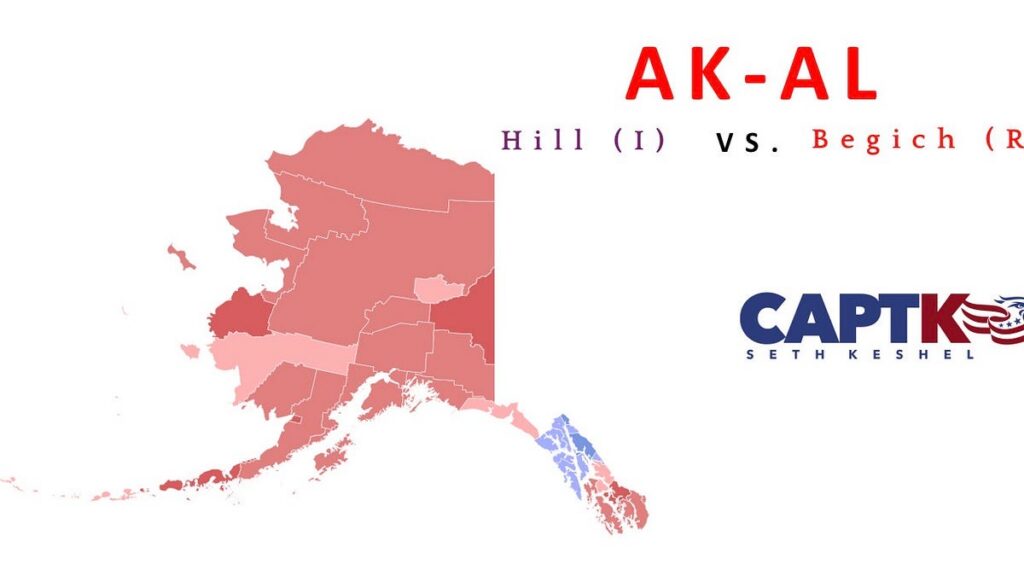
- Alaska At-Large (Begich – R, inc.)
- FL-25 (open)
- IA-3 (Nunn – R, inc.)
- ME-2 (open)
- MI-10 (open)
- OH-9 (Kaptur – D, inc.)
- TX-34 (Gonzalez – D, inc.)
Out of these seven, Alaska-At Large and ME-2 are widely thought to be “in the bag.” Alaska’s only viable statewide Democrat candidate is running for Senate, and incumbent Begich faces a weak field. Paul LePage, former GOP governor of Maine, is popular in the north and running for an open seat Democrats are probably tired of having to defend. That makes 210.
FL-25 gets its first test in new boundaries, and the question will come down to how much of Trump’s South Florida gains hold up in a midterm environment. IA-3 has a strong GOP incumbent with better electoral turf than we find on the other side of the state in IA-1. MI-10 features a popular name (Bouchard, son of Oakland County sheriff) running in an increasingly Trumpy district, while OH-9 just down the road has been redrawn into a Trump +12 seat. TX-34 will rely solely on GOP nominee Eric Flores keeping most of Trump’s gains in a seat Joe Biden narrowly carried, but that Trump won handily in 2024.
Those seven seats, if won, take the GOP count to 215 – just three shy of majority, with 16 shots at goal.
First, with the pessimistic – I consider OH-7 (Miller – R, inc.) a possible hold despite his considerable baggage, because it is after all a seat that went to Trump by double digits in 2024, and that he never won by less than 9 points. It seems that the drama about his candidacy has receded a bit, though time will tell if the bullet has been dodged. Holding that seat would run the count to 216.
I don’t think the GOP candidate is the favorite in any of the other seats in the “bearish” category, but Jen Kiggans in VA-2 may be close to a 50/50, especially if I’m right that there are lingering bad vibes over the failed redistricting attempt in the Commonwealth. Getting any other win in the bearish category brings massive wind in the sails for holding a majority.
Where the rubber meets the road, then, falls by default to the “neutral” category. Like a baseball series, winning one out of three in Pennsylvania looks most likely in PA-8, which Trump carried by 8.6% in 2024. Rob Bresnahan is a popular incumbent who has gobbled up a lot of key endorsements, and is far more likely to hold than Ryan Mackenzie in PA-7 or Scott Perry in PA-10. Holding one Pennsylvania decisive seat, if my 208 + 7 + 1 holds, equals 217.
This leaves us a few outs to get one for a majority. A split in Arizona (likely AZ-1) would do it, so would a hold by a few GOP incumbents with solid 2024 margins, like Mike Lawler in NY-17 or Tom Kean in NJ-7. MI-7, held by Tom Barrett (Republican), looks much better after primaries than it did this summer, because Democrats nominated a loose cannon with DSA ties in a very milquetoast district centered on the state capital, with a lot of “suburbia” mixed in. Then there’s the chance Derrick Van Orden holds WI-3. I’d consider IA-1 the flimsiest bet of all in that category, but the point remains – the GOP has a real shot if they hold serve in Trump + a lot turf and seats they already hold.
Seemingly minor victories, such as the one that appears to be solidifying out of Missouri, are integral in keeping a majority that can be retained only with a slim pathway to victory, as I’ve shown here in today’s post. The ultimate winner of the House majority is increasingly likely to hold fewer than 225 seats.
Seth Keshel, MBA is a Senior Fellow at the Gold Institute for International Strategy and a retired Army Captain. He publishes Captain K’s Corner on Substack.