(This article was written by Derk Jan Eppink and appeared in Wynia’s Week. Doctrinair, wereldvreemd en geen kiezersmandaat: logisch dat ‘Uschi’ bij Trump niet in de smaak valt)
Ursula von der Leyen, president of the European Commission, has drawn a great deal of power to herself in the EU, but the White House is keeping her outside the door for the time being. Ursula, ‘Uschi’ to intimates, needs Italian Prime Minister Giorgia Meloni for a reception in Washington. The Italians made sure that Von der Leyen, at the pope’s funeral, ‘accidentally’ ran into President Trump, in a plea for an invitation. Rather sad for the woman at the top of the Brussels power pyramid.
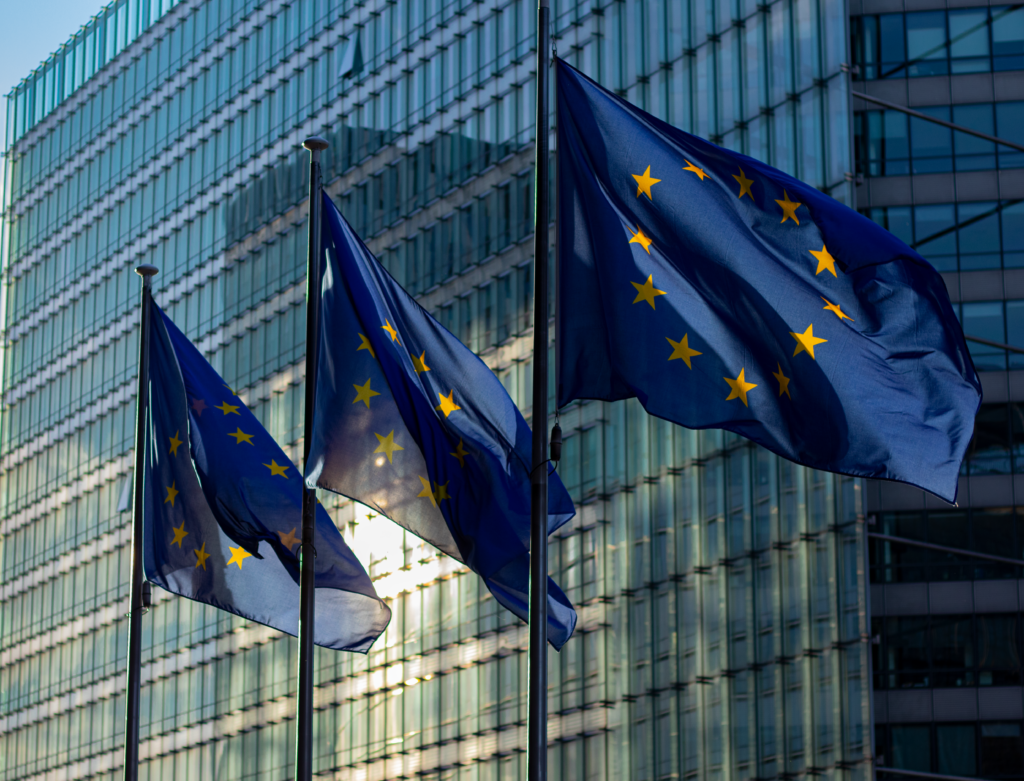
In Brussels Von der Leyen lives in self-chosen isolation. She is the first Commission president to live on the top floor of the Berlaymont, the headquarters of the European Commission. Her office is on that thirteenth floor. Next to it she has had a small apartment furnished as private quarters. On the same floor are also the Commission’s meeting room and the restaurant for breakfast and lunch. Some call this ‘Spartan’, but in fact Von der Leyen has ‘eingebunkert’ herself.
By way of a special lift she reaches the garage with her official car and driver. During rides to the European Parliament she can see Brussels, where she was born in 1958, through tinted windows. Nobody can see her. The rapid decline of Brussels escapes her; the Brussels municipality of Saint-Josse-ten-Noode has been Islamised and is the poorest municipality in Belgium. The mayor, Emir Kir, is a notorious denier of the Armenian genocide. Anyone who lives like that for six years is ‘out of touch’. Queen at the top, a court of yes-men but a stranger in Europe.
In 2019 she was elected Commission president with a minimal majority of nine votes. Originally the Commission operated a collegiate form of government. The president sought consensus. One did so in a somewhat more ‘top down’ way, such as Jacques Delors; another drew conclusions after open debate, such as Romano Prodi. The enlargement of the number of member states changed the chemistry. Manuel Barroso bossed around like a company director. The Luxembourger Jean-Claude Juncker was, after his alcoholic refreshment rather early in the day, quite often off track. His chief of staff Martin Selmayr ruled the roost.
The Protestant Ursula Albrecht (her maiden name) put the helm about. She constructed a power pyramid with herself at the top, assisted by chief of staff Björn Seibert, her former planning aide at the German ministry of defence. Ursula feels ‘called’, as if she had been appointed by God.
Her father Ernst Albrecht was in 1958 one of the first officials of the European Commission and rose to become director-general for Competition. From 1976 to 1990 he was highly respected as minister-president of the German state of Lower Saxony. In 1986 Ursula Albrecht married Heiko von der Leyen, scion of an aristocratic family in the Moselle region. With that resounding name she went into politics herself. She eventually became minister of defence in the Merkel government. Under her direction the Bundeswehr sank to an ‘all time low’.
In her current second term as president, Von der Leyen stands untouchable at the top. The Commission structure is so fragmented that organised criticism is barely possible. The information channels operate on a ‘need to know’ basis, at best. Von der Leyen has gathered institutional power, but lacks vision, insight and perspective.
During a meeting of her European People’s Party (EPP) on 30 April in Valencia she spoke as if it were a feel good session. She praised the Spanish citizens for their ‘calm in the dark’ during the ‘unprecedented power cut’. The government of socialist Prime Minister Pedro Sánchez had boasted of an electricity grid that was ‘100 percent renewable’. Spain as a guiding country. Then came a black-out. The real cause of it is the climate policy of the European Union. But naming the truth is heresy.
Her speeches sound like fairy tales, full of platitudes, usually ending in the trilingual profession of faith: ‘Long Live Europe, Es lebe Europa, Vive l’Europe’. Von der Leyen is a convinced European federalist, thinking that every EU fund leads with historical inevitability to the European State. Doctrinaire thinking permeates German politics. GDR leader Erich Honecker said on 14 August 1989, three months before the fall of the Wall: ‘Den Sozialismus in seinem Lauf hält weder Ochs noch Esel auf’.
In the Commission Von der Leyen intervenes directly, certainly when it concerns herself. In Lower Saxony, where the family resides, farmers complained in vain about the wolf plague. Livestock was bitten to death by wolves that enjoy ‘protected status’ in Europe. Until a wolf killed Dolly, Von der Leyen’s thirty-year-old favourite horse. She demanded revenge. Von der Leyen set Commission officials to work to lower the protected status of the wolf. Manfred Weber, chairman of the EPP group in the European Parliament, was told by the powerful Commission president to cooperate with a reduced protection. Hunters in Lower Saxony set out to liquidate the ‘murderer of Dolly’. That did not succeed during the hunting season, however. The big bad wolf escaped.
Von der Leyen’s isolation takes its revenge above all in the relationship with the Trump administration. During her speech in Valencia she said: ‘Global markets are now shaken by the unpredictable tariff policy of the US administration. US tariffs on the rest of the world are at their highest in a century.’ In reality EU tariffs on American products are double the American tariffs on products from the EU. Her words will not speed up an invitation from America.
It goes deeper. American conservatives only take seriously leaders who have been elected ‘by the people’. Von der Leyen was appointed by EU heads of government and the French president; not by European voters. For Trump the EU is a regional organisation like the Organization of American States (OAS) and the African Union (AU). In that protocol order Von der Leyen is a ‘senior official’. For her that is lèse-majesté.
Meloni, by contrast, has the right credentials: elected by ‘il popolo’ and conservative. She is in every respect the opposite of Von der Leyen: born and raised in the Roman working-class district of Garbatella. Mother from Sicily; father from Sardinia. Her father ran off with another woman. At 15 Giorgia joined the youth wing of the Movimento Sociale Italiano (MSI), an organisation with roots in Italian fascism. What Von der Leyen had thrown into her lap, Meloni had to fight for step by step. After a passage through right-wing parties she eventually founded her own party: Fratelli d’Italia (FdI), or ‘Brothers of Italy’, the first words of the Italian national anthem. In Rome I once attended a Fratelli demonstration. It was abundantly clear: ‘la Sorella’ (sister) was the absolute boss of the Fratelli.
Meloni is helping Von der Leyen where Trump is concerned. Her fixer is the Italian foreign minister Antonio Tajani (71), who sat for 22 years in the European Parliament and was a member of the European Commission for eight years. Tajani, an amiable and shrewd figure, knows in Rome and Brussels, to put it in the Flemish way, ‘God and little Pierke’. It was a small trick to get Von der Leyen ‘accidentally’ to Trump.
Is Meloni the ‘airlift’ for Von der Leyen out of charity? No, economically Italy is doing well, partly thanks to the more than 200 billion euros from the corona recovery fund. The money poured in. Meloni’s right-hand man, the likeable Raffaele Fitto from Apulia (the heel of Italy), became European Commissioner, responsible for regional policy and the spending of money from EU funds, such as the corona recovery fund. For Meloni too the rule is: ‘Prima l’Italia’.
Derk Jan Eppink is a Distinguished Fellow (Honorary) at the Gold Institute for International Strategy, a Washington D.C.-based foreign policy and defense think tank.