By: Eli M. Gold, President
With Americans voting tomorrow, Tuesday, November 3, scrutiny of extremist influence cannot wait. Before entrusting anyone with senior public office, voters must demand clear, verifiable answers to substantive concerns about organizational ties, financial backing, and public statements. Credible questions about relationships with organizations that support terrorism are national-security matters, not inconveniences to be brushed aside until after an election.
A denial is not an investigation. When substantive allegations rest on documented statements, financial records, or organizational relationships, candidates and institutions must address that evidence directly. A blanket disavowal does not explain a fundraising arrangement, a leadership role, or recurring coordination. The public deserves specific answers supported by records, not assurances that leave the underlying questions unanswered.
This standard must apply to those seeking or holding office in Michigan, New York, and throughout the country, as well as national and state-based organizations seeking political influence. Scrutiny cannot stop at formal membership. Financial support, institutional partnerships, leadership connections, and documented coordination also matter. These relationships do not automatically establish wrongdoing, but they must be examined when credible evidence raises a security concern.
The administration must investigate credible threats through lawful channels. Congress must exercise oversight. Voters must insist on transparency before granting public trust. Allegations are not proof, but neither are denials a substitute for evidence. Where substantive questions remain unresolved, the answer is further scrutiny, not automatic reassurance. National security demands that warning signs be examined before power is entrusted, not explained away afterward.
The underlying threat is not speculative. In January, the Trump administration designated the Lebanese Muslim Brotherhood as both a Foreign Terrorist Organization and a Specially Designated Global Terrorist (SDGT). The Egyptian and Jordanian branches received SDGT designations for providing material support to Hamas. In March, the Sudanese Brotherhood was designated a Foreign Terrorist Organization. Washington has already determined that these branches are terrorist actors or supporters. The task now is to disrupt the infrastructure that enables them.
This is a threat to American interests beyond our borders, and a counterterrorism responsibility within them. The United States must identify and stop any domestic financing, logistical assistance, or other unlawful support reaching designated organizations. It must also work with allies to confront their activities abroad. An organization’s foreign address does not make its support network irrelevant to American security.
The Brotherhood’s history and institutional reach extend to the United States, where members and supporters helped establish American organizations. Those relationships demand scrutiny and, where current ties are established, decisive action. If the Brotherhood is designated a terrorist organization, sanctions should reach its branches, chapters, and entities shown to be owned or controlled by it, acting on its behalf, or providing prohibited support. Humanitarian, educational, or charitable work must not provide a shield from those consequences. Independent organizations must sever prohibited ties rather than allow their resources or legitimacy to sustain the designated movement. Historical connections warrant investigation; documented present-day involvement demands accountability.
Washington should assess the Brotherhood as a transnational movement, not a collection of unrelated national problems. Shared ideological origins and cross-border relationships require a comprehensive intelligence picture. Separate registrations and different organizational names must not obscure a common enterprise where the evidence establishes one. The strategic assessment should cover the movement; enforcement should identify the conduct, control, financing, and coordination that justify action.
Sudan illustrates the external danger. The State Department accused the Sudanese Brotherhood’s fighters of mass executions and said many had received training and other support from Iran’s Islamic Revolutionary Guard Corps. These allegations concern armed violence and support from a regime hostile to American interests. They warrant a response grounded in national security, not a narrow debate over political ideology.
Nor should schools, clinics, or charitable assistance shield an organization’s overall conduct from examination. Those services may genuinely help vulnerable people. They do not cancel evidence of terrorist financing or material support. Investigators must examine leadership, money, operational relationships, and beneficiaries together. Good works cannot purchase immunity for wrongdoing.
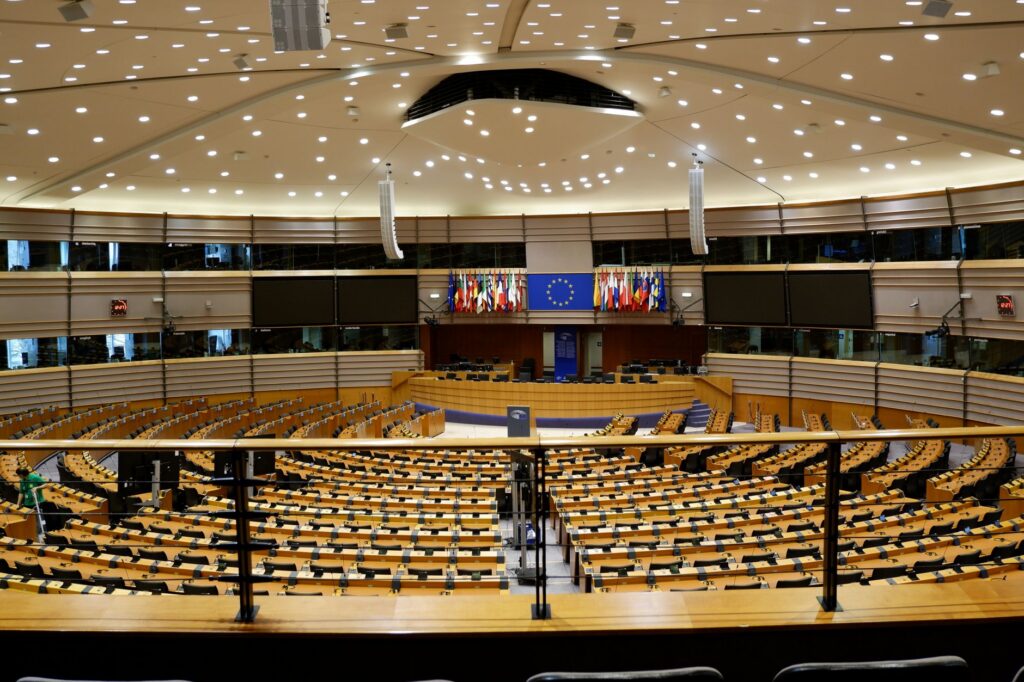
Europe’s response creates an opportunity for coordinated action. On October 8, the European Parliament voted 381 to 167, with 15 abstentions, for a resolution addressing Islamist entryism and Brotherhood networks. It described activity through cultural, educational, religious, charitable, and social institutions and called for terrorist listings where the legal criteria are met. The resolution was not a completed EU-wide designation, but it supplied a clear basis for closer cooperation.
At least seven countries have designated the Brotherhood or particular branches: Egypt, Saudi Arabia, the United Arab Emirates, Russia, Bahrain, the United States, and Argentina. This is a conservative minimum, not an exhaustive tally. Their measures differ in scope, particularly the branch-specific American and Argentine actions. Washington should turn that overlapping concern into shared investigations, coordinated financial restrictions, and enforcement against intermediaries that sustain designated entities.
Europe’s recent unrest reinforces the need to distinguish peaceful protest from violence and organized exploitation. Reuters traced October’s French demonstrations to grievances over living costs and public services. Reporting from Italy described suspected efforts by Islamist-linked actors to exploit protests, not proof that the Brotherhood directed the riots. The American response, including on university campuses, must protect lawful expression while confronting intimidation, violence, unlawful financing, and demonstrated extremist coordination.
Trump should order a comprehensive review of the relationships surrounding designated Brotherhood branches, including any American support networks, financial intermediaries, and fronts. Where the record supports additional designations, the administration should proceed. Where it supports designating an identifiable international organization, Washington should make that case rather than stop automatically at national chapters.
Congress should demand an assessment of enforcement gaps and the resources required to close them. Allies should be asked to share evidence, trace funds, and coordinate restrictions. The purpose is not simply to add names to a list. It is to deny terrorist actors the money, assistance, and access they need to operate.
Tomorrow’s vote makes the issue timely. The threat makes it enduring. Trump has established the basis for action against several Brotherhood branches. He should now pursue a sustained strategy across borders and institutions, protecting American security at home and American interests abroad.
Eli M. Gold is the President of the Gold Institute for International Strategy, a Washington, DC-based think-and-do tank focusing on foreign policy and defense matters. To learn more about the Gold Institute, visit www.Goldiis.org.