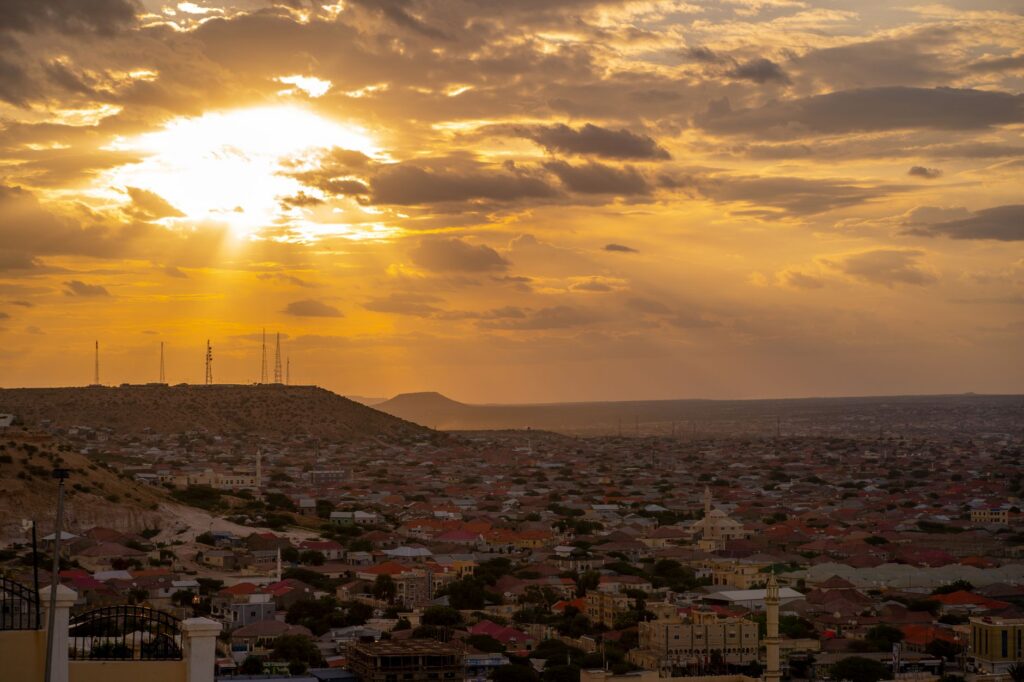
For more than three decades, Somaliland has operated as a self-governing political entity in the Horn of Africa while seeking international recognition as an independent country. Somaliland declared the restoration of its independence in 1991 after the collapse of Somalia’s central government. Since then, it has established its own government institutions, security forces, currency, elections, and administrative system. The United States, however, has historically recognized Somalia’s sovereignty within its 1960 borders, including Somaliland. (State Department) The question of whether Washington should change that position has therefore become an important foreign-policy debate.
Supporters of recognition first point to Somaliland’s distinct history. The former British Somaliland protectorate became independent on June 26, 1960, before uniting several days later with the former Italian-administered territory to create the Somali Republic. U.S. historical records confirm this sequence, although the United States did not formally recognize Somaliland separately during its brief period of independence. (Office of the Historian) Somaliland’s supporters consequently argue that its present claim differs from a conventional separatist movement because it seeks to restore the borders of the previously independent State of Somaliland.
A second argument concerns governance and political stability. Since declaring independence in 1991, Somaliland has developed institutions that function separately from those of Somalia’s federal government. Even the African Union has historically acknowledged that Somaliland experienced relative peace and stability compared with other parts of Somalia and made progress in areas including economic and social development. (African Union Archives) Advocates contend that recognition could encourage accountable government and institution-building by demonstrating that sustained self-government and political development can produce greater international engagement.
Somaliland’s geographic position also gives the debate strategic importance for the United States. It lies along the Gulf of Aden, near the Bab el-Mandeb and the maritime routes connecting the Red Sea with the Indian Ocean. Disruption around these waterways can affect international shipping and security far beyond the Horn of Africa. Previous legislation introduced in the U.S. Congress has specifically proposed deeper cooperation with Somaliland in areas including counterterrorism, intelligence sharing, counter-trafficking, trade, and U.S. policy toward the Red Sea corridor and Horn of Africa. (Congress.gov) Supporters therefore see a closer relationship with Somaliland as potentially serving American security and commercial interests.
Recognition could also provide a formal framework for broader economic relations. Somaliland’s location and access to the Gulf of Aden could make it a useful commercial partner linking East Africa with markets in the Middle East and beyond. Formal diplomatic relations could make government-to-government agreements and certain forms of investment and development cooperation easier. Advocates argue that greater economic opportunity could also contribute to regional stability by creating jobs and strengthening institutions.
There is also an argument based on diplomatic realism. Somaliland has maintained a separate administration for decades, regardless of its international legal status. Supporters of recognition argue that U.S. policy should acknowledge this political reality rather than continue treating Somaliland’s final status primarily through the framework of Somalia. Interest in changing U.S. policy has reached Congress: legislation introduced in December 2024, for example, proposed recognizing Somaliland as a separate independent country. (Congress.gov) A Congressional Research Service report in 2025 likewise identified Somaliland recognition as a policy question facing U.S. decision-makers. (Congress.gov)
However, recognition would carry serious diplomatic consequences. Somalia considers Somaliland part of its sovereign territory, and the African Union continues to support Somalia’s territorial integrity. In December 2025 and again in 2026, the African Union explicitly rejected unilateral recognition of Somaliland, arguing that such action could undermine Somalia’s sovereignty and create broader risks for regional stability. (African Union) Critics therefore argue that unilateral U.S. recognition could damage relations with Somalia, complicate counterterrorism cooperation, and intensify political disputes in the Horn of Africa.
Ultimately, the Somaliland question forces U.S. policymakers to weigh competing principles and interests: territorial integrity, self-determination, regional stability, democratic governance, security cooperation, and strategic access to the Red Sea region. Supporters believe recognition would acknowledge Somaliland’s decades of separate self-government and create opportunities for closer security and economic cooperation. Opponents emphasize Somalia’s sovereignty and the potential regional consequences of changing internationally recognized borders. For the United States, any decision on Somaliland would therefore represent not merely a symbolic diplomatic act, but a significant choice about its long-term strategy in the Horn of Africa.