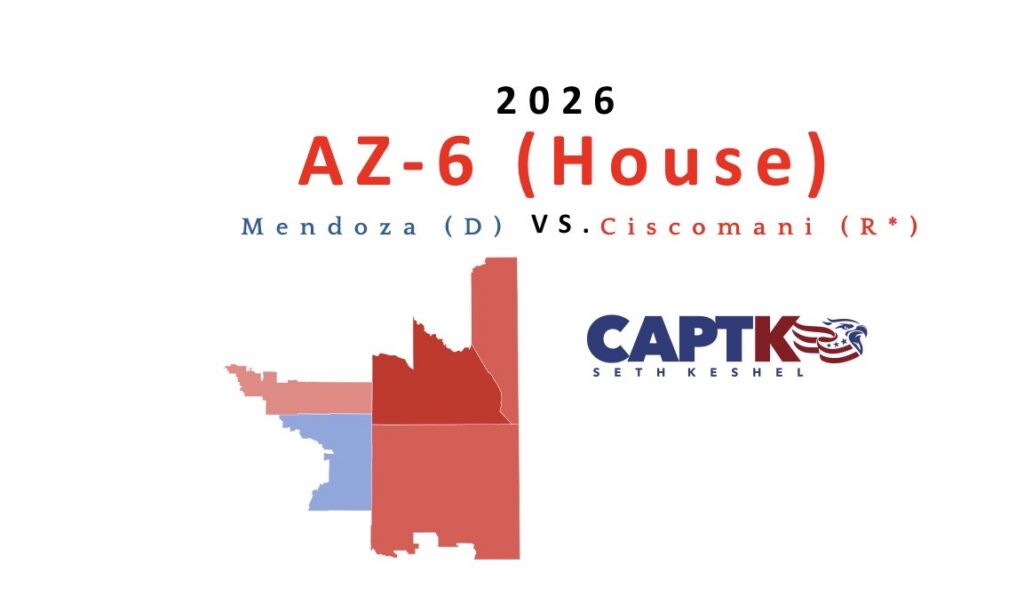
Juan Ciscomani (R) vs. JoAnna Mendoza (D)
I. The Race
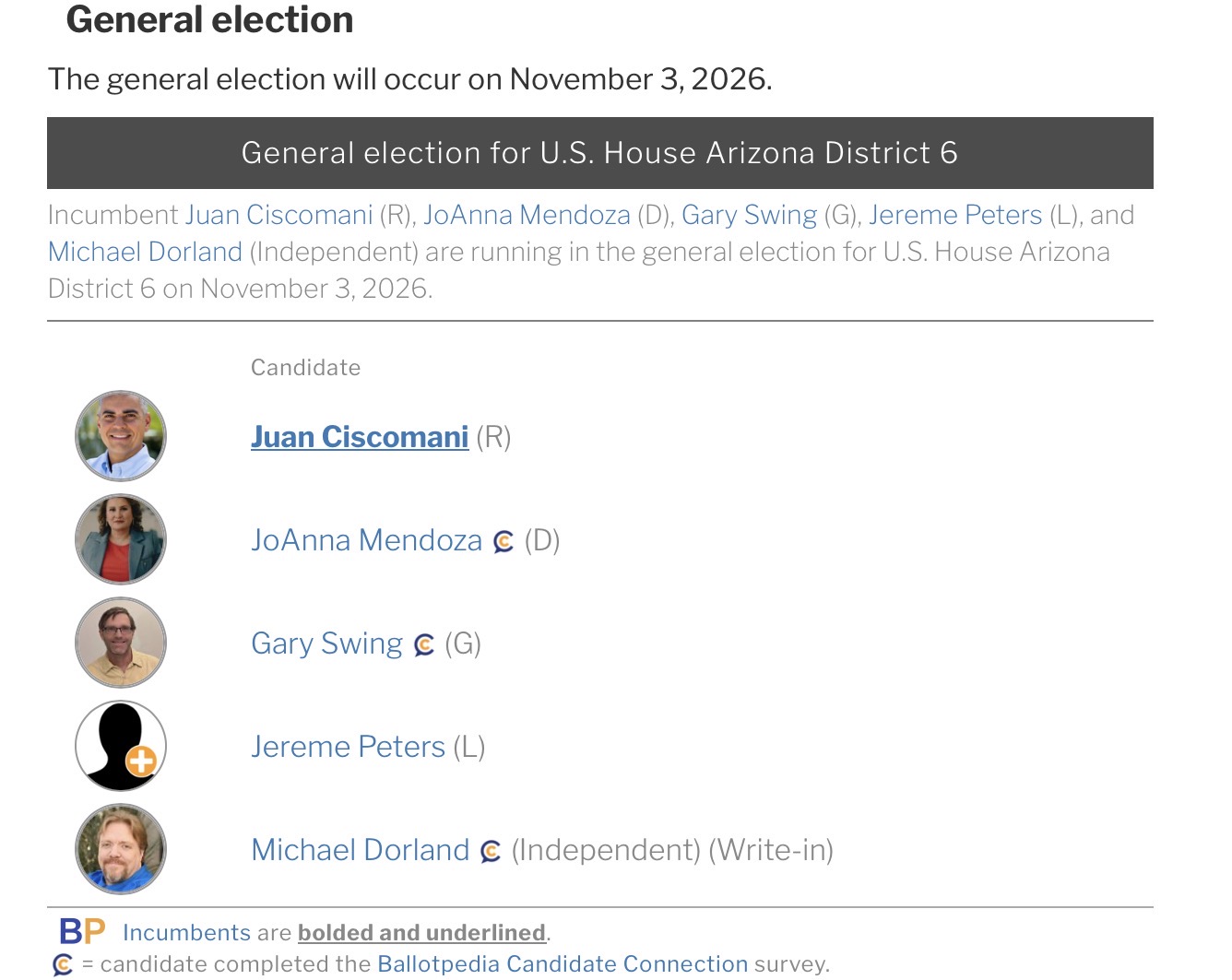
Juan Ciscomani (Republican) seeks his third term representing AZ-6 in the U.S. House. He won the seat in 2022 in the first election held under its current boundaries after having served as an advisor to former Arizona governor Doug Ducey. Ciscomani is the first naturalized immigrant from Mexico to serve in Congress from Arizona.
JoAnna Mendoza (Democrat) is a Marine Corps veteran who found her way into politics after retirement from the military. She has worked extensively as a lobbyist and ran unsuccessfully for the Arizona Senate in 2020.
The ballot also includes potential spoilers for both candidates – especially Green Party candidate Gary Swing (who would exclusively siphon votes from Mendoza).
II. District Geography
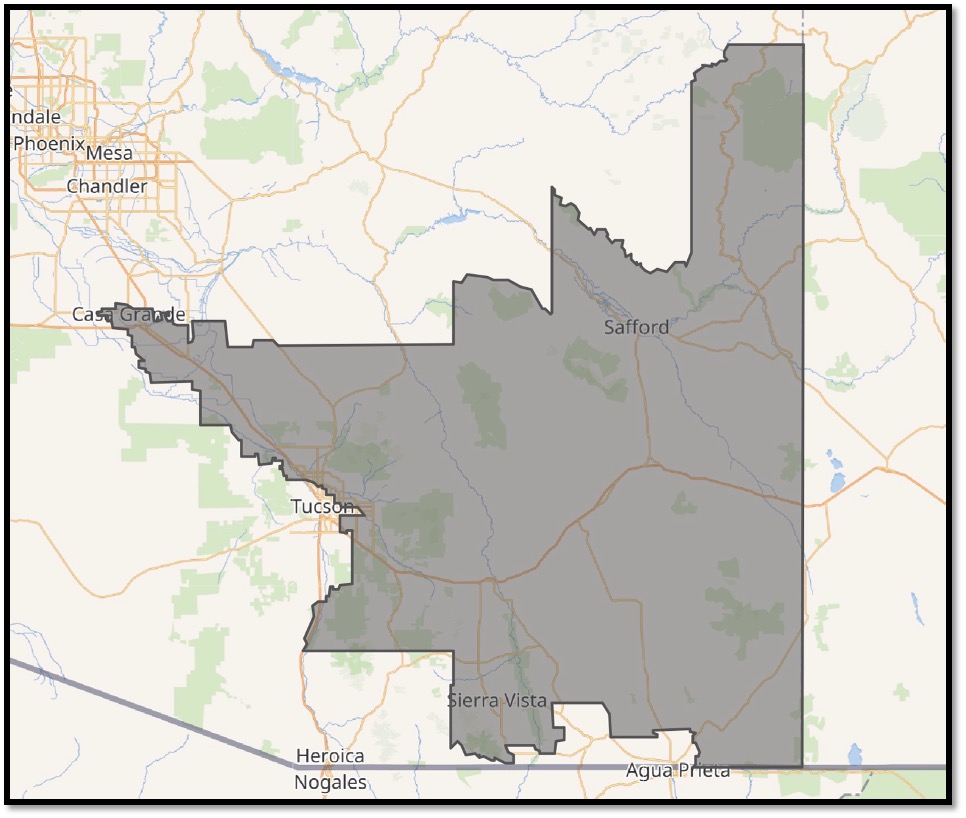
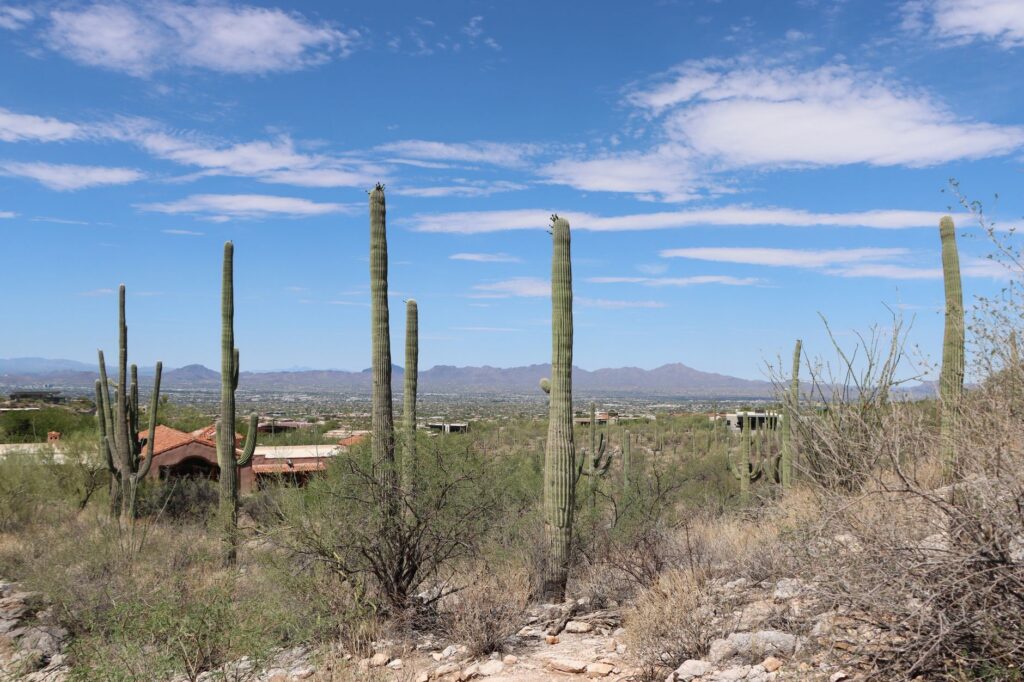
Arizona’s 6th Congressional District (AZ-6) is wedged into the southeast corner of the state and stretches across five counties: all of tiny Greenlee County, and fragments of Cochise, Graham, Pinal, and Pima Counties. The Pima portion includes chunks of northeast Tucson, the sole reason the district is competitive in any way and the portion Mendoza rests her hopes on for unseating Ciscomani.
Mendoza is originally from Eloy in Pinal County, so she will look for extra support in that part of the district while looking to leverage her military service to sandbag Ciscomani’s margins in Cochise County, which is home to Fort Huachuca – the headquarters of the U.S. Army Military Intelligence Corps (where yours truly was twice stationed).
The shift against Trump in northeastern Tucson and its suburbs (which includes my wife’s district, Legislative District 17) dramatically reduced the presidential margins of these boundaries:
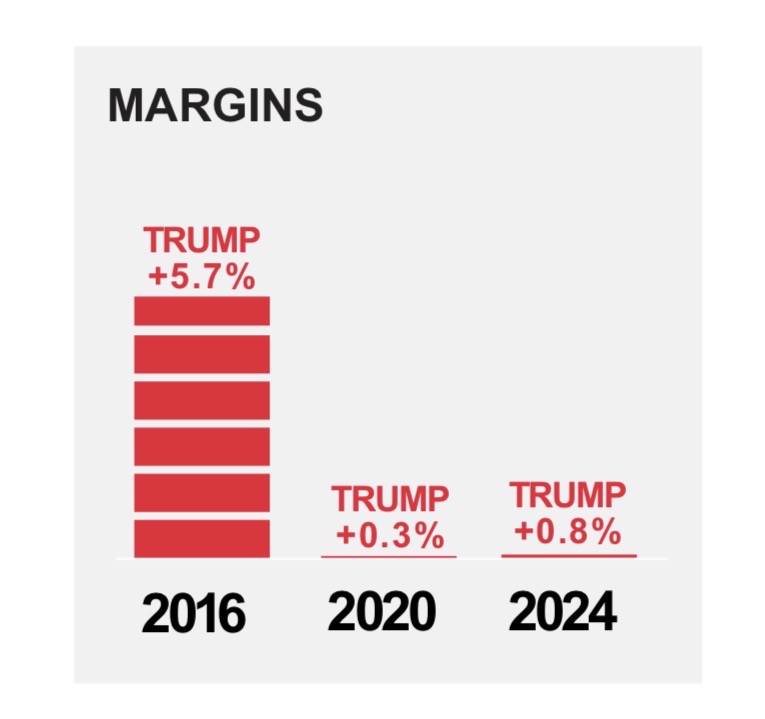
As you can clearly see, Trump went from winning these boundaries by 5.7% in 2016 to carrying them by less than a point in 2020 and 2024, running behind Ciscomani in the latter run. Whereas he has continuously improved with Latino voters, he has backtracked with affluent former Republicans of the Flake/McCain variety. It truly takes a skilled political toolset to succeed in this district, and it would be difficult to draw a more complex and competitive district than AZ-6. The winning candidate must have an excellent overall game that includes rural outreach and urban strategy.
Key Statistics
• 63.1% White, 24.7% Hispanic
• 96.8% Urban, 3.2% Rural
III. Market Assessment
Polymarket bettors have their money on the out-party candidate, Mendoza, but have her significantly overvalued against a candidate who has figured out how to thread the needle in the Trump era.
IV. History
The latest redistricting of Arizona drastically altered the composition of the suburban Tucson district. The remainder of Tucson, the urban core and its heavily Hispanic working-class vote in the southern end of the metro, has long been given over to the Grijalva political family, which rules over its subjects with an iron fist.
In 2016, Cochise County and northeastern Pima County made up AZ-2 (AZ-2 is now Eli Crane’s district in northern Arizona). Incumbent Martha McSally won the seat by 14 points, at the same time Trump lost the district by 5. That is one of the biggest red flags possible looking back at the 2018 cycle (Trump massively underperforming the GOP House candidate), and when McSally vacated the seat to run for U.S. Senate, all hell broke loose. Democrats won the seat by 9.5%.
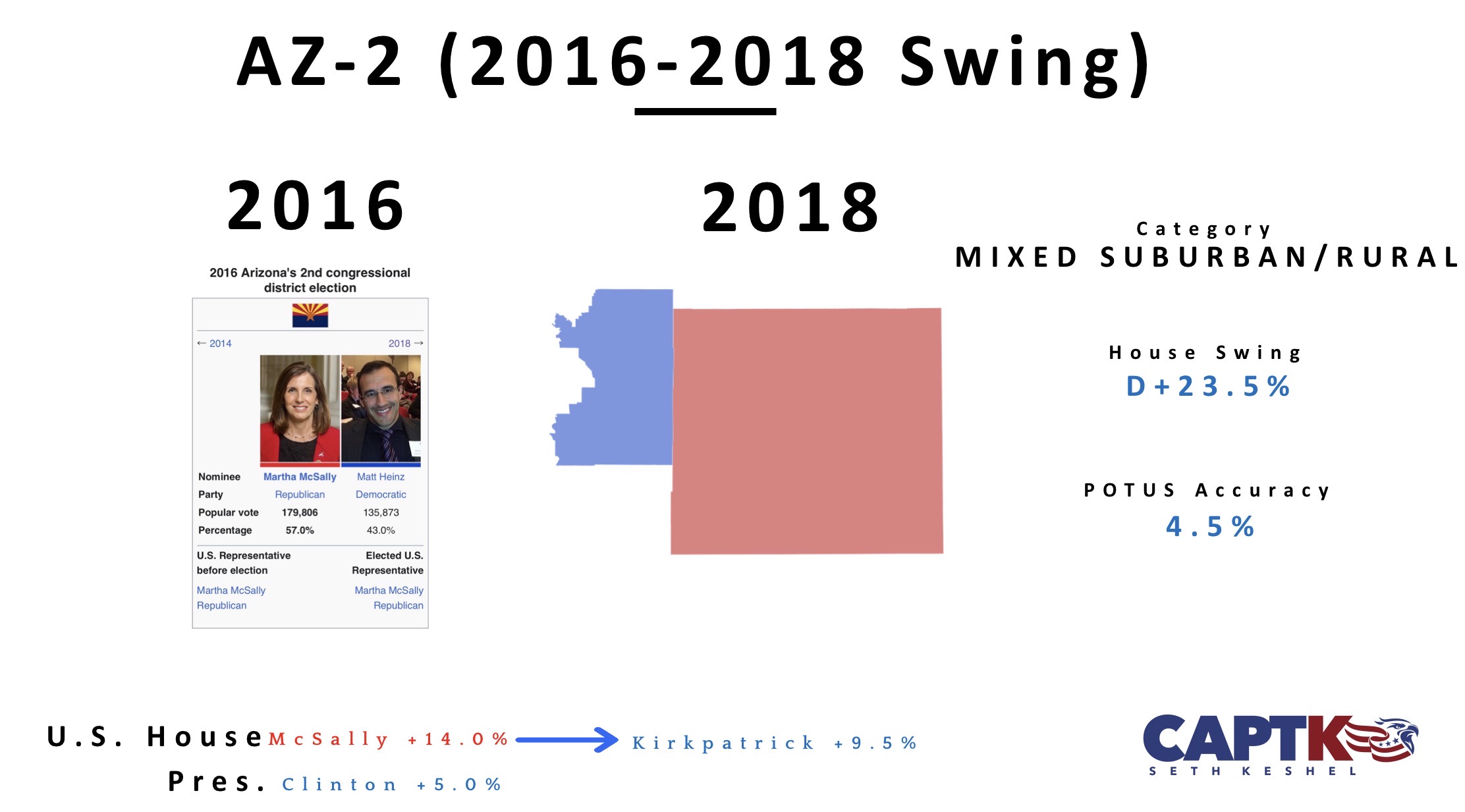
Cochise County, while weaker in margin, wasn’t the problem. It was northeastern Pima County, which is still in Ciscomani’s district today. The middle swung hard to the left and contributed one more to the Democrat count on their way to a strong House majority win. Ann Kirkpatrick, who took the seat, held it by 10.2% against Republican Brandon Martin in 2020’s crooked election.
Arizona redistricted, and with Kirkpatrick retiring, Ciscomani and Kirsten Engel battled for the seat in the 2022 midterms. Despite Arizona elections being a disaster once again, Ciscomani narrowly defeated Engel in what was a surprise to many.
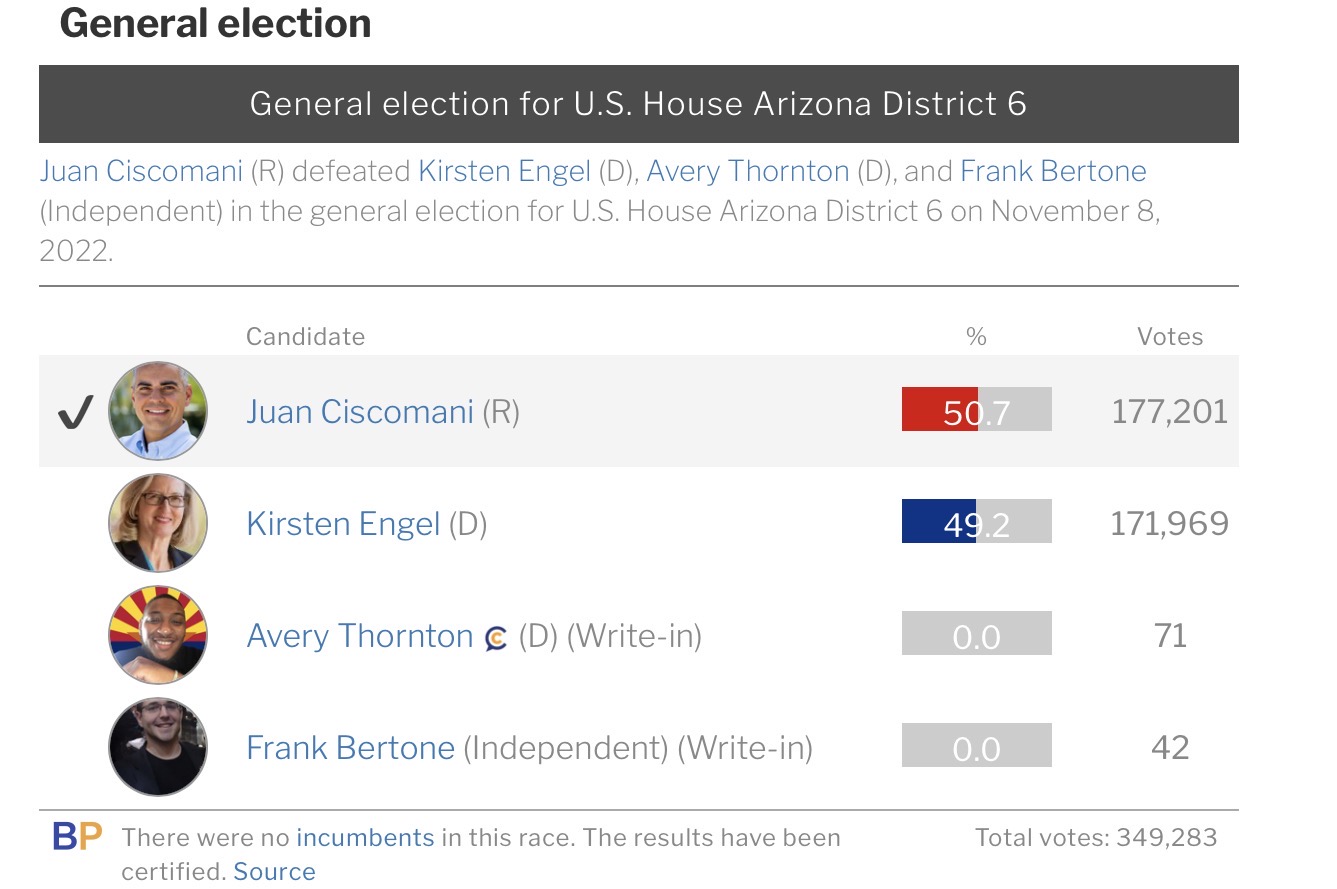
Ciscomani then held the seat in 2024 by a larger margin against the same opponent, with his win being the seat that led media networks to call the House for the GOP:
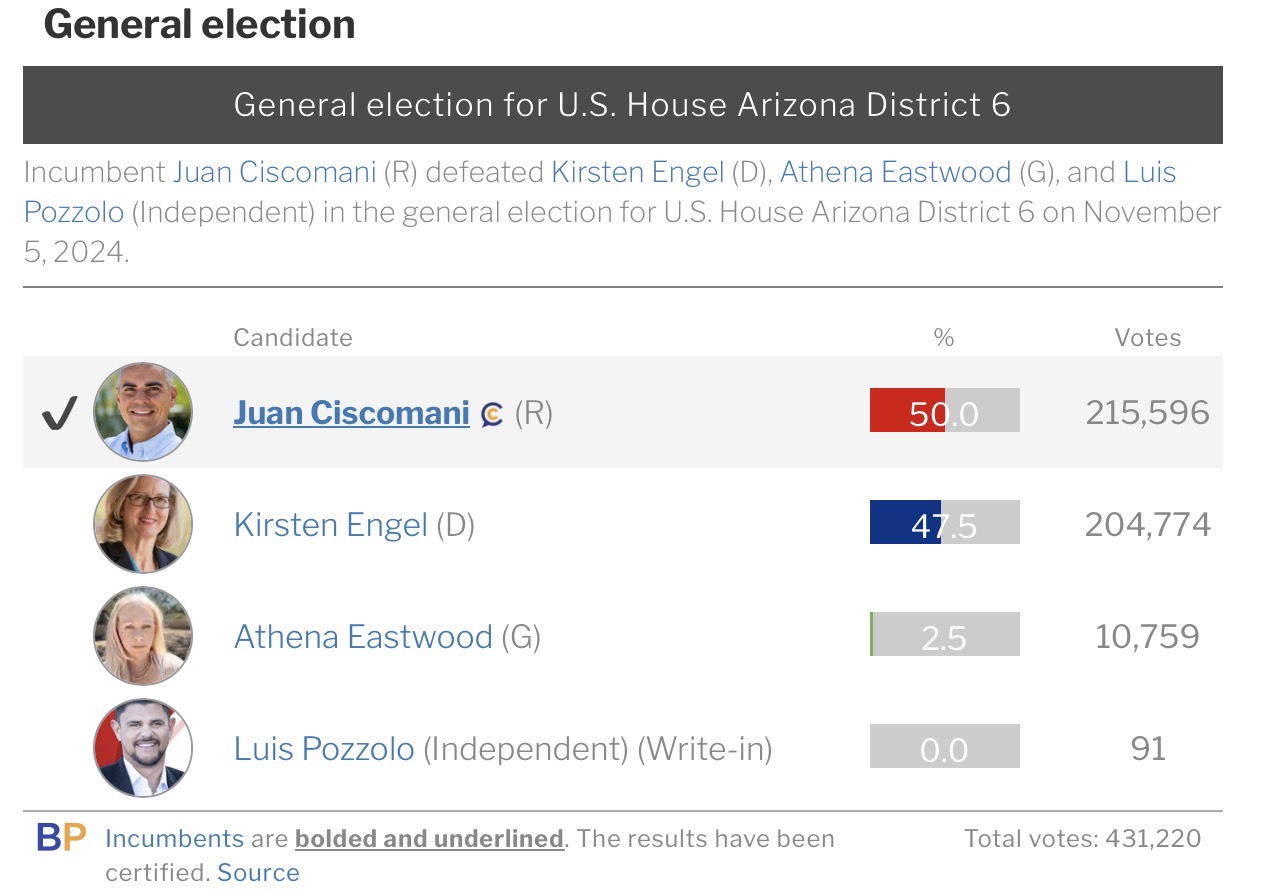
History suggests to us that an elastic portion of the electorate in Pima County can swing hard in a midterm, but also that Ciscomani has found success in a district that has been resistant to the MAGA agenda.
V. Analysis of 2026 Primary Results
Ciscomani had to fight difficult primaries in 2022 and 2024, but got a break in 2026. Neither he nor Mendoza had primary challengers.
VI. Polls
Polls pulled from The New York Times:
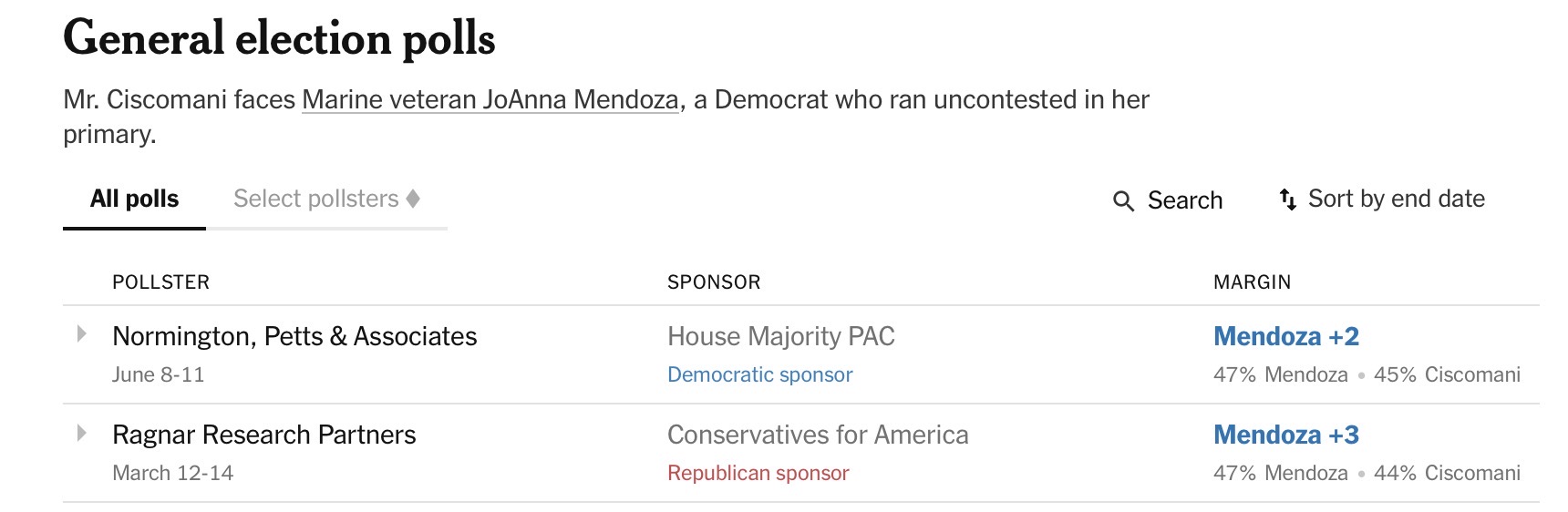
It has been more than four months since any polling has been released, but the last one had Mendoza up by just 2 points (inside the margin of error) and was sponsored by Democrats.
VII. Media Ratings
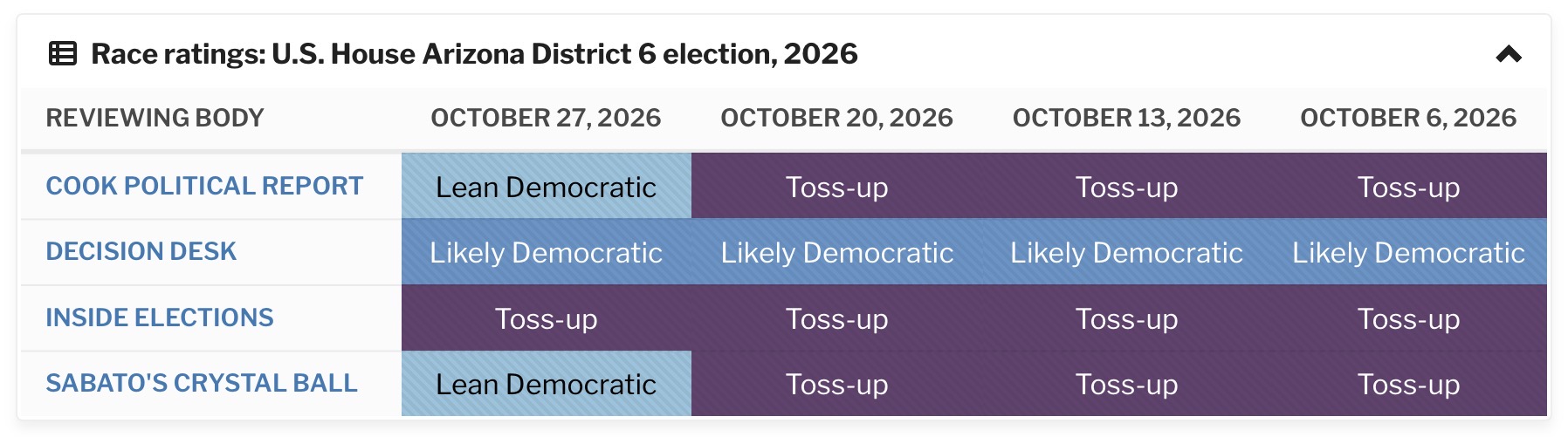
All major reviewers except for Inside Elections have this race favoring Mendoza. Decision Desk feels strongest about her chances, rating the race as “Likely Democratic.”
VIII. Party Registration
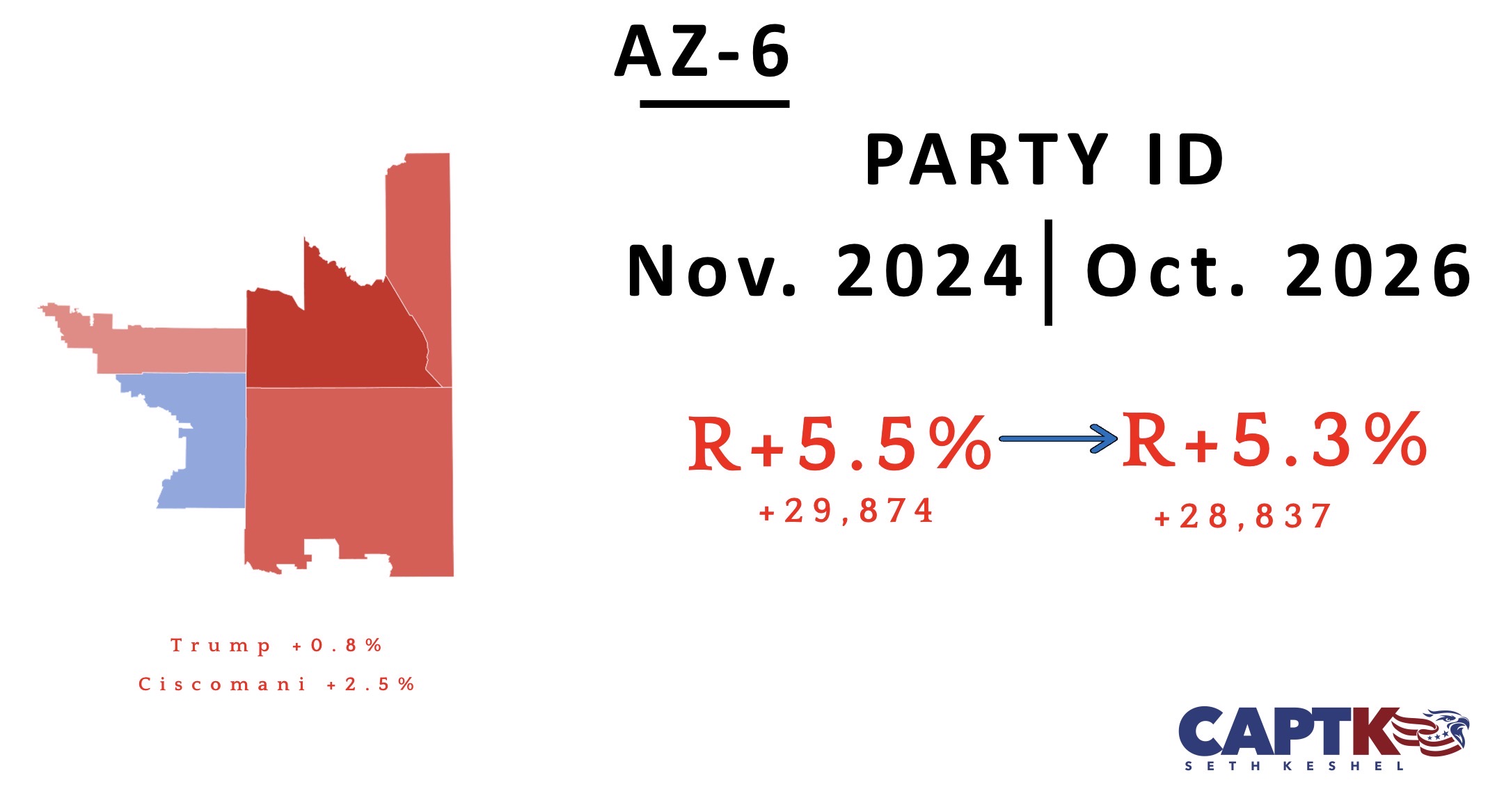
Democrats have made a very modest net gain in voter registration, but only because they have lost fewer registered party members than Republicans have. Both parties have lost members to the growing chunk of non-affiliated voters, just as I profiled in my forecast of AZ-1.
This change affords a slight advantage to Mendoza and suggests a tailwind with independent voters in a hotly contested federal office.
IX. Election Considerations
Here is what I wrote about Arizona’s elections in my forecast for AZ-1:
It will come as absolutely no surprise to anyone who has followed the battle for election integrity in America that Arizona is one of the worst states in the country for transparency, handling of mail-in ballots, long counts, and “bipartisan” cover for these activities. The Maricopa County Board of Supervisors, supposedly four Republicans to one Democrat, have constantly interfered with the efforts of Justin Heap, the new County Recorder, to streamline as much of this process as possible in a short period of time.
If you want to be depressed and less optimistic, read my 2024 overview of the impact of Arizona’s electoral environment:
Arizona – 2024 Election Compendium
Pima County’s recorder, Gabriella Cazares-Kelly, is another real disaster when it comes to running elections. You can review some of her exploits in this piece:
Pima County on the Clock After Mail-Balloting Botch
X. Summary and Election Estimate
This is one of few remaining seats held by the GOP that is far more friendly to House Republicans than President Trump atop the ticket. Most of them were blown over in 2018, and haven’t been taken back. That, as shown by the dramatic shift in the old AZ-2 in 2018, is the biggest risk to Ciscomani, who is running a fine campaign as we speak:
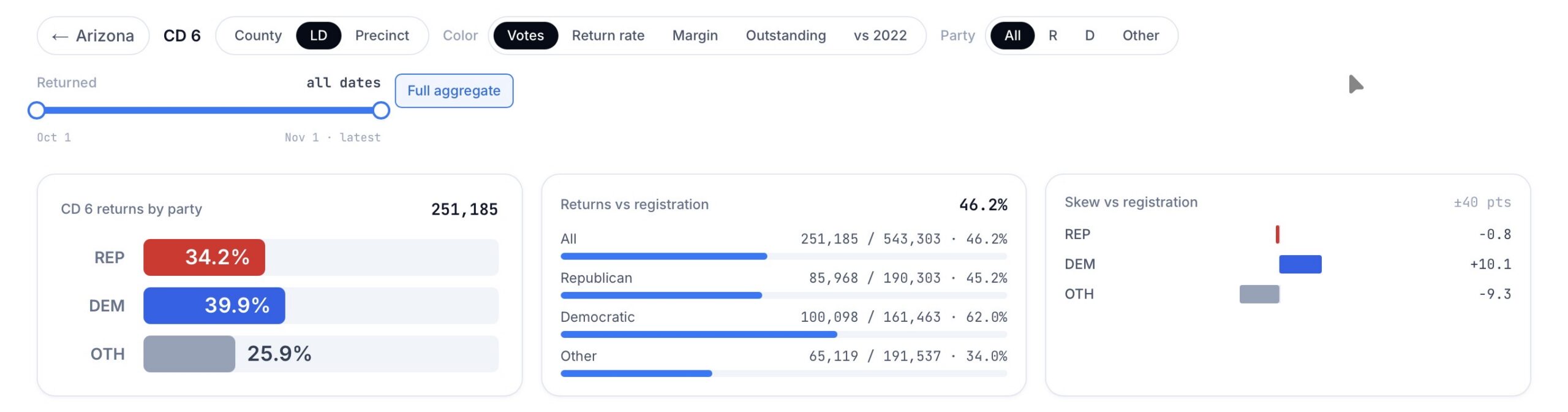
Democrats are up 5.7% in returns, but they’ve been up like this in Ciscomani’s two previous runs. TPUSA efforts are also squeezing low propensity voters to get ballots in. If Ciscomani is going to pull off the hold and see his 2.5% margin from 2024 stand up, he’s going to need to do well in northeastern Tucson:
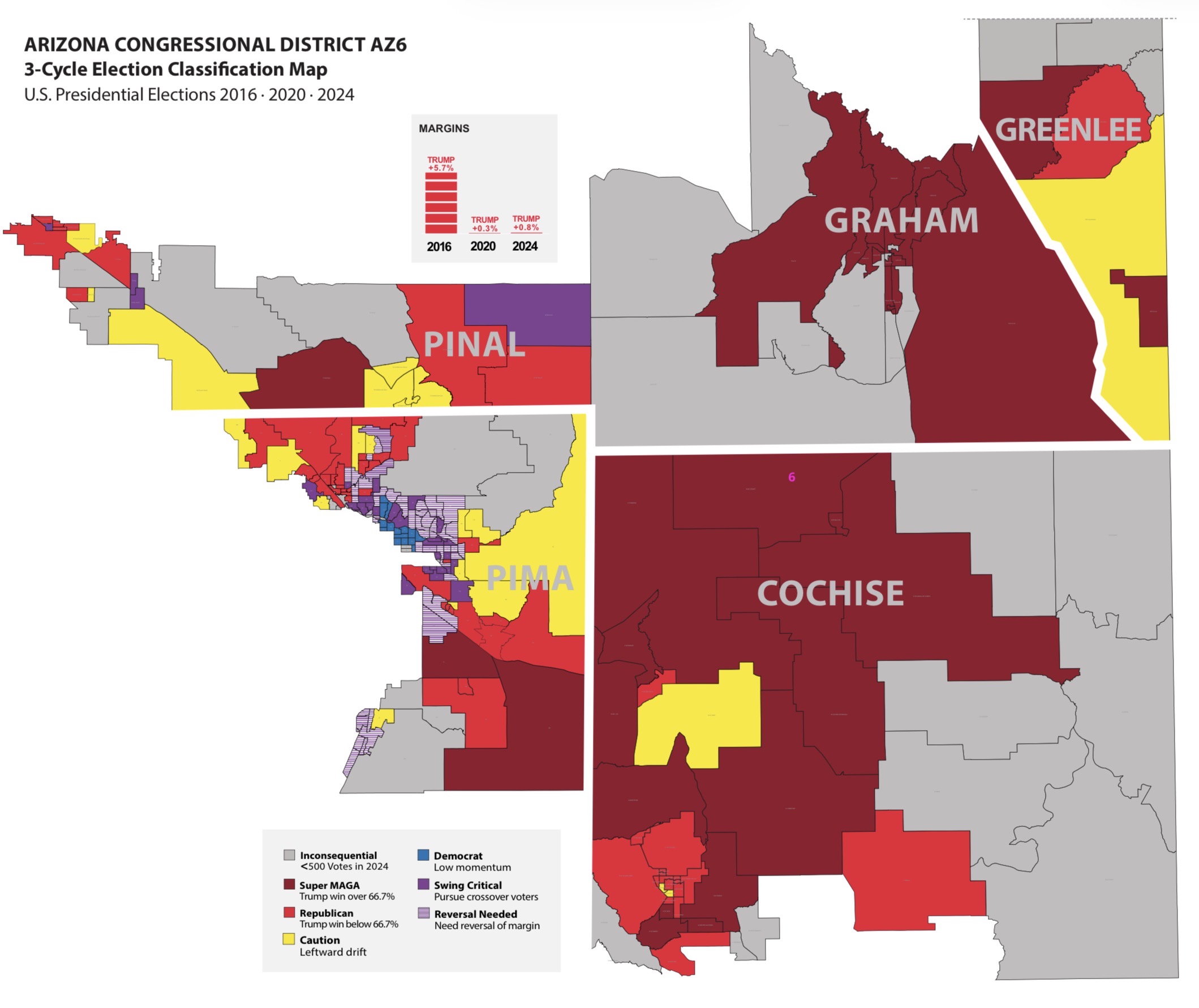
Ciscomani will dominate the rural vote. MAGA precincts (crimson-shaded) are all over southeastern Pima County, Cochise County, and Graham County. Those purple (solid and striped) and yellow precincts in Pima County will determine if Ciscomani goes back to Congress, or Mendoza takes over. This is how the decision matrix looks:
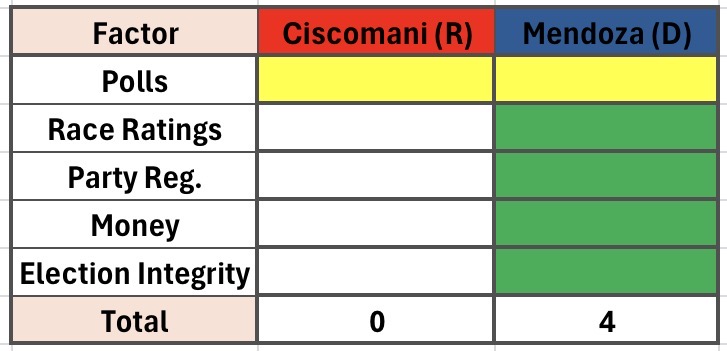
Despite having no singular advantage in this matrix, I think Ciscomani has a shot. Things aren’t as volatile as they were at the beginning of the Trump era, and the GOP has made gains with important voting blocs, like Latinos (AZ-6 is 24.7% Hispanic). If he can tie Mendoza’s progressive record and obsession with LGBTQ issues to the emergence of the DSA, he may pull off the upset – especially if the Green candidate gets in the way.
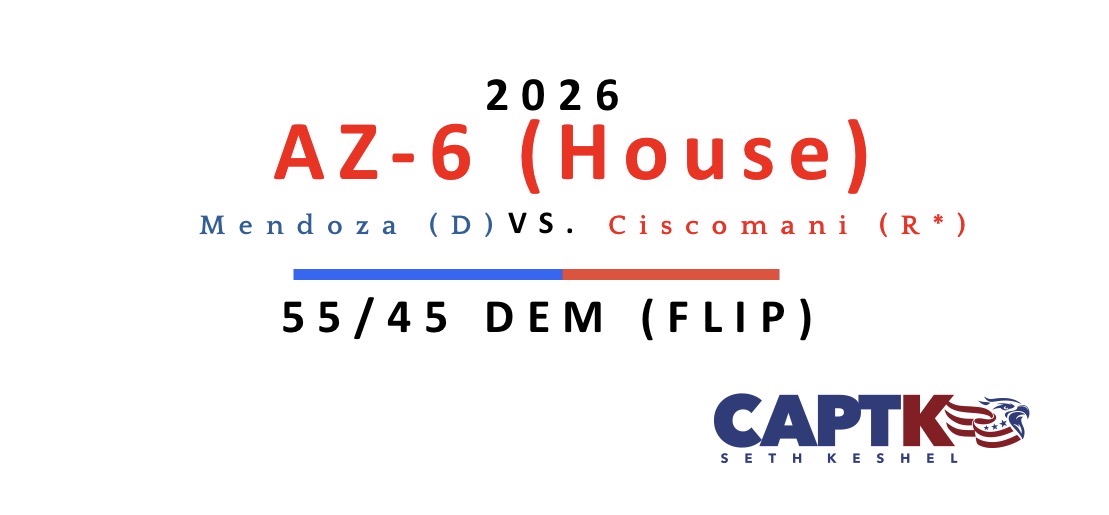
Forecast for AZ-6 House
Seth Keshel, MBA is a Senior Fellow at the Gold Institute for International Strategy and a retired Army Captain. He publishes Captain K’s Corner on Substack.