With the American midterms on the menu, “commentating Netherlands” is settling in for the show. Viewers expect a range of opinions, as befits a public broadcaster, but are treated to the one uniform opinion: “Democrats must win; Republicans are crazy; Trump is a criminal.” Whoever does not share this subtle analysis is not decent either.
The Dutch debate about America has nothing to do with America, and everything to do with the Netherlands. Your opinion of America, let alone of Trump, determines where you stand and whether you are decent, and if you are not, you deserve to be met with silence. Behold the “democratic debate.”
In 2008 I lived in New York and decided to become a “Republican watcher.” A niche and at the same time lonely profession, but for me a world opened up in the “other America.” I attended the conventions in the presidential election, both the Democrats’ in Denver and the Republicans’ in Minneapolis-St. Paul.
The NOS was in Denver with a sizable delegation in rented caravans. For Barack Obama was the anointed one, awaiting canonization. At the Republicans’ convention there was a single NOS radio journalist, who left early because of a flood elsewhere.
On stage, Sarah Palin was launched as the vice-presidential candidate, and the media immediately banished her. But she voiced something that was widely felt in non-urban America, and on which the later candidate Donald Trump built: the gap between voters and Washington, DC.
In 2015 Trump launched his campaign and was immediately declared “crazy.” In Washington everyone laughed at him; the fool of the day. At his first campaign appearance, in August 2015, he flew his plane (lettered: TRUMP) over a football stadium with 30,000 people in Mobile, Alabama.
I thought: “Something is happening here, this is an American ‘Pim moment,’” and wrote in De Volkskrant (September 2, 2015): “Can Trump ultimately win? Yes he can.” The editors printed it, probably shaking their heads.
A year later, on a street in New York (coincidences do happen), I ran into Bret Stephens, head of the opinion pages of the Wall Street Journal. I knew him from my Brussels days as head of The Wall Street Journal Europe. He invited me to lunch. I told him Trump stood a real chance, given those reactions in the stadium. A kind of “Pim effect.”
He knew who Pim Fortuyn was and suddenly became very angry. “Trump cannot win, not a single chance: zero!” But Trump won. Stephens traded the Wall Street Journal for the New York Times. Pollsters, too, believed Trump mathematically could not win, but politics is not mathematics. The Dutch television panels were shrouded in tears that election night.
The coming midterms are Trump’s last and most difficult. That he is a narcissist everyone knows (TikTok prime minister Jetten is one too): for many politicians, narcissism is in fact an inexhaustible source of energy. Compared with Europe, America has a strong economy; a liter of gasoline costs about 2.65 euros in the Netherlands (half of it tax), and 0.90 euros in America. Trump plays the lead role in world politics and relies on a loyal MAGA base at home.
In midterm elections turnout is usually low: the main task is getting your own supporters to the ballot box. At the same time, the Democrats have radicalized to the left and in some states are fielding candidates who are too radical even for an average Democrat. Dutch journalists often take their cues from CNN, but that is a “mini-channel” compared with the conservative FOX News. Then there is the Trump factor: he is campaigning in all the swing states, for every vote.
Everything is close. Republicans are often “under-polled,” as the 2024 presidential election showed once again; they distrust pollsters. The Republicans have a reasonable chance of keeping the Senate; the House of Representatives is neck and neck.
It will be nail-biting at the Dutch television panels. Will it be a bonfire of joy or (once again) a vale of tears?
Written byDerk EppinkDistinguished Fellow (Honorary), Gold Institute for International Strategy
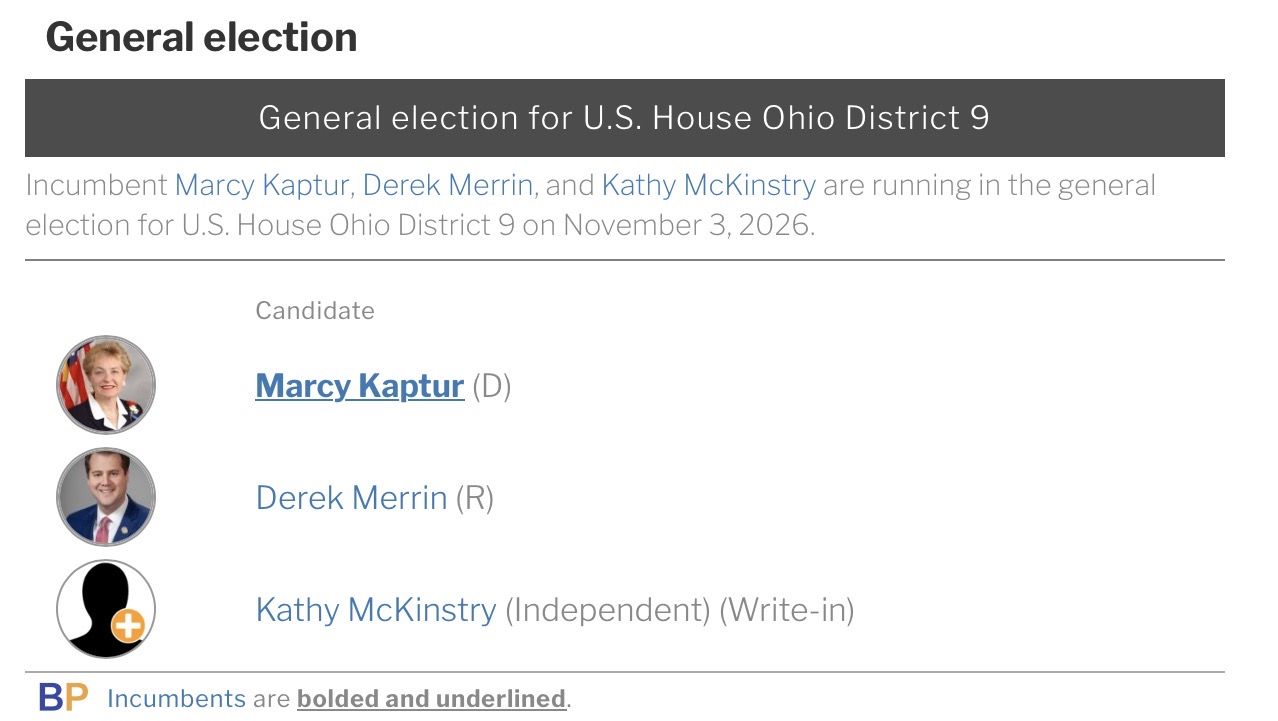
Derek Merrin (Republican) is a former member of the Ohio House of Representatives who is locked into a 2024 rematch with Kaptur, but this time with much friendlier district boundaries at his disposal.
Marcy Kaptur (Democrat) is the longest-tenured woman in Congress, and seeking a twenty-third term after barely surviving Merrin’s surge in President Trump’s statewide romp in 2024. For perspective, I turn 42 next month; Kaptur was wrapping up her first term when I was born.
II. District Geography
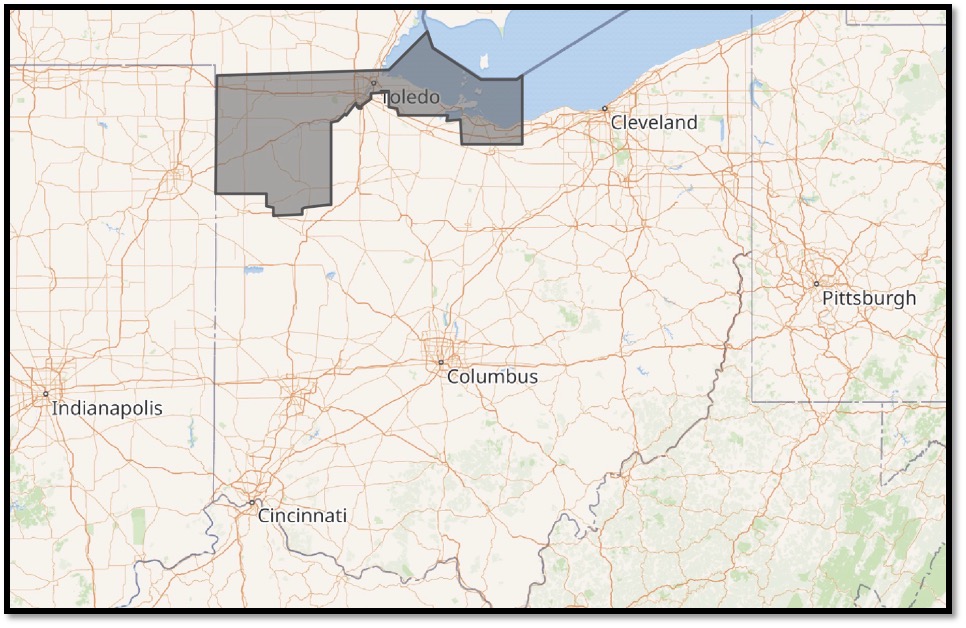
Ohio’s 9th Congressional District (OH-9) occupies the northwest corner of the Buckeye State and contains Toledo as its major metro area. These boundaries have been redrawn since the 2024 election thanks to the requirements of Ohio law, and OH-9 seems to be the seat in the bipartisan arrangement that was most gift-wrapped for Republicans to take over. OH-13, held by Democrat Emilia Sykes, was close in 2024 but made bluer by the redistricting commission, and OH-1 covering the southwest corner and Cincinnati was weakened (for Democrats) a little, but probably not enough to tip over in the 2026 cycle.
The new map removed the following from OH-9:
• Sandusky County • The northeastern edge of Wood County closest to Toledo
The map added these counties:
• Henry County (Trump +46.5%) • Paulding County (Trump +55.9%) • Putnam County (Trump +68.5%)
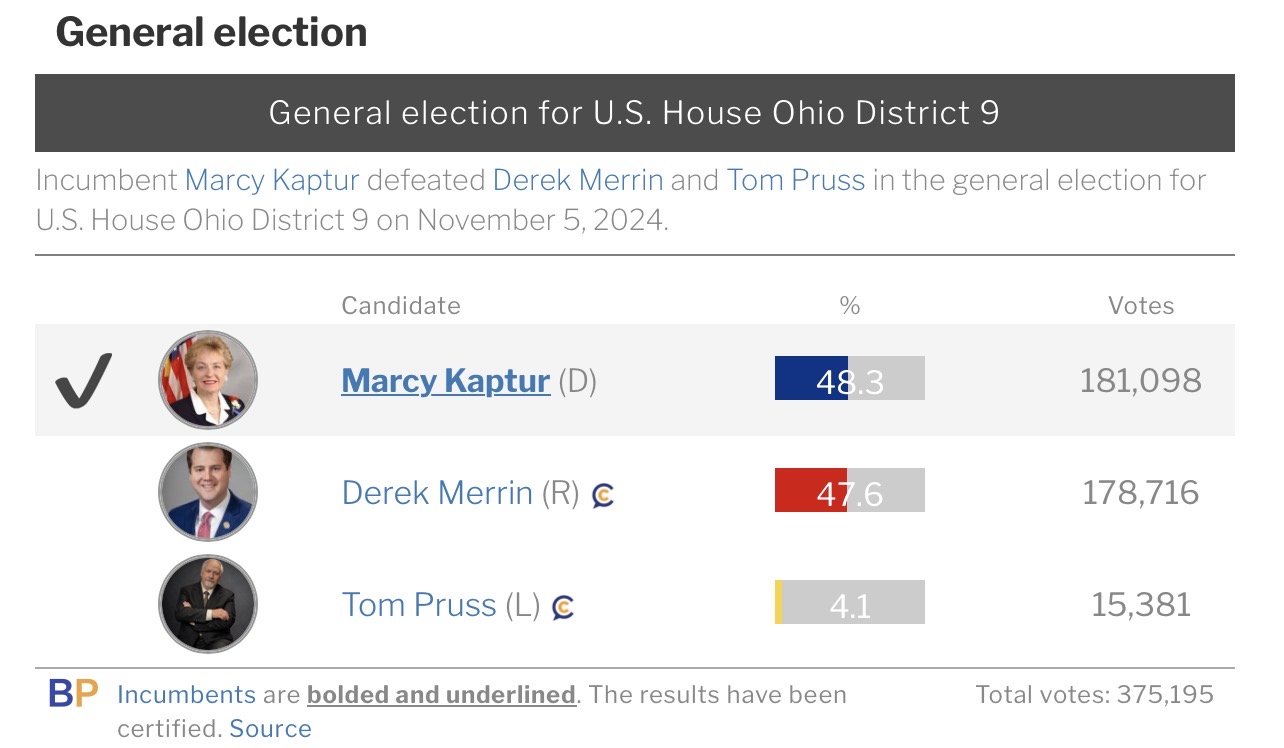
Trump won the boundaries of OH-9 as they were in 2024 by 7 points. His performance was not quite enough to get Merrin past the entrench Kaptur.
Here are the approximate recent presidential margins for the new boundaries:
Despite the geographical disadvantage, Polymarket bettors are still throwing in with Kaptur – a heavy favorite in the market.
IV. History
To write a history of OH-9 in its various shapes and descriptions over the past four decades would essentially be to write a biography of Kaptur. She has hogged the seat for far too long as a career politician posing as a public servant.
Prior to the 2024 race, and thanks to much friendlier ideologies and boundaries, Kaptur never had a close call. She often won by Pelosi margins, taking over 70% of the vote. In 2024, with Trump on his way to a +11.2% win statewide in Ohio, Kaptur barely held the line against Merrin:
2,382 votes, just 0.7%, separated her from her GOP challenger. Tom Pruss, the libertarian on the ticket, and given who is voting Democrat in OH-9, I’d bet his presence on the ticket hurt Merrin the most. Either way, Merrin is back for round two, and this time in a district with four more points of presidential margin at his back.
V. Analysis of 2026 Primary Results
Kaptur, unlike many entrenched Democrats, faced no challenger in the Democrat primary.
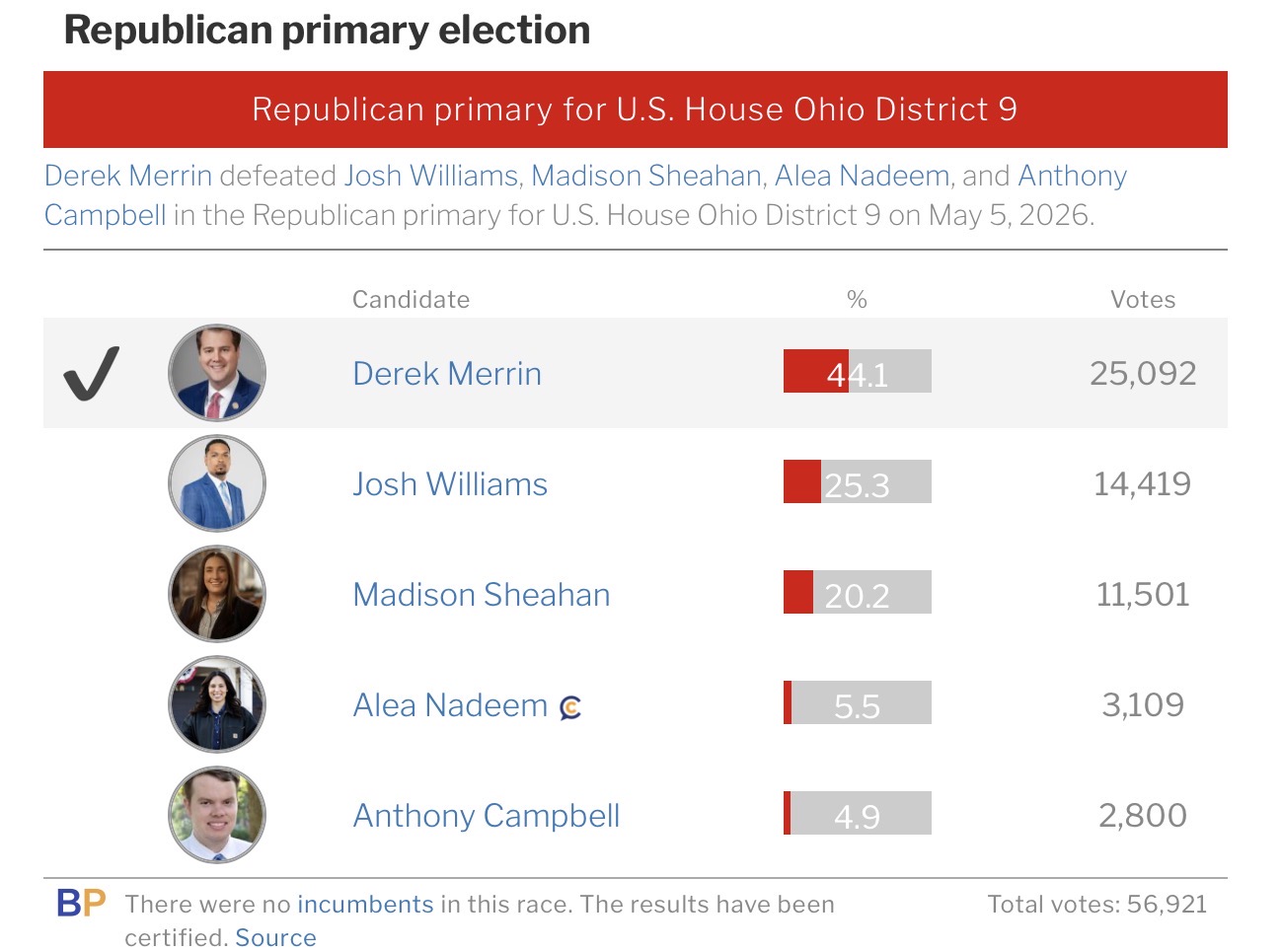
Merrin had to fend off a field of opponents, and prevailed by a +18.8% margin over Josh Williams, the second place finisher:
The GOP primary was full of mud-slinging and personal attacks, but the candidates have moved on and backed Merrin – and so has President Trump.
VI. Polls
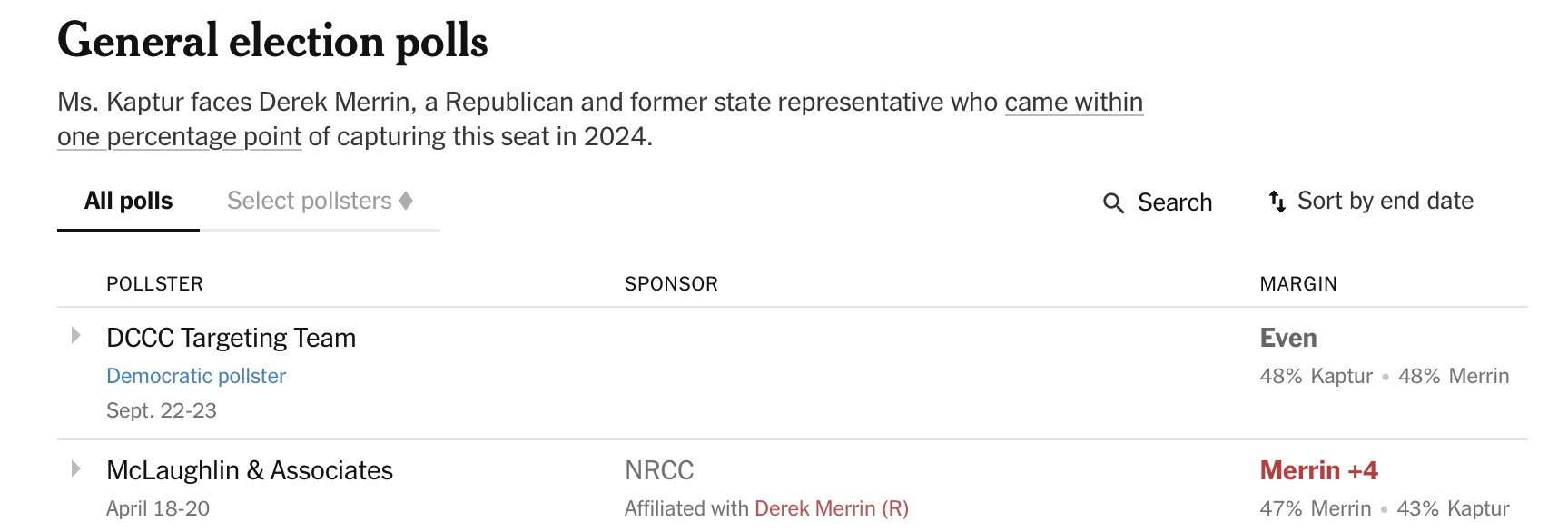
These polls were pulled from The New York Times:
The McLaughlin poll is old, but shows a four-point lead for Merrin. A recent Democrat-sponsored poll shows a tie, which is not a good poll for Kaptur given who paid for the result. I will award a slight edge to Merrin in this category.
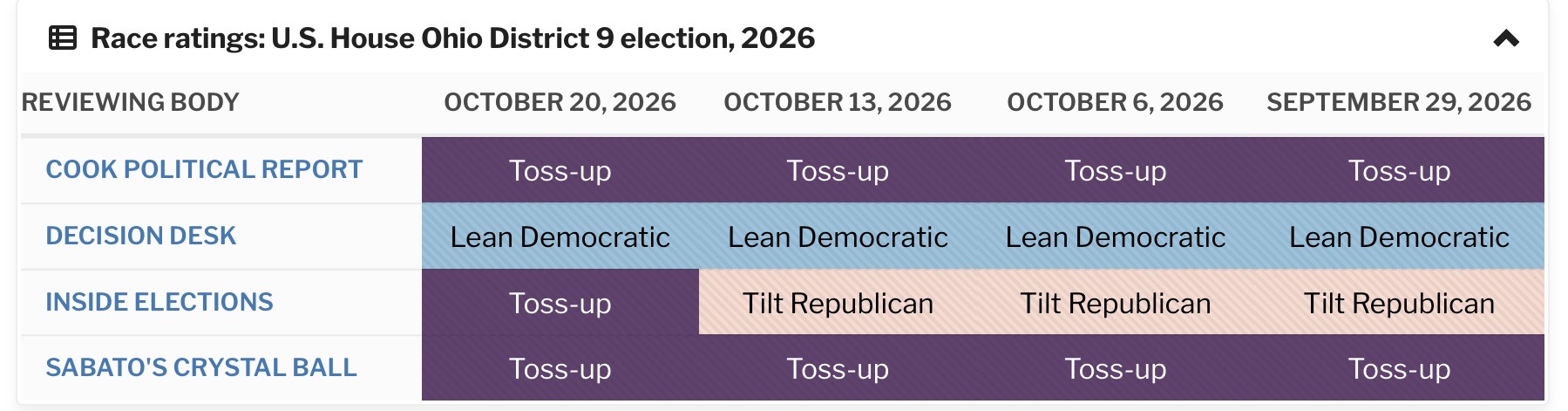
VII. Media Ratings
Decision Desk is a Kaptur believer, but the three other reviewing bodies I consider have the race scored a “toss-up.” Until the most recent update, Inside Elections favored Merrin, albeit narrowly.
VIII. Party Registration
Ohio does not register voters by party; however, based on similar county profiles in Pennsylvania, it is highly likely OH-9 would have a notable rightward drift in registration if we had such information.
IX. Election Considerations
Here is what I had to say in my write-up of the greatest unforced error in the race for the majority, OH-7:
Fortunately for Miller, Ohio has done a relatively strong job of sealing up election loopholes and has ensured they have control over the limited mail-in balloting that exists in the Buckeye State. I wrote up Ohio’s election details in the aftermath of the 2024 election for those of you interested in understanding how election integrity impacts races there. In short, there will be no late night ballot dumps impacting this race.
X. Summary and Election Estimate
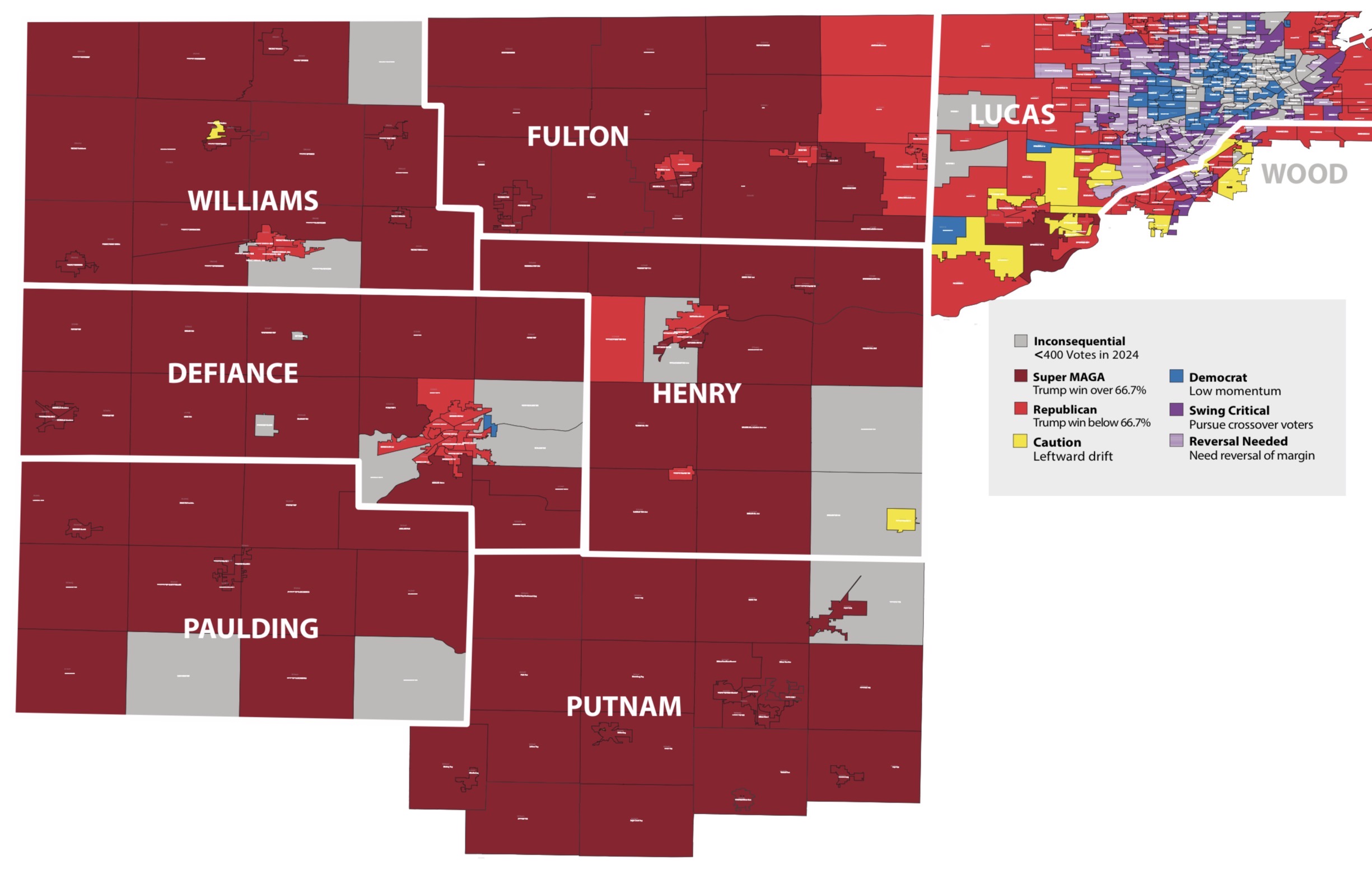
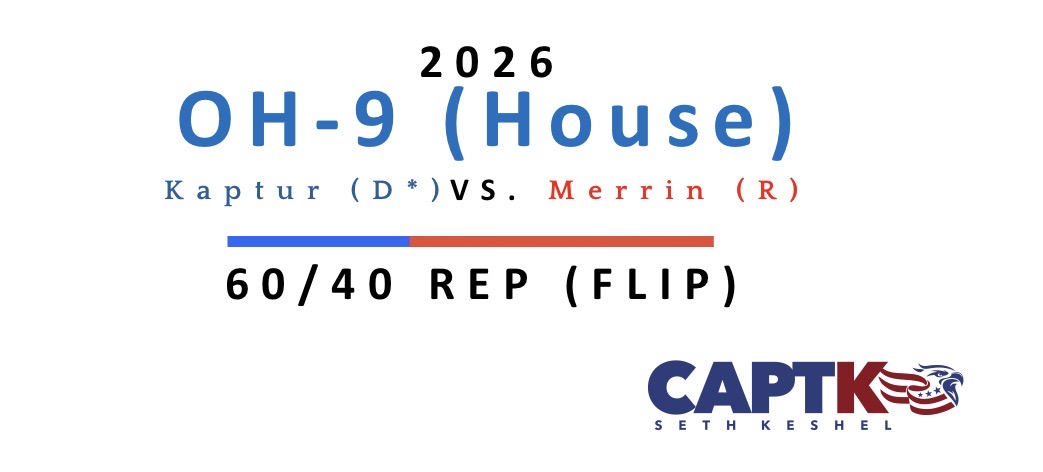
Ohio Republicans, at fault for showing mercy to Democrats when they could have flipped three seats, got the redistricting job done enough to imperil Kaptur’s seemingly endless career. They have set OH-9 up for a clash of two worlds: MAGA-land vs. Toledo. Have a look at my proprietary mapping of the new boundaries:
Captain K Proprietary Mapping of OH-9
This map excludes some of the far northeastern portion of the district, but I’m presenting the snippet this way with clarity in mind. Those crimson-shaded precincts are what I label “Super MAGA” precincts. Trump had 66.7% or more of the vote there in 2024, and there are no signs of leftward lurching. Lucas County, the home of Toledo, even has some friendly Republican precincts (regular red shade, no leftward drift, won by Trump but with less than 66.7% of the vote), so the entire county isn’t destroyed by the urban spread.
Toledo itself has a mix of Democrat-rated precincts (blue, Trump at less than 30% of the vote and often in low single digits for overwhelmingly black precincts) and working-class precincts with rightward momentum (solid purple). In a geographic arrangement like we find in the new OH-9, Kaptur needs two things to happen to win:
• Poor turnout in the crimsons • Massive turnout in the blues of Lucas County
Right now, Lucas County ranks 62nd out of 88 counties in Ohio, close to the bottom quarter, in terms of how much of its 2024 presidential vote count it has already turned out in 2026. To make matters worse, the turnout in Lucas County that has already happened is disproportionately from precincts less likely to overwhelmingly back Kaptur. If the city doesn’t vote, she can’t win.
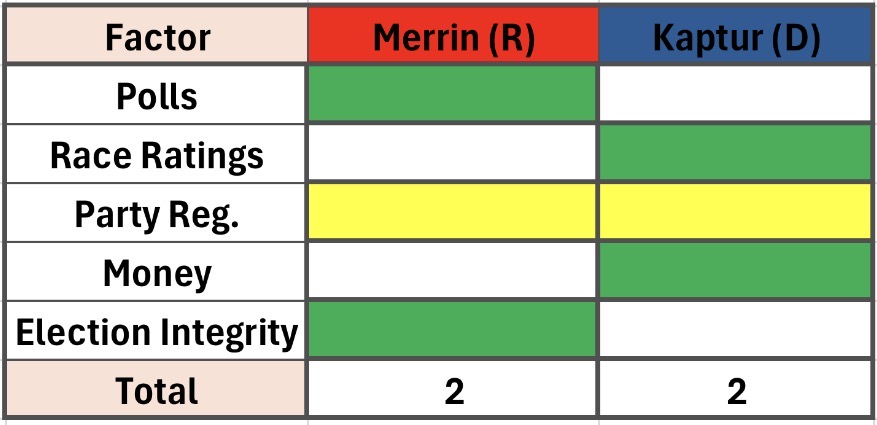
The decision matrix for this race looks like this:
Just as I have given Merrin the edge for inconclusive (but telling) polls, I gave Kaptur an edge for race ratings because she has just one outlet thinking she will win. Kaptur’s only real advantage is with money, a field in which she has massively benefitted because every special interest group in America is trying to save her career from what looks likely based on what I can read (and I don’t read polls).
Forecast for OH-9 House
I feel fairly confident Kaptur has reached the end of the line. This seat, just like the redrawn NC-1 seat, is a must-win for Republicans if they hope to hold their majority in the House. It is too strong presidentially, with voters trending almost uniformly in the right direction, to lose unless the entire brand is weighed down with too much baggage to defend all the seats up for grabs successfully.
Democrats can take the House without holding OH-9 (and NC-1), but if they manage to keep this seat, then I don’t see them missing out on the majority. Still, the fundamentals remain – if Toledo doesn’t vote, Kaptur goes into retirement.
Seth Keshel, MBA is a Senior Fellow at the Gold Institute for International Strategy and a retired Army Captain. He publishes Captain K’s Corner on Substack.
Featuring Ernie Audino, Senior Military Fellow, Kurdistan Program (U.S. Chair), Gold Institute for International Strategy
In brief
Ernie Audino joins Sarah Martinez Amir on the Jerusalem Center’s East to West podcast to discuss what a year embedded with the Kurdish Peshmerga taught him about Iran and the Middle East.
From the Jerusalem Center’s description: “What did a year fighting alongside Kurdish forces in Iraq teach a U.S. Army officer about Iran and the Middle East? Brigadier General Ernest C. Audino, a 28-year U.S. Army veteran who spent a year embedded with the Kurdish Peshmerga, joins Sarah Martinez Amir.”
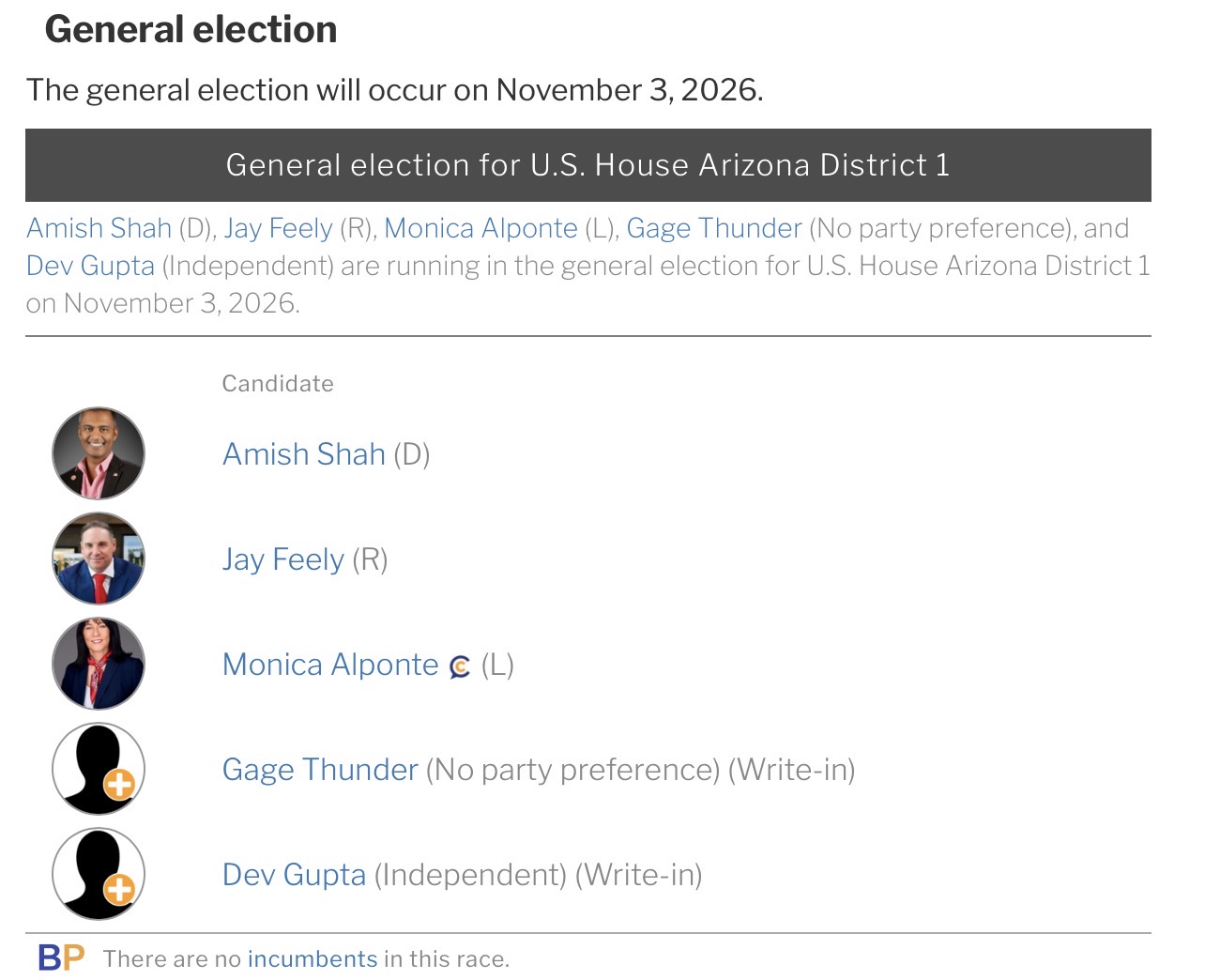
Jay Feely (Republican) is a former NFL kicker and TV sports analyst now trying his hand at politics. He is looking to replace David Schweikert, who is leaving AZ-1 open after eight terms in the U.S. House because he decided to run for governor and get absolutely destroyed by Andy Biggs.
Amish Shah (Democrat) is a physician and former member of the Arizona House of Representatives. He failed to unseat Schweikert in 2024 and, although he has a reputation as a moderate from the legislature, has recently cozied up to many DSA-adjacent figures and positions.
II. District Geography
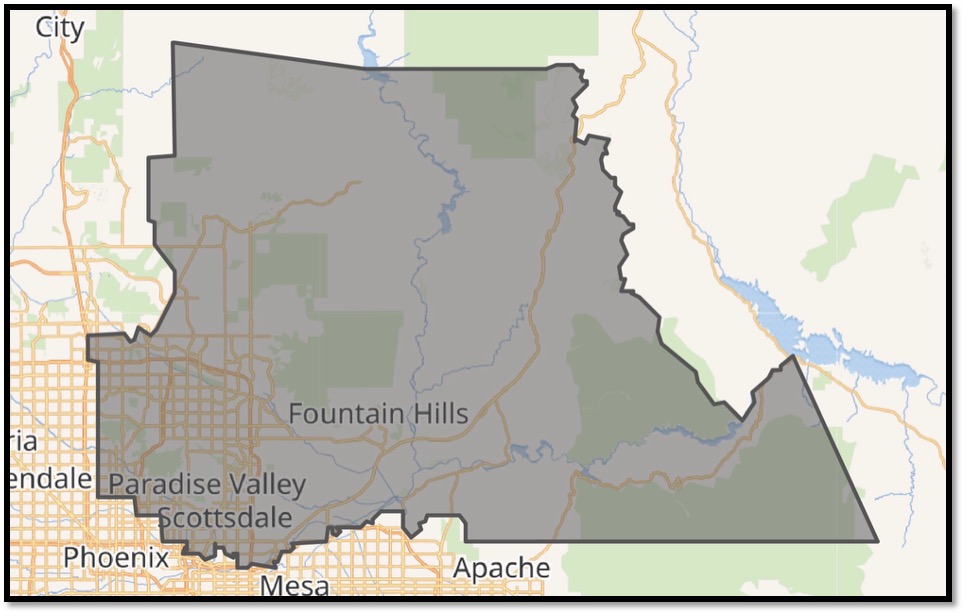
Arizona’s 1st Congressional District (AZ-1) occupies the northeastern corner of Maricopa County, including affluent cities like Paradise Valley, Scottsdale, and Fountain Hills, as well as segments of northeast Phoenix, which are more favorable for Democrats.
Despite its considerable Republican voter registration advantage, this district’s boundaries have been tough for President Trump and aligned Republicans for the past decade.
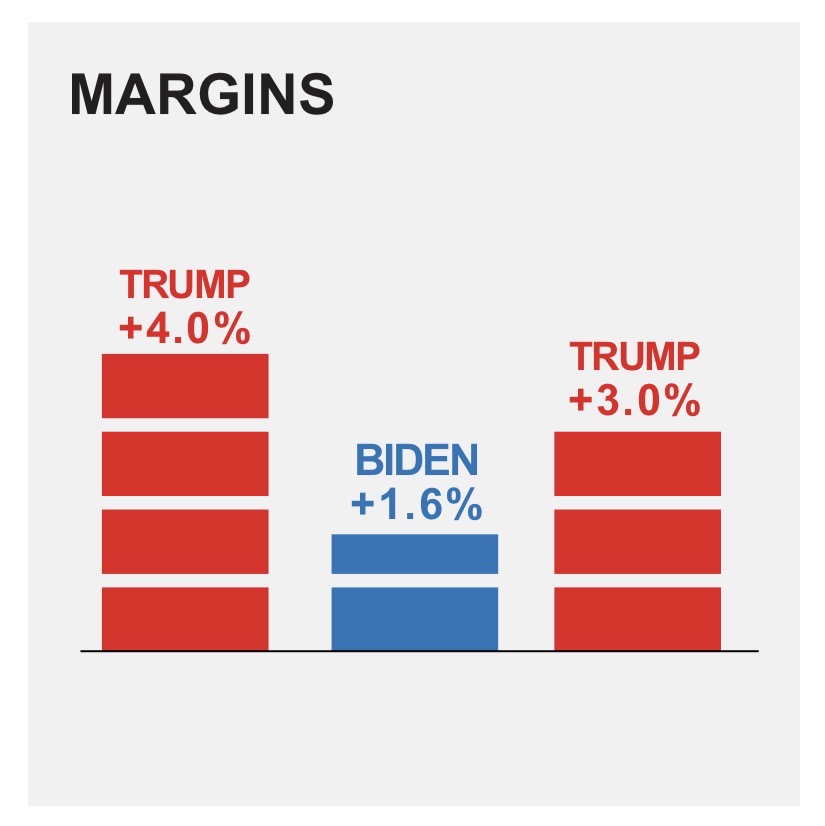
Presidential Margins
Practically everyone reading this will agree that the 2020 election in Arizona warped a lot of figures, including the margin in what is now AZ-1. Still, the Trump margins for all three of his races run far to the left of the GOP registration advantages for each year, and are mostly linked to GOP defectors in swanky places like Scottsdale and Paradise Valley, which featured nice gains for Trump in 2024 (which I will dive into in Section X).
Polymarket bettors have wagered heavily on Shah, whose shares are clearly overpriced.
IV. History
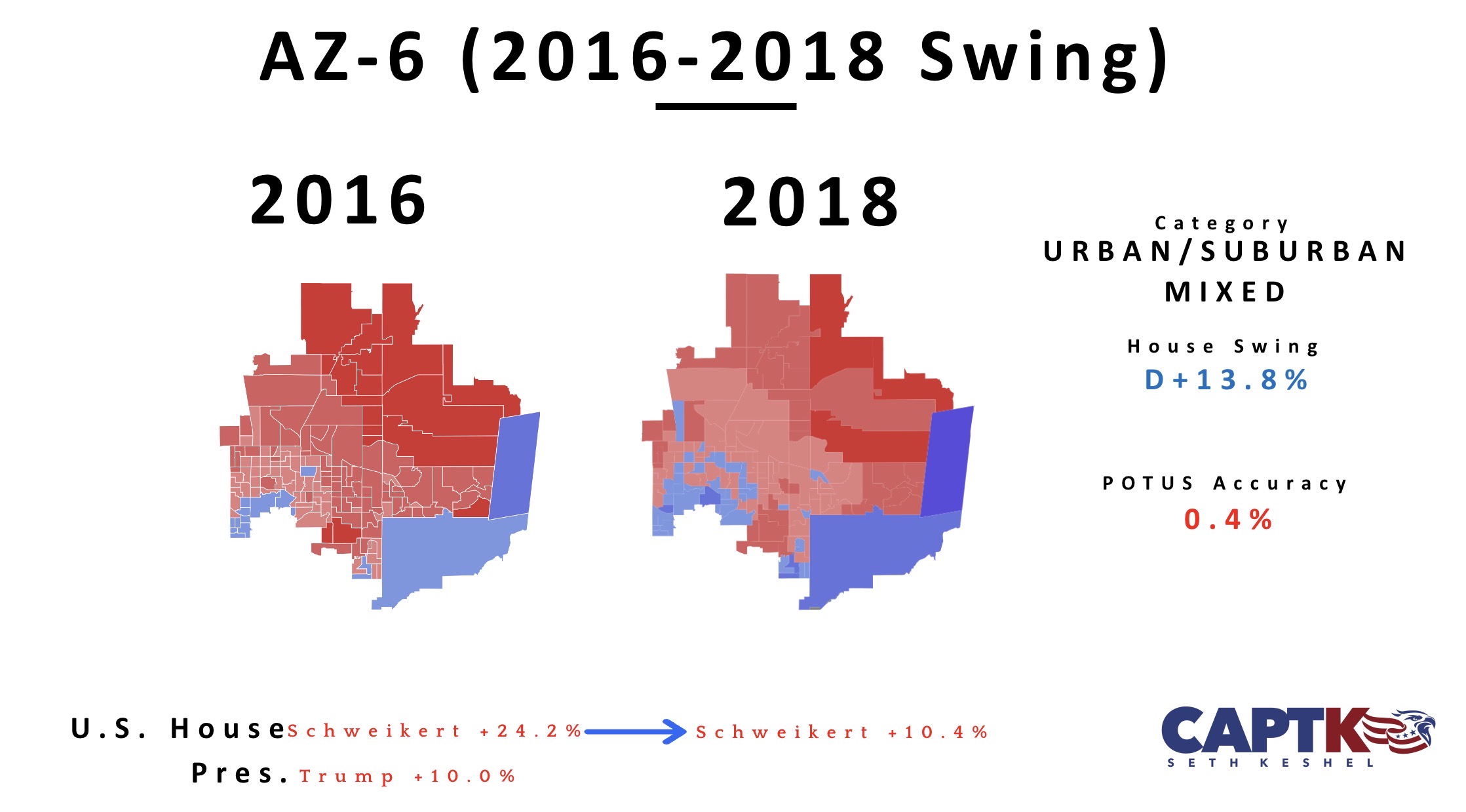
Prior to the 2022 election, most of the territory of what is now AZ-1 was called AZ-6, represented by Schweikert. Trump won those boundaries even in the 2020 election by roughly 4 points. The redistricting of Arizona post-2020 cut out more Republican-friendly areas of north Phoenix and replaced them with more Democrat-friendly neighborhoods closer to downtown, hence the reason for paper-thin margins this decade. Here is how the old boundaries, which still included the affluent establishment Republican areas in the district today, shifted from 2016 to 2018:
Despite being an overwhelmingly Republican district at the time, the 2016-18 shift met all the warning signs prominent that year. Trump underperformed Schweikert in the district thanks to the McCain feud and his perceived lack of Republican “street cred” in 2016, and in 2018, the margin essentially matched Trump’s. This was good enough to hold the seat, but the gaps in KS-3, CO-6, and other suburban seats weren’t enough to give the GOP incumbents room to breathe.
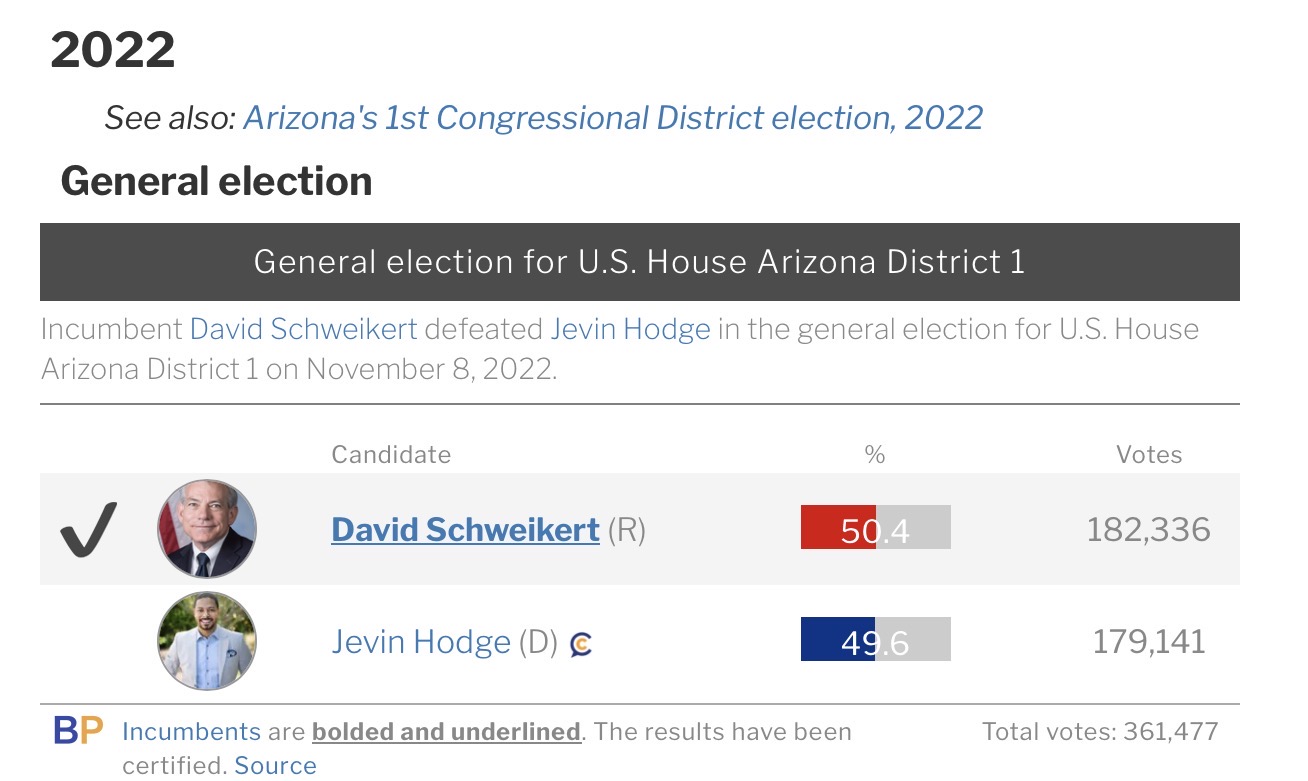
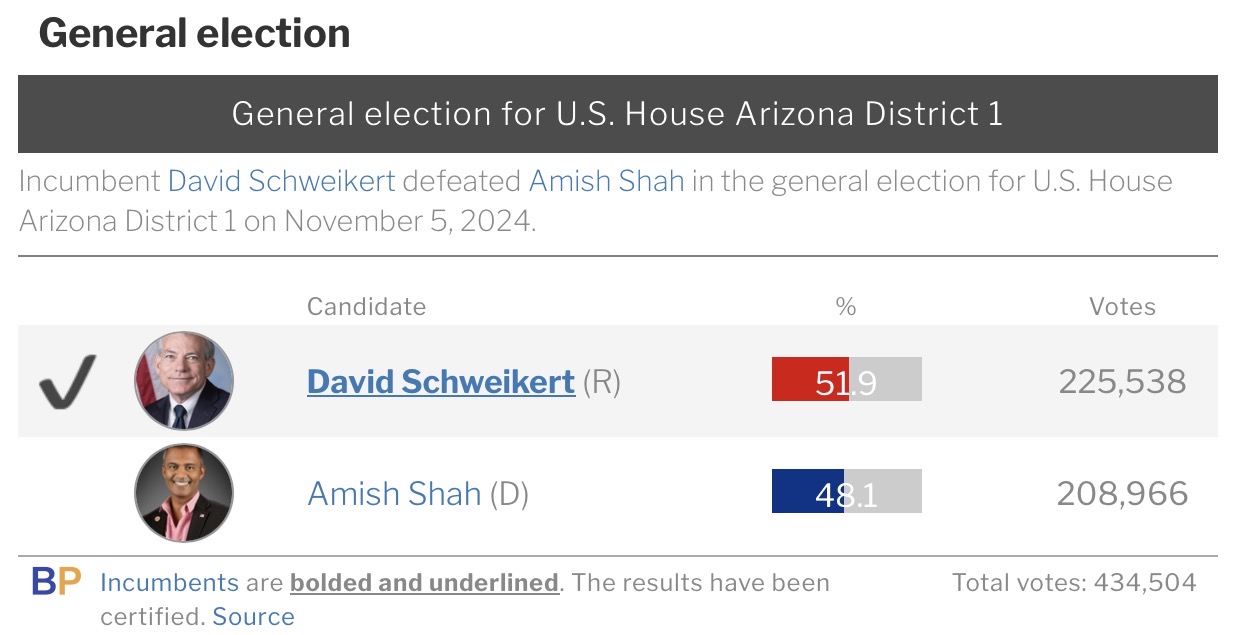
This anti-Trump trend continued through the awful 2020 election, when Schweikert held on by just 4.4% against Hiral Tipirnini. In two races since the seat has been redrawn, Schweikert’s margins have been equally uncomfortable:
• 2022 +0.8%
• 2024 +3.8%
I would have expected Schweikert to have a larger margin in 2022, a GOP House popular vote midterm victory, than I would have thought he’d get in 2024, when he won by 3.8% against Shah; this seems like a positive sign that Shah is seen as out of touch with the district and not likely to capture a tailwind like the one we saw in 2018 (which Republicans also didn’t see as vulnerable, and spend accordingly).
V. Analysis of 2026 Primary Results
Both parties had seriously contested primaries, and Democrats have the worst fallout.
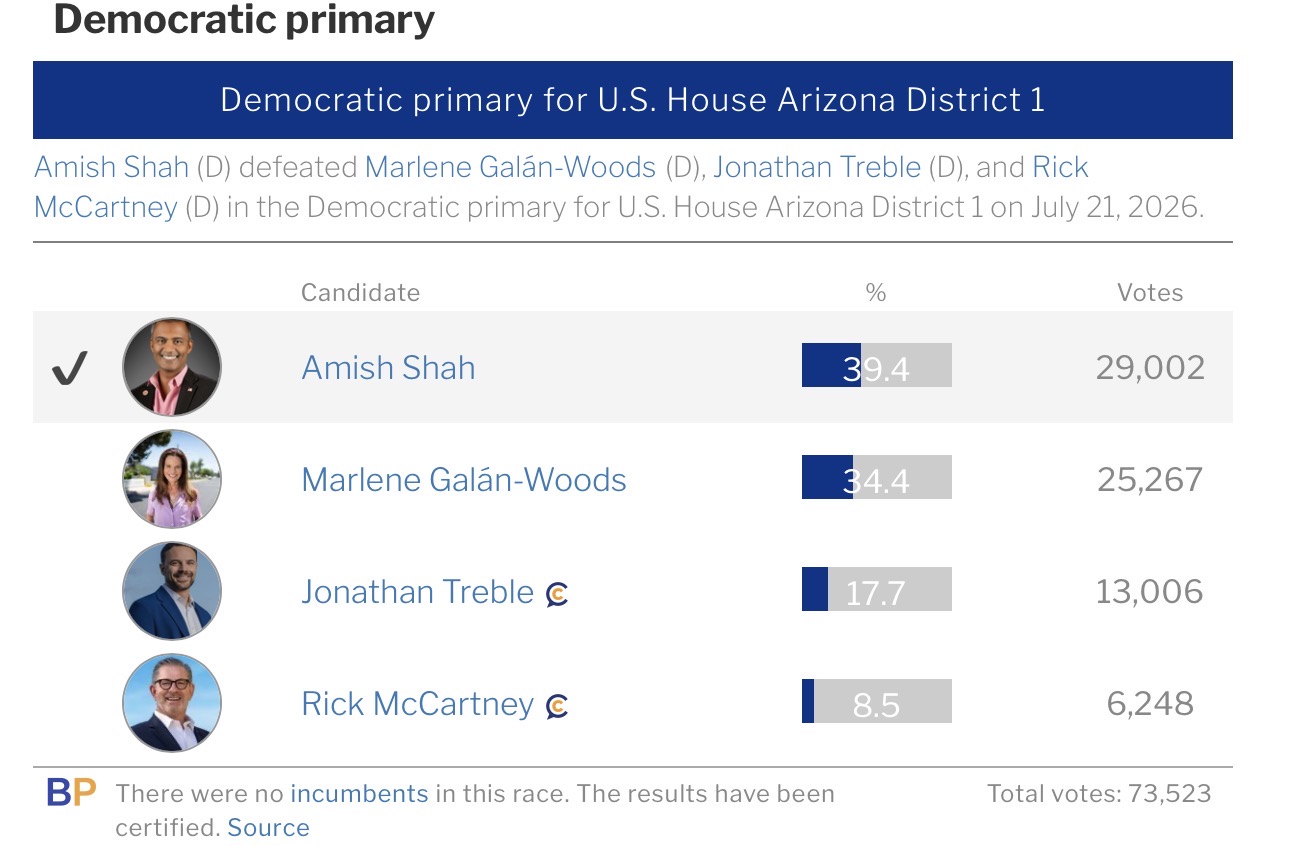
The deep pockets, lobbyist groups, and Democrat establishment all wanted broadcast journalist Marlene Galan-Woods to win the Democrat nomination. She came up 5 points short to Shah, who had no choice but to run toward the left-wing grassroots organizations – a pathway to victory in the primary but a potential millstone for the General Election.
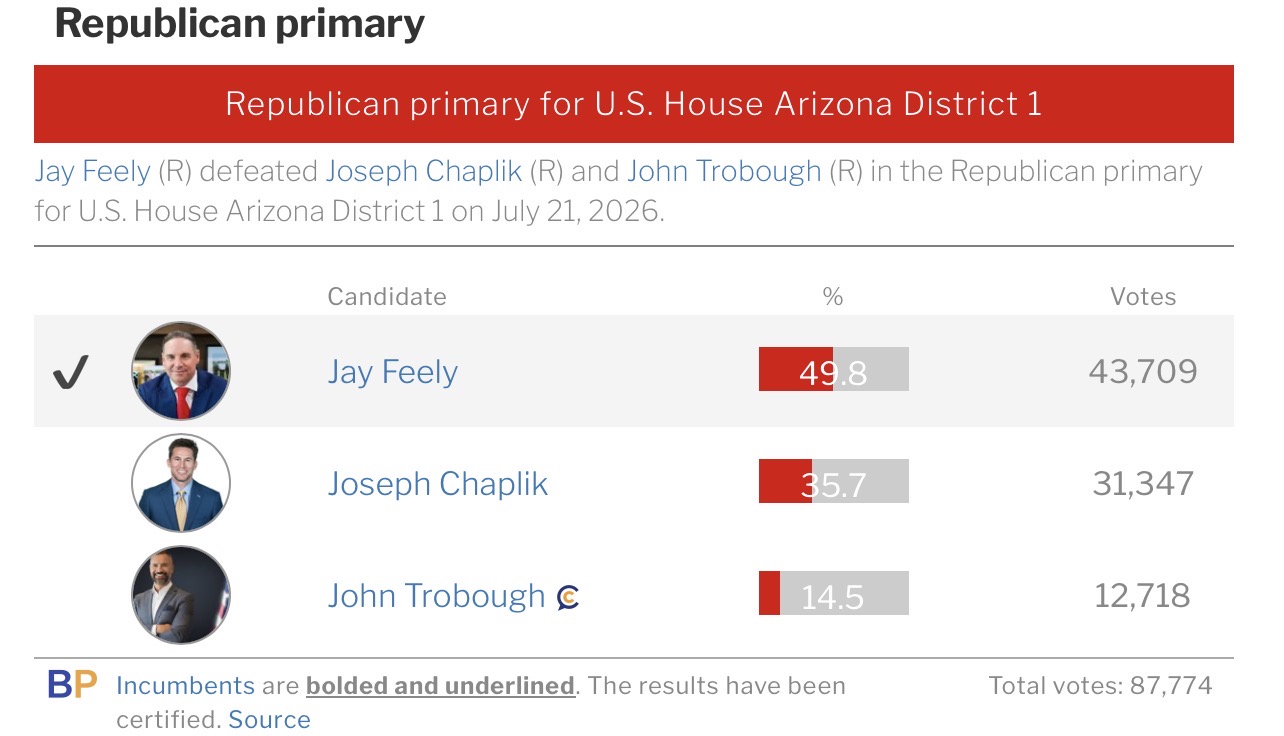
Republicans also had a hotly contested primary. Rachel and I were pulling for former State Representative Joseph Chaplik, who is more aligned with the grassroots, but Feely pulled 49.8% of the vote and won the nomination, highlighting the continued divide between Republican establishment and the MAGA coalition in Arizona.
VI. Polls
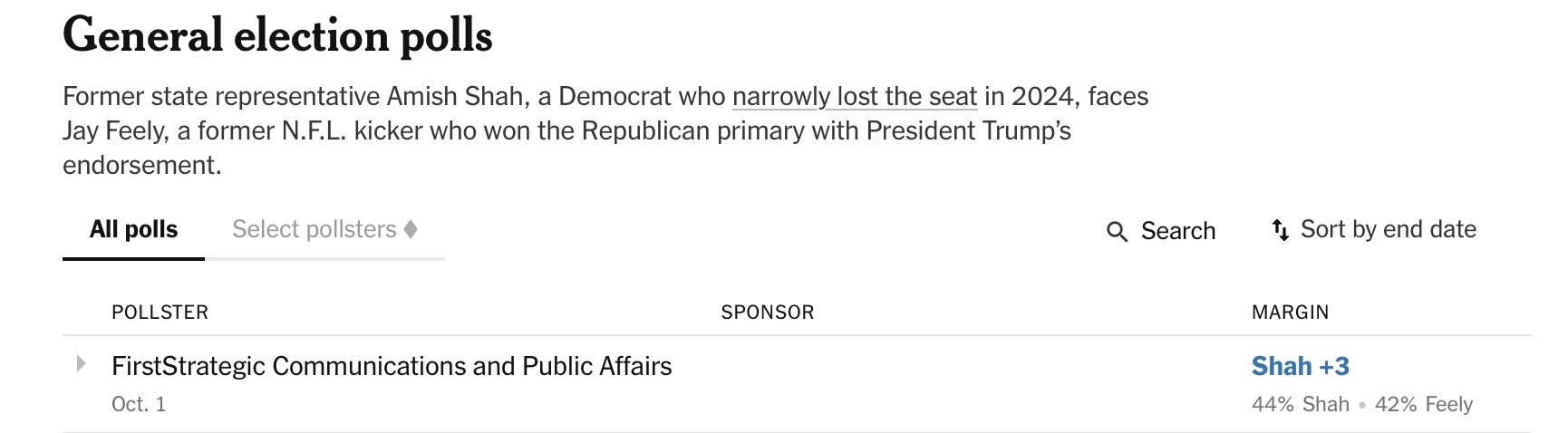
Poll sourced from The New York Times:
Only one poll is on file for this stretch run, and it tells us next to nothing with 14% undecided and the race within the margin of error.
VII. Media Ratings
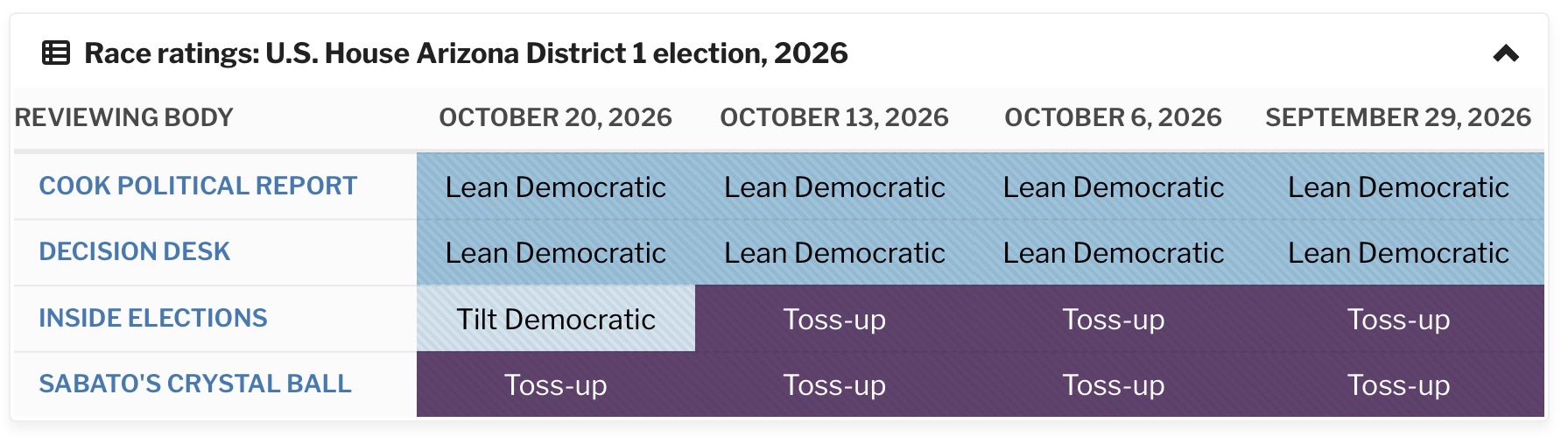
Sabato has this race as a “toss-up,” but the other three favor Shah by varying degrees likely predicated by the 2018 swing.
VIII. Party Registration
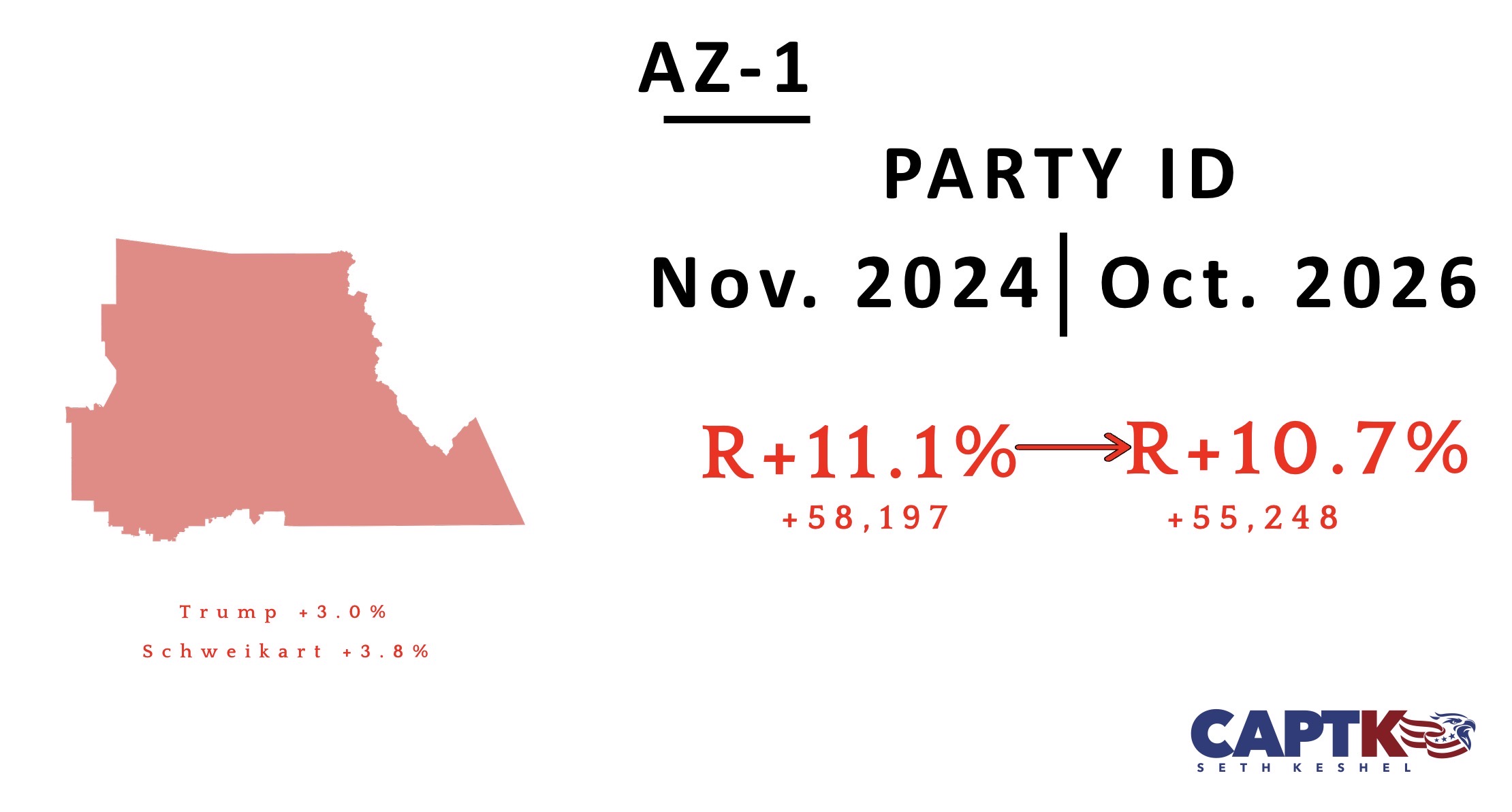
Party registration changes in AZ-1 only slightly favor Shah, as Democrats have closed the gap by less than 3,000, and less than half of a percentage point. These are net gains, a product of both parties losing membership since the 2014 election. It gives TPUSA a slightly diminished bench from which to chase ballots, but isn’t representative of a fundamental shift in voter behavior evident by registration analysis.
IX. Election Considerations
It will come as absolutely no surprise to anyone who has followed the battle for election integrity in America that Arizona is one of the worst states in the country for transparency, handling of mail-in ballots, long counts, and “bipartisan” cover for these activities. The Maricopa County Board of Supervisors, supposedly four Republicans to one Democrat, have constantly interfered with the efforts of Justin Heap, the new County Recorder, to streamline as much of this process as possible in a short period of time.
X. Summary and Election Estimate
At face value, AZ-1 looks like a perilous contest for the Republicans, facing an open seat, in a midterm year that is supposed to favor Democrats; however, there are three factors that give the Republicans the best odds of the two decisive house seats in the state:
Candidates. Shah beat out Galan-Woods, the media personality the Democrat and Maricopa establishment was trying to nominate for the race. He has had to adapt his positions and while he’s not a card-carrying DSA member, appealing to the new left is what got him the nomination. On the other side of that coin, Republicans nominated the establishment candidate, too.
Unfortunately for Shah, AZ-1 is a very establishment district, as observable by how far left of its registration it has been voting in the Trump era. Feely has come under fire for his positions on guns and for being wishy-washy with his past statements (and for some of his alliances, like those with the Clintons). It will be impossible to hang the “too extreme” label on Feely, as Chaplik’s opponents would have done with him.
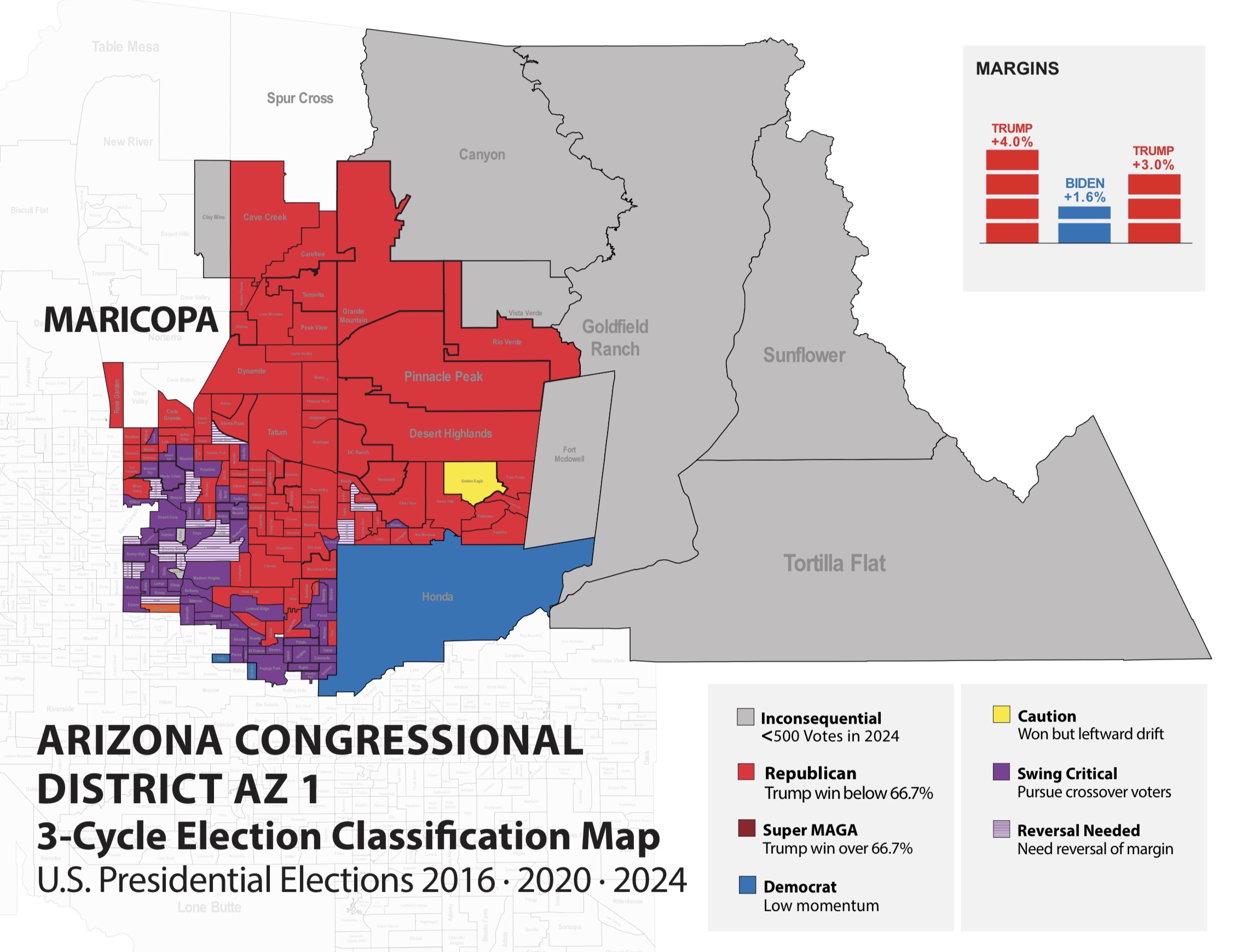
The turbulence has settled down. There was a lot of volatility in this portion of Maricopa County at the beginning of the Trump era, but the almost all of the Republican precincts became more favorable for Trump in 2024. Here is my proprietary mapping of the district:
Captain K Proprietary Mapping of AZ-1
There are no “Super MAGA” (Trump with over 66.7% of the vote), but the positive indication here is that unlike VA-2, the district isn’t covered in yellow (precincts won by Trump but with at least 3% of leftward drift). The red precincts here are, for the time being, “friendlies.” The precincts in purple are heavily Latino, and those with solid coloring had movement toward Trump despite going for Harris overall.
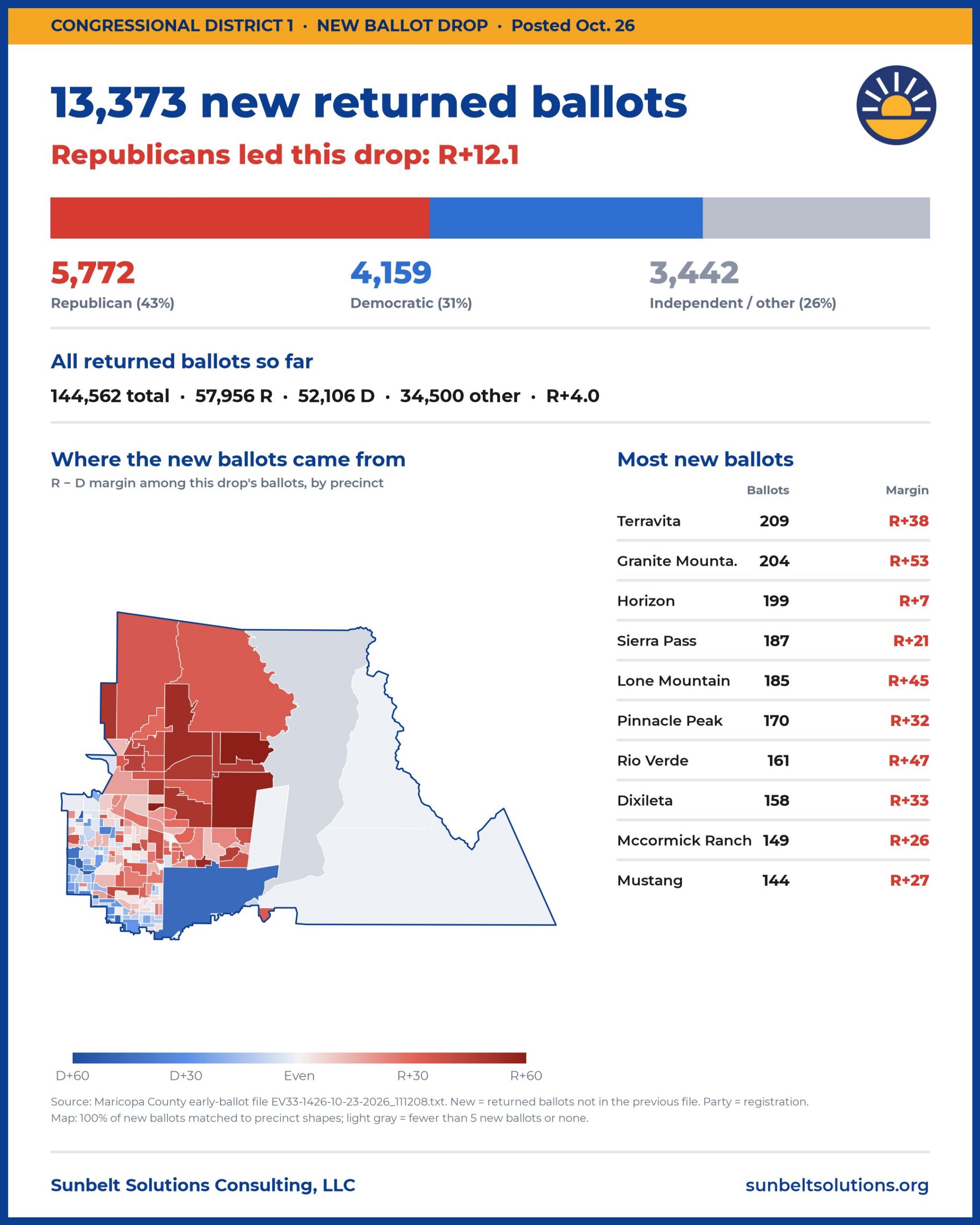
Early turnout. As I sat down to write this assessment, Maricopa County released a bunch of ballots that went R+12.1%:
To understand how massive that is, it’s eight days until the election and Republicans just secured a drop that ran right of overall registration (R+10.7%, shown above). Overall returns in AZ-1 sit at R+4.1%. As this trend escalates, likely due to Latino voters sitting on their hands with lower enthusiasm, Feely will become more and more likely to hold the seat.
🚨NEW SWING SEAT UPDATE: Arizona Republicans are showing up for @jayfeely. Today’s Maricopa drop in CD1: 13,373 ballots @ R+12.1. GOP lead in early returns grew from R+3.2 to R+4.0. 5,850 more R than D ballots.
Ari Daniel Bradshaw (@AriBradshawAZ), Oct 26, 2026
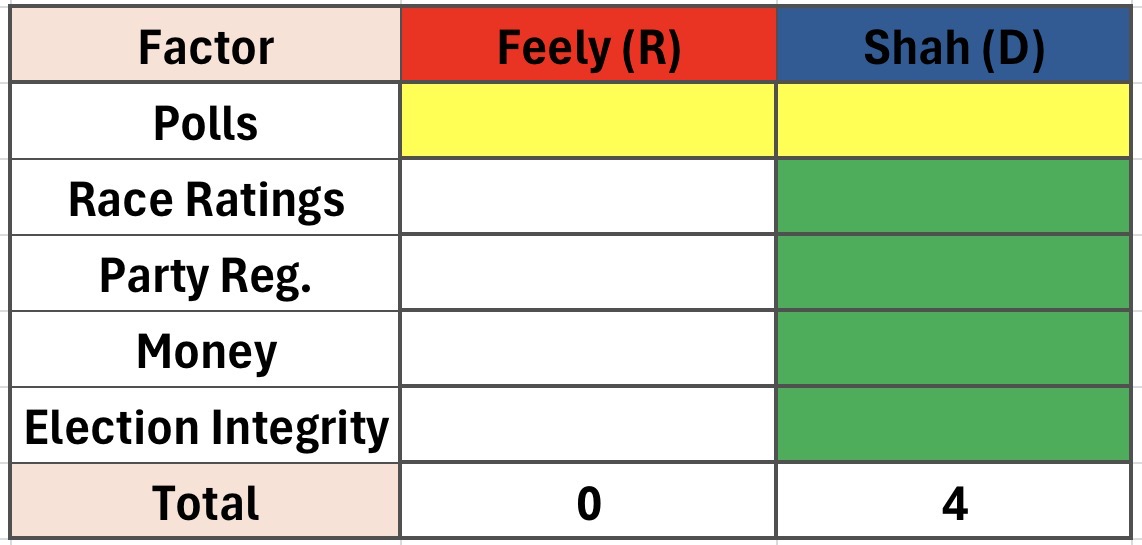
Shah leads every applicable category in my decision matrix, although Feely has plenty of money coming in from outside spending:
However, despite having these advantages at his disposal, I think candidate quality and the TPUSA ballot chase differential puts this race on its head:
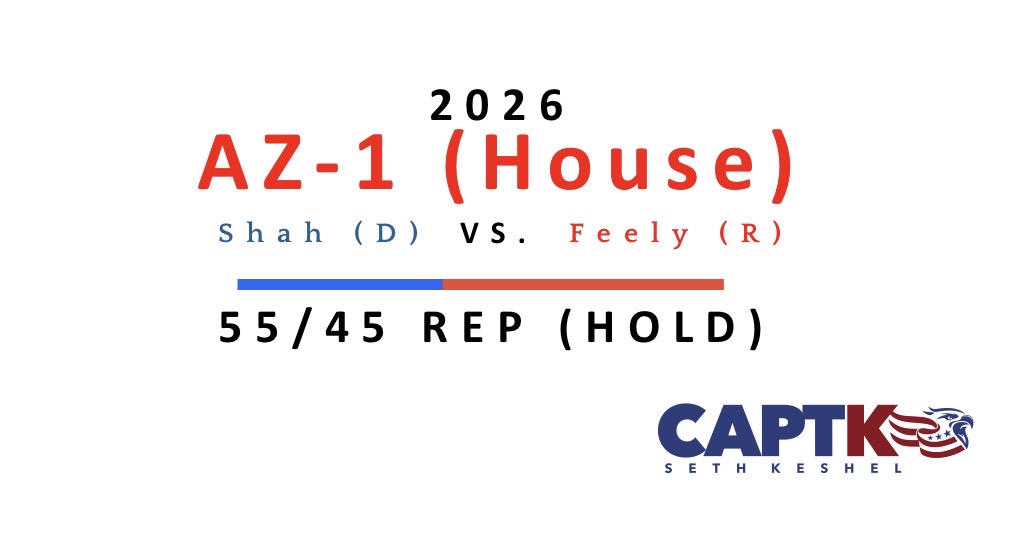
Forecast for AZ-1 House
As with all of my 55/45 calls, I consider this race a flip of the coin, with the lean being owed to either the core set of fundamentals or, in this case, a steady stream of data. The latest ballot drop and the success in low prop voter turnout appears to be making a dent, and I think Feely is massively undervalued in this race. Shah will need to see a major uptick in Latino Democrat turnout and hope there are a lot of soft Republicans voting for Hobbs that will tick Democrats all the way down the ballot.
Seth Keshel, MBA is a Senior Fellow at the Gold Institute for International Strategy and a retired Army Captain. He publishes Captain K’s Corner on Substack.
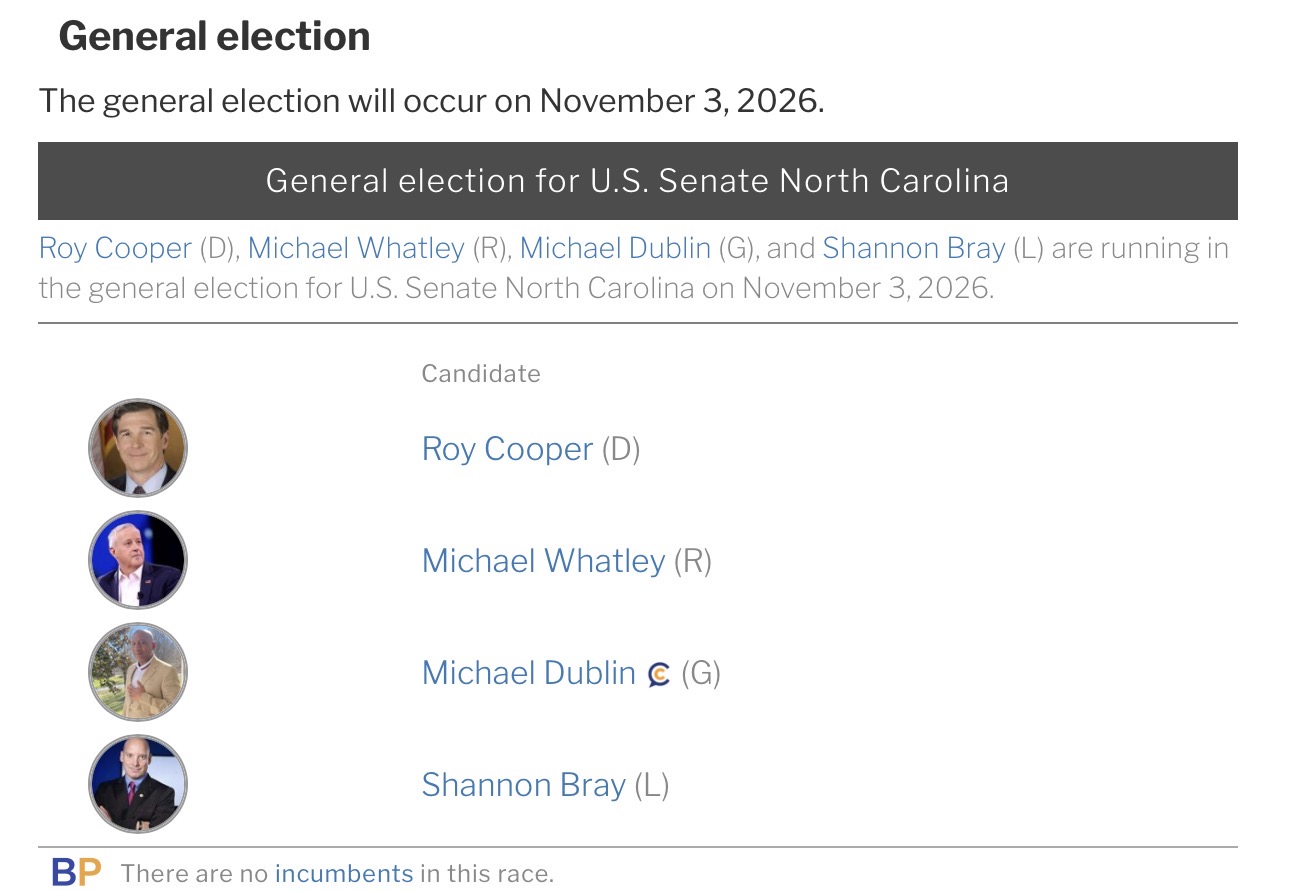
Michael Whatley (Republican) is an attorney who served in the Bush 43 administration before working in the energy industry and chairing the North Carolina Republican Party. He was RNC chairman during President Trump’s winning 2024 campaign, and now looks to fill the Senate seat being vacated by noted backstabber, Thom Tillis.
Roy Cooper (Democrat) has been a politician for 40 years, serving in the state legislature, as Attorney General, and then as governor from 2017 through 2025, when he was replaced by current governor, Josh Stein. He looks to become the first Democrat elected to represent North Carolina in the U.S. Senate since Kay Hagan, who won her last race in 2008.
II. State Profile
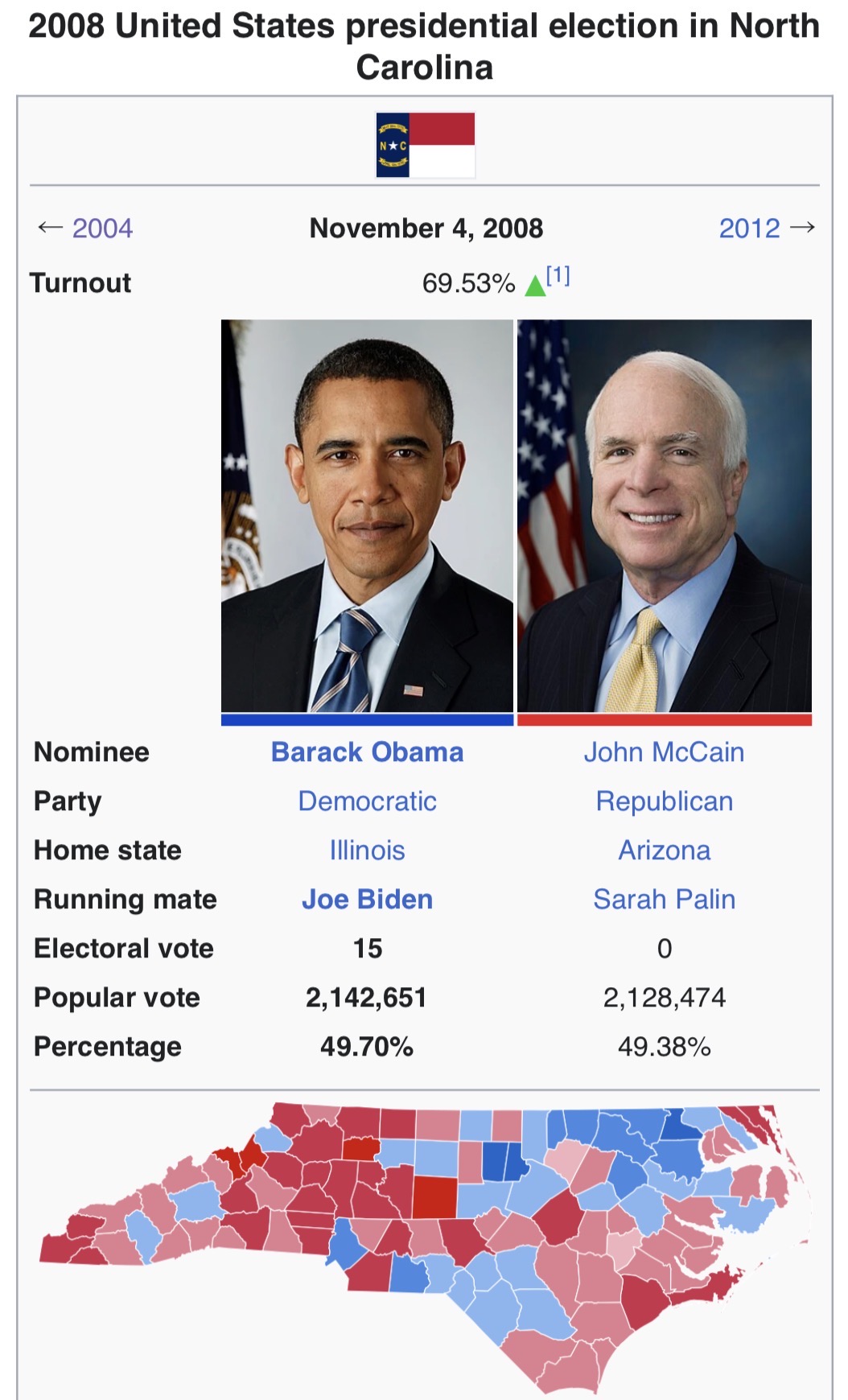
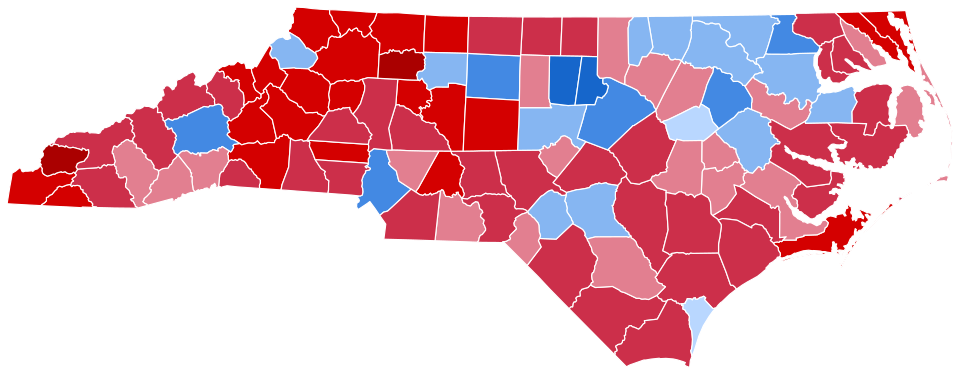
North Carolina has grown tremendously since the start of the century, when George W. Bush won it twice by more than 12 points. It represented, perhaps after only Indiana, Barack Obama’s most significant upset in the 2008 election:
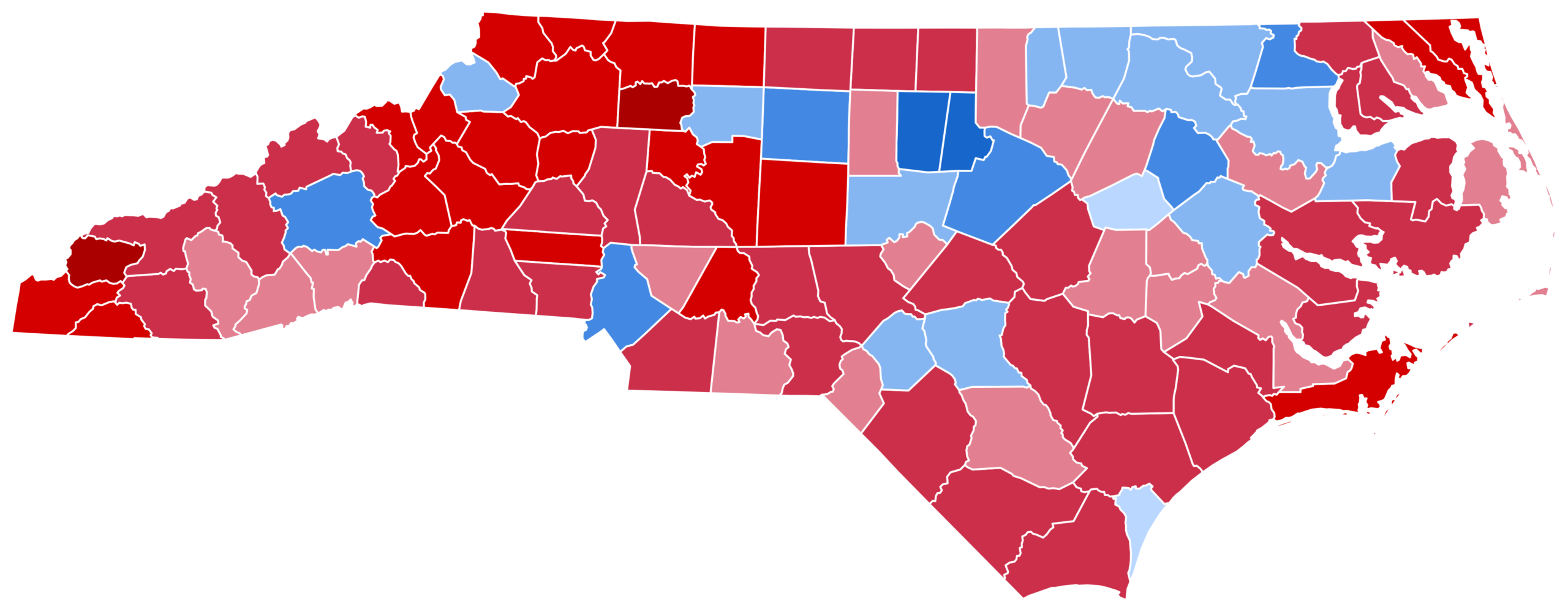
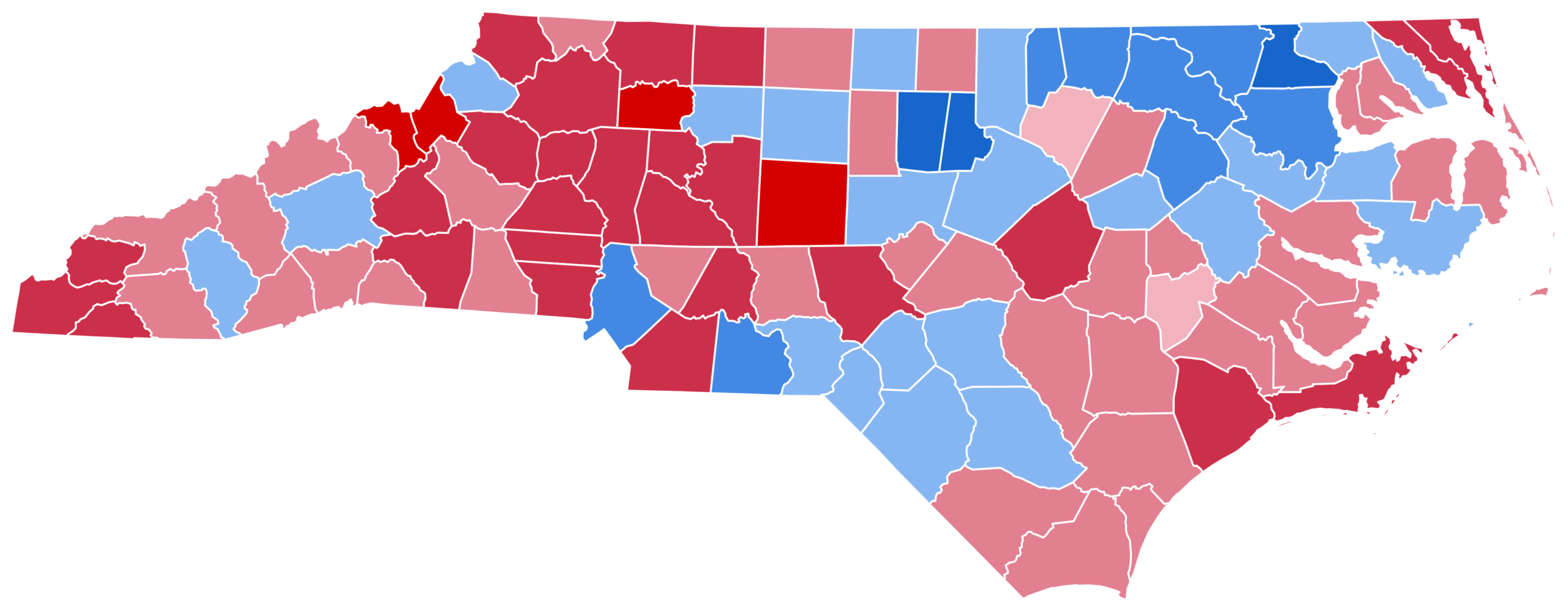
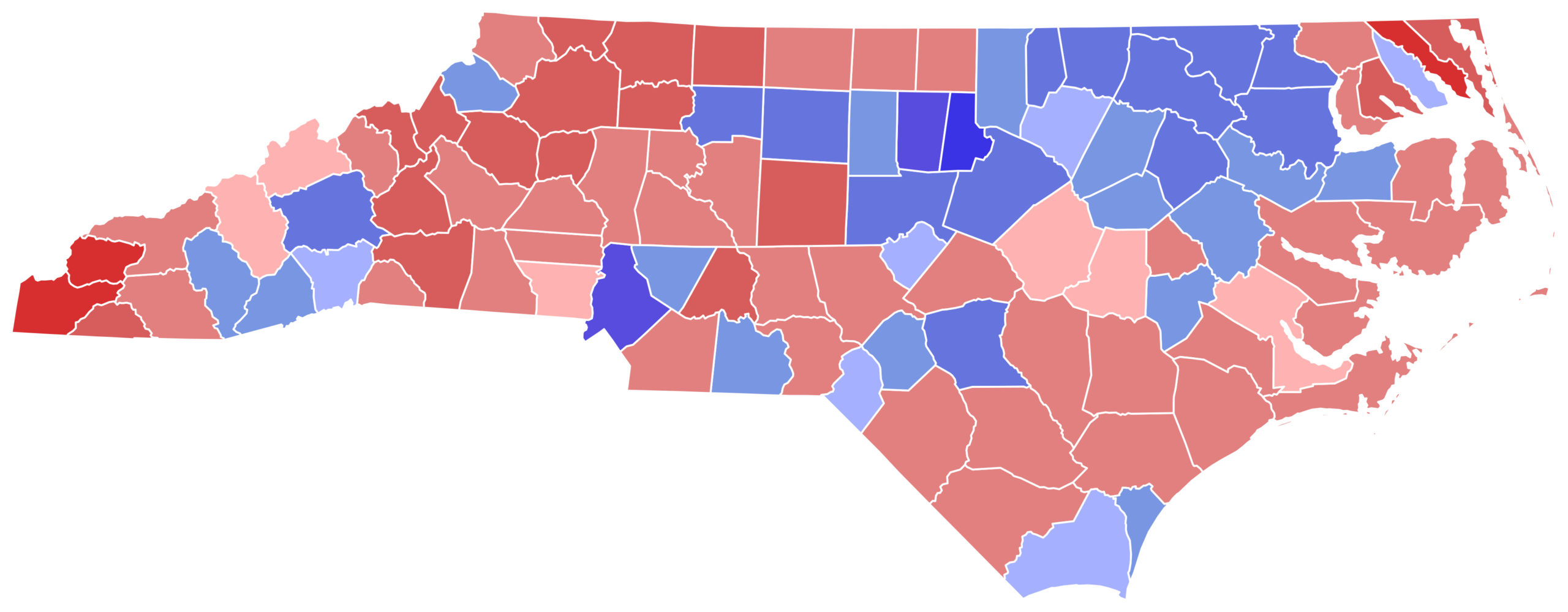
Since then, it has been won by four consecutive GOP presidential nominees:
That 2020 result, which ran 2.4% left of 2016 despite a monumental move in voter registration toward Republicans, has ironically put me at odds with Whatley for five years. I argue that election was tainted by the expansion of mail-in balloting, and he has rebutted my positions repeatedly. Nevertheless, the state is constantly growing and changing, and risks turning into Georgia if Republicans don’t right the ship. The difference between a Democrat presidential win of North Carolina and a Republican one is much different than we would have envisioned it 20 years ago.
2008 Presidential Election in North Carolina
2024 Presidential Election in North Carolina
North Carolina’s Appalachian west and the southeastern coastal areas have turned a hard shade of red, whereas they were once Democrat-leaning or light pink. In the Trump era, Mecklenburg and Wake Counties (Charlotte and Raleigh, respectively) have become real liabilities – countered only by the reddening of the perimeter of the state. Had Trump won Romney’s margins outside of Wake and Mecklenburg, he’d have lost the state in 2020 and 2024.
North Carolina, as evidenced by their frequent Democrat governors, do split tickets. Here is the map from Stein’s 2024 victory, concurrent with Trump on the ticket:
2024 Gubernatorial Election in North Carolina
As I will demonstrate with party registration figures later in this article, North Carolina does not possess widespread loyalty to the Republican Party, especially in rural areas like it does in states like Texas, Georgia, or in the heartland. The largest metro areas are hardcore Democrat strongholds now, and the combination of these two factors gives Democrats a chance to win despite GOP progress throughout most of the state’s geography.
Key Statistics
60.5% White, 20.2% Black, 10.7% Hispanic
III. Market Assessment
Polymarket bettors feel even more confident in Roy Cooper than they do in Jon Ossoff in neighboring Georgia.
IV. History
Republican Jeter Pritchard left the United States Senate in 1903, and with it, so did North Carolina’s GOP influence on the chamber for many decades. It was until 1972 that the Tar Heel State elected another Republican when it sent Jesse Helms to Washington, D.C. He declined to run for a sixth term in 2002, and was replaced by Elizabeth Dole, whose husband was none other than the legendary Bob Dole.
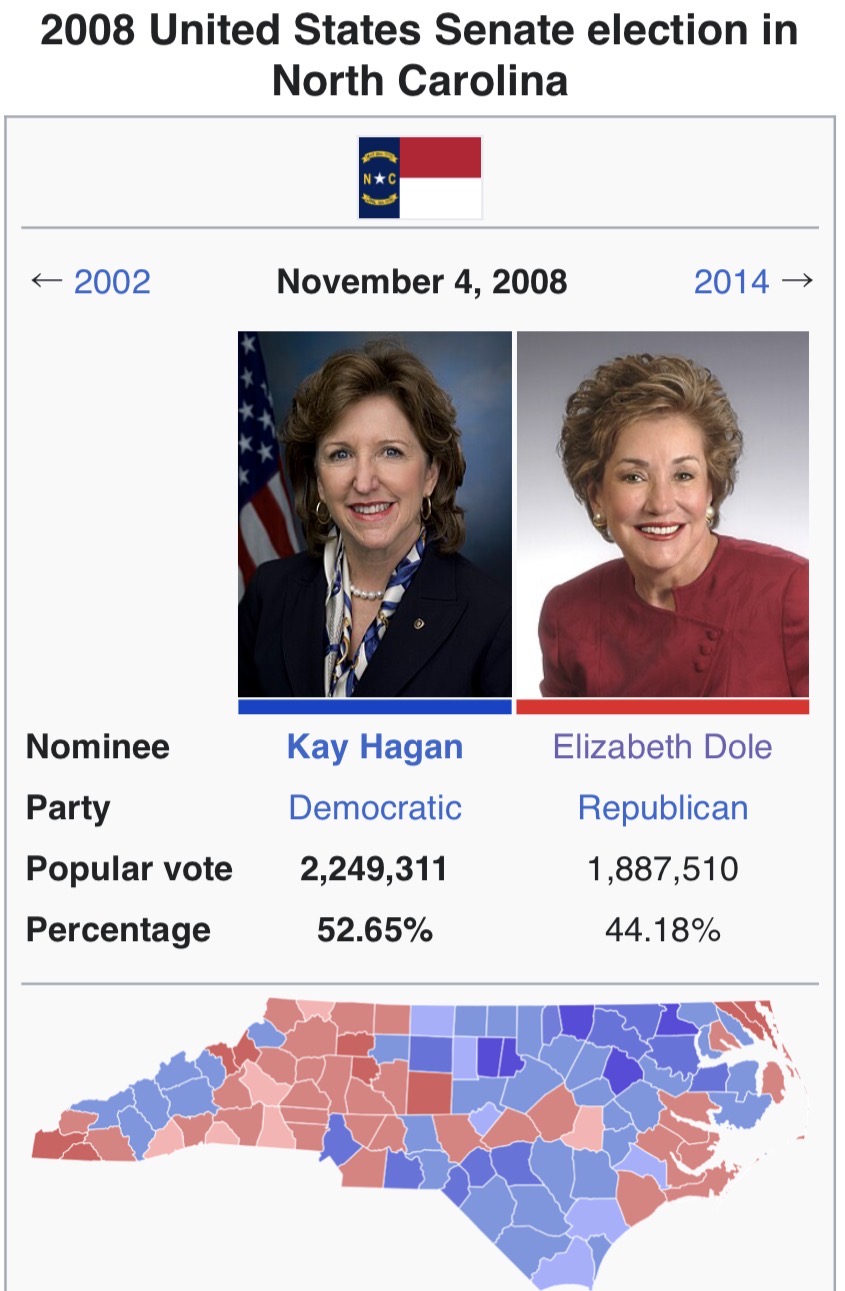
Her opponent in 2008, Kay Hagan, rode Obama’s statewide upset and ancestral Democrat strength to her own victory, and by a large margin:
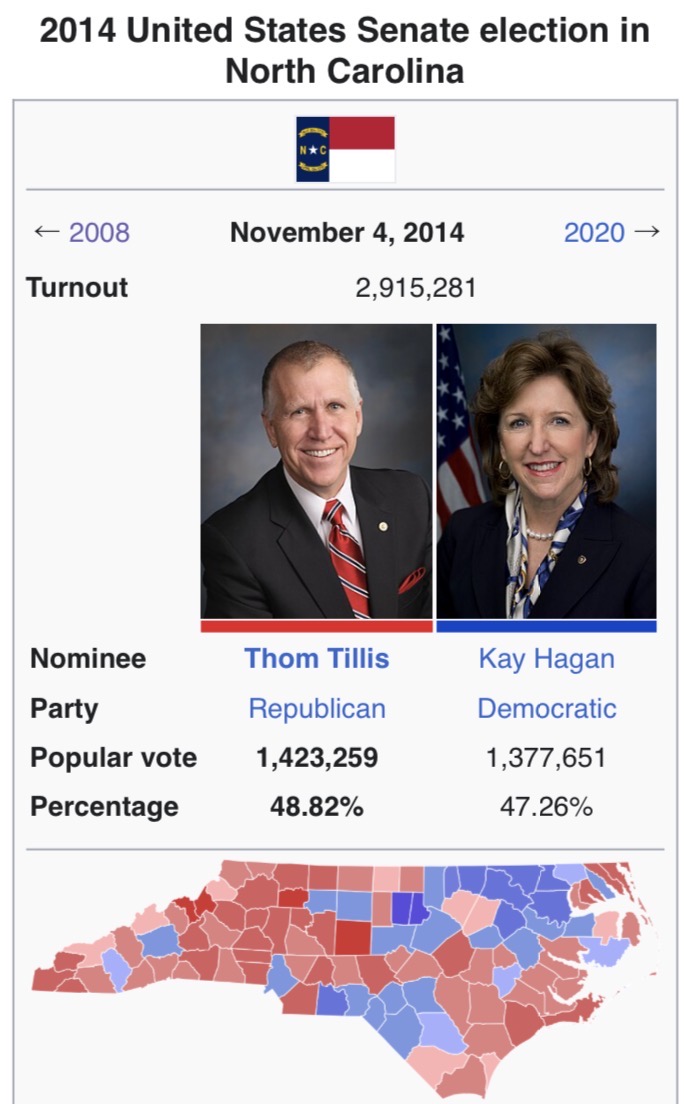
With North Carolina trending red during the Obama days, Hagan was ousted by Tillis in the 2014 GOP wave in a 1.6% squeaker in which hardly anyone voted:
Tillis was reelected in 2020, and only by 1.7%, after Democrat Cal Cunningham had a late-breaking scandal that most likely shifted things to the incumbent. Tillis then went on to antagonize the Republican base and hamstring President Trump at every turn, leading to Trump making it clear that he could retire or be brutally primaried like John Cornyn or Bill Cassidy.
The other Senate seat, currently occupied by Republican Ted Budd, has had a mix of Democrats and Republicans stretching back to 1981. In short, history shows Democrat competitiveness in the Senate even in recent, redder times, with an incumbent who never won by more than 1.7% leaving the seat open in a year that is supposed to be favorable to Democrats.
V. Analysis of 2026 Primary Results
Cooper faced five candidates in the Democrat primary, but bludgeoned them mercilessly in taking 92.0% of the vote. It was decisive, and as a result, there is no Democrat intraparty drama in the way of the General Election.
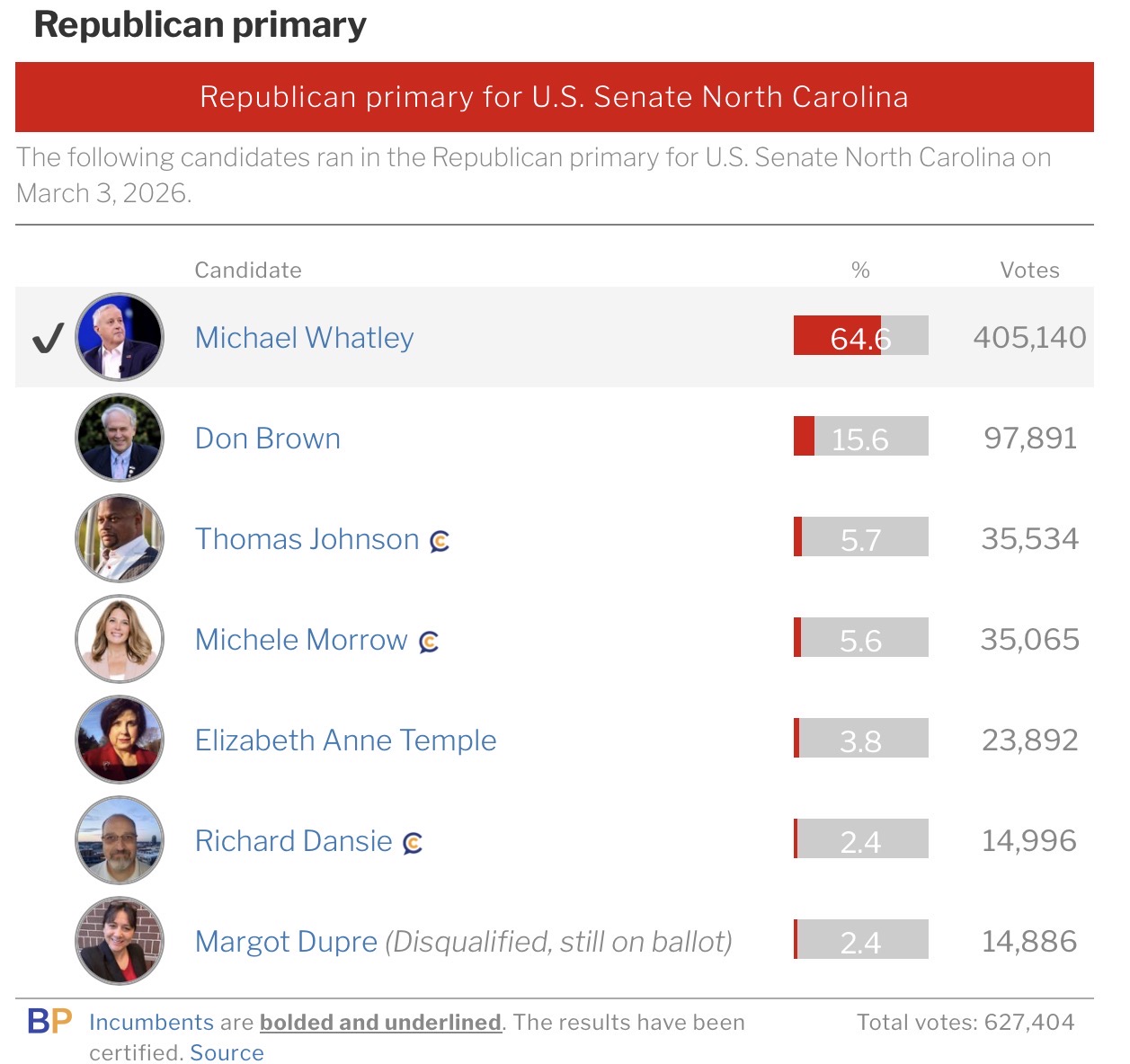
Whatley also prevailed by a decisive margin, beating Don Brown by 49.0%.
Brown said after the primary that he was “1,000 percent” behind Whatley and would do everything he could to help him defeat Cooper. The field of GOP candidates hasn’t contributed to any drama, but there exists a serious divide between Republican factions that has given the party unity advantage to Democrats in a big way.
VI. Polls
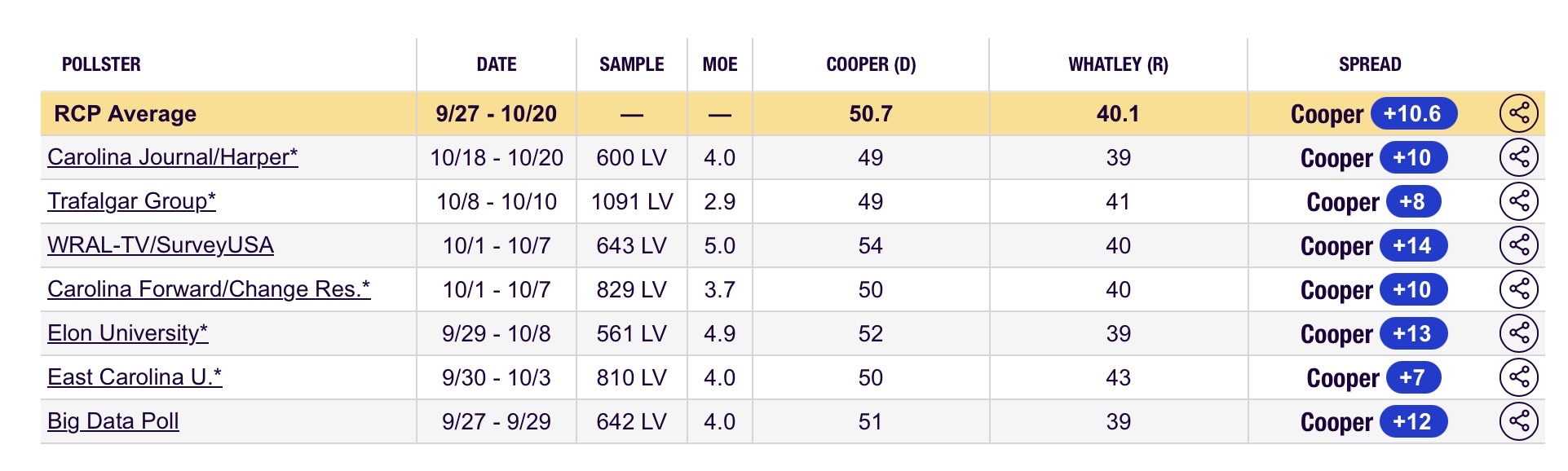
Removing outliers from the RCP Average, the standard poll of the Senate race shows Cooper up 7-10 points over Whatley.
It should be noted that Cooper drastically underperformed his polling during his 2020 reelection bid, and I expect the same will be true in 2026.
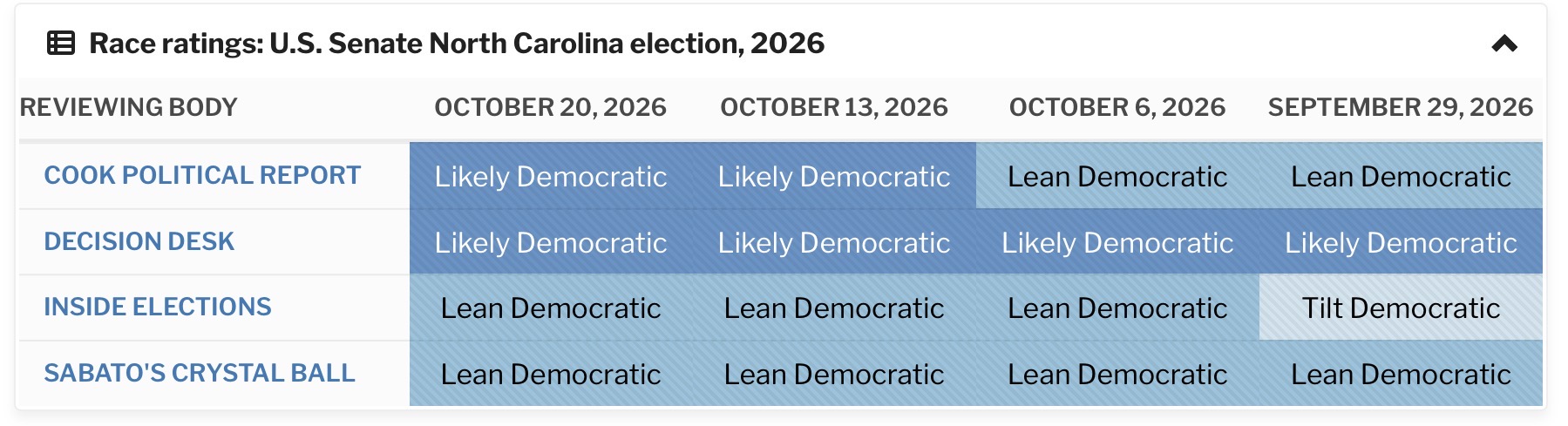
VII. Media Ratings
While all reviewers favor Cooper, it appears Inside Elections and Sabato think the polls are overstating Cooper’s strength, as well.
VIII. Party Registration
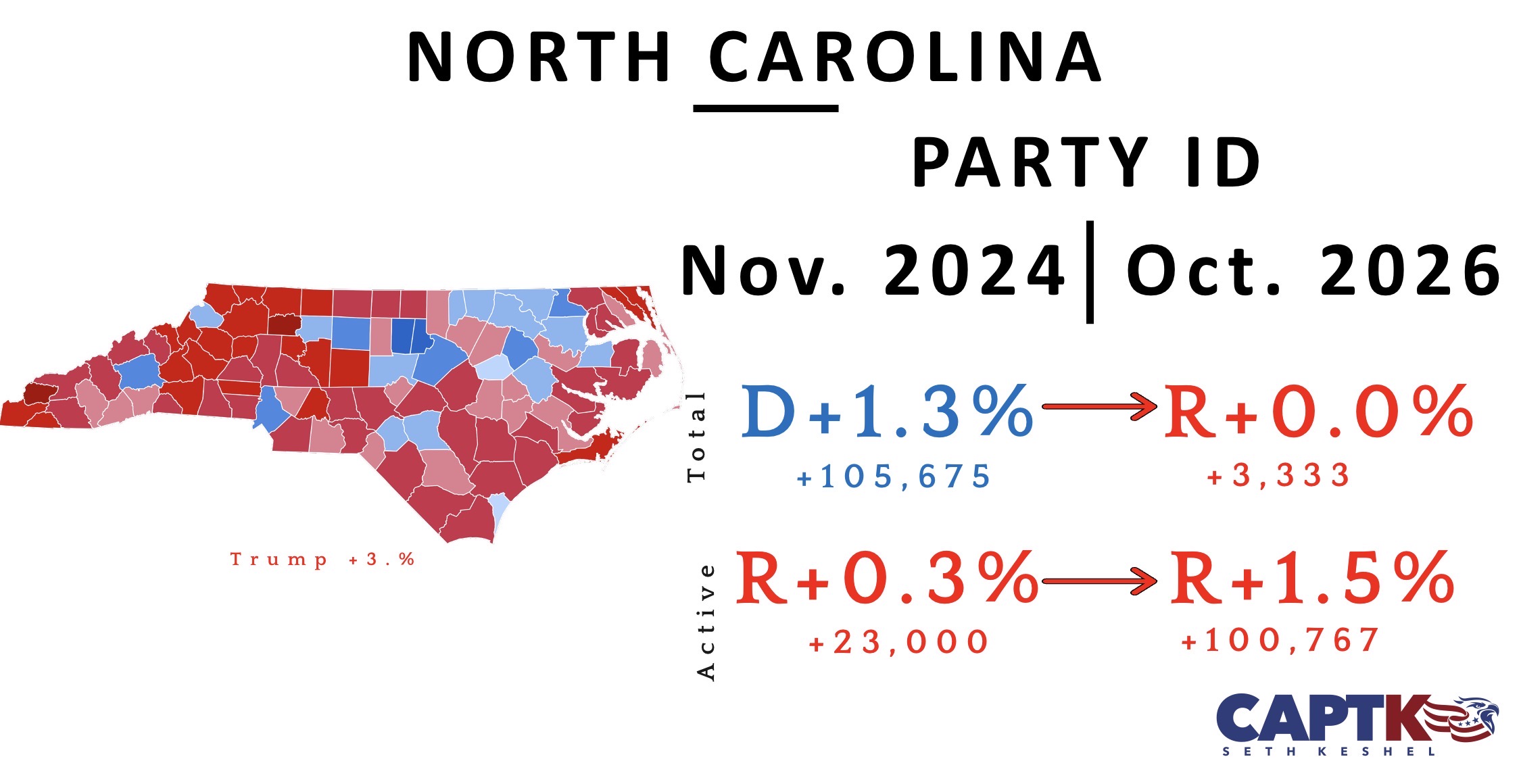
This is going to be a split decision. North Carolina sits nicely to the right of its 2024 voter registration index both in terms of overall and active registrations, giving a more optimistic GOP outlook for the long run than I can provide here in the short run. On the flip side of the coin, Democrats have made modest but noticeable gains in voter registration since summer, and have even barely flipped back the overall registration lead at the closing of the books leading into this election (numbers above reflect the balance at the beginning of October).
This is a push – Whatley has a deeper bench to pull from than Trump did, but Cooper has the recent momentum – which is mostly confined to urban areas like Wake, Mecklenburg, and Durham Counties.
IX. Election Considerations
I have posted at length about North Carolina elections in my posts forecasting the House races in NC-1 and NC-11, and don’t need to reinvent the wheel here.
North Carolina only recently passed Voter ID, and has reasonably basic safeguards in place. It is not extremely easy to cheat in the state (exempting the mail-in heavy 2020 quasi election), but loopholes exist in the event of a close election, like that for the Supreme Court in 2024 – when the Democrat candidate “won” by 734 ballots after weeks of UOCAVA and provisional ballot drips.
X. Summary and Election Estimate
Republicans are off to a rough start in North Carolina’s early voting period, but take heart – it’s not because they’re not voting. They actually have more votes banked now than at this point in 2022. The Democrats are busy front loading. Key blue strongholds Chatham, Orange, Durham, and Buncombe Counties hold the top four spots for percentage of the 2024 presidential vote already turned out in 2026, and the GOP rurals occupy almost all of the bottom 40 percent of 100 counties in the same measure.
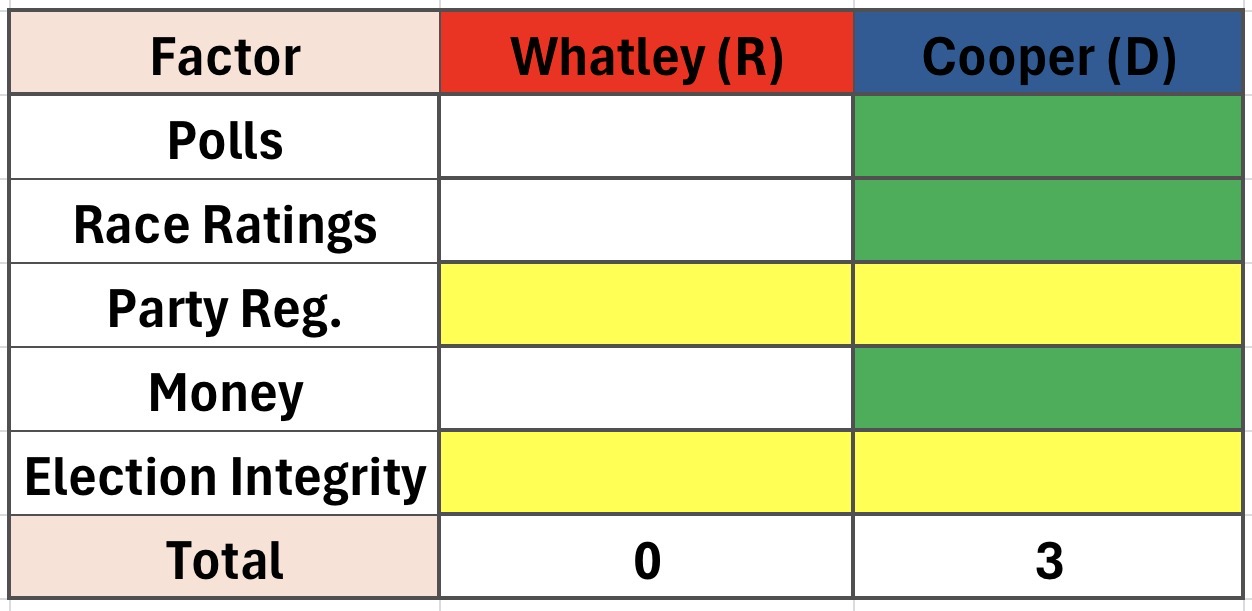
The good news here is that this will close a lot this week. Democrats are front-loading their high propensity voters, and can’t sustain that pace. North Carolina has a much stronger Republican preference in federal elections than statewide elections, so I suspect that Cooper’s ceiling is limited and not likely to reach double digits. Regardless, Cooper has a serious advantage in my decision matrix:
Cooper has roughly four times the receipts and twelve times the cash on hand that Whatley does; it has been noted that Whatley’s advertising has been rolled back and the GOP has moved on to other races as funding priorities. These are not good signs, and spoken plainly with an understanding of North Carolina’s ancestral Democrat tendencies and competitive Senate races even in GOP years like 2022, Cooper is clearly on his way to a win that could only be upset by a massive drop-off in urban participation this week:
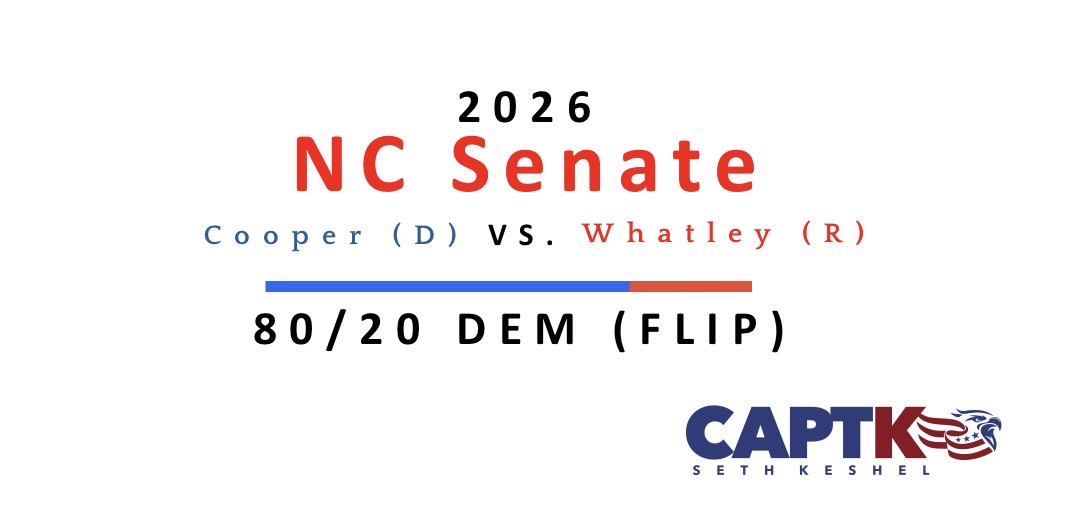
Forecast for NC Senate
The biggest risk to mailing it in on this Senate race is that Republicans will depress turnout needed to flip NC-1 and hold onto NC-11, and a good long-term goal given Democrat functionality in a few key metros would be for Republicans to start investing heavily in an urban strategy so North Carolina doesn’t turn into another Georgia. This race is a must-win for Democrats, and without it, there is no path to a Democrat majority in the Senate.
Seth Keshel, MBA is a Senior Fellow at the Gold Institute for International Strategy and a retired Army Captain. He publishes Captain K’s Corner on Substack.
Featuring Hermann Tertsch, Distinguished Fellow, Gold Institute for International Strategy
In brief
Hermann Tertsch spoke with NTN24 about María Corina Machado’s return to Venezuela, calling it an irreversible step toward democracy.
From NTN24 (translated): Spanish MEP Hermann Tertsch of Vox told NTN24 that Machado’s return “does not complicate the transition to democracy and freedom for Venezuelans at all. It favors, encourages, accelerates and inspires the whole process.” He credited the Trump administration for the progress of the transition, said that ideally the chavista leaders, naming Diosdado Cabello and Jorge Rodríguez, “would go to keep Maduro company in a prison in New York,” and drew parallels with Spain, criticizing the government of Pedro Sánchez.
The interview is conducted in Spanish. NTN24’s headline: “Lo ideal sería que Delcy y Diosdado fueran a acompañar a Maduro en la cárcel”: eurodiputado celebró la vuelta de María Corina a Venezuela y pidió el regreso de la democracia.
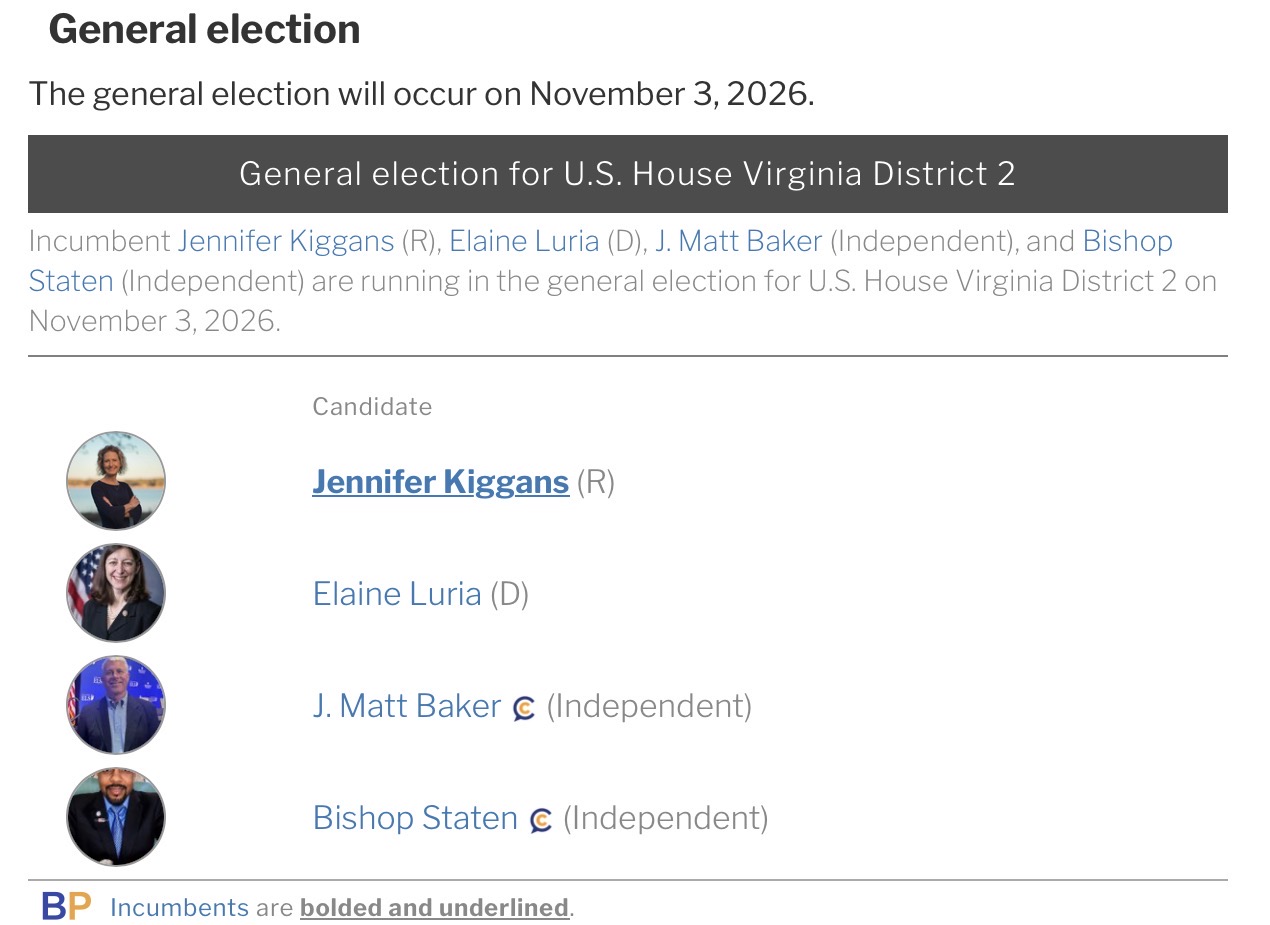
Jennifer Kiggans (Republican) is a Navy veteran, former nurse practitioner and state senator, and incumbent U.S. House representative of VA-2. She is seeking a third term, having first won the seat during the 2022 Republican House victory.
Elaine Luria (Democrat) is likewise a Navy veteran (retired); she won the VA-2 seat in the 2018 Democrat House wave and was reelected in 2020, but dropped it to Kiggans in 2022. She is back for a rematch and is looking to chip away at a very Trump-hesitant electorate in an area that has been drifting left for a decade.
II. District Geography
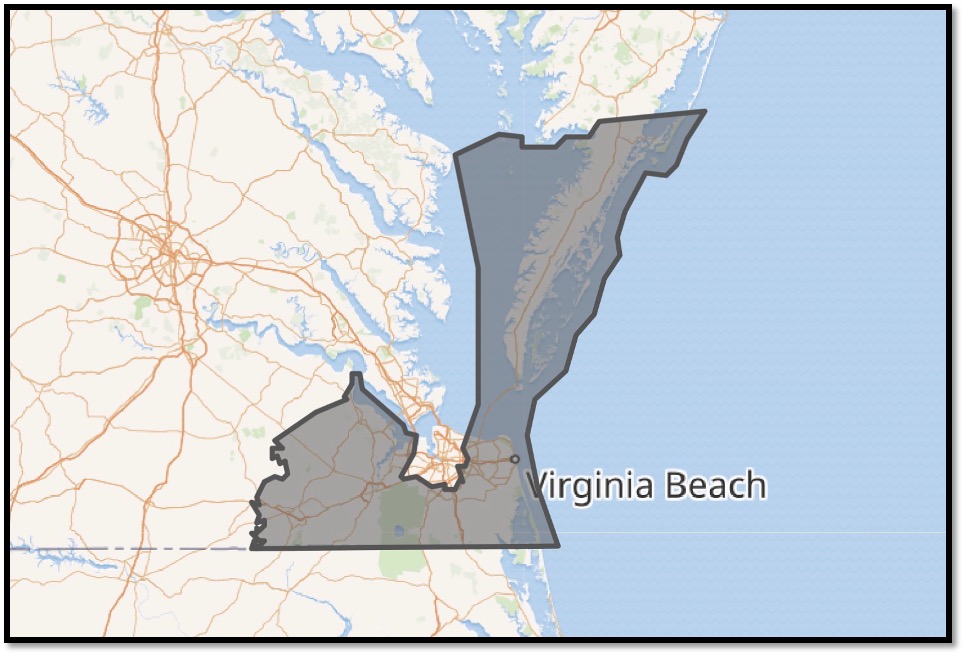
Virginia’s 2nd Congressional District (VA-2) runs along the border with North Carolina and extends onto the Delmarva Peninsula, spanning 8 counties and independent cities – of which Virginia Beach is the most populated and significant. The Tidewater Region is a major military hub, which keeps it from running too far left like most of Virginia’s urban areas have done in the past two decades.
Kiggans is one of the few Republicans still holding on in anti-MAGA districts. Large stretches of “Trump hesitant” precincts are present in Virginia Beach and Suffolk City, and the Democrats have a large minority population from which to pull large margins. Here are the last three presidential margins in the district:
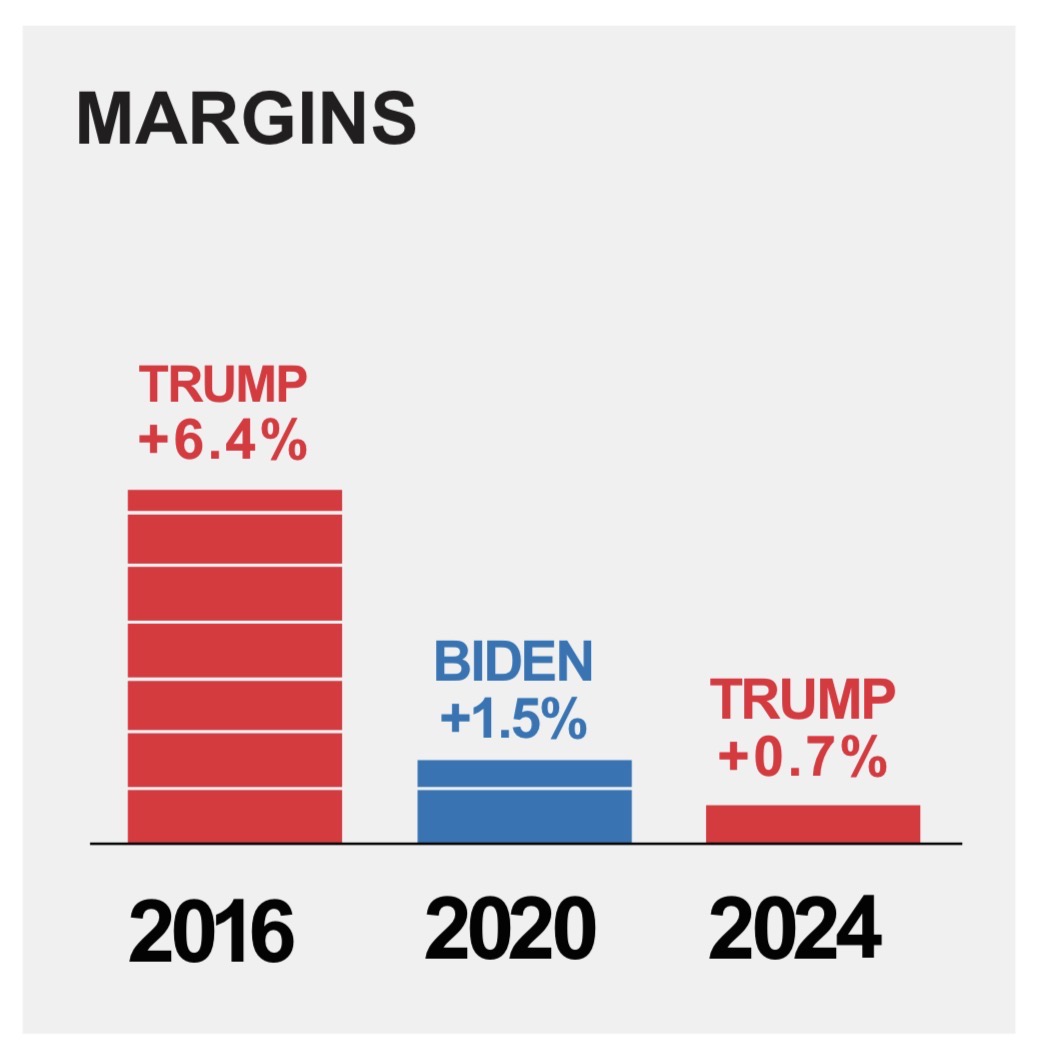
Trump won the current boundaries by +6.4% in 2016, carrying even Virginia Beach (but only with a plurality). When Biden flipped it (Virginia Beach specifically) in 2020, it was the first presidential win of Virginia Beach since Lyndon Johnson’s 1964 national landslide. Trump made marginal improvement in the city 2024, but still failed to carry it. With that shift in margin in the largest jurisdiction in VA-2, the district has become a heavy lift. Although he carried the district by less than a point, Trump ran 3.1% behind Kiggans, who won reelection on the same ticket.
Key Statistics
58.7% White, 22.0% Black, 7.5% Hispanic
92.6% Urban, 7.4% Rural
III. Market Assessment
Luria is the clear favorite according to Polymarket bettors, and is heavily overpriced.
IV. History
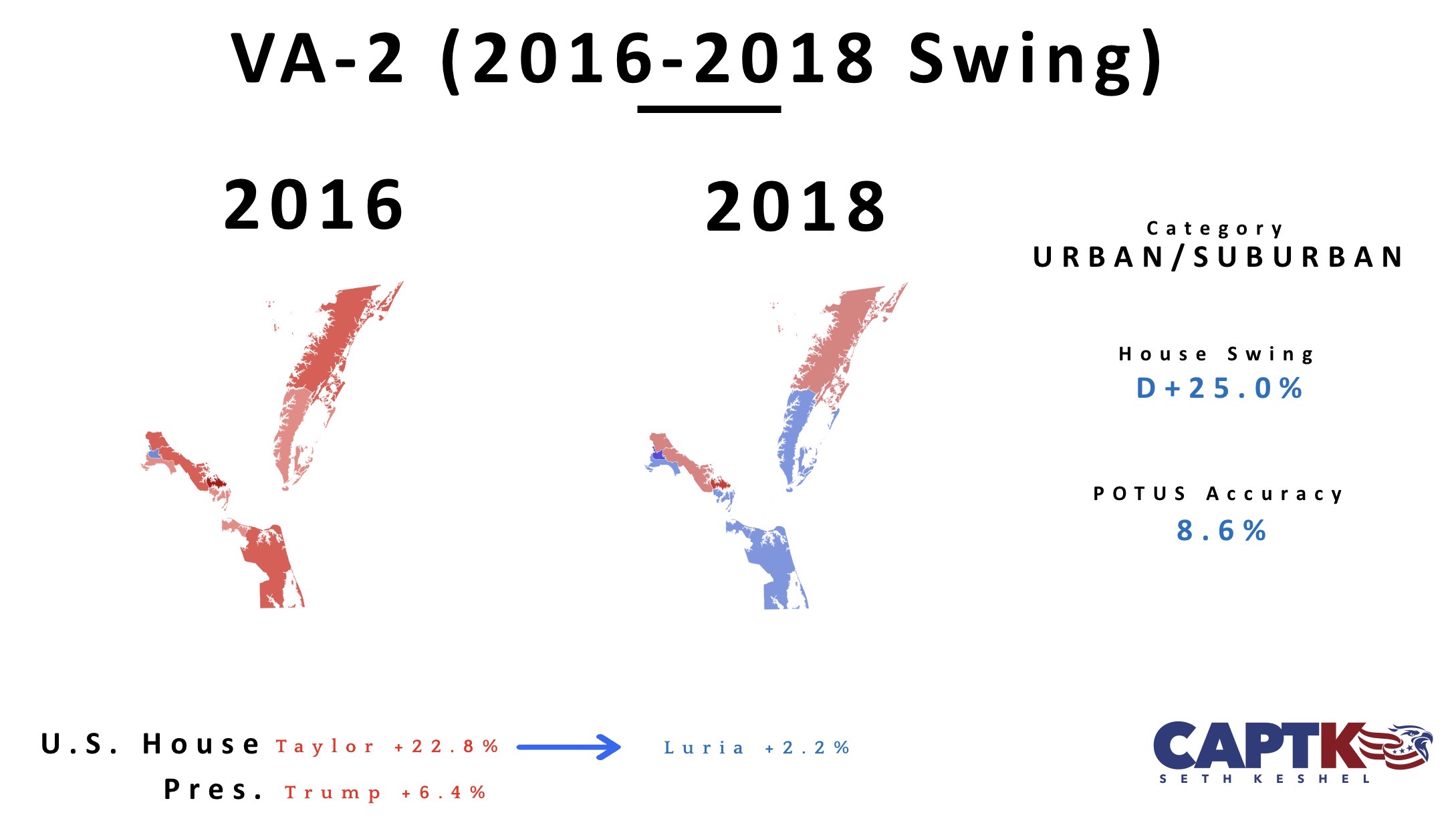
While the boundaries of VA-2 have changed, Virginia Beach remains the leverage point. In 2016, running for an open seat, Republican Scott Taylor decimated his Democrat opponent by a +22.8% margin. Facing Luria two years later, VA-2 then swung an incredible 25 points, giving Luria the upset win:
The classic 2016 to 2018 warning light had been flashing, with Trump underperforming Taylor by 16.4% in the district. The anti-Trump nature of VA-2 voters was evident, and enthusiastically proclaimed in 2018 along with many other suburban districts Trump had won by less-than-usual margins two years earlier.
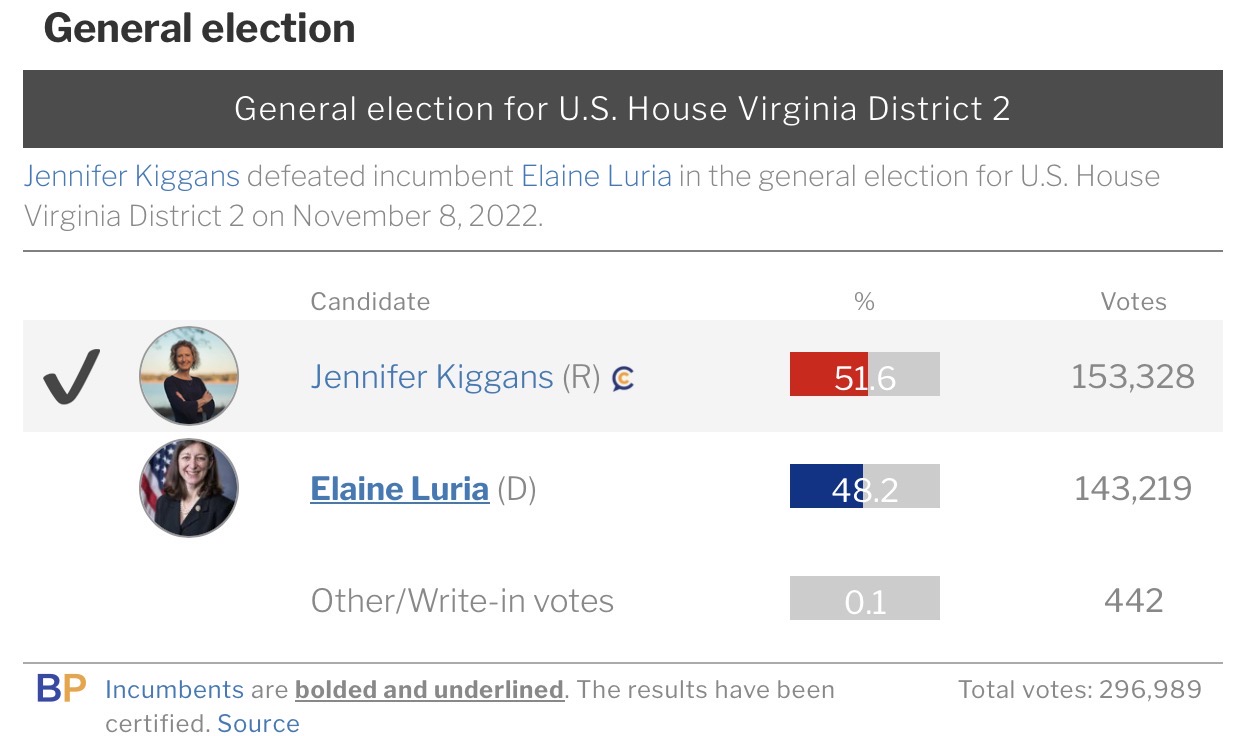
In a 2020 rematch, Luria held off Taylor by a margin of +5.8%. Her luck ran out as the swingy voters of the newly redrawn district swung with the national pendulum:
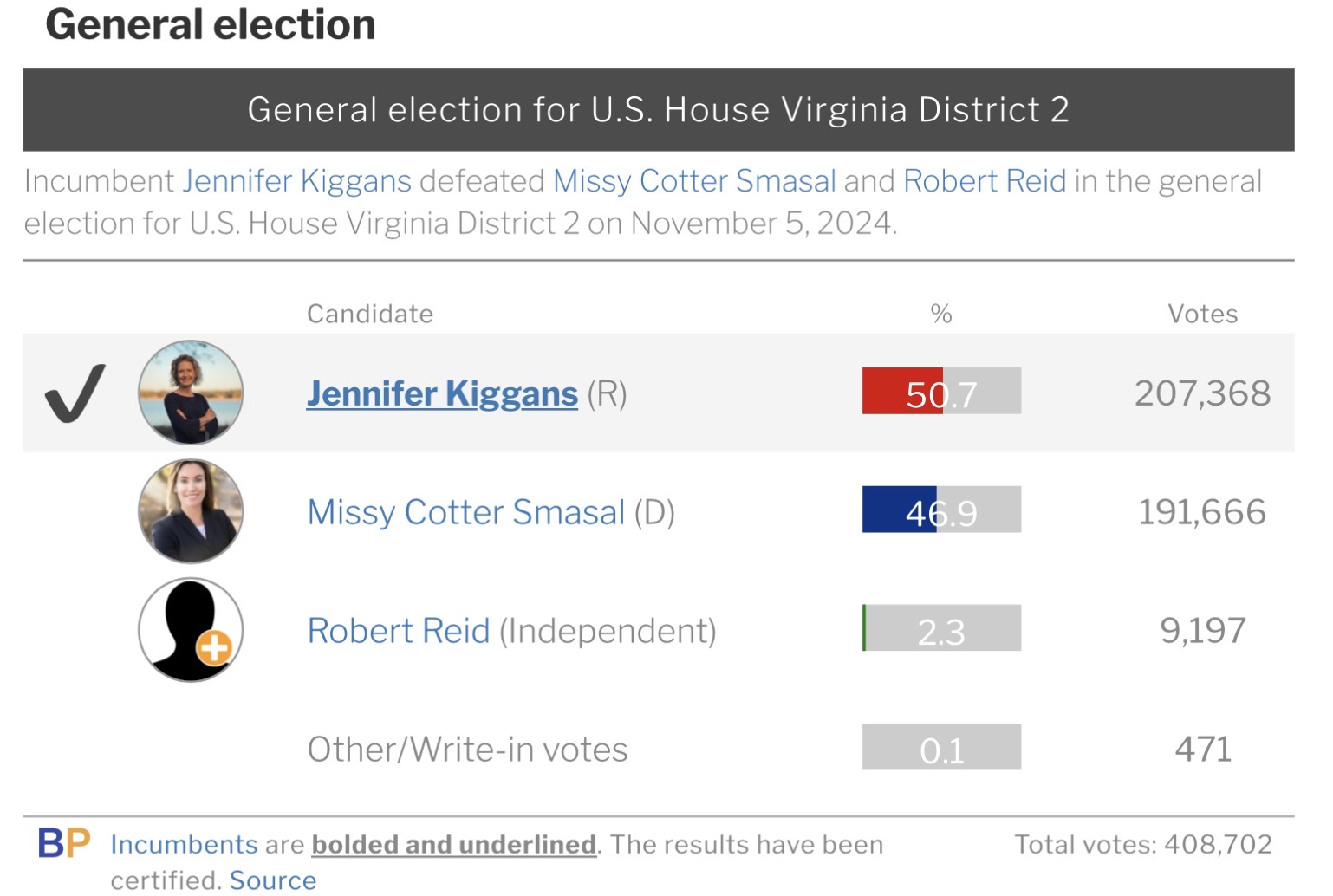
Kiggans carried the seat by +3.4%, and held on by a similar margin alongside Trump’s narrow win in the district against Missy Cotter Smasal.
VA-2’s recent history is one that features consistent swings on the political pendulum, driven largely by what is going on in Virginia Beach.
V. Analysis of 2026 Primary Results
Kiggans faced no opponent for the GOP nomination.
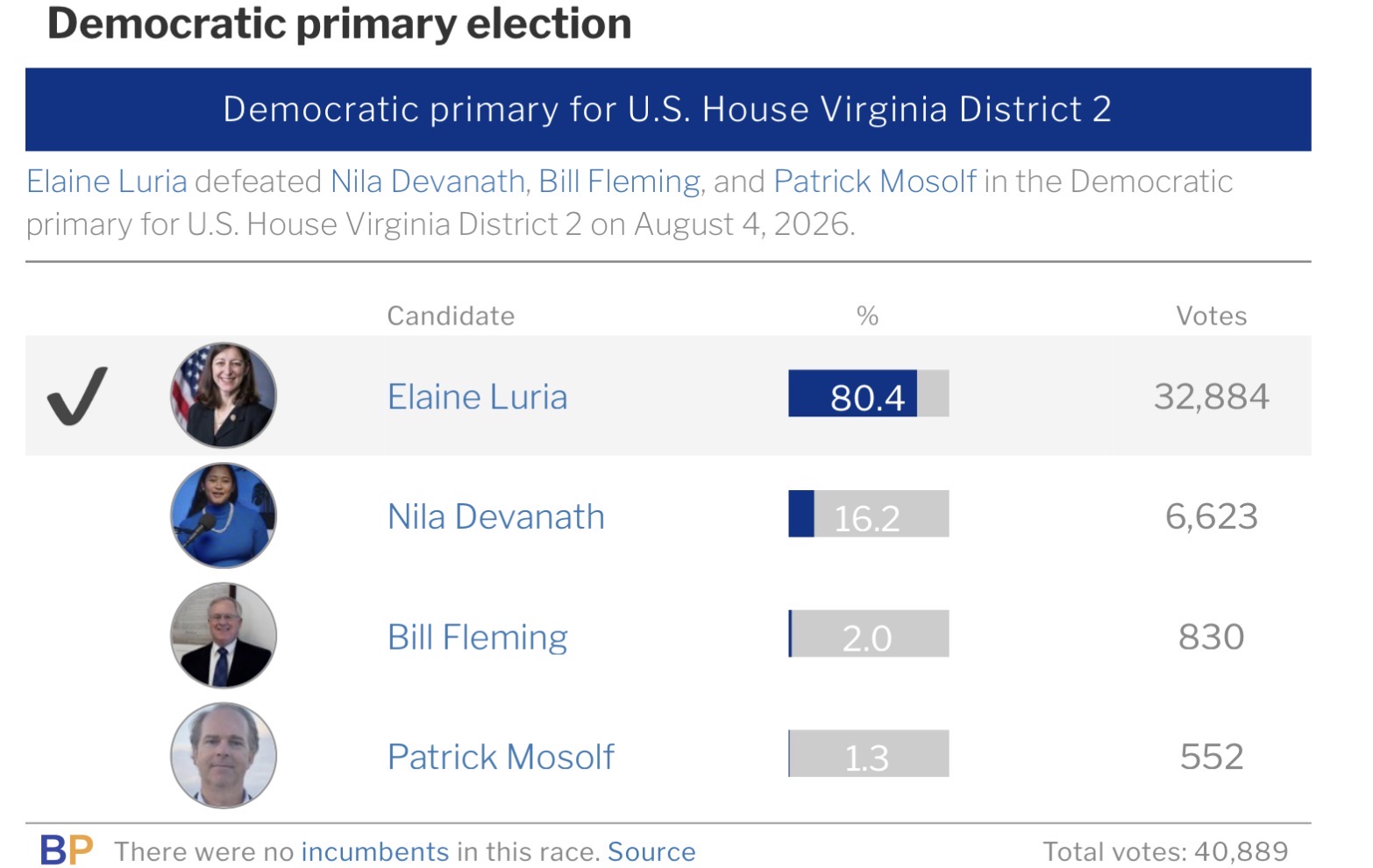
Luria steamrolled her competition on the first step of her journey to return to Congress:
Luria’s win was decisive enough to prevent any intraparty drama and give her a unified faction for her General Election battle against Kiggans.
VI. Polls
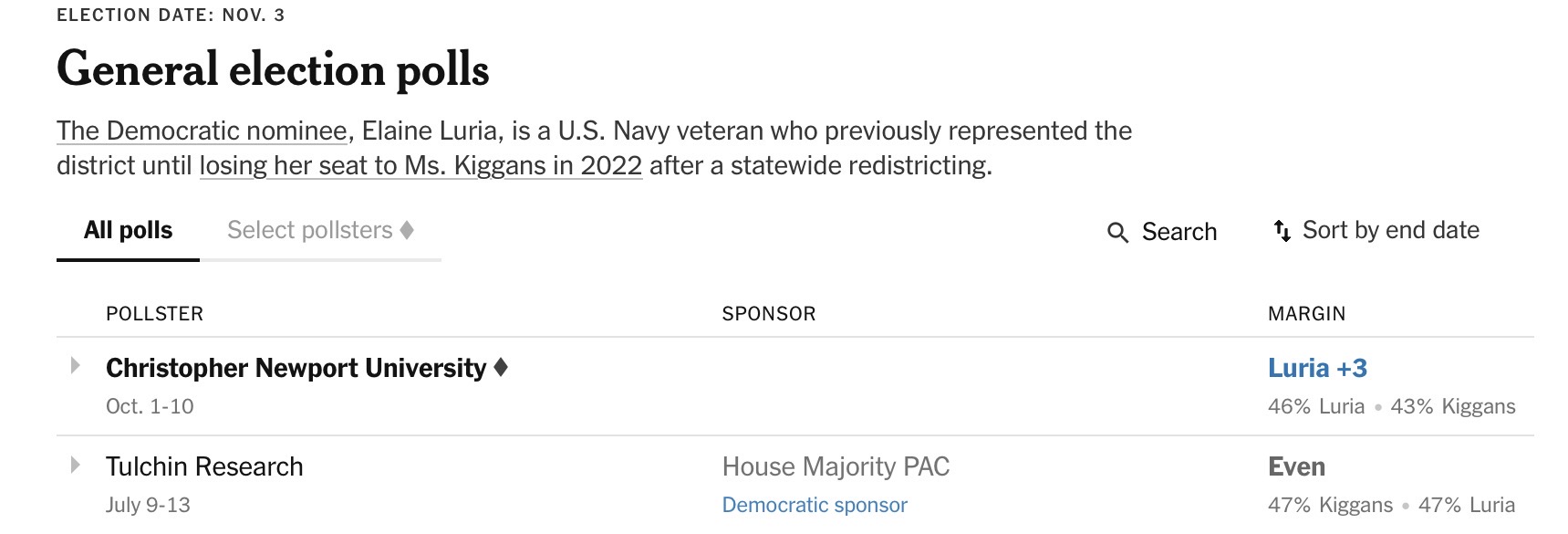
These polls were pulled from The New York Times:
If you’re a polls guy or gal, these don’t look too bad for Kiggans given the volatility of the district.
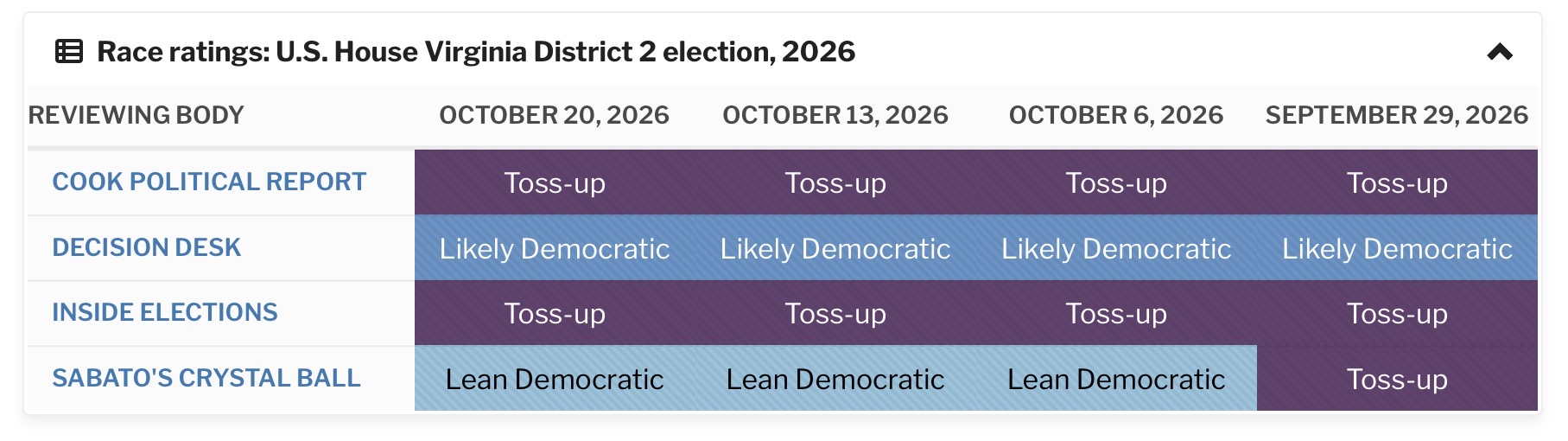
VII. Media Ratings
Two reviewers consider the race a “toss-up,” while Decision Desk and Sabato have the race favoring Luria.
VIII. Party Registration
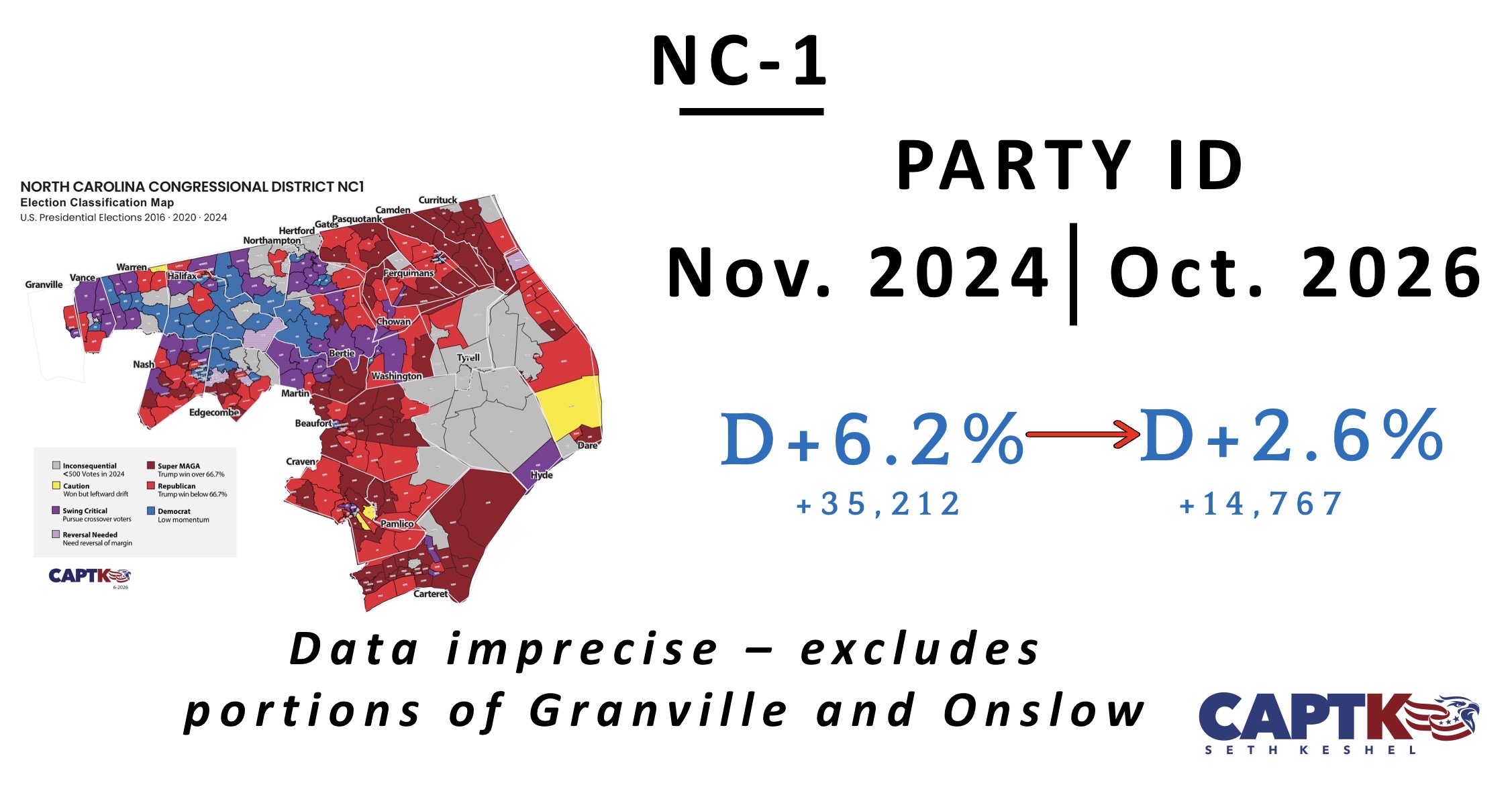
Virginia is one of 20 states not registering voters by party; therefore, I can’t make a concrete assessment of the long-term trend of the district; however, adjacent counties in North Carolina (NC-1), especially those with large black populations, have seen a massive drop-off in rural black Democrat party membership:
It is possible Democrats will struggle with similar demographic enthusiasm in the southwestern portions of VA-2.
IX. Election Considerations
Virginia’s Democrat lean over the past decade has introduced many negative things to the electoral environment:
• The year – the Republican president’s midterm, facing the headwinds that have already proven volatile in the district and with a serious dose of Trump Derangement Syndrome on record from 2018. • Federal cuts impacting Virginia, and a blue electorate forming in the state. • A nominally anti-Trump disposition, and loose election laws that can make a difference in a tight race.
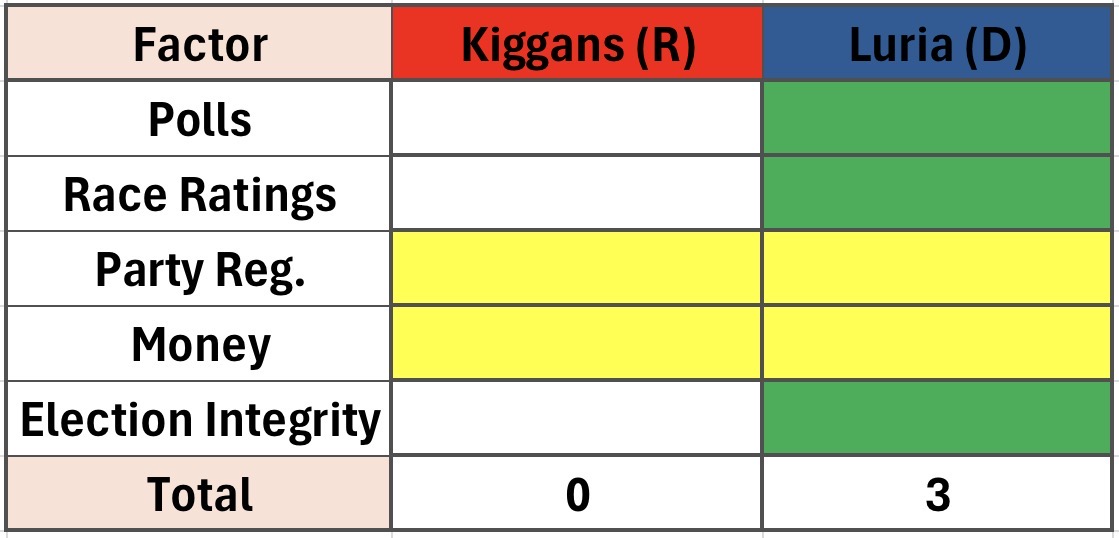
Luria has a 3-0 advantage according to my decision matrix:
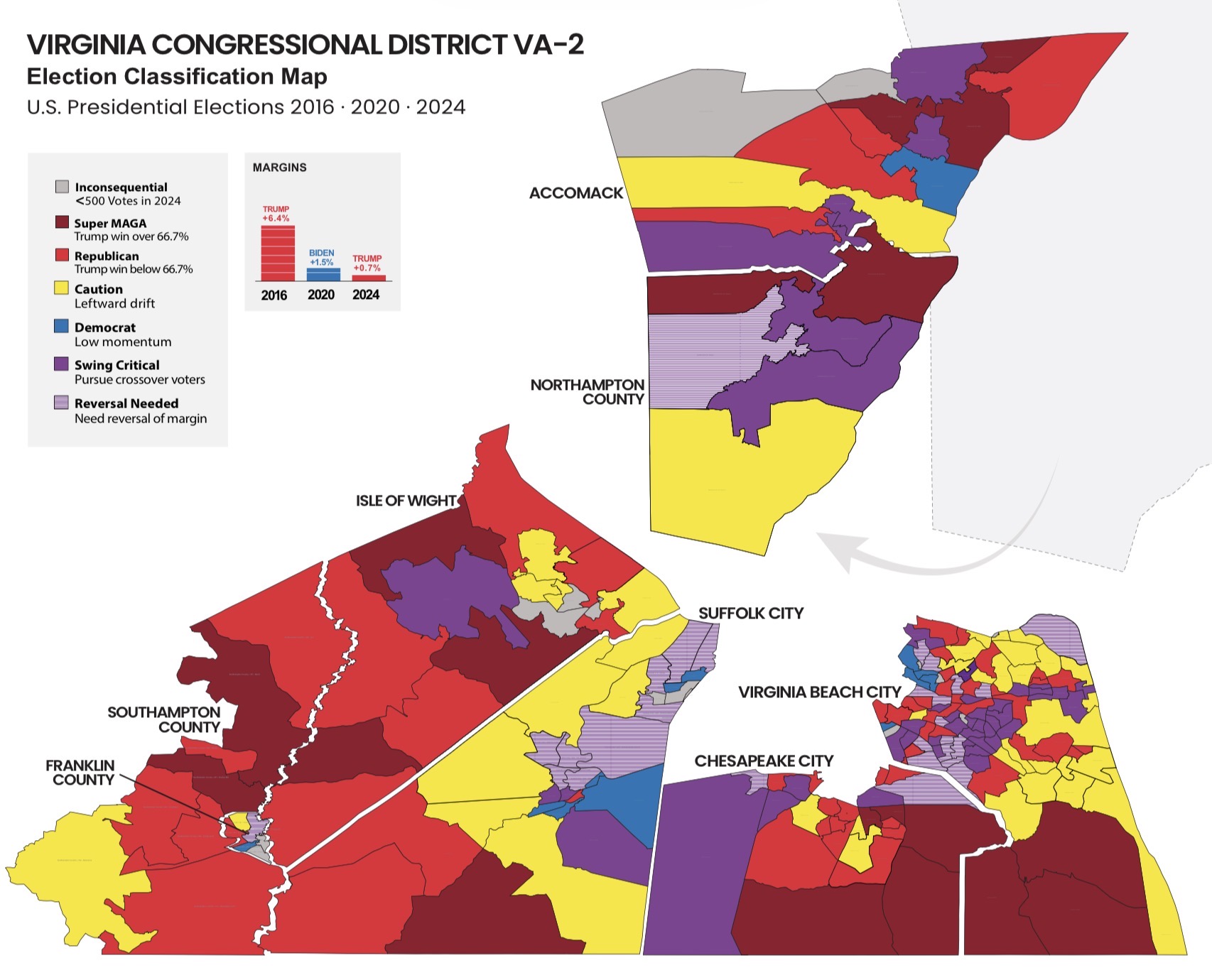
Kiggans has her work cut out for her. She already runs stronger than Trump in VA-2, and my proprietary mapping makes it very clear where she will need to overperform:
Captain K Proprietary Mapping of VA-2
Those yellow precincts are exactly what you don’t want to see if you’re running a GOP campaign in the 2026 cycle. They represent precincts that voted for Trump in 2024, but with leftward drift of at least 3 points from 2020; in almost all cases, they have leftward drift dating back all the way to 2016. Trump-hesitant nominally Republican (swing) voters are all over Virginia Beach and Suffolk City, and Luria will be looking to pry them away. Kiggans will be looking to moderate and keep them, saddled with the unenviable task of pleasing all factions of the Republican Party.
Still, I think Kiggans has four unseen factors that could save her campaign:
• She has a little more margin (+3.8%) to give, and there are two independent candidates on the ballot. If there is a legitimate DSA scare associated with the Democrat brand, this could throw the projections out the window. • Lingering animosity over the attempted 10-1 redistricting effort in Virginia, forced by Governor Spanberger – which VA-2 voted against. • Poor minority turnout, which is a major wild card. Right now, turnout is up from 2022, but I can’t find meaningful precinct-level data to show who (location, age, and race) is voting and who is not. Black enthusiasm is down, and many states tracking that data show a precipitous drop-off after high propensity voters have been exhausted. • The economy of VA-2 is heavily tied to shipping and the United States Navy. Many strong federal projects have kicked off under the Trump administration that could neutralize the known volatility of the district.
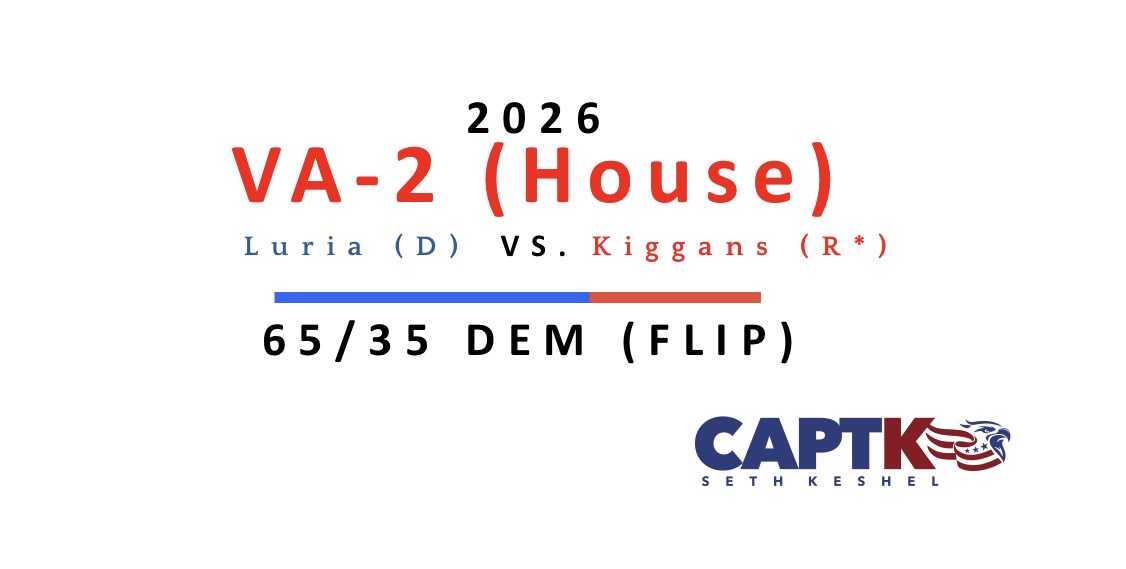
This is a prime pickup opportunity for Democrats. If they lose it, they’ll have valid reason for concern about winning the majority. Luria enters Election Day as a clear, but not inevitable, favorite:
Forecast for VA-2 House
Seth Keshel, MBA is a Senior Fellow at the Gold Institute for International Strategy and a retired Army Captain. He publishes Captain K’s Corner on Substack.
Eric Flores (Republican) is a first-time candidate looking to capitalize on recent Republican gains in South Texas. He is an attorney with an accomplished legal career and also a member of the Texas Army National Guard (infantry officer).
Vicente Gonzalez (Democrat) was first elected to represent TX-15 in 2016. Now representing a twice-redrawn TX-34, Gonzalez, also an attorney, seeks a sixth term. As a member of the House Blue Dog Coalition, he will need to create maximum distance from the radical left in order to win in much more challenging electoral terrain.
II. District Geography
Texas’s 34th Congressional District (TX-34), newly redrawn for the 2026 General Election, stretches from the U.S. border with Mexico along the Rio Grande River all the way north to Nueces County. It includes all of Cameron, Willacy, Kenedy, and Kleberg Counties, and all of Nueces except for the innermost precincts of Corpus Christi. It is truly an expert draw from the Texas legislature. The only question is whether it is ripe for the picking in what is supposed to be a strong Democrat year.
President Trump, thanks to his massive improvement with Latino voters nationwide, won both the newly drawn district (+10.5%) and the old TX-34 boundaries (+5.0%).
Presidential Margins
He won neither the old nor the new boundaries in 2020, but ran these new boundaries 10 points right of where they had been in 2016. A 13 points bump to the right put TX-34 in double digits, punctuating a generational performance in South Texas for a GOP presidential nominee.
Key Statistics
90.3% Hispanic, 7.9% White
84% Urban, 16% Rural
The newly redrawn district, one of the big GOP targets, cut out a McAllen-heavy portion of Hidalgo County and replaced it with the portion of Nueces County described above.
III. Market Assessment
On Polymarket, Gonzalez is the trading favorite, albeit heavily overvalued.
IV. History
Gonzalez started out in TX-15, winning a +19.6% margin over Republican Tim Westley in a district that ran from the southern end of San Antonio straight south to McAllen. He won reelection in 2018 by +18.9%, but a close call in 2020 force him to reassess his career aspirations.
Facing Trump’s unexpected strength in South Texas, Gonzalez defeated Monica De La Cruz, who now represents TX-15, by just 2.9%. He announced the next year that he would switch over to TX-34; he wound up facing Republican Mayra Flores, who had captured the seat in a special election in March 2022:
Gonzalez rode a much stronger Biden baseline than he had in TX-15 to a +8.5% win over Flores, and successfully defended the seat concurrent with Trump’s massive conquest of South Texas, albeit narrowly:
Mayra Flores (of no relation to Eric) ran 7.6% left of Trump, falling just short of unseating Gonzalez. Gonzalez’s worries stem from TX-34 being redrawn from the Trump +5.0% turf that got him past Mayra Flores by 5,177 votes to Trump +10.5% looping in the most conservative portions of Nueces County.
The longterm trend for the Democrat brand in South Texas looks very bad:
V. Analysis of 2026 Primary Results
Both Gonzalez and Flores had to deal with primaries. Gonzalez won his comfortably while running against a challenger to his left, yet another data point that the future political coalitions of America feature Latinos opposing the emerging DSA:
For Republicans, it was the battle of the Floreses. Eric knocked off Mayra, who was eager for yet another rematch with Gonzalez. The two eventually buried the hatchet, but Mayra seems frustrated in most of her online commentary since endorsing Eric. I doubt any lingering beef will impact the General Election.
VI. Polls
Polls pulled from The New York Times:
Flores published an internal poll showing him in the lead in June; two other polls from mid-August to present have Gonzalez with an average lead of 5 points. It should be noted that Latinos are very difficult to poll, and no 2024 polls detected Trump’s 55% share of the Texas Latino vote.
VII. Media Ratings
All four major reviewers are looking at this as a tight race. Two have it still labeled “toss-up,” and Decision Desk and Sabato lean it for Gonzalez.
VIII. Party Registration
Texas does not register voters by party; however, no counties with large Latino-majority populations in other states that I know of have a meaningful move to the left by registration since the 2024 election.
IX. Election Considerations
Texas, being such a huge state with an overwhelmingly urban and suburban population, has people rung up on election corruption charges all the time – including in South Texas.
Still, Texas has strong control over what few mail-in ballots are sent out, and the risk for widespread corruption in this race (relative to others I’ve profiled) is low.
X. Summary and Election Estimate
This is another race that is very tough to predict. To Gonzalez’s advantage, most voters in the new TX-34 boundaries to the south of Nueces County are still Democrats. They vote in Democrat primaries because the GOP has very little true infrastructure built in South Texas, and there are very few standard Republican social clubs like those that can be found in every red suburb in the Lone Star State. Anecdotally, I knew a man in a previous life (a gringo) who was as pro-Trump as they came, but he voted in Democrat primaries because it was inevitable a Democrat would win the local race, and he wanted a say-so.
Times are changing. I’m not convinced the Republicans won’t hold most (or all) of Trump’s gains. Roughly 40% of Texas counties shifted more Republican from the 2016 presidential election to the 2018 Texas Senate race, and they were largely Latino – potentially saving Ted Cruz’s campaign. Recent data from Yuma County, Arizona – a strong comp for the Rio Grande Valley, looks very good for the GOP.
TX-34 looms as a must-win for any hope of a GOP majority, especially since OH-7 and NC-11 are jump balls thanks to unforced errors. Essentially, Flores is going to need to hit the Latino working-class hard and hold the emerging red suburbs of Cameron County (where they actually do vote in GOP primaries), limiting margins of defeat in core Brownsville and rolling out every last right-winger in the northern end of the new boundaries.
Captain K Proprietary Mapping of TX-34
If Latino margins blow slightly left of 2024, Gonzalez can still hold the district based on his incumbency and the familiarity of his voters with the party; however, if the gains stick, then Flores can introduce a brand-new lay of the land for Republican politics in South Texas.
My decision matrix gives Gonzalez the edge in three of four applicable categories:
Gonzalez knows the drift of the district, and that’s why he’s been over-the-top in rejecting the woke agenda and championing his “blue dog” credentials. If he manages to hold on in 2026, he’s probably going to be gone in 2028 with a return to presidential trend lines. I consider this race a pure flip of the coin, only edged to Gonzalez for incumbency, party infrastructure, and midterm dynamics (which may not apply for this very unique district). Multiple sources in Texas have confirmed to me that the race is viewed as very tight.
Forecast for TX-34 House
Seth Keshel, MBA is a Senior Fellow at the Gold Institute for International Strategy and a retired Army Captain. He publishes Captain K’s Corner on Substack.
There’s no shortage of breathless talking heads criticizing the Israeli ops to eliminate the Hamas terror threat in Gaza. Many of them insinuate/assert that Israel’s war on Hamas is somehow unjust. Many (if not most) of these talking heads have neither wartime military experience nor professional experience with the Hague and Geneva conventions, which apply.
The Conventions incorporate Just War Doctrine as articulated by St. Augustine in the 5th Century. Of the several tenets of Just War Doctrine, the big three are Just Cause, Proportionality, and Discrimination.
Just Cause – Per the doctrine, war can be just if it’s defensive or waged to right a grave injustice.
Proportionality – Per the doctrine, the application of military force must be enough to achieve the military objective or defeat the threat, but no more. This tenet is widely misunderstood, however. Many wrongly assume that military force must be proportional to the adversary’s military force or to balance the harms…an eye for an eye, so to speak, i.e. “The enemy killed 1,200 of us, so we can only kill 1.200 of them.” This is a fundamental misunderstanding and couldn’t be further from the truth.
Discrimination – Per the doctrine, parties to war must discriminate combatants from noncombatants. Civilians must be protected from intentional targeting. Targets must be legitimate, military targets. All reasonable measures must be employed to protect civilians, but collateral civilian deaths are expected and tragic. Unintended civilian deaths do not necessarily make the war unjust.
So, let’s apply these to the IDF ops to destroy the Hamas threat in Gaza.
Does Israel have a Just Cause? Yes. The Hamas atrocities of 7Oct provide indisputable justification for Israel’s counterattack and the ongoing military effort to eliminate all continuing threat of re-occurrence. No reasonable person can argue otherwise.
Is Israel’s response Proportional to the objective of eliminating that threat? Yes. The Hamas attack on 7Oct was made possible by a preceding 21 years of terrorist stockpiling of arms & ammunition, 21 years training specifically to kill non-combatants, 21 years to build its manpower to 30,000+ fighters, most intentionally arrayed within civilian neighborhoods, schools, hospitals, mosques, and of course, deep within a network of 500 kms of tunnels, most of which were intentionally emplaced beneath civilian infrastructure. It took Hamas 21 years to build all the above. Only a serious effort can dismantle it.
• Against Hamas (and by my best count), the IDF presents a peak of 14 IDF brigades engaged in active ops at any one time on the ground in Gaza. So, at 4,000 troops or so per brigade, that totals to roughly 56,000 on the ground at any one time to confront the 30,000 Hamas terrorists. The ratio of IDF to Hamas on the battlefield is not even 1.9:1. That’s WAY below the 6:1 force ratio historically considered optimal for offensive operations, AND that’s even below the 3:1 force ratio considered minimally acceptable for offensive ops.
Do IDF ops discriminate combatants from non-combatants? Yes, and to extremes I’ve never personally experienced on the battlefield. For example, in advance of each, specific operation, the IDF makes phone calls and sends texts to the families and households in/near the objective and warns them of the upcoming operation. It directs them toward safe zones established for their relocation. The IDF uses loudspeakers, radio announcements and leaflets for the same purposes. And the IDF has postponed or delayed kinetic ops until all reasonable efforts to remove civilians from the target area had been exhausted. So, what are the numbers?
• More than 42,000 phone calls • More than 4,000,000 leaflets • More than 12,000,000 recorded messages • More than 15,000,000 texts
And keep in mind, every time IDF commanders issue these warnings in advance of upcoming ops, they are wittingly assuming additional risk upon themselves. As a matter of pure military logic, no commander in his right mind would choose to disclose his upcoming ops. We call it OPSEC (Operational Security).
So, do your own analysis, and don’t rely on headlines.
We discussed all of the above and more on the show this week. My guest is British Army Colonel (ret) Richard Kemp. You’ve likely seen him on TV or in the news. He’s a Commander of The Order of The British Empire and recipient of the Queen’s Commendation for Bravery. He has led troops everywhere from Northern Ireland to Bosnia to Iraq to Afghanistan, and he’s recently spent a fair amount of time inside Gaza. He knows of what he speaks. Click on the link to hear our discussion: https://frontlinesoffreedom.com/show-983/
Written byErnie AudinoSenior Military Fellow, Gold Institute for International Strategy